Munich — complete visitor guide
Everything you need to plan a trip to Munich: neighborhoods, top sights, beer halls, day trips, transport, and honest practical advice for 2026.
Munich: old town walking tour
Quick facts
- Population
- 1.56 million
- Main station
- Munich Hauptbahnhof (Hbf)
- Airport
- MUC — 40 min by S-Bahn S1/S8
- Currency
- Euro (EUR)
- Time zone
- CET/CEST (UTC+1/+2)
What kind of city is Munich?
Munich (München in German) is the capital of Bavaria and Germany’s third-largest city — but it feels nothing like Berlin or Hamburg. The pace is slower, the architecture is grander, the beer comes in one-litre steins, and the Alps sit close enough that you can be hiking at 2,000 metres before lunchtime. Visitors expecting a single dominant attraction are often surprised: Munich is a collection of very good things rather than one unmissable spectacle, and it rewards a few slow days more than a single breathless 24-hour sprint.
This guide covers the city from end to end: what to see, which neighbourhoods to base yourself in, where to drink beer without paying tourist-trap prices, how to get around cheaply, and which day trips are genuinely worth the effort.
| Where | Bavaria, southern Germany |
| Cost | Around EUR 120–180/night mid-range hotel |
| Time needed | 3–5 days minimum, 7 with day trips |
| Getting there | MUC airport, S-Bahn S1/S8 to centre (~40 min) |
| Best time | May–Jun and Sep for mild weather, fewer crowds |
Top sights in Munich
Marienplatz and the Altstadt
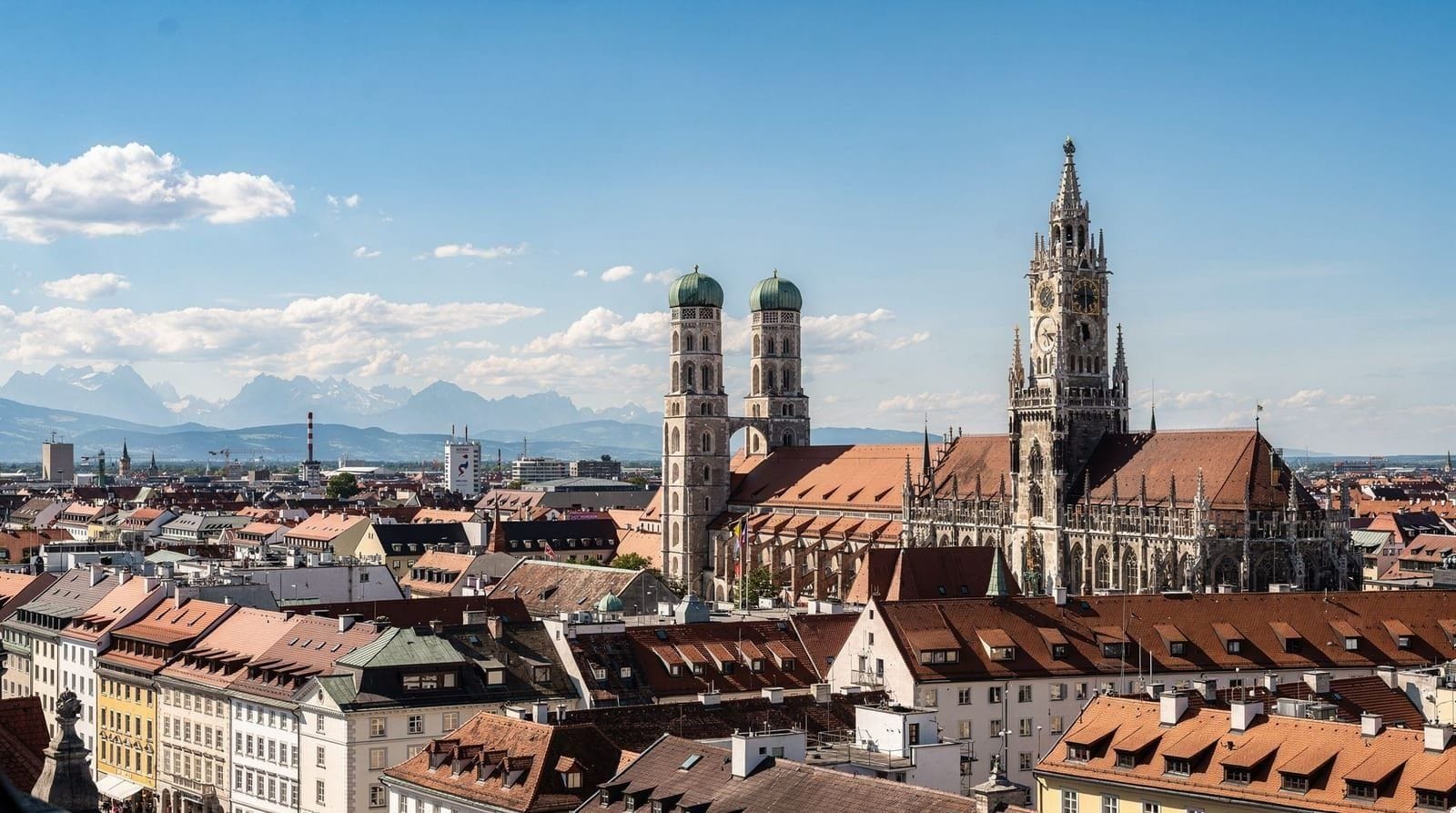
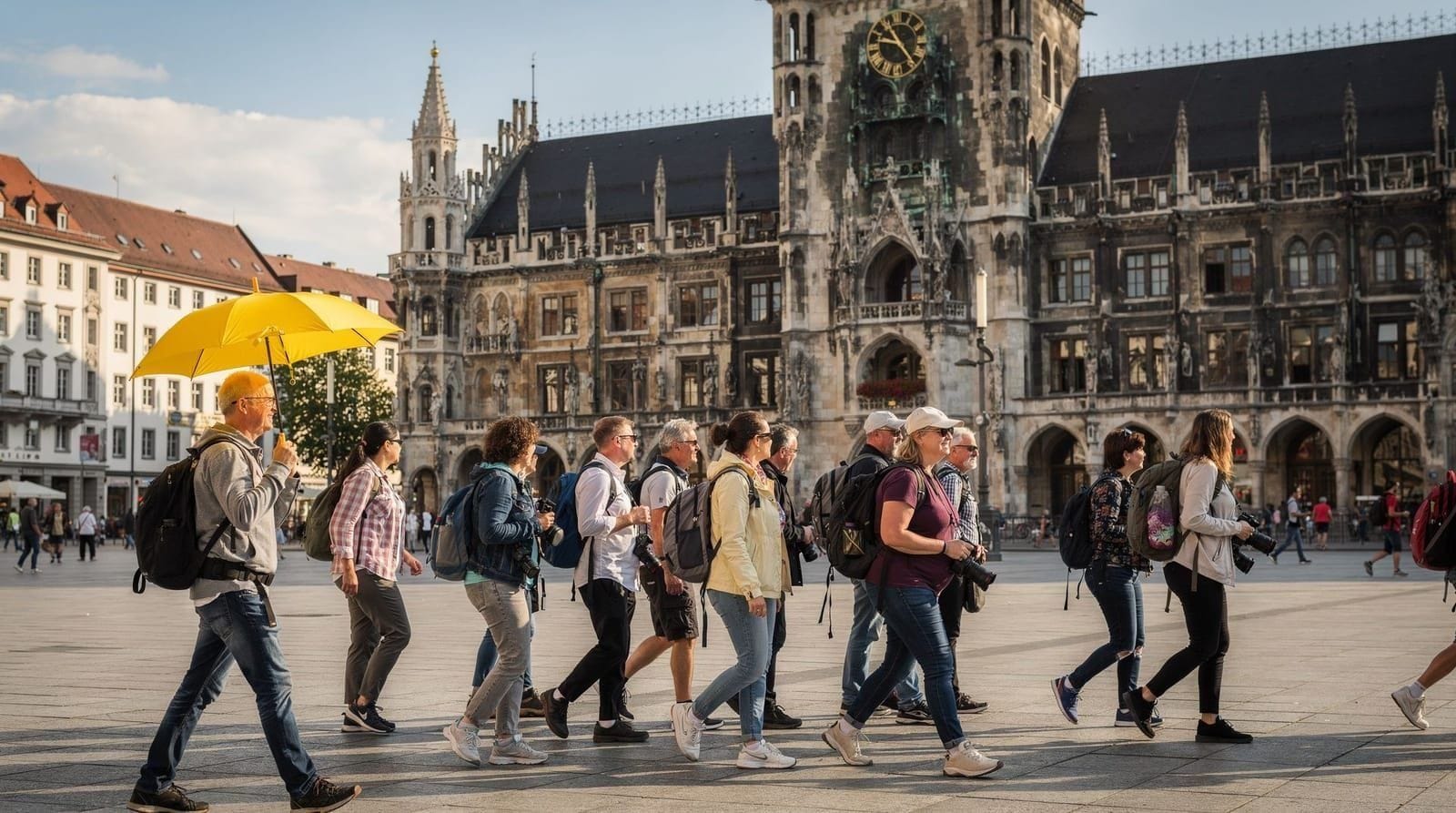
Marienplatz is Munich’s central square and the starting point for most visits. The Neues Rathaus (New Town Hall) dominates the north side with its neo-Gothic facade and the Glockenspiel, a carillon that plays daily at 11:00, 12:00, and — in summer — 17:00. The Glockenspiel attracts large crowds and is pleasant without being essential; if you have seen a Swiss cuckoo clock, you have the general idea.
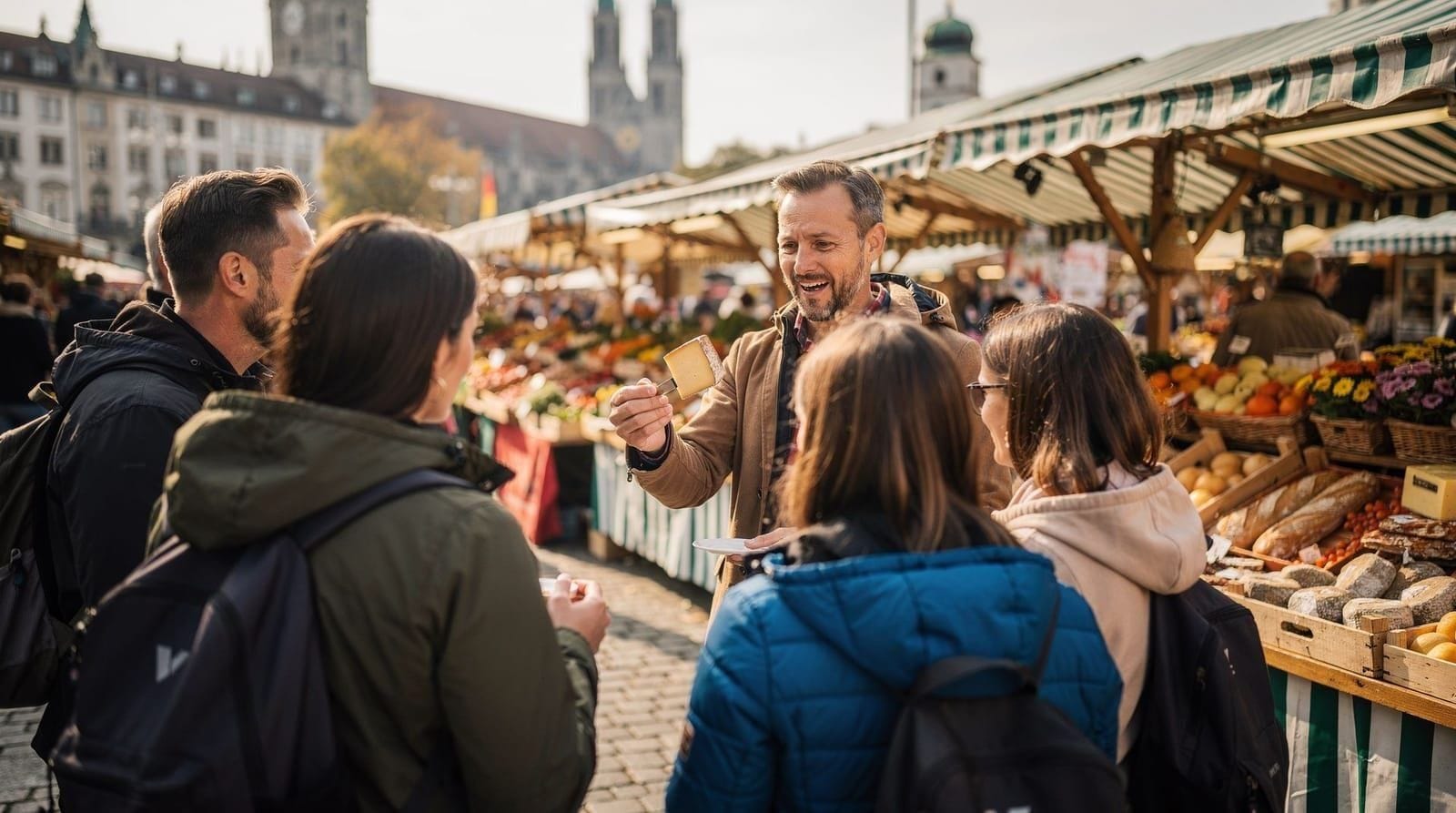
More rewarding is the Viktualienmarkt, a five-minute walk south, which has been an open-air food market since 1807. It is where locals buy bread, cheese, sausages, and seasonal produce, and it contains a beer garden that serves Augustiner Bräu beer. Prices are not cheap but they are honest: a Masskrug (1 litre of beer) runs around EUR 8–9 in 2026.
For a broader overview of the old town, join a guided walking tour of Munich’s Altstadt — most cover Marienplatz, Peterskirche (climb the tower for EUR 5 for panoramic views), and the Asamkirche without lasting more than two hours.
The Residenz
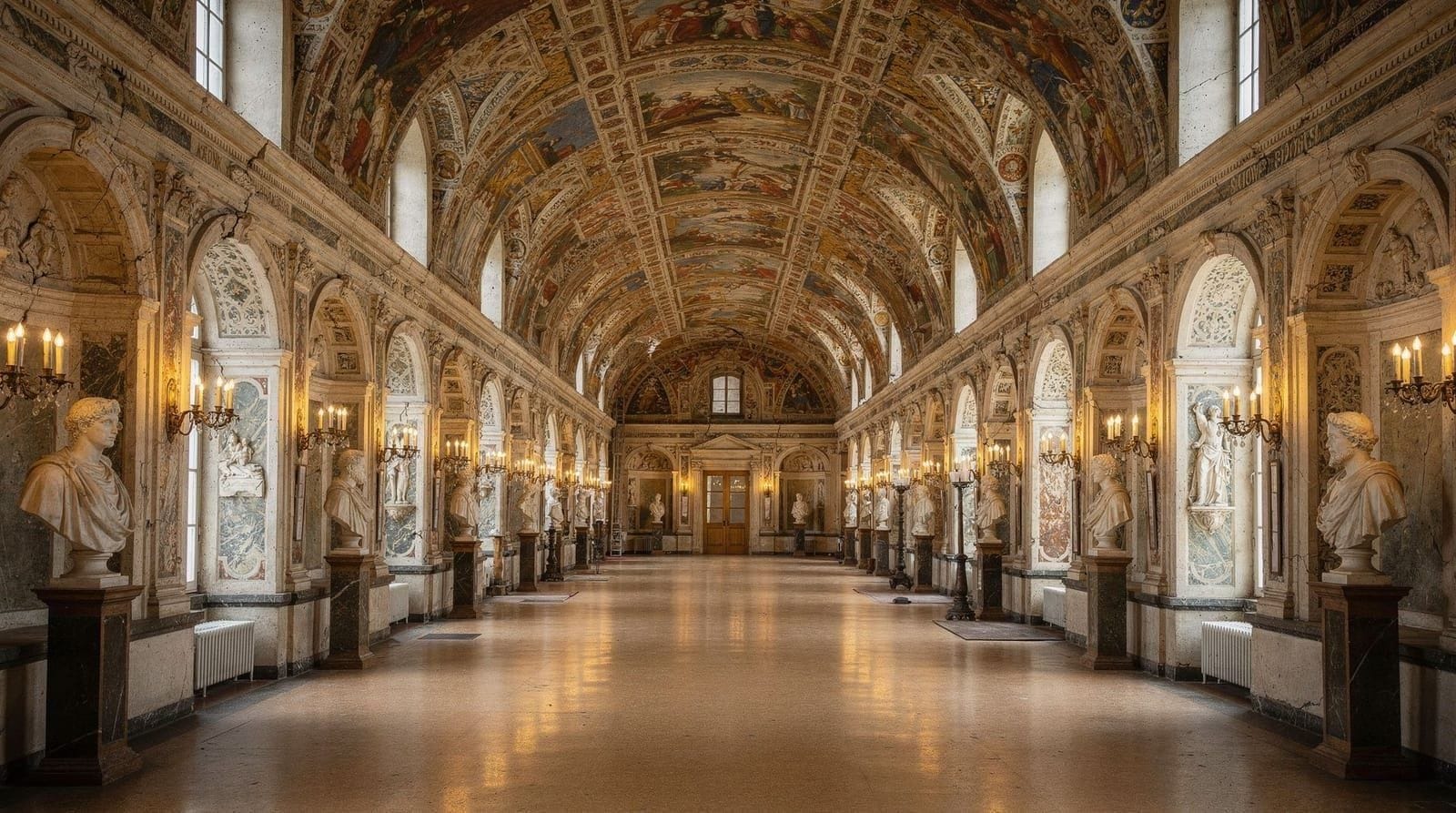
The Munich Residenz is the former royal palace of the Wittelsbach dynasty, expanded over four centuries from 1385 to 1944. It is the largest urban palace in Germany and one of Europe’s most significant museum complexes. Entry to the Residenzmuseum alone costs EUR 9 (standard) or EUR 7 reduced; the combined ticket including Schatzkammer (Treasury) and Cuvilliés Theatre costs EUR 19.
Allow at least three hours for the main museum; the Treasury’s collection of crowns, swords, and decorative objects from the 10th century onward justifies the extra cost. The skip-the-line ticket with guided tour of the Residenz is worth considering in summer when queues at the box office can take 30–45 minutes.
Englischer Garten (English Garden)
Larger than Central Park in New York, the English Garden stretches 3.7 kilometres north through the city. In summer it fills with sunbathers, picnickers, and surfers — yes, surfers. The Eisbach wave at the southern entrance has been a surfing spot since the 1970s and is one of Munich’s genuinely original sights: a standing river wave where skilled surfers ride indefinitely in the middle of an urban park.
The park contains four beer gardens. The Chinesischer Turm (Chinese Tower) is the most visited and can seat 7,000 people; it is tourist-heavy. The Hirschau beer garden on the northern end is larger (8,000 seats) and draws more locals. Entry to all beer gardens is free; you can bring your own food if you buy drinks on site, a tradition protected by Bavarian law.
Nymphenburg Palace
Seven kilometres west of the centre, Nymphenburg was the summer residence of the Bavarian rulers from 1664 onward. The central building plus four pavilions sit at the end of a long formal canal, and the grounds include an English-style park with three more pavilions worth seeking out: the Amalienburg (a hunting lodge with extraordinary Rococo interiors), the Pagodenburg, and the Badenburg.
Entry to the palace and all pavilions costs EUR 15 (EUR 12 reduced) in 2026. The Palace Museum inside contains carriages including the coronation coach of Charles VII. The grounds are free to walk and make a good afternoon even if you skip the interiors.
BMW Welt and the Olympic Park
Located next to each other in the north of the city, BMW Welt and the Olympic Park can be combined into a half-day. BMW Welt is a free exhibition space (entry costs nothing) showing current and concept vehicles in a striking double-cone building. The adjacent BMW Museum costs EUR 10 and covers the brand’s history from 1916. The Olympic Park was built for the 1972 Games; the stadium roof’s tent-like structure, designed by architect Frei Otto, is worth seeing. The Olympic Tower observation deck costs EUR 11 and gives the best view of the Alps on clear days.
For visitors interested in Allianz Arena and FC Bayern, a combined BMW/Arena bus tour covers both sites — see the guides section for details on the FC Bayern Museum and arena experience.
Deutsches Museum
The Deutsches Museum on an island in the Isar is the world’s largest science and technology museum, with around 73,000 exhibits across 73 sections. Entry costs EUR 17 (EUR 9 reduced) in 2026. It is genuinely excellent but also genuinely overwhelming: even a five-hour visit will not cover everything. The aviation hall, the mining section (with a reconstructed underground mine), and the chemistry section are among the highlights. Families should read our guide to the Deutsches Museum with kids before visiting.
Munich’s neighborhoods
Altstadt-Lehel
The historic core covers Marienplatz, the Residenz, and the Maximilianstraße luxury shopping street. It is a logical base for first-time visitors but accommodation costs are high and noise levels in summer are considerable. Most major attractions are within a 20-minute walk.
Maxvorstadt
Directly north of the Altstadt, Maxvorstadt contains the Pinakothek museum quarter — three world-class art museums within 400 metres of each other — plus the Kunstareal (art district) and the Technical University. The neighbourhood has good cafés, independent bookshops, and a mixed student-and-professional population. For museum-focused trips, it makes an excellent base.
Schwabing
Stretching north of Maxvorstadt toward the English Garden, Schwabing was Munich’s bohemian quarter in the early 20th century — Thomas Mann, Wassily Kandinsky, and Lenin all lived here at various points. Today it is prosperous and residential rather than edgy, with good restaurants and direct access to the park’s southern end.
Au-Haidhausen
East of the Isar and a short walk or tram ride from Marienplatz, Au-Haidhausen is where many younger Müncheners actually live. It has independent bars, multicultural restaurants, and the Müller’sches Volksbad (a spectacular art-nouveau public swimming pool from 1901). Cheaper to sleep in than the Altstadt.
Glockenbachviertel
South of the Altstadt and adjacent to the Isar, the Glockenbach quarter is Munich’s most openly LGBTQ+ neighbourhood and one of the liveliest for eating and drinking in the evening. The Sendlinger Tor U-Bahn station connects it quickly to the centre.
A full breakdown of where to stay relative to each district is in our Munich neighborhoods guide.
Beer halls and beer gardens
Munich’s beer culture is genuine and deep, not a theme-park performance. The city has six major Brauereien (breweries) — Augustiner, Paulaner, Hofbräu, Hacker-Pschorr, Löwenbräu, and Spaten-Franziskaner — whose beers appear across the city’s traditional Gaststätten (pubs) and Biergärten (beer gardens).
Hofbräuhaus (Am Platzl 9): The most famous beer hall in the world is also the most crowded and most expensive. Expect tour groups, oompah bands, and Masskrug prices of EUR 10–11 in 2026. It is a legitimate historical site (founded 1589) and worth one visit, but not for a quiet evening. Seats fill quickly from mid-morning on weekends.
Augustiner-Keller (Arnulfstraße 52): A large beer garden in the Maxvorstadt with 5,000 seats serving Augustiner — widely regarded as Munich’s best lager — directly from wooden barrels. Prices are lower than the tourist-heavy halls. Recommended.
Löwenbräukeller (Stiglmaierplatz): Slightly less tourist-saturated than the Hofbräuhaus, with a large garden and traditional Bavarian food at reasonable prices. The Sterneckerbräu at Tal 38 is a smaller, quieter alternative with historical resonance.
Viktualienmarkt beer garden: Sits in the middle of the market, serves changing seasonal beers from all six Munich breweries, and is excellent for a lunchtime drink.
For a structured introduction to Munich’s beer culture, a three-hour beer hall and brewery tour covers multiple venues and includes a guide who can explain the differences between Helles, Dunkel, Weissbier, and Märzen.
Read the complete guide to Munich beer halls and beer hall etiquette before visiting.
When to visit Munich
May and June offer warm weather (18–24°C), blooming parks, and manageable crowds. The beer gardens open in earnest and long evenings make the city pleasant to walk.
July and August are the hottest months (sometimes 30°C+) and the busiest for tourism. The English Garden is at its most lively but queues at major museums are long.
September is arguably the best month: the weather remains warm, Oktoberfest runs from mid-September to the first Sunday in October, and the light has an autumnal quality that photographers appreciate.
October sees Oktoberfest end and crowds thin quickly. Temperatures drop but Munich in autumn (falling leaves in the English Garden, shorter queues at the Residenz) is underrated.
Winter (November–February) is cold (often below 0°C) and brings reduced daylight hours, but also the Christmas markets (late November to Christmas Eve), Starkbierfest in March, and significantly lower accommodation prices. Indoor attractions are uncrowded.
See the best time to visit Munich guide for month-by-month detail.
How many days in Munich?
Three days covers the core: Altstadt and Residenz (day one), English Garden and Nymphenburg (day two), a museum and a day trip to Dachau (day three). Five days allows you to add the Olympic Park and BMW Welt and a half-day trip to Starnberger See or Andechs monastery. Seven days opens up overnight trips or full-day excursions to Neuschwanstein or the Bavarian Alps.
A full set of structured itineraries is available: 1 day in Munich, 2 days, 3 days, 4 days, and the Munich first-time 3-day itinerary.
Getting around Munich
Munich’s public transport network (MVV) covers the city and surrounding region with U-Bahn (metro), S-Bahn (suburban rail), trams, and buses. A single journey in the inner zone (Zone M) costs EUR 3.90 in 2026; the 24-hour ticket costs EUR 9.20 for one person (EUR 19.60 for groups of up to 5). The Bayern-Ticket covers S-Bahn plus regional trains across Bavaria for EUR 27 (one person) or EUR 46 (up to 5 people) for a full day — essential if you plan any regional travel. See our Bayern-Ticket guide for details.
Airport: S-Bahn S1 and S8 run every 10 minutes between Munich Airport (MUC) and the city centre (Marienplatz, approximately 40 minutes). A single ticket costs EUR 13.60 from the outer zone. Taxis take about 45 minutes and cost EUR 60–80 depending on traffic.
Within the city: Most major sights are within the first three U-Bahn/S-Bahn rings. Walking between Marienplatz, the Residenz, and the Englischer Garten is feasible. Nymphenburg requires the tram (17 or 51 from the Altstadt). The Munich public transport guide covers routes and ticketing in full.
Cycling: Munich has an extensive cycle network. Bike rental is available from multiple operators near Hauptbahnhof for around EUR 15–18 per day. See our bike rental guide.
Day trips from Munich
Munich’s position makes it one of Europe’s best bases for day trips. Key options within a 90-minute train journey:
- Neuschwanstein Castle: 2 hours by train via Füssen (Bayern-Ticket valid). Book timed entry tickets online months in advance — they sell out. Guide: Munich to Neuschwanstein day trip.
- Berchtesgaden and the Eagle’s Nest: 2.5 hours by train (change at Salzburg). Guide: Munich to Berchtesgaden day trip.
- Garmisch-Partenkirchen and Zugspitze: 1.5 hours by BRB train. Guide: Munich to Garmisch day trip.
- Salzburg, Austria: 1.5 hours by Deutsche Bahn. Guide: Munich to Salzburg day trip.
- Nuremberg: 1 hour by ICE. Guide: Munich to Nuremberg day trip.
- Dachau Memorial: 25 minutes by S-Bahn + bus. Guide: Munich to Dachau day trip.
The best day trips from Munich guide ranks all options by effort, cost, and reward.
A first-time visitor’s honest priority list
With limited time, the sights that reward the effort most are, in rough order: the Residenz (the single best indoor sight in the city, genuinely underrated relative to its crowds), the Viktualienmarkt and a beer garden (the most authentic single afternoon), the English Garden including the Eisbach surfers (free, memorable, easy to combine with a walk), and one day trip into Bavaria — Neuschwanstein for the classic image, Berchtesgaden for scenery and history, or Garmisch-Partenkirchen for the Alps without an overnight commitment. The Deutsches Museum and Nymphenburg Palace are excellent but require a genuine half-day each; fit them in on a longer stay rather than squeezing them into a rushed itinerary. The Munich best attractions guide ranks the full list with honest notes on which sights are overrated relative to their fame.
Food beyond beer halls
Munich’s food scene extends well past Weisswurst and pretzels. The Viktualienmarkt is the best single stop for high-quality local produce. For a structured eating tour, a guided gourmet food tour of the Viktualienmarkt and Altstadt introduces Bavarian specialities with tastings included.
Key dishes to try: Weisswurst (white veal sausage, eaten before noon with sweet mustard), Schweinebraten (roast pork), Obatzda (seasoned Camembert spread), and Dampfnudel (steamed dumplings with vanilla sauce). The best Bavarian food guide covers where to find each one.
For contemporary restaurants beyond traditional Bavarian food, see our restaurant guide. Munich has four Michelin-starred restaurants in 2026; details in our Michelin restaurants guide.
Practical information
Language: German. English is widely understood in hotels, museums, and tourist areas; less so in traditional beer halls and local shops.
Safety: Munich is one of Europe’s safest major cities. Standard urban precautions apply at the main station area and during Oktoberfest.
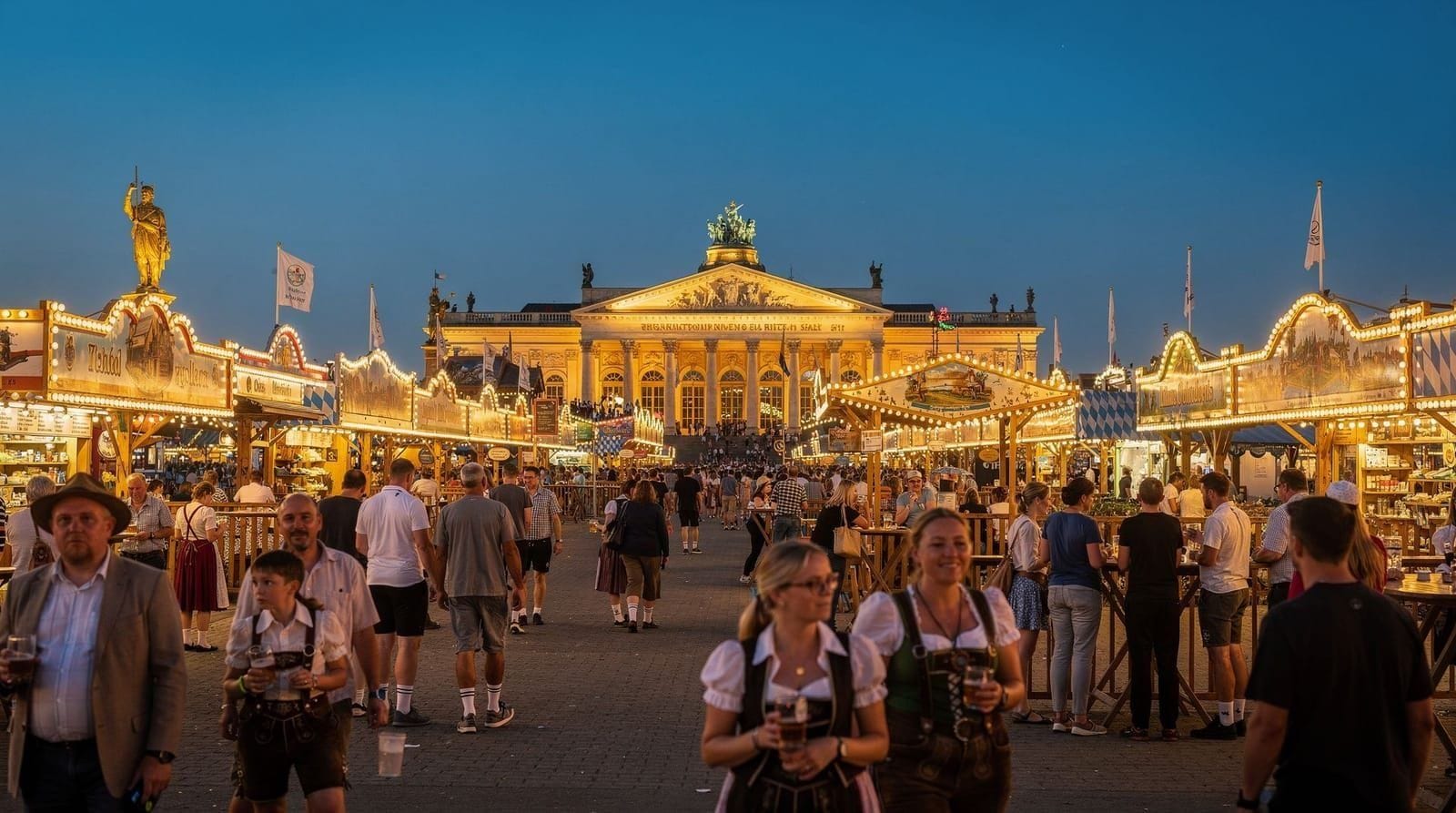
Oktoberfest: Held at the Theresienwiese fairground, a 15-minute walk west of Hauptbahnhof. Admission to the grounds is free; beer tent entry can be walk-in for standing room on weekdays but requires reservations for seated service. Reservations open in spring for the following autumn. See our Oktoberfest guide and Oktoberfest tickets guide.
Museum passes: The Munich Museum Pass covers 45+ attractions and is worth calculating against your specific planned visits.
Frequently asked questions about Munich
How do I get from Munich airport to the city centre?
Take S-Bahn S1 or S8 from Munich Airport (MUC) to Marienplatz or Hauptbahnhof (40 minutes, EUR 13.60 single in 2026). Trains run every 10 minutes from around 04:00 to 00:30. A taxi costs approximately EUR 60–80 and takes 35–50 minutes depending on traffic. There is no direct U-Bahn line to the airport.
Is Munich expensive?
By German standards, yes. By global city standards, mid-range. Accommodation averages EUR 120–180 per night for a mid-range hotel in the Altstadt in 2026; cheaper options exist in Au-Haidhausen and Schwabing. A Masskrug of beer at the Hofbräuhaus costs EUR 10–11; at the Augustiner-Keller, EUR 8–9. A sit-down lunch at a traditional Gaststätte runs EUR 15–22. See our Munich budget guide for a full cost breakdown.
Do I need to book Oktoberfest tables in advance?
Yes, if you want a guaranteed seat in a beer tent. Reserved tables for evening sessions book out months in advance and are typically allocated through the official tent operators’ websites. Day sessions on weekdays have walk-in availability for standing areas. The Oktoberfest tickets guide explains the booking process.
What is the best neighbourhood to stay in Munich?
For first-time visitors who want to walk to sights: Altstadt-Lehel or Maxvorstadt. For a more local experience at lower prices: Au-Haidhausen or Glockenbachviertel (both 15–20 minutes by foot or tram from the centre). See where to stay in Munich for a neighbourhood comparison.
How many days do I need in Munich?
Three days covers the essential city sights. Five days allows one or two half-day or full-day trips into Bavaria. Seven days is ideal if you want to see both the city and major regional destinations like Neuschwanstein or Berchtesgaden. The how many days in Munich guide helps you build a plan based on your interests.
Is Munich suitable for a day trip from another city?
Munich is reachable from Salzburg in 1.5 hours, Nuremberg in 1 hour (ICE), Innsbruck in 1.75 hours, and Frankfurt in 3 hours. It works as a destination from these cities, but a single day does not do the city justice. If you are stopping over between other destinations, prioritise the Residenz, Viktualienmarkt, and a beer garden.
What are the tourist traps in Munich to avoid?
The Glockenspiel generates disproportionate expectations relative to the reality. Horse-drawn carriage rides around Marienplatz are expensive (EUR 30–50 per person) relative to value. Souvenir shops around the Hofbräuhaus charge inflated prices for items available elsewhere. See Munich tourist traps for a longer list with alternatives.
Is Munich a good base for exploring the rest of Bavaria?
Yes, one of the best in Germany. Regional trains and the Bayern-Ticket put Neuschwanstein, Garmisch-Partenkirchen, Berchtesgaden, Nuremberg, and Salzburg (Austria) all within a 1–2.5 hour journey, and the Hauptbahnhof has frequent direct or one-change connections to each. Basing yourself centrally in Munich for 5–7 days and doing day trips is often more efficient than trying to change hotels every night.
Should I visit Munich for Oktoberfest or avoid it entirely?
Depends on what you want. Oktoberfest brings enormous crowds, inflated hotel prices (often double the rest of the year), and a boisterous, alcohol-heavy atmosphere that some travellers love and others find exhausting. If beer-tent culture genuinely appeals, it’s worth the higher cost and advance planning. If you prefer a calmer city visit with the same beer gardens and history minus the crowds, May–June or September outside the festival dates are the better choice.
Munich vs other German cities
Visitors deciding between a Bavaria-focused trip and other German destinations often ask how Munich compares:
| City | Character | Best for | Distance from Munich |
|---|---|---|---|
| Munich | Grand, Alpine-adjacent, beer culture | Palaces, day trips, Oktoberfest | — |
| Berlin | Historic, edgy, nightlife-driven | Modern history, contemporary culture | ~4h by ICE |
| Nuremberg | Medieval old town, WWII history | Christmas markets, Nuremberg Trials | 1h by ICE |
| Salzburg (Austria) | Baroque old town, Sound of Music | Mozart heritage, easy day trip | 1.5h by train |
Munich’s biggest advantage over Berlin and Hamburg is proximity to the Alps — no other major German city puts you within a 90-minute train ride of genuine mountain scenery. The Munich vs Berlin guide covers the comparison for travellers deciding between the two as a primary destination. Travellers combining Munich with Salzburg often base themselves in Munich and treat Salzburg as a single day trip, since Munich has the larger airport, more direct international flight connections, and a wider choice of accommodation across every budget band.
Families and accessibility in Munich
Munich is a genuinely family-friendly city: the U-Bahn and S-Bahn network is stroller-accessible with lifts at most stations, the English Garden has vast open space for children to run, and several major sights (Deutsches Museum, BMW Welt, Hellabrunn Zoo) are specifically designed with family visits in mind. The Altstadt’s pedestrian zones around Marienplatz are flat and easy to navigate with a pram, though cobblestones in some side streets can be uneven. Most museums offer reduced or free entry for children under a set age (typically 6 or under 18 for EU residents), and the Munich with kids guide has a fuller breakdown by age group and interest.
Top experiences
Bookable activities with verified prices and instant confirmation on GetYourGuide.