Visiting Dachau Memorial from Munich: a practical and respectful guide
From Munich: Dachau Memorial Site day tour
How do you get from Munich to Dachau Memorial Site?
Take S-Bahn line S2 from Munich Hauptbahnhof toward Petershausen and get off at Dachau station (about 20 minutes, €6.20 return with the MVV day ticket or included in Bayern-Ticket). From Dachau station, take bus 726 to the KZ-Gedenkstätte stop (10 minutes, every 20 minutes). Total journey around 35 minutes.
What you need to understand before you go
Dachau is not a difficult journey from Munich. The logistics are simple: a suburban train and a short bus ride. But logistical simplicity should not be mistaken for lightness of purpose. The Dachau Concentration Camp Memorial Site is one of the most sobering places in Europe, and arriving prepared — emotionally, historically, practically — makes a genuine difference to how much you take away from the visit.
This guide covers the journey from Munich to Dachau, what you will find at the memorial site, how to spend your time there, and what context you need before you arrive. It does not treat this visit as a day trip in the tourist sense. It is a visit to a site of profound human suffering, and that is the tone in which this guide is written.
| Where | Dachau, 16km northwest of Munich |
| Cost | Free entry; audio guide around €4.50 |
| Time needed | 3–4 hours minimum |
| Getting there | S2 S-Bahn (~20 min) + bus 726 (~10 min), around 35 minutes total |
| Best time | Weekday mornings, arriving at opening (9:00) |
The history: why Dachau exists as a memorial
On 22 March 1933 — less than two months after Adolf Hitler was appointed Chancellor of Germany — Dachau became the site of the first Nazi concentration camp. Munich’s police chief Heinrich Himmler announced its opening publicly. The location, a former munitions factory 16 kilometres northwest of Munich, was chosen for practical reasons: it was accessible, contained existing infrastructure, and was outside the city proper.
That first camp was intended for political prisoners: communists, social democrats, trade union leaders, clergy, journalists. Over the following twelve years, the population and the function of the camp changed. Jewish prisoners were sent in increasing numbers, particularly after the November 1938 pogroms. Prisoners from across occupied Europe — Polish, Soviet, French, Czech, Dutch, Yugoslav, and others — arrived as the Nazi empire expanded. Dachau also became a centre for lethal medical experiments conducted on prisoners without consent.
More than 200,000 people were imprisoned in Dachau and its network of subcamps over those twelve years. At least 41,500 deaths are documented. The actual number is believed to be higher. Prisoners died from starvation, disease, exhaustion, execution, and the deliberate cruelty of the system. Dachau did not operate a systematic gas chamber programme in the way that the extermination camps in occupied Poland did, but a gas chamber was constructed on site and the conditions of imprisonment were themselves lethal.
On 29 April 1945, units of the 42nd Infantry Division of the US 7th Army liberated the camp. Soldiers reported prisoners so weakened they could not stand, bodies piled near the crematoria, and a system of industrial dehumanisation preserved in plain sight. Some soldiers and officers were so affected by what they found that their accounts remain among the most powerful testimonies from the liberation of Nazi camps.
The memorial site was established in 1965, on the initiative of survivors and the Comité International de Dachau. It was the first major concentration camp memorial in Germany and has shaped how such sites are preserved and presented internationally.
Understanding this outline before you arrive is important. The memorial site provides detailed documentation, but arriving with some awareness allows you to engage more fully rather than spending the early part of your visit simply orienting yourself to what happened.
For the broader context of Munich’s role during the National Socialist period, the Munich WWII history guide provides essential background. Munich was not a passive host to these events — it was the city where the movement emerged and where some of its most significant early violence was staged.
Getting from Munich to Dachau Memorial
The journey is straightforward and well-served by public transport.
By S-Bahn from Munich Hauptbahnhof:
Take S-Bahn line S2 in the direction of Petershausen or Dachau. The S2 runs approximately every ten to twenty minutes depending on the time of day. The journey from Munich Hauptbahnhof to Dachau station takes around twenty minutes. The station is clearly signed; Dachau is a recognisable stop name and you will not miss it.
Tickets:
The Munich MVV day ticket (Tageskarte) covering the inner zone plus Dachau costs approximately €6.20 for the return journey equivalent. If you have purchased a Bayern-Ticket — the popular state-wide day pass valid for regional trains including S-Bahn lines — this also covers the S2 to Dachau. The Bayern-Ticket represents good value if you are making any other regional journeys that day, though combining Dachau with extensive sightseeing is not advised.
Validate your ticket before boarding. Inspections on S-Bahn lines occur regularly.
From Dachau station to the memorial:
From Dachau Bahnhof, take bus line 726 toward the KZ-Gedenkstätte stop. Buses depart every twenty minutes and the journey takes around ten minutes. The stop name — KZ-Gedenkstätte — is explicit; the German abbreviation KZ stands for Konzentrationslager (concentration camp).
Alternatively, the walk from Dachau station to the memorial takes approximately twenty to twenty-five minutes on foot. It is a straightforward route, but in warm weather or if you are travelling with older visitors or children, the bus is a more practical choice.
Total travel time from Munich city centre: approximately 35 minutes.
Recommended departure: Leave Munich by 9:00 to arrive when the memorial opens at 9:00, or shortly after. Earlier in the day, the site is generally quieter. Coach tours and school groups tend to arrive mid-morning. An early start allows you to engage with the exhibition before crowds build.
When crowds are lightest:
| Time | Crowd level | Notes |
|---|---|---|
| Weekday mornings, year-round | Low | Best overall window, especially at opening |
| Weekday afternoons | Moderate | Coach tours often arrive by mid-morning and stay into early afternoon |
| Weekends, July–August | High | School groups largely absent in summer, but general visitor numbers peak |
| Weekends, spring/autumn | High | School groups add to general visitor numbers |
| Winter weekdays | Low | Fewer visitors overall; grounds are cold and exposed |
If your schedule allows any flexibility, a weekday morning outside the summer school-trip season is the quietest and most reflective way to visit.
What you will find at the memorial site
The Dachau Concentration Camp Memorial Site is a genuine place of historical witness. It is not a reconstruction of history in a sanitised or managed form — it is the original site, preserved and documented, with the physical evidence of what happened visible in the landscape itself.
The grounds:
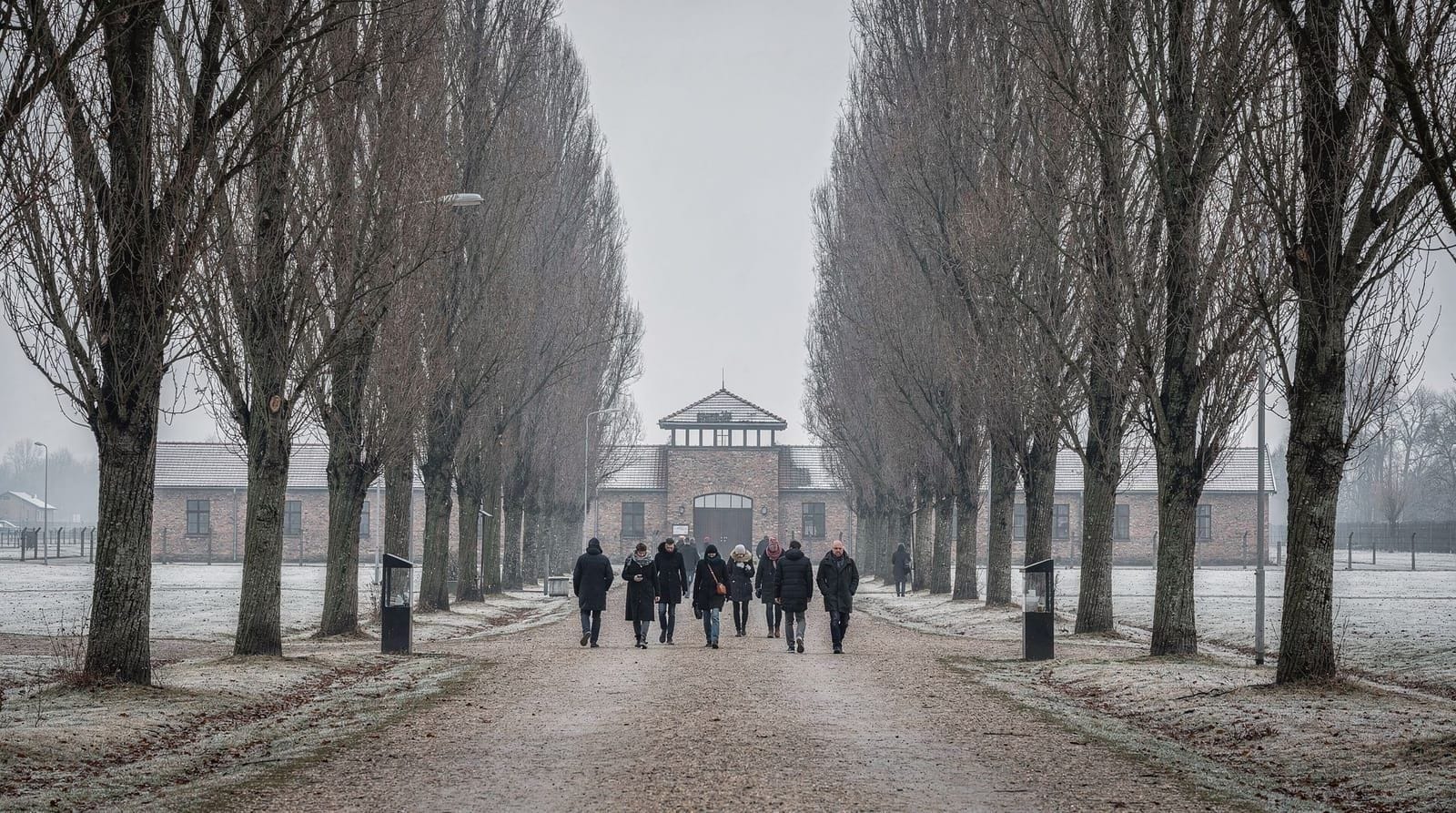
The perimeter of the camp — the watchtowers, the wall, the wire — remains. Walking the perimeter gives a direct sense of scale. The main camp road, lined with where barracks once stood, stretches before you with a flatness that was deliberate: prisoners could be surveyed at all times. Two of the original barracks have been reconstructed to show the conditions of imprisonment as they changed over the camp’s twelve years of operation — from the overcrowded but still recognisable conditions of the early years to the catastrophically overcrowded conditions of 1944 and 1945, when the camp held far more people than it was designed for.
The roll call square:
The large open area at the centre of the camp where prisoners were assembled, sometimes for hours at a time regardless of weather, for daily counts. The square is now a place of reflection. The scale — the size of the space in relation to the surrounding camp structures — is part of what makes it legible. It is impossible to stand here without some sense of what that assembly meant.
The crematoria:
At the far end of the camp grounds, the crematorium buildings and the gas chamber are preserved. The new crematorium, constructed in 1942, contains the gas chamber. Entry is open. The space is small, the walls close, and the conditions under which it functioned are documented immediately outside. This is one of the most difficult parts of the visit, and visitors should be prepared for it. Many people find this section requires quiet and time.
The memorial sculptures and religious memorials:
A striking memorial sculpture — a long, low, sculptural form in bronze — spans the central axis of the camp and serves as the primary artistic memorial. At the southern end of the grounds, three religious memorial structures were built in the years following the site’s establishment: a Catholic convent and chapel, a Protestant church of reconciliation (the Versöhnungskirche), and a Jewish memorial. An international monument stands at the centre of the grounds. These are places for contemplative pause and are treated as such by most visitors.
The documentation centre:
The permanent exhibition in the documentation centre is comprehensive and deeply researched. It traces the history of Dachau from its establishment through the stages of the Nazi system’s evolution, the experiences of specific categories of prisoner, the medical experiments, the liberation, and the post-war decades including the establishment of the memorial itself. The exhibition uses original documents, photographs, objects, and testimony from survivors.
Allow two to three hours for the exhibition alone if you intend to engage with it seriously. The content is dense and the documentation is extensive. Moving quickly through it means missing most of what it communicates. Bags must be deposited in the cloakroom before entering — this is a practical requirement, not a formality.
An audio guide is available for rent at €4.50 and is offered in ten languages. For visitors without prior detailed knowledge of this period, the audio guide provides context that the exhibition labels alone cannot fully supply.
Photography within the documentation centre archive is not permitted in all areas. The grounds may be photographed; visitors should remain respectful in both their behaviour and the use of cameras.
The question of a guided visit
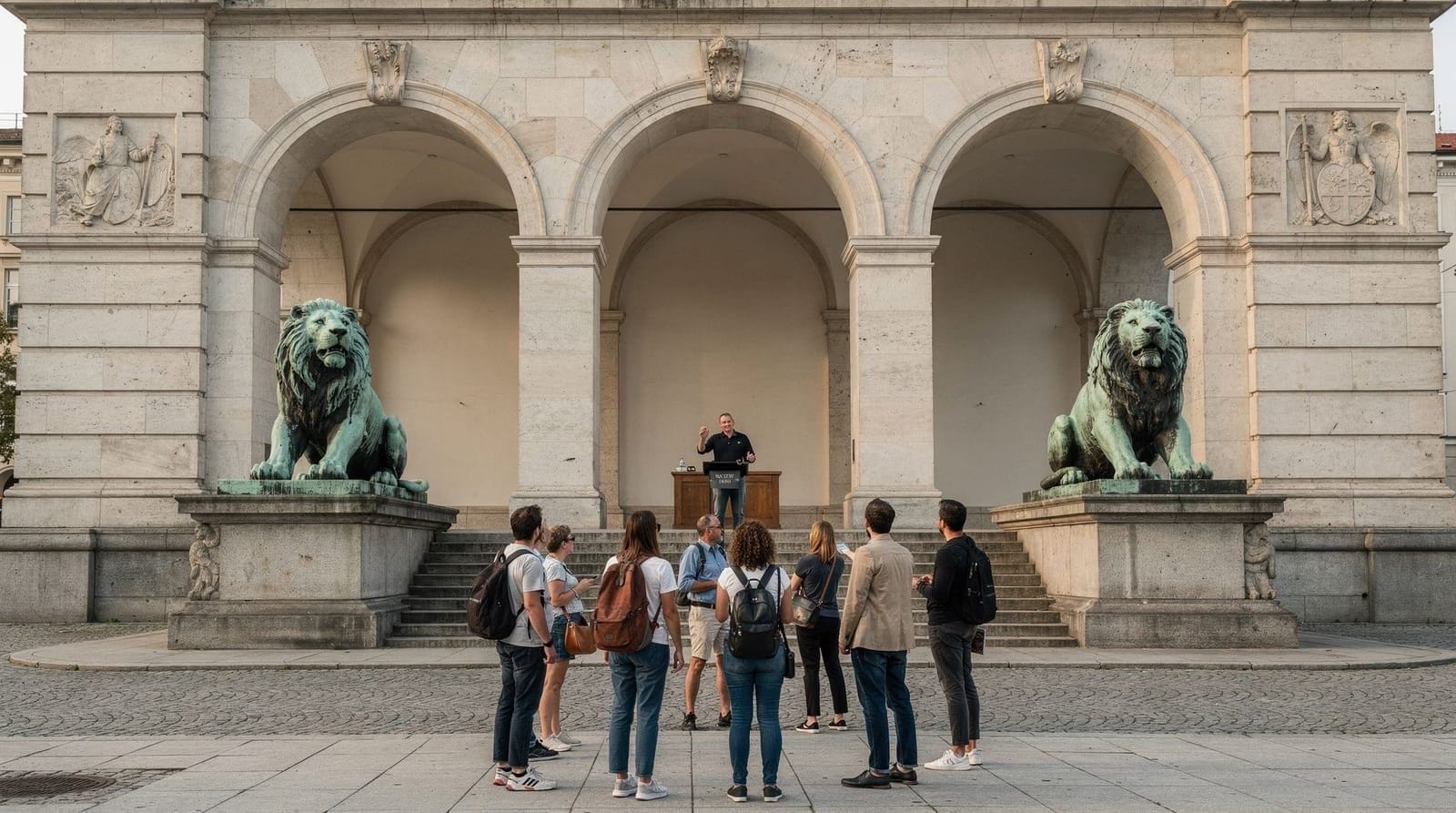
The permanent exhibition at Dachau is well-designed and thorough. A determined self-guided visitor, prepared beforehand, can gain genuine understanding from it. But there is something that a knowledgeable guide provides that an exhibition, however good, cannot fully replicate: the human thread that connects a specific place to the broader history, and the lived context that transforms documentation into comprehension.
Guided tours of Dachau from Munich exist in a context where the guide’s quality matters enormously. A good guide will connect Dachau’s history to Munich — to the political atmosphere of the early 1930s, to the Beer Hall Putsch of 1923 and what it represents, to the specific geography of a city that was simultaneously the centre of a movement responsible for industrialised murder. The connections between Munich’s Third Reich history and what happened at Dachau are not incidental; they are structural.
For visitors approaching this without prior immersion in the history — and honestly, for many who think they know it well — a guided visit offers a level of understanding that repays the time and cost. Dachau Memorial guided visit from Munich
For those who prefer a smaller group and more discussion, a small-group format allows for more direct engagement with the guide and with other visitors’ questions. Dachau Memorial small-group guided tour from Munich
These are visits in the true sense — structured opportunities to understand what happened here, with qualified guides. They are not sightseeing excursions.
Preparing emotionally: what the visit asks of you
There is no way to prepare fully for a visit to Dachau, and it would be dishonest to suggest otherwise. What the site asks of visitors is attention and presence — not performance of grief, not self-consciousness, but genuine engagement with what the documentation and the physical reality communicate.
Several things are worth knowing:
The visit is not appropriate for very young children. The content of the permanent exhibition — photographs, testimony, documentation of extreme violence and deprivation — is graphic in the way that historical honesty requires it to be. The appropriate age threshold depends on the child and the family, but below ten is generally too young to engage meaningfully, and below twelve is an age at which the emotional burden may be disproportionate to the understanding.
Allow time after the visit. The impulse to return immediately to the centre of Munich and engage in cafes, beer gardens, and the city’s visible pleasures can feel jarring after Dachau. Some visitors find they need quiet time — a walk, a period of sitting, a conversation — before re-entering ordinary tourist activity. This is a normal response. Planning a quiet buffer after your visit is not precious; it is sensible.
Go slowly. The site rewards the visitor who is willing to stand in a place and let it register. The documentation centre contains thousands of individual testimonies and stories. You cannot read them all. But choosing to stay with a few — to actually read an account, follow a specific case, understand one person’s journey through the camp — is more valuable than covering the full ground rapidly.
The town of Dachau itself is a separate place from the memorial. The modern town, with its historic old town centre and pleasant landscape above the river Amper, has lived with the weight of its name for more than eighty years. Most visitors to the memorial site do not visit the town itself, and there is no obligation to do so. The two are distinct. If you have time before or after, the Dachau destination guide covers the town’s own history and old-town sights, separate from the memorial visit.
Common misunderstandings worth correcting
A few misconceptions come up often enough that they are worth addressing directly. Dachau is frequently confused with the extermination camps built later in occupied Poland — Dachau was a concentration and forced-labour camp, not a purpose-built extermination centre, though conditions there were nonetheless lethal for tens of thousands of prisoners, and a gas chamber was constructed on site (its full operational history remains debated among historians). Dachau was also not exclusively a camp for Jewish prisoners: its first inmates were political opponents of the Nazi regime, and its population diversified over its twelve years of operation to include prisoners of many nationalities and backgrounds, including a large number of Jewish prisoners especially from 1938 onward. Getting this history right before you visit helps you engage with the exhibition’s actual content rather than assumptions brought in from elsewhere.
Historical connections in Munich
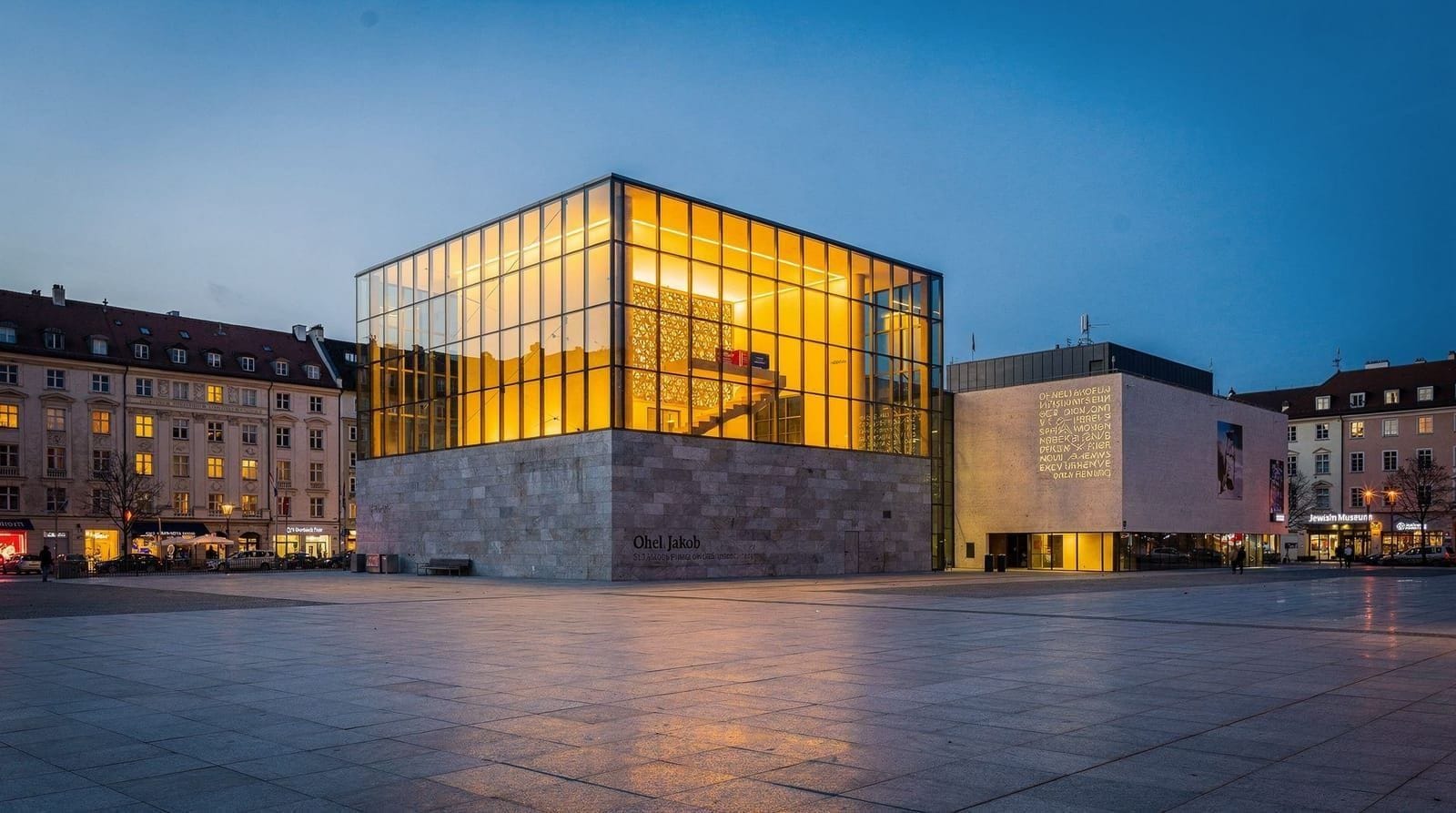
The history of Dachau does not exist in isolation from Munich. The concentration camp was established by the same political apparatus that had its centre of gravity in this city. The Beer Hall Putsch history — the failed coup attempt of November 1923 — established the narrative of martyrdom that the movement subsequently weaponised. The Munich Jewish history guide documents the community that was progressively persecuted and then destroyed.
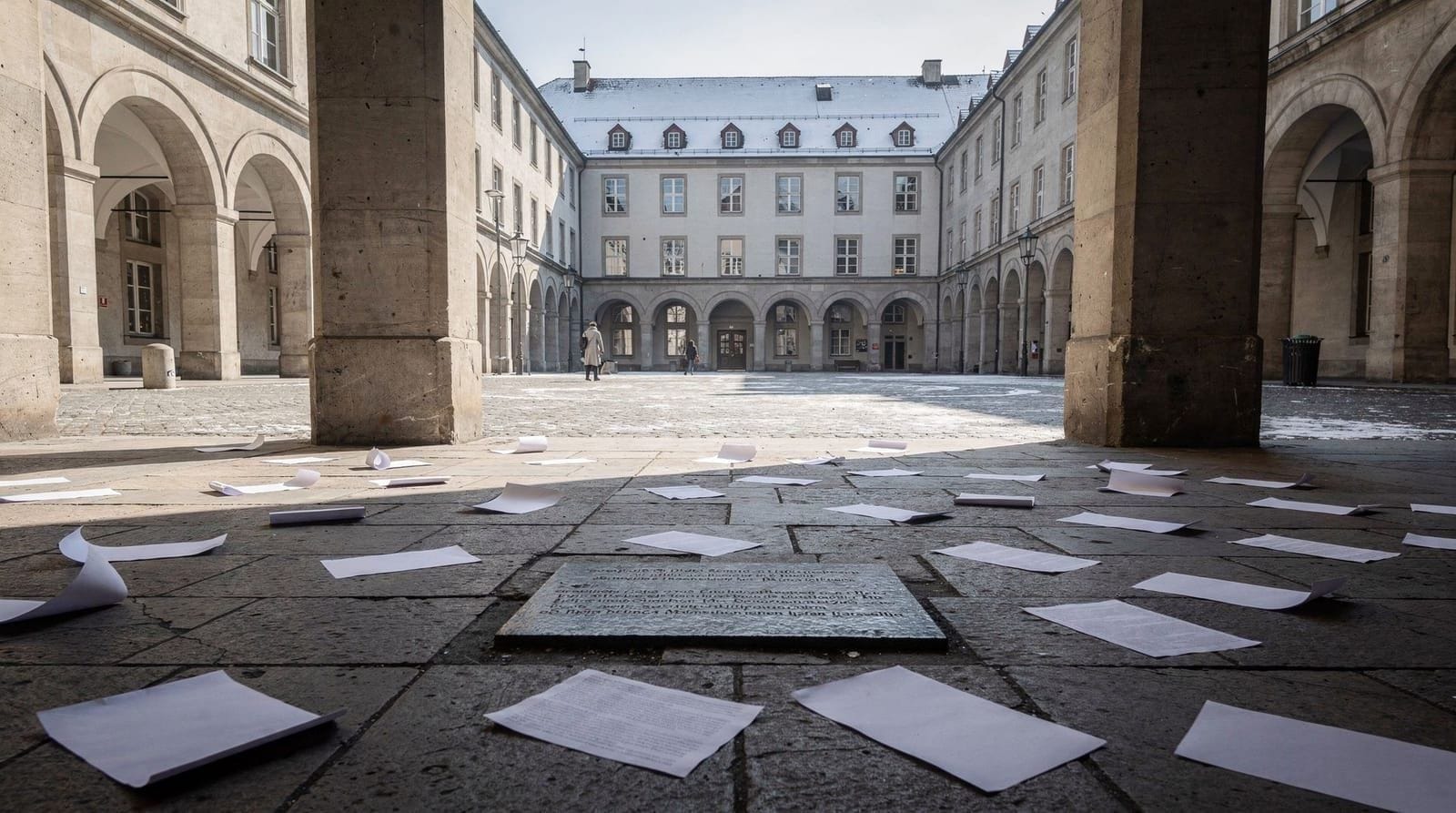
The White Rose resistance — the student resistance group that distributed anti-Nazi leaflets from the University of Munich in 1942 and 1943 — represents a form of witness to what was happening, at enormous personal cost. The members of the White Rose knew about the camps. Hans and Sophie Scholl, Christoph Probst, and their collaborators were executed for their resistance. Their story is inseparable from the broader history of what Munich tolerated and what a small number refused to tolerate.
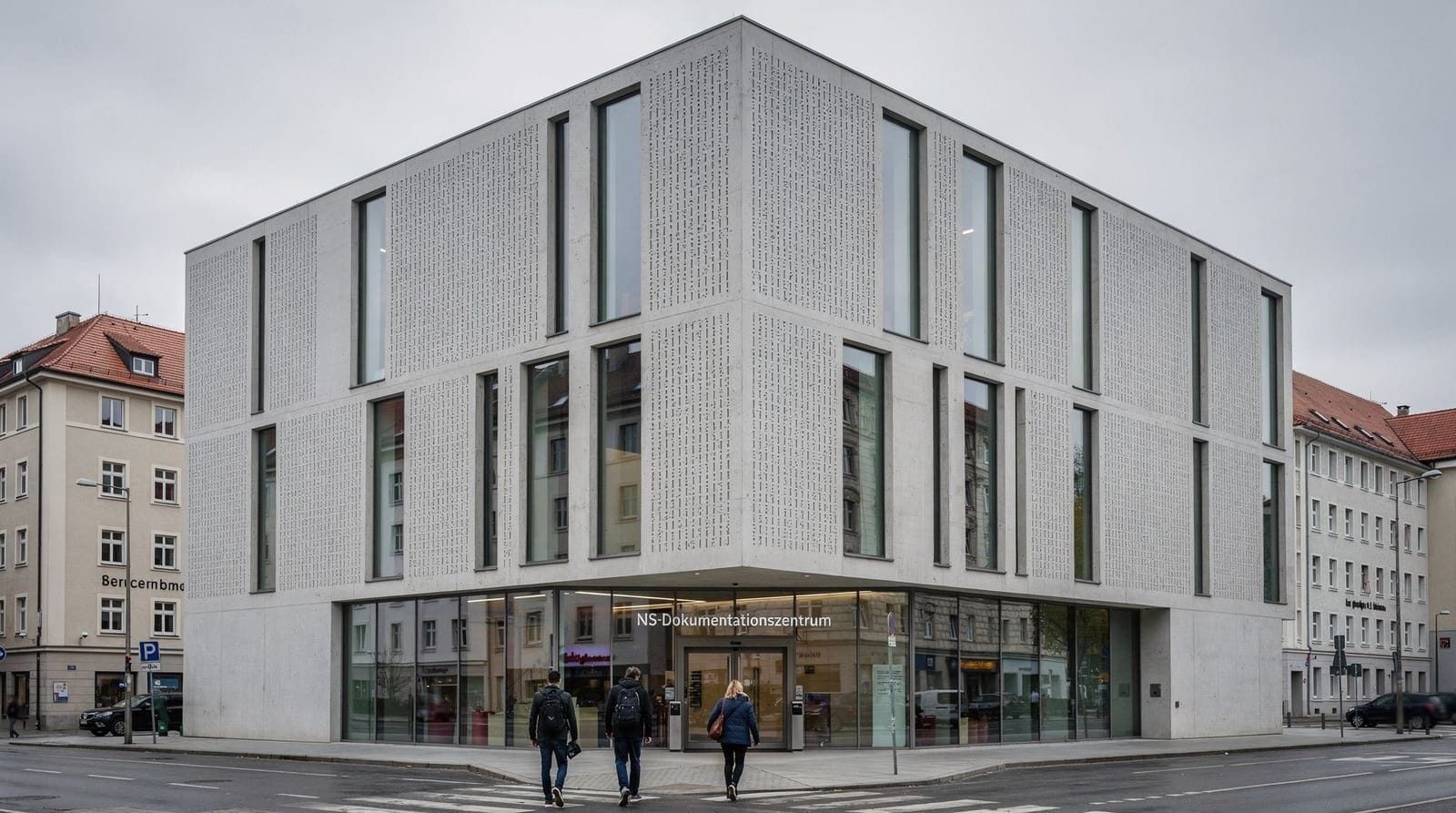
The Nazi Documentation Center in Munich’s Königsplatz area is worth visiting either before or after Dachau. It provides the political and social context for how the National Socialist movement took root in Munich and spread from there. The Documentation Center and the Dachau memorial site together form a coherent historical engagement with this period.
The Nuremberg Trials guide offers context on how the crimes documented at places like Dachau were eventually prosecuted — and on the limits of that prosecution.
For visitors with a broader interest in Munich’s historical and cultural landscape, the Munich museum quarter history covers the city’s cultural institutions, several of which have significant historical collections related to this period. The Munich best attractions guide provides orientation across the city’s major sites, including the historical and the contemporary.
Practical summary
Opening hours: Daily 9:00 to 17:00 (last admission). Closed on New Year’s Day, Faschingsdienstag (Shrove Tuesday), and certain German public holidays. Always verify current closures on the memorial site’s official website before visiting.
Entry: Free of charge for all visitors.
Audio guide: €4.50, available in ten languages including English, German, French, Italian, Spanish, Polish, Czech, Hebrew, Russian, and Arabic.
Travel: S2 from Munich Hauptbahnhof to Dachau (approximately 20 minutes), then bus 726 to KZ-Gedenkstätte (approximately 10 minutes). Total journey around 35 minutes. Bayern-Ticket or MVV day ticket covering the Dachau zone covers the full journey.
Recommended time: 3–4 hours minimum. A full four hours allows serious engagement with the documentation centre and the grounds without rushing.
Bags: Must be deposited in the cloakroom before entering the exhibition building. Small bags and cameras are permitted on the grounds.
Photography: Permitted on the grounds; restricted in parts of the documentation centre.
Food and water: There is a small cafe near the entrance. Bringing water is advisable, particularly in summer. The site does not have extensive catering.
Accessibility: The grounds are flat and largely accessible. The documentation centre is accessible. Specific accessibility information is available on the official memorial site.
Before visiting: Reading even a brief account of Dachau’s history in advance will significantly improve the quality of your engagement. The memorial site’s own publications are available at the entrance. The Munich WWII history guide provides useful orientation for visitors approaching this period of history from a Munich base.
Preparing further: what to read beforehand
You do not need to arrive as an expert, but a small amount of preparation changes the visit substantially. The memorial site’s own official history, available in short form on its website and in longer form in its published guidebook (on sale at the entrance), is the most directly relevant preparation. Beyond that, general histories of the Nazi camp system — widely available in English — provide the structural context: how Dachau fit into a broader network, how the system evolved from 1933 to 1945, and how the postwar trials addressed what happened there, a thread the Nuremberg Trials guide picks up in detail. Survivor testimony, where you can find it, is often the most affecting preparation of all — the documentation centre features a great deal of it, but arriving having already encountered even one or two individual accounts tends to make the exhibition’s material land more directly.
For visitors new to Munich who are planning a broader visit to the city, the Munich museums pass covers a range of the city’s major cultural institutions — though it does not apply to Dachau, which is free to enter.
Why this visit matters
There is sometimes a question about whether visiting sites like Dachau is appropriate, meaningful, or useful — or whether it risks becoming a form of dark tourism, a consumption of tragedy. It is a question worth sitting with rather than dismissing.
The answer that emerges from the existence of the memorial site itself — established by survivors, maintained by the Bavarian state, visited by millions — is that bearing witness is a responsibility, not a form of consumption. The survivors who campaigned for the memorial’s establishment did so because they believed that documentation and witness were the necessary counterweight to denial and forgetting. The Comité International de Dachau, representing survivor communities across Europe, was explicit about this: the site should exist so that visitors would know, and knowing would carry consequences.
Coming to Dachau with seriousness and presence is one way of honouring that intention. It asks nothing more of visitors than attention — but it asks that genuinely.
The Dachau page on this site provides further orientation to the town and its context. The Munich guide covers the city from which almost every visitor to Dachau makes their journey, and the wider landscape of what Munich offers those who come to understand it fully.
Frequently asked questions about Visiting Dachau Memorial from Munich
Is entry to Dachau Memorial Site free?
Yes. Entry to the Dachau Concentration Camp Memorial Site is free. The permanent exhibition, the grounds, and the memorial structures cost nothing to visit. Audio guides are available for rent at €4.50. Guided tours have a separate fee.How long should you spend at Dachau Memorial?
Plan at least 3–4 hours. The permanent exhibition alone takes 2–3 hours to engage with properly. The grounds include the reconstructed barracks, the crematoria, the memorial sculpture garden, and the religious memorial chapels. Rushing through is disrespectful and you will not absorb the significance.What is the Dachau Memorial Site exactly?
Dachau was the first Nazi concentration camp, opened in March 1933, 16km northwest of Munich. It was operational for 12 years until liberation by US forces on 29 April 1945. Over 200,000 people were imprisoned there and at least 41,500 died. The memorial site, opened in 1965, preserves the original grounds and documents the history comprehensively.What should you know before visiting Dachau?
The visit is emotionally intense and not appropriate for very young children. Photography is permitted except in the documentation archive. Dress respectfully. The site operates in German and English; audio guides are available in 10 languages. Bags must be checked in the cloakroom before entering the exhibition.Is a guided tour of Dachau worth it?
A guided tour adds significant context that the exhibition alone cannot fully convey. Good guides explain the historical connections to Munich, the sequence of events, and the individual stories. For visitors without prior knowledge of this period of history, a guided tour is strongly recommended over self-guided visits.Can you do Dachau as a half-day from Munich?
Yes. Leave Munich by 9:00, arrive at the memorial around 9:45. A thorough visit takes 3–4 hours. You can be back in Munich by early afternoon. This is enough time to engage meaningfully with the site. Combining Dachau with tourist sightseeing on the same day is not advisable — allow yourself time to process the visit.What are the opening hours of Dachau Memorial?
The Dachau Concentration Camp Memorial Site is open daily from 9:00 to 17:00 (last admission). It is closed on New Year's Day, Shrove Tuesday (Faschingsdienstag), and some German public holidays. The memorial grounds are open slightly longer than the documentation centre.Should I combine Dachau with other Munich sightseeing on the same day?
It is not recommended. Most visitors find the visit emotionally significant enough that it needs its own day, or at least the rest of the day afterward for quiet reflection. If you do plan other activities, keep them light and avoid scheduling anything immediately after, such as beer halls or nightlife.Is there a quieter time of year to visit Dachau Memorial?
Weekday mornings outside July and August tend to be quieter, with fewer coach and school groups. Winter months see lower visitor numbers overall, though the grounds are exposed and cold. An early arrival at opening time, regardless of season, is the most reliable way to avoid crowds.
Top experiences
Bookable activities with verified prices and instant confirmation on GetYourGuide.