Munich museum quarter guide: the Kunstareal history and collections
Munich: Alte Pinakothek skip-the-line and guided walking tour
What is the Munich Kunstareal and how many museums does it contain?
The Kunstareal (art area) is Munich's museum quarter in Maxvorstadt, roughly between Königsplatz and the university district. It contains eight major museums within comfortable walking distance: Alte Pinakothek, Neue Pinakothek, Pinakothek der Moderne, Museum Brandhorst, Glyptothek, Staatliche Antikensammlungen, Lenbachhaus and NS-Dokumentationszentrum. Together they hold one of the world's most comprehensive collections of Western art from antiquity to the present.
Ludwig I’s idea and what it became
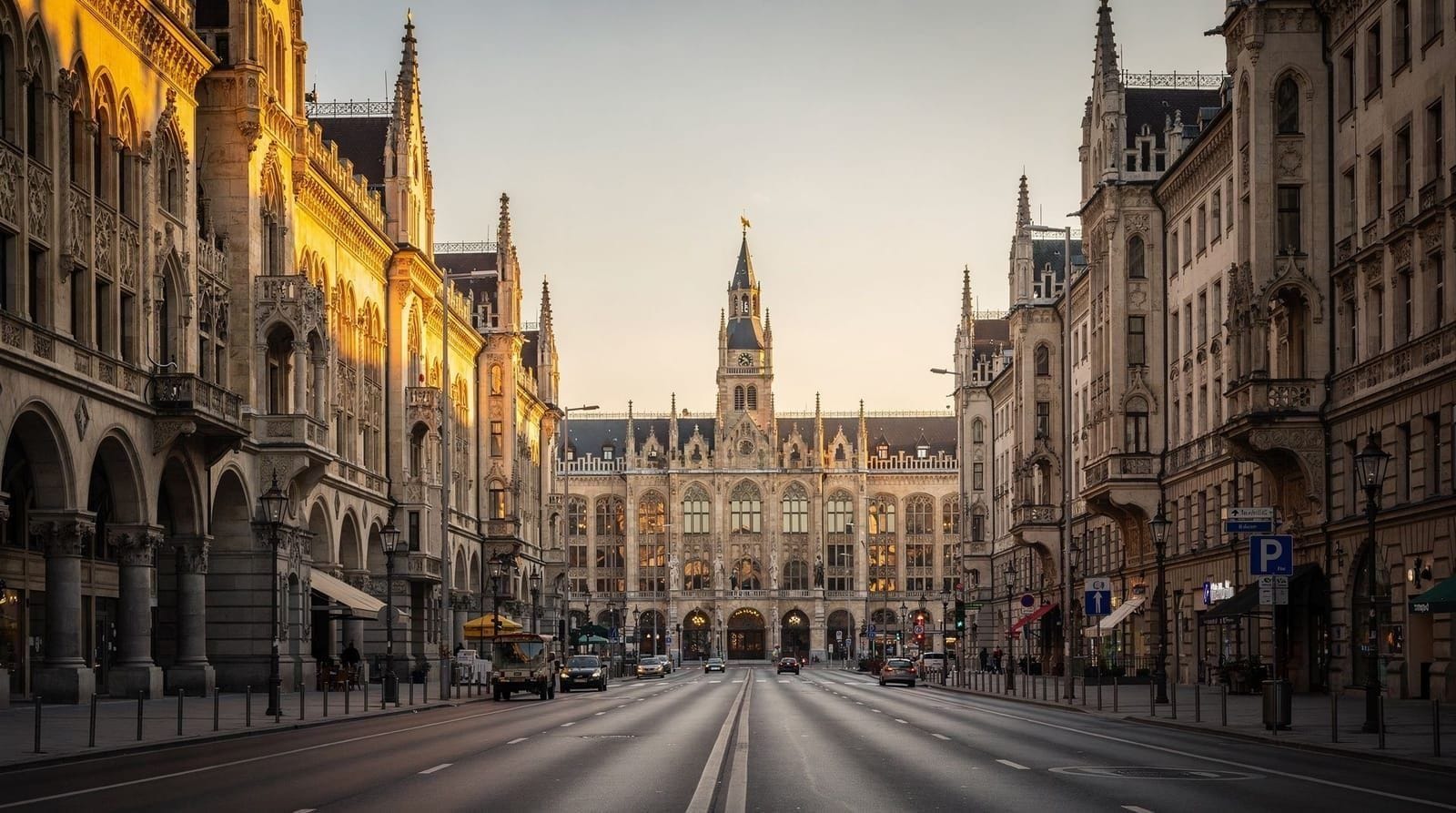
In the 1820s, the Bavarian king Ludwig I had a vision that was either grandiose or visionary depending on your perspective: he wanted to transform the fields north of Munich’s old town into the cultural equivalent of ancient Athens. “Munich must become a city that does honour to Germany,” he said, “such that no one who has not seen Munich can claim to know Germany.”
Two centuries later, the Maxvorstadt district — the physical realisation of this vision — is one of the densest concentrations of major art museums in the world. The Kunstareal (officially registered as a cultural brand since 2009) encompasses eight institutions covering ancient sculpture, old master painting, 19th-century art, contemporary art, design, architecture, graphics, Expressionism and the history of National Socialism, all within a 15-minute walk of each other.
This was not planned as a coherent whole. It accumulated over two centuries of building, renovation, wartime destruction, postwar reconstruction and 21st-century expansion. What makes it coherent is the underlying logic that Ludwig I established: Munich would express its self-worth through public collections, and those collections would be housed in architecturally ambitious buildings.
Understanding the Kunstareal requires understanding both the collections and the buildings that contain them. In this district more than anywhere else in Munich, the container and the contents are inseparable.
| Where | Maxvorstadt, U2 Königsplatz or Theresienstrasse |
| Cost | around €7–15 per museum weekday; €1 each on Sunday |
| Time needed | half a day for two museums, a full day for three or four |
| Getting there | U2 to Königsplatz or Theresienstrasse; around 15 minutes on foot from the Hauptbahnhof |
| Best time | weekday mornings for fewer crowds; Sunday for the €1 admission |
Practical logistics before you go
Most Kunstareal visitors underestimate the walking time between museums even though they look close together on a map — allow 10–15 minutes between the Pinakotheken cluster on Barer Strasse and Königsplatz, plus a proper coffee or lunch stop rather than rushing straight through. Visitors staying in Maxvorstadt itself can reach the whole quarter within 15 minutes on foot, which makes an early start realistic. From the Altstadt or Schwabing, add 10–20 minutes of transit each way. For how a Kunstareal day fits into a wider stay, see the how many days in Munich guide, and for admission strategy see the Munich museum passes and tickets guide — the Sunday €1 deal changes the maths for a museum-quarter day completely.
Ludwig I’s neoclassical foundation: the Glyptothek and Antikensammlungen
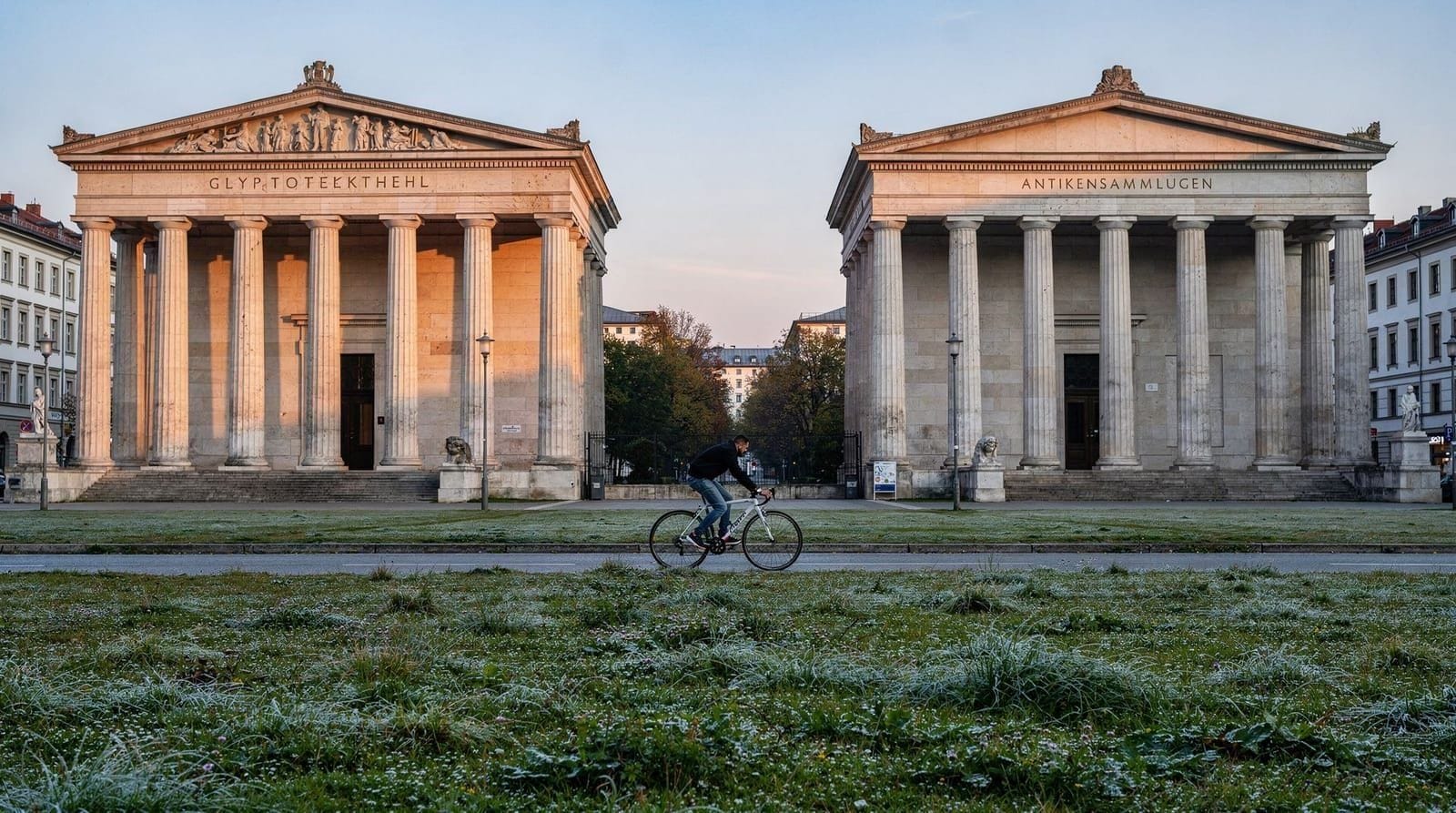
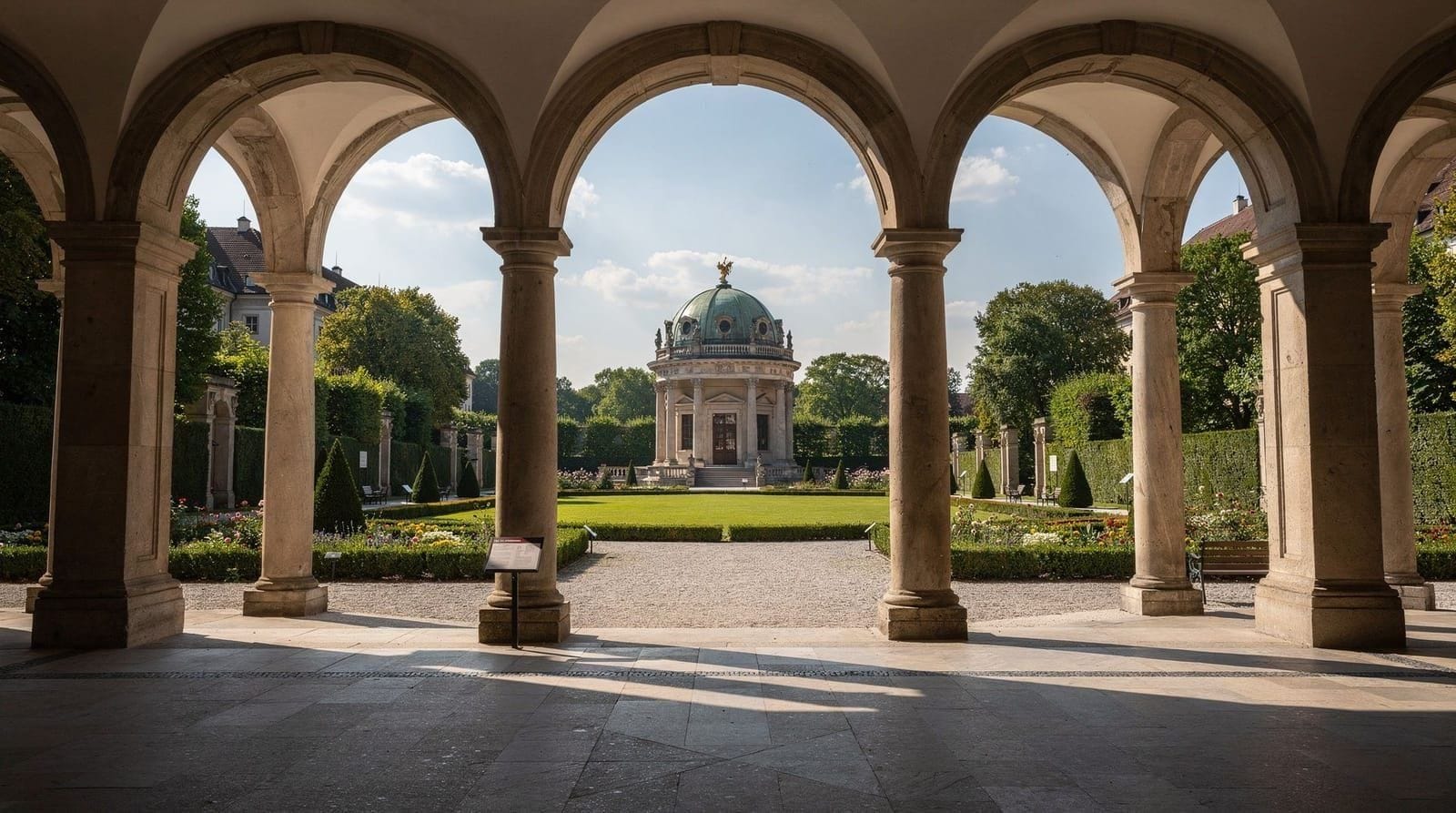
The Glyptothek (1830) on the north side of Königsplatz was the first purpose-built public sculpture museum in Germany. Leo von Klenze designed a Greek Doric temple — austere outside, richly painted inside — to house Ludwig I’s collection of ancient sculpture, which he had been assembling since the early 19th century through purchases in Rome and Greece.
The collection’s centrepieces are the Aegina sculptures: the pediment figures from the Temple of Aphaia on the Aegean island of Aegina, carved around 500 BCE and among the finest examples of late Archaic Greek sculpture outside Athens. Ludwig bought them in 1812 from the Englishman Charles Cockerell, who had excavated them. The purchase was regarded as a coup at the time; today it raises the same questions of cultural heritage repatriation that dog the Elgin Marbles.
Also significant is the Barberini Faun (approximately 220 BCE), a Hellenistic bronze — now in marble copy — of a sleeping satyr, whose languid pose and slightly parted lips challenged 19th-century assumptions about the dignity of ancient sculpture. It was considered scandalous by some collectors; Ludwig I loved it.
The Glyptothek’s interiors were originally painted in vivid polychrome colours based on contemporary research into ancient painting practices — the pale white marble halls we now associate with classical museums are actually a 19th-century invention. After World War II bomb damage stripped the painted plaster, the decision was made not to repaint but to expose the bare brick — an interesting reversal of the 19th-century’s own reversal of ancient practice.
The Staatliche Antikensammlungen (State Collection of Antiquities) occupies the matching building on the south side of Königsplatz (completed 1848, originally the Kunstausstellungsgebäude) and focuses on ancient bronzes, vases, jewellery and terracottas.
The Alte Pinakothek: old masters at European level
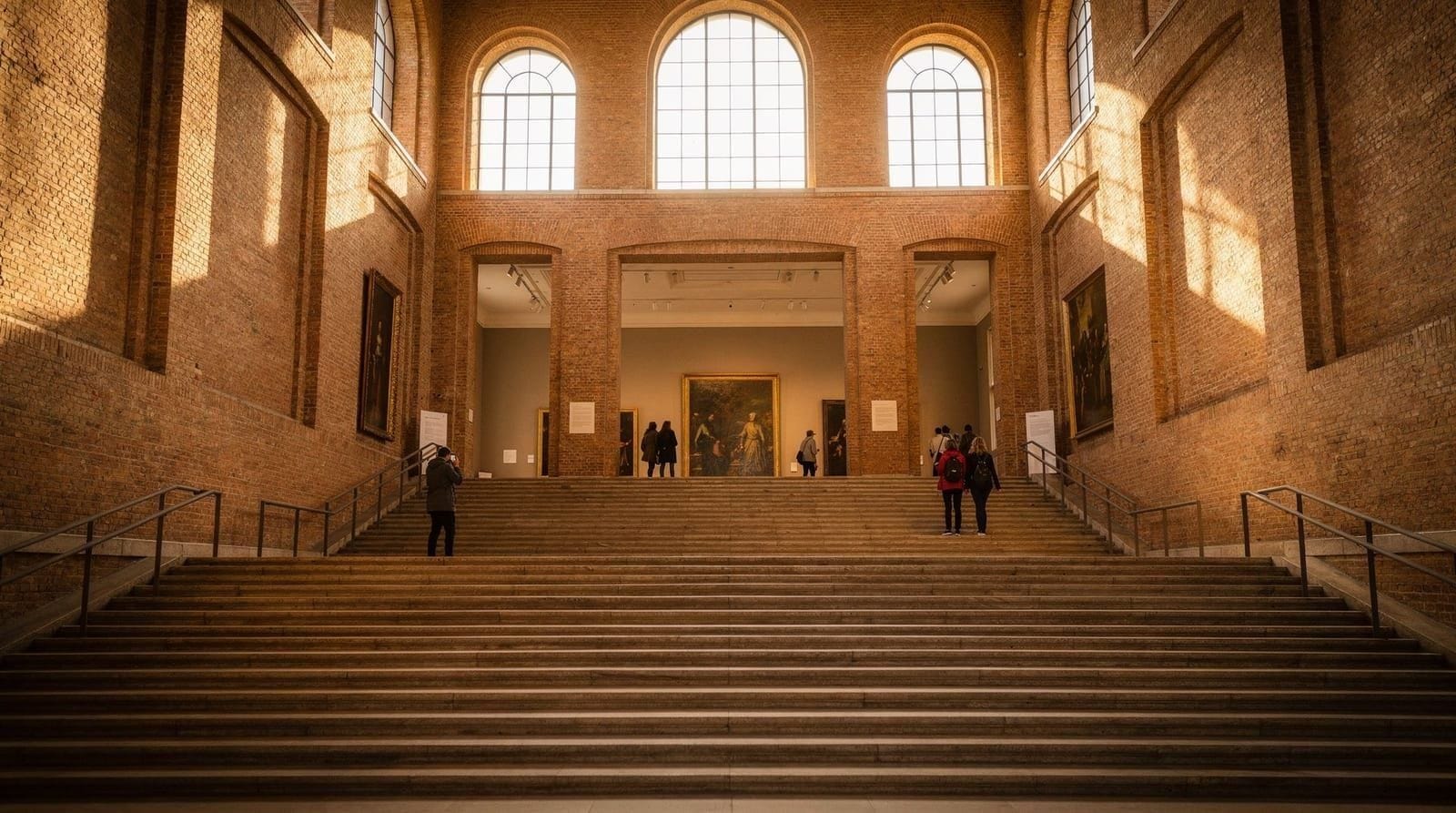
The Alte Pinakothek (1836), designed by Klenze on Barer Strasse, was one of the first purpose-built public art galleries in the world. Its building type — a long gallery structure with top-lighting from skylights and lateral windows — became the model for museum buildings across Europe and North America throughout the 19th century.
The collection has Wittelsbach roots going back to the 16th century. Albrecht V began collecting systematically; Wilhelm IV commissioned historical paintings including Albrecht Altdorfer’s Battle of Issus (1529), which remains in the collection. The depth in German and Flemish painting reflects these dynastic origins.
The holdings that distinguish the Alte Pinakothek at international level include:
Albrecht Dürer: the largest collection of Dürer’s works in the world, including the Four Apostles (1526) and several self-portraits. The Four Apostles in particular — given by Dürer to the city of Nuremberg as a bequest — arrived in Munich through the Wittelsbach collection and represent Dürer’s most monumental achievement in painting.
Peter Paul Rubens: over 60 works, making this one of the two or three most important Rubens collections anywhere. The Last Judgement, the Massacre of the Innocents and the series of small oil sketches Rubens made as modelli for larger commissions are all here.
Raphael: the Canigiani Holy Family is the centerpiece. Titian, Rembrandt, Vermeer, El Greco, Leonardo (a drawing, not a painting) — the breadth of the holdings is genuinely exceptional.
The building was heavily bombed in 1943 and the reconstruction, completed between 1952 and 1957, included a deliberate decision to leave exposed wartime brick on the north facade — making the damage visible rather than concealing it. The building now reads simultaneously as a grand 19th-century institution and as a record of mid-20th century destruction. Skip-the-line guided tour: Alte Pinakothek
The Neue Pinakothek: from Goya to Cézanne
The original Neue Pinakothek was built in 1853 under Ludwig I to house contemporary art — specifically the 19th-century works that were too new for the Alte Pinakothek’s historical focus. It was destroyed in the war and not immediately rebuilt.
The current Neue Pinakothek (1981), designed by Alexander von Branca, is a postmodern building that has been controversial since opening — its fragmented massing and historicist references satisfied neither traditionalists nor modernists. The building will be closed for renovation from 2025 to approximately 2029; its holdings will be partially redistributed to other Kunstareal buildings during this period.
The collection spans from Goya’s late works through to Cézanne, Van Gogh and early Klimt — the full arc of 19th-century European painting. Particularly strong in German Romanticism (Caspar David Friedrich, Carl Spitzweg) and French Impressionism. The Goya section, which includes some of his late dark works, is among the best representations of the Spanish master outside Spain.
The Pinakothek der Moderne: four collections, one building
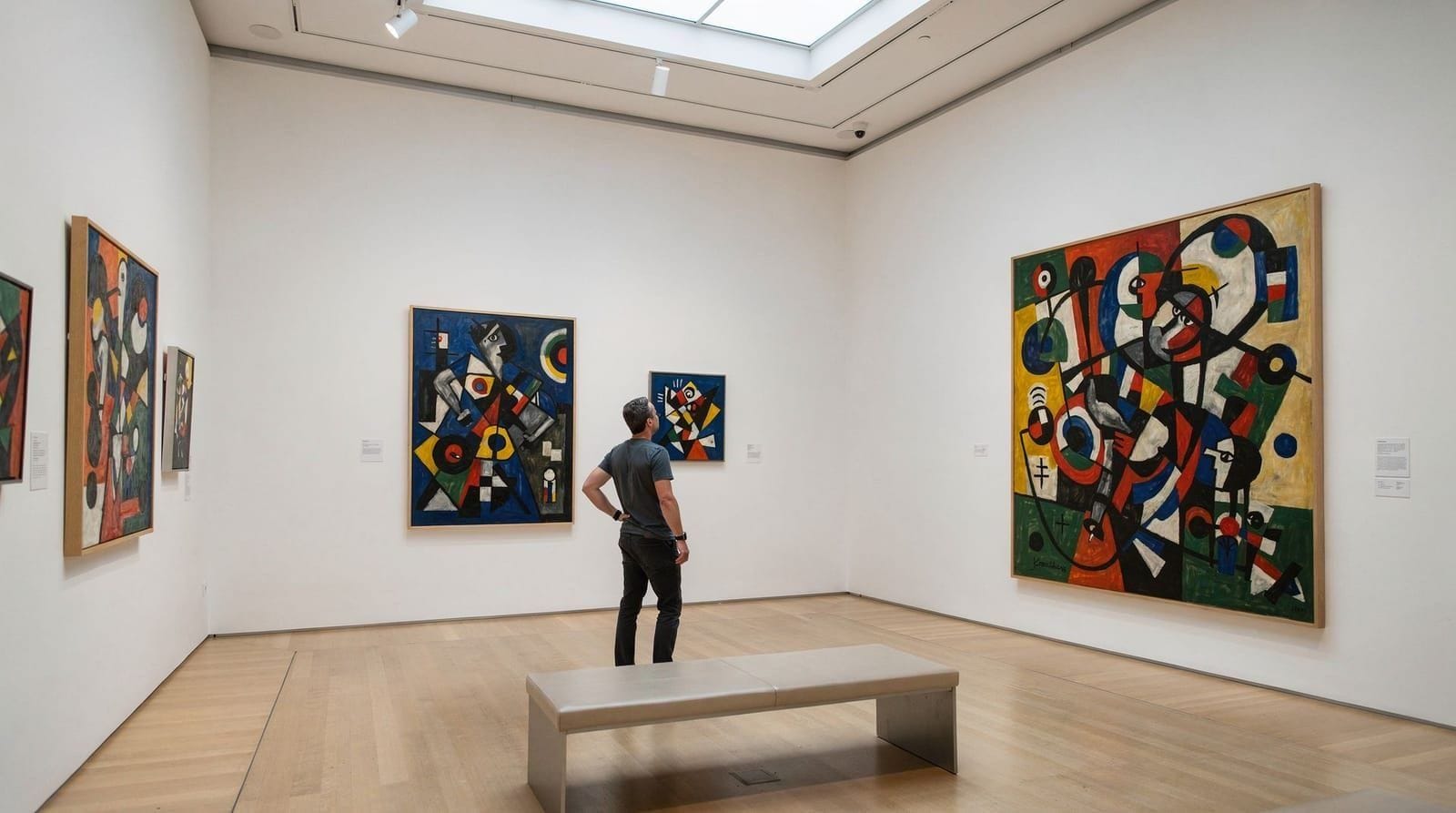
The Pinakothek der Moderne (2002), designed by Stephan Braunfels, was conceived to solve an accumulated problem: Munich had significant holdings of contemporary art, architecture, design and graphics that were spread across storage and inadequate venues. The solution was a single large building housing four previously separate collections.
The building itself is architecturally significant: a large rotunda at its centre, lit from above through a 27-metre skylight, mediates between the four wings. The materials are deliberately restrained — white walls, natural stone floors — to keep attention on the works.
The four collections:
Staatsgalerie moderner Kunst: the primary contemporary art collection, covering the 20th and 21st centuries with works by Picasso, Braque, Mondrian, Warhol, Beuys, Cy Twombly (though the major Twombly holdings are at Museum Brandhorst), Sigmar Polke and many others.
Architekturmuseum der TU München: one of the largest architecture collections in Germany, covering 16th-century drawings to contemporary CAD models. The archive holds approximately 350,000 drawings, plans and photographs.
Die Neue Sammlung — The Design Museum: the oldest design museum in Germany, founded in 1925, now housed permanently in the Pinakothek’s lower floors. Covers industrial design, graphic design, ceramics, glass and digital design from the Bauhaus period to the present.
Staatliche Graphische Sammlung: one of the world’s largest collections of prints and drawings — approximately 400,000 works on paper, of which a rotating selection is displayed. The holdings span Dürer drawings to contemporary graphics. Guided tour of the Alte Pinakothek
Museum Brandhorst: Cy Twombly and contemporary art
Museum Brandhorst (2009), designed by Sauerbruch Hutton with a distinctive multi-coloured ceramic rod facade, was built specifically to house the Brandhorst Collection, donated to Bavaria by Udo and Anette Brandhorst. The facade’s approximately 36,000 ceramic rods in 23 colours create an optically dynamic surface that reads differently depending on lighting conditions.
The collection has two centres of gravity:
Cy Twombly: the largest collection of Twombly’s work in the world, including major cycle paintings and sculptures. The dedicated Twombly room — a sequence of large canvases covering the ancient Mediterranean myths he returned to throughout his career — is among the most memorable single gallery experiences in European contemporary art.
Andy Warhol: a significant body of works including several of the iconic repetition series.
The museum also holds works by Damien Hirst, Bruce Nauman, Mike Kelley, Sigmar Polke and other major figures of late 20th and early 21st century art. It is considerably smaller than the Pinakotheken and can be done in 90 focused minutes, but the density of significant work in the Twombly room rewards more time.
The Lenbachhaus: Blaue Reiter and civic Munich
The Städtische Galerie im Lenbachhaus is the only museum in the Kunstareal not run by the Bavarian state — it is a city museum, which gives it a slightly different character and focus. It is based in the former villa and studio of Franz von Lenbach (1836–1904), the most successful portrait painter in late 19th-century Munich.
The building’s significance for art history lies not in Lenbach’s portraits but in the Blaue Reiter collection. In 1957, Gabriele Münter — Wassily Kandinsky’s partner until their separation in 1914 — donated over 1,000 works she had kept in storage in Murnau am Staffelsee throughout the Nazi period (when Kandinsky’s work was classified as “degenerate art”). The donation established the Lenbachhaus as the primary repository for Blaue Reiter material.
The Blaue Reiter (Blue Rider) group was active in Munich between approximately 1911 and 1914. Its core members — Kandinsky, Franz Marc, August Macke, Gabriele Münter, Alexej von Jawlensky, Paul Klee and others — developed an approach to painting based on spiritual expression and colour theory that anticipated abstract expressionism. The almanac they published in 1912 (“Der Blaue Reiter”) was one of the most influential documents of early 20th-century art.
A major extension designed by Foster + Partners, completed in 2013, added substantial new gallery space and improved the building’s accessibility. The combination of the original villa, its garden and the new wing creates an institution with distinct spatial character.
The lenbachhaus-guide has full practical information and gallery-by-gallery content notes.
NS-Dokumentationszentrum: history at the edge of the art quarter
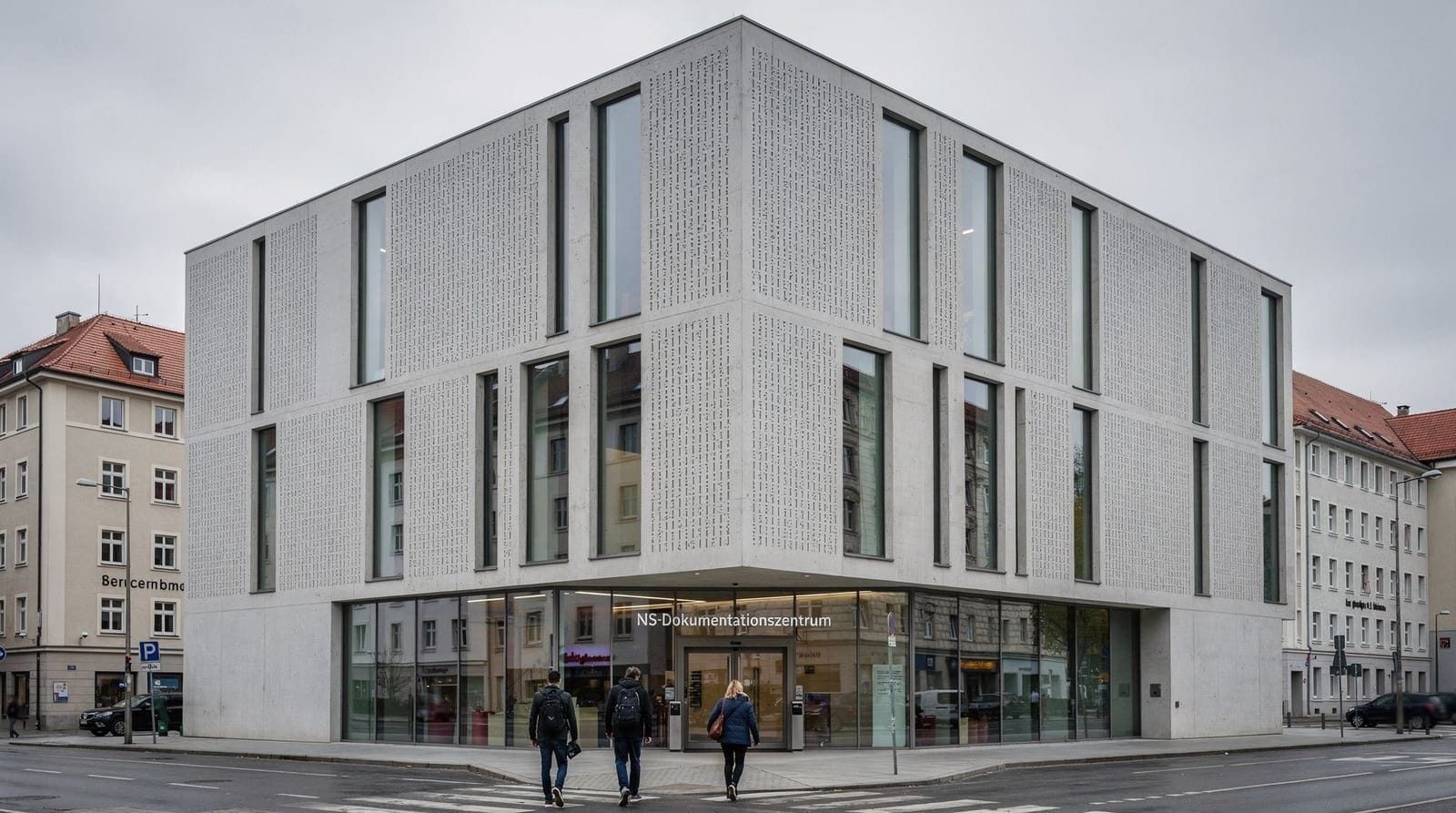
The NS-Dokumentationszentrum (2015) on Brienner Strasse represents a different kind of Kunstareal institution. It is not an art museum but a historical documentation centre — a permanent exhibition on Munich’s role in the rise and operation of National Socialism.
It sits at the corner of the Kunstareal not by coincidence. The address — Brienner Strasse 34 — was the site of the Palais Barlow, which the NSDAP purchased in 1930 and converted into the Braunes Haus (Brown House), the party headquarters. The building was bombed in the war and later demolished. The NS-Dokumentationszentrum was built on this site after decades of debate about appropriate uses for the ground.
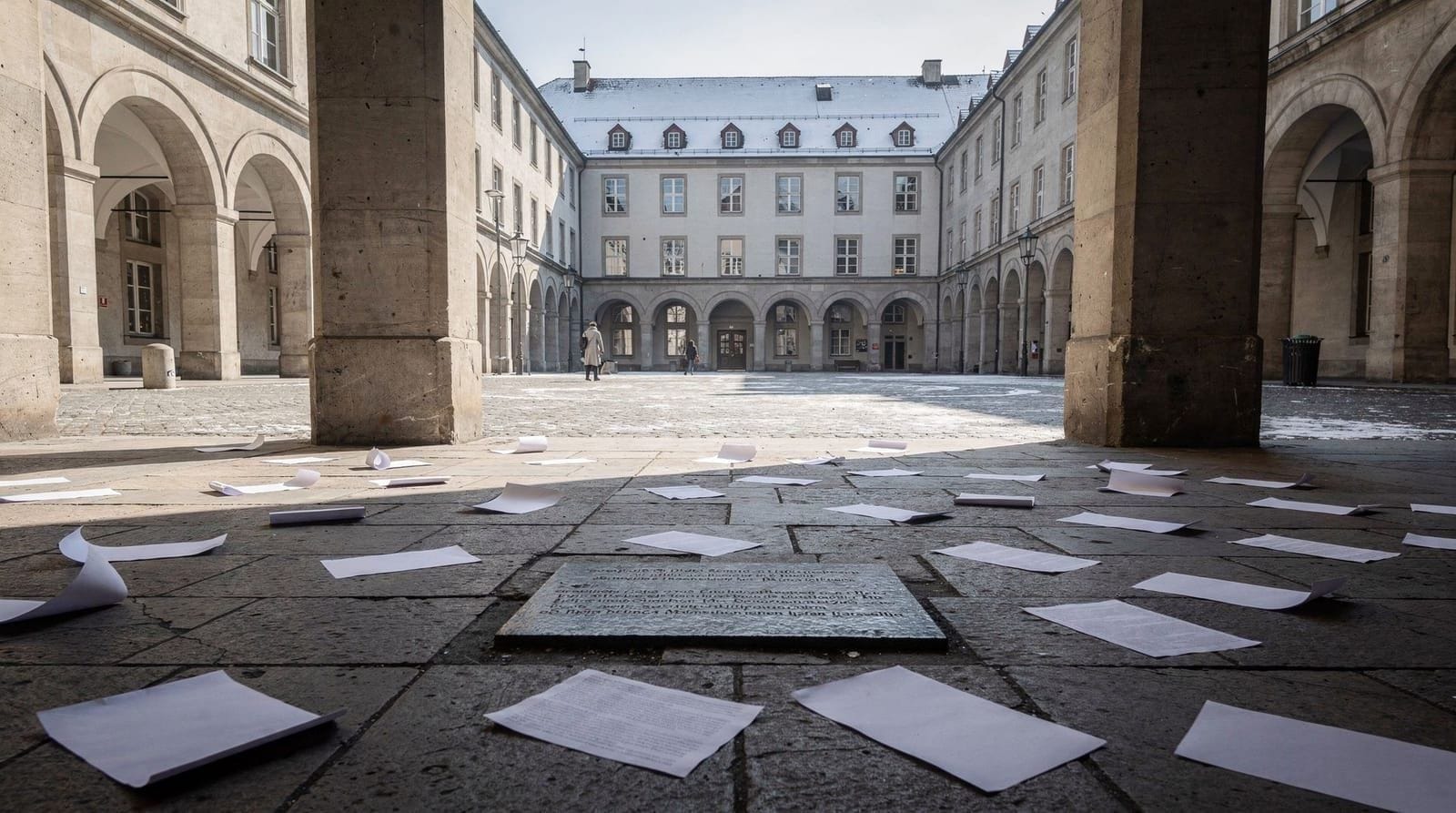
The exhibition notes explicitly that the cultural quarter Ludwig I designed — the neoclassical temples to art and antiquity on Königsplatz — was the same neighbourhood that became the NSDAP’s administrative heart. The Glyptothek looked across Königsplatz at rallies where books were burned.
The NS-Dokumentationszentrum Munich guide and the Beer Hall Putsch guide guide cover the content and context of the NS-Dokumentationszentrum in detail. Private walking tour: Alte Pinakothek and Munich old town
One-day Kunstareal itinerary
09:00 — Arrive at Königsplatz (U2 Königsplatz station). Walk through the square and spend 30 minutes examining the Glyptothek and Antikensammlungen exteriors and the square itself. On Sundays, state museum admission is 1 euro — if this applies, consider a brief visit to the Glyptothek’s Aegina sculptures.
10:00 — Alte Pinakothek (Barer Strasse 27). Spend 2.5–3 hours. Priorities: Room IV (Dürer), Room VII (Rubens), Room XII (Flemish and Dutch). The ground floor café is a reasonable option for a mid-morning coffee.
13:00 — Lunch. Café Ella in the Lenbachhaus garden is a good option. Alternatively, the Alte Pinakothek café, or one of several options along Türkenstrasse.
14:00 — Pinakothek der Moderne (Barer Strasse 40). Allow 2 hours. Focus on one or two of the four collections — for first-time visitors, the Staatsgalerie modern art and the Design Museum are the most immediately engaging.
16:00 — Museum Brandhorst (Theresienstrasse 35). One hour, focused on the Twombly room and Warhol collection.
17:00 — Lenbachhaus (Luisenstrasse 33). One hour for the Blaue Reiter collection specifically.
18:00 — Evening. The Kunstareal’s southern edge connects to the bars and restaurants of Maxvorstadt’s student district, particularly around Türkenstrasse and Schellingstrasse.
Practical visiting information
Getting there: U2 to Königsplatz (for Glyptothek and Antikensammlungen), or U2/U8 to Theresienstrasse (for the Pinakotheken cluster). The Pinakotheken and Brandhorst are all within 5 minutes’ walk of each other on Barer Strasse/Theresienstrasse.
Tickets: A combined Pinakotheken day ticket (Alte + Neue + Moderne) costs approximately 12 euros. Individual tickets are 7–8 euros. Sundays: all Bavarian state museums charge 1 euro admission (this includes the three Pinakotheken, Glyptothek, Antikensammlungen but not Lenbachhaus or Brandhorst). The Munich museum passes and tickets guide explains multi-day pass options.
Opening hours: Most Kunstareal museums are closed on Mondays. Tuesday–Sunday hours are approximately 10:00–18:00, with extended evening hours on Tuesdays for some venues (check individual websites as schedules change).
Children: The Pinakothek der Moderne’s Design Museum and the Lenbachhaus tend to engage younger visitors more readily than the old master collections. The Kunstareal also runs family workshops on selected Sundays. Munich: Alte Pinakothek Renaissance paintings with entry ticket
Accessibility: The Alte Pinakothek, Pinakothek der Moderne and Museum Brandhorst all have step-free access and lifts between floors — all three were built or substantially renovated with modern accessibility standards in mind. The Glyptothek and Antikensammlungen, as 19th-century buildings, have more limited step-free routes; call ahead or check the venue website if mobility is a concern. The Lenbachhaus’s 2013 Foster + Partners extension added a fully accessible entrance alongside the historic villa.
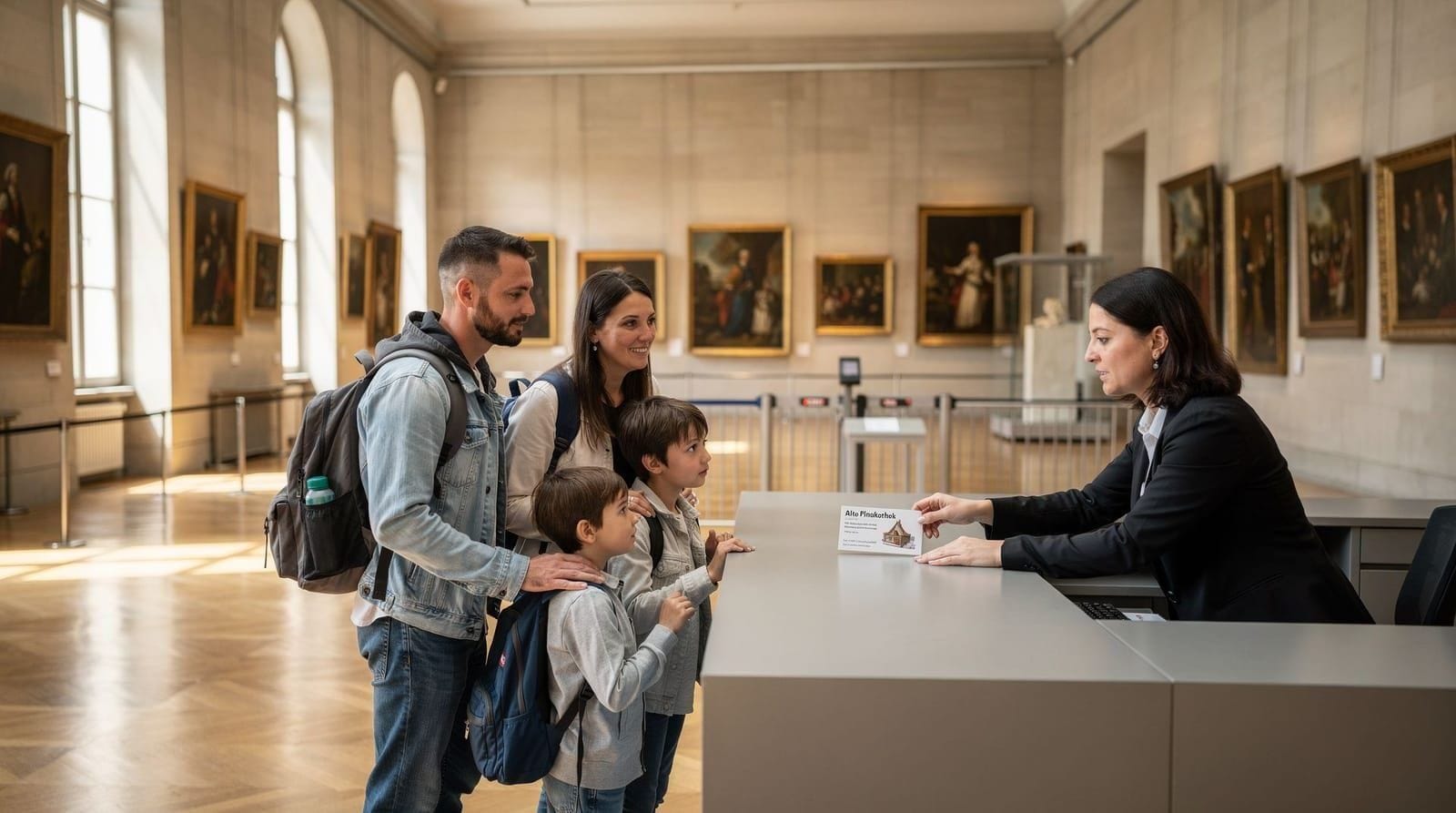
Booking: Advance tickets are rarely essential outside major temporary exhibitions, but they do let you skip the ticket-desk queue, which can run 15–20 minutes at the Alte Pinakothek on Saturdays and during school holidays. A skip-the-line guided tour is the more reliable option if your schedule is tight, since it locks in both entry and a fixed time slot.
Where to eat near the Kunstareal
Museum cafés cover the basics, but the surrounding streets have better options if you have time for a proper meal. Türkenstrasse, roughly 5 minutes east of the Pinakotheken, has a dense run of independent cafés, bakeries and casual restaurants serving Munich’s student population — reliable, inexpensive and open outside typical tourist-zone hours. Schellingstrasse, one block south, has a similar mix with a slightly older crowd. For a sit-down lunch between museums, Café Ella in the Lenbachhaus garden remains the most atmospheric option, especially in warmer months when its outdoor tables fill the villa’s garden. If you are staying through the evening, the Kunstareal’s southern edge flows directly into Maxvorstadt’s bar and restaurant scene, making it easy to end a museum day without relocating across the city.
Which Kunstareal museum suits you
If you cannot see all eight, use interest rather than fame to decide:
| Museum | Best for | Typical visit time |
|---|---|---|
| Alte Pinakothek | Old masters, Dürer, Rubens | 2.5–3 hours |
| Pinakothek der Moderne | Contemporary art, design, architecture | 2 hours |
| Museum Brandhorst | Twombly, Warhol, focused contemporary | 60–90 minutes |
| Lenbachhaus | Blaue Reiter, Kandinsky circle | 60–90 minutes |
| Glyptothek | Ancient Greek sculpture | 45–60 minutes |
| NS-Dokumentationszentrum | Munich’s Nazi-era history | 90 minutes–2 hours |
Pair this table with the Munich best attractions guide if you are weighing the Kunstareal against Munich’s other major sights, or with Munich’s neighborhoods overview if you have not yet decided where to base yourself.
The Kunstareal in European context
Munich’s museum quarter is frequently compared to Berlin’s Museum Island (a UNESCO World Heritage Site) and to Vienna’s Museumsquartier. In terms of sheer collection depth across multiple centuries, Munich has a strong claim to comparability with either. The Alte Pinakothek’s holdings in German and Flemish painting are arguably superior to Berlin’s equivalent collections; the Glyptothek’s ancient sculpture rivals Vienna’s Kunsthistorisches Museum in selected areas.
What Munich lacks compared to Berlin is a universal encyclopaedic collection in a single building. The Kunstareal’s strength is its specialisation: each museum goes deep in a defined area rather than attempting to cover everything.
The “Athens on the Isar” concept that Ludwig I articulated in the 1820s was grandiose, and Munichers themselves sometimes treat it with mild irony. But the collection that accumulated over two centuries justifies taking it seriously. Whatever Ludwig I’s political flaws, his investment in public cultural institutions was genuinely visionary, and the Kunstareal is the most tangible legacy of that vision in the 21st century.
Frequently asked questions about the Munich Kunstareal
Are photography and video allowed in the Munich Pinakotheken?
Photography without flash is permitted in most permanent collection galleries of the Pinakotheken, subject to the right to photograph individual works. Temporary exhibitions often have stricter restrictions. Check at the entrance before assuming. Video tripods and commercial photography require advance permission.
Which museum should I visit if I have only 90 minutes in the Kunstareal?
Museum Brandhorst for contemporary art (the Twombly room is exceptional), or the Alte Pinakothek for old masters — specifically Room IV (Dürer) and Room VII (Rubens). Both can yield a memorable 90-minute visit if you are selective. Avoid trying to “do” the Alte Pinakothek comprehensively in 90 minutes.
Is there a restaurant or café in the museum quarter?
Café Ella in the Lenbachhaus garden (accessible with or without a museum ticket) is one of Munich’s better museum cafes. The Alte Pinakothek has a ground-floor café. The Pinakothek der Moderne has a canteen-style option. Alternatively, Türkenstrasse and Schellingstrasse, running parallel to Barer Strasse about 200 metres east, have numerous independent cafes and restaurants.
Can I visit the Kunstareal without buying tickets to individual museums?
Yes. The exteriors and squares — Königsplatz in particular — are public space. The Lenbachhaus garden is accessible without a museum ticket (Café Ella is in this garden). The NS-Dokumentationszentrum building exterior can be viewed from Brienner Strasse. Some temporary exhibitions have lower admission than the permanent collections.
What is the Kunstareal’s relationship to the university district?
Maxvorstadt, where the Kunstareal is located, is also the university district — Ludwig Maximilian University is 10 minutes on foot east, the Technical University is at the southern edge of the Kunstareal. The neighbourhood’s student population gives it more vitality than a pure museum district, with independent bookshops, cafes and bars mixed into the cultural geography. This is particularly visible on Türkenstrasse and Amalienstrasse.
How long would it take to see the entire Kunstareal properly?
To engage with all eight major institutions at a level above superficiality requires approximately four to five full days. Most visitors concentrate on two or three museums over one or two days. If the Kunstareal is your primary reason for visiting Munich, it rewards a full week’s stay.
Can I combine the Kunstareal with other Munich attractions in a single itinerary?
Yes. The Kunstareal pairs naturally with a broader Maxvorstadt or Altstadt day — see the Munich 3-day itinerary for how it fits alongside Marienplatz, the Residenz and the English Garden. Visitors with limited time sometimes combine a morning at the Alte Pinakothek with an afternoon exploring Schwabing, which is a short walk or one U-Bahn stop north.
Is the Kunstareal suitable for a rainy day in Munich?
Very much so — it is one of the best rainy-day options in the city, since every major building is indoors and connected by short covered or sheltered walks. Combine it with a museum café lunch rather than an outdoor stop, and check the Munich rainy day guide for other wet-weather backups if you want to split the day.
Top experiences
Bookable activities with verified prices and instant confirmation on GetYourGuide.