Garmisch-Partenkirchen — alpine resort and Zugspitze gateway
Plan your visit to Garmisch-Partenkirchen: Zugspitze access, Partnach Gorge, skiing, hiking, and practical tips for getting there from Munich.
From Munich: Zugspitze mountain van tour with Garmisch town
Quick facts
- Distance from Munich
- 90 km south (1 h 20 min by train)
- Elevation
- 708 m (town), 2,962 m (Zugspitze summit)
- Train
- BRB from Munich Hbf — hourly service
- Bayern-Ticket
- Valid on BRB trains
- Best season
- Year-round; skiing Dec–Apr, hiking Jun–Oct
Two towns, one destination
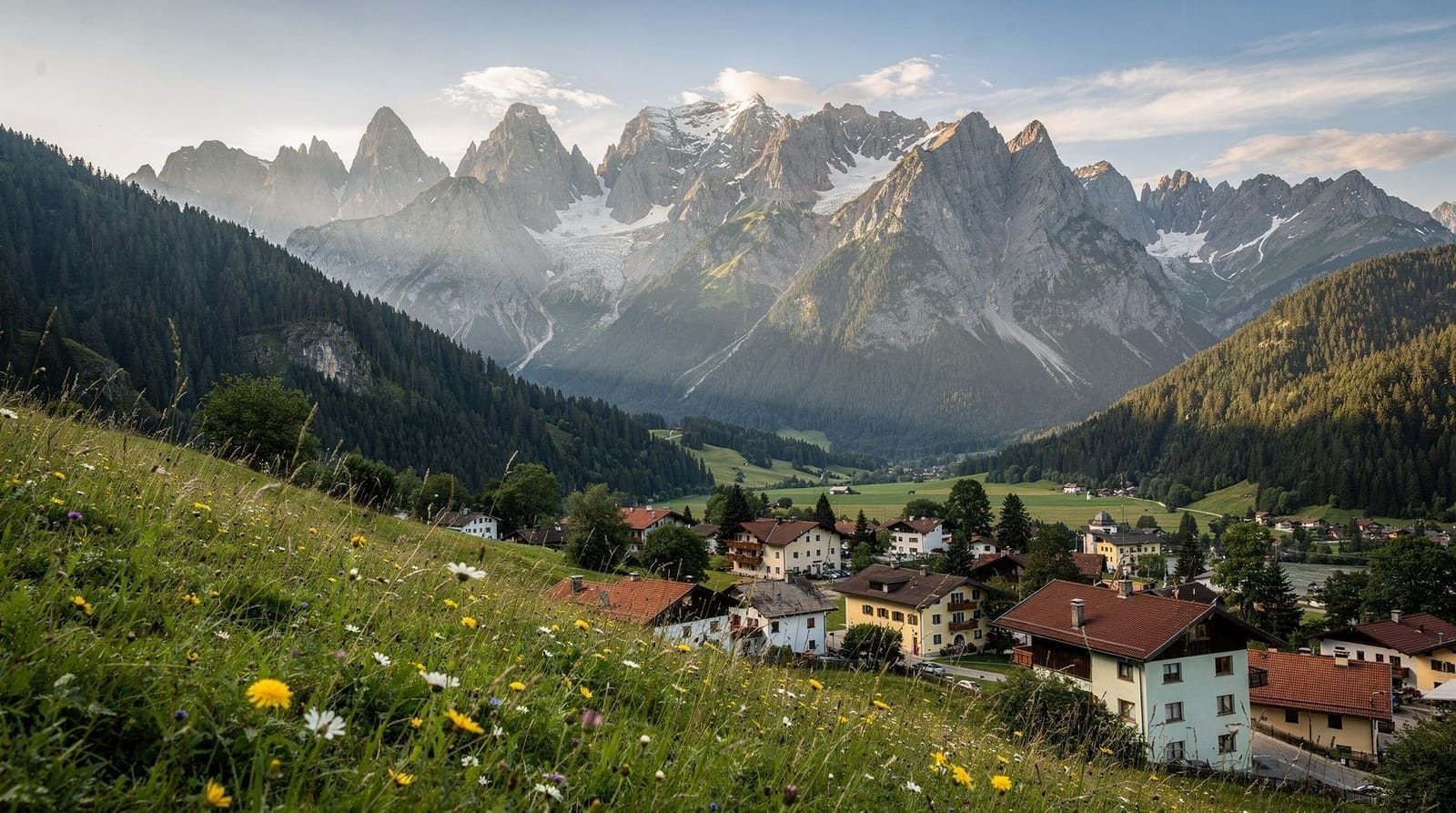
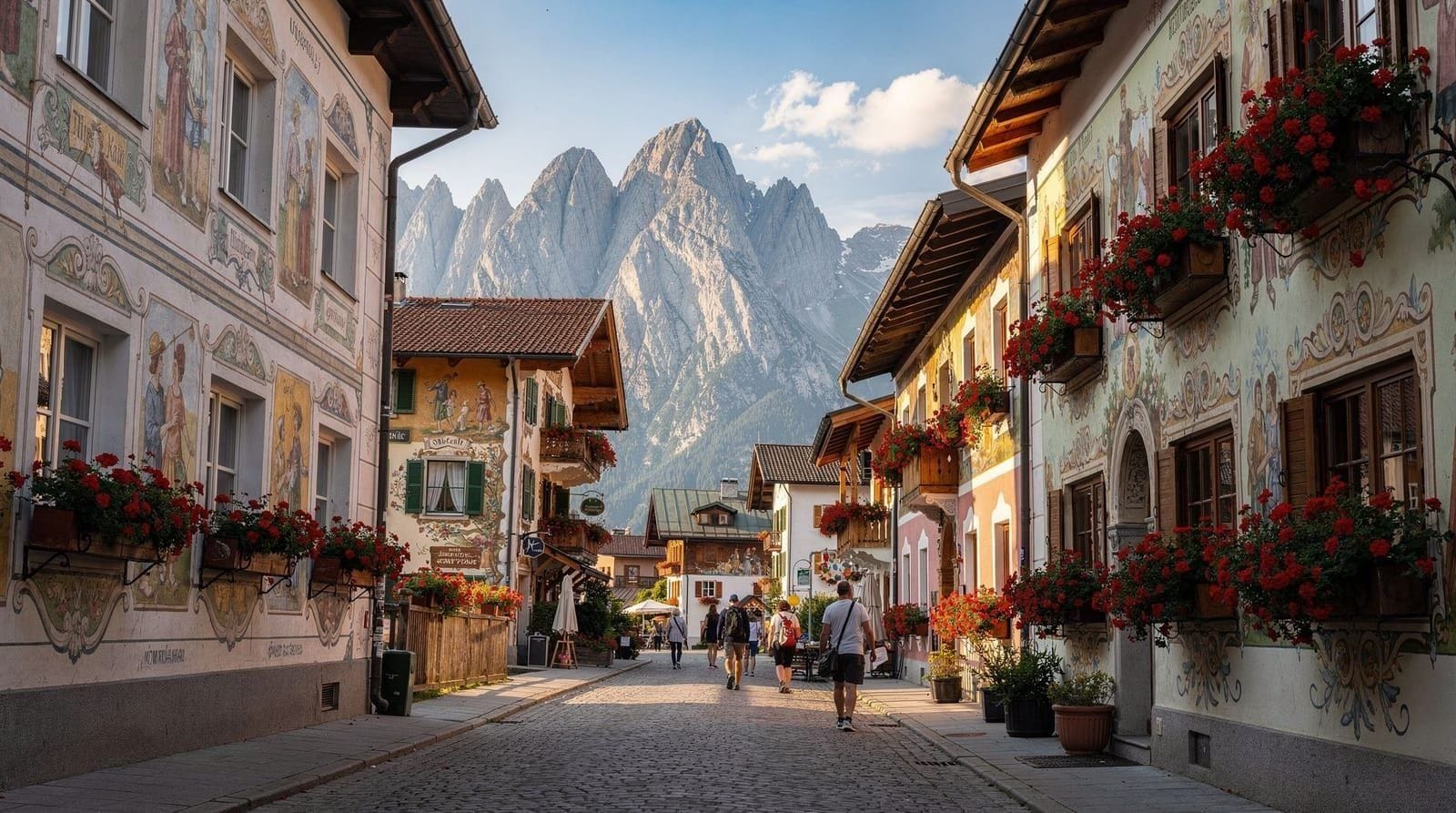
Garmisch and Partenkirchen were two separate market towns until they were merged in 1935 by the Nazi government ahead of the 1936 Winter Olympics. The distinction is still visible on the ground: Partenkirchen has the older, more traditional character with painted facades on its Ludwigstraße, while Garmisch is slightly larger and more commercial. Together they form Bavaria’s most significant mountain resort, sitting at the foot of Germany’s highest peak and surrounded by a ring of peaks that make the town a genuine four-season destination.
At 708 metres elevation, the town has a noticeably different climate from Munich: cooler summers, heavier snowfall, and a crispness to the air that becomes apparent the moment you step off the train. The German Alpine Road passes through here, and on clear days the Zugspitze (2,962 m) towers directly above the southern end of town.
| Where | 90 km south of Munich, foot of the Zugspitze |
| Cost | Around EUR 25–30 train + EUR 69 Zugspitze ticket |
| Time needed | 1 day (Zugspitze focus) or 2–3 days |
| Getting there | BRB train from Munich Hbf, hourly, 1h20 |
| Best time | Jun–Oct hiking, Dec–Apr skiing |
Getting there from Munich
The BRB (Bayerische Regiobahn) runs direct trains from Munich Hauptbahnhof to Garmisch-Partenkirchen roughly once per hour. Journey time is 1 hour 20 minutes. In 2026, a single second-class ticket costs around EUR 25–30 (booked in advance via the DB Navigator app); the Bayern-Ticket (EUR 27 for one person, EUR 46 for up to 5 people) covers the entire journey and is worthwhile for groups or if you are making other regional trips the same day.
The train station in Garmisch-Partenkirchen is on the eastern (Partenkirchen) side of the merged town, a 10-minute walk from the main pedestrian street and about 20 minutes on foot from the Zugspitzbahnhof (the dedicated station for the cog railway to the summit).
By car, the A95 Autobahn runs directly from Munich to Garmisch-Partenkirchen. Journey time is around 1 hour in light traffic. Parking is available at the Zugspitzbahnhof and around the town centre; expect EUR 2–3 per hour in the central car parks.
The Munich to Garmisch day trip guide covers transport options and timing in detail. A guided van tour is an alternative that handles logistics: a full-day Zugspitze and Garmisch van tour from Munich collects from Munich hotels and includes the summit cable car.
The Zugspitze
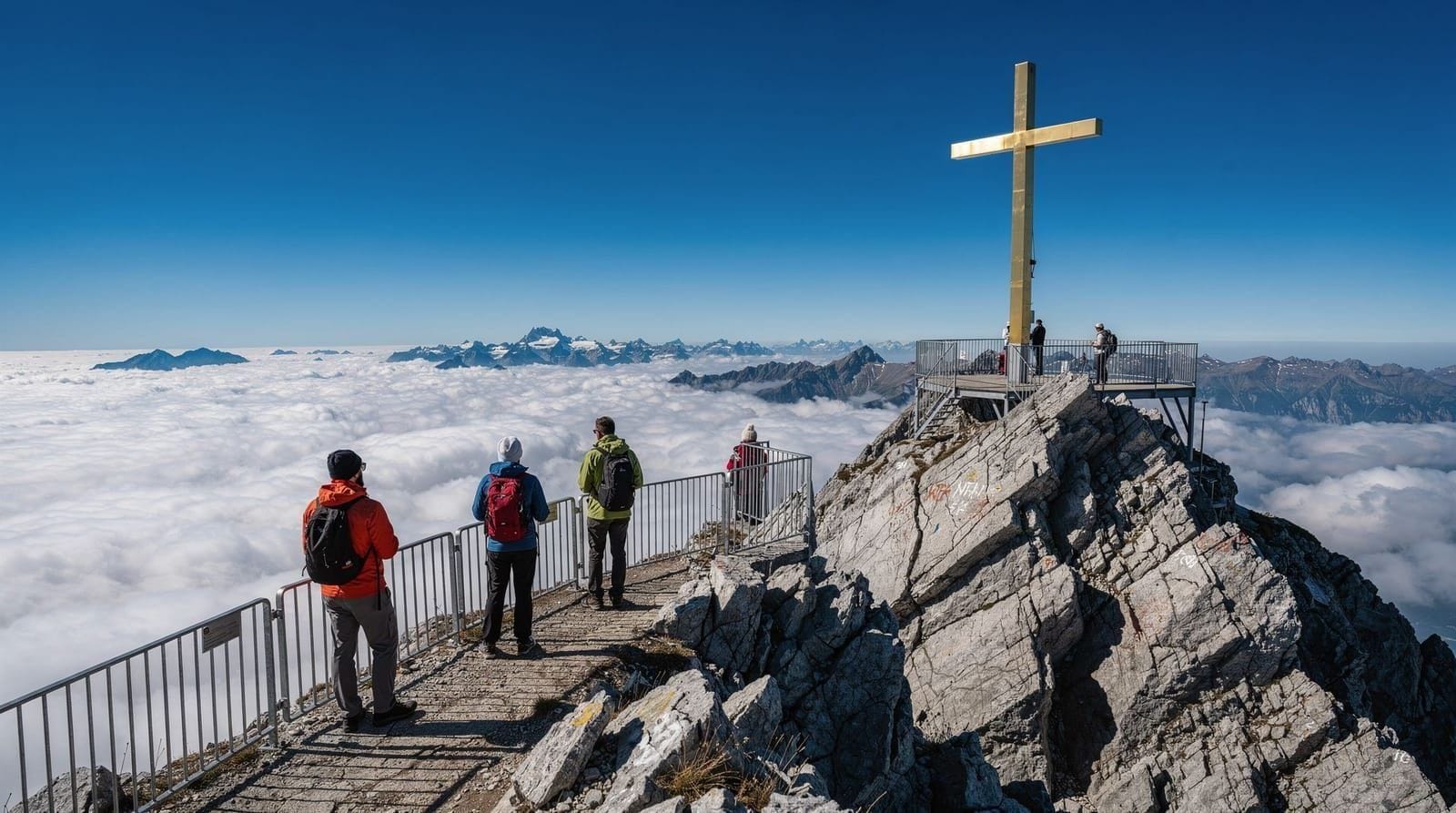
The Zugspitze is the primary reason most international visitors come to Garmisch-Partenkirchen. At 2,962 metres, it is Germany’s highest point and offers views into four countries on clear days. For a full account of the summit experience, Eibsee, and the two ascent options, see the dedicated Zugspitze destination page.
In brief: you ascend either by the Zugspitzbahn (a cog railway from Garmisch-Partenkirchen station, 75 minutes) or by the Eibsee cable car (from the lake, 10 minutes). The combined round-trip ticket in 2026 costs EUR 69 for adults (EUR 44.50 for children 6–15). Booking online in advance is strongly recommended in summer and avoids queuing at the Eibsee gondola station.
Partnach Gorge
The Partnachklamm is a 700-metre limestone gorge carved by the Partnach river, located 3 kilometres south of the town centre. The gorge walls rise 80 metres in places and are topped by overhangs that drip with ice in winter, making it visually dramatic in all seasons. The path through the gorge — cut into the rock with tunnels and walkways — stays wet from spray throughout the year; waterproof clothing is advisable. Walking time is about 45 minutes for the round trip through the gorge section.
Entry to the Partnachklamm costs EUR 7 for adults and EUR 3.50 for children in 2026. You reach the gorge entrance either on foot from town (45 minutes each way on the flat) or by horse-drawn carriage (Pferdekutsche) from the Olympic ski stadium, which costs around EUR 14–16 per person return. The carriage is charming but not essential — the walk through the Reintal valley is pleasant. The gorge is open year-round; summer and early autumn have the fullest water flow.
Full hiking context is in the Partnach Gorge guide.
Skiing in winter
The Zugspitz Gebiet (Zugspitze ski area) combines skiing on the Zugspitze plateau (accessible year-round on the glacier, snow-permitting) with the lower Klassische Zugspitze and Wank pistes above town. Total skiable area is around 40 km of marked pistes, which is not large by Alpine standards but sufficient for a day or weekend. The glacier skiing at the summit (approximately 2,600–2,960 m) is the highest in Germany and the snow quality is generally reliable.
Day pass prices in the 2025/26 season were EUR 64 for adults and EUR 38 for children. Multi-day passes reduce the daily cost significantly. The Garmisch Classic area (separate from the Zugspitze summit) covers the valley-accessible slopes and costs EUR 46 per day.
Garmisch-Partenkirchen hosted the 1936 Winter Olympics, the 1978 Alpine Ski World Championships, and regularly hosts World Cup races. The Olympic ski jump (Große Olympiaschanze) is visible from the town and hosts summer events. Equipment rental is available from multiple shops along the Zugspitzstraße, with full ski/boot/pole rental starting from EUR 25–30 per day.
For a deeper dive into the winter options, see the Munich skiing day trips guide.
Hiking in summer
The area offers marked trails from gentle valley walks to serious multi-day Alpine routes. Key routes accessible without technical climbing:
Wankbahn and Wank summit (1,780 m): A gondola from the town’s north side (EUR 28 return for adults) reaches the Wank plateau, which has exceptional views of Garmisch-Partenkirchen and the Zugspitze massif. Easy to moderate hiking along the ridge takes 1–2 hours.
Reintal valley walk: From the Partnach Gorge car park, the flat Reintal valley extends south toward the Zugspitze for around 22 km. The first 5 km (to the Bockhütte mountain hut) is an easy family walk on a gravel path. The Bockhütte serves food and drink.
Alpspix and Alpspitze: The Alpspitze cable car (Alpspitzbahn) reaches the Osterfelderkopf at 2,050 m and the spectacular Alpspix viewing platform — two glass-floored walkways cantilevering over the void. Cable car return costs EUR 38 for adults. The platform is free once you’ve paid the cable car.
The Garmisch hiking guide covers trailheads, difficulty ratings, and which huts to stop at.
Other things to do
Ludwigstraße, Partenkirchen: The older part of the merged town has painted murals (Lüftlmalerei) on its traditional Bavarian houses, a pedestrian street with local food shops, and a considerably quieter atmosphere than the tourist-heavy Garmisch side.
Olympic Ice Sports Centre: The Olympia-Eisstadion hosts public ice skating sessions year-round; prices in 2026 are EUR 6–8 for adults including skate hire.
Mittenwald: 20 kilometres east by bus or train, Mittenwald is a smaller village famous for violin-making and has some of the best-preserved Lüftlmalerei in Bavaria. Easy day trip from Garmisch-Partenkirchen.
Eibsee lake: 10 km from town (car or bus), the Eibsee is an extraordinarily clear mountain lake at 1,000 m elevation with turquoise water and direct views of the Zugspitze. Swimming is possible in summer (water temperature rarely exceeds 18°C). Detailed in the Zugspitze guide.
Where to eat and drink
Gasthof Fraundorfer (Ludwigstraße 24, Partenkirchen): Traditional Bavarian Gaststätte in operation since 1820, known for generous Bavarian food and occasional live Volksmusik. Mains EUR 16–26.
Restaurant Zugspitze (inside the summit building): Cafeteria-style options with mediocre food at summit prices (EUR 15–25 for a main course). Eating on the Zugspitze should be treated as an experience, not a meal.
Chocolaterie Anna Elsa (Marienplatz 4): Good coffee and cakes; useful if you are waiting for a train.
Around the region — what else to visit
Garmisch-Partenkirchen makes a logical hub for exploring the western Bavarian Alps over two or three days. Key options within an easy drive or bus ride:
Mittenwald (20 km east by train, 25 minutes): A picture-perfect village renowned for its violin-making tradition (Geigenbauschule) and for its Lüftlmalerei — painted murals covering entire house facades. The Mittenwald destination page covers the village in detail. A day trip from Garmisch combining Mittenwald with a cable car ride on the Karwendelbahn (to 2,244 m, EUR 31 return) makes an excellent alternative to the Zugspitze for visitors on a second or third day.
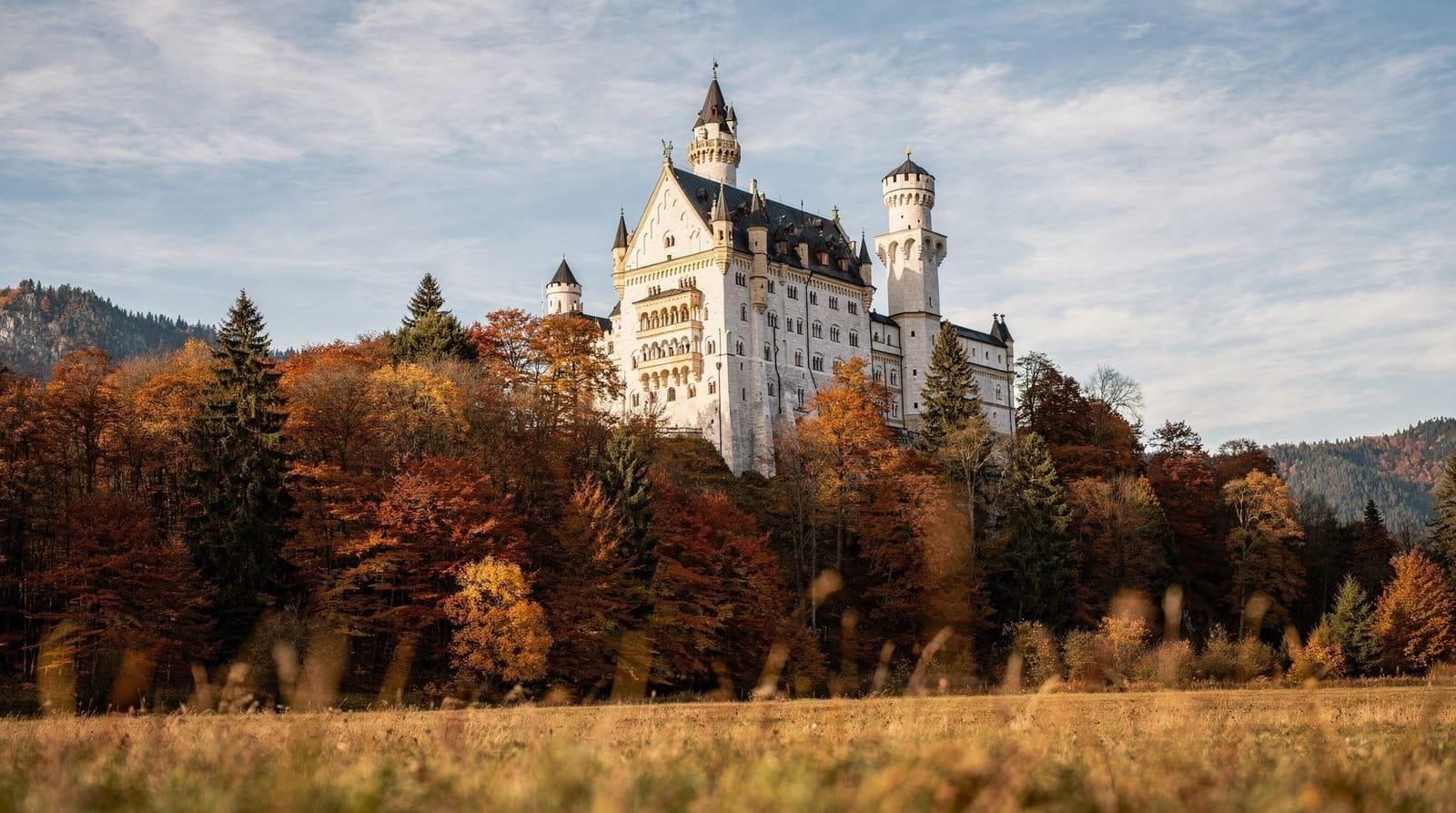
Oberammergau (20 km north by bus, 30 minutes): Famous for the Passion Play (performed every 10 years; next in 2030), the village also has outstanding painted houses and the Linderhof Palace nearby — the most intimate of Ludwig II’s royal residences. The Munich to Neuschwanstein day trip combines all three.
Bad Tölz (30 km northeast, 45 minutes by BRB regional train): A spa town on the Isar with well-preserved painted houses and access to the Blomberg mountain. The Bad Tölz destination page covers the spa tradition and hiking options.
Tegernsee (35 km east, 1 hour by BRB via Holzkirchen): One of Bavaria’s most popular lakes with postcard-perfect villages, swimming in summer, and a well-regarded brewery (Schloss Tegernsee). See the Tegernsee day trip guide.
Practical planning notes
Weather: Mountain weather in the Wetterstein changes rapidly. In summer, mornings are typically clear and afternoon thunderstorms are common from around 14:00 onward. For Zugspitze visits and any exposed hiking, the general rule is: be at altitude by 10:00 and descend before 14:00 in stormy forecasts.
Languages: German is the working language; English is understood in hotels, tourist offices, and the main attractions. In traditional Gasthäuser and local shops in Partenkirchen, German is more prevalent.
Useful transport: The local bus network (RVO, covered by Bayern-Ticket) connects Garmisch-Partenkirchen to Mittenwald, Grainau (near Eibsee), and Oberammergau. Timetables are at bahn.de or the RVO website.
Where to stay
Hotel prices in Garmisch-Partenkirchen are significantly lower than central Munich. A mid-range hotel (3 stars) runs EUR 80–130 per night in summer; ski season rates are higher (EUR 110–180). The Reindl’s Partenkirchner Hof (Bahnhofstraße 15) is a long-established 4-star hotel with direct views of the Wetterstein massif. Budget options and guesthouses (Pensionen) are plentiful on the Partenkirchen side of town.
For those combining Garmisch with a wider Bavarian Alps itinerary, the Bavarian Alps 3-day itinerary and the Munich Bavaria 7-day itinerary offer structured frameworks. The day trips by train from Munich guide compares all the major options for time and cost efficiency.
History and culture
Garmisch-Partenkirchen’s forced merger in 1935 created an awkward administrative unit that the two communities have never quite reconciled. Walk from Garmisch’s commercial centre to Partenkirchen’s Ludwigstraße and you cross a palpable boundary: the architecture changes from late 19th century resort-style to older Bavarian farmhouse vernacular, the shops become less tourist-focused, and the overall atmosphere is quieter. Many residents still identify primarily with their original town.
The 1936 Winter Olympics left a significant physical legacy. The ski stadium (with its large jump structure) at the south end of Garmisch is still in use; the ice rink is open to the public; and the Olympic flame bowl is preserved. A walking tour of the Olympic sites takes about 2 hours and is covered in the Garmisch hiking guide.
The Zugspitze itself has a less cheerful historical note: the first German summit cross was erected there in 1851 by a royal surveyor, but the Nazi period saw the mountain used as a symbol of German mastery of nature, with the summit building and cable car both developed during the 1930s with ideological overtones. The current summit building dates to 1985.
Itineraries and how long to spend
One day is the minimum and works well for a Zugspitze-focused visit from Munich: take the first BRB train from Munich (around 07:00), ascend by cog railway, spend 2–3 hours at the summit, descend by Eibsee cable car, walk around the Eibsee for an hour, and catch a late afternoon train back. Total cost approximately EUR 85–95 per person (Bayern-Ticket EUR 27 + Zugspitze ticket EUR 69, minus the Eibsee bus from town).
Two days allows the Zugspitze plus one of: Partnach Gorge (half day), Mittenwald day trip, Alpspitz cable car, or a longer hike in the Reintal. Three days opens up Oberammergau, the Linderhof Palace, or a ski day in winter.
For a fully planned framework, the Bavarian Alps 3-day itinerary routes through Garmisch as its western anchor, while the Munich Bavaria 7-day itinerary places it in the context of a broader Bavarian tour.
Families, prams and accessibility
Garmisch-Partenkirchen is manageable with young children if you plan around the cable cars rather than the hiking trails. The Zugspitzbahn cog railway and the Eibsee cable car both have level boarding and are stroller-friendly; the summit platform itself has railings and is safe for supervised children, though it is exposed and cold even in summer (pack a warm layer). Partnach Gorge is doable with an off-road stroller or a baby carrier but not a standard pram — the path is uneven and wet underfoot. The Wankbahn gondola and the flat Reintal valley path to the Bockhütte are the easiest family outings, both stroller-passable for at least the first stretch. For a broader family framework covering Munich itself, see the Munich with kids guide.
Local festivals and seasonal highlights
Almabtrieb (cattle drive), mid-to-late September: decorated cattle are walked down from the alpine pastures into town, a genuinely local tradition rather than a tourist show, with brass bands and stalls. Christmas market: smaller and more traditional than Munich’s, held on the Marienplatz in Partenkirchen through Advent. Musikkapelle concerts: local brass bands play in the Kurpark bandstand on summer Sunday mornings, free to attend. These are worth timing a visit around if your schedule allows, but none require advance booking the way the Zugspitze ticket does.
Garmisch-Partenkirchen vs nearby alpine bases
Visitors choosing where to anchor a Bavarian Alps trip often compare Garmisch-Partenkirchen with Berchtesgaden and Mittenwald. Each has a distinct character:
| Base | Best for | Distance from Munich | Standout feature |
|---|---|---|---|
| Garmisch-Partenkirchen | Highest peak, most infrastructure | 90 km / 1h20 train | Zugspitze summit |
| Berchtesgaden | Alpine lake scenery, WWII history | 150 km / 2h30 train | Königssee, Eagle’s Nest |
| Mittenwald | Quiet village, violin-making, murals | 110 km / 1h40 train | Karwendelbahn views |
Garmisch wins on sheer scale (the summit, the ski area, the range of hikes); Berchtesgaden wins on scenery and history depth; Mittenwald wins if you want a slower, quieter overnight base. Many itineraries combine two of the three — see the Bavarian Alps 3-day itinerary for a route through Garmisch and its neighbours.
Frequently asked questions about Garmisch-Partenkirchen
How far is Garmisch-Partenkirchen from Munich?
90 kilometres by road, approximately 1 hour by car. By train (BRB), the journey takes 1 hour 20 minutes from Munich Hauptbahnhof. There are roughly hourly departures throughout the day.
Do I need a car to get around Garmisch-Partenkirchen?
No. The town centre, train station, Zugspitzbahn station, and Partnach Gorge trailhead are all walkable or reachable by local bus. The Eibsee is accessible by RVO bus (Route 9606) from the town bus station. A car is helpful if you want to visit multiple attractions in one day but is not essential.
What is the best time to visit Garmisch-Partenkirchen?
For the Zugspitze summit, late June to September offers the best visibility and longest platform hours. For skiing, December to March. For Partnach Gorge, the gorge is open year-round; autumn and winter offer dramatic ice formations. May and June are the quietest tourist months with pleasant temperatures.
How much does the Zugspitze cost to visit?
In 2026, the round-trip ticket from Garmisch (using the cog railway and cable car) costs EUR 69 for adults. Discounts apply for children (6–15: EUR 44.50), and combined tickets with equipment rental are available in ski season. Booking online in advance is recommended in summer.
Is Garmisch-Partenkirchen worth a day trip from Munich?
Yes, particularly if you combine the Zugspitze ascent with either the Partnach Gorge or the Eibsee. Arriving early (first train departs Munich around 06:30) maximises your time at altitude before afternoon cloud cover builds in summer. Budget around EUR 80–90 per person for transport (Bayern-Ticket) + Zugspitze cable car.
What walking is possible without taking cable cars?
The Reintal valley from the Partnach Gorge to the Bockhütte (5 km each way, flat, no equipment needed), the Loisach river path through town, and the lower sections of the Wank are all accessible without gondolas. Partnach Gorge itself (EUR 7 entry) is the most dramatic short walk.
Can I combine Garmisch-Partenkirchen with Neuschwanstein in one day?
It is possible but rushed. Neuschwanstein is roughly 35 km east by car (45 minutes) or requires a train change via Füssen (total about 1.5 hours). If doing both in a day, prioritise Zugspitze in the morning from Garmisch, then drive or take the afternoon train to Füssen for a Neuschwanstein ticket slot. This works better with a car. See the Bavarian Alps 3-day itinerary for a structured multi-destination plan.
Is Garmisch-Partenkirchen good for families with young children?
Yes, if you plan around the cable cars. The Zugspitzbahn and Eibsee cable car are stroller-friendly, and the Wankbahn gondola plus the flat Reintal valley path make easy family outings. Partnach Gorge needs a carrier rather than a standard pram, and the Zugspitze summit is cold and exposed, so pack warm layers even in summer. See the Munich with kids guide for a wider family-trip framework.
How does Garmisch-Partenkirchen compare to Berchtesgaden or Mittenwald?
Garmisch-Partenkirchen offers the highest peak and the most developed cable-car and ski infrastructure. Berchtesgaden has more dramatic lake scenery (the Königssee) and WWII history (the Eagle’s Nest), but is further from Munich at around 2h30 by train. Mittenwald is smaller and quieter, better as an overnight base than a day-trip highlight. Many visitors combine two of the three across a multi-day Bavarian Alps trip.
Top experiences
Bookable activities with verified prices and instant confirmation on GetYourGuide.