Tegernsee day trip from Munich: lake, brewery, and what to actually do
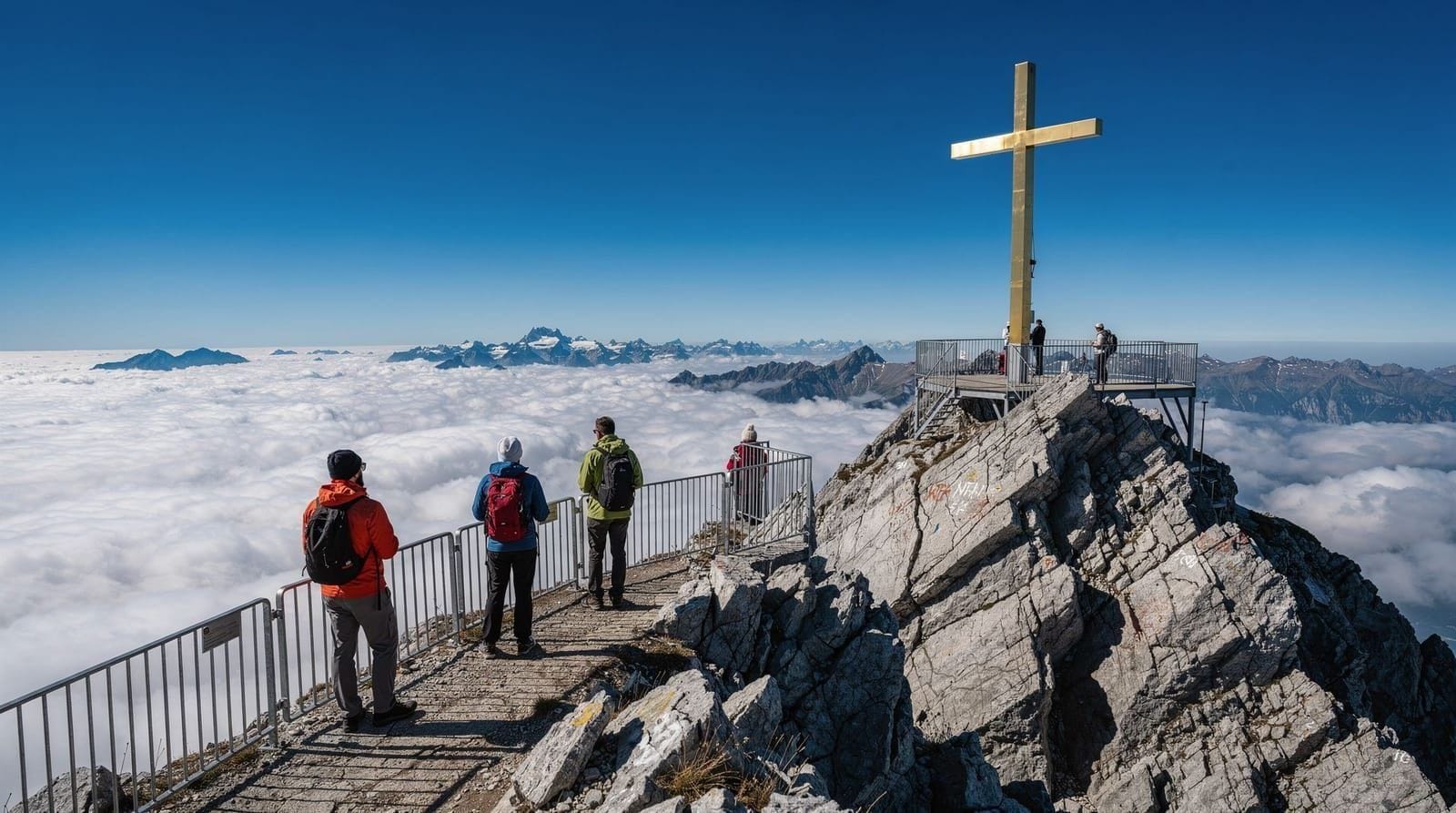
From Munich: Zugspitze mountain van tour with Garmisch town
How do you get from Munich to Tegernsee by train?
Take the BRB (Bayerische Regiobahn) from Munich Hauptbahnhof to Tegernsee town — journey time is approximately 60-70 minutes, with a change at Holzkirchen. Bayern Ticket covers the full journey. Trains run roughly every hour. The walk from Tegernsee station to the waterfront takes under 10 minutes.
What makes Tegernsee different from Munich’s other lakes
Bavaria has dozens of lakes within day-trip range of Munich, and several of them — Starnberger See, Ammersee, Chiemsee — get substantial visitor numbers. Tegernsee stands out for a specific combination that the others do not offer in the same form: a working brewery with a centuries-old tavern, mountains rising directly from the southern shore, and a level of scenery per square kilometre that arguably rivals anywhere in the German-speaking Alps.
The lake itself is about 9 kilometres long and 2 kilometres wide, ringed by four villages — Gmund at the north, Tegernsee town and Bad Wiessee on the eastern and western shores, and Rottach-Egern at the south end beneath the Wallberg. The surrounding terrain is genuine foothills-of-the-Alps landscape: forested ridges, summer meadows, and peaks that exceed 1,700 metres directly accessible from the lakeshore.
The relevant question for a day visitor from Munich is how to use the available hours well. This guide walks through the logical sequence for a single day, with notes on where to flex depending on your priorities — food, swimming, walking, or a combination.
| Where | Tegernsee, ~50km south of Munich |
| Cost | Bayern Ticket covers transport; Bräustüberl lunch ~€18–25/person |
| Time needed | Full day, roughly 9am–evening for the suggested itinerary |
| Getting there | BRB train from Munich Hbf, ~60–70 min, change at Holzkirchen |
| Best time | Weekday mornings, or May/June/Sept–Oct to avoid summer weekend crowds |
Getting there: the BRB train from Munich
The most practical option for the majority of Munich visitors is the BRB (Bayerische Regiobahn) regional train from Munich Hauptbahnhof to Tegernsee. The route involves a change at Holzkirchen and takes approximately 60-70 minutes. Trains run roughly every 60 minutes throughout the day; the journey is comfortable and the carriages are not overcrowded on weekday mornings.
A Bayern Ticket covers the full journey — both the main-line segment from Munich to Holzkirchen and the BRB branch to Tegernsee. For groups of two or more, the Bayern Ticket group option (valid for up to 5 people) represents significant savings on individual tickets. Our Bayern Ticket guide covers how to buy it correctly and avoid the common errors.
From Tegernsee train station, the centre of town and the lake waterfront are under 10 minutes on foot, walking south along Hauptstrasse toward the monastery complex. The Bräustüberl brewery tavern is signposted and visible within a few minutes of leaving the station.
Arriving in Tegernsee before 10am on summer weekends is genuinely advisable if you want a table at the Bräustüberl without a long wait. By 11:30am on a sunny Saturday in July, the beer garden fills to capacity.
The Bräustüberl Tegernsee: what it is and how to approach it
The Herzogliches Brauhaus Tegernsee occupies a former Benedictine monastery that dates to the 8th century. The Wittelsbach royal family (Bavaria’s ruling dynasty) acquired it in the early 19th century and converted the monastery buildings into a brewery estate, which they continue to own. The brewery is one of the last genuinely aristocratic commercial operations in Bavaria — not a marketing construct, but a working brewery that has been in the same family’s hands for over 200 years.
The Bräustüberl (brewery tavern) is the public-facing arm of this. It occupies the ground floor of the monastery building, with a large beer garden facing the lake in good weather. The interior is panelled wood and long communal tables in the Bavarian tradition — not a tourist-adapted version of it, but the actual tradition.
The beer served here is Tegernseer — brewed on the premises and not widely available outside the region. The house varieties are the Hell (light lager, clean and well-made), Dunkel (dark malt, slightly sweet), and seasonal specials including a Märzen in autumn and a strong Bock in winter. The Tegernseer is uniformly well-regarded among Bavarian beer drinkers and is notably different in character from the Munich brewery beers (Augustiner, Paulaner, Hacker-Pschorr) — slightly more mineral, with a different water profile from the local springs.
Food at the Bräustüberl covers Bavarian standards honestly executed. The Schweinshaxe (roast pork knuckle), Brezn with Obazda (pretzel with seasoned soft cheese), and various sausage platters are the core menu items and are reasonably priced for a tourist destination. Portions are large. Vegetarian options are limited to the traditional Bavarian spectrum — cheese, bread, and salads — without dedicated plant-based dishes.
Practical notes for the Bräustüberl: cash is accepted and sometimes preferred for smaller purchases. The beer garden is self-service (order at the counter); the indoor Stube has table service. Reservations are possible for the indoor section but not the beer garden. On summer weekends, expect to share tables with strangers in the Bavarian communal manner — this is normal and not rude.
The lakeshore and swimming
After the Bräustüberl, the sensible move is the lake. The eastern shore of Tegernsee directly south of town has grass areas and small pebble beaches usable for swimming without any entry fee. The water quality in Tegernsee is consistently good — it is fed by alpine springs and the catchment area is relatively protected from agricultural runoff.
Water temperature peaks in late July and early August at around 22-24°C, which is comfortable for swimming without a wetsuit. By September the temperature drops noticeably — still swimmable for the willing, but closer to 18°C. May and June water is cold (12-16°C) and suited primarily to hardened swimmers or the very young.
The Strandbad Tegernsee, a few minutes south of town, charges a small entry fee (around €5 for adults) and has changing facilities, a snack kiosk, and a supervised bathing area with a diving platform. It is the most organized swimming facility on the eastern shore and is worth the modest cost for families with children who need changing rooms and supervision.
For a quieter alternative, the northern end of the lake at Gmund (reachable by boat or a 15-minute bus ride from Tegernsee) has less crowded swimming areas that locals favour on busy weekends. The Gmund waterfront has a beer garden and a small sailing harbour.
The Wallberg: the mountain above the lake
Rottach-Egern at the southern end of the lake (accessible by a 20-minute electric boat across the water, or 15 minutes by bus) sits at the foot of the Wallberg (1,722 m). A gondola cable car operates from the edge of Rottach-Egern and takes about 15 minutes to reach the summit plateau.
The Wallberg summit is one of the best viewpoints in the Tegernsee region — looking north across the lake to the Bavarian foothills and south toward the Mangfallgebirge peaks. The summit hut (Wallberghaus) serves food and has outdoor seating. Walking around the summit rim takes around 30-40 minutes and requires no special equipment.
The cable car is not accessible on a Bayern Ticket; it requires a separate ticket (approximately €28 round trip for adults in 2026). For those visiting Tegernsee primarily for the lake and brewery, the Wallberg cable car is a pleasant addition rather than an essential; but for those who want an alpine dimension to the day, it is the most accessible option from the lake.
A full hiking descent from the Wallberg to Rottach-Egern takes about 75-90 minutes on a well-marked path — a reasonable option for those who prefer to walk down. The descent via the north face toward Tegernsee town is longer (around 2.5 hours) and involves more elevation change.
Spa options: Bad Wiessee’s thermal baths
Bad Wiessee, directly across the lake from Tegernsee town (reachable by ferry or a short bus journey around the north end), has a quieter character and two bathing traditions worth knowing about.
The Jod-Schwefel-Therme in Bad Wiessee is a traditional Bavarian mineral bath fed by iodine-sulphur springs that were discovered in the 1830s. Day visitors can access the thermal pools and wellness area. The facilities are old-fashioned compared to modern spa hotels but have genuine therapeutic credentials — the sulphur-mineral water is the real article, not a marketing construct. Entry for a half-day (up to 4 hours) costs approximately €22 for adults in 2026.
This is a more appropriate option for those who want relaxation over activity — the thermal baths are popular with older visitors and families with small children. The sulphur smell in the water is noticeable; it is characteristic of this type of spring and not a problem once you acclimatise, but worth knowing about in advance.
For a more upmarket spa experience, the Strandhotel Überfahrt in Rottach-Egern has a day spa (Tegernsee SPA) with lake views, accepting non-resident day guests. This costs significantly more (around €60-80 per person for a half-day), but the facilities are among the best in the region.
Boat trips and the Tegernsee ferry
An electric passenger ferry service connects the four main villages around the lake: Gmund (north), Bad Wiessee (west), Tegernsee (east), and Rottach-Egern (south). The ferry runs from May to October approximately, with reduced service outside peak months.
A day pass for unlimited lake crossings costs around €12 for adults and is sold at the ferry landing in Tegernsee town. Using the ferry to move between the villages rather than the bus is noticeably more pleasant, especially when the lake is calm and the Alps are visible to the south. The crossing from Tegernsee town to Rottach-Egern takes about 30-40 minutes on the scenic route calling at Bad Wiessee.
The ferry is the most effective way to see the lake from the water without booking a separate boat trip, and provides the only direct connection between Bad Wiessee on the west shore and Tegernsee town without going around the north end of the lake by road.
Suggested itinerary for a single day
For visitors arriving by the first BRB train from Munich (departing around 8am, arriving around 9am):
Morning: Walk to the Bräustüberl (opens at 10am on weekdays, 9am weekends). If arriving before opening, explore the monastery courtyard and the Tegernsee church — a fine Baroque building with original 18th-century interior that most visitors walk past without stopping.
Late morning: Bräustüberl for a Tegernseer Hell and lunch. The house food is exactly what it claims to be and good value; plan on €18-25 per person including beer.
Early afternoon: Walk south to the Strandbad or the free lakeshore swimming areas. Alternatively, take the ferry across to Bad Wiessee for the thermal baths, then return by ferry.
Mid-afternoon: Take the ferry to Rottach-Egern and, if time allows, the Wallberg cable car. Alternatively, walk the lakeside path north from Tegernsee town toward Gmund (flat, 3 km, scenic).
Evening: Return ferry or bus to Tegernsee town in time for the BRB back to Munich. Last trains back run until late evening.
This schedule is comfortably achievable with time to linger at each point. For those prioritising hiking over swimming, replacing the afternoon lake section with the Wallberg excursion and a trail descent to Rottach-Egern is the natural adjustment.
For visitors with children, a lighter version works better: skip the Wallberg cable car and the thermal baths, and instead spend the freed-up time at the Strandbad, where the supervised swimming area and shallow entry are easier to manage than the free lakeshore spots. The Munich with kids guide has more on planning family day trips of this kind around Munich generally.
What to skip
The tourist shops near Tegernsee station. Standard Bavarian souvenir fare at inflated prices. Nothing here that you cannot find in Munich at lower cost.
Organised bus tours from Munich to Tegernsee. The train connection is simple, comfortable, and covers it on a Bayern Ticket. Paying a tour operator to take you on a bus adds cost without meaningful benefit.
The Seepromenade on busy summer afternoons. The lakeside promenade in Tegernsee town is genuinely pretty but becomes uncomfortably crowded by mid-afternoon on summer weekends. Either arrive early, explore during midday, or plan to be at the Strandbad or on the ferry during peak crowd hours.
Driving on a summer weekend. The roads around the lake, and particularly the approach from Munich via the A8 and B307, back up badly on sunny Saturdays and Sundays from late morning onward. Parking in Tegernsee town and Rottach-Egern is limited and fills early. The train has no such problem and is genuinely the better option for a day trip regardless of whether you have a car available.
For more on the other Bavarian lakes worth comparing, see our Munich lakes guide and Chiemsee lake guide. Tegernsee is a genuinely outstanding day trip but not the only option — the comparison is worth making depending on your priorities.
Water temperature and crowds by season
| Month | Water temp | Crowds | Notes |
|---|---|---|---|
| May–June | 12–16°C | Low-moderate | Cold for casual swimmers; good for hiking and the Bräustüberl without queues |
| July–August | 22–24°C | High, especially weekends | Best swimming; arrive before 10am on weekends |
| September | ~18°C | Moderate | Still swimmable, noticeably quieter than August |
| October | Below 15°C | Low | Ferry service reduced; better for hiking and spa visits than swimming |
Combining Tegernsee with other Bavarian day trips
Tegernsee sits far enough south of Munich that it does not combine naturally with most other single-day excursions, but it is worth weighing against them when planning a broader Bavaria trip. Compared with a Garmisch day trip, Tegernsee trades higher mountains for a calmer, lake-centred pace and a genuinely excellent brewery. The nearby town of Bad Tölz, about 20 minutes further by train or bus, makes a reasonable half-day extension if you want a historic Bavarian town centre alongside the lake — its Marktstrasse is one of the better-preserved painted-facade streets in the region. For a wider view of what else is reachable from Munich in a day, the best day trips from Munich guide and the day trips by train guide put Tegernsee in context against the Alps, the lakes, and the historic towns further afield. If your visit falls in summer, the Munich in summer guide covers how a Tegernsee day fits alongside the city’s own warm-weather highlights.
Frequently asked questions about Tegernsee day trips
How do you get from Munich to Tegernsee by train?
Take the BRB (Bayerische Regiobahn) from Munich Hauptbahnhof to Tegernsee town — journey time is approximately 60-70 minutes, with a change at Holzkirchen. Bayern Ticket covers the full journey. Trains run roughly every hour.
What is the Bräustüberl Tegernsee and is it worth visiting?
The Tegernseer Bräustüberl is the brewery tavern of the Herzogliches Brauhaus Tegernsee — the ducal brewery owned by the Wittelsbach family. It serves the house beer alongside Bavarian standards. It is genuinely popular with locals and visitors alike, often packed on weekends. Arrive before 12:30 or after 14:00 to avoid the lunch rush.
Can you swim in Lake Tegernsee?
Yes. Swimming is free at several access points around the lake. The water temperature reaches 22-24°C in July and August. The Strandbad Tegernsee has a small entry fee and supervised bathing.
Is there a spa at Tegernsee?
The Jod-Schwefel-Therme in Bad Wiessee is the most accessible spa option for day visitors — traditional iodine-sulphur thermal baths reachable by ferry from Tegernsee town. Entry costs approximately €22 for a half-day in 2026.
What is the best hiking near Tegernsee?
The Wallberg (1,722 m) above Rottach-Egern is the most rewarding accessible hike. A cable car runs to the summit, with walking options for descent. For easier walks, the flat lakeside path from Tegernsee town to Rottach-Egern (around 6 km) is pleasant.
Which village on Lake Tegernsee is the best base?
For a single day trip by public transport, Tegernsee town is the most practical starting point — closest to the train station, the Bräustüberl, and the main lakeshore.
Is Tegernsee busy in summer?
Very much so on weekends. On sunny summer weekends, the lake area fills quickly by late morning. Weekday visits are noticeably more relaxed. May, June, September, and October offer a better experience for those who want the lake without the crowds.
How does Tegernsee compare to Chiemsee or the Starnberger See?
Tegernsee is smaller and more mountain-framed than Chiemsee, which is Bavaria’s largest lake and better known for Herrenchiemsee palace on its island. Starnberger See is closer to Munich and easier for a short visit but has less dramatic scenery and no equivalent to the Bräustüberl. If mountains and a genuine historic brewery matter most, Tegernsee wins; if you want an island palace, Chiemsee is the better choice. See the Chiemsee lake guide and Munich lakes guide for the full comparison.
Top experiences
Bookable activities with verified prices and instant confirmation on GetYourGuide.