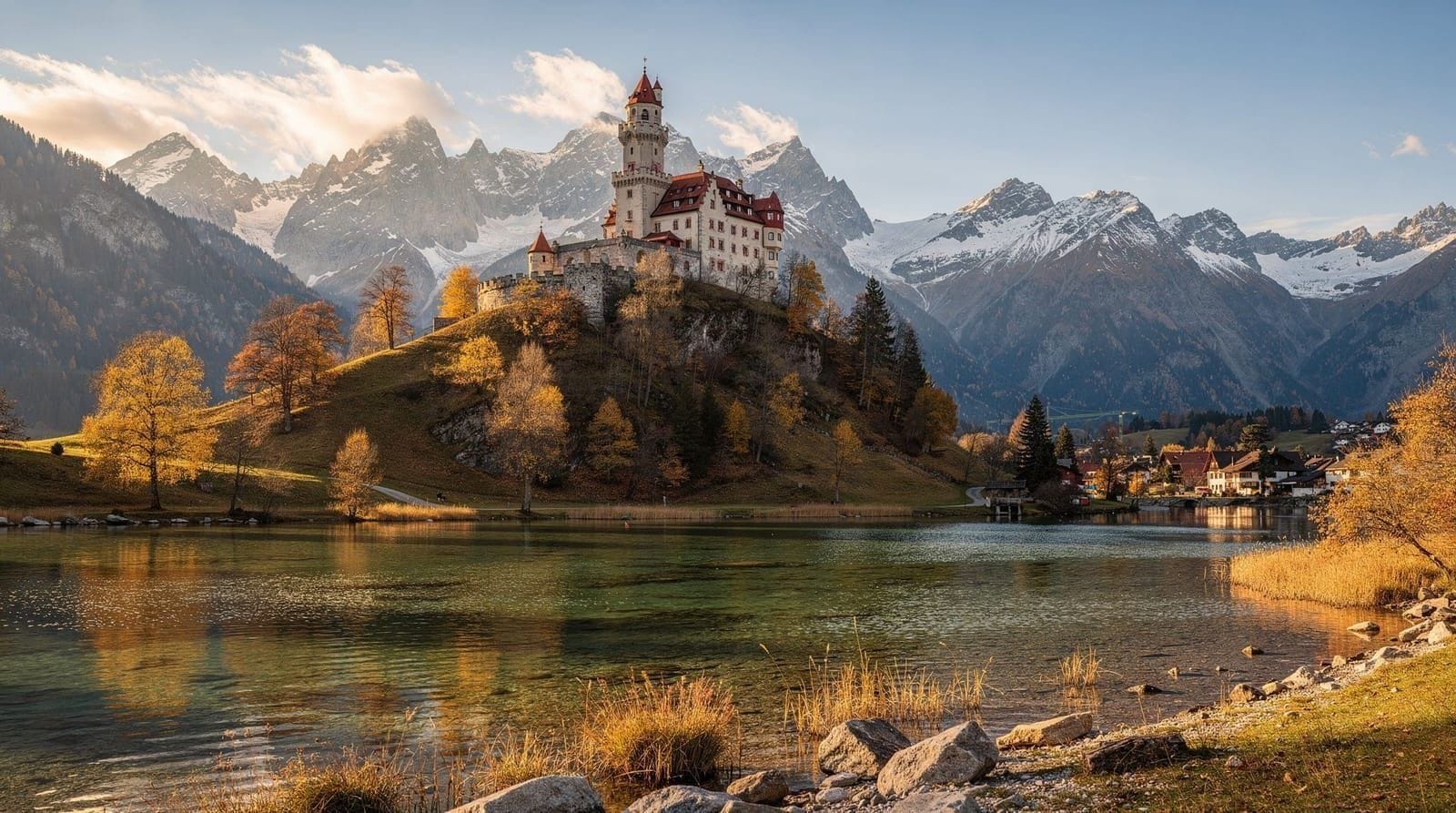
Bayern-Ticket guide: prices, rules, and the best routes to use it
What is the Bayern-Ticket and what does it cost?
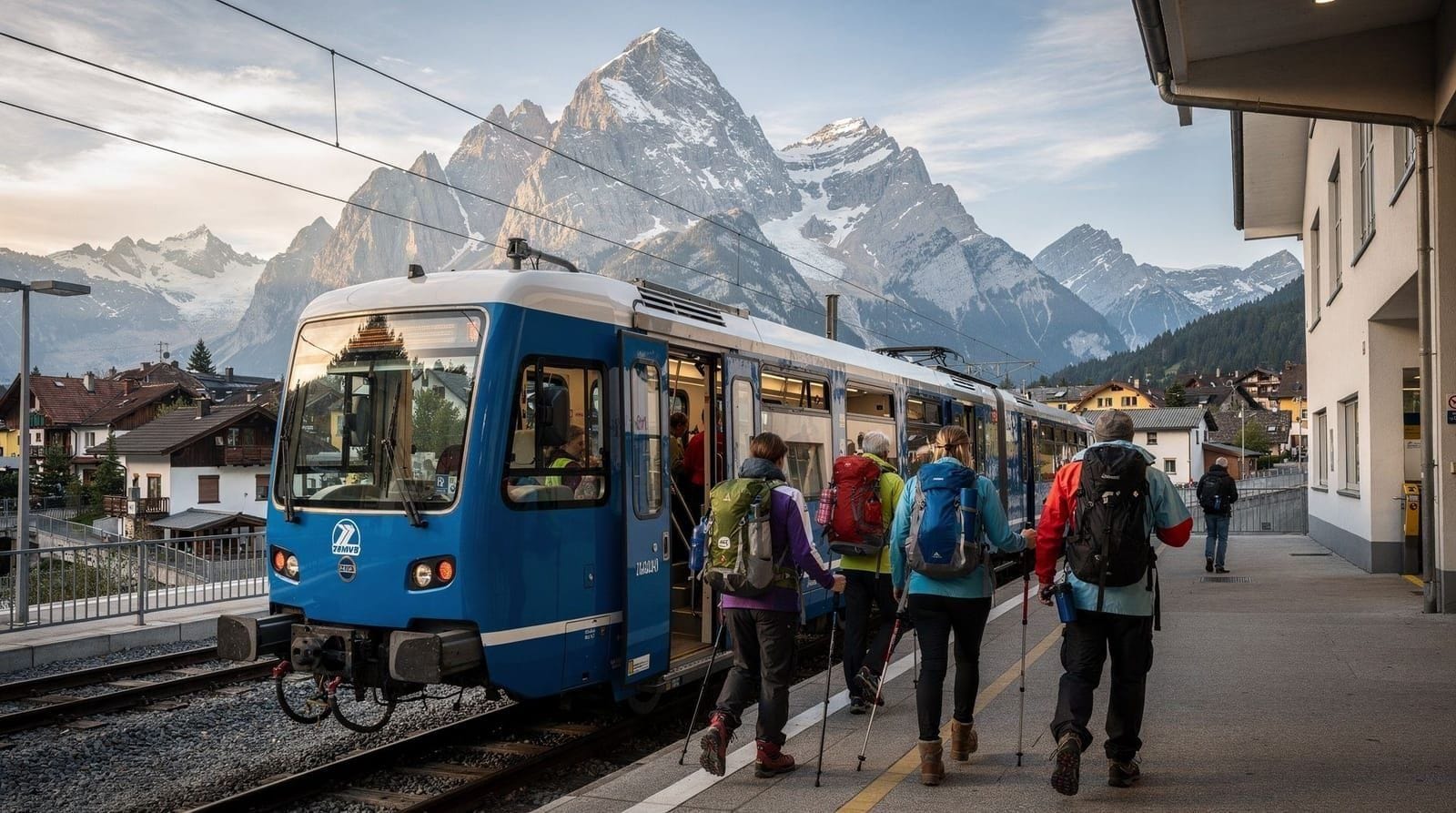
The Bayern-Ticket is a day ticket for all regional trains (RE, RB, IRE), S-Bahn, MVV buses, and trams in Bavaria. In 2026, it costs €29 for one person, plus €10 for each additional person (maximum 5 people total, so €69 for a group of 5). It is valid on weekdays from 9am until 3am the next day, and on weekends and public holidays from midnight.
| Where | Valid across Bavaria on regional trains, S-Bahn, MVV buses/trams |
| Cost | €29 for 1 person, +€10 per extra person up to 5 (€69 max) |
| Time needed | One calendar day, 9am weekdays or midnight weekends, until 3am next day |
| Getting there | Buy at DB machines, the DB Navigator app, or bahn.de |
| Best time | Weekends, when validity starts at midnight instead of 9am |
What the Bayern-Ticket actually is
The Bayern-Ticket is a day pass for regional public transport across the entire state of Bavaria. One ticket, valid from 9am on weekdays or midnight on weekends, covers you on all regional trains, S-Bahn, U-Bahn (within MVV), trams, and buses for a full day until 3am the following morning.
For visitors to Munich who plan to do day trips into Bavaria, the Bayern-Ticket is often the most cost-effective option — particularly for routes like Garmisch-Partenkirchen, Füssen (for Neuschwanstein), and Regensburg. For groups, the value is even clearer.
This guide explains exactly what the ticket covers, where the rules get complicated, and which routes deliver the best value.
2026 pricing
| Number of people | Cost |
|---|---|
| 1 person | €29 |
| 2 people | €39 |
| 3 people | €49 |
| 4 people | €59 |
| 5 people | €69 |
These prices apply to both weekday and weekend Bayern-Tickets. There is no weekend surcharge.
Children aged 6–14 cost €5 each additional. Children under 6 travel free.
Compare this to what you would otherwise pay: a return single ticket from Munich to Garmisch for one adult without a Bayern-Ticket costs around €30–44. The Bayern-Ticket at €29 (covering both directions plus all Munich city transit) is better value from the moment you leave Munich.
Exactly what the Bayern-Ticket covers
Valid on:
- RE (RegionalExpress) trains
- RB (RegionalBahn) trains
- IRE (InterRegioExpress) trains
- S-Bahn trains (DB and MVV)
- BRB (Bayerische Regiobahn) trains
- BOB trains (now BRB)
- MVV buses, trams, and U-Bahn in Munich
- All local buses and regional buses operated by local transit authorities throughout Bavaria
NOT valid on:
- IC trains (InterCity)
- ICE trains (InterCityExpress)
- EC trains (EuroCity)
- Any international journey (Austria, Czech Republic, Switzerland)
- Zugspitze Cogwheel Railway (Zahnradbahn) — separate pricing
- Night trains (CNL, etc.)
The distinction matters most on routes where both fast (ICE/EC) and slow (RE/RB) trains operate — like Munich to Nuremberg or Munich to Salzburg. The Bayern-Ticket covers the slow trains only.
Time validity rules
Weekdays (Monday to Friday)
Valid from 9am until 3am the following morning. Not valid before 9am. If your train departs Munich at 8:45am, your Bayern-Ticket is not valid for it.
Weekends (Saturday and Sunday) and public holidays
Valid from midnight until 3am the following morning. This means you can use it on the first train of Saturday or Sunday morning.
Practical consequence
If you want to do a full day trip on a weekday and make the most of it, plan to leave Munich at 9am or just after. On a Saturday or Sunday, you can leave as early as trains run — the Bayern-Ticket covers it.
Who is on the ticket
All travellers must be named on the Bayern-Ticket or — if issued via a machine — travelling together. The ticket is not transferable to individual travel: if you buy a 3-person Bayern-Ticket, all 3 people must travel together on all legs.
On the DB Navigator app, digital Bayern-Tickets list the lead passenger. On paper tickets from machines, you write the names of all travellers in the spaces provided (a conductor may ask you to verify this).
The Salzburg question (and Innsbruck)
This is where people get confused. The Bayern-Ticket does not cover travel to Salzburg or Innsbruck. Austria is a different country, and the Bayern-Ticket has no validity beyond German territory.
The EC and RailJet trains from Munich to Salzburg are international trains, explicitly excluded from the Bayern-Ticket even though they travel through Bavaria. The same applies to trains to Innsbruck via Kufstein.
What you can do:
- Buy a standard DB or ÖBB ticket for the EC/RailJet direct service to Salzburg (approximately 90 minutes). Book in advance for better prices.
- Use the Bayern-Ticket to reach Freilassing (the last German station before the Austrian border), then buy an Austrian ticket for the remaining 15 minutes to Salzburg. This is technically valid but requires an extra ticket purchase and adds awkwardness. Most people simply buy a through ticket.
For Salzburg day trip logistics, see Munich to Salzburg day trip.
Best routes for the Bayern-Ticket
Munich to Garmisch-Partenkirchen
Time: ~1h20 by direct BRB/DB service
Round-trip cost without Bayern-Ticket: approximately €30–44
With Bayern-Ticket (1 person): €29
Verdict: Clear winner for the Bayern-Ticket. Even solo, the Bayern-Ticket matches or beats the price of a return single. For groups, the savings are substantial.
See Munich to Garmisch day trip for what to do there.
Munich to Füssen (Neuschwanstein)
Time: ~2 hours with change at Buchloe
Round-trip cost without Bayern-Ticket: approximately €40–55
With Bayern-Ticket (1 person): €29
Verdict: Excellent value. The Bayern-Ticket covers the full return journey including the bus from Füssen to Hohenschwangau (bus 73/78 is a VGO regional bus, covered by Bayern-Ticket). This is one of the most popular Bayern-Ticket uses.
See Munich to Neuschwanstein day trip for timing and castle logistics.
Munich to Nuremberg (regional trains)
Time: ~2h30 via RE
With Bayern-Ticket: valid
Verdict: Good if time is flexible. If you want the 1-hour ICE, buy a separate ticket. If a relaxed 2.5-hour journey through Ingolstadt or Nürnberg direction is fine, the Bayern-Ticket gives very good value for the all-day pass.
See Munich to Nuremberg day trip.
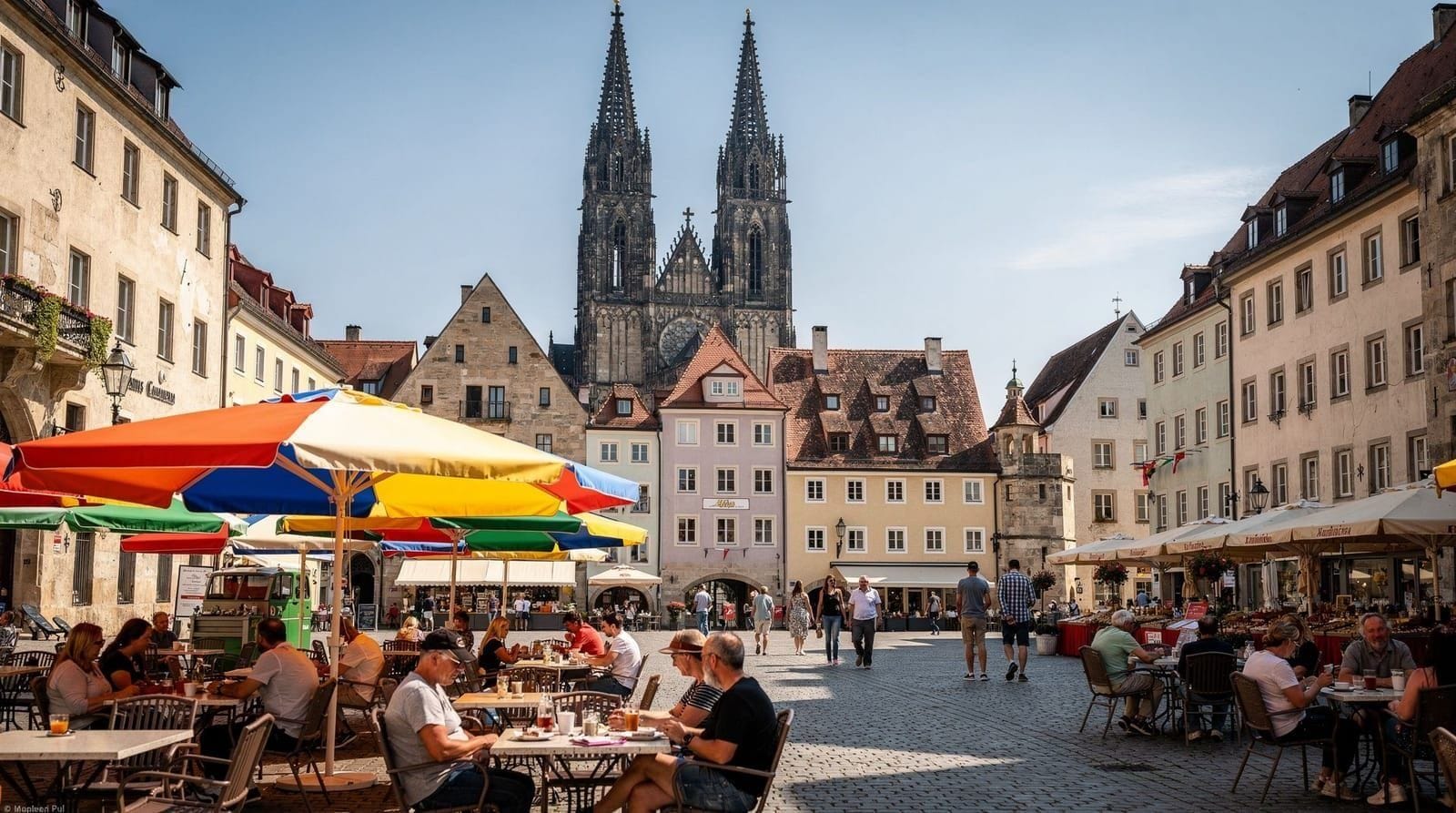
Munich to Regensburg
Time: ~1h20 by RE
Round-trip cost without Bayern-Ticket: approximately €36–50
With Bayern-Ticket: €29
Verdict: Very good value. Regensburg is underrated and deserves a full day. The Bayern-Ticket is a natural choice.
See Munich to Regensburg day trip.
Groups of 3–5 people on any route
For a group of 4 people going to Garmisch, a Bayern-Ticket costs €59. Four individual return singles would cost around €120–160 total. The Bayern-Ticket is dramatically cheaper.
Where to buy the Bayern-Ticket
DB ticket machines
At Munich Hauptbahnhof and all major S-Bahn stations. Yellow DB machines sell the Bayern-Ticket — select “Tickets” then “Bayern-Ticket”. The machine will prompt for number of adults and children.
DB Navigator app
Search for your route, then select Bayern-Ticket as the ticket type if it appears as an option. Digital tickets in the app are valid immediately and do not need separate validation.
DB website (bahn.de)
Useful for planning and buying in advance. The Bayern-Ticket can be selected as a ticket option when you enter a regional train route.
MVV ticket machines
Some MVV (Munich transit) machines also sell the Bayern-Ticket. They are the yellow machines inside S-Bahn and U-Bahn stations.
Tips for using the Bayern-Ticket
Book ahead for popular weekends: The Bayern-Ticket itself does not have a seat reservation built in — you just board. But on peak days (summer weekends, Oktoberfest period, public holidays), trains to Neuschwanstein, Garmisch, and other popular destinations fill up. Board early in Munich and not partway through the route.
Write names clearly: On paper tickets, write all traveller names legibly in the spaces provided. Conductors will check. If you have a digital ticket in the DB app, the lead passenger name is already recorded.
Combine with Munich city transit: Remember that the Bayern-Ticket includes all MVV transport in Munich. If you are doing a day trip on a weekend, you do not need a separate Munich day ticket — the Bayern-Ticket covers everything from midnight.
Watch the 9am cutoff on weekdays: Plan your Monday–Friday outbound journey to depart at 9:00am or later. If you are near a U-Bahn station, the S-Bahn to Hauptbahnhof from within Munich is also covered once 9am passes.
Return journey planning: The ticket is valid until 3am the next morning, so you have generous flexibility on when to return. Late trains back from Garmisch or Füssen run until around 11pm with a final service after midnight on some routes.
Is the Bayern-Ticket worth it? Honest assessment
For solo travellers going to Garmisch or Neuschwanstein, the Bayern-Ticket makes financial sense — it usually costs the same or slightly less than a straight return single, and adds the bonus of all-day Munich transit coverage.
For groups of 3–5 people, the Bayern-Ticket is almost always significantly cheaper than individual tickets. There is rarely a situation where individual tickets beat the Bayern-Ticket group price on a covered route.
For destinations requiring ICE trains (Nuremberg in 1 hour, Salzburg directly), the Bayern-Ticket does not work for the fast service. But for regional-train-accessible destinations in Bavaria, it is the most cost-effective all-day option available.
The one scenario where it is not worth it: if you are only making a very short journey or crossing into Austria/Innsbruck. In those cases, standard tickets or the Deutschland-Ticket are more appropriate.
Fitting the Bayern-Ticket into a wider Bavaria trip
If you are planning several day trips rather than just one, it is worth mapping out which days need the Bayern-Ticket and which do not. A trip that mixes a castle day (Neuschwanstein), an alpine day (Garmisch or Zugspitze), and a city day (Nuremberg or Regensburg) can use the Bayern-Ticket for all three regional-train legs, while a Salzburg day sits outside it and needs a separate ticket. The Munich to Bavaria by train guide lays out the wider rail network beyond the specific routes covered here, and the day trips by train guide is a useful cross-check for which destinations are realistically reachable and back in a single day.
For visitors without a fixed day-trip plan yet, the best day trips from Munich guide is the natural starting point — decide the destination first, then check the relevant route section above to confirm whether the Bayern-Ticket is the right ticket for that specific day.
Frequently asked questions about the Bayern-Ticket
Can the Bayern-Ticket be split between different days?
No. It is a one-day ticket and must be used on a single calendar day (with the overnight extension to 3am). You cannot use part of it on one day and the rest another day.
Is the Bayern-Ticket the same as the Deutschland-Ticket?
No. The Deutschland-Ticket is a monthly subscription at €58 covering all local public transport across all of Germany. The Bayern-Ticket is a single-day pass specifically for Bavaria. If you have the Deutschland-Ticket subscription, it already covers everything the Bayern-Ticket covers (and more), so you would not need to buy the Bayern-Ticket separately.
Does the Bayern-Ticket work on BRB trains?
Yes. BRB (Bayerische Regiobahn) is a regional train operator and all its services are covered by the Bayern-Ticket. The Garmisch line, the BOB routes, and other BRB services are all included.
Can I use the Bayern-Ticket on Bavarian local buses?
Yes, local and regional buses across Bavaria are included. For example, the bus from Füssen station to Hohenschwangau (bus 73/78) is covered. This is particularly useful for reaching remote destinations after the train journey.
Does the Bayern-Ticket work on the Zugspitze?
Only for the regional train from Munich to Garmisch-Partenkirchen. The Zugspitze Cogwheel Railway (Zahnradbahn) is a separate service with its own pricing and is not included in the Bayern-Ticket. You will need to buy a separate Zugspitze ticket at Garmisch. See Zugspitze day trip guide.
Is the Bayern-Ticket worth buying for a single Munich-only day with no day trip?
No. If you are staying entirely within Munich city limits, a standard MVV day ticket for the city zones is cheaper than the Bayern-Ticket, since you are not using its main value — regional trains beyond the city. Save the Bayern-Ticket for days when you are actually leaving Munich.
Which day trips get the best value from the Bayern-Ticket?
Garmisch-Partenkirchen, Füssen/Neuschwanstein, and Regensburg consistently offer the strongest value, since the regional-only journey time is reasonable and the ticket price undercuts a standard return single even for one traveller. See the Munich to Garmisch day trip, Munich to Neuschwanstein day trip, and Munich to Regensburg day trip guides for the full logistics of each.