Best day trips from Munich: 12 destinations ranked by value, ease, and scenery
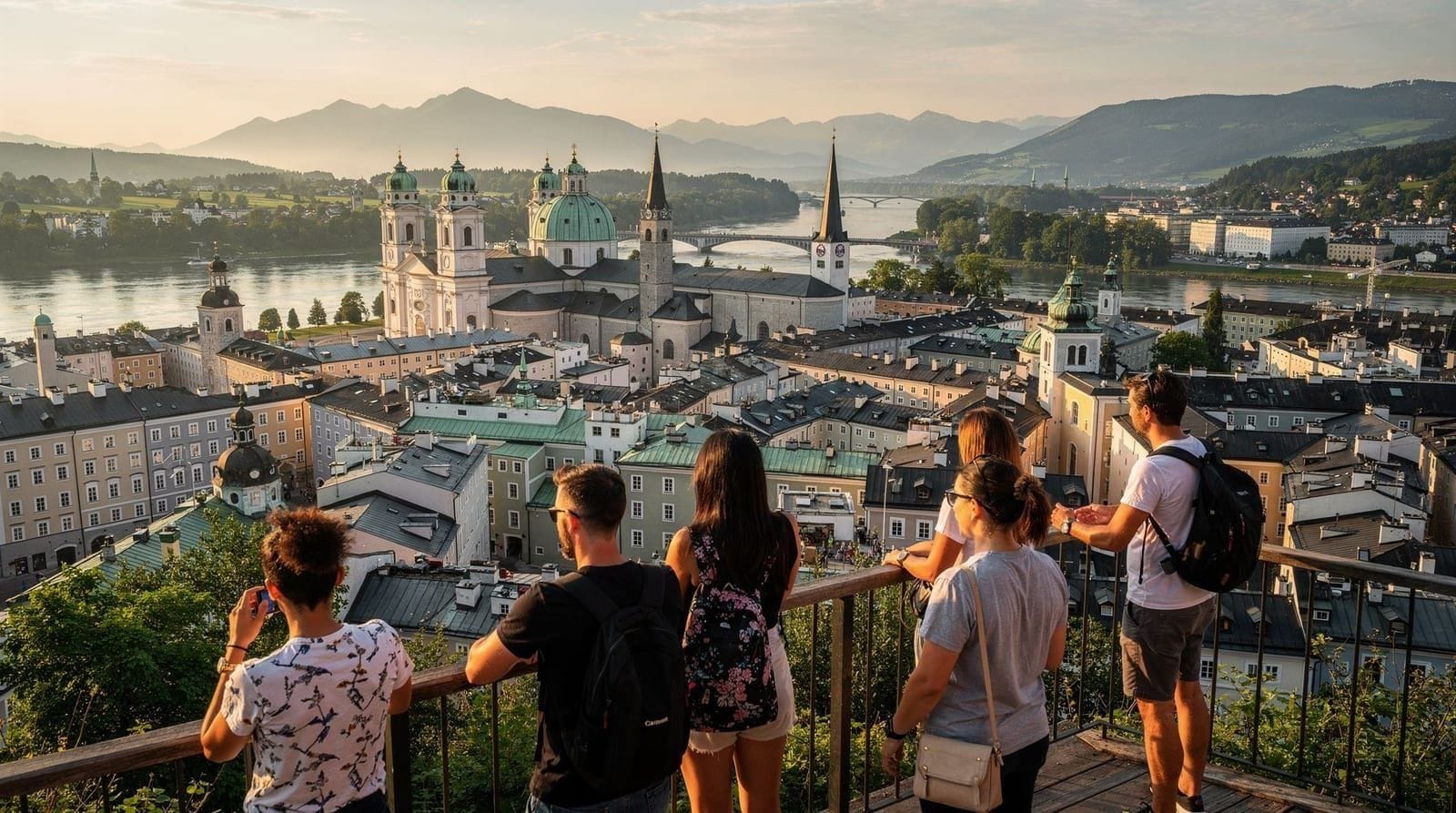
From Munich: Salzburg day trip by train
What are the best day trips from Munich?
The top day trips from Munich by train are Salzburg (1h 45min), Neuschwanstein (2h), Nuremberg (1h 10min), Regensburg (1h 25min), and Berchtesgaden (2h 40min). All are reachable independently with the Bayern-Ticket. Salzburg and Nuremberg offer the best city-break experience; Neuschwanstein and Berchtesgaden are best for scenery. All can be done in a single day.
Why Munich is the best base in Germany for day trips
Munich’s geography gives it an advantage almost no other German city can match. Within two hours by train you can reach Austria’s most beautiful city, a UNESCO medieval old town, Germany’s most photographed castle, one of the most dramatic mountain landscapes in the Alps, and two of Germany’s most historically significant cities. That is not marketing language — it is a straightforward description of what is actually accessible.
The Bayern-Ticket reinforces this. At €29 for a single traveller (€9 per additional person up to five), it covers virtually every regional train in Bavaria plus the cross-border service to Salzburg. A couple travelling together pays €38 for unlimited regional rail travel for the day. This makes even the more distant destinations — Berchtesgaden at 2h 40min, Rothenburg ob der Tauber at 2h 30min — financially sensible for a single day.
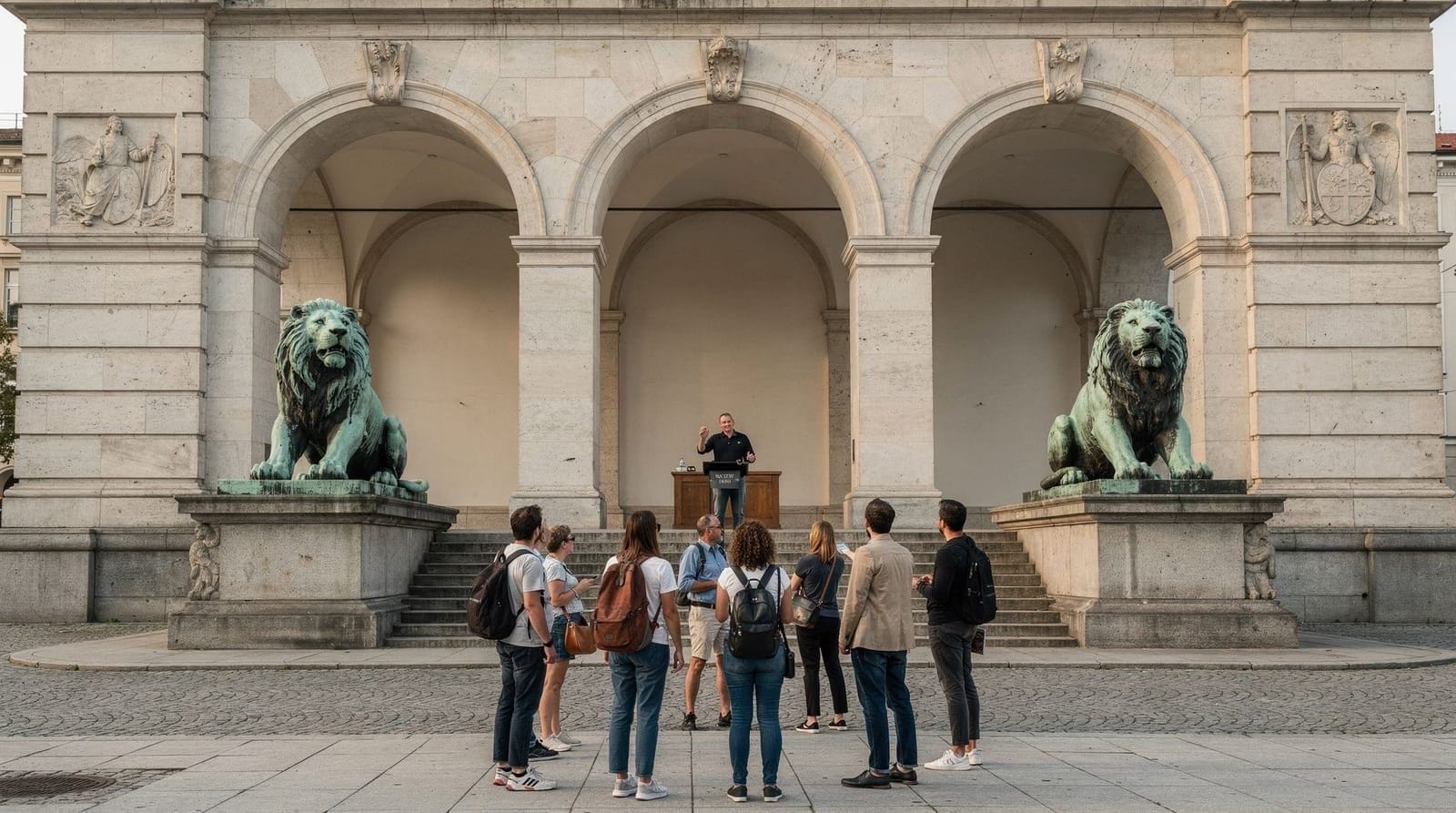
This guide ranks 12 destinations honestly, covering what each one is actually like, how long you realistically need, what it costs in 2026, and who each destination suits best. Day trip to Salzburg from Munich by train — guided tour with local expert
| Where | 12 destinations, 30km (Dachau) to 250km (Rothenburg) from Munich |
| Cost | Bayern-Ticket €29/person, or €9 each additional traveller |
| Time needed | Full day for most; half day for Augsburg or Dachau |
| Getting there | Deutsche Bahn regional trains from Hauptbahnhof |
| Best time | May–June and September for comfort and lighter crowds |
The ranking: 12 day trips rated by category
Before diving into detail, here is the honest ranking. These ratings reflect the return on time invested, not just the quality of the destination in isolation.
Tier 1 — Outstanding (worth a full day every time):
- Salzburg: city richness, walkability, cultural depth
- Neuschwanstein: spectacle, photographic impact, castle interiors
- Berchtesgaden and Eagles Nest: scenery, history, Konigssee
Tier 2 — Very good (excellent if the category interests you):
- Nuremberg: history, medieval old town, castle
- Regensburg: medieval centre, Danube, relaxed pace
- Zugspitze: Germany’s highest peak, alpine drama
- Chiemsee: Bavaria’s largest lake, Herrenchiemsee Palace
Tier 3 — Good but conditional:
- Rothenburg ob der Tauber: stunning if you like preserved medieval towns; can feel theme-park-like in summer
- Fussen and Hohenschwangau: excellent companion to Neuschwanstein
- Garmisch-Partenkirchen: good hiking base, town itself is ordinary
- Dachau memorial: essential and sober — not a recreational day trip but important
Worth knowing about: Innsbruck (Austria), Augsburg, Bamberg, Passau — all reachable, all rewarding, not covered in depth here.
Salzburg — the outright best city day trip
Distance: 150 km | Train: approximately 1h 45min from Munich Hbf | Bayern-Ticket: yes (cross-border regional service)
Salzburg consistently tops Munich day-trip rankings, and it deserves the position. The old town (Altstadt) is genuinely beautiful — baroque architecture organised around an open river, a castle (Festung Hohensalzburg) visible from almost everywhere, Mozart’s birthplace on the main shopping street, and the Mirabell Gardens immediately across the Salzach river.
The city is walkable in a way that few Austrian or German cities match. You can cover the main sights on foot without transport — the old town is compact, the key museums are clustered, and the Festung is accessible by funicular (or a steep walk for free).
A realistic Salzburg day: arrive around 11am, walk Getreidegasse, visit the Domquartier or Mozart’s Geburtshaus (his birthplace, around €12 admission), cross to Mirabell Gardens, take the funicular to the Festung (€16 including entry), eat at Cafe Tomaselli or the Augustiner Bräustübl (a massive beer hall attached to a 17th-century monastery at Augustinergasse 4 — cheap, excellent), and return on the evening service.
Full guide: Munich to Salzburg day trip Private guided day trip to Salzburg from Munich
Neuschwanstein — most photogenic destination in Bavaria
Distance: 130 km | Train to Fussen: 2h (change at Kaufbeuren or Buchloe) | Bayern-Ticket: yes
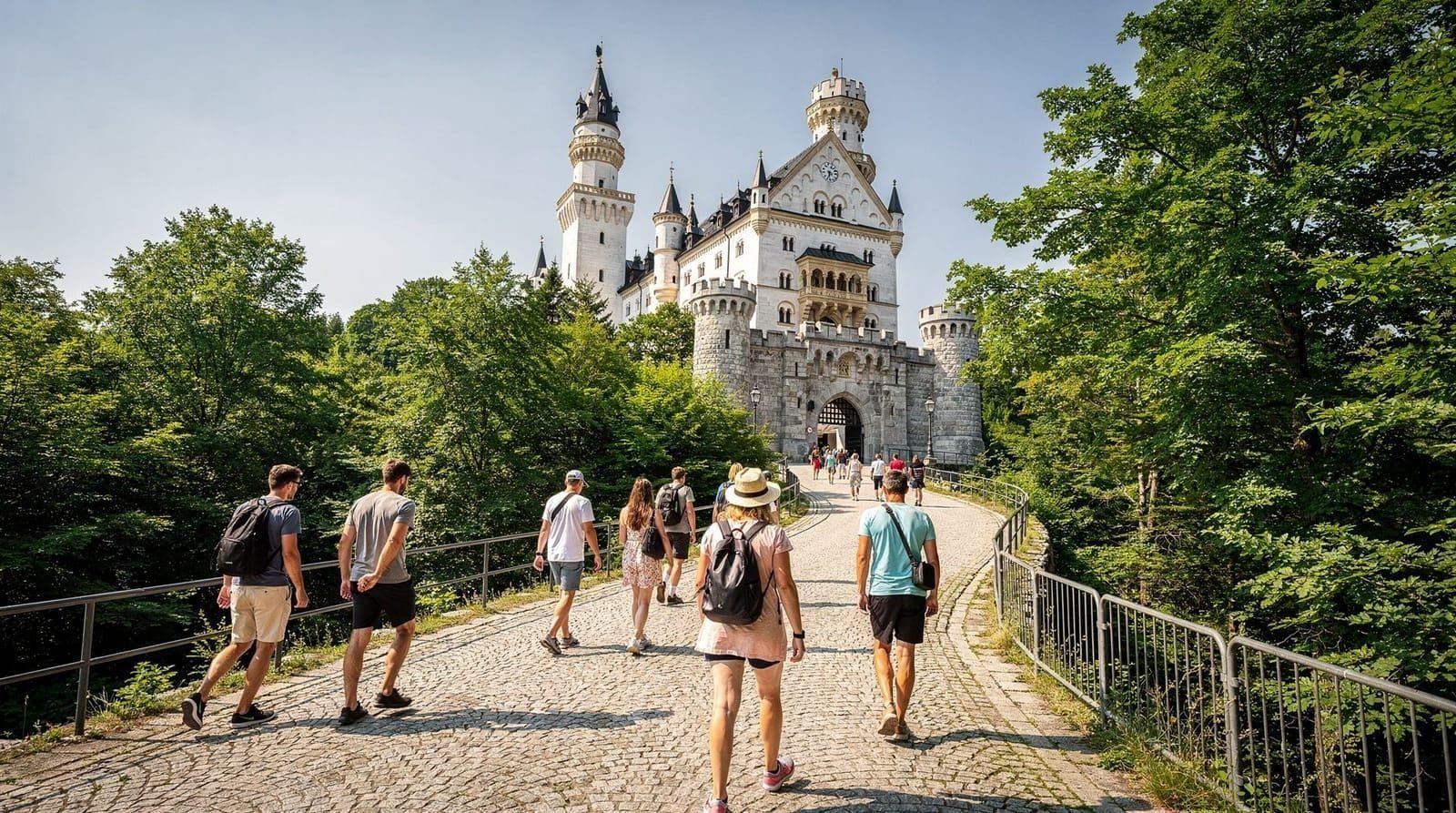
Neuschwanstein is the castle that inspired the Disney logo. The exterior — a white turret rising from forested rock above a valley — is among the most photographed scenes in all of Germany. The interior is also genuinely interesting: King Ludwig II’s obsessive recreation of a Wagnerian fantasy world, never finished but remarkable in the rooms that were completed.
The visit is tightly managed. Entry is only possible via timed tickets, booked in advance from hohenschwangau.de. In peak summer (July-August), tickets sell out weeks ahead. Walk-up availability at the ticket centre in the valley is essentially zero on summer weekends. Booking in advance is not optional.
The walk from the valley to the castle entrance takes about 35 minutes uphill, or 20 minutes by horse-drawn carriage (€8-10 per person). The Marienbrucke suspension bridge above the castle gives the classic exterior view and is about 10 minutes further on foot from the castle entrance.
For the full logistics guide including ticket-booking strategy, see Munich to Neuschwanstein day trip.
Nuremberg — the best history day trip
Distance: 170 km | Train: 1h 10min direct (ICE) or 1h 50min regional | Bayern-Ticket: regional train only (not ICE)
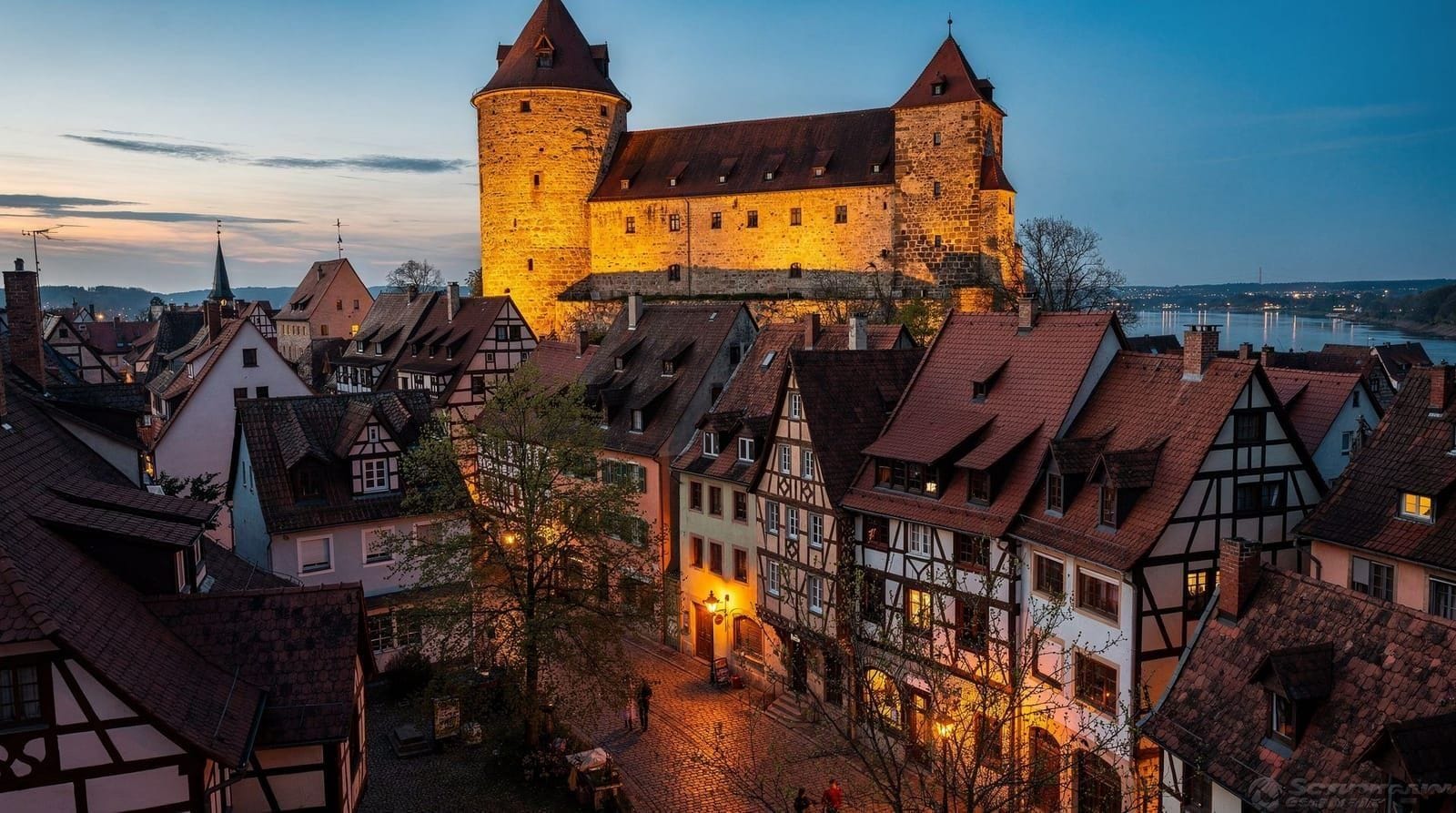
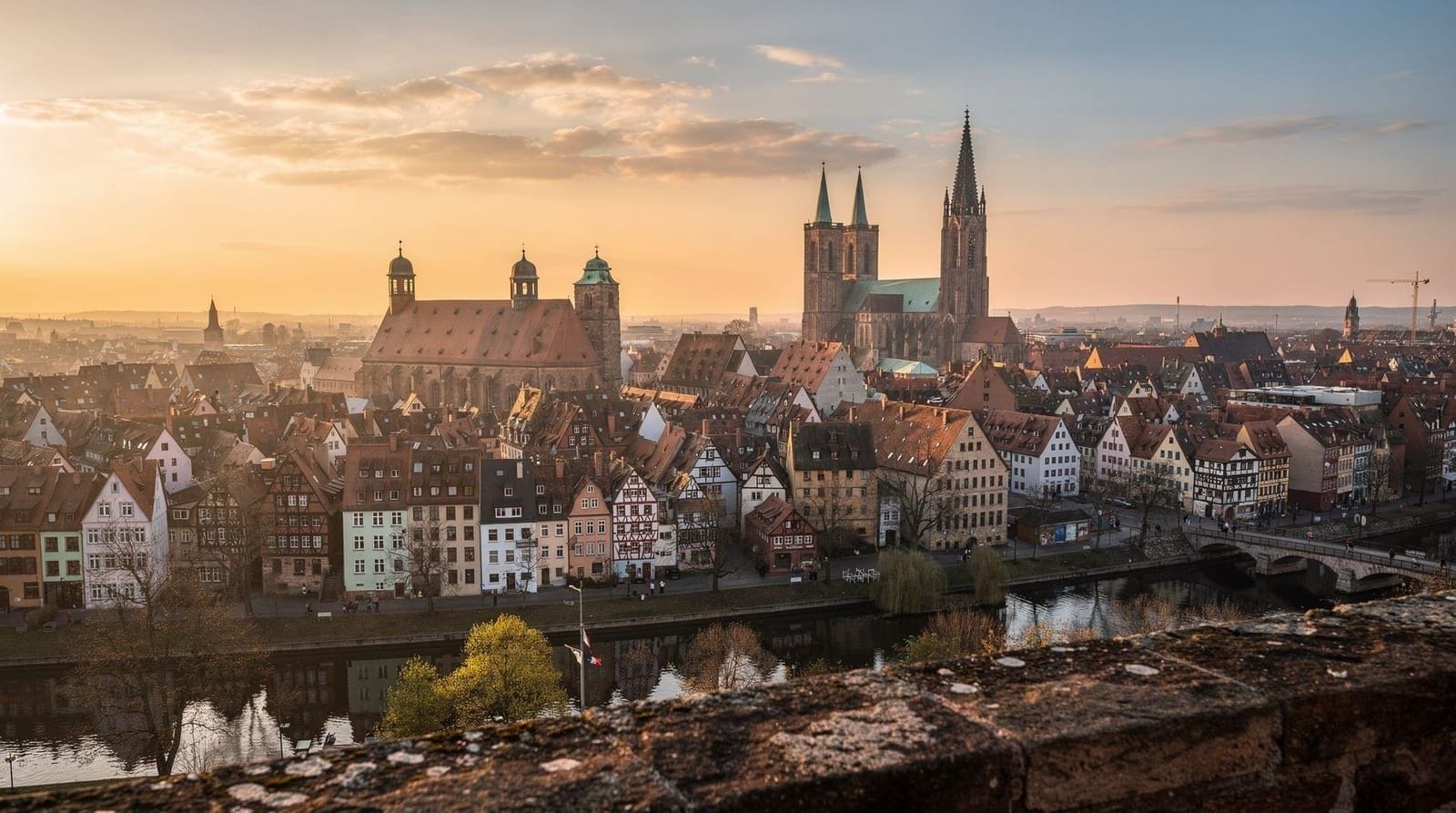
Nuremberg is the largest historic city reachable from Munich within two hours. The old town (Altstadt) survived World War II with significant damage but has been carefully reconstructed. The Nuremberg Castle (Kaiserburg) is impressive and offers views across the city. The main market square (Hauptmarkt), the Church of St. Lorenz, and the streets of the Altstadt are all genuinely attractive.
But Nuremberg’s strongest draw is its 20th-century history. The Nazi Party Rallies took place here. The Nuremberg Trials were held here. The Documentation Centre at the former Nazi Rally Grounds (Zeppelinfeld, on the edge of the city) is one of Germany’s most important historical museums — thorough, honest, and sobering. The Courtroom 600, where the Nuremberg Trials took place, can be visited in the adjacent Justice Palace.
The ICE from Munich Hauptbahnhof takes just 1h 10min but costs €40-70 one-way without a saver fare. The regional train (covered by Bayern-Ticket) takes 1h 50min and stops at several intermediate stations. For a full-day visit, the time difference is manageable.
Full guide: Munich to Nuremberg day trip
Berchtesgaden and Eagles Nest — most dramatic scenery
Distance: 180 km | Train to Berchtesgaden: 2h 40min (change at Freilassing) | Bayern-Ticket: yes
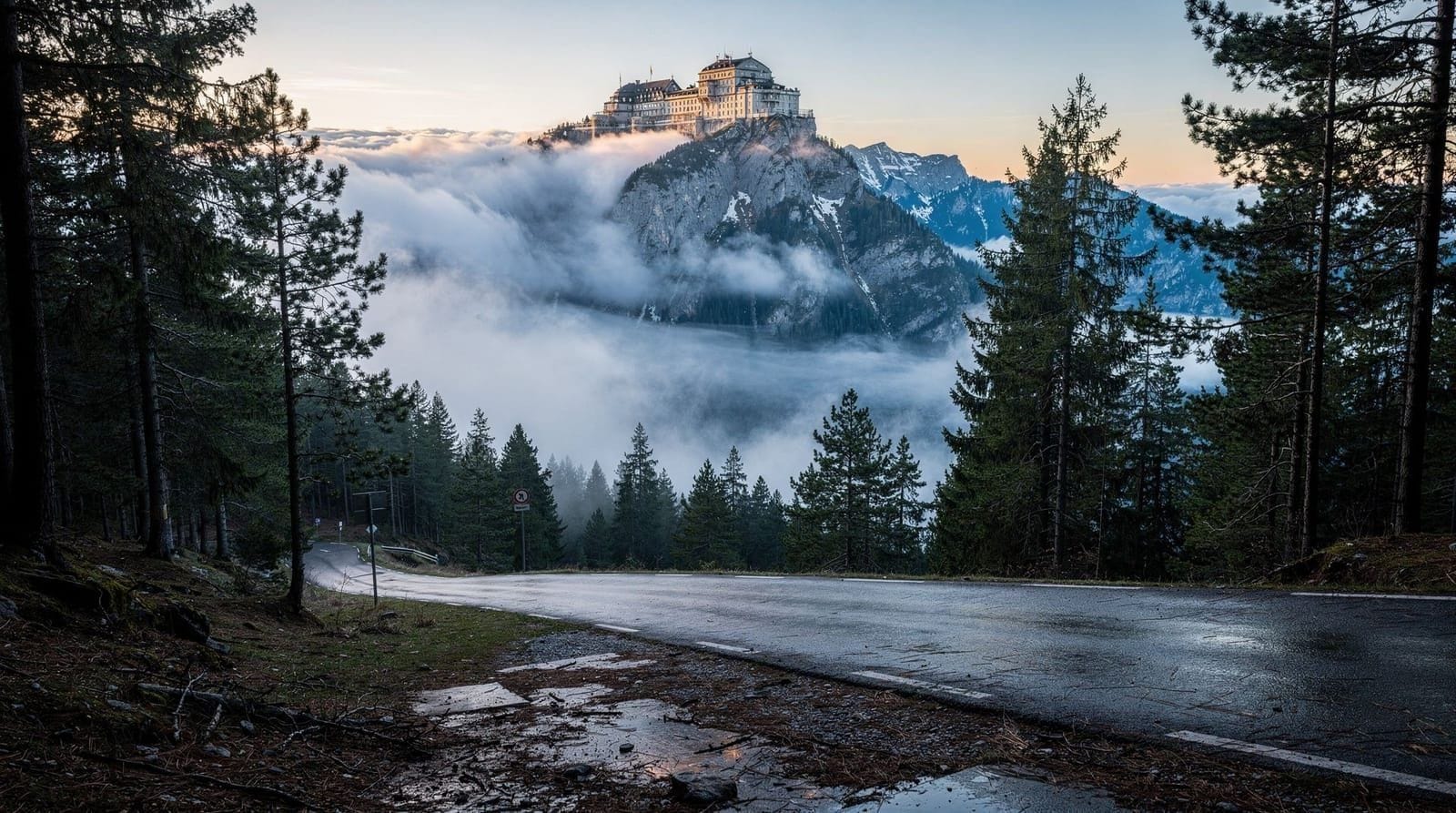
Berchtesgaden is where the scenery becomes genuinely alpine. The town sits in a valley ringed by the Berchtesgadener Alpen, with Konigssee lake (dark, deep, surrounded by vertical cliff faces) 5 kilometres away and the Eagles Nest (Kehlsteinhaus) perched on a 1,834-metre summit above the town.
The Eagles Nest is Hitler’s former alpine retreat, built in 1938 and used as a gift to Hitler on his 50th birthday. It survived the war intact and is now a restaurant and viewpoint open from mid-May to late October. The approach requires a dedicated shuttle bus from the Documentation Centre car park — the road is one of the engineering feats of the Nazi era, and the bus itself is part of the experience. At the summit, you take a lift through the rock to emerge inside the building. The history and the panorama combine to make it one of the most unusual visitor experiences in Bavaria.
Konigssee is a separately worthwhile half-day: electric boat tours on the lake depart from Schonau am Konigssee (reachable by bus from Berchtesgaden), crossing to the St. Bartholomae church and the inner lake (Obersee).
Full guide: Munich to Berchtesgaden day trip
Regensburg — the most underrated city
Distance: 120 km | Train: 1h 25min | Bayern-Ticket: yes
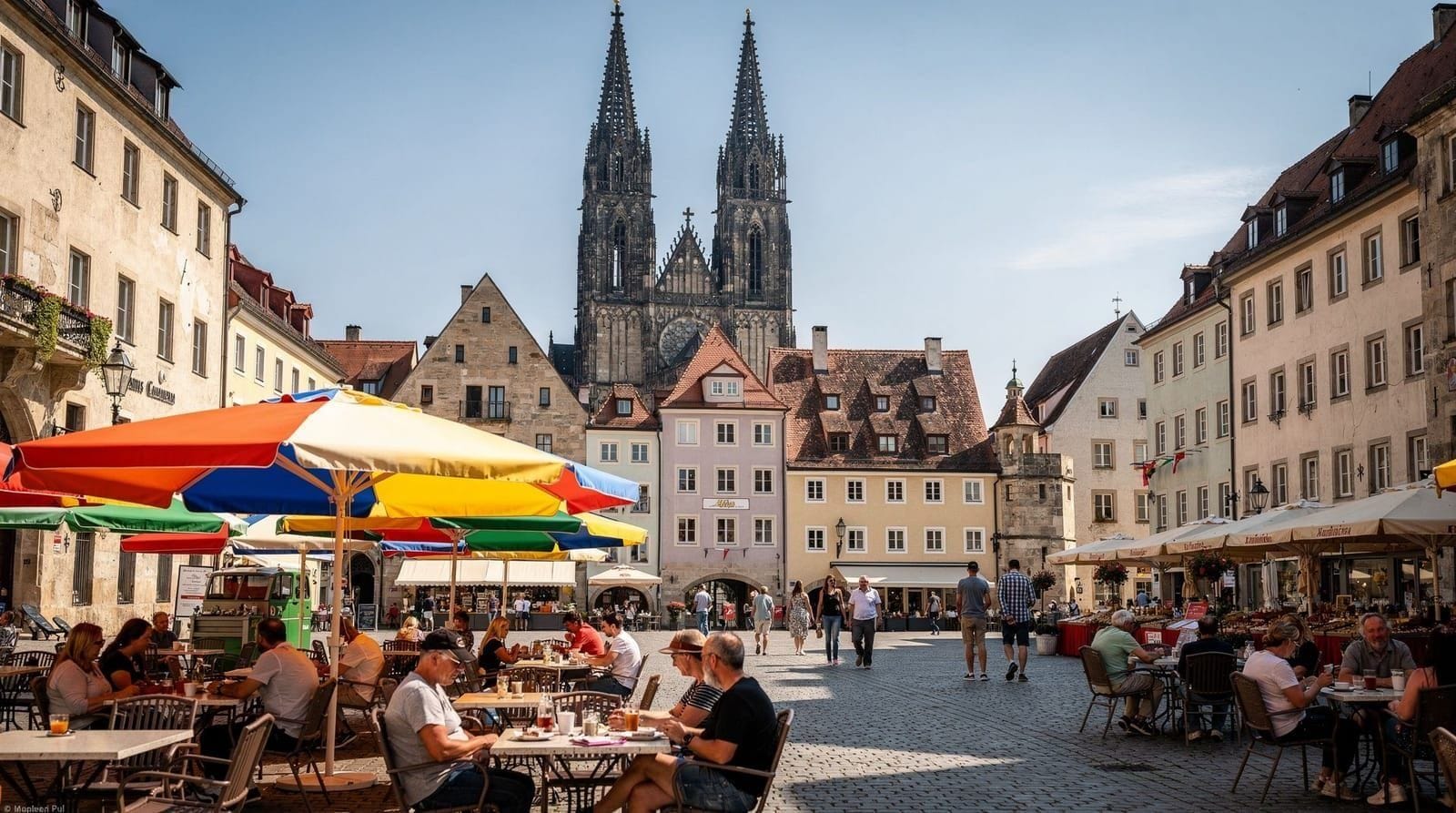
Regensburg is UNESCO-listed, remarkably well-preserved, and consistently overlooked by visitors who rush to Neuschwanstein or Salzburg instead. The old town is one of the largest and most intact medieval centres in Germany: the stone bridge across the Danube (Steinerne Brücke, built 1135-1146) is still in use, the Cathedral of St. Peter is a serious Gothic work, and the Roman tower at Porta Praetoria dates from around 179 AD.
The city’s small size (around 160,000 inhabitants) means it retains a genuine local character that larger German tourist destinations have lost. The Wurstküche at the base of the stone bridge has been selling grilled sausages since the 12th century and continues to do so — it is touristy but honest.
Regensburg is an excellent choice for travellers who have already done the main Bavarian highlights and want something less crowded and more authentic.
Full guide: Munich to Regensburg day trip
Rothenburg ob der Tauber — medieval preservation at a cost
Distance: 250 km | Train: 2h 30min (changes at Ansbach) | Bayern-Ticket: yes
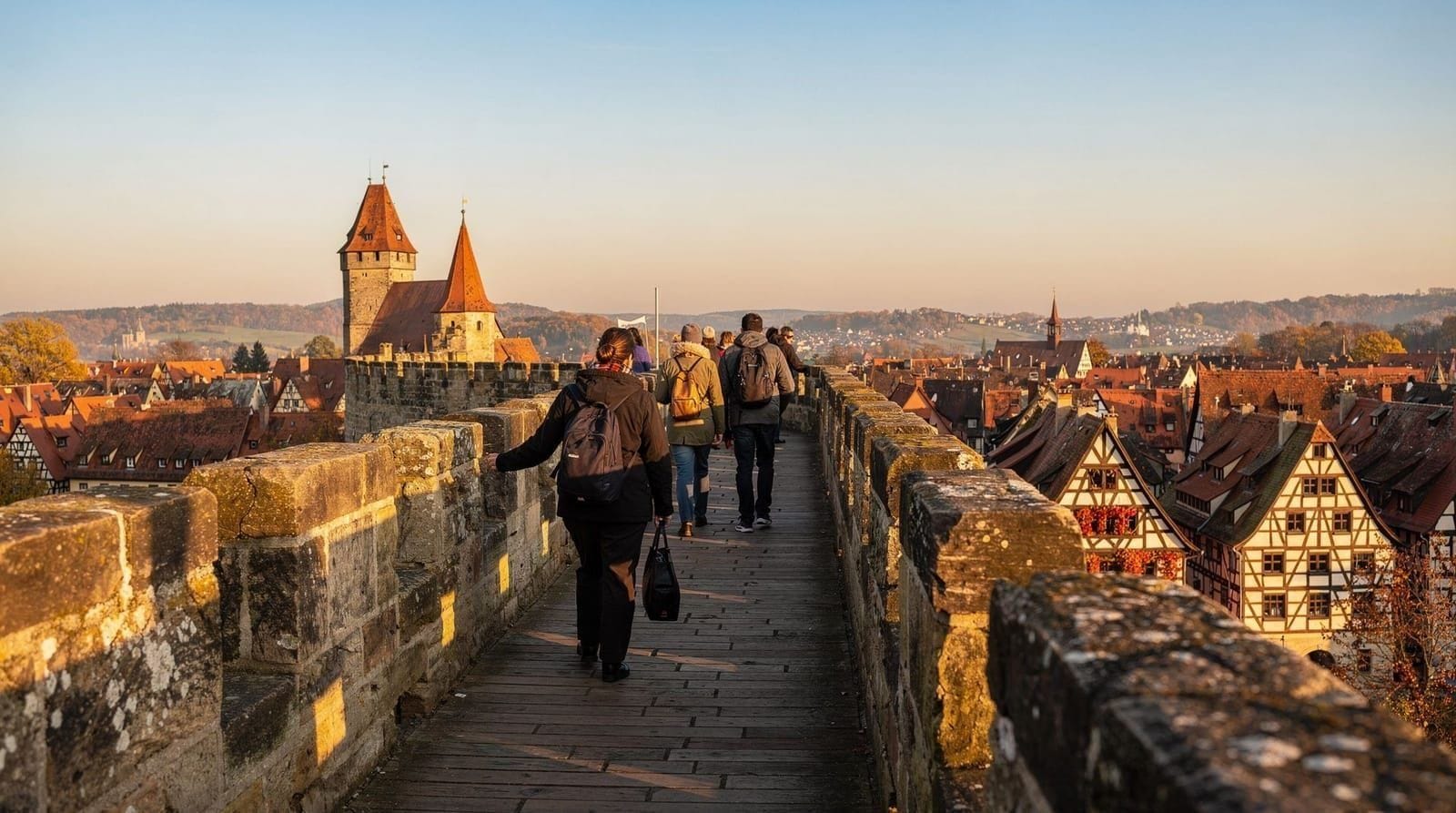
Rothenburg is the most complete medieval walled city in Germany. The Stadtmauer (city wall) is walkable for almost its entire 2.5-kilometre circuit. The Rathaus (Town Hall) dates from 1572. The main square (Marktplatz) is lined with timber-framed buildings in remarkably original condition. In purely visual terms, it is extraordinary.
The trade-off is that Rothenburg is intensely touristy. The souvenir shops on Herrngasse sell the same items in every window. In July and August, the streets are genuinely crowded with tour groups. The famous Schneeball (a fried pastry ball covered in sugar) is sold everywhere and is, to be honest, a mediocre product at a premium price.
Visit in the early morning, late afternoon, or in the shoulder season (April-May or October) and Rothenburg is magical. At peak summer midday it is an exercise in crowd management.
Full guide: Munich to Rothenburg day trip
Zugspitze — Germany’s highest peak
Distance: 90 km | Train to Garmisch: 1h 30min | Bayern-Ticket: yes (Munich-Garmisch leg only)
The Zugspitze at 2,962 metres is included here because it is one of Munich’s signature day trips, though it operates differently from a city destination. The journey from Munich to the summit involves the regional train to Garmisch-Partenkirchen, then the Zugspitzbahn cog railway (75 minutes from Garmisch) or the Eibseeseilbahn cable car. The summit transport ticket costs approximately €72 for adults in 2026, on top of the Bayern-Ticket.
The summit experience depends almost entirely on the weather. On a clear day, the panorama across four countries is outstanding. In cloud, you pay €72 to stand in cold grey fog. Check the summit webcam at zugspitze.de the morning of your visit.
Full details in the Zugspitze day trip guide.
Dachau memorial — the necessary day trip
Distance: 30 km | Train: S2 line from Munich Hauptbahnhof, 40 minutes | Bayern-Ticket: yes
Dachau is not a recreational day trip. The Dachau Concentration Camp Memorial Site is Germany’s first concentration camp, operational from 1933 to 1945, and it is now one of the country’s most important memorials and documentation centres. Admission is free.
It deserves inclusion here because it is a significant part of understanding Munich and Bavaria — the camp opened within weeks of Hitler taking power, and its proximity to Munich is historically relevant. The memorial is handled with appropriate gravity; there is no voyeurism or sensationalism. The documentation centre is thorough and takes 2-3 hours to do justice.
Allow a full morning or afternoon — not a quick stop. See the full Dachau Memorial guide.
Planning your day trips: practical toolkit
Bayern-Ticket fundamentals: Buy online via the DB Navigator app or at station ticket machines. It is available from 12am the day of travel (valid from 9am). For travel on Monday-Friday, the Quer-durchs-Land-Ticket is an alternative that covers all of Germany (not just Bavaria), though at a higher price point.
Timetable tools: The DB app (Deutsche Bahn) is the most reliable for German rail timetables. For connections involving buses at the destination, check the local transport authority: for Berchtesgaden, BVB; for Regensburg, RVV; for Nuremberg, VGN.
Seat reservations: Not required on regional trains. For specific timed tours (like Neuschwanstein’s timed entry), book well in advance.
Start times: Departing Munich between 7:00am and 8:30am gives the longest useful time at the destination and avoids the mid-morning rush at popular sites. For Berchtesgaden (Eagles Nest) and Neuschwanstein, arriving before the first tour buses is a material advantage. Guided day trip to Nuremberg from Munich by train
Matching the day trip to your interests
Rather than working through the ranking in order, most visitors get better results picking by what they actually want out of the day:
Want a second beautiful old European city, not just Bavaria: Salzburg. It is the only destination on this list that feels like a genuinely different country rather than a Bavarian variation — because it is one.
Want the single most photographed building in Germany: Neuschwanstein, without hesitation, booked well in advance.
Want mountains and a lake in one day: Berchtesgaden and Konigssee, or Zugspitze if the summit itself (rather than the valley scenery) is the point.
Want history without a castle: Nuremberg for 20th-century history and a genuinely impressive medieval old town, or Dachau if the memorial itself is the priority for the day.
Want the quiet, underrated option: Regensburg. It gets a fraction of the visitors that Salzburg or Neuschwanstein see and delivers comparable medieval density.
Want low cost and minimal planning: Chiemsee or Starnberger See — both close, both scenic, both simple by train.
Day trips that work well as a pair with Munich city time
Not every day trip needs to consume a full day away from Munich. A few destinations pair naturally with a half-day still spent in the city:
- Dachau in the morning, central Munich in the afternoon — the S-Bahn journey is short enough that a reflective transition back into the city works better than trying to fill an entire day around the memorial.
- Andechs Monastery combines well with an Ammersee lake afternoon for travellers who want beer history and a swim in the same half-day.
- Nymphenburg Palace, technically inside Munich, is frequently treated as a mini day trip and pairs naturally with a morning in the Altstadt — see best castles near Munich for the comparison against the true out-of-town castles.
Frequently asked questions about day trips from Munich
Which day trip from Munich is most worth it?
Salzburg delivers the most varied experience in a single day: UNESCO old town, Mozart connections, baroque architecture, and a castle above the city. Neuschwanstein is the most photogenic. Nuremberg is the best for modern history. For pure nature, Berchtesgaden and the Eagles Nest are unmatched in Bavaria.
How does the Bayern-Ticket work for day trips?
The Bayern-Ticket is a day pass covering all DB regional trains and most buses in Bavaria, valid from 9am on weekdays and from midnight on weekends. A single-person ticket costs €29 in 2026; each additional person adds €9. It covers Munich to Salzburg, Nuremberg, Regensburg, Berchtesgaden, Garmisch, and most Bavarian destinations. ICE and IC trains are not covered.
Can you do multiple day trips in one day from Munich?
Combining two destinations in a single day is almost always a mistake. Transit time alone from Munich eats into your time at each place. The one exception that works is pairing Neuschwanstein with Fussen or Hohenschwangau, since they are immediately adjacent. Salzburg plus Berchtesgaden is technically possible but leaves only 2 hours in each — too little for either.
Is it better to book a tour or go independently?
For most destinations, going independently by train is cheaper and more flexible. The Bayern-Ticket makes independent travel very cost-effective for groups of two or more. Organised tours are worth considering for Berchtesgaden and the Eagles Nest (where the shuttle bus connection requires planning), and for Neuschwanstein in peak summer when timed entry tickets sell out weeks ahead.
What day trip is best for families with young children?
Salzburg and Regensburg both have pedestrian-friendly old towns without steep terrain. Neuschwanstein has a steep 1.5km walk uphill to the entrance. Berchtesgaden requires significant walking. For very young children, Chiemsee or Starnberger See are gentler options with lake swimming and flat paths.
Are all these day trips doable without a car?
Yes. All destinations in this guide are served by regular Deutsche Bahn regional trains from Munich Hauptbahnhof. The Bayern-Ticket covers most journeys. A car adds flexibility for Rothenburg ob der Tauber and for countryside exploration, but is not necessary for any of these trips.
How many days should I allow for day trips in Munich?
On a 4-day Munich trip, realistically plan for 1-2 day trips. Two destinations per trip would be ambitious. If day trips are a priority, base yourself in Munich for 5-7 days. The most common mistake is underestimating how long getting to and from a destination takes — a 2h 40min journey to Berchtesgaden means 5+ hours of total transit on a single day.
Top experiences
Bookable activities with verified prices and instant confirmation on GetYourGuide.