Munich to Salzburg day trip: the complete 2026 guide by train
From Munich: Salzburg day trip by train
How do you get from Munich to Salzburg by train and how long does it take?
Direct regional trains (RB) from Munich Hauptbahnhof to Salzburg Hauptbahnhof run roughly every hour and take approximately 1h 50min. The Bayern-Ticket covers this cross-border journey. The first useful departure for a day trip is around 7:00am, arriving at 8:50am. Last return train from Salzburg is typically around 9pm.
Why Salzburg tops the Munich day-trip list
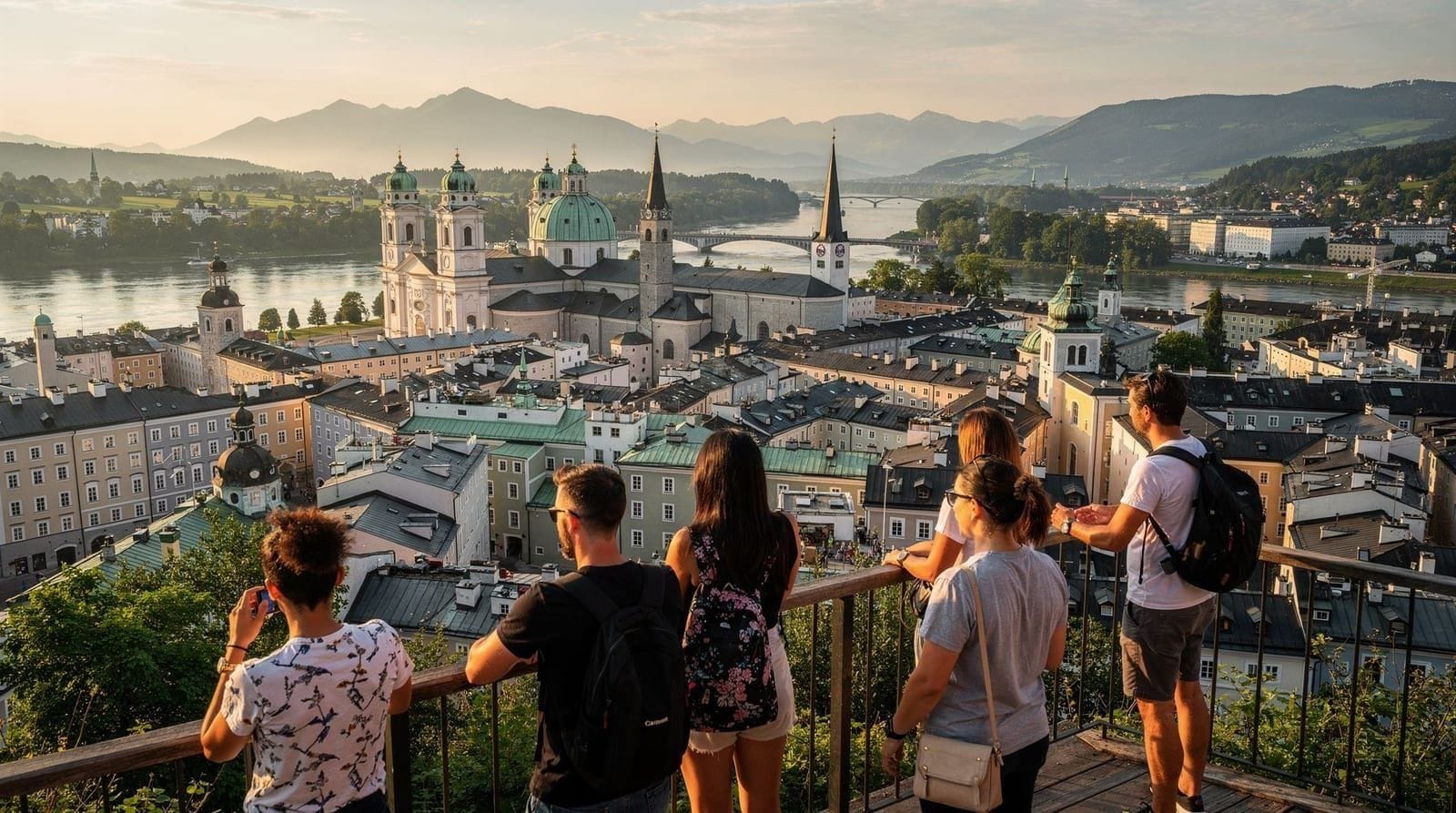
Salzburg appears at the top of almost every Munich day-trip recommendation, and for once the consensus is correct. The city offers a concentration of genuine attractions within a walkable area that few Austrian or German cities can match: UNESCO-listed baroque architecture, one of the best-preserved medieval castle-towns in Central Europe, a serious musical history (Mozart was born here in 1756), and a riverside setting that works in almost any season.
The other honest reason Salzburg tops the list: the train from Munich takes under two hours, uses the Bayern-Ticket, and runs frequently enough that you can choose your departure time without elaborate planning. You leave Munich after breakfast and arrive in Salzburg in time to start exploring before the main crowds appear.
This guide covers the practicalities as they exist in 2026, including what the entry fees actually look like, where to eat without paying tourist-trap prices, and how to structure the day to get the most out of roughly 8-9 hours in the city.
| Where | Salzburg, Austria, ~140km southeast of Munich |
| Cost | Bayern-Ticket ~€29 covers the train; budget €50–70/person total |
| Time needed | 8–9 hours in the city |
| Getting there | Direct regional train, ~1h50, roughly hourly |
| Best time | Before 10am for quieter streets; avoid late July–August festival crowds if possible |
Getting there: Munich to Salzburg by train
Trains: Direct regional trains (classified as RB — Regionalbahn) run from Munich Hauptbahnhof to Salzburg Hauptbahnhof roughly every hour throughout the day. Journey time is approximately 1h 50min. The service is jointly operated by Deutsche Bahn and OBB (Oesterreichische Bundesbahnen).
Key departure times from Munich Hbf (2026 timetable, verify on DB Navigator):
- 7:02 → arrives Salzburg 8:52
- 8:02 → arrives Salzburg 9:52
- 9:02 → arrives Salzburg 10:52
For a full day in Salzburg, the 7:02 or 8:02 departure is ideal. Arriving before 10am gives you time at the main sights before tour groups from Vienna, Prague, and other cities arrive by coach.
Bayern-Ticket: Covers this journey in full. Purchase online via DB Navigator, at station ticket machines, or at the DB service counter. Valid from 9am on weekdays (if you take the 7:02 train on a weekday, buy a separate cheap ticket for the first leg before the Bayern-Ticket activates — or simply take the 9:02 departure). On weekends, the Bayern-Ticket is valid from midnight.
Return trains from Salzburg to Munich: Last useful services depart around 8:45pm-9:15pm. Check the exact timetable on the day, as schedules vary slightly.
Alternative — organised tour: If you prefer a guided structure or don’t want to handle the logistics, see our Salzburg day trip tours comparison for vetted options including small-group and private tours. Guided day trip from Munich to Salzburg by train with local expert
What to see in Salzburg: the essential circuit
Salzburg is compact. The main attractions are within a 1.5-kilometre walk of each other. You do not need public transport within the city unless visiting the zoo (Tiergarten Hellbrunn, 4km south) or the Hellbrunn Palace.
Getreidegasse and the Altstadt
Getreidegasse is Salzburg’s most famous street: a narrow pedestrian lane lined with tall buildings, wrought-iron guild signs hanging above each shop (one of the few cities in Austria where this tradition is intact), and the inevitable souvenir shops. Mozart’s Geburtshaus (Mozart’s Birthplace) is at number 9 — a yellow facade, easy to miss if you are moving quickly.
Mozart’s Geburtshaus (Getreidegasse 9): The house where Mozart was born in 1756 is now a museum with period rooms, instruments, and biographical material. Admission is €12 for adults. The rooms are genuinely atmospheric; the exhibits cover his early life and his relationship with Salzburg, which was complicated (he left as soon as he could and wrote disparagingly about the city). The queue can be long in peak season; arrive before 10am or visit later in the afternoon.
The Altstadt as a whole is UNESCO-listed. The main square (Alter Markt), the Residenzplatz with its baroque fountain, and the Cathedral (Dom) with its wide ochre facade are all within a 5-minute walk of Getreidegasse. The Dom interior is impressive — the triple portals are 17th-century bronze, and the nave is one of the finest early baroque interiors in the German-speaking world. Admission free.
Mirabell Palace and Gardens
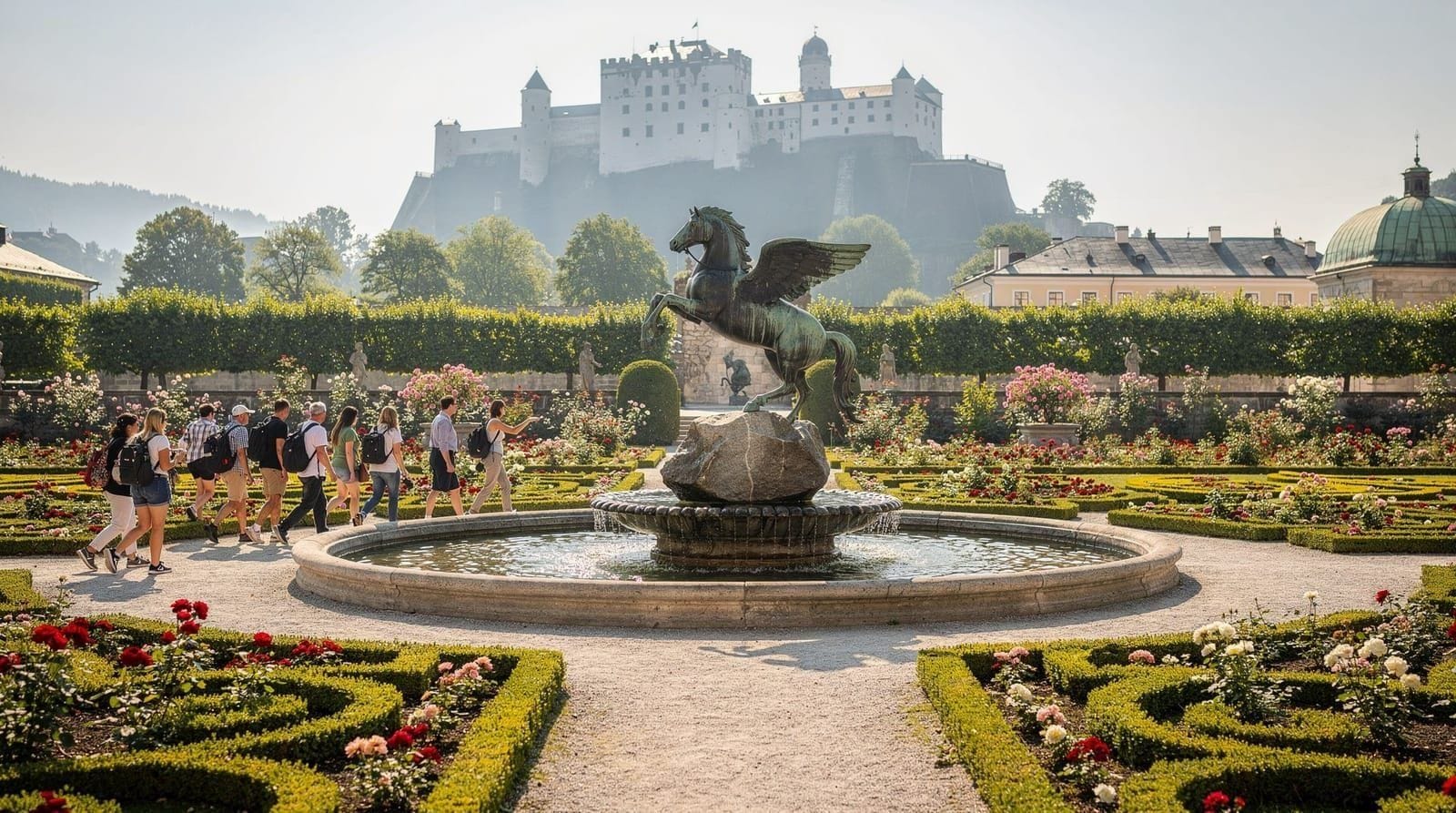
Cross the Salzach River via the Staatsbrücke to reach the Mirabell Palace and Gardens — the formal gardens made famous in The Sound of Music (this is where “Do-Re-Mi” was filmed, a fact the tourist board will not let you forget). The gardens are open year-round and free to enter. The symmetrical layout with the Festung visible above on the rock behind makes for the classic Salzburg photograph.
The Mirabell Palace itself houses the Salzburg Standesamt (civil registry) and is not generally open to tourists in its interior, but the marble staircase is occasionally accessible during visits.
Festung Hohensalzburg
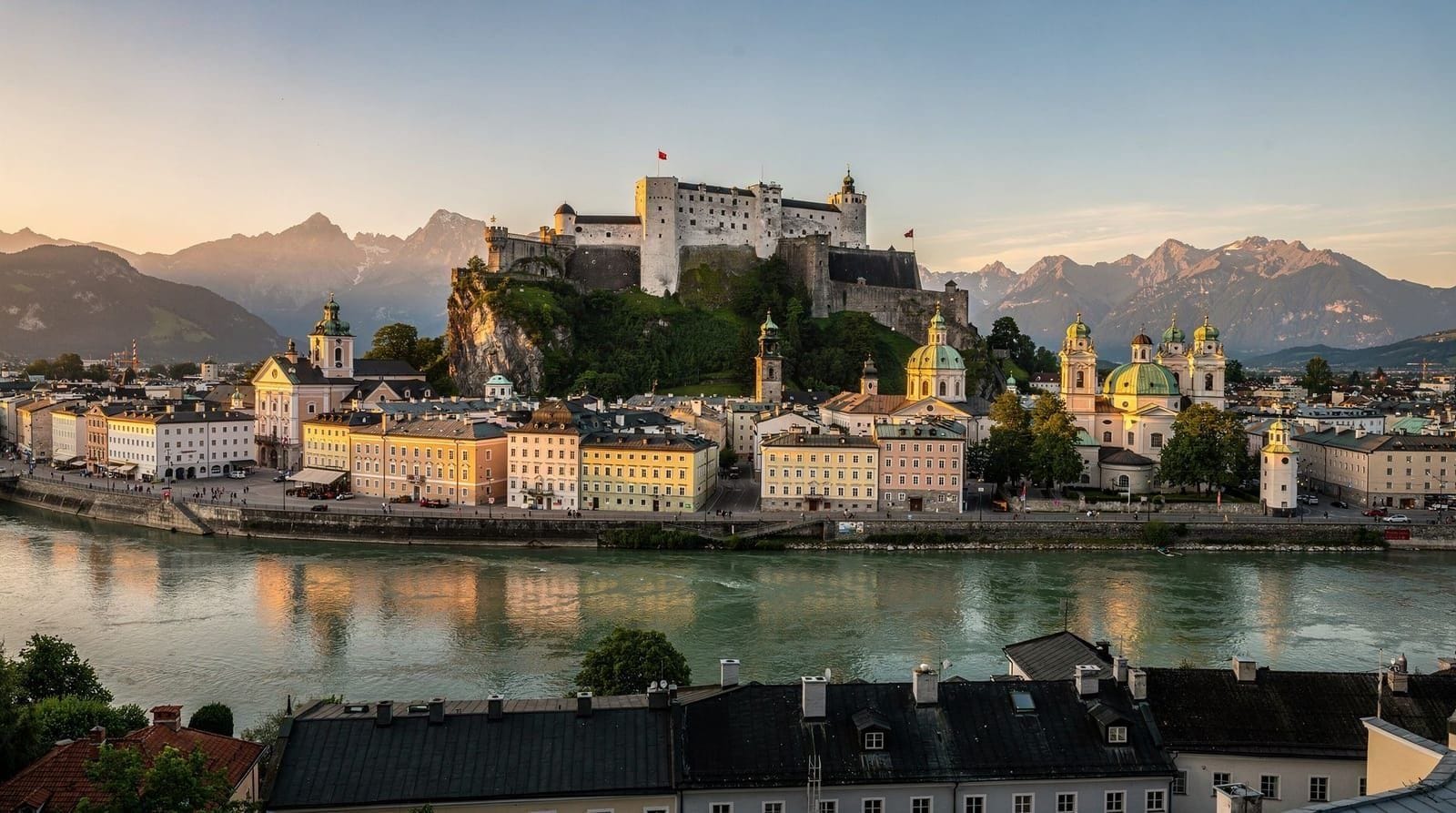
The fortress above the Altstadt is Salzburg’s most dominant feature. Built from 1077 and expanded through the 16th century, it is one of the best-preserved medieval castles in Central Europe. The funicular (Festungsbahn) runs from Festungsgasse, a few hundred metres from the Dom, and takes about 70 seconds.
Tickets (2026): Funicular plus fortress entry: approximately €16 for adults. Walking up the hill is possible for free but steep — allow 15 minutes on foot. The interior includes the State Rooms of Archbishop Leonard von Keutschach (richly decorated late-Gothic rooms), the Marionette Museum, and the Rainer Museum with period weapons and armour. The terrace views over Salzburg and the Salzach valley are excellent. Allow 1.5-2 hours for a full visit.
Domquartier
The Domquartier is a combined museum of the Archbishop’s Residence and several connected ecclesiastical buildings around Residenzplatz. Admission €16 for adults. The rooms are genuinely impressive — particularly the state rooms of the Archbishop’s Residenz with their frescoed ceilings and collection of Austrian and Italian paintings. The route connects several buildings via interior passages, including the cathedral galleries with views down into the nave.
If time is tight, choose between the Festung and the Domquartier rather than doing both — they cover similar themes of ecclesiastical and aristocratic wealth, and two hours in one is more rewarding than one hour in each. Private guided day trip to Salzburg — custom itinerary from Munich
Festung vs Domquartier, if you can only do one:
| Festung Hohensalzburg | Domquartier | |
|---|---|---|
| Cost | ~€16 (funicular + entry) | ~€16 |
| Highlight | State rooms, terrace views over the whole city | Frescoed Residenz state rooms, cathedral gallery views |
| Time | 1.5–2 hours | 1.5–2 hours |
| Best for | Views and medieval fortress atmosphere | Baroque interiors and art collections |
If you value a panoramic view of Salzburg above everything else, take the Festung. If interior decorative art matters more, take the Domquartier.
Where to eat and drink in Salzburg
Augustiner Bräustübl (Augustinergasse 4-6): This is Salzburg’s honest answer to a Bavarian beer hall — a massive monastic brewery (Augustinian friars, founded 1621) with several large vaulted rooms and a garden. You collect your beer from a counter in the traditional manner, bring it to your table, and order food (cold cuts, pretzels, sausages) from various stations. It is not particularly charming in decor, but the atmosphere is genuine and the prices are reasonable — a Masskrug (1-liter mug) of Augustiner-Bräu costs around €8. Closed Monday.
Cafe Tomaselli (Alter Markt 9): Operating since 1705, this is one of Austria’s oldest continuously operating coffee houses. The service is formal (Viennese coffeehouse tradition), the Apfelstrudel is good, and the seating terrace on Alter Markt is one of the better places to sit in the square. Coffee and cake will run to €10-15 per person. Busy but manageable in the morning before 11am.
Stiftsbäckerei St. Peter (Kapitelplatz 8): A bakery attached to the Benedictine abbey of St. Peter, making bread in a stone oven. More of a specialty item — the bread is notably good — than a full meal stop. Open mornings only.
Tourist-trap alert: The restaurants directly on Getreidegasse and immediately around the Dom are predictably expensive. Stick to streets slightly off the main pedestrian circuit for better value at lunch.
What to skip or reconsider
Sound of Music tour: Multiple bus tour operators run “Sound of Music” tours of filming locations around Salzburg. If the musical is meaningful to you, these can be enjoyable. If not, they eat 4 hours of your limited day visiting locations that look ordinary without the film context. The Mirabell Gardens (free, 20 minutes) cover the most famous scene without requiring a tour.
Hellbrunn Palace: The Lustschloss Hellbrunn and its famous trick fountains (water surprises built in the 17th century to soak unsuspecting guests) are genuinely entertaining but require a bus journey and half a day. Not recommended unless you have at least two days in Salzburg.
Salzburg card: The Salzburg Card (€32/48-hour) gives free entry to major attractions and free public transport. It is only worthwhile if you plan to visit 4+ paid sites and use the buses extensively. For a single focused day, paying entry fees individually works out cheaper.
Crowds and timing
Salzburg has become substantially more crowded in the last decade. July and August see the highest visitor volumes, with the Salzburg Festival (Salzburger Festspiele) in late July and August adding music-focused tourists from around the world. Festival events themselves require separate expensive tickets booked months in advance.
For a day trip, the most effective strategy is arriving before 10am (take the 8:02 or 7:02 from Munich), walking Getreidegasse and visiting Mozart’s Geburtshaus first, then moving to the Festung before the mid-morning tour coaches arrive. Early afternoon (1-3pm) is the most crowded period on the main streets.
For the full list of day trips from Munich ranked by value, see Best day trips from Munich.
Combining Salzburg with other destinations
Salzburg and Hallstatt: Hallstatt, the small UNESCO village on a lake in the Salzkammergut, is 75km from Salzburg by road. Combining both in a single day from Munich is possible but aggressive — you would need to take the earliest Munich train, spend 2 hours in Salzburg, travel to Hallstatt by bus (allow 2 hours total including the bus from Bad Ischl), and then return via Salzburg to Munich in the evening. Specialists offer this as a tour. For independent travel, it works better as a 2-day trip.
Salzburg and Berchtesgaden: Berchtesgaden is 25km from Salzburg. The connection by bus takes about 40 minutes. If your primary interest is the Eagles Nest and Konigssee, base yourself in Salzburg overnight and visit Berchtesgaden the following morning, before returning to Munich. The Munich to Berchtesgaden guide covers the Eagles Nest logistics in detail.
Salzburg and the Sound of Music sites: For visitors specifically drawn by the film, the Sound of Music Salzburg tour guide covers which filming locations are worth a detour and which are skippable without a guided tour. Mirabell Gardens alone covers the most famous scene for free.
Frequently asked questions about visiting Salzburg from Munich
Does the Bayern-Ticket cover the Munich to Salzburg train?
Yes. The Bayern-Ticket covers the cross-border regional train from Munich Hauptbahnhof to Salzburg Hauptbahnhof. The train crosses into Austria and the Bayern-Ticket remains valid for the complete journey. ICE and IC express trains on the same route are not covered.
How much does a day trip to Salzburg from Munich cost?
With a Bayern-Ticket (€29 single, €38 for two, €9 each additional person up to 5), the train is covered. In Salzburg, Mozart’s Geburtshaus costs €12, the Festung with funicular €16, the Domquartier €16. A realistic day budget including transport, 1-2 entry fees, lunch, and coffee is €50-70 per person.
What is the best way to spend one day in Salzburg?
Start at Getreidegasse (Mozart’s birthplace at no. 9), walk through the Altstadt to the Dom, cross the Salzach to Mirabell Gardens, return for the funicular to Festung Hohensalzburg, and finish with dinner at Augustiner Bräustübl (Augustinergasse 4). This covers the main sights in a natural walking circuit.
Is Salzburg day trip crowded?
Yes, particularly in July and August. The Altstadt is compact and concentrates visitors. Arriving before 10am and exploring Getreidegasse early avoids the worst congestion. The Festung is less crowded in the morning than in the afternoon.
Do you need a passport or visa for Salzburg?
Austria is part of the Schengen Area. EU and Schengen-area citizens travel freely. Non-EU visitors who entered Germany on a Schengen visa can cross into Austria without additional documentation. No border checks are routinely performed on the Munich-Salzburg train.
Can you combine Salzburg with Berchtesgaden in one day?
Technically possible but not recommended. Combining both leaves only 2-3 hours in each, which is too short for either. The 2-day Munich-Salzburg itinerary is a much better option if you want to cover both destinations.
Is Salzburg or Innsbruck the better cross-border day trip from Munich?
Both require a standard ticket rather than the Bayern-Ticket, but Salzburg is shorter (1h50 vs 1h50-2h15), has a richer concentration of baroque and musical history, and is the more efficient choice if time is limited. Innsbruck offers a more dramatic mountain setting with a cable car from the old town. If you can only do one, choose based on whether history and architecture or alpine scenery matters more.
Should I book Festung or Domquartier tickets in advance?
For most of the year, walk-up tickets are fine. In July and August, especially during the Salzburg Festival, booking online in advance for the Festung and Domquartier saves time in the queue, though neither typically sells out the way Neuschwanstein does.
Top experiences
Bookable activities with verified prices and instant confirmation on GetYourGuide.