Munich to Berchtesgaden day trip: Eagles Nest, Konigssee, and the Alps
Munich: Eagle's Nest, Obersalzberg and Berchtesgaden tour
How do you get from Munich to Berchtesgaden and how long does it take?
The regional train from Munich Hauptbahnhof to Berchtesgaden takes approximately 2 hours 40 minutes with a change at Freilassing. The Bayern-Ticket covers the full journey. From Berchtesgaden, local buses connect to Konigssee (10 minutes) and the Eagles Nest shuttle bus (20 minutes). The Eagles Nest (Kehlsteinhaus) is only open mid-May to late October.
Why Berchtesgaden is worth the longer journey
Berchtesgaden sits at the confluence of two things that are separately exceptional and together make for one of the most memorable day trips in Bavaria: extraordinary alpine scenery, and one of the most unusual historical sites in Germany.
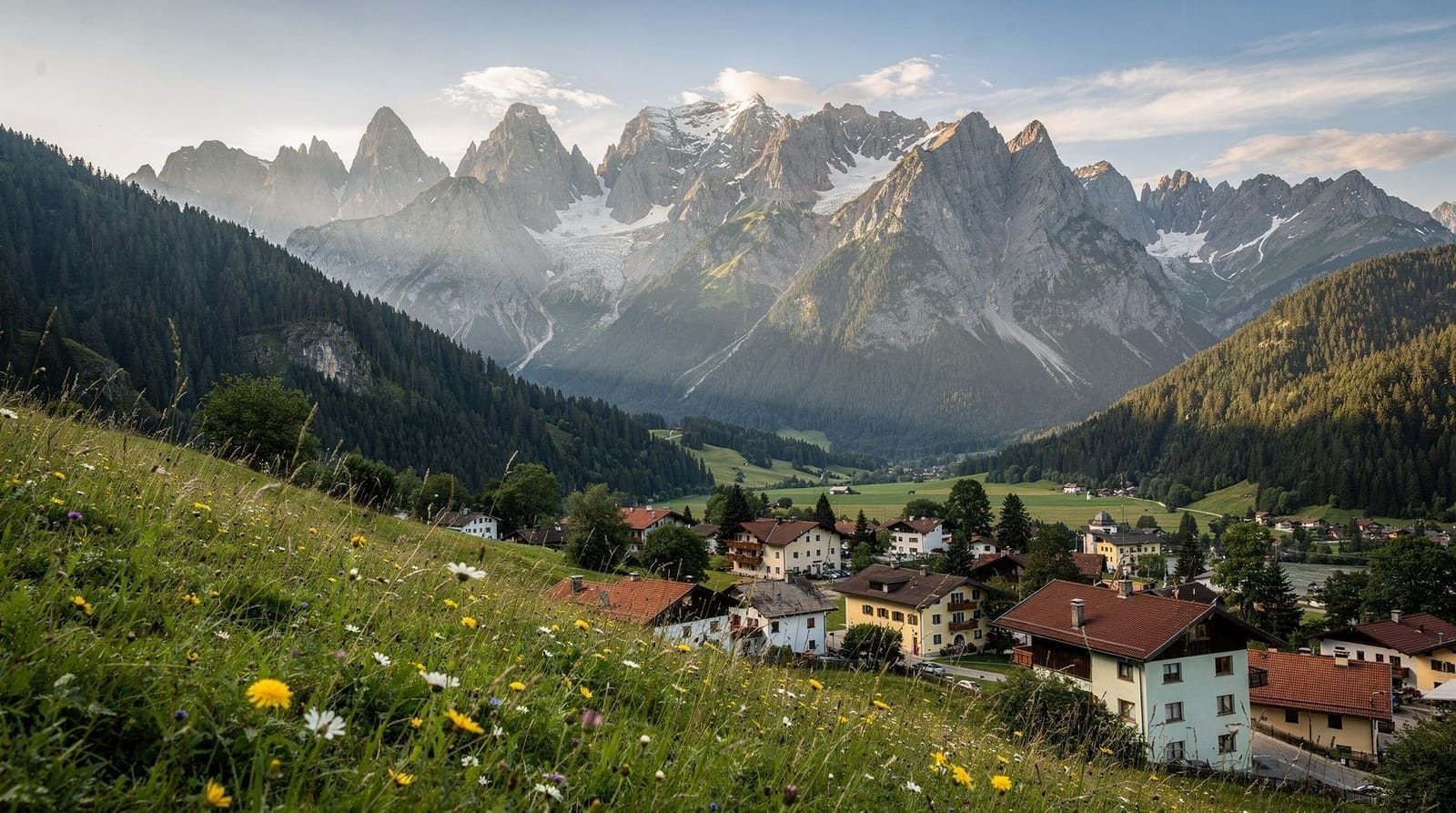
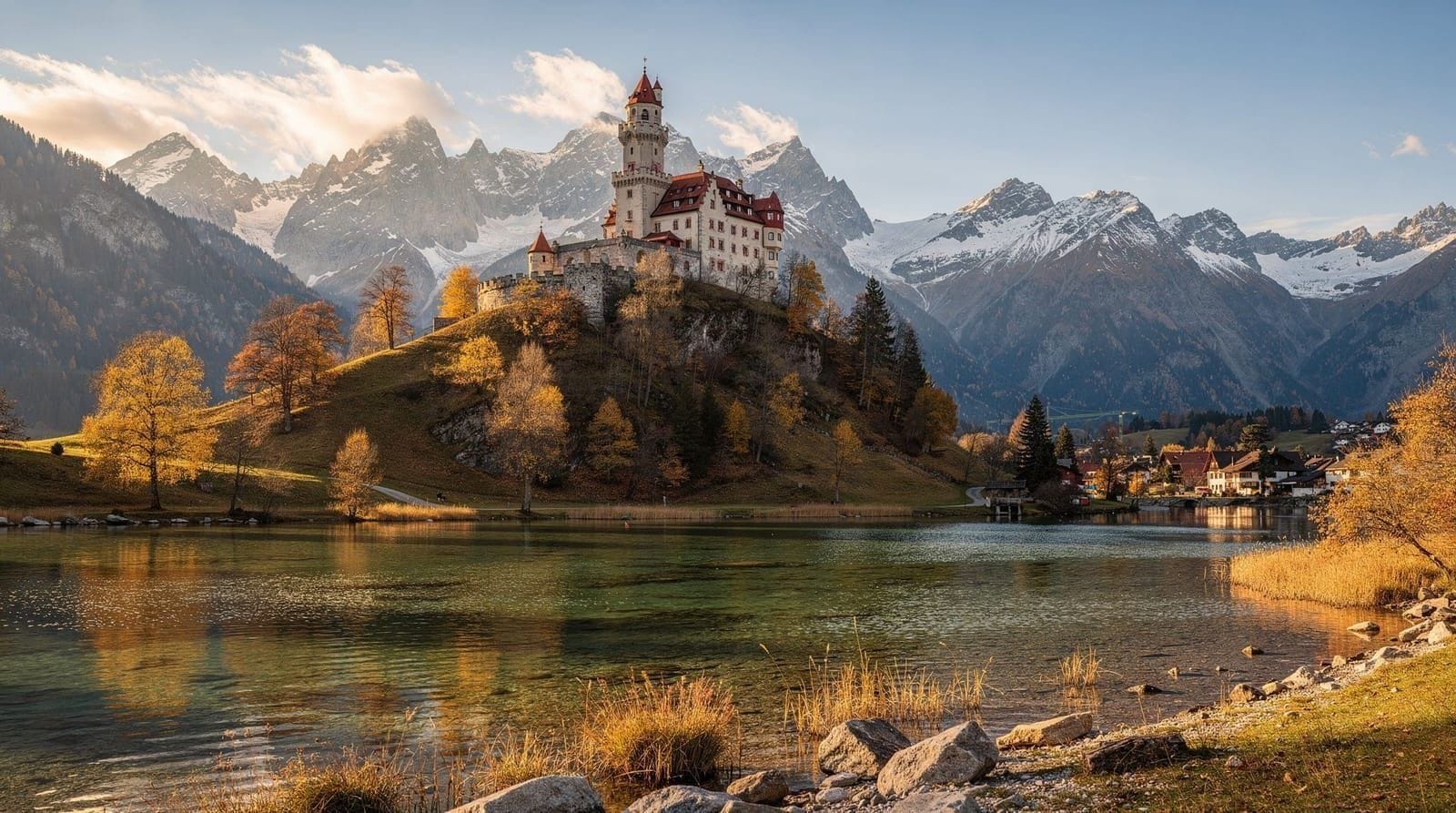
The town itself is in a valley ringed by the Berchtesgadener Alpen — steep forested mountains with occasional rock faces above the treeline. Konigssee lake, 5 kilometres south, is enclosed by near-vertical cliff walls rising directly from the water in a way that has no parallel in Bavaria. The Eagles Nest (Kehlsteinhaus) sits on a 1,834-metre summit above the town, accessible via one of the most dramatic mountain roads in the Alps.
The historical layer: the Obersalzberg plateau above Berchtesgaden was Nazi Germany’s second seat of power from the mid-1930s. Hitler’s primary Alpine residence (the Berghof), Bormann’s house, Goering’s house, and a complex of SS compounds and bunkers occupied the hillside. Most was bombed by the RAF in April 1945 and subsequently demolished. What remains — the Kehlsteinhaus (Eagles Nest, which was spared), the Documentation Centre, and the surviving bunker tunnels — constitutes one of Germany’s most complete preserved sites from the Nazi leadership’s private world.
The combination of dramatic natural beauty and serious historical weight makes Berchtesgaden unlike any other day trip from Munich.
Honest caveat on timing: Berchtesgaden is 2h 40min from Munich by regional train. This is the longest transit time of any destination in this guide. Budget at least 7-8 hours at the destination to justify the journey, which means a full day and an early start. Guided day trip to the Eagles Nest and Berchtesgaden from Munich
| Where | Berchtesgaden, Bavarian Alps, near the Austrian border |
| Cost | Around €20 Eagles Nest shuttle, €20 Konigssee boat, €10 Documentation Centre |
| Time needed | 7–8 hours minimum; full day recommended |
| Getting there | Regional train, 2h40 with a change at Freilassing (Bayern-Ticket valid) |
| Best time | Mid-May to late October (Eagles Nest closed otherwise); early morning for clear summit views |
Getting from Munich to Berchtesgaden
Train: Regional trains from Munich Hauptbahnhof to Berchtesgaden Hauptbahnhof require a change at Freilassing. Journey time approximately 2h 40min. The Bayern-Ticket covers the complete journey.
Key departure times from Munich Hbf (2026 timetable — verify on DB Navigator):
- 6:02 Munich Hbf → change Freilassing → arrives Berchtesgaden approximately 8:42
- 7:02 Munich Hbf → arrives approximately 9:42
- 8:02 Munich Hbf → arrives approximately 10:42
For a day that includes both the Eagles Nest and Konigssee, the 6:02 or 7:02 departure is essential. The Eagles Nest shuttle bus stops running in late afternoon and summit cloud builds from noon in summer.
From Berchtesgaden to the Eagles Nest: Take local Bus 849 (RVO) from Berchtesgaden Hauptbahnhof to the Documentation Centre (Dokumentation Obersalzberg) — approximately 10 minutes. From the Documentation Centre car park, the Eagles Nest shuttle Bus 838 runs to the base of the summit road at Kehlstein. Journey approximately 20 minutes on a narrow mountain road with dramatic drops. At the end of the road, a 124-metre lift through the rock brings you to the Kehlsteinhaus.
Bayern-Ticket and local buses: The Bayern-Ticket covers the local buses in Berchtesgaden (BRB regional network). Check which specific buses are included at the time of travel.
From Berchtesgaden to Konigssee: Bus 841 from Berchtesgaden Zentrum (about 10 minutes walk from the Hauptbahnhof) to Schonau am Konigssee, approximately 10 minutes. Boats depart from the landing stage at Schonau.
The Eagles Nest: what to expect
The approach to the Kehlsteinhaus is as dramatic as the destination. The shuttle bus from the Documentation Centre climbs 6 kilometres on a mountain road with vertiginous drops on one side, constructed in under a year in 1938 using thousands of workers. The road is not accessible to private vehicles — the shuttle is mandatory. At the end of the road, a brass-fitted lift (the original 1938 lift) rises through 124 metres of rock to emerge inside the building.
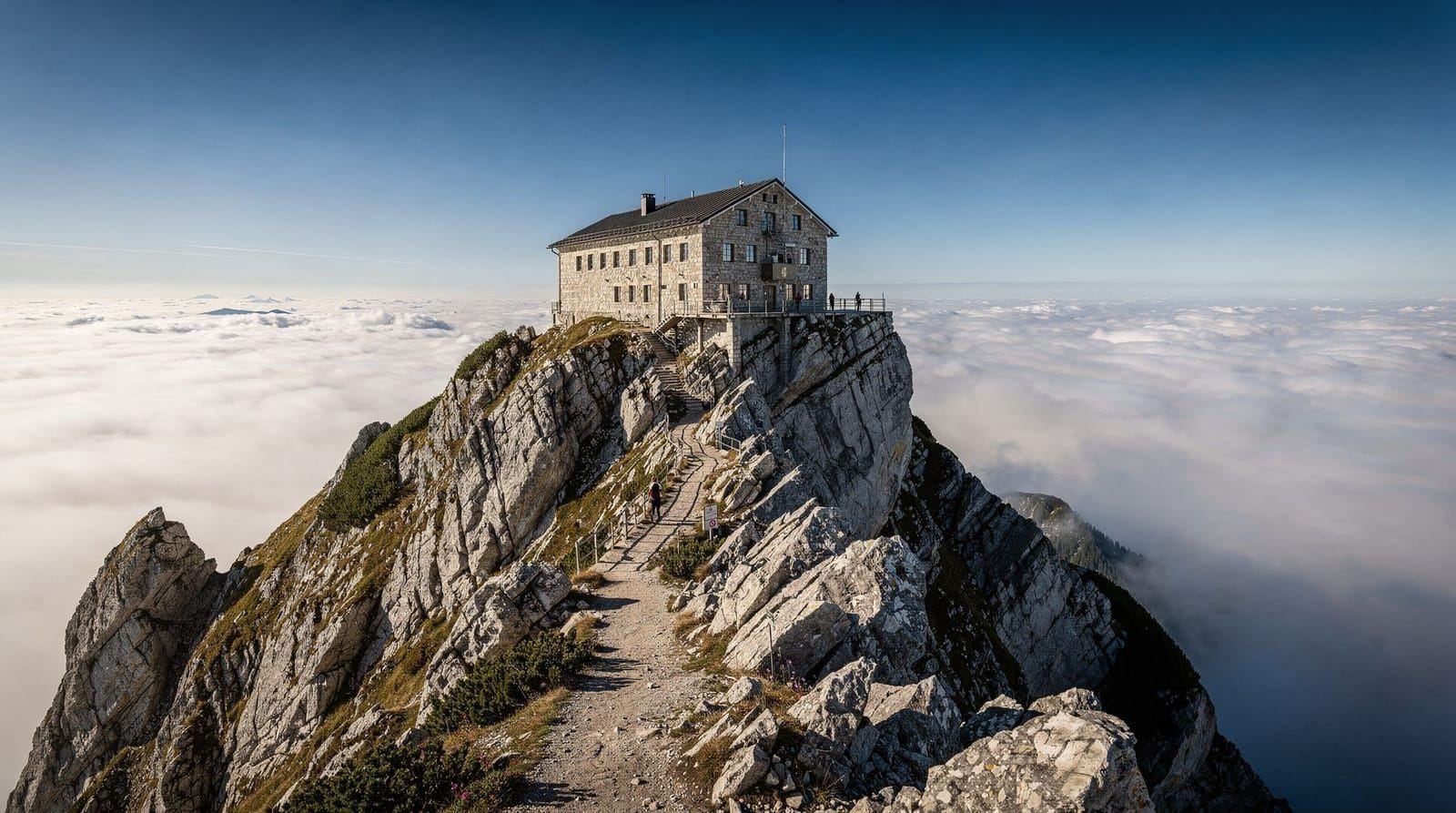
The building itself: The Kehlsteinhaus is a stone building on a narrow summit ridge at 1,834 metres. It has a terrace with panoramic views (on clear days, south into the Austrian Alps and north across the Bavarian plain) and a restaurant serving standard alpine fare at mountain prices. The interior includes the original marble fireplace (a gift from Mussolini) and several rooms with period photographs.
The history: Hitler used the Eagles Nest perhaps 14 times — less than the Berghof, where he spent much more time. The building is preserved because it was spared in the RAF bombing raid of April 1945 (the bombers targeted the Berghof and SS compounds, not the Eagles Nest) and subsequently because the French military administration used it as a restaurant. The Bavarian state has maintained it as a restaurant and memorial site since 1960.
Season and hours: Open mid-May to late October. Shuttle buses depart from the Documentation Centre approximately every 25 minutes from 8:30am. Last bus up approximately 4pm; last bus down approximately 5pm. In peak season, the summit can be in cloud from noon — aim for a morning visit.
Shuttle bus cost (2026): Approximately €20 per adult for the return bus journey plus lift. The building and summit are free to enter. Full-day Eagles Nest and WWII history tour from Berchtesgaden
Obersalzberg Documentation Centre
The Dokumentation Obersalzberg museum occupies the site of the former Nazi leadership complex on the plateau above Berchtesgaden. The permanent exhibition covers the history of the Obersalzberg, the Nazi inner circle’s use of the area, the construction of the complex, daily life, the end of the war, and the post-war history.
Entry: Approximately €10 for adults. The ticket also includes access to the surviving bunker tunnels under the complex — a 4-kilometre network built from 1943 as air raid shelters. The tunnels are cool (8-10 degrees) and partially lit; they extend under the hillside and connect several former building sites. This is one of the more unusual historical experiences in Bavaria.
The Berghof site: Hitler’s primary Alpine residence was bombed in April 1945 and demolished by the Bavarian government in the 1950s to prevent it becoming a neo-Nazi pilgrimage site. Only a small amount of masonry remains visible. The Documentation Centre stands on the adjacent site. Understanding what was here requires the museum’s historical context — without it, you are looking at a largely cleared hillside.
Time: Allow 2-3 hours for the Documentation Centre and bunkers. The content is substantial and the bunkers alone take 45-60 minutes to walk through properly.
Konigssee: the lake in the cliff walls
Konigssee is 5 kilometres south of Berchtesgaden and accessible by bus (Bus 841, approximately 10 minutes from Berchtesgaden Zentrum). The lake is technically two connected bodies of water: the main Konigssee and the smaller Obersee, separated by a short walking section.
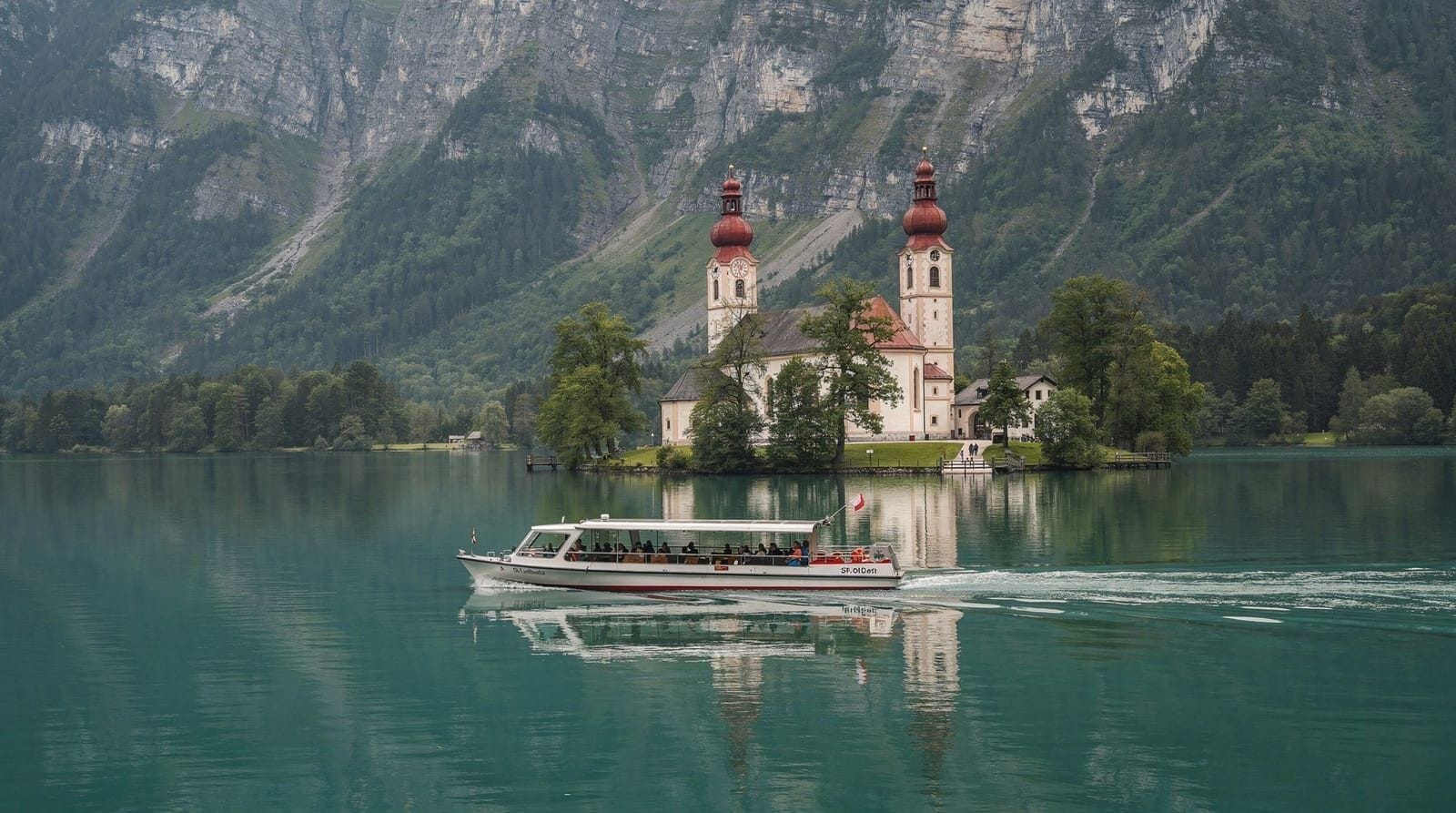
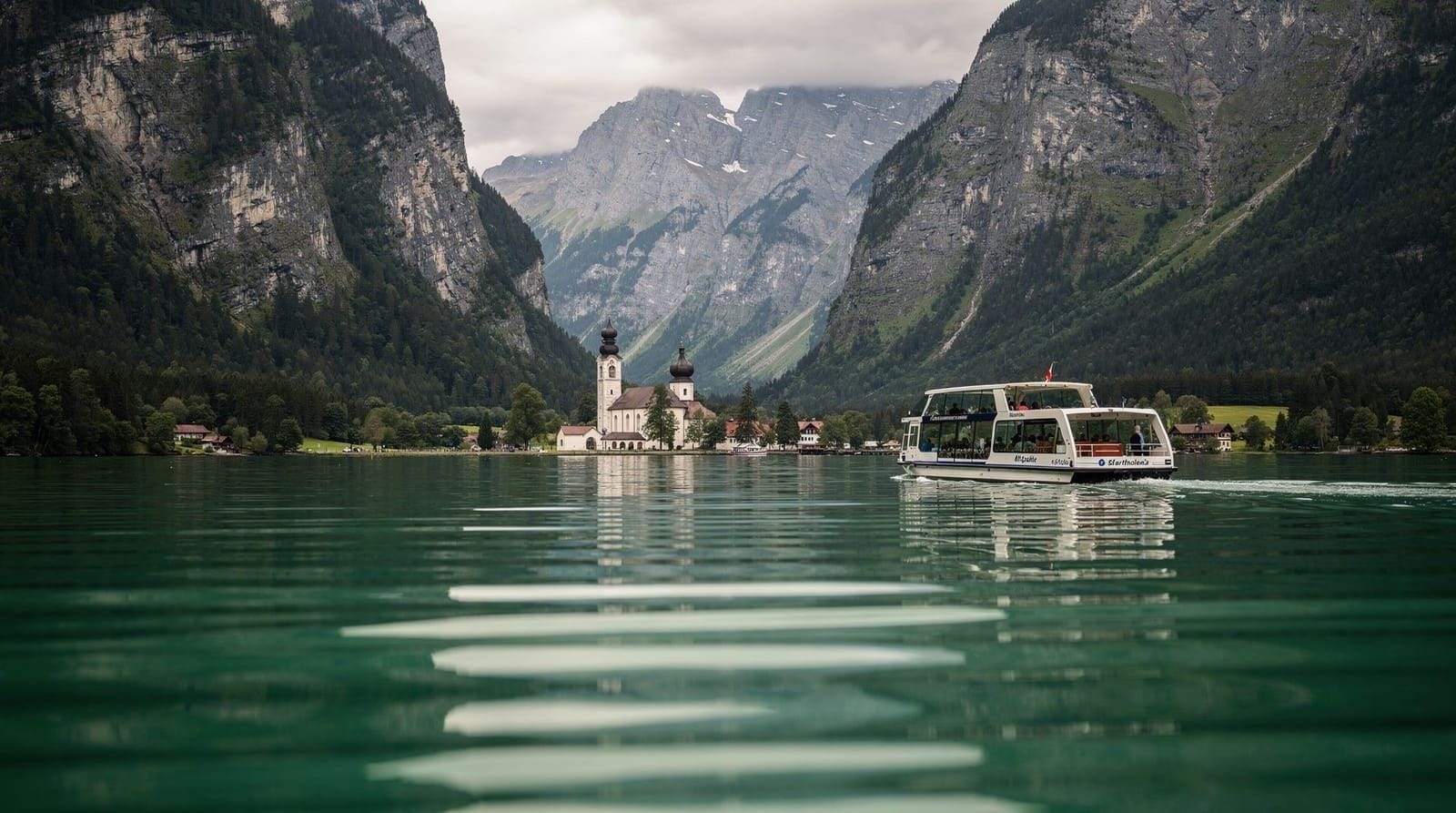
The boat trip: Electric boats (the lake has been motor-free since 1909 to preserve the water quality) depart from the landing at Schonau am Konigssee. The standard return trip goes to St. Bartholomae on the western shore, a pilgrimage church standing at the base of the Watzmann’s east face — a 2,700-metre wall of rock rising directly from the lake. Journey approximately 35 minutes each way. Adult return ticket approximately €20.
The Echowand (Echo Wall) is a cliff face that the boat pauses at during the journey — the captain plays a bugle and the sound bounces back. This is mildly theatrical, mildly enjoyable, and takes about 3 minutes.
St. Bartholomae: The pilgrimage church at St. Bartholomae (on the shore at the base of the Watzmann) dates from the 12th century; the current baroque building is from the 17th century. There is a restaurant and beer garden at the landing. The location — the white church with its distinctive onion domes, set against the vertical rock face above — is one of the most photographed scenes in Bavaria.
Obersee: From St. Bartholomae, a 30-minute walk along the lakeside leads to the Salet boat landing, from where a further boat crosses to the Obersee (inner lake). The Obersee is quieter and more dramatic than the main lake — narrower, darker water, surrounded by even more vertical terrain. The Rothbach Waterfall at the far end of the Obersee drops 470 metres and is visible from the lake. This extension adds 2-3 hours to the Konigssee visit.
For a comprehensive guide to the lake, see Konigssee guide.
Combining Eagles Nest and Konigssee in one day
This is achievable with an early start from Munich:
6:02 Munich Hbf → arrive Berchtesgaden 8:42 → Bus 849 to Documentation Centre (depart approximately 9am) → Eagles Nest shuttle bus up (depart ~9:30am) → Explore Kehlsteinhaus and summit: 10:00am-12:00pm → Shuttle bus back to Documentation Centre → Quick Documentation Centre visit: 12:30-1:30pm (or skip for Konigssee) → Bus/walk to Berchtesgaden Zentrum, then Bus 841 to Schonau → Konigssee boat to St. Bartholomae: 2:30-4:30pm → Return boat and bus to Berchtesgaden Hbf → Train back to Munich: depart ~5:30-6pm
This schedule is full but not frantic. Skipping the Documentation Centre or the Obersee extension makes it more comfortable. The Eagles Nest and Konigssee together give the most complete experience. Guided Konigssee boat trip and day tour from Munich
Practical information for 2026
Eagles Nest shuttle (Bus 838): Approximately €20 return for adults. No advance booking required. Departs Documentation Centre car park at regular intervals from approximately 8:30am. Last bus up approximately 4pm.
Konigssee boat (Schiffahrt Konigssee): Adult return to St. Bartholomae approximately €20. Boats run regularly throughout the day in season. First departure typically 8am.
Weather: The Eagles Nest summit is frequently in cloud. Check the webcam at eagles-nest.info the morning of your visit. Summit cloud does not necessarily affect the Documentation Centre or Konigssee lower down.
Crowds: Peak summer (July-August) brings significant numbers to both sites, particularly Konigssee which is a major destination for visitors to Salzburg and Berchtesgaden. The Eagles Nest is less crowded in the early morning. Konigssee is most crowded midday.
What to bring: Warm layers for the Eagles Nest summit (temperatures can be 10-15 degrees lower than Berchtesgaden valley). Good walking shoes for the Konigssee shore path.
For all Munich day trips compared, see Best day trips from Munich.
Guided tour vs independent train trip
| Guided day tour | Independent by train | |
|---|---|---|
| Cost | Higher, but fixed and inclusive of transport | Lower, but shuttle/boat tickets paid separately |
| Time | Fixed pickup and return, usually from central Munich | Full flexibility on the Munich–Berchtesgaden leg |
| Logistics | Driver handles the Freilassing connection and local buses | You manage train changes and Bus 849/838/841 yourself |
| Best for | First-timers, those short on planning time, groups | Confident independent travellers, Bayern-Ticket users |
Given the 2h40 train journey and multiple local bus connections, a guided tour genuinely removes a layer of stress on what is already the longest day trip in this guide — worth weighing if you are only in Munich for a few days and don’t want to risk a missed connection eating into your Eagles Nest window.
Eating in Berchtesgaden and at the sites
Options at altitude are limited and priced accordingly. The Kehlsteinhaus restaurant serves standard alpine fare (soups, schnitzel, apple strudel) at mountain prices — expect to pay a premium for the view. At Konigssee, the beer garden and restaurant at St. Bartholomae landing is a pleasant lunch stop with lake views, though it gets busy midday. In Berchtesgaden town itself, simple bakeries and cafes near the Hauptbahnhof are cheaper options if you want to eat before or after the day’s excursions rather than at altitude.
Frequently asked questions about the Berchtesgaden day trip
Is the Eagles Nest open year-round?
No. The Kehlsteinhaus is open mid-May to late October only. In winter the building and access road are buried under snow. Shuttle buses depart from approximately 8:30am; last bus up around 4pm.
What is the Eagles Nest and why is it significant?
The Kehlsteinhaus at 1,834 metres was built in 1938 as a diplomatic retreat and gift to Hitler on his 50th birthday. Hitler used it perhaps 14 times. It survived the war and the 1945 RAF bombing of Obersalzberg and is now a restaurant and viewpoint with panoramic Alpine views.
Do you need to book the Eagles Nest shuttle bus in advance?
No advance booking needed. The shuttle Bus 838 from the Documentation Centre car park runs regularly and payment is made on the day. Arrive at the Documentation Centre before 10am in peak summer to avoid queues.
What is the Konigssee boat trip?
Electric boats on Konigssee (motor-free since 1909) depart from Schonau am Konigssee and cross to St. Bartholomae church, set against the 2,700-metre Watzmann east face. Return ticket approximately €20. Journey approximately 35 minutes each way.
Can you combine Eagles Nest and Konigssee in one day?
Yes, with a 6:02 or 7:02 departure from Munich. Eagles Nest in the morning, Konigssee in the afternoon. It is a full day but manageable.
What is the Obersalzberg Documentation Centre?
A museum on the site of the former Nazi leadership complex above Berchtesgaden, covering the history of the Obersalzberg and including surviving bunker tunnels. Entry approximately €10. Allow 2-3 hours. One of Germany’s most significant WWII historical sites.
Is Berchtesgaden worth it if I’ve already done Neuschwanstein or Zugspitze?
Yes — the experience is genuinely different. Neuschwanstein is castle architecture and Zugspitze is Germany’s highest peak, but Berchtesgaden combines the Konigssee’s cliff-walled lake with the Obersalzberg’s uniquely preserved Nazi-era history, a pairing that exists nowhere else in Bavaria. If you only have time for one alpine day trip, base the choice on whether the historical layer interests you.
What happens if the Eagles Nest is closed by cloud or weather?
The shuttle bus and lift still run in light cloud, but a socked-in summit means no view — check the webcam at eagles-nest.info before committing to the ascent. If conditions look poor, prioritise the Documentation Centre and Konigssee instead, both of which are unaffected by summit cloud, and treat the Eagles Nest as a bonus if it clears later in the day.
Top experiences
Bookable activities with verified prices and instant confirmation on GetYourGuide.