Königssee guide: electric boats, St. Bartholomä, and Bavaria's most dramatic lake
From Munich: Königssee day tour by van
How do you visit Königssee and how much does it cost?
Königssee is a national park lake near Berchtesgaden, accessible by electric boat from the Schönau am Königssee landing. In 2026, the boat from Schönau to St. Bartholomä costs approximately €19 round trip per adult; the extension to Obersee (Salet landing) costs approximately €26 round trip. Boats run year-round, with reduced frequency in winter. The lake has no roads along its shores — the boat is the only way to reach St. Bartholomä.
Why Königssee feels different from other Bavarian lakes
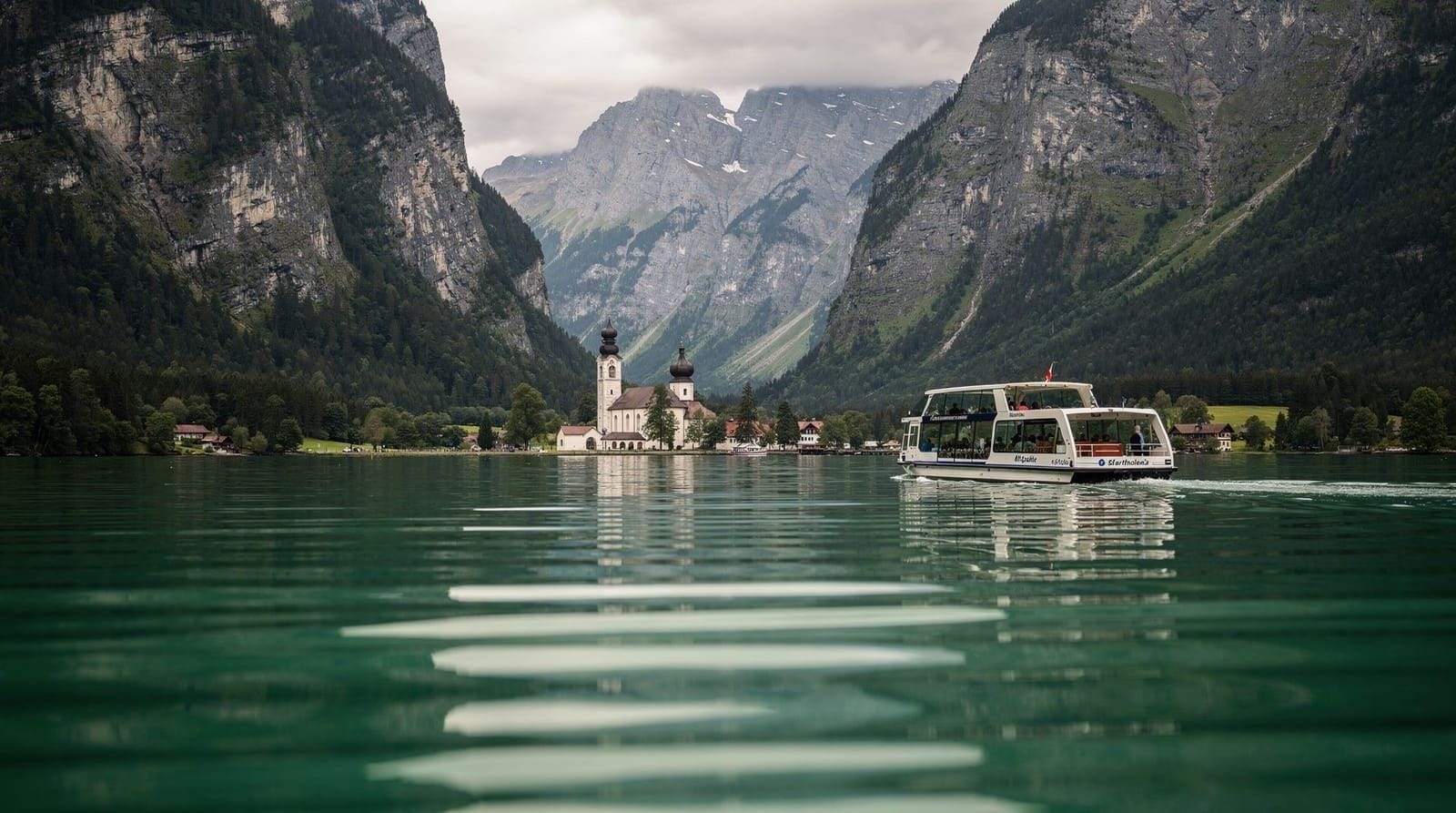
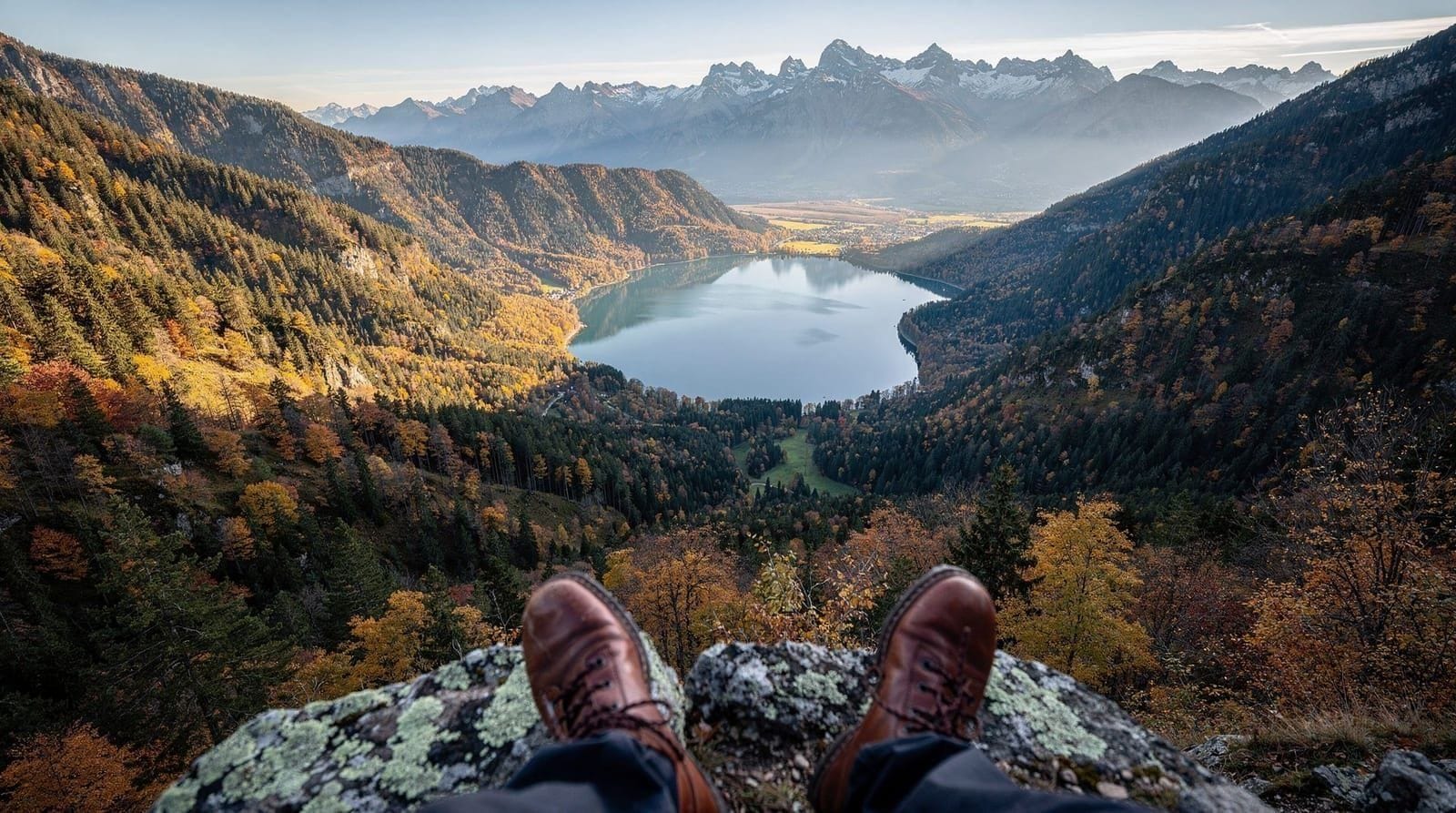
Königssee is not simply a scenic lake. It is a fjord-like body of water enclosed on three sides by near-vertical mountain walls — the Watzmann massif (2,713 m) to the west and the Hagengebirge plateau to the east. The lake is only 1.5 kilometres wide but 7.7 kilometres long, and the mountains rise directly from the water’s edge with almost no shoreline in places. The effect is dramatic in a way that the more accessible Bavarian lakes — Starnberger See, Tegernsee, Ammersee — cannot match.
Add the fact that there are no roads along the lake shores, no private motorboats permitted, and that the electric boats have been the only transport since 1909, and you have a lake that genuinely feels unspoiled — despite receiving well over a million visitors per year. The national park status (Berchtesgaden National Park, established 1978) enforces this: no development on the shores, strict environmental rules, and the quiet that comes from having no combustion engines on the water.
The Malerwinkel — the “painters’ corner” viewpoint at the southern end of the access path from Schönau — has been used by landscape painters since the Romantic period and gives the classic view of the lake with the St. Bartholomä church and the Watzmann behind it. It is reached by a 15-minute walk from the boat landing and remains one of the most photographed views in Bavaria. Königssee day tour by van from Munich with boat ride
| Where | Schönau am Königssee, near Berchtesgaden |
| Cost | around €19 round trip to St. Bartholomä; around €26 to Obersee |
| Time needed | half day for the boat trip; full day combined with Eagle’s Nest |
| Getting there | train to Berchtesgaden then bus 841/843, or a guided day tour from Munich |
| Best time | early morning arrival, May–September for reliable boat schedules |
Getting to Königssee from Munich
The lake is located at Schönau am Königssee, about 5 kilometres south of Berchtesgaden. From Munich, the journey involves:
By train and bus: Munich Hauptbahnhof to Berchtesgaden by regional train (approximately 2 hours 30 minutes, change at Freilassing). From Berchtesgaden Bahnhof, bus 841 or 843 to Schönau am Königssee (approximately 20 minutes, several departures per hour). A Bayern-Ticket covers the Munich-Berchtesgaden train journey but not the Berchtesgaden-Schönau bus (a separate ticket for approximately €3-4).
By organised tour: Munich to Königssee tour operators typically use minibuses or coaches that drop you directly at Schönau. The advantage is no train changes and no bus coordination. Journey time by road is approximately 2 hours depending on traffic. Day trips from Munich to Berchtesgaden cover the logistics comparison.
Parking at Schönau: If driving, use one of the large car parks near the Königssee boat landing — approximately €7-10 per day. In peak season (July-August), the car parks fill early; arrive before 9am.
Journey time from Munich: Allow approximately 3 hours door-to-boat-landing from central Munich by train and bus. Plan for a full day if you want to do the boat trip to St. Bartholomä and the extension to Obersee.
The electric boat experience
The boat operation at Königssee is unusual enough to describe in detail. The boats — large, flat-bottomed, roofed vessels holding about 80 passengers — run continuously during operating hours. You purchase a ticket at the Schönau landing (or book in advance in peak season) and board when the next boat is ready.
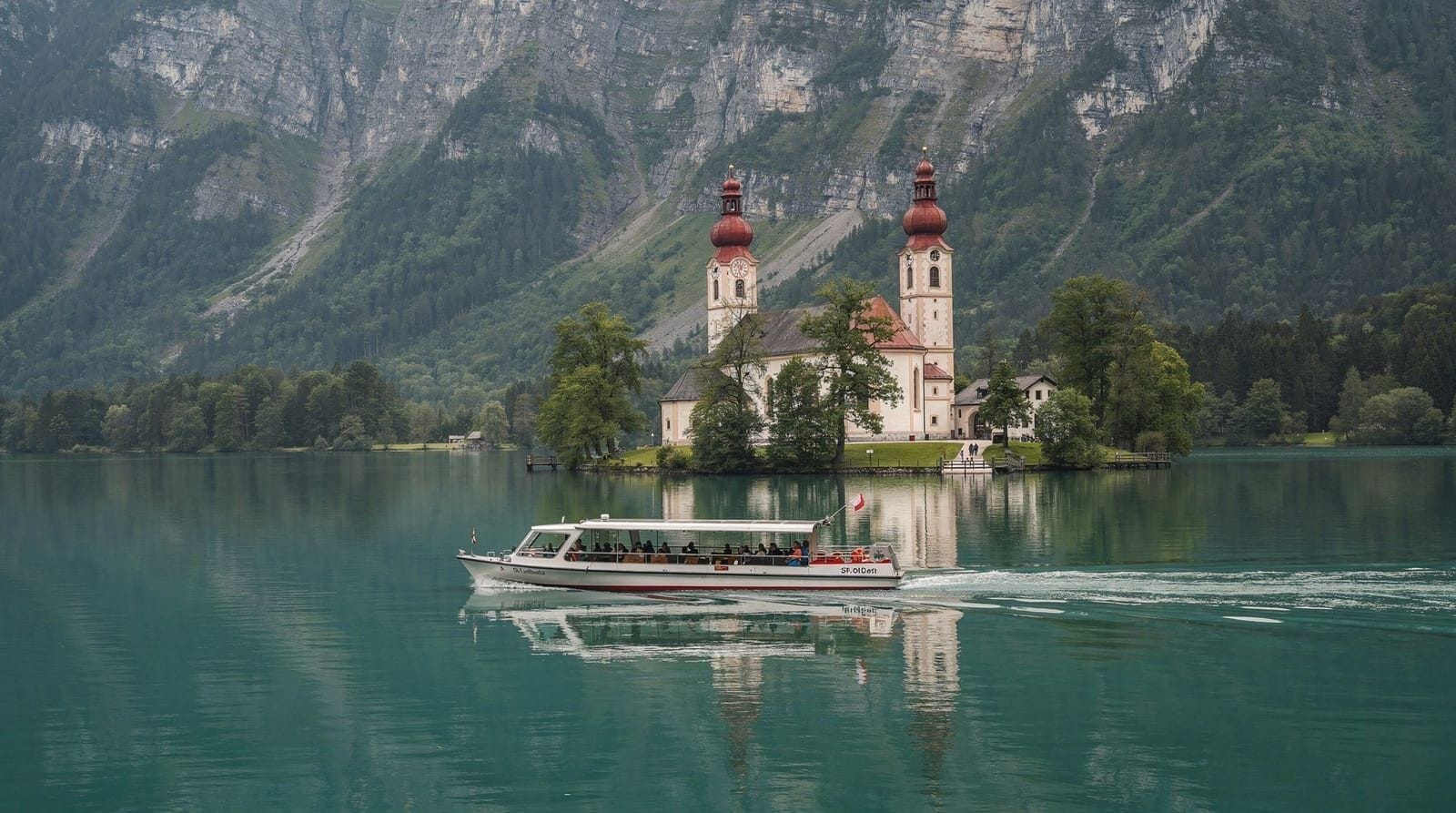
The journey from Schönau to St. Bartholomä takes approximately 20-25 minutes. The boats run slowly enough for passengers to appreciate the scenery; the silence of the electric motors means you can hear the water and the wind. Passing under the shadow of the Watzmann’s east face — a near-vertical wall of rock over 2,000 metres high — is one of the more memorable moments of any Bavarian day trip.
Ticket prices (2026 approximate):
- Schönau to St. Bartholomä and back: €19 per adult
- Schönau to Salet (Obersee) and back: €26 per adult
- Children under 4: free
- Children 4-14: approximately half price
Tickets are available at the Schönau landing ticket office. In peak season (July-August), morning queues form before the first departures. Online booking is available and recommended for weekend visits.
The echo trumpet demonstration
At a specific point in the outward journey — typically opposite the dramatic Echowand cliffs about 10 minutes from Schönau — the boatman stops the engine and plays a trumpet or flugelhorn. The sound bounces off the cliff face and returns as a clear, pure echo, a fraction of a second behind the original note. For longer notes, multiple echoes return in sequence.
This has been a tradition on Königssee boats since at least the 1860s when steamboats first operated on the lake. The Echowand (echo wall) creates the effect through its near-perfect vertical surface and the geometry of the lake — the parallel cliff walls act like a natural anechoic chamber in reverse. The demonstration takes about 3 minutes and is part of every regular boat journey.
It is simple. It is slightly kitsch. It is also genuinely impressive — the clarity of the echo is better than most people expect.
St. Bartholomä: the chapel and the peninsula
The St. Bartholomä peninsula juts into the west side of Königssee approximately halfway down the lake. It is one of the most visually distinctive spots in Bavaria: the red-roofed, onion-domed pilgrimage chapel surrounded by narrow strips of meadow, with the near-vertical east face of the Watzmann rising immediately behind it.
The chapel: The current Baroque church of St. Bartholomew dates from 1697, though a chapel has stood here since the 12th century. It was a pilgrimage destination throughout the medieval period, accessible only by boat even then. Inside, the chapel has the modest decorations typical of a remote pilgrimage church — plain white walls, a few altars, paintings of saints. It is still used for services and functions as an active Catholic church. Entry is free.
The Watzmann east face: The vertical wall of rock directly above St. Bartholomä is the Watzmann Ostwand — one of the major alpine climbing routes in the Eastern Alps, approximately 1,800 metres of near-vertical rock. The first complete ascent was made in 1881. The route is technically demanding and has claimed numerous lives; a memorial at the chapel records some of them. Looking up at the wall from the peninsula gives some understanding of the scale involved.
The restaurant at St. Bartholomä: An inn and restaurant operates at the peninsula, serving Bavarian food and beer. The quality is reliable — the location ensures a captive audience, but the management maintains reasonable standards. Fish from the Königssee (Seesaibling, a type of alpine char) is a specialty and genuinely good. Prices are slightly elevated versus town.
Walking from St. Bartholomä: A short signed trail leads from the landing around the peninsula and up to a viewpoint above the church. For more serious walking, trails into the national park begin here, including routes toward the Watzmann massif for equipped hikers. Boat tour from Schönau to Königssee and Obersee
Obersee: the quieter second lake
The boat continues south from St. Bartholomä to the Salet landing at the southern end of Königssee. From Salet, a footpath (approximately 15 minutes, mostly flat) leads to Obersee — a smaller, higher lake connected to Königssee by the Röthbach stream.
Obersee is consistently quieter than Königssee itself, partly because fewer visitors make the extension and partly because the walk from Salet filters out those who are not willing to leave the boat. The cliffs around Obersee are even more dramatic than those around Königssee — the lake sits in a narrower valley with steeper walls.
The Röthbach waterfall: At the far eastern end of Obersee, the Röthbach falls from the Steinernes Meer plateau some 470 metres above. The fall itself is one of the highest in Germany (total height over 600 metres including intermediate drops). Depending on the season, water volume varies significantly — spring and early summer, when snowmelt feeds it, gives the most impressive display.
Is Obersee worth the extra fare? For most visitors: yes. The additional boat extension costs about €7 over the St. Bartholomä round trip, and the walk from Salet is straightforward. The additional hour or so gives access to a noticeably less crowded environment. The exception: if you are pressed for time (e.g., combining with the Eagle’s Nest on the same day), skip Obersee and spend more time at St. Bartholomä.
Malerwinkel: the classic viewpoint
Before or after the boat trip, the Malerwinkel (painters’ corner) viewpoint is worth the 15-minute walk from the Schönau landing. A signed path leads along the west shore of Königssee to a viewpoint that has been used by painters and photographers for over 150 years.
The view from Malerwinkel looks southeast down the length of the lake, with St. Bartholomä chapel visible in the middle distance and the Watzmann rising behind it. This is the image that appears on most postcards and travel photography of Königssee. The morning light (before 10am) makes the shot; by midday the mountains behind cast shadow on the chapel.
Getting there: from the Schönau boat landing, follow signs to Malerwinkel. The path is paved and accessible for most visitors. Allow 30 minutes for the round trip.
Combining Königssee with Berchtesgaden
Most visitors to Königssee are also visiting Berchtesgaden, and the two can be combined in a single day from Munich with some planning.
Morning Eagle’s Nest, afternoon Königssee: Take the first Kehlsteinbus from Berchtesgaden (around 9am), allow 2.5 hours at the summit, descend by noon, have lunch in Berchtesgaden, and catch the bus to Schönau for a boat trip in the afternoon. The last boats typically run until around 5pm (summer); confirm current times. This is an ambitious but achievable day.
Morning Königssee, afternoon Documentation Center: A gentler combination — arrive at Schönau early (before 9am), take the first boat to St. Bartholomä and Salet, return to Schönau by early afternoon, bus to Berchtesgaden, then visit the Obersalzberg Documentation Center before catching the train back to Munich.
For the Eagle’s Nest visit in detail, see the Eagle’s Nest Kehlsteinhaus guide. For the broader logistics of the Berchtesgaden day trip from Munich, see the Munich to Berchtesgaden guide. Munich: Königssee day trip with boat ride and salt mine visit
Practical notes for 2026
Operating season: Boats run year-round, including winter. In winter (approximately November to April), frequency is reduced but the lake remains accessible. Winter Königssee has a completely different character — fewer visitors, frozen shorelines, and the possibility of mist over the water. The national park is worth visiting in any season.
Crowds: July and August are the peak months. Weekend mornings see the largest crowds. Arriving before 9am gives a noticeable advantage. On peak summer days, queues for the first boats can form before the ticket office opens.
What to bring: The lake environment is cool and windy even in summer. Bring a light jacket. If planning to walk to Obersee, wear comfortable shoes. There are no shops at St. Bartholomä or Salet beyond the inn.
Dogs: Permitted on the boats and in the national park on leads. Check current national park rules on the Berchtesgaden National Park website.
Accessibility: The Schönau landing and the boats are accessible for wheelchair users. The path to Malerwinkel is paved. The Salet-Obersee path is a gravel trail that may be challenging for wheelchairs but is manageable for most mobility conditions.
Königssee by season
| Season | Conditions | Crowds | Notes |
|---|---|---|---|
| Spring (Apr–May) | Snowmelt feeds Röthbach falls, green valleys | Moderate | Best waterfall volume at Obersee |
| Summer (Jun–Aug) | Warm, reliable boat schedule | Heavy — arrive before 9am | Peak season, book ahead for weekends |
| Autumn (Sep–Oct) | Clear light, cooler | Lower | Good balance of weather and quiet |
| Winter (Nov–Mar) | Reduced boat frequency, possible mist/frozen shoreline | Lowest | Different, quieter character; check schedules |
What locals do differently
Regulars tend to skip the crowded first hour and instead arrive mid-morning after the initial rush has boarded, timing their trip to catch a quieter boat around 10:30–11:00 once the earliest queues have cleared. Many also treat St. Bartholomä as the destination rather than a stopover — sitting at the lakeside restaurant with a Seesaibling lunch rather than rushing back for the return boat. If you have a car, combining Königssee with a short stop in Berchtesgaden town itself, rather than heading straight back to Munich, rounds out the day with less driving pressure. For a broader sense of how Königssee compares to Bavaria’s other lakes, see the Munich lakes guide and best alpine views near Munich.
Frequently asked questions about Königssee
Are the Königssee boats really electric?
Yes. The Königssee has operated exclusively with electric boats since 1909 — the earliest lake to do so in Germany. The current boats hold approximately 80 passengers and are completely silent on the water, which preserves the natural atmosphere of the national park.
What is the echo trumpet demonstration on the Königssee boat?
At a specific point in the journey, opposite the Echowand cliffs, the boatman plays a trumpet or flugelhorn. The sound bounces back from the cliff face as a clear echo. This tradition dates from at least the 1860s.
Can you walk around Königssee?
There are no roads along the shore and no circumnavigation path. The shoreline is steep mountain terrain. The boat is the practical way to move along the lake; hiking in the national park requires proper alpine equipment.
What is at St. Bartholomä?
St. Bartholomä is a small peninsula with the distinctive onion-domed Baroque chapel (1697), a restaurant and inn, and national park trails. It is reached exclusively by electric boat, approximately 20 minutes from Schönau.
What is Obersee and is it worth the extra fare?
Obersee is a smaller lake south of Königssee, reached by a 15-minute walk from the Salet landing. It has the Röthbach waterfall and dramatic cliff scenery. For most visitors with time, the extension is worth the additional fare of approximately €7.
How do I get to Königssee from Munich?
Take the regional train from Munich Hauptbahnhof to Berchtesgaden (approximately 2.5 hours, change at Freilassing), then bus 841 or 843 to Schönau am Königssee (about 20 minutes). A Bayern-Ticket covers the train portion.
Is Königssee good for swimming?
The water is extremely cold (8-12 degrees Celsius even in summer). Swimming is technically permitted in some areas but is not a primary activity here. Most visitors focus on the boat trip and the scenery.
Can I combine Königssee with the Eagle’s Nest in one day?
Yes, though it makes for a long day. The most workable structure is an early Eagle’s Nest visit (first Kehlsteinbus around 9am), lunch in Berchtesgaden, then the bus to Schönau for an afternoon Königssee boat trip. See the Eagle’s Nest Kehlsteinhaus guide for the timing details, and confirm last boat departures before committing to this plan.
Is Königssee worth visiting in winter?
Yes, for a different kind of visit. Boats run at reduced frequency but the lake stays accessible, and the near-empty landings, possible mist over the water, and quiet national park trails give Königssee a completely different, more contemplative character than the busy summer months. Check current winter boat schedules before travelling, as some routes reduce further in deep winter.
Top experiences
Bookable activities with verified prices and instant confirmation on GetYourGuide.