Munich to Neuschwanstein day trip: tickets, trains, and honest tips for 2026
Munich: Neuschwanstein Castle tour
How do you get from Munich to Neuschwanstein and how much does it cost?
Take the regional train from Munich Hauptbahnhof to Fussen (approximately 2 hours, with a change at Kaufbeuren or Buchloe). The Bayern-Ticket covers this journey. From Fussen, Bus 73 or 78 runs to Schwangau and the castle area (about 10 minutes). Castle entry tickets must be booked in advance from hohenschwangau.de — in peak summer they sell out weeks ahead. Entry costs approximately €15 for adults in 2026.
What Neuschwanstein actually is — and what it is not
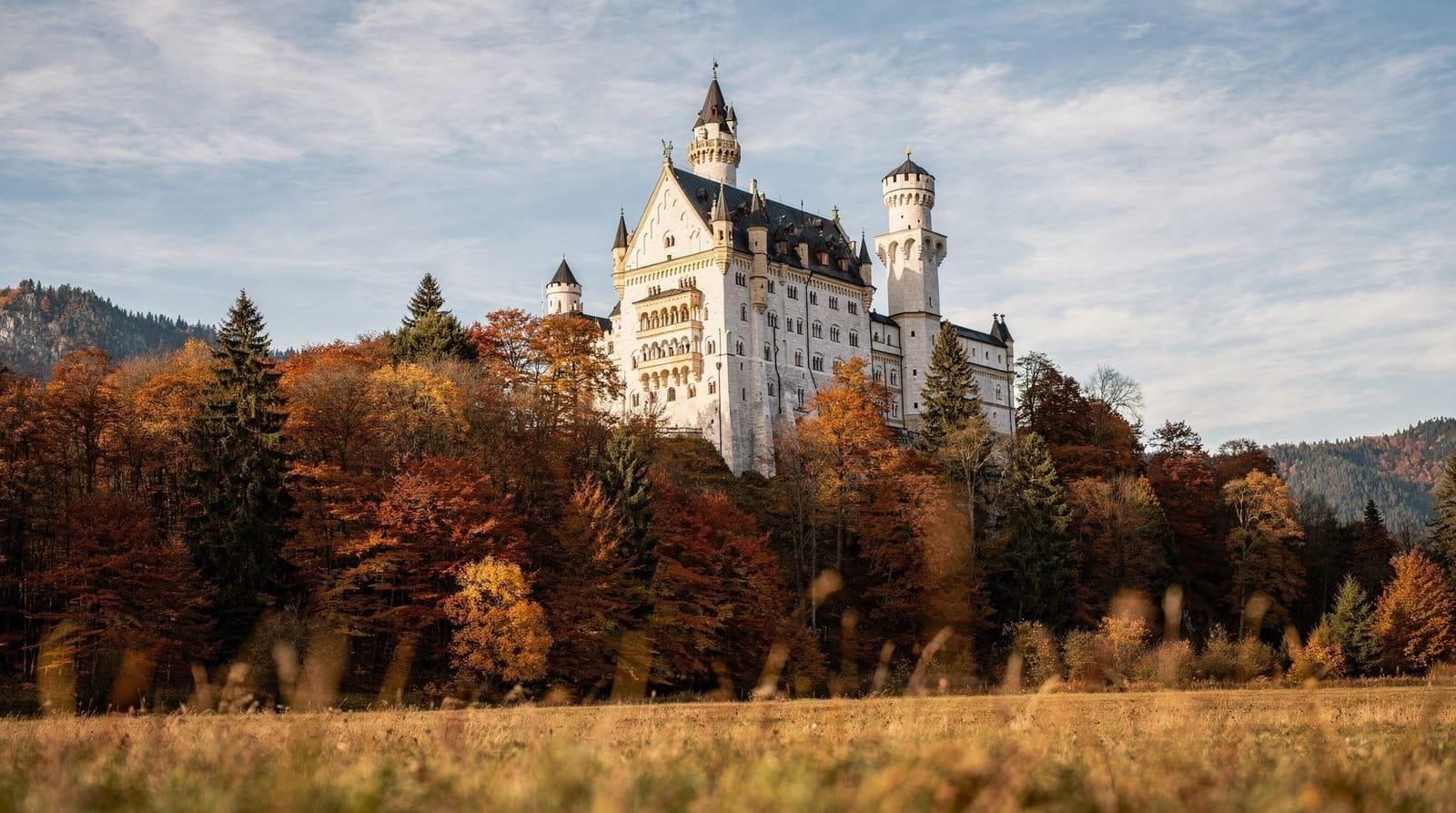
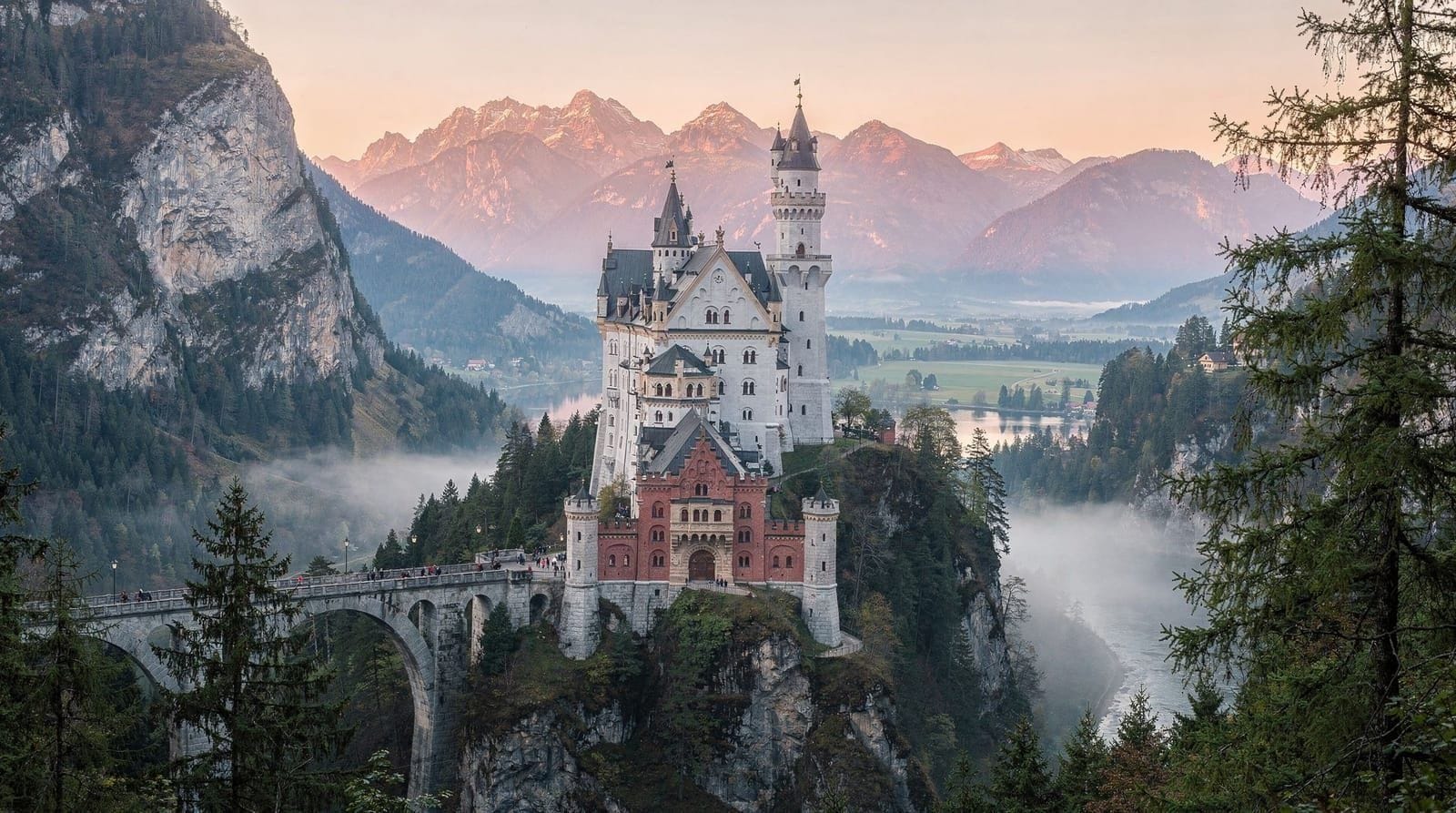
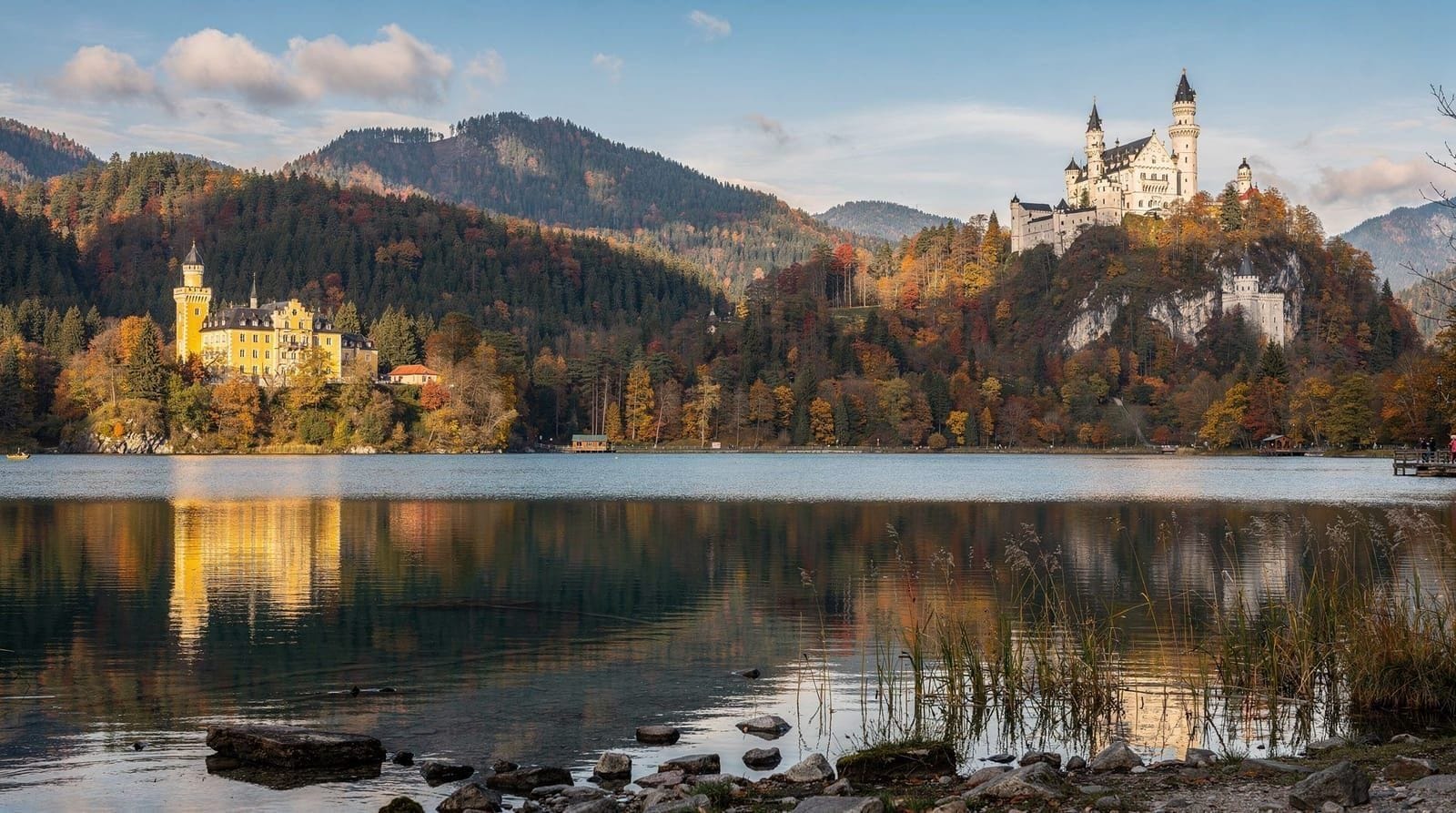
Neuschwanstein is one of the most recognisable buildings in the world. The white turreted castle rising from a forested rock above the valley is an image familiar from Disney branding, travel posters, and Bavaria tourist material — and the real thing does deliver the visual impact the photographs promise.
But it is worth understanding what Neuschwanstein is before you visit. It is not an authentic medieval castle. It was designed by a theatrical set designer (Christian Jank), not a military architect, and built between 1869 and 1886 for King Ludwig II as a personal fantasy retreat inspired by the operas of Richard Wagner. When Ludwig died in 1886 (under suspicious circumstances, officially by drowning in the Starnberger See), the castle was unfinished and opened to tourists just six weeks later. It has been a tourist attraction from almost the moment of its creator’s death.
This context shapes what you see inside: extraordinary craftsmanship and theatrical vision in the rooms that were completed, but also rooms that exist only as bare walls because Ludwig ran out of time. The result is genuinely fascinating rather than disappointing — it tells you as much about Ludwig’s obsession and his end as it does about medieval architecture.
The logistics of visiting in 2026 require planning. This guide covers everything you need to know. Guided day trip to Neuschwanstein from Munich with entrance ticket
| Where | Schwangau, near Fussen, 120km southwest of Munich |
| Cost | Around €15 Neuschwanstein, €23 Hohenschwangau, €31 combined |
| Time needed | Full day; around 2h45 travel each way including the uphill walk |
| Getting there | Regional train to Fussen (~2h) + Bus 73/78 (~10 min); Bayern-Ticket valid |
| Best time | Book 4–6 weeks ahead for July–August; first morning slot for fewer crowds |
Getting from Munich to Fussen and the castle
The train journey: Regional trains run from Munich Hauptbahnhof to Fussen approximately every two hours. The journey takes approximately 2 hours with one change, usually at Kaufbeuren or Buchloe. The Bayern-Ticket covers the full journey. Key morning departures (verify on DB Navigator for 2026 timetable):
- 6:51 Munich Hbf → arrives Fussen approximately 8:55
- 8:51 Munich Hbf → arrives Fussen approximately 10:55
- 10:51 Munich Hbf → arrives Fussen approximately 12:55
For a summer visit, the 6:51 or 8:51 departure is strongly advisable. Earlier arrival means less crowding on the path up to the castle, better photographic light in the morning, and a better chance of clear skies before afternoon clouds build over the Alps.
From Fussen to the castle: Bus 73 (operated by RVA) runs from Fussen Bahnhof to Hohenschwangau-Alpseestrasse (the stop for the castle ticket centre) in approximately 10 minutes. Tickets cost around €2.70 or are included with the Bayern-Ticket. A taxi from Fussen to the ticket centre takes 5 minutes and costs around €10-12. Walking from Fussen station to the ticket centre is possible (about 4km) but not worth it given the uphill walk still ahead.
Walking to the castle: From the ticket centre in the valley, the path to the castle entrance is approximately 1.5 kilometres and involves steady uphill climbing (about 130 metres of elevation gain). Allow 30-40 minutes. The path is well-maintained but not accessible for wheelchairs or pushchairs. Wear shoes with grip — parts of the path are uneven stone.
Horse-drawn carriage: Available from Müller Hotel in the valley, running uphill to a stop about 200 metres below the castle entrance. Uphill costs approximately €8 per person; downhill €4. The carriage drops you off not at the castle door but at a parking area below, requiring another 5 minutes of walking. Waiting times for the carriage can exceed 30 minutes in summer, so it is not necessarily faster than walking. Book at the carriage station in the morning — no advance booking available.
Walking vs carriage, compared:
| Walking | Horse-drawn carriage | |
|---|---|---|
| Time | 30–40 min, steady climb | Variable — often 30+ min wait in summer |
| Cost | Free | €8 uphill, €4 downhill |
| Drops you | At the castle entrance | ~200m below the entrance |
| Best for | Anyone reasonably fit, wanting predictability | Those who want the novelty and don’t mind waiting |
Most visitors are better off walking — it is free, avoids the waiting-time uncertainty, and the uphill path itself has good views over the valley. The carriage is more of an experience in its own right than a genuine time-saver, since the wait can exceed the time it would take to simply walk.
Booking tickets: the most important logistical step
Neuschwanstein operates a timed-entry system. Visitors are admitted in groups at specific time slots. The tours themselves (guided in German and English, roughly 35 minutes) run continuously through the day.
Where to book: hohenschwangau.de is the only official booking platform. Avoid third-party ticket sellers who charge additional fees and sometimes use unofficial booking channels.
How far in advance: In peak summer (July-August), book 4-6 weeks ahead. In shoulder season (April-June, September-October), 1-2 weeks is usually sufficient. In November-March, advance booking is still advisable but walk-up availability is more common.
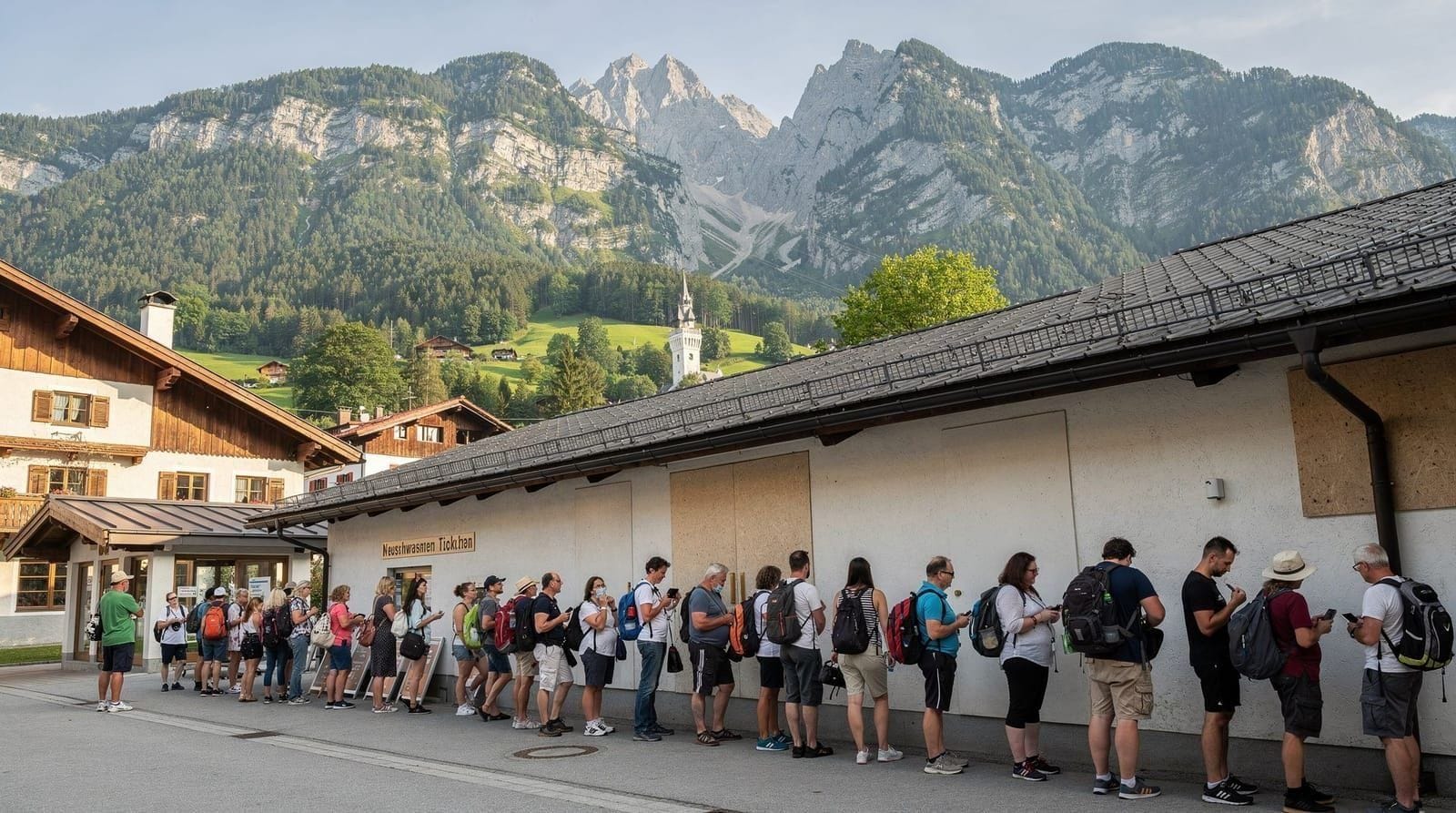
Walk-up tickets: A limited allocation of tickets is held for same-day purchase at the ticket centre in the valley. These open at 8am and sell out within minutes on summer weekends. Arriving at the ticket centre before 8am and queuing is the only reliable strategy for walk-up tickets in peak season.
Ticket prices 2026: Neuschwanstein adult ticket approximately €15. Hohenschwangau adult ticket approximately €23. Combined Neuschwanstein + Hohenschwangau approximately €31 (check hohenschwangau.de for current pricing as it varies). Neuschwanstein half-day tour from Munich with priority entrance
The castle interior: what the 35-minute tour covers
The guided tour enters through the castle courtyard and proceeds through approximately 15 rooms. Tours run simultaneously in German and English — ask at the entrance which group to join.
The Throne Room (Thronsaal): The most theatrically impressive space. The room was designed as an idealized royal throne room, but no throne was ever installed — Ludwig died before it was completed. The Byzantine-influenced decoration with a golden apse, painted saints, and a chandelier designed to resemble a Byzantine crown is unlike anything else in Germany.
The Singers’ Hall (Sangersal): The largest room in the castle, modelled on the Wartburg Castle’s Festsaal and designed for performances of Wagnerian operas — specifically those set in the world of medieval German knights. Ludwig had a direct personal relationship with Wagner and funded several of the composer’s projects.
The King’s Bedroom: Intricate woodcarving of Gothic-inspired motifs took 14 craftsmen four years to complete. The room is intensely detailed — every surface has been worked. The adjacent dressing room and bathroom are also shown.
The Grotto: A small artificial cave connecting two rooms, inspired by the cave in Wagner’s Tannhauser. This is the sort of detail that reveals Ludwig’s creative obsession most clearly.
Unfinished rooms: Several rooms exist only as bare plaster or brick — reminders that Ludwig died with the castle perhaps 30 percent complete. These unfinished sections are oddly poignant.
The tour ends with the castle kitchen, a large and well-equipped 19th-century kitchen that was never used for cooking a single meal during Ludwig’s lifetime.
Marienbrucke: the famous viewpoint
The Marienbrucke (Mary’s Bridge) is a suspension bridge over the Pollat Gorge, approximately 10 minutes walk uphill from the castle entrance. It provides the frontal view of Neuschwanstein that appears in most photographs — the castle face seen across the gorge with the Alps behind.
The bridge is free to access and worth the extra 20 minutes. In summer, the bridge itself becomes very crowded (it is narrow and can hold only a limited number of people safely), so visiting early in the morning or late in the afternoon reduces congestion. Photography conditions are better in morning light.
In winter (roughly November through March), the bridge is frequently closed due to ice on the surface. Check at the castle information point before walking up.
For more on the best photography spots, including the Jugendstil and the Alpsee lake, see the Neuschwanstein photo spots guide.
Hohenschwangau: the more intimate companion castle
Hohenschwangau Castle stands 300 metres from the Neuschwanstein ticket centre. It is the castle where Ludwig II actually grew up — his father Maximilian II bought and renovated the medieval ruin in the 1830s and 1840s. Where Neuschwanstein is theatrical fantasy, Hohenschwangau is a liveable home: smaller rooms, Biedermeier furniture, and murals depicting legends of the Schwabenland that clearly inspired the young Ludwig.
The interior tour (separate ticket, approximately €23 for adults) takes 30 minutes and is genuinely rewarding as a companion to Neuschwanstein. Seeing both in the same day gives you a clearer picture of Ludwig’s evolution from childhood in a romantic revival castle to his own increasingly detached fantasy world. For a detailed comparison, see Neuschwanstein vs Hohenschwangau.
Fussen: worth 30-60 minutes
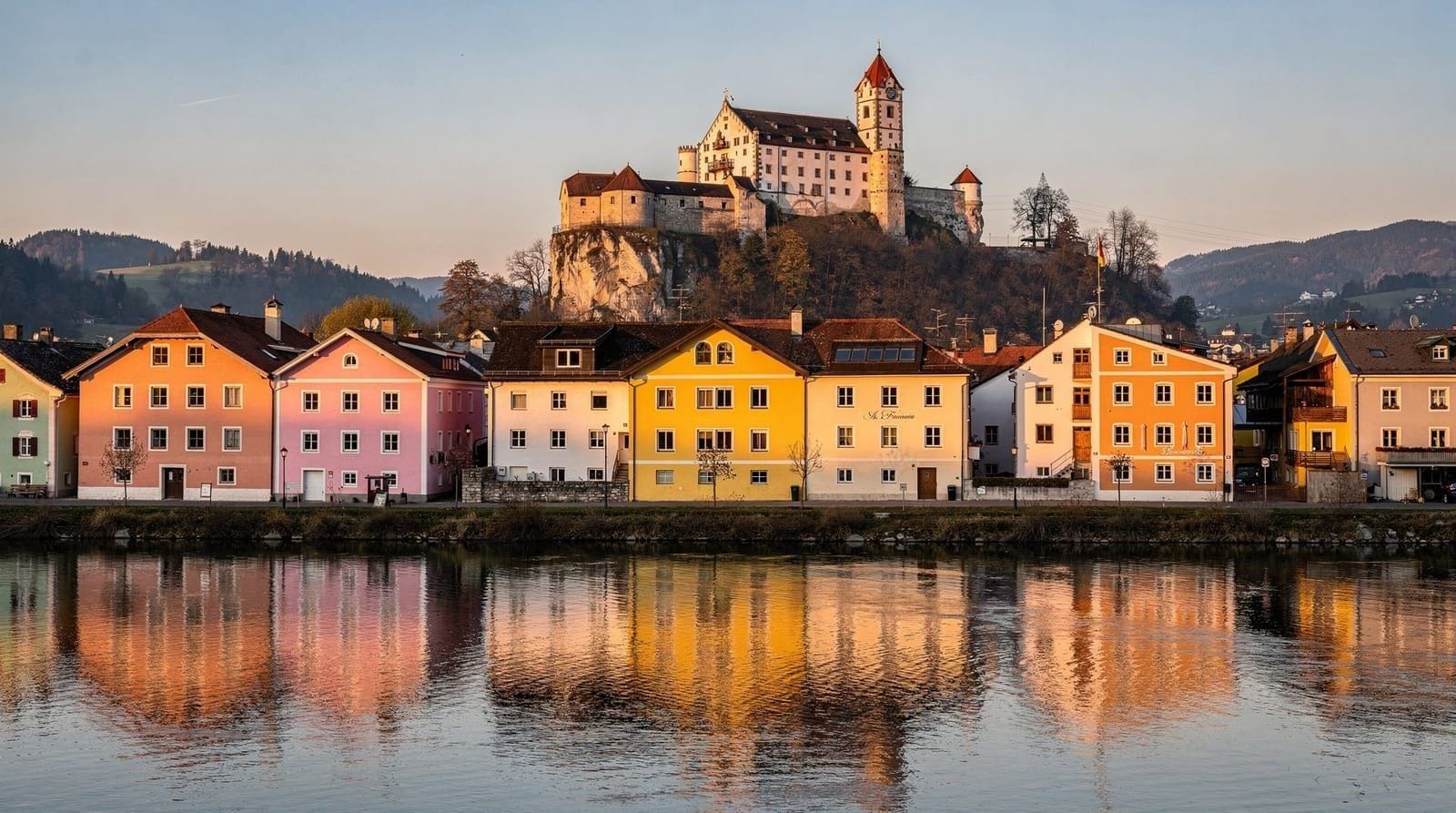
Fussen, the nearest town (5km from the castles), has its own old town centred on the Kloster Sankt Mang and the High Castle (Hohes Schloss). The old town is pleasant and not heavily touristed — most visitors pass through without stopping. The Fussener Altstadt along Reichenstrasse has some preserved medieval buildings and a quieter atmosphere than the castle valley.
If you have time before your castle entry slot, Fussen is worth a short walk. The lake (Alpsee, immediately east of the castle valley) is also worth 30 minutes — swimming is permitted and the setting with the castles visible above is beautiful. A flat lakeside path circles most of the shore and makes a pleasant, uncrowded alternative if the main castle path feels busy. Full-day Neuschwanstein and Linderhof tour from Munich
Combining with Linderhof or other King Ludwig sites
If you have a full day and want to go beyond Neuschwanstein, Linderhof Palace — Ludwig’s smaller, fully-completed palace with elaborate gardens and a grotto — pairs naturally on a guided day trip, though it is not straightforward to combine independently by public transport in a single day given the distances involved. The King Ludwig II castles guide covers all three of Ludwig’s major building projects — Neuschwanstein, Linderhof and Herrenchiemsee — and how they relate to each other. For those specifically comparing routes, Munich castles day trip and castles day trip by train both cover independent multi-castle logistics in more depth.
Practical tips for the visit
Crowds: Peak season (July-August) brings very large crowds. The path to the castle is heavily used from 10am to 3pm. The first timed-entry slot (usually 9am) is the least crowded. If visiting independently, aim for first entry.
Weather: The castle is at roughly 800 metres altitude and the surrounding mountains can produce afternoon cloud and rain. A light rain jacket is advisable year-round. The castle itself is sheltered, so rain does not ruin the visit.
Food at the castle: There is a cafe at the castle entrance area. It is overpriced for what it offers. Bring your own snacks or eat in Fussen before or after the castle.
Mobile signal: Limited to absent inside the castle. Download the DB Navigator offline maps and confirm your ticket booking before you leave Fussen or Munich.
Return trains: Regular trains from Fussen to Munich depart throughout the afternoon and evening, with the last convenient service around 8pm. Check return times before you leave Munich.
For the comprehensive ranking of all day trips from Munich, see Best day trips from Munich.
Frequently asked questions about the Munich to Neuschwanstein day trip
Do you need to book Neuschwanstein tickets in advance?
Yes, advance booking is essential from April through October. In peak summer, timed-entry tickets on hohenschwangau.de sell out 4-6 weeks ahead. Walk-up tickets at the valley centre open at 8am and sell out within minutes on summer weekends. Book as early as possible.
How long does it take to get from Munich to Neuschwanstein?
The regional train from Munich Hauptbahnhof to Fussen takes approximately 2 hours with one change. Bus 73 from Fussen to Hohenschwangau takes 10 minutes. Walking up to the castle entrance takes 30-40 minutes. Total from Munich to castle entrance: approximately 2h 45min.
Can you walk up to Neuschwanstein or do you have to take the carriage?
Walking is the standard option. The path from the valley ticket centre is approximately 1.5km and steep in parts, taking 30-40 minutes. The horse-drawn carriage (€8 uphill, €4 downhill) drops you 200 metres below the entrance, not at the door. Carriage waiting times in summer can exceed 30 minutes.
What is the Marienbrucke and do you need to visit it?
The Marienbrucke suspension bridge above the Pollat Gorge, 10 minutes uphill from the castle, gives the classic frontal photograph of Neuschwanstein. It is free to access. Worth the extra 20 minutes. Often closed in winter due to ice.
Is the inside of Neuschwanstein worth seeing?
Yes. The 35-minute interior tour covers the Throne Room, Singer’s Hall, King’s Bedroom, the Grotto, and several other rooms. The craftsmanship is extraordinary in completed areas; unfinished rooms remind you the castle was never truly finished.
Should you combine Neuschwanstein with Hohenschwangau in the same day?
Yes, if you have booked both timed tickets. They are 300 metres apart. Hohenschwangau (where Ludwig grew up) complements Neuschwanstein effectively. Budget 1.5-2 hours per castle. Tickets are separate: approximately €15 (Neuschwanstein) and €23 (Hohenschwangau) for adults.
Is a guided tour better than visiting independently?
A guided tour removes the biggest risk of an independent visit — missing your timed-entry slot because of a train delay or a slow walk-up — since the operator manages tickets and timing. It costs more than doing it yourself with a Bayern-Ticket and a pre-booked entry, but for a first visit or a tight schedule, that certainty has real value.
What happens if I miss my timed-entry slot?
Neuschwanstein’s timed slots are strict — arriving late can mean being turned away or squeezed into a later group if space allows, which is not guaranteed. Build in generous buffer time for the train connection, the bus, and the uphill walk, and aim to reach the ticket centre at least 30–40 minutes before your slot.
Top experiences
Bookable activities with verified prices and instant confirmation on GetYourGuide.