Neuschwanstein vs Hohenschwangau: which castle should you visit?
Schwangau: combo ticket Neuschwanstein and Hohenschwangau Castle
Should I visit Neuschwanstein, Hohenschwangau, or both?
Most visitors prioritise Neuschwanstein for its fairy-tale silhouette and Ludwig II's eccentric interiors. Hohenschwangau is smaller but less crowded, genuinely historic, and gives context to Ludwig's obsessions. The combo ticket saves around €5 and makes sense if you have a full day.
| Where | Hohenschwangau village, near Füssen (2hrs from Munich) |
| Cost | around €15 each castle, around €25 combo ticket |
| Time needed | 45-60 min per castle tour, plus walking between them |
| Getting there | train to Füssen, then bus 73/78 to Hohenschwangau |
| Best time | book Neuschwanstein online well ahead; Hohenschwangau has more walk-up room |
Two castles, one valley — and a ticketing decision to make
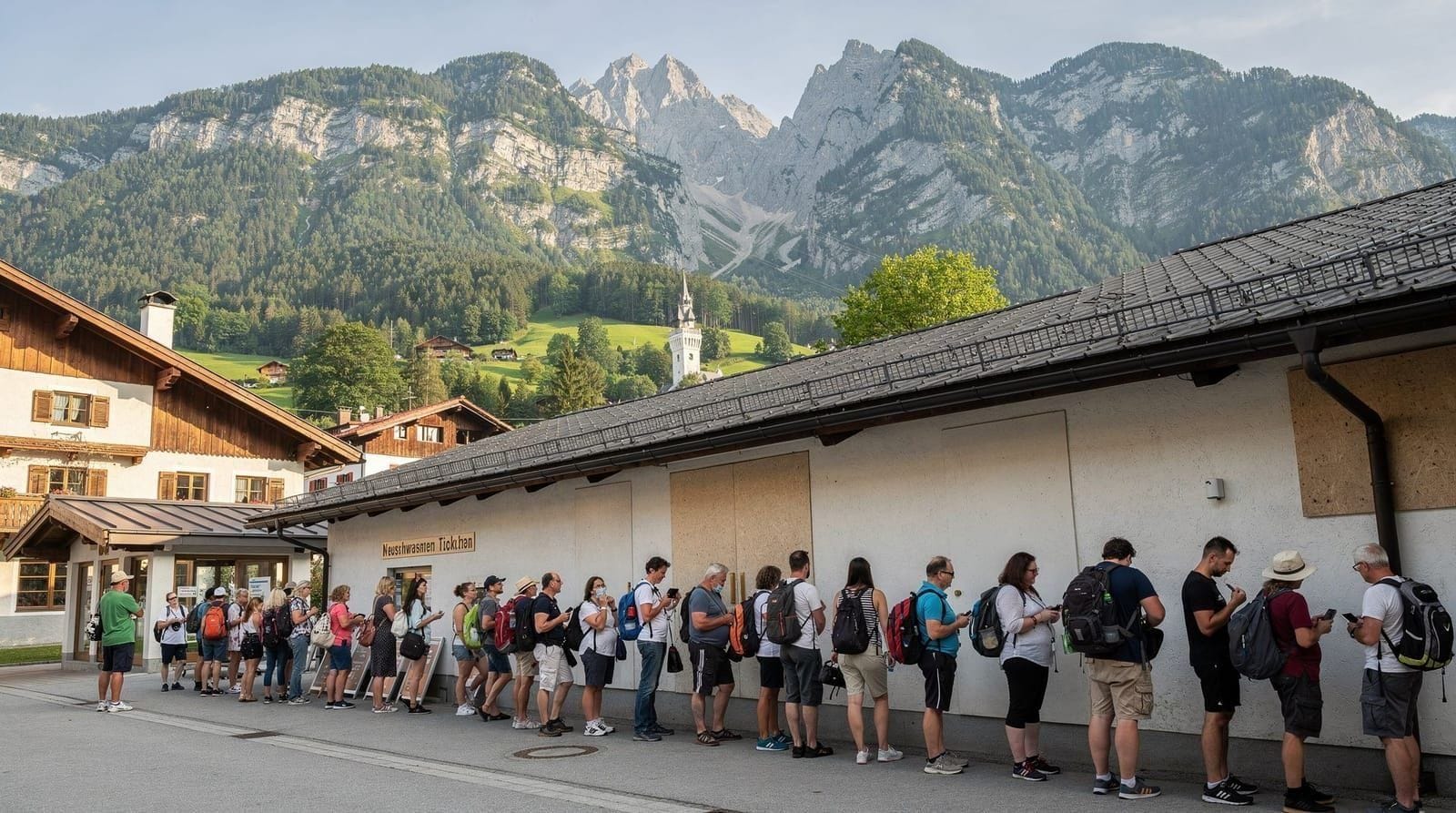
Standing at the ticket centre in Hohenschwangau village, most visitors face the same dilemma: buy entry for one castle or both? The combo or the single? Morning or afternoon slot? This guide cuts through the noise with a direct comparison so you can make the call before you arrive — and avoid the queues that trap so many day-trippers.
Both Neuschwanstein and Hohenschwangau castles overlook the Alpsee lake near the town of Füssen in southern Bavaria, about 130 kilometres southwest of Munich. They sit within walking distance of each other but tell very different stories.
What you actually see inside each castle
Neuschwanstein: the theatrical dream
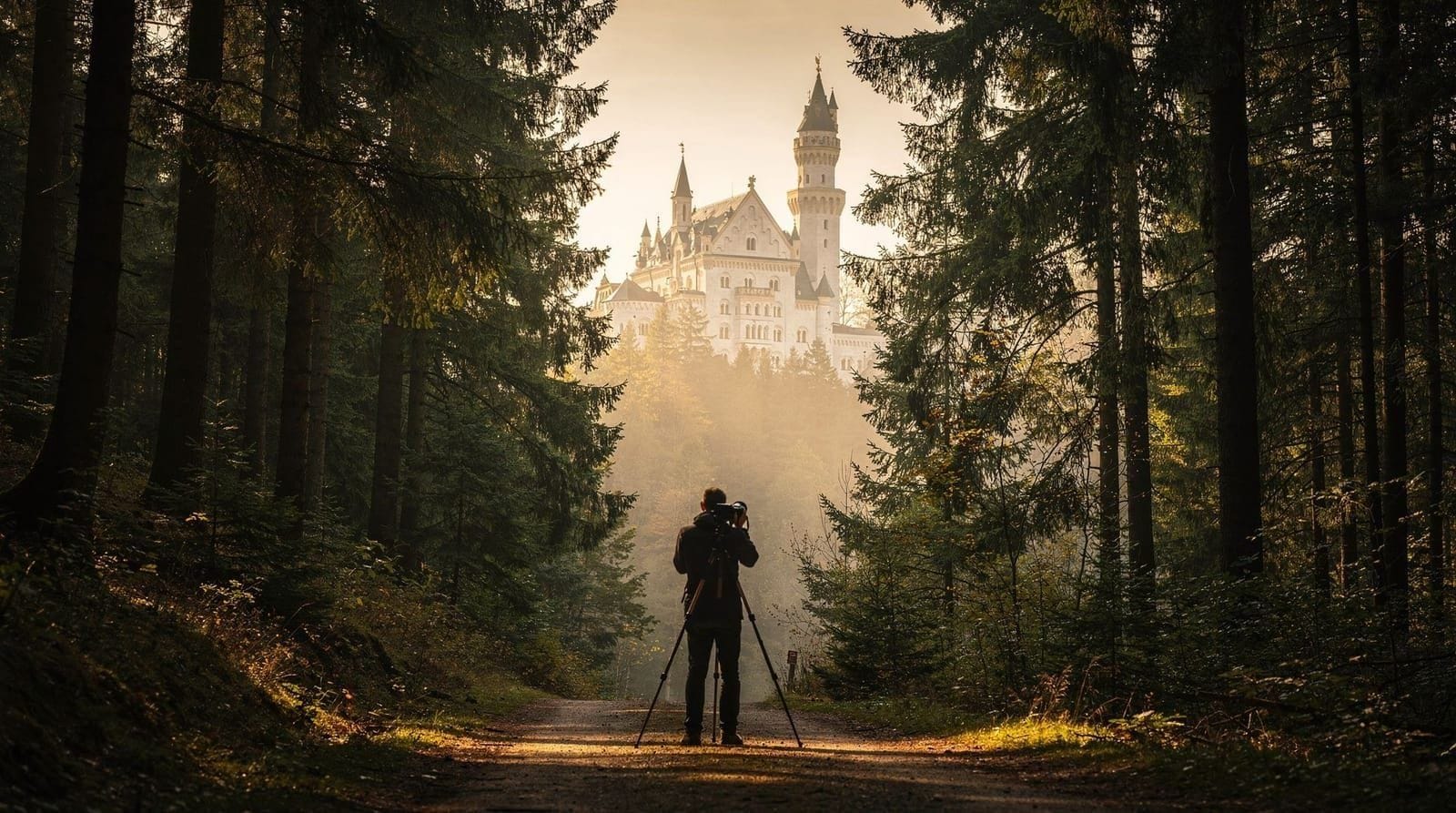
Neuschwanstein is Bavaria’s most visited building and the template for Disney’s Sleeping Beauty Castle. Ludwig II commissioned it in 1868 as a personal retreat inspired by Wagnerian opera mythology. He lived there for a total of 172 days before dying under mysterious circumstances in 1886. The castle was opened to the public just six weeks after his death.
The guided tour covers roughly a third of the interior — Ludwig left 14 of the 200 planned rooms unfinished. What you do see is genuinely dramatic: the Byzantine Throne Room with its gold mosaics and twelve apostles painting above a space built for a throne that was never installed; the Singers’ Hall modelled on Wartburg Castle’s Great Hall and decorated with scenes from Parsifal; and Ludwig’s own bedroom, where the carved wooden canopy took 14 craftsmen four years to complete.
The tour lasts around 35 minutes and moves quickly. Photography inside is permitted without flash. Stairs are steep in places, and there is no lift — visitors with limited mobility should check access before booking.
Hohenschwangau: the lived-in original
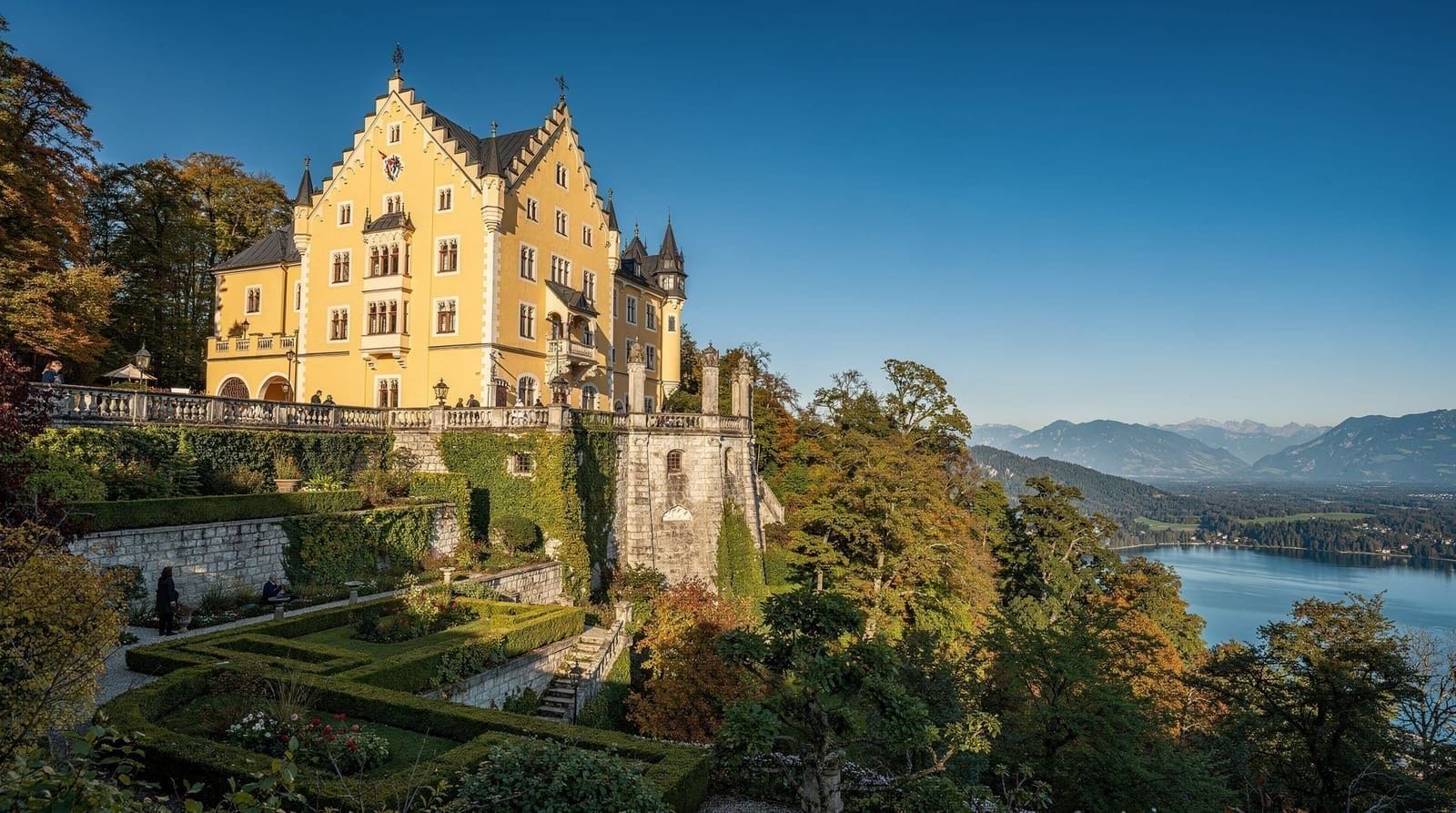
Hohenschwangau is the yellow castle visible from the village and was Ludwig II’s childhood home. His father, Maximilian II, rebuilt it in neo-Gothic style between 1833 and 1837 on the ruins of a medieval fortress. Ludwig spent summers here until his death.
The rooms feel smaller and more personal than Neuschwanstein’s grand halls. Original 19th-century furniture remains in place. The wall murals — painted by court artists — depict scenes from German medieval legend, which shaped Ludwig’s imagination and directly influenced Neuschwanstein’s decor. You can see Ludwig’s actual study, his bedroom with a sky ceiling dotted with stars that he could illuminate at night, and Queen Marie’s reception room.
The tour covers more of the castle than Neuschwanstein’s does and takes approximately 40–45 minutes. The building is fully preserved rather than a work-in-progress, which gives it a different atmosphere — less theatrical, more tangibly historical.
Ticket prices and combo strategy in 2026
The official ticket centre for both castles is on Alpseestrasse in Hohenschwangau village, about 1.5 kilometres from Füssen train station (reachable by bus 73 or 78).
| Ticket | Adult | Concession | Under 18 |
|---|---|---|---|
| Neuschwanstein only | €15 | €13 | Free |
| Hohenschwangau only | €15 | €13 | Free |
| Combo (both castles) | €25 | €21 | Free |
The combo ticket saves €5 per adult. For a couple, that is €10 saved — worth taking if you plan to enter both. Note that children under 18 are free at Bavarian state palaces, so families with children save only on the adult tickets.
Booking online in advance is essential for Neuschwanstein. The castle releases timed-entry slots on the official Bavaria palace website (bayerische-schloesser.de). Slots for July and August typically sell out 3–5 days ahead. Arrive without a ticket in peak season and you will be turned away. Hohenschwangau has more walk-up availability but still benefits from pre-booking. 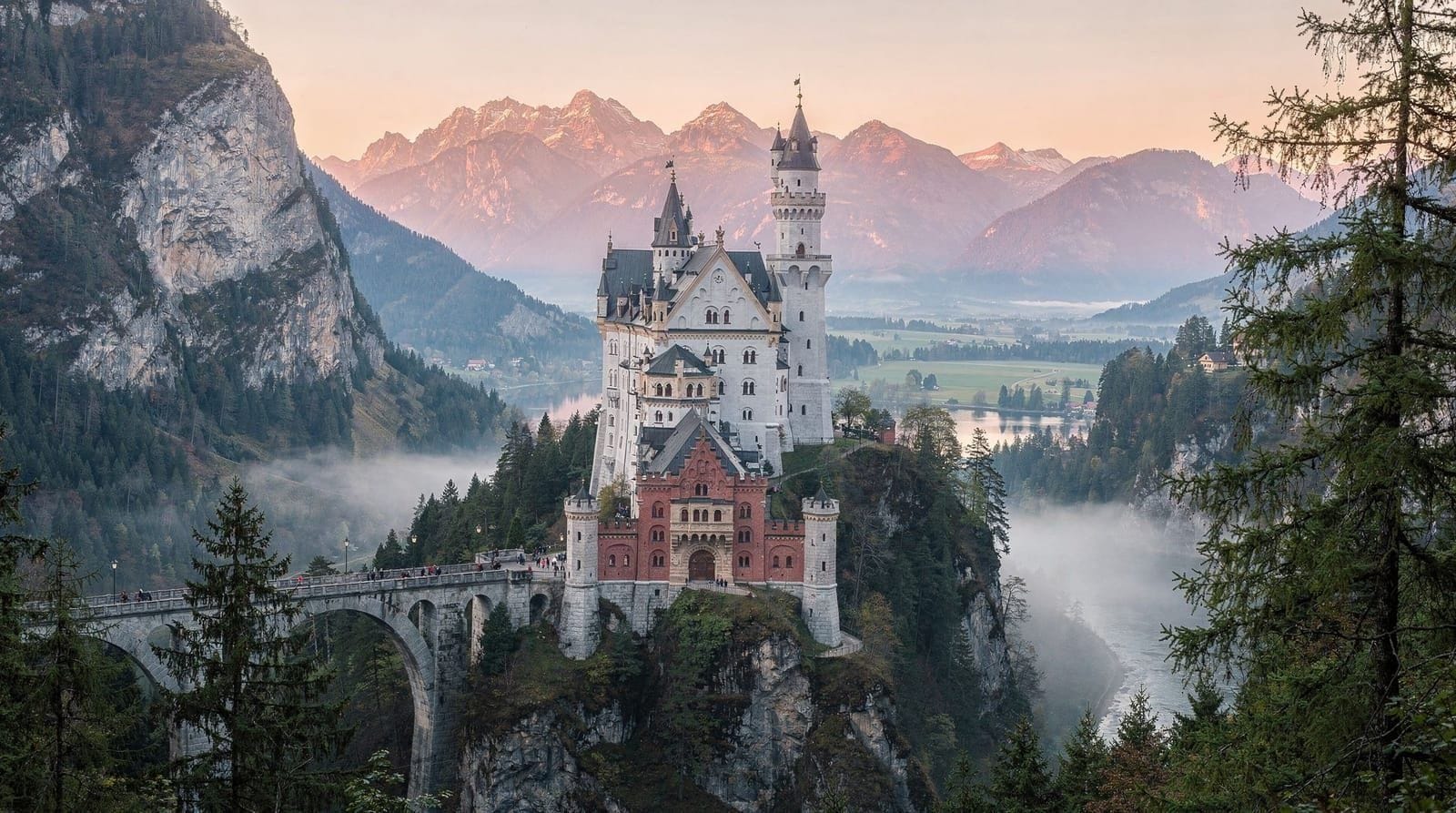 combo ticket Neuschwanstein and Hohenschwangau CastleCheck availability Neuschwanstein and Hohenschwangau Castle entry ticket and audio guideCheck availability
How to structure your visit
The logical order is Hohenschwangau first, Neuschwanstein second. Here is why: Hohenschwangau is lower down and easier to reach early in the morning when your legs are fresh. Its story provides context for Neuschwanstein — you understand Ludwig’s obsessions better having seen where he grew up. Then you walk up to Neuschwanstein, which takes about 20–25 minutes on foot uphill, or you can take the shuttle bus (€3 each way) or horse-drawn carriage (€9 up, €4.50 down) for extra cost.
Book your Neuschwanstein slot about 30–45 minutes after your Hohenschwangau tour to allow walking time. A 9:30am Hohenschwangau tour and an 11:00am Neuschwanstein slot works well. By 1pm you are done and can walk to the Marienbrücke viewpoint — or head back down to lunch in Füssen.
For the full day-trip itinerary from Munich, see our guide to Neuschwanstein day trips from Munich and the Bayern-Ticket guide for train options.
Getting there from Munich
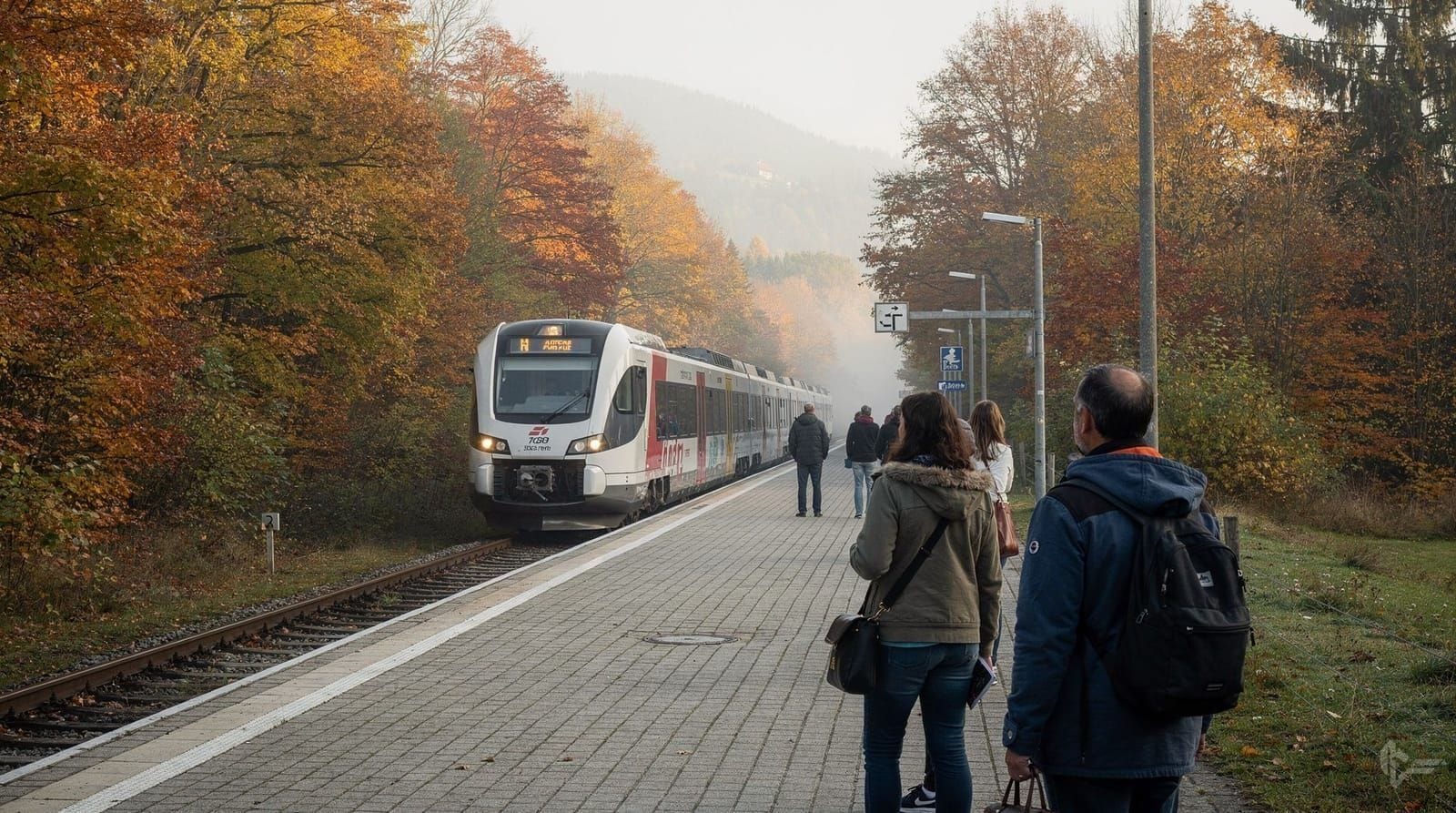
The standard route: RB train from Munich Hauptbahnhof to Füssen (2 hours, frequent departures), then bus 73 or 78 from Füssen station to Hohenschwangau (about 10 minutes, €2.70 one-way or included in Bayern-Ticket day pass). The Bayern-Ticket covers all regional trains and buses in Bavaria for one day at €29 for one person or €49 for up to five — check the current price on DB Regio’s website.
If you prefer a guided day trip from Munich that handles logistics: 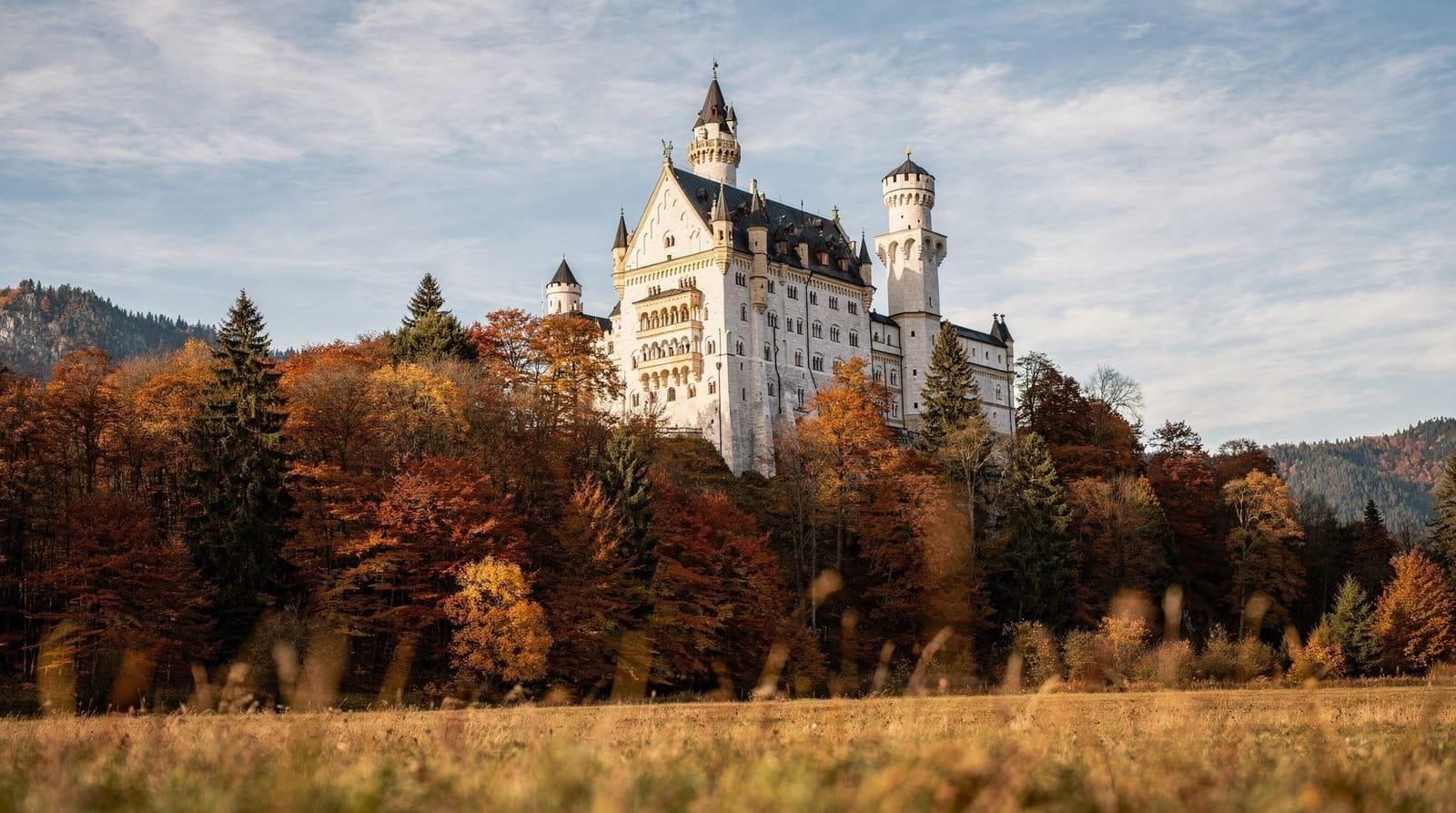 Neuschwanstein Castle full-day trip by trainCheck availability
See also: castles day trips by train for planning your own route.
Which should you visit if you can only do one?
The honest answer depends on what you want.
Visit Neuschwanstein if you want the iconic silhouette, the theatrical interiors, the view from Marienbrücke, and the most photogenic castle in Germany. Accept that it is heavily visited and the tour moves fast.
Visit Hohenschwangau if you prefer a less crowded experience, genuine historical furniture, smaller-scale rooms where you can actually look around, and a building that feels inhabited rather than staged. It costs the same, takes slightly longer to tour, and has walk-up availability most of the year.
Visit both if you have a full day from Munich, which you do if you take an early train. The combo ticket saves money and the two castles complement each other in a way that a single visit does not capture.
What neither castle offers, to be direct: peace and quiet in summer. Both are extremely busy from June through September. If you visit in late September or October, the crowds thin considerably, the surrounding Alps show autumn colour, and the light for photography is better.
What you will not see: the gaps in both tours
Neither castle gives you a comprehensive picture of Ludwig II’s vision. Knowing the gaps helps set expectations.
At Neuschwanstein, you tour roughly 15 rooms out of the planned 200. The remaining sections are either unfinished (raw stone walls, scaffolding-era work) or closed for structural reasons. The kitchen, which was technically advanced for its era with running hot and cold water, is not on the tour. The gatehouse and lower ward are externally visible but not included. Ludwig spent 172 days at Neuschwanstein total across 1884–1886 — the rooms you see were freshly completed when he arrived.
At Hohenschwangau, the upper floor rooms used by Ludwig’s mother Queen Marie are not part of the tour. The castle’s original medieval towers — which Maximilian II incorporated into the 1830s rebuild — are structurally present but not highlighted. The view from the towers toward the Alpsee and the Alps is exceptional but only visible from the exterior terrace.
Both tours move at a fixed pace with groups. Lingering is not encouraged, and photography is possible but rushed. If you want unhurried time with the interiors, come in shoulder season (May or October) and book the first tour slot of the morning.
Which is better for families and mobility-limited visitors
For families with young children, Hohenschwangau is the gentler option: the approach is shorter and less steep, the smaller rooms mean less time standing in a moving crowd, and the domestic, lived-in feel tends to hold children’s attention better than Neuschwanstein’s grander but less relatable state rooms. Neuschwanstein’s uphill approach (20-25 minutes on foot, or the shuttle/carriage for a fee) is the bigger factor for anyone with mobility limitations — both castle interiors involve stairs with no lift, but Hohenschwangau’s shorter, less steep approach path makes it the more realistic option for visitors who find sustained inclines difficult. If your group has mixed mobility needs, doing Hohenschwangau alone rather than attempting both is a legitimate choice, not a compromise — see our Hohenschwangau castle guide for the full picture of what that visit involves on its own.
Ludwig II: the context that makes both castles meaningful
Without knowing who Ludwig II was, both castles risk feeling like elaborate set pieces. With the context, they become the biography of one of the most unusual rulers in European history.
Ludwig II became King of Bavaria at 18 in 1864, following the sudden death of his father Maximilian II. He had no interest in governance and enormous interest in art, music, theatre, and architecture. He was Richard Wagner’s primary financial patron — his support enabled Tristan und Isolde and the Ring Cycle. His castles were his physical expression of a mythological world he preferred to the political realities of a Bavaria being absorbed into Bismarck’s new German Empire.
He financed Neuschwanstein, Linderhof, and Herrenchiemsee personally, from the royal family’s private funds, eventually borrowing heavily from European banks. His ministers and relatives declared him mentally unfit in June 1886 and had him taken to Berg Castle on the Starnberger See. He was found dead in the shallow water of the lake the following evening, along with the physician who had signed his certificate of incapacity. The cause of death was never definitively established.
At Hohenschwangau, you see the childhood spaces that shaped him. At Neuschwanstein, you see the adult vision he was building. Together, they form a biographical arc that a single visit cannot fully capture.
For a wider exploration of Ludwig’s legacy across Bavaria, see King Ludwig II castles guide and the broader context in Munich royal history.
Best time to visit: crowd and weather considerations
Both castles are affected by the same seasonal patterns, since they share a location.
July–August: Peak season, maximum crowds. Neuschwanstein sells out timed slots days in advance. Marienbrücke viewpoint is rarely quiet during daylight hours. Prices for accommodation in Füssen and Hohenschwangau village are at their highest. Compensation: long daylight hours (7am–9pm in midsummer), wildflowers in the alpine meadows, and consistent warm weather.
May–June: Excellent shoulder season. Crowds are significantly lower in May. Neuschwanstein tickets are available online with shorter advance booking. The meadows below the castle have wildflower displays in early June. Snow may linger on the surrounding peaks into May, adding alpine drama to the view. Temperatures are mild (12–18°C typically).
September–October: Arguably the best combination of reasonable crowds and good weather. The last two weeks of September see alpine colour changes on the surrounding hillsides. October is cooler but typically dry. The Oktoberfest period in Munich (mid-September to first weekend of October) sees Munich hotels fill up, but the castles themselves are less affected than city accommodation.
November–March: Off-season. Marienbrücke is closed (ice risk). Some services in Hohenschwangau village reduce or close. The castle itself remains open year-round except 1 January, Shrove Tuesday, and 24 December. Winter visits with snow are visually spectacular but logistically more demanding — check road conditions and bus schedules.
Füssen: what to do before and after the castles
Füssen is a small Bavarian market town at the foot of the Alps, 2 kilometres from the castle ticket centre. It is underrated as a stop in itself and makes the day feel less like a pure castle-tourism exercise.
The Altstadt (old town) has a pedestrian zone with Bavarian painted facades (Lüftlmalerei), a 15th-century Benedictine monastery (St. Mang’s), and a small late-Gothic castle (Hohes Schloss) that houses a regional art museum. The museum costs €7 for adults and includes access to the castle’s courtyard with its trompe-l’oeil painted facades — an unusual local artistic tradition.
The Lech River runs through the town and over the Lechfall waterfall at the southern end, walking distance from the station. The Lech colours intensify in spring snowmelt — a pale turquoise from glacial mineral content.
For food: the restaurant quality in Hohenschwangau village itself is aimed at tourist traffic and priced accordingly. Füssen’s old town has more local options. The Hotel Hirsch on Kaiser-Maximilian-Platz has a reliable Bavarian kitchen; the Altstadtcafe on Reichenstrasse is good for morning coffee and cake. Budget: a main course in Füssen ranges from €14–25.
For overnight stays: if you want to photograph Neuschwanstein at sunrise (see Neuschwanstein photo spots), staying in Füssen or Hohenschwangau village saves you the 2-hour early morning train from Munich. Hotels book out in summer — plan at least 6–8 weeks ahead for July–August.
Budgeting a two-castle day
A realistic per-person budget for the combo day from Munich: around €25 for the combo castle ticket, around €29 for a Bayern-Ticket covering the round-trip train and local buses (cheaper per person if travelling in a group of up to five), €2-4 for the shuttle bus or carriage if you skip the uphill walk, and €15-25 for lunch in Füssen. That puts a reasonable total around €75-90 per adult for a full castles day including transport and food, before any souvenirs or the Museum der Bayerischen Könige. Travelling by guided tour instead typically costs more overall but bundles the ticket risk and transport into one price — worth it if avoiding the booking logistics is worth the premium to you.
Practical logistics checklist
- Book Neuschwanstein tickets online before you travel. The official site is bayerische-schloesser.de. Book as early as possible in summer.
- Arrive at the ticket centre 15 minutes before your timed slot — if you miss your slot, the ticket is generally not transferable.
- Wear comfortable shoes — cobblestones at the ticket centre, uphill paths to the castles, and steep internal stairs inside both buildings.
- Hohenschwangau village cafes and restaurants price at tourist premium. Eating in Füssen before or after is better value.
- There is a luggage storage facility at the ticket centre if you are carrying a daypack.
- The nearest ATM is in Füssen. Card payment is accepted at the ticket centre and both castle gift shops.
- Shuttle buses run from the ticket centre to the Neuschwanstein entrance (€3 each way). Horse-drawn carriages also run (€9 uphill, €4.50 downhill). Both save the 30-minute steep walk — useful if you have limited mobility or are carrying children.
- Tipping the tour guide at the end of the interior tour is customary in Germany — €1–2 per person is standard.
- Weather in the foothills can change quickly even on a clear Munich morning — pack a light rain layer, since neither approach path offers much shelter.
- If you’re combining the day with a third stop, the Bavarian Alps cable cars at nearby Tegelberg are the natural add-on, but only if you’ve started early enough to fit it in before the last cable car down.
For photo planning, read our guide to Neuschwanstein photo spots which covers the Marienbrücke, the alpine meadows below the castle, and the Tegelbergbahn cable car angles.
For the broader question of which castles to prioritise across Bavaria, see best castles near Munich.
Frequently asked questions about Neuschwanstein vs Hohenschwangau
What is the price difference between the two castles?
In 2026, Neuschwanstein entry costs €15 for adults (€13 concessions). Hohenschwangau is also €15. The official combo ticket for both is €25 per adult, saving €5 versus buying separately. Children under 18 are free at both.
Which castle has a shorter queue?
Hohenschwangau is consistently less crowded. Neuschwanstein sells out days in advance in peak summer. Always book Neuschwanstein online at least 2–3 days ahead; same-day slots are often gone by 7am.
How far apart are the two castles?
They are roughly 400 metres apart as the crow flies — a 10-minute walk up the hill between them. Both are reached from the same ticket centre in Hohenschwangau village.
Can I visit both in one day?
Yes, comfortably. Most visitors do Hohenschwangau first then Neuschwanstein second. Allow 45–60 minutes inside each plus 20–30 minutes walking between them. A full day from Munich is enough.
Is the combo ticket worth it?
If you plan to enter both castles, yes — it saves €5 per adult. If you only want Neuschwanstein, skip it. Note: the combo ticket still requires a timed entry slot at Neuschwanstein.
Which castle has better interior rooms?
Neuschwanstein has grander, more theatrical rooms — the Singers’ Hall and Throne Room are spectacular, though Ludwig never finished or lived there long. Hohenschwangau has smaller but fully furnished, lived-in rooms with original 19th-century furniture and murals where Ludwig actually grew up.
Do I need a guide or can I visit independently?
Both castles require guided tours — self-guided entry is not available. Tours run continuously every 20–30 minutes in multiple languages. The audio guide is included in the ticket price.
Which castle is better for young children or limited mobility?
Hohenschwangau, generally. Its approach path is shorter and less steep than Neuschwanstein’s 20-25 minute climb, and the smaller, more domestic rooms tend to hold children’s attention better. Neither castle has a lift inside, so both involve some stairs regardless of which you choose.
Top experiences
Bookable activities with verified prices and instant confirmation on GetYourGuide.