Munich royal history: the Wittelsbach dynasty guide
Munich: Residenz Palace and Hofgarten skip-the-line guided tour
How long did the Wittelsbach dynasty rule Bavaria?
The Wittelsbachs ruled Bavaria for over 700 years, from 1180 when Otto I was granted the Duchy of Bavaria by Emperor Frederick Barbarossa until 9 November 1918, when the last king Ludwig III was deposed in the revolution led by Kurt Eisner. Their legacy is woven into Munich's architecture, museums and cultural institutions.
Seven centuries of dynastic rule over Bavaria
No European dynasty shaped a single city more comprehensively than the Wittelsbachs shaped Munich. From the founding of the university at Ingolstadt in 1472 to the construction of Neuschwanstein in the 1880s, from the creation of Europe’s first public beer garden regulations to the commissioning of the Alte Pinakothek — the Wittelsbach fingerprint is on virtually every institution, building and tradition that defines the city today.
Understanding the Wittelsbachs is therefore not optional background for visitors. It is the interpretive key to most of what you will see in Munich, whether you are standing in the Residenz’s Antiquarium, walking through Nymphenburg’s formal gardens, or trying to figure out why Ludwig II spent the equivalent of Bavaria’s annual defence budget on a castle in the Alps that he visited fewer than ten times.
This guide traces the dynasty from its founding in 1180 through its seven centuries of rule, ending with the surprisingly peaceful revolution of November 1918 that turned Bavaria into a republic overnight.
| Dynasty span | 1180–1918, 738 years |
| Founder | Otto I, Duke of Bavaria |
| Best-known ruler | Ludwig II, castle-builder |
| Key sites in Munich | Residenz, Nymphenburg |
| Dynasty ended | 8 November 1918 revolution |
A quick timeline of key Wittelsbach rulers
| Ruler | Reign | Best known for |
|---|---|---|
| Otto I | 1180–1183 | Founding Wittelsbach rule in Bavaria |
| Maximilian I | 1597–1651 | Electoral dignity, Thirty Years War |
| Max Emanuel | 1679–1726 | Expanding the Residenz and Nymphenburg |
| Ludwig I | 1825–1848 | Neoclassical Munich, Königsplatz |
| Ludwig II | 1864–1886 | Neuschwanstein, Linderhof, Herrenchiemsee |
| Ludwig III | 1913–1918 | Last king, deposed in 1918 revolution |
The founding: Otto I and the Duchy of Bavaria
The Wittelsbach story begins not with a palace but with a political transaction. In 1180, Holy Roman Emperor Frederick I — known as Barbarossa — stripped Henry the Lion, Duke of Saxony and Bavaria, of his territories following years of conflict. He needed a reliable ally to manage Bavaria, and chose Count Palatine Otto I of the Wittelsbach family.
The Wittelsbachs at this point were a relatively minor noble family from the region around today’s Aichach, north of Augsburg. The Schloss Wittelsbach, their ancestral castle, is now largely a ruin. What they received in 1180 was a major political promotion — one they would not relinquish for 738 years.
Munich at this point was barely a town. It had been established by Henry the Lion in 1158 as a crossing point on the Isar River and market for salt being transported from the Alps. The Wittelsbachs made Munich their official residence from 1255, when the duchy was divided between two brothers and Munich became the capital of Upper Bavaria.
The Residenz: building a European court
The Munich Residenz grew over four centuries from a moated castle to one of the most complex palace complexes in Europe. The construction history mirrors the dynasty’s changing political ambitions and artistic tastes.
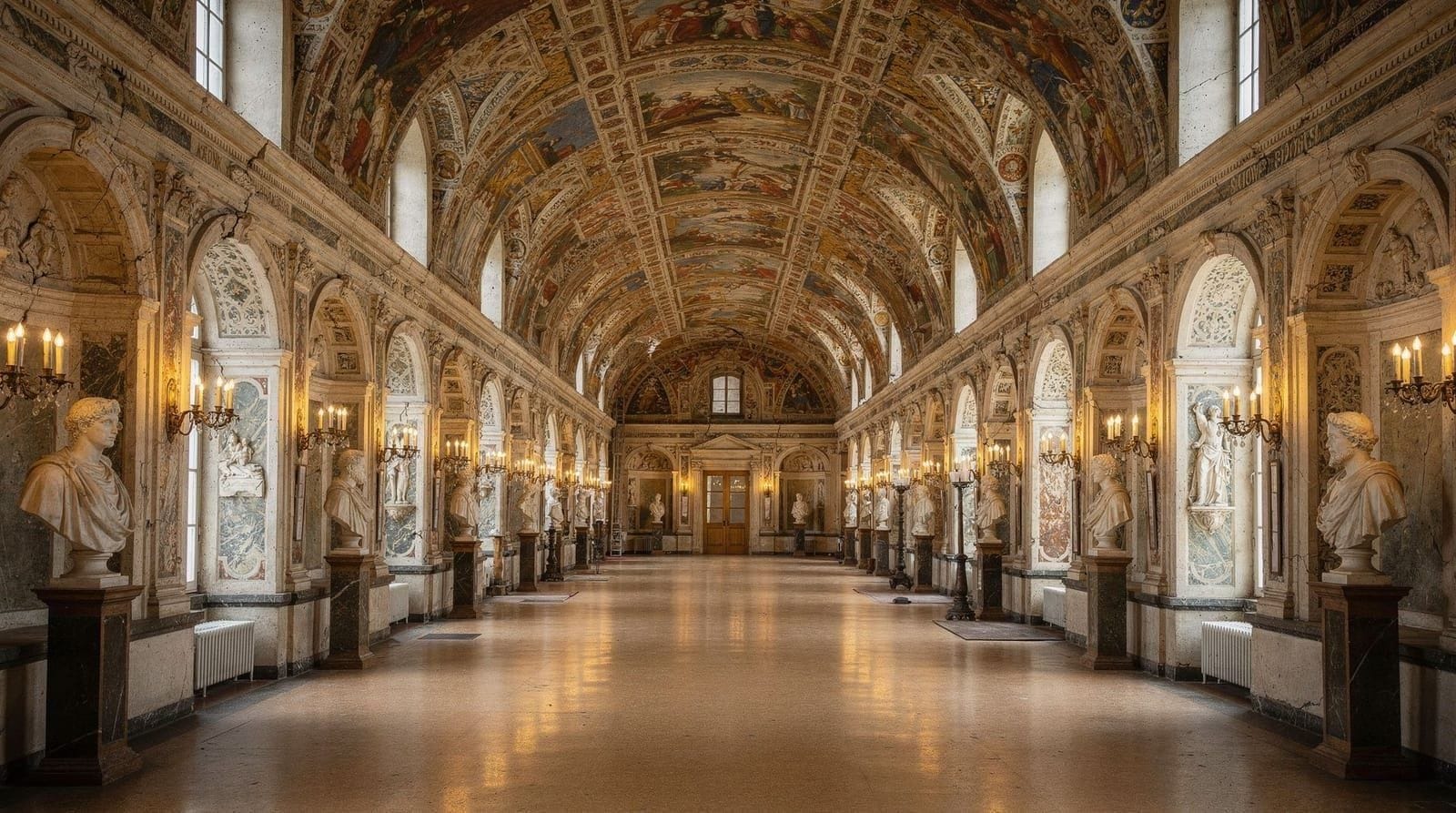
The original Neuveste (new fortification) was built in 1385 on the northeast edge of the old town. By the 16th century, the Wittelsbachs were expanding their European ambitions. Duke Wilhelm IV signed off on the Antiquarium — now the largest Renaissance hall north of the Alps — between 1568 and 1571. It was designed to house ancient sculpture and serve as a reception room for diplomatic occasions.
Maximilian I, who became the first Elector (Kurfürst) of Bavaria in 1623 and played a decisive role in the Thirty Years War, transformed the Residenz in the early 17th century into something approaching a proper baroque palace. His Antiquarium was redecorated in full Renaissance style. He was the ruler who, by backing the Emperor against the Protestant Union, ensured that Bavaria would remain Catholic — a decision with consequences felt through to the present day in Bavarian culture.
The Residenz expanded further under Max Emanuel (1679–1726) and Karl Albrecht (1726–1745), who briefly became Holy Roman Emperor Charles VII. By the early 19th century, the complex had grown to encompass the Hofkapelle, the Cuvilliés Theatre (a Rococo jewel rescued piece by piece from wartime storage and rebuilt after 1945), and eventually 130 rooms open to the public.
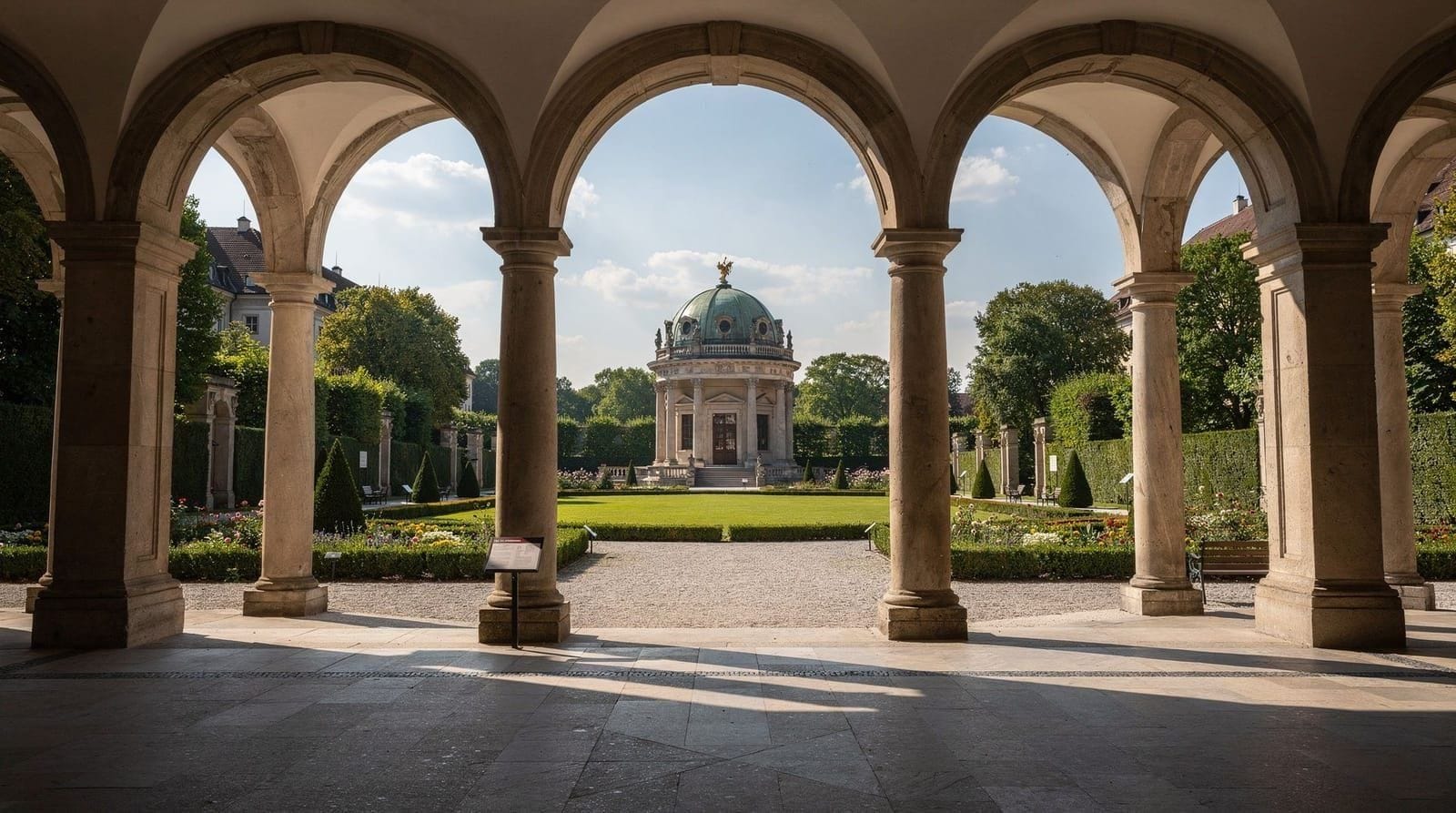
The Munich Residenz guide covers the practical details of visiting today: opening hours, ticketing, the Treasury’s Wittelsbach crown jewels and how to navigate the 130 rooms. Skip-the-line guided tour: Munich Residenz and Hofgarten
Ludwig I: the builder-king and Athens on the Isar
If one monarch transformed Munich from a regional capital into a European cultural centre, it was Ludwig I, who reigned from 1825 to 1848. His vision was explicit and somewhat grandiose: he wanted Munich to be a city that no German could be ashamed to call home, a peer to Rome, Paris and Vienna.
To achieve this, he appointed two architects who would define the city’s appearance for generations. Leo von Klenze handled the neoclassical buildings: the Glyptothek (1830) for ancient sculpture, the Alte Pinakothek (1836) for old master paintings, and the Propyläen (1862, completed after Ludwig’s abdication) at Königsplatz. Friedrich von Gärtner designed the Ludwigstrasse from the Feldherrnhalle north to the Siegestor — an Italianate boulevard of sandstone-coloured facades that remains one of the most coherent urban ensembles in Germany.
Königsplatz, designed as a Greek agora transposed to Bavaria, features three Greek revival structures: the Glyptothek, the Antikensammlungen (completed 1848) and the Propyläen gateway. The square was later hijacked by the Nazi regime, which paved it in granite slabs and held mass rallies there. The slabs were removed after the war and the grass reinstated.
Ludwig I’s reign ended in humiliation. His relationship with Lola Montez, a dancer who had been granted Bavarian citizenship and a title by the king, triggered public unrest in 1848 against a backdrop of the wider European revolutionary wave. Ludwig abdicated on 20 March 1848, passing power to his son Maximilian II. He died in 1868, having outlived the dynasty’s glory days.
The Munich architecture guide covers the architectural legacy of Ludwig I’s building programme in detail, including Königsplatz, the Pinakotheken and the surviving neoclassical streetscape.
Maximilian I, the Thirty Years War and the Counter-Reformation
Going back to an earlier period: Maximilian I (1573–1651) was arguably the most politically significant Wittelsbach ruler, even if his buildings are less photogenic than Ludwig II’s castles. He was the patron of the Theatinerkirche (built by his successor Ferdinand Maria from 1663 to celebrate the birth of an heir), and his court was a centre of Counter-Reformation culture.
Maximilian secured Bavaria’s position within the Holy Roman Empire by backing the Emperor against the Protestant League, and his reward was the electoral dignity in 1623 — making Bavaria one of the seven territories whose rulers chose the Holy Roman Emperor. This status elevated Munich to the level of a genuine European court, attracting artists, musicians and scholars from across the continent.
Ludwig II: the dream-builder king
No Wittelsbach ruler is better known today than Ludwig II (1845–1886), the so-called “Mad King.” The epithet is misleading in several ways. Ludwig II was not particularly mad — he was an eccentric, reclusive individual with a passion for Wagner, French absolutism and medieval romance who happened to be temperamentally unsuited to constitutional monarchy and parliamentary government. He was certainly a poor administrator and catastrophically indebted by the time of his deposition. But the castles he built are the reason most international visitors know Bavaria exists.
Neuschwanstein Castle, begun in 1869 and never completed to its original design, is the most visited castle in Germany. It was conceived as a personal theatrical set, inspired by Wagner’s operas and the legends of the German Middle Ages. Ludwig spent approximately 180 nights there in total.
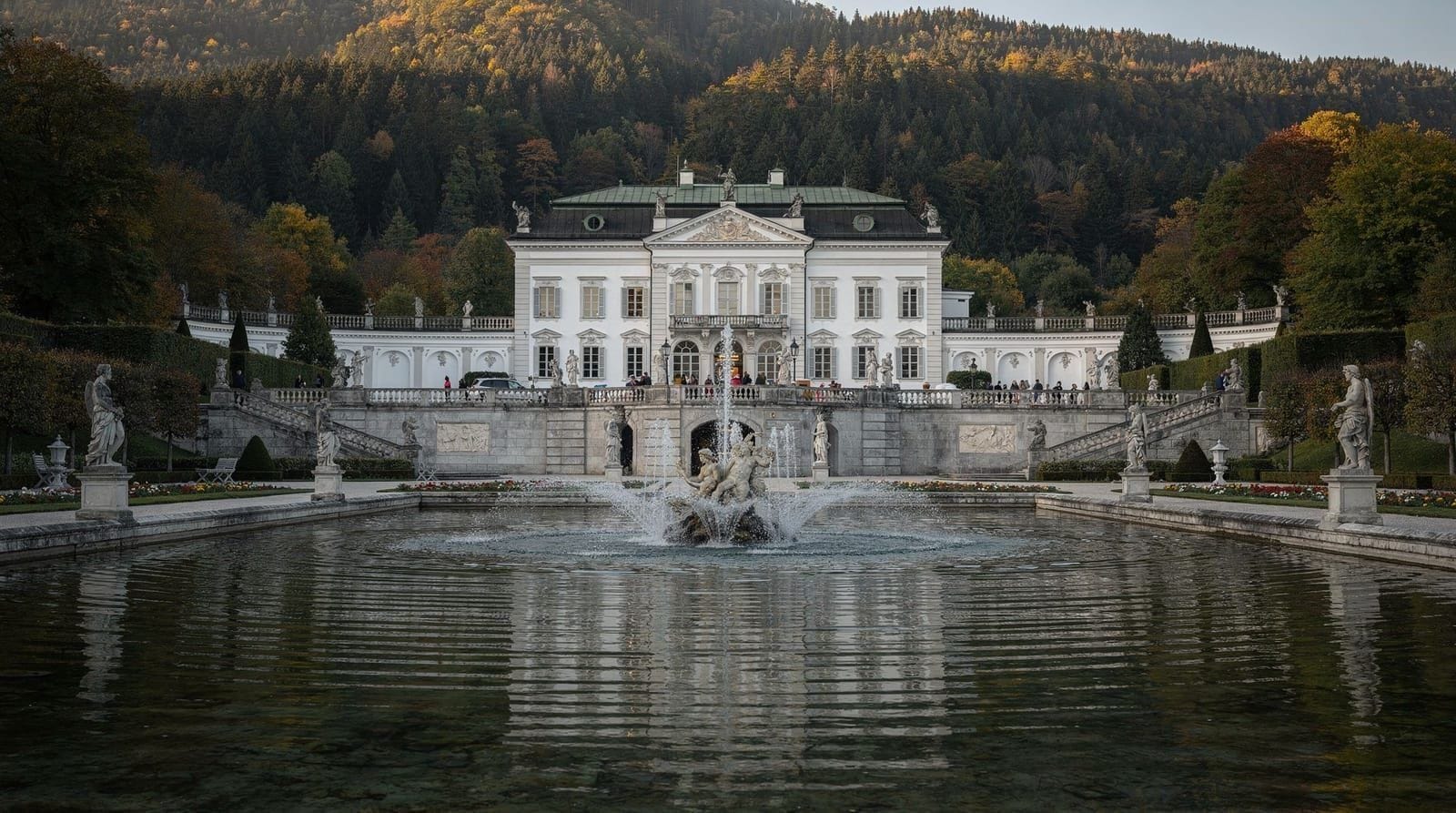
Linderhof Palace (1878), tucked into the Graswang Valley near Ettal, is a Rococo confection modelled on the Petit Trianon at Versailles. It is the only one of Ludwig’s palaces that was completed during his lifetime. The grounds contain a Venus Grotto with a mechanically operated wave machine and a Moroccan House purchased from the 1867 Paris World Exhibition.
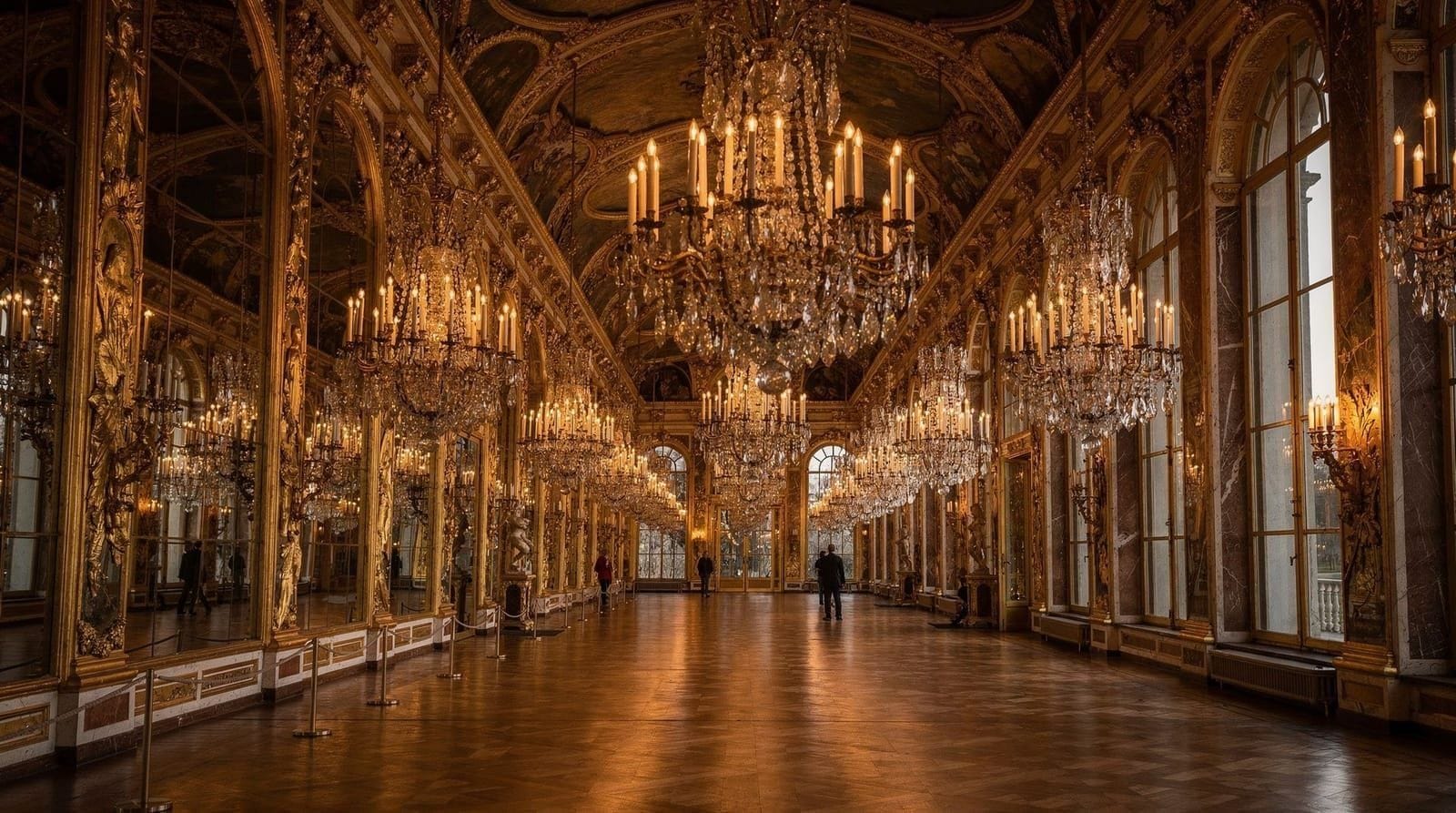
Herrenchiemsee (construction began 1878) was Ludwig’s most ambitious project: a full-scale replica of Versailles built on an island in the Chiemsee lake. The Hall of Mirrors is slightly longer than its Versailles original. Ludwig used the palace for just nine days before his death.
The King Ludwig II castles covers all three castles and how to visit them efficiently from Munich. Private guided tour: Munich Residenz, Museum and Treasury
Nymphenburg Palace: the summer residence
While the Residenz served as the city-centre ceremonial palace, Nymphenburg in Munich’s western suburbs functioned as the Wittelsbach summer residence from 1675 onwards. The main palace was begun by Elector Ferdinand Maria in 1664 and expanded over the following century, with the distinctive wings added in the early 18th century under Max Emanuel.
The palace complex includes several pavilions in the extensive grounds: the Amalienburg (a Rococo hunting lodge of extraordinary refinement), the Pagodenburg, the Badenburg and the Magdalenenklause. Ludwig II was born in Nymphenburg in 1845.
The Marstall (royal stables) at Nymphenburg now houses the Marstallmuseum, displaying royal carriages and sleighs — including Ludwig II’s gilded state coaches. Nymphenburg’s porcelain manufactory (Nymphenburg Porzellan), founded in 1747, still produces handmade porcelain today and operates a shop in the palace wing.
The Nymphenburg Palace guide has full practical information including how to combine the palace visit with the grounds and pavilions in a single day.
The end of the monarchy: November 1918
The Wittelsbach monarchy ended not with a battle but with a march. On the evening of 7 November 1918, Kurt Eisner — a Berlin-born Jewish journalist and member of the Independent Social Democratic Party (USPD) — led a procession of perhaps 50,000 workers and soldiers from the Theresienwiese to the military barracks across Munich. By midnight, soldiers had joined the revolution and their barracks were under workers’ control.
King Ludwig III had already left the city — technically to visit troops, but effectively in flight. On 8 November 1918, Eisner proclaimed Bavaria a free state and republic, making it the first German state to abolish its monarchy. The German Kaiser Wilhelm II followed suit the next day.
Eisner was assassinated on 21 February 1919 by Count Anton von Arco auf Valley, a right-wing aristocrat who had been rejected by the antisemitic Thule Society for being part Jewish. The assassination triggered a period of intense political violence in Munich, including a short-lived Soviet Republic and its violent suppression, which created the conditions in which Hitler’s NSDAP would later emerge.
The Beer Hall Putsch guide covers the 1923 Nazi coup attempt, which must be understood against the background of the political chaos that followed the 1918 revolution.
The Wittelsbacher Ausgleichsfonds today
The 1923 settlement that created the Wittelsbacher Ausgleichsfonds (WAF) was a compromise between the Bavarian state and the former royal family. Some properties went to the state; others remained with the family through the WAF, which manages them as a private foundation.
The WAF today owns significant real estate in Bavaria, including buildings in Munich city centre, and holds art collections partly on loan to Bavarian state museums. The arrangement is not without critics, but it avoided the full nationalisation that would have come with a more adversarial settlement.
The House of Wittelsbach continues to exist as a noble family. The current head, Duke Max in Bavaria, maintains a low public profile. Members of the family occasionally appear at ceremonial events in Bavaria, and the question of their historical role is handled with more nuance in Bavaria than in most post-monarchical European states. Official guide: Nymphenburg Palace tour with Marstall Museum
This continuity is part of why Bavaria’s relationship with its monarchy feels different from, say, France’s with its own former royal houses — the family never went into exile, the settlement was negotiated rather than imposed, and Wittelsbach descendants still attend Oktoberfest’s opening ceremony as guests of honour each year.
Visiting Wittelsbach Munich: practical planning
A thorough exploration of Wittelsbach Munich requires at minimum three separate visits:
Munich Residenz and Treasury: half a day minimum. Open daily 09:00–18:00 (April to mid-October) or 10:00–17:00 (mid-October to March). Tickets cover both the Residenzmuseum and Treasury; the Cuvilliés Theatre has separate hours and an additional ticket. Located on Max-Joseph-Platz.
Nymphenburg Palace: half a day to a full day if you include the grounds and pavilions. Open daily 09:00–18:00 in summer, 10:00–16:00 in winter. Tram 17 from the city centre takes about 20 minutes.
Ludwig II’s castles: at least one full day per castle if travelling independently. Organised day tours from Munich combine Neuschwanstein and Linderhof in one long day. The Munich Residenz vs Nymphenburg Palace guide helps you choose if you only have time for one palace in Munich itself.
The Munich museum quarter guide covers the Alte Pinakothek and the rest of Ludwig I’s legacy in the Kunstareal. Private skip-the-line tour: Nymphenburg Palace
Following the Wittelsbach trail beyond Munich
The dynasty’s story does not end at the city limits. Herrenchiemsee, Ludwig II’s Versailles replica on an island in the Chiemsee, and Linderhof, the only completed castle, both make sense as extensions of the Munich royal history trail rather than standalone trips. Closer to home, the Munich old town history guide traces how the Wittelsbach court shaped the street plan and civic buildings of the Altstadt long before Ludwig I’s neoclassical additions. For visitors who want the full architectural picture rather than the dynastic one, the Munich architecture guide is the natural companion piece.
Understanding this longer arc changes how the castles read. Neuschwanstein and Herrenchiemsee are not eccentric one-off follies so much as the final, most extravagant chapter of a building tradition that runs continuously from the 1385 Neuveste through Ludwig I’s neoclassical Munich to Ludwig II’s mountain fantasies — each generation using architecture to make a political or personal statement in the idiom of its era.
Frequently asked questions about Wittelsbach Munich
Where is the best place to start understanding Wittelsbach history in Munich?
The Munich Residenz is the logical starting point — it spans more Wittelsbach centuries than any other single building and its Treasury contains the crown jewels and ceremonial objects that convey the dynasty’s self-image most directly. The Residenzmuseum’s room sequence traces the building’s evolution from Renaissance through Baroque to Neoclassical.
Did Ludwig II really refuse to appear in public?
In his later years Ludwig II increasingly withdrew from public life and court ceremonial. He conducted much of his government business by letter and preferred to travel at night to avoid being seen. His reclusive behaviour alarmed ministers who expected a visible, accessible monarch. It was one of the factors cited in the 1886 psychiatric assessment, though historians now read it more as introversion and depression than clinical madness.
Are the Wittelsbach crown jewels on display in Munich?
Yes. The Residenz Treasury (Schatzkammer) holds the Bavarian crown jewels, including the Crown of Bavaria created in 1806 for Maximilian I Joseph, the first king of Bavaria. The Treasury also holds medieval reliquaries, Wittelsbach swords and orders. It is one of the most important royal treasury collections in Europe and is included in the general Residenz ticket.
Why does Nymphenburg have a canal in front of it?
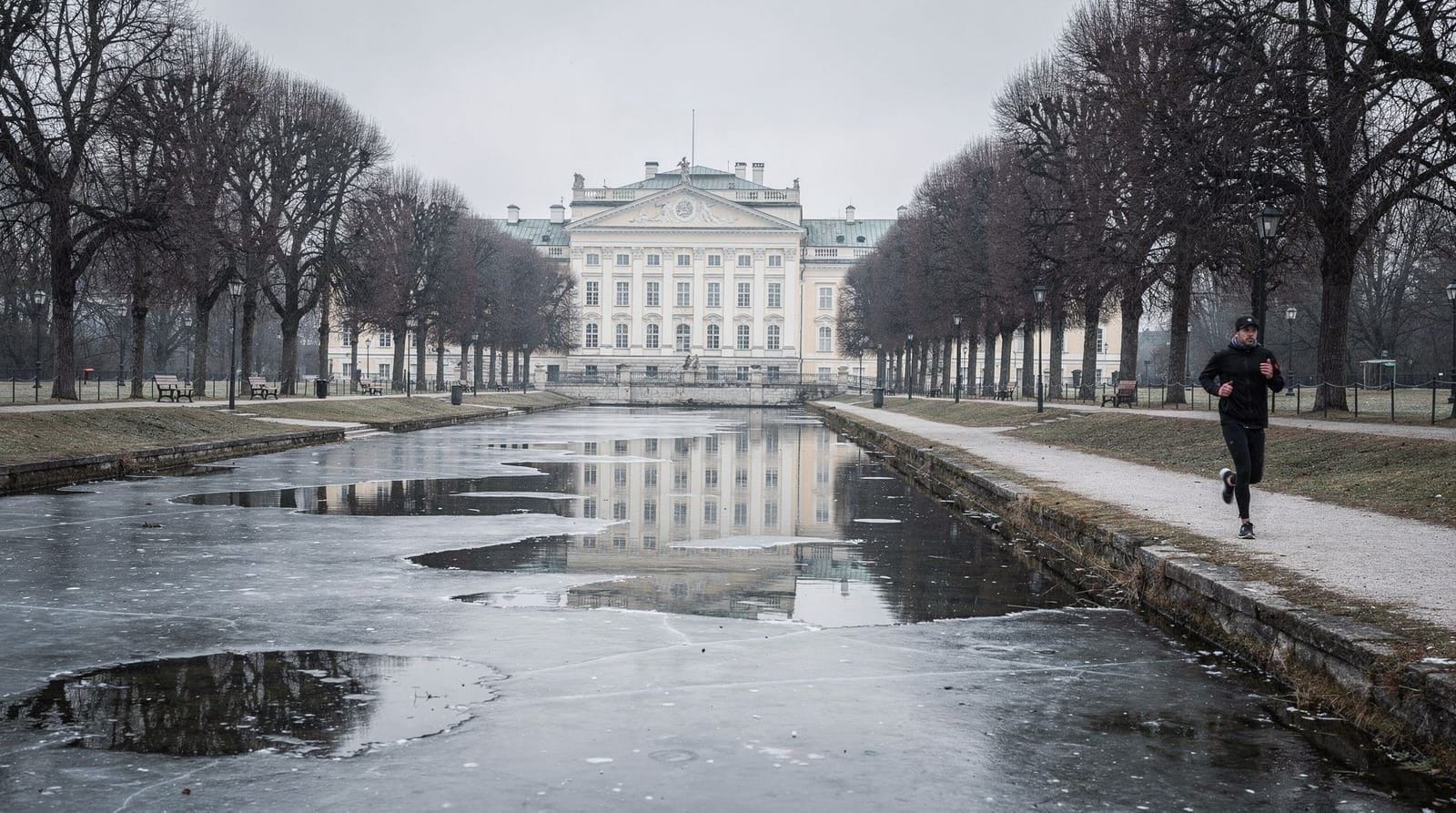
The long formal canal (Schlosskanal) in front of Nymphenburg was constructed in the 17th and 18th centuries as part of the French-influenced formal garden design and as a practical drainage system for the low-lying land. The canal runs several kilometres into the city and feeds the ornamental basins in the palace park. In winter it sometimes freezes and becomes an ice skating venue.
Which Wittelsbach ruler was most popular with ordinary Bavarians?
Ludwig II, despite — or because of — his eccentricities. He was seen as having no personal political ambitions and no desire to lead Bavaria into war. His castle-building project, while catastrophically expensive, created what are now the country’s most visited tourist attractions. After his mysterious death in 1886, ordinary Bavarians mourned him genuinely. The government ministers who engineered his removal were not popular.
How did the Wittelsbachs acquire their art collections?
Through a combination of purchase, commission, dynastic inheritance and — in the 16th and 17th centuries — wartime acquisition. The Alte Pinakothek’s holdings trace back to the Wittelsbach collection begun in the late Renaissance, with major additions in the 17th century from the Duchy of Mantua, acquired during the Thirty Years War. Ludwig I purchased Italian primitives and Dürer works specifically to build a publicly accessible national collection.
Can I see Wittelsbach history in one day, or does it need more?
A single focused day can cover the Residenz in the morning and Nymphenburg in the afternoon, giving a solid overview of the dynasty’s city-centre and summer-palace sides. Doing justice to Ludwig II’s castles requires at least one additional full day, since Neuschwanstein, Linderhof and Herrenchiemsee sit well outside Munich and cannot be rushed without losing the point of visiting them.
Is it worth visiting all three of Ludwig II’s castles?
Only if you have the time — most visitors get a fuller picture from Neuschwanstein alone paired with either Linderhof or Herrenchiemsee rather than all three in one trip. Neuschwanstein and Linderhof combine into a realistic single day; Herrenchiemsee, being on an island reached by boat, works better as a separate excursion. The King Ludwig II castles guide has the practical routing.
Top experiences
Bookable activities with verified prices and instant confirmation on GetYourGuide.