Nymphenburg Palace guide: visiting tips, tickets and what to see
Munich: Nymphenburg Palace with official guide
Is Nymphenburg Palace worth visiting?
Yes, especially if you combine the palace with the park and the Marstallmuseum. Unlike Neuschwanstein, there are no timed entry slots and you can arrive without advance booking. The palace itself is lighter and more elegant than the Munich Residenz; the park adds genuine breathing room in a city that can feel dense. Budget 3–4 hours for a full visit.
| Where | Schloss Nymphenburg, 8km northwest of central Munich |
| Cost | around €8 palace only, around €17 full combination ticket (summer) |
| Time needed | 3-4 hours for palace, Marstallmuseum and pavilions |
| Getting there | Tram 17 from Karlsplatz/Stachus, around 20 minutes |
| Best time | opening time (9am) for a quiet Great Hall; avoid summer weekends |
The summer palace of the Wittelsbachs: a practical visiting guide
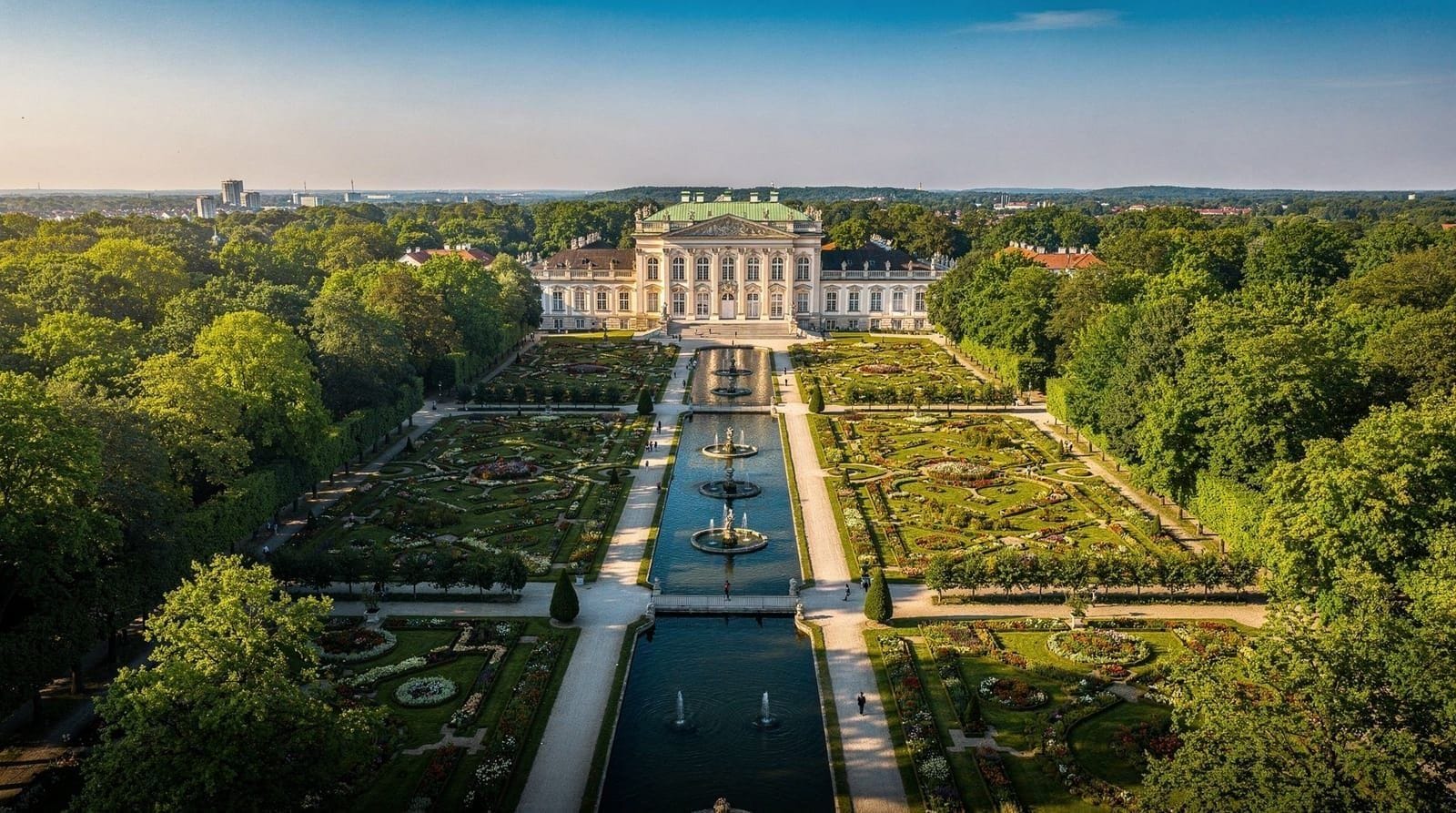
Nymphenburg Palace sits 8 kilometres northwest of central Munich, at the end of a long canal that once connected it to the city. It was the summer residence of the Bavarian Wittelsbach rulers for nearly 250 years — a more relaxed, outward-facing counterpart to the formal grandeur of the Munich Residenz. Where the Residenz is dense, urban and serious, Nymphenburg is airy, surrounded by 200 hectares of gardens, and designed for pleasure.
The palace’s story begins in 1664 when Elector Ferdinand Maria gave the land to his wife Adelaide of Savoy as a gift celebrating the birth of their son Max Emanuel. The main block was built by Agostino Barelli from 1664 to 1674. Over the following century, Max Emanuel and his successors expanded the building with long lateral wings, added the French formal canal garden out front, and planted the great English landscape park that forms the western half of the grounds today.
The result is not one building but a complex: the main palace, two long wings curving to enclose a courtyard facing the city, a formal garden with canals and fountains, and a landscape park with four garden pavilions. Each element can be visited separately — the park for free, the palace interiors and pavilions with a ticket.
Getting there from Munich
By tram (recommended): Tram 17 from Karlsplatz/Stachus or from the Hauptbahnhof area reaches the Schloss Nymphenburg stop in about 20 minutes. The stop is at the palace’s main canal and the walk to the entrance is under 5 minutes. Tram 17 runs frequently — roughly every 10 minutes in daytime — so there is no need to plan around it.
By U-Bahn + tram: U-Bahn lines U1/U7 to Laimer Platz, then tram 17. Roughly the same time.
By car: There is a pay car park on Einfahrt Nymphenburger Schlossrondell. Parking on summer weekends fills up; the tram is less stressful.
By bike: Munich has good cycling infrastructure and the route from the Altstadt along Nymphenburger Strasse is well-signed and mostly flat. About 30 minutes from Marienplatz.
Ticket options in 2026
The Bavarian Palace Administration (Bayerische Schlösserverwaltung) runs Nymphenburg and offers several ticket configurations:
Summer prices (April 1 – October 15):
- Main Palace only: €8
- Marstallmuseum only: €6
- Combination ticket (all buildings): €17
- Under 18: free
Winter prices (October 16 – March 31):
- Main Palace only: €5
- Combination ticket: €13
- Some pavilions (Amalienburg, Badenburg, etc.) closed in winter
Tickets can be bought on arrival at the box office (no reservation required). A skip-the-line guided tour is worthwhile if you want expert context on the palace history without having to queue for the audioguide. Official guided tour of Nymphenburg Palace
The main palace: what to see inside
The main building’s central section contains the most important rooms, arranged on two floors. The highlights:
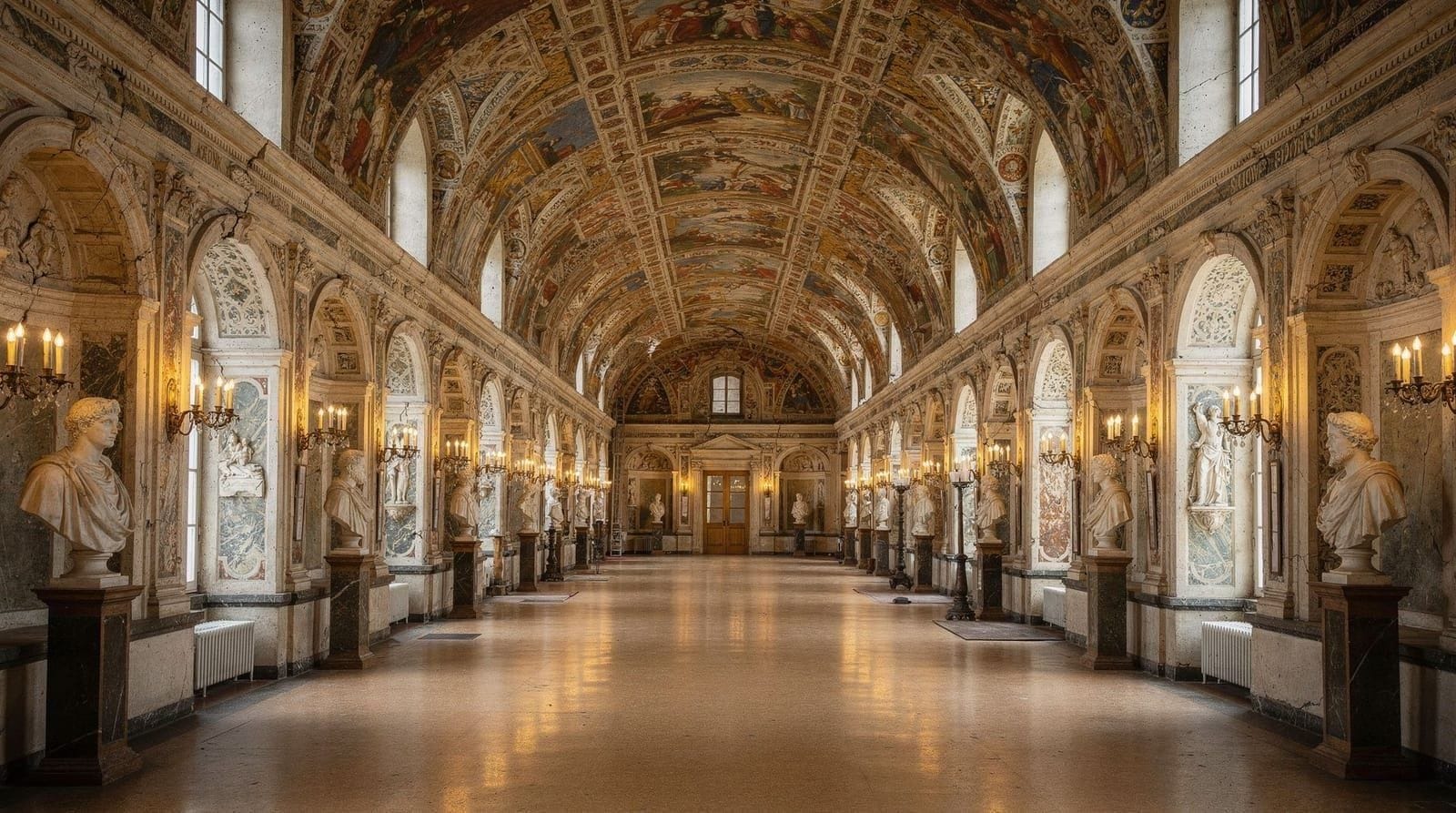
The Great Hall (Steinerner Saal): The central hall rising through both floors, frescoed by Johann Baptist Zimmermann in 1756 with scenes glorifying the Wittelsbach dynasty. The natural light from the windows facing the park is best in the morning. This is the room you will see in every photograph of Nymphenburg’s interior, and it lives up to its reputation.
The Gallery of Beauties: On the first floor of the south wing, this room contains 36 portraits commissioned by Ludwig I between 1827 and 1850, painted primarily by Joseph Karl Stieler. The subjects include the duchess Amalie Auguste of Bavaria, the shoemaker’s daughter Helene Sedlmayr (who reportedly caught Ludwig’s eye at a church), and Lola Montez — the Irish dancer born Eliza Gilbert who became Ludwig’s mistress and whose influence on his government provoked a political crisis that contributed to his abdication in 1848. The collection is an oddity that has aged into something genuinely interesting.
The Queen’s apartments: A run of rooms in the north wing furnished to show how the palace functioned as a working royal residence. The furnishings are primarily Biedermeier and early 19th century — comfortable rather than grandiose, which gives a more human sense of royal domestic life than the state rooms of the Residenz.
The Porcelain Museum: Housed in the main palace, this displays pieces from the Nymphenburg Porcelain Manufactory, which has operated in the palace’s north wing since 1761 and is still active. The 18th-century pieces — figures, tableware and decorative objects — are good quality; the factory’s work remains known internationally.
The Marstallmuseum: carriages and the world of Ludwig II
The Marstallmuseum, in the southern wing of the complex, is the collection that most visitors discover only after they have already done the main palace. It deserves more attention.
The carriages on display cover three centuries of Wittelsbach transport, from 17th-century leather coaches to the extraordinary vehicles of Ludwig II. Ludwig’s contribution includes:
- The state coronation carriage of Karl VII (1742) — a gold-encrusted baroque carriage of exceptional craftsmanship
- Ludwig II’s sleighs — several elaborate rococo-revival sleighs built for Ludwig in the 1870s and 1880s, decorated with scenes from the operas of Richard Wagner. Ludwig frequently used them for night drives through the Bavarian Alps, accompanied by outriders carrying torches. The sleighs convey the dreamlike, theatrical quality of Ludwig’s personality more directly than the castles do.
- The coronation carriage of Ludwig I (1830) — a relatively restrained neoclassical design compared to his successor’s fantasies
The upper floor of the Marstallmuseum contains the Nymphenburg Porcelain extension, with figures of the horses displayed alongside royal riding equipment and saddlery.
The park and garden pavilions
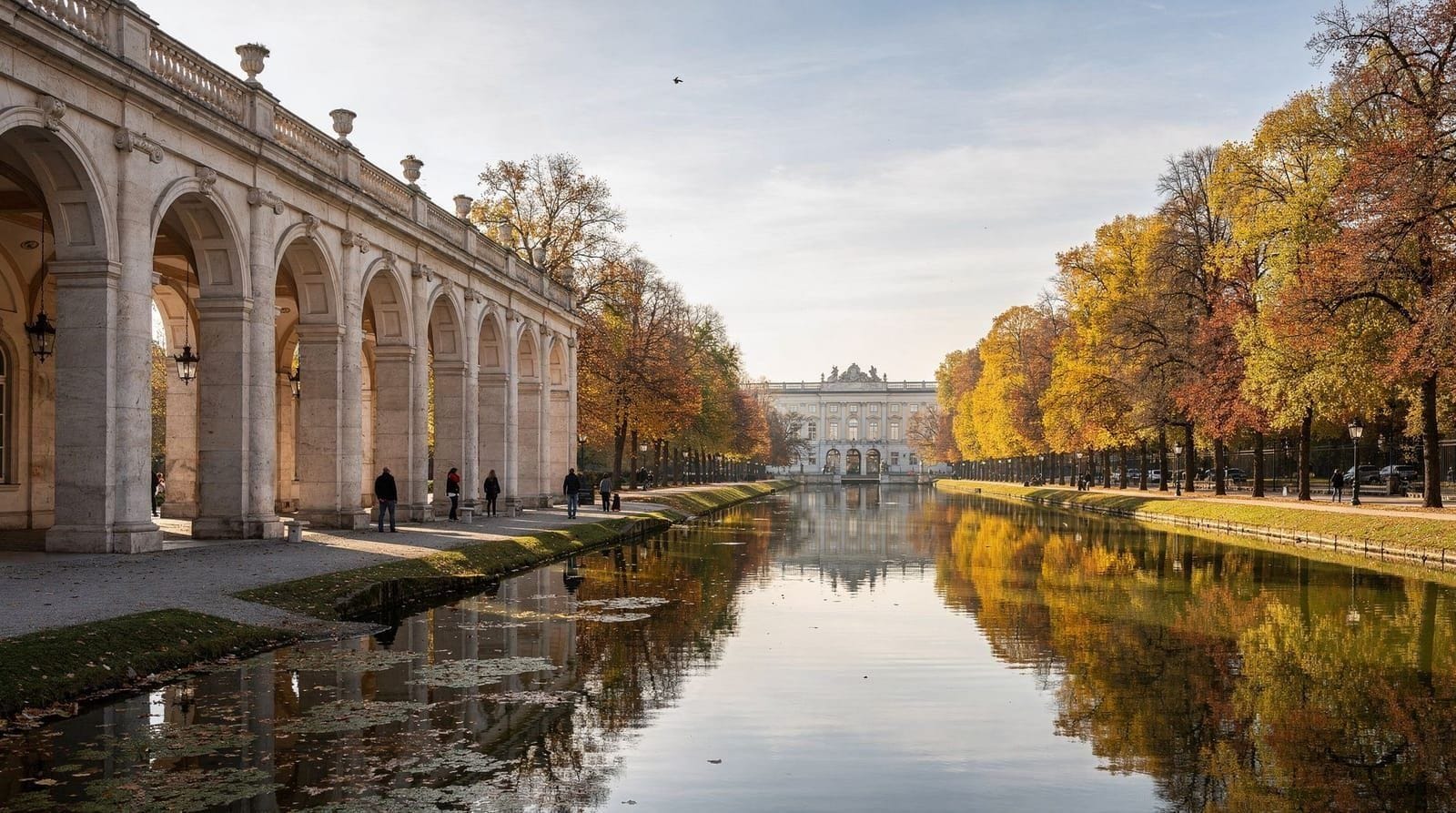
The park at Nymphenburg is the largest palace park in Germany open to the public. It divides into two distinct styles: the formal French garden immediately west of the palace (geometric, with canals, cascades and fountains), and the great English landscape park beyond it (informal, with meandering paths, artificial lakes and woodland). Both are free.
The landscape park contains four pavilions, all included in the combination ticket and worth visiting if you have time:
Amalienburg (1734–39, south garden): A Rococo hunting lodge by François de Cuvilliés the Elder. The Hall of Mirrors inside is the single finest Rococo interior at Nymphenburg — more concentrated and jewel-like than anything in the main building. Silver stucco palm trees grow from the floor to the ceiling; hunting trophies and exotic birds are rendered in sculptural relief. Do not skip this.
Badenburg (1718–21, north garden): A bathing pavilion with two heated pools — one of the first of its kind in Germany. The main bathing hall has a gallery above it and a Chinese lacquer room on the upper floor. The building shows how the 18th-century Wittelsbach court understood leisure and bodily pleasure.
Pagodenburg (1716–19, north garden): A small tea pavilion in a hybrid Chinese-European style popular in the early 18th century. Two floors, with European and Chinese painted panels. Charming rather than spectacular.
Magdalenenklause (1725–28, south garden): An artificial ruin — designed to look like a collapsing hermitage — built for Elector Max Emanuel as a place of retreat and meditation. A deliberately strange object: a fake ruin built to look centuries older than it was.
Allow 10–15 minutes walk from the main palace to the furthest pavilions. In summer, the walk through the park is pleasant; in winter, the pavilions are closed and the park is quieter.
| Season | Park conditions | Pavilions |
|---|---|---|
| Apr-Oct | Full colour, canals and fountains running | Open, included in combo ticket |
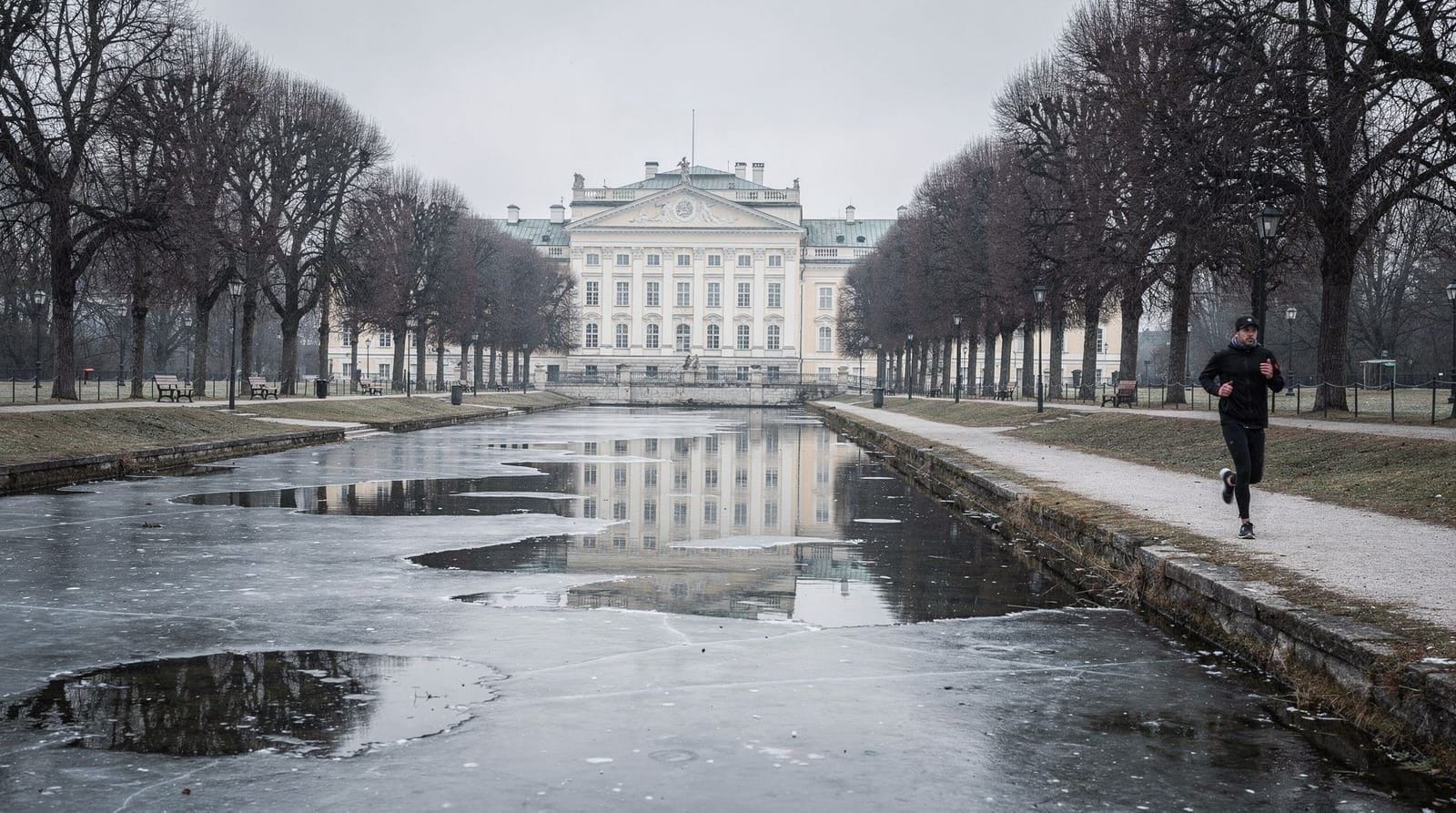
| Nov-Mar | Bare trees, quieter, still atmospheric | Closed |
| May-Jun | Best for flowering plants near Amalienburg | Open |
| Dec-Jan | Occasional snow on the formal garden’s geometry | Closed |
Comparing Nymphenburg to the Munich Residenz
Visitors often ask which palace to prioritise. The Munich Residenz and Nymphenburg are quite different in character:
- Residenz: urban, dense, 130 rooms, strong on Baroque and Rococo interior decoration, best for those interested in the minutiae of court life and applied arts
- Nymphenburg: suburban, garden-focused, airier interiors, best for those who want a combination of architecture and outdoor space
Neither duplicates the other. If you are choosing one, consider: the Residenz rewards close looking at objects and rooms; Nymphenburg rewards time to walk and absorb a broader landscape. With two full days in Munich, visit both. With one day, consider your priorities.
For those interested in the castles-palaces dimension specifically — the story of Ludwig II and his fairy-tale constructions — the guide to King Ludwig II’s castles covers the relationship between Nymphenburg (his birthplace) and the eccentric projects he undertook at Neuschwanstein, Linderhof and Herrenchiemsee. Private skip-the-line guided tour of Nymphenburg Palace
Accessibility and what to wear
The main palace’s ground-floor rooms are accessible for wheelchair users and pushchairs, but the upper-floor apartments and the Gallery of Beauties require stairs with no lift alternative in most sections — check with staff at the entrance about current accommodations if mobility is a concern. The Marstallmuseum is largely ground-floor and easier going. In the park, the formal garden’s gravel paths are flat and manageable, but the informal English landscape park further out has some uneven, unpaved stretches, especially after rain. Comfortable walking shoes matter more here than at most Munich museums, given how much ground the full visit covers — the round trip to Amalienburg and back alone is close to half an hour of walking.
Practical tips for visiting in 2026
Best time to arrive: The palace opens at 9am (summer). Arriving at opening gives you the Great Hall largely to yourself for about an hour before tour groups arrive. Weekends in July and August are busiest.
Allow enough time for the park: Many visitors underestimate how large the grounds are and leave before reaching Amalienburg. The walk from the main palace to Amalienburg takes about 12 minutes each way. If you only have 2 hours total, skip the park and focus on the main building and Marstallmuseum.
Food and drink: There is a café/restaurant at the palace entrance — adequate but not remarkable. Alternatively, pack a picnic; the park grounds are ideal for it. The nearest substantial food options in a neighbourhood setting are along Nymphenburger Strasse back towards the city.
Photography: Permitted inside without flash. The Great Hall and Amalienburg’s Hall of Mirrors are the most photographable spaces. In the Marstallmuseum, the lighting on the carriages is good for photography.
With children: The park is excellent for children — wide paths, water features and enough space to run. The museum interiors are less child-oriented than the Deutsches Museum, but older children interested in history or the Ludwig II story tend to engage well.
Itinerary integration: Nymphenburg is a full half-day at minimum. It pairs naturally with an afternoon in the Altstadt — Marienplatz, Frauenkirche and Viktualienmarkt are 25 minutes east by tram. For a themed day around Munich’s palaces, the Munich Residenz in the morning and Nymphenburg in the afternoon is ambitious but doable with early starts.
Frequently asked questions about Nymphenburg Palace
Do I need to book Nymphenburg Palace tickets in advance?
No advance booking is required. Tickets are available at the on-site box office on arrival and queues are generally short — much faster than Neuschwanstein, which requires timed-entry tickets booked weeks in advance. Peak summer weekends can see waits of 15–20 minutes at the box office.
Is Nymphenburg Palace free?
The palace park is always free to enter. The palace interiors, Marstallmuseum and garden pavilions require a ticket. Adults pay €17 for the full combination ticket in summer; children under 18 enter free. Winter tickets are cheaper (€13 combination).
What is the best thing to see at Nymphenburg?
The Great Hall in the main palace and the Amalienburg pavilion are the two unmissable highlights. The Marstallmuseum, particularly Ludwig II’s ornate sleighs, is the most surprising discovery for most visitors.
How do I get from central Munich to Nymphenburg by public transport?
Tram 17 from Karlsplatz (Stachus) runs directly to the palace entrance in about 20 minutes. It is the simplest and most reliable option — no transfers needed. Trams run every 10 minutes throughout the day.
Can you see Nymphenburg and the Residenz in one day?
It is possible if you start early (Residenz at 9am, Nymphenburg in the afternoon), but it makes for a long and potentially exhausting day. Most travellers are better served by visiting one per day and spending the saved energy exploring the surrounding neighbourhoods.
Is Nymphenburg Palace open in winter?
The main palace and Marstallmuseum are open year-round (October 16–March 31: 10am–4pm). The four garden pavilions (Amalienburg, Badenburg, Pagodenburg, Magdalenenklause) are closed from mid-October to March. Winter ticket prices are lower.
Where was Ludwig II born at Nymphenburg?
Ludwig II was born on August 25, 1845 in the Queen’s Bedroom (Königinzimmer) in the main palace’s south wing. A plaque marks the room. His connection to Nymphenburg is historically significant — the palace remained a Wittelsbach family residence throughout his reign.
Is Nymphenburg Palace accessible for wheelchairs or pushchairs?
The main palace’s ground floor and the Marstallmuseum are largely accessible, but the upper-floor state rooms, including the Gallery of Beauties, require stairs with no lift in most sections. The formal garden’s paths are flat and manageable; the wider landscape park has some uneven, unpaved stretches. Check with staff at the entrance about current accommodations if this affects your visit.
Top experiences
Bookable activities with verified prices and instant confirmation on GetYourGuide.