Deutsches Museum guide: the world's largest science museum
Munich: Deutsches Museum guided tour with entry ticket
How long do you need at the Deutsches Museum?
The Deutsches Museum is genuinely enormous — 73,000 square metres of exhibition space across 6 floors and 80 departments. A selective visit to your areas of interest takes 3–4 hours. Attempting to see everything in a day is a mistake. Come with a plan: pick 5–6 departments, get the floor map at the entrance, and stick to it.
The world’s largest science and technology museum: an honest overview
The Deutsches Museum is not like other museums. It is not possible to see it in an afternoon. It is not possible to see it in a day. It contains approximately 28,000 objects on display across 73,000 square metres — roughly the footprint of ten football pitches — spread across 80 departments covering everything from mining and astronomy to marine technology, aircraft, printing and musical instruments. Founded in 1903 by engineer Oskar von Miller and opened in its current building on Museumsinsel in 1925, it has been continuously maintained, expanded and renovated for over a century.
The most common mistake visitors make is arriving without a plan and wandering until they are too tired to walk. The museum rewards selective visiting — choose your departments before you arrive, pick up the floor plan at the entrance, and accept that you will not see everything. That is fine.
The second most common mistake is underestimating how long it takes to move between floors and departments in a building of this size. Budget 15 minutes just for transit time between major sections.
| Where | Museumsinsel, 1km southeast of Marienplatz |
| Cost | Around €15 adults, €5.50 children 6–17 |
| Time needed | 3–4 hours selective visit, full day for enthusiasts |
| Getting there | 12–15 min walk from Marienplatz, or tram 16/17 to Isartor |
| Best time | Weekday mornings, avoid July–August school holidays |
Getting there from central Munich
The museum is on Museumsinsel (Museum Island) in the Isar river, 1 kilometre southeast of Marienplatz. The most pleasant route is on foot from Marienplatz: head south on Sendlinger Strasse, cross the Sendlinger Torplatz, then continue east to the Isar and cross Ludwigsbrücke bridge. The walk takes 12–15 minutes.
By public transport: Trams 16 and 17 stop at the Isartor (about 8 minutes from Marienplatz by tram). From there, a 5-minute walk east along Zweibrückenstrasse reaches the museum entrance. U-Bahn U1/U2 to Fraunhoferstrasse is a 10-minute walk from the southwest.
There is no significant car park adjacent to the museum. Public transport or walking is strongly recommended.
Tickets and planning your visit
2026 ticket prices:
- Adults: €15
- Children 6–17: €5.50
- Under 6: free
- Family ticket (2 adults + up to 4 children): €33
- Reductions for students (with valid ID), seniors, disabled visitors
Tickets can be bought at the door; advance booking is rarely necessary except during school holiday peaks in July and August. The museum is open daily 9am–5pm.
A guided tour with included entry is the best option if you want expert orientation through the most important departments — particularly useful for first-time visitors. Guided tour of the Deutsches Museum with entry ticket
What to see: a department-by-department guide
With 80 departments, the choice is overwhelming. The following are the sections most visitors single out as unmissable — either because of the quality of the objects, the interactive elements, or sheer spectacle.
Bergwerk (Mine): The walk-through underground mine section is a perennial favourite and one of the museum’s oldest permanent installations. You descend into a reconstructed mine showing coal, potassium and iron ore extraction techniques from the 18th to 20th centuries. The tunnels are genuine exhibition space — not a theatrical ride — and the equipment is real or faithfully reproduced. It is dark, occasionally cramped, and takes 30–45 minutes to walk through properly. Do not miss it.
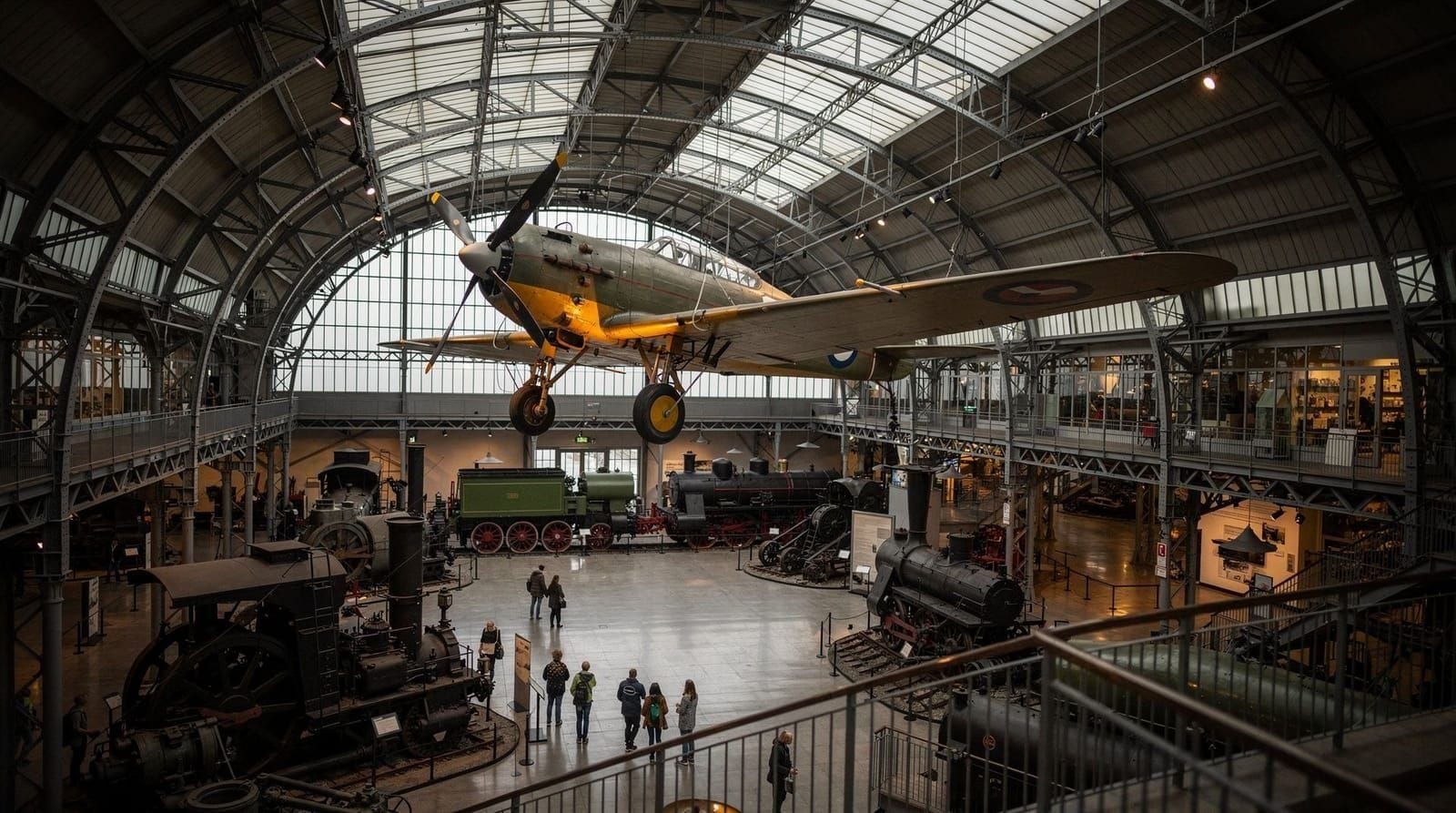
Luftfahrt (Aviation): The aviation hall occupies the museum’s north wing and contains aircraft from the very earliest flying machines to jet fighters and commercial aviation. A Wright Flyer replica, a Focke-Wulf Fw 190 fighter, Junkers transport aircraft and a Douglas DC-3 are among the objects. The scale of the hall — essentially an indoor aircraft hangar — is itself part of the experience. You can walk around and under most of the aircraft.
Marine and Sailing: A full-scale cross-section of a cargo ship, models of historic vessels from antiquity to the 20th century, and navigation instruments. The ship section is particularly good for children who can board partial reconstructions.
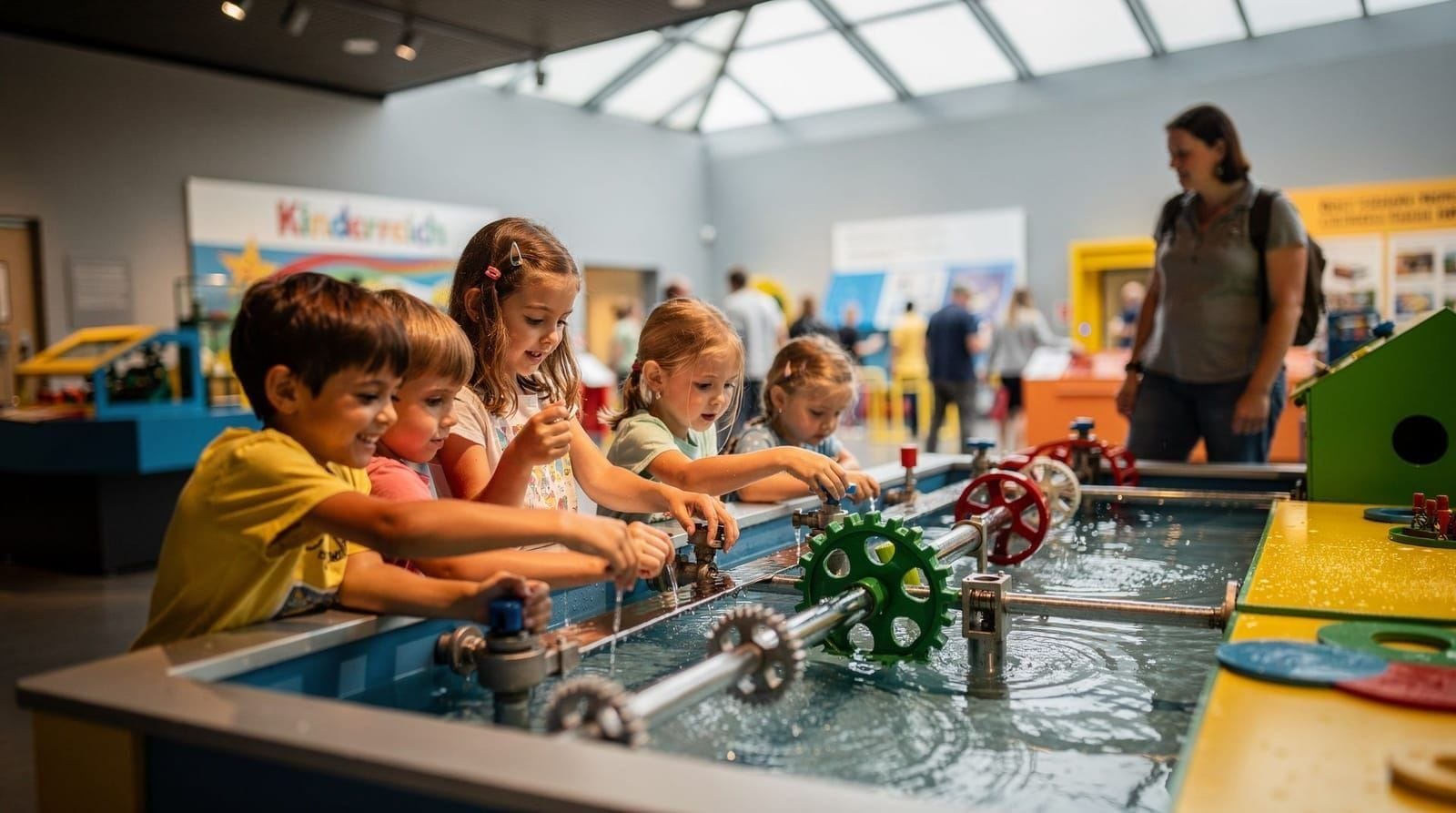
Kinderreich (Children’s World): On the 4th floor, this dedicated section for ages 3–8 has a water experimentation area, oversized building blocks, and interactive displays designed for sensory engagement. Entry is included in the main ticket but access is via a separate time-slot system. Pick up your Kinderreich slot immediately on arrival — they fill quickly during school holidays.
Physics: Recently renovated, the physics department has significantly modernised its display approach, with more interactive demonstrations replacing older static panels. Optics, acoustics, mechanics and electromagnetism are covered. The high-voltage demonstration (Van de Graaff generator) is scheduled at set times and is popular — check the day’s demonstration schedule at the information desk.
Astronomy and Planetarium: The planetarium in the museum’s dome holds regular shows (separate ticket, roughly €4–€5; book at the information desk on arrival). The astronomy department itself covers telescopes, cosmological models and the history of observational astronomy. On a clear day, access to the roof platform gives a view across Munich.
Musical Instruments: A serious collection of historical instruments spanning keyboard, string, wind and percussion from the 16th century onward. This department is quieter than most and rewards visitors interested in music history or instrument-making.
Printing and Paper: Working historical printing presses that are demonstrated at set times during the week. The department covers Gutenberg-era letterpress through lithography and 20th-century offset printing. Demonstrations are worth timing your visit around if you can.
Mathematics: Geometric models, calculating machines from Leibniz’s mechanical calculators to early computers, and a good section on the history of mathematical thought. More abstract than most departments and less popular with children.
Glass, Ceramics and New Materials: The recently renovated New Materials section covers carbon fibre, nano-scale materials and biotechnology in ways that connect historical material science to contemporary applications.
The ongoing renovation
The Deutsches Museum began a phased major renovation in 2019, prompted by decades of deferred maintenance and the need to modernise presentation in older sections. The project is one of the largest museum renovation programmes in German history. By 2026, the following sections have completed renovation: Physics, New Materials, Future Technology, Marine, and parts of the Bergwerk. Some departments may still be partially closed or reorganised; the floor plan you receive at entrance reflects current availability.
The renovation has broadly improved the museum. Sections completed since 2021 have better lighting, more interactive elements and improved English-language text. Older unrenovated sections vary in quality.
Tips for families visiting with children
The Deutsches Museum is the best museum in Munich for families — significantly more engaging for children than the Pinakotheken or the Residenz. A few specific tips:
- Get the Kinderreich time slot first. The Kinderreich fills up fast on school holiday periods. Arrive at 9am, collect your slot ticket immediately, and plan the rest of your morning around when your slot starts.
- The Bergwerk is great for children aged 7 and up, but can feel claustrophobic for younger children or those who dislike confined spaces.
- The aviation hall is immediately engaging for most children — they can get close to aircraft and look up at the scale.
- The museum cafeteria on the ground floor is adequate for a quick lunch. It is large enough to accommodate school groups but can get crowded between 12pm and 1:30pm.
- Allow time for rest. The museum is large and physically tiring for young children. Benches and seating are available throughout but unevenly distributed.
For a dedicated children’s museum guide, see Deutsches Museum with kids.
The Verkehrszentrum branch
The Deutsches Museum Verkehrszentrum (Transport Museum) is at Theresienhöhe, about 3 kilometres west of the main island museum, near the Theresienwiese (the Oktoberfest grounds). It covers the history of land transport — road vehicles, railways, urban transport — across three historic trade fair halls.
Separate ticket required (adults €9, children €3.50, family €22). It is open Tuesday–Sunday, 9am–5pm. The highlight is the collection of historic locomotives and carriages, including one of Germany’s oldest preserved railway coaches. It is a worthwhile half-day for transport enthusiasts or families, particularly combined with a walk across Theresienwiese.
What to eat and drink
The museum has a cafeteria on the ground floor and a restaurant on the first floor. Both are adequate — not remarkable. Prices are reasonable for a museum location. Bringing your own snacks is permitted.
For a better meal, the neighbourhood of Au-Haidhausen on the Isar’s east bank is 10 minutes’ walk from the museum and has a good range of neighbourhood restaurants and cafés. The Au-Haidhausen guide covers the best options. Munich City Pass — includes Deutsches Museum entry
How the Deutsches Museum fits into a Munich itinerary
For a first visit to Munich, the Deutsches Museum competes for time with the Altstadt — Marienplatz, Frauenkirche, Viktualienmarkt — and the major art collections at Pinakothek der Moderne and Alte Pinakothek. Given its location southeast of the Altstadt, the most natural approach is to dedicate the Deutsches Museum to its own half-day, ideally a morning (9am–1pm), and then walk back through the Altstadt in the afternoon.
Visitors with families who are here for 3+ days should seriously consider spending a full day at the Deutsches Museum. It is simply too large for a half-day to do it justice. The itinerary recommendation in how many days in Munich addresses this. If you’re building a full multi-day plan, the Munich 3-day itinerary slots the museum into a sensible half-day block alongside the Altstadt sights.
Best time to visit and how crowded it gets
Crowd levels at the Deutsches Museum swing hard with the German school calendar, and it is worth planning around them if you want room to actually engage with the exhibits rather than queue for demonstrations.
| Period | Crowds | Notes |
|---|---|---|
| Weekday mornings, Sep–Mar | Low | Best overall window, short Kinderreich queue |
| Weekday afternoons, Sep–Mar | Moderate | School groups common after 10am |
| Weekends, year-round | Moderate–high | Families dominate, plan Kinderreich slot early |
| July–August (school holidays) | High | Arrive at opening; queues for popular demonstrations |
| Christmas week / New Year | High | Combine with Christmas market crowds citywide |
Rainy days across Munich push extra visitors toward indoor attractions, and the Deutsches Museum is a default choice — see the rainy day Munich guide for how it compares to other wet-weather options.
Photography and quiet corners
Photography without flash is permitted throughout the permanent collection for personal use; flash is prohibited near the Bergwerk’s low-light installations and around some conservation-sensitive objects. If the main halls feel overwhelming, the Musical Instruments and Mathematics departments are consistently the quietest, even at peak times, and make a good reset before tackling the aviation hall again.
Where the Deutsches Museum fits in your wider trip
Munich’s museum landscape is dense enough that first-time visitors often try to cram too much in. If you only have time for one science-and-technology stop, this is it — see Munich’s best attractions for how it ranks against the Residenz, the Pinakotheken and the Altstadt churches. Travellers weighing up a Munich museums pass should check it covers the Deutsches Museum before buying, since not every pass includes it.
Frequently asked questions about the Deutsches Museum
How many items are in the Deutsches Museum?
The museum holds approximately 73,000 objects in total, with around 28,000 on permanent display across 80 departments. It is the largest science and technology museum in the world by most measures of floor space and collection size.
Can I buy Deutsches Museum tickets online?
Yes, tickets can be purchased online in advance via the museum’s official website. Online purchase is not strictly necessary (the door queue is rarely long) but it can save time on busy summer mornings.
Is there a guided tour of the Deutsches Museum?
Official guided tours are available through the museum in German and occasionally English; schedules are posted at the information desk. Third-party licensed guides also offer English-language tours with included entry via platforms like GetYourGuide, which are generally more flexible in timing.
What are the must-see exhibits in the Deutsches Museum?
Most visitors recommend the Bergwerk (walk-through mine), the aviation hall, the physics demonstrations, and — for families — the Kinderreich. The marine section and the astronomy department are secondary priorities for a selective visit.
Is the Deutsches Museum accessible for visitors with mobility limitations?
The museum has lifts connecting all floors and is largely wheelchair accessible. The Bergwerk (mine) section has some areas that are not fully accessible; check with the information desk on arrival for the accessible routing. The scale of the building means that even with lifts, a full visit involves substantial walking distance.
Is the Deutsches Museum open on Sundays?
Yes. The museum is open every day of the week from 9am to 5pm, including Sundays and most public holidays. Exceptions include January 1, Shrove Tuesday (Fasching Dienstag), May 1, November 1, and December 24, 25 and 31.
How does the Deutsches Museum compare to similar museums in Europe?
The Science Museum in London and the Cité des Sciences in Paris are the most direct comparisons. The Deutsches Museum is larger in collection size than either, with deeper historical coverage of industrial technology. The Science Museum tends to have more interactive, visitor-experience-focused displays; the Deutsches Museum has more historical depth in the objects themselves.
Can I visit the Deutsches Museum and the Altstadt in one day?
Yes, but it is tight. A focused 3-hour visit in the morning leaves an afternoon for Marienplatz and the Frauenkirche, but you will need to be selective in both places. Families or first-time visitors who want to see either properly are better off splitting them across two half-days.
Is the Deutsches Museum worth it if I only have one day in Munich?
It depends on your interests. With only one day, most first-timers get more overall satisfaction from a half-day Altstadt walk plus one major sight than from a rushed Deutsches Museum visit, since the museum genuinely needs 3+ hours to feel worthwhile. If science and technology are a priority, dedicate the morning to it and compress the Altstadt into the afternoon.
Top experiences
Bookable activities with verified prices and instant confirmation on GetYourGuide.