Munich's best attractions: a ranked guide for 2026
Munich: City Pass with 45+ top attractions and public transport
What are the best attractions in Munich?
Marienplatz and the Neues Rathaus are the obvious starting point, but the Englischer Garten, Nymphenburg Palace grounds, Deutsches Museum, and the Residenz offer more depth for less money. The Olympiapark is often overlooked — it combines open parkland, the Olympic Tower, and a fascinating piece of modern history for almost nothing.
| Top pick | Marienplatz and the Altstadt core |
| Best value | Englischer Garten, Hofgarten — free entry |
| Typical entry fees | Around €8–14 per major sight |
| Getting there | Nearly all reachable by U-Bahn/S-Bahn |
| Best time | Weekday mornings, before 10am |
Munich is manageable in a way that many large European cities are not. Most of the major attractions cluster within a few kilometres of the city centre, public transport is reliable, and entry prices are, by the standards of western European capitals, reasonable. The challenge is not access but prioritisation — the city has a lot to offer and not every attraction earns the same amount of your time. This guide works through Munich’s main sights in order of general merit, with honest assessments of what each is actually like, what it costs, and who it suits.
Marienplatz and the Neues Rathaus
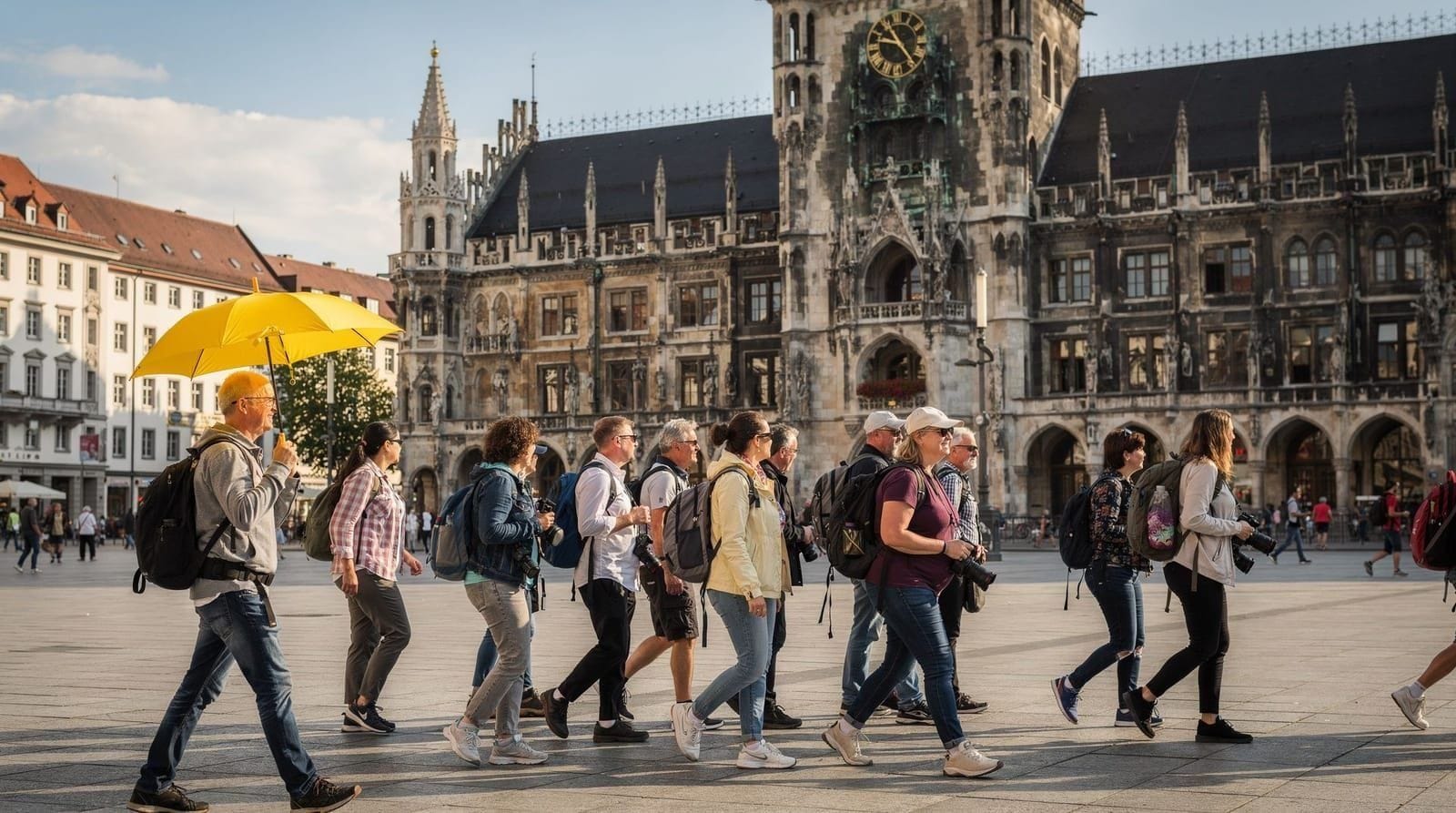
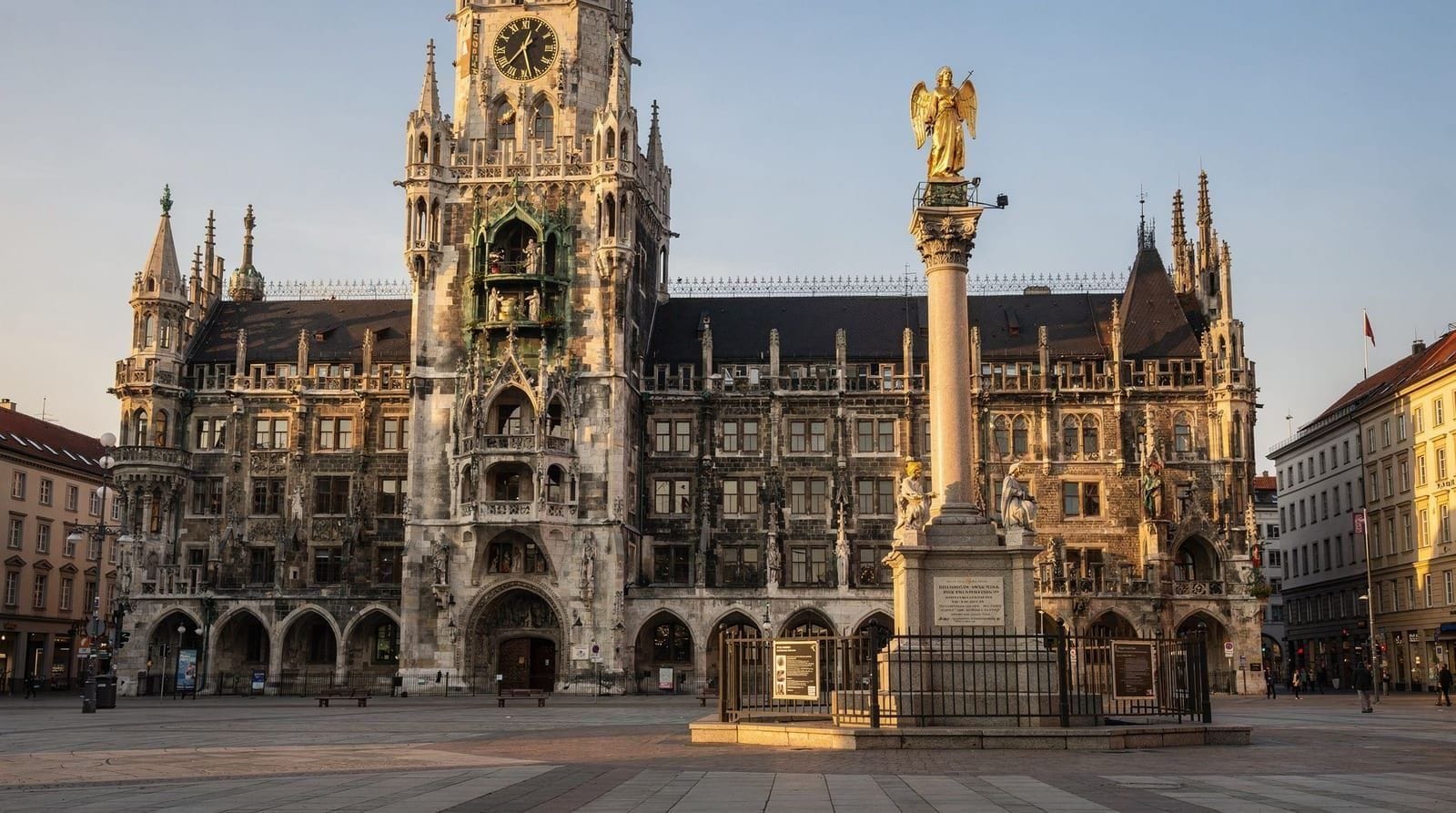
The Marienplatz is Munich’s central square and its oldest public space, first documented in 1158. It is framed on the north side by the Neues Rathaus (New Town Hall), a neo-gothic building completed in 1909, and on the east side by the Altes Rathaus (Old Town Hall), which now houses a small toy museum.
The Neues Rathaus is famous for its Glockenspiel — a large carillon in the tower that performs daily at 11:00 and 17:00, with an additional performance at 21:00 from May through October. The mechanical show depicts two scenes from Munich’s history: the marriage of Duke Wilhelm V in 1568 (a jousting tournament) and the Schäfflertanz (coopers’ dance) of 1517, which according to legend celebrated the end of a plague. Forty-three figures in two tiers rotate for about 15 minutes. It draws large crowds and is worth seeing once.
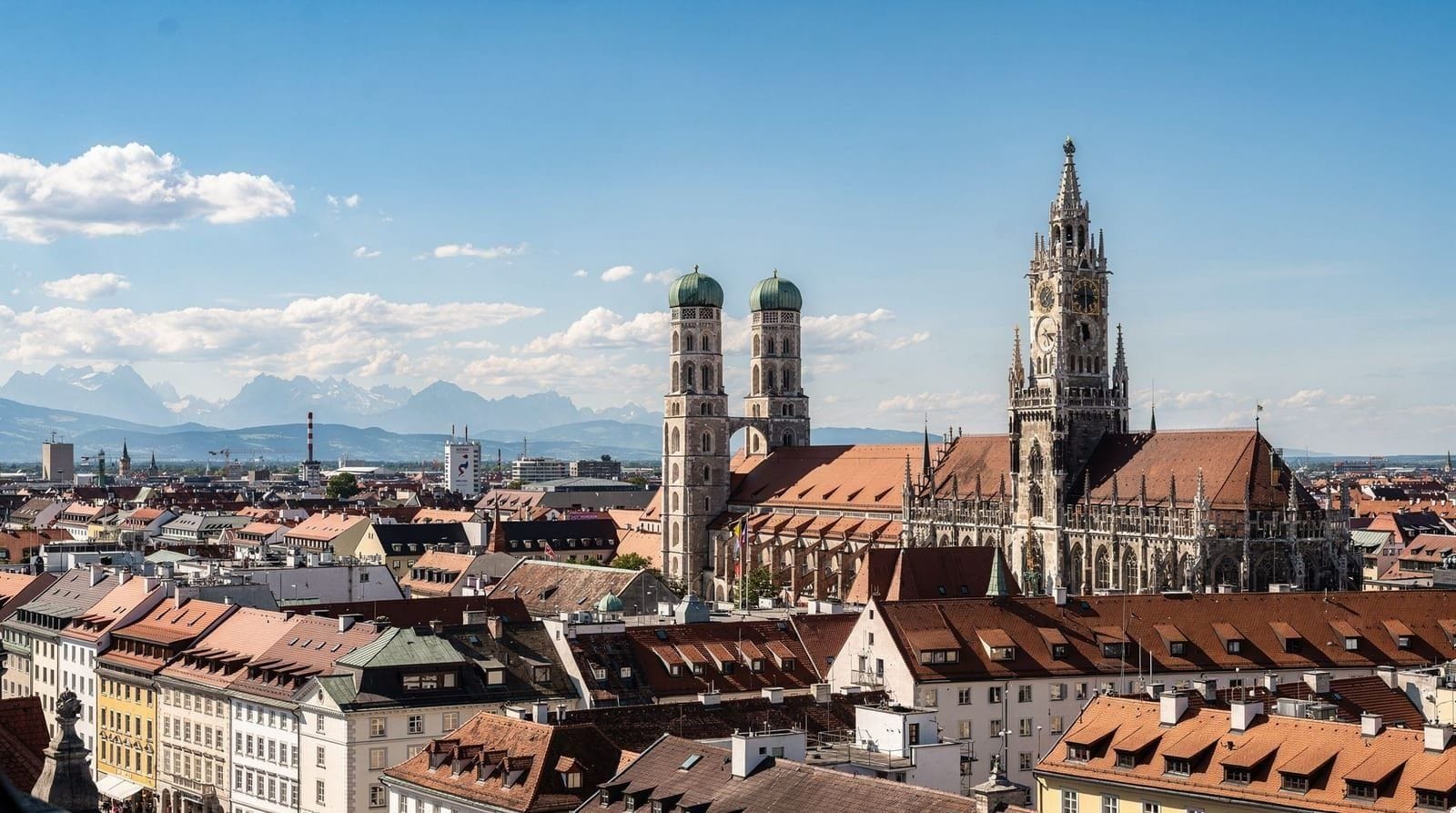
The tower lift runs to the 85-metre observation gallery and costs €4 per adult in 2026. Opening hours are Monday to Friday 10:00–17:00 only — it does not open on weekends, which catches many visitors off guard. The views of the Altstadt rooflines and the Frauenkirche towers are clear on most days.
The Mariensäule, the golden column at the centre of the square, dates to 1638 and was erected to celebrate the city’s survival of the Thirty Years’ War and the bubonic plague.
For detailed background on the square and everything around it, the Marienplatz guide covers the history and logistics. If you want a structured introduction to the Altstadt with a guide who can provide context, a walking tour is an efficient way to orient yourself. Munich Old Town walking tour (2 hours)
Englischer Garten (English Garden)
The Englischer Garten is one of the largest urban parks in the world — at 373 hectares, it is meaningfully bigger than New York’s Central Park (341 hectares) or London’s Hyde Park (142 hectares). It runs north from the edge of the Altstadt for about 9 kilometres along the Isar floodplain, offering a mix of open meadows, formal gardens, woodland, and lakes. Entry is free.
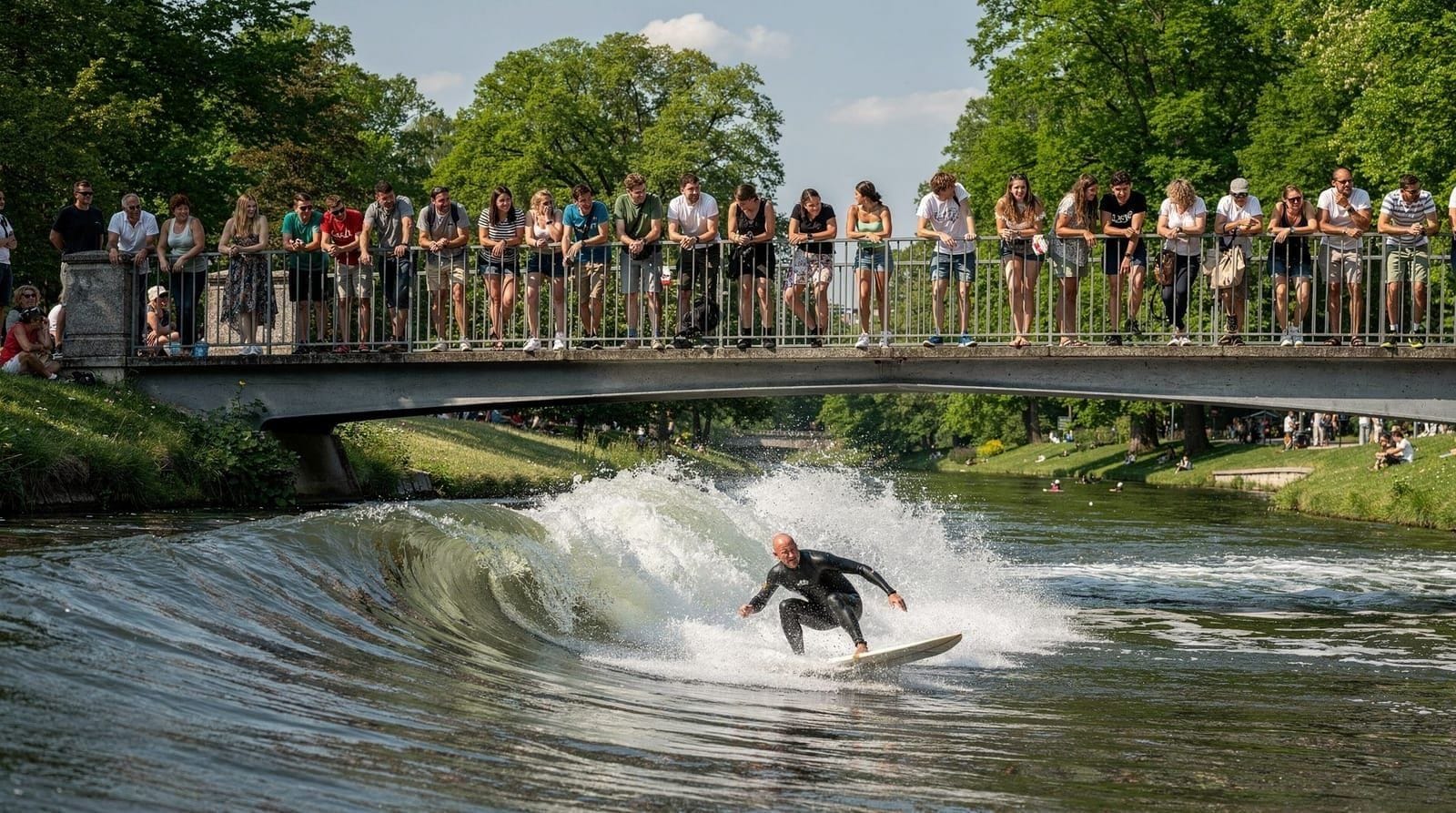
The most talked-about feature is the Eisbach wave — a standing wave on the Eisbach stream at the Prinzregentenstrasse bridge, where surfers ride year-round in all weather. The wave is small (about 1.5 metres) but powerful, generated by the narrow channel beneath the bridge. A small crowd typically gathers to watch. It is best viewed from the bridge itself or the banks just downstream.
The Chinesischer Turm (Chinese Tower) beer garden is the park’s most visited spot — 7,000 seats around a wooden pagoda, making it one of the largest beer gardens in Munich. It is typically busy from late morning onward in good weather. Beer (Hofbräu) costs around €10–11 per Maß, and you can bring your own food as long as you buy drinks from the venue. A small oompah band often plays on the upper levels of the tower.
The Kleinhesseloher See (small lake at the north end of the southern section) is good for a quieter detour — rowing boats can be rented in summer, and the lakeside paths are less crowded than the main axis.
For anyone spending more than a day in Munich, the Englischer Garten is worth at least two to three hours. See the full English Garden guide for routes and seasonal details.
Nymphenburg Palace
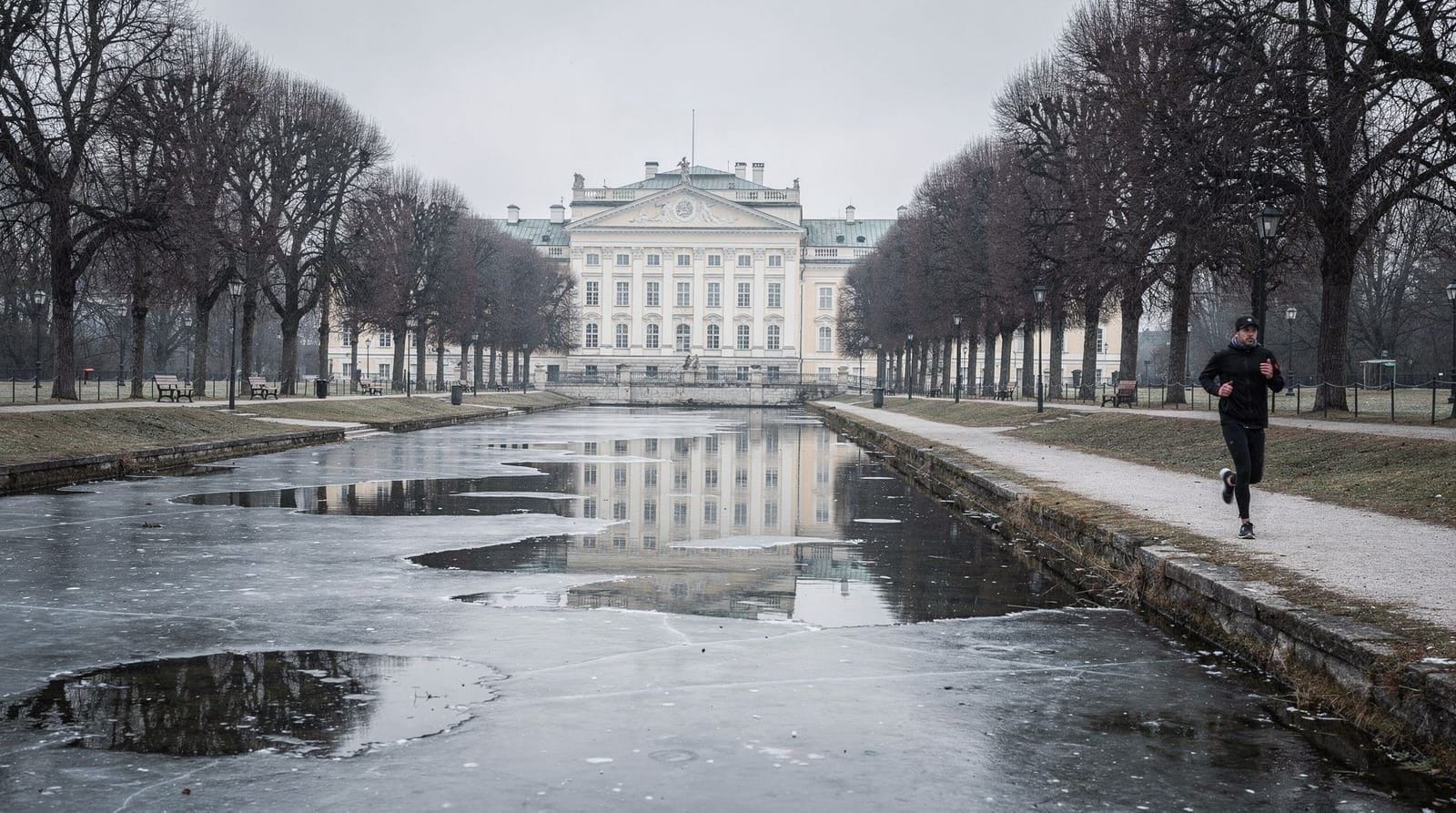
Nymphenburg Palace, about 6km northwest of the city centre, was the summer residence of the Bavarian royal family (the Wittelsbachs) from 1664 until 1918. The main building and its four flanking pavilions form a 600-metre-wide baroque ensemble that is one of the most photogenic sights in Munich. The palace grounds and formal garden are free to enter and are particularly pleasant in spring.
Palace entry: €8 per adult (2026) for the main building, which includes the state rooms, the famous Gallery of Beauties (36 portraits commissioned by Ludwig I), and the Marstallmuseum (royal stables and carriages). A combination ticket covering all buildings on site is available.
Grounds and park: free at all times. The formal parterre in front of the palace is the obvious photo location, but the English landscape garden behind (stretching over 200 hectares) has lakes, canals, smaller follies (including the Amalienburg hunting lodge and the Badenburg bathing house), and quieter paths through woodland.
The palace is about 20 minutes from central Munich by tram (line 17 from Karlsplatz/Stachus or Hauptbahnhof). The Nymphenburg Palace guide covers the interiors and grounds in detail. Nymphenburg Palace entry ticket with audio guide
Deutsches Museum
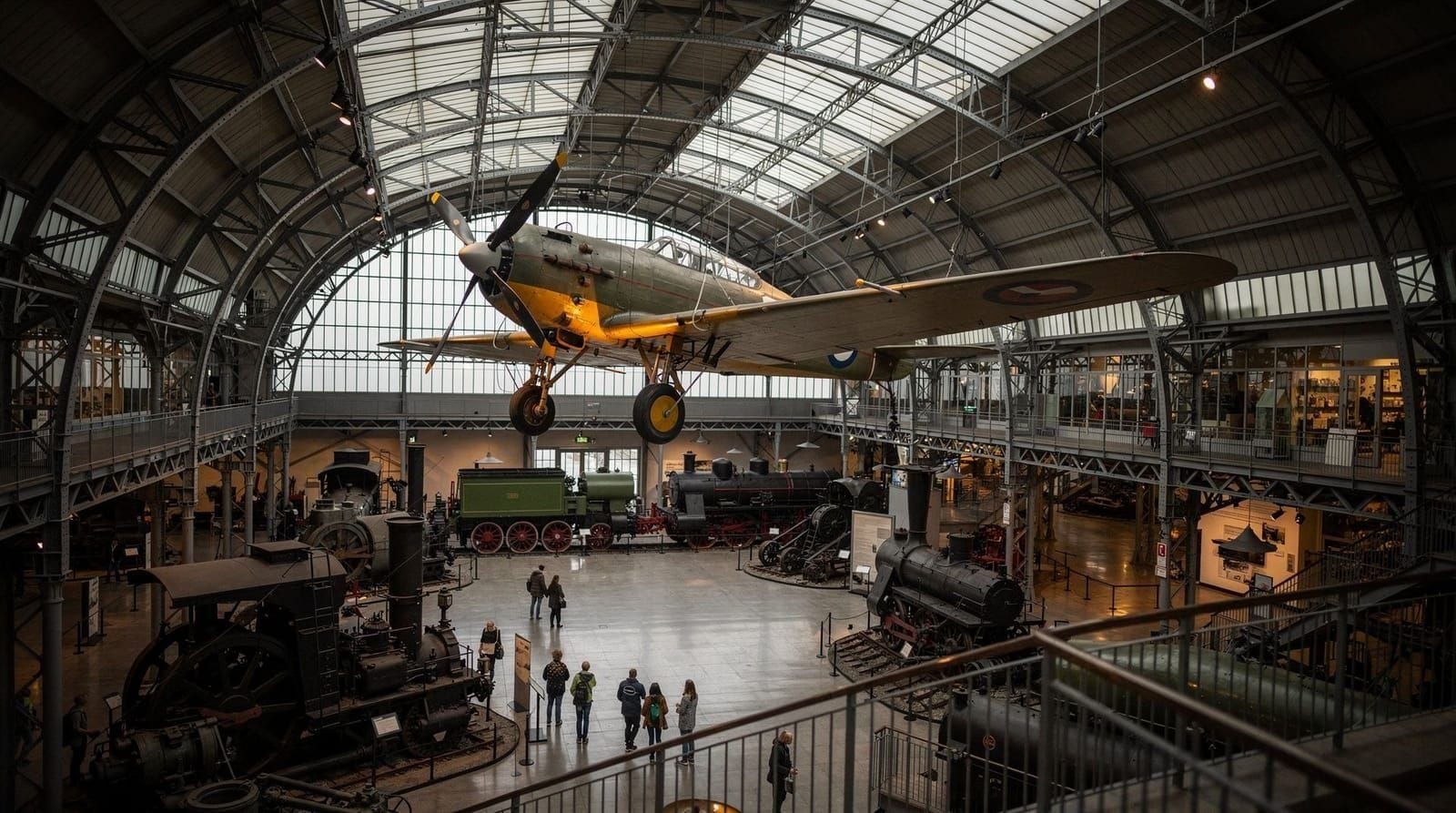
The Deutsches Museum (German Museum of Science and Technology) on Museumsinsel in the Isar river is the world’s largest museum devoted to science and technology. It holds around 73,000 objects across 68 departments — aircraft, ships, submarines, mining, chemistry, musical instruments, telescopes, computers, and much more. It is genuinely enormous: if you walked every exhibit at a brisk pace it would take more than two full days.
Entry: €14 per adult (2026). Open daily 09:00–17:00, closed on major public holidays. Allow at least half a day; a full day is not excessive if you have genuine interest in any of the subject areas.
The highlights depend on your interests, but widely praised sections include:
- Mining: a full-scale underground mine you can walk through, with equipment going back to the 16th century
- Aviation hall: spanning the history of flight from early biplanes to jet aircraft, with German aircraft from both world wars
- Planetarium (additional charge): daily shows in German, with some English options — check the timetable on arrival
- Chemistry section: one of the best chemistry museum exhibits in the world, tracing the history of the discipline with original equipment
The museum is a 10-minute walk from the city centre or a short ride on tram 16 or bus 132. The Deutsches Museum guide has a suggested route for a half-day visit. Guided tours are available if you want expert context on specific sections. Deutsches Museum guided visit with entry ticket
The Residenz
The Munich Residenz, tucked into the northeastern corner of the Altstadt, is the former royal palace of the Bavarian rulers and the largest urban palace in Germany. It contains 130 rooms and 10 courtyards, with interiors spanning four centuries of European art from the 16th to the 20th. By any measure, it should be one of Munich’s most-visited attractions — in practice, it is consistently undervisited relative to its quality.
Entry: €9 per wing (Residenzmuseum or Schatzkammer treasury), or a combo ticket at €18 for both. The treasury alone is worth the entry for the goldsmith work, imperial crowns, and reliquaries. Open daily 09:00–18:00 (April–October), 10:00–17:00 (November–March).
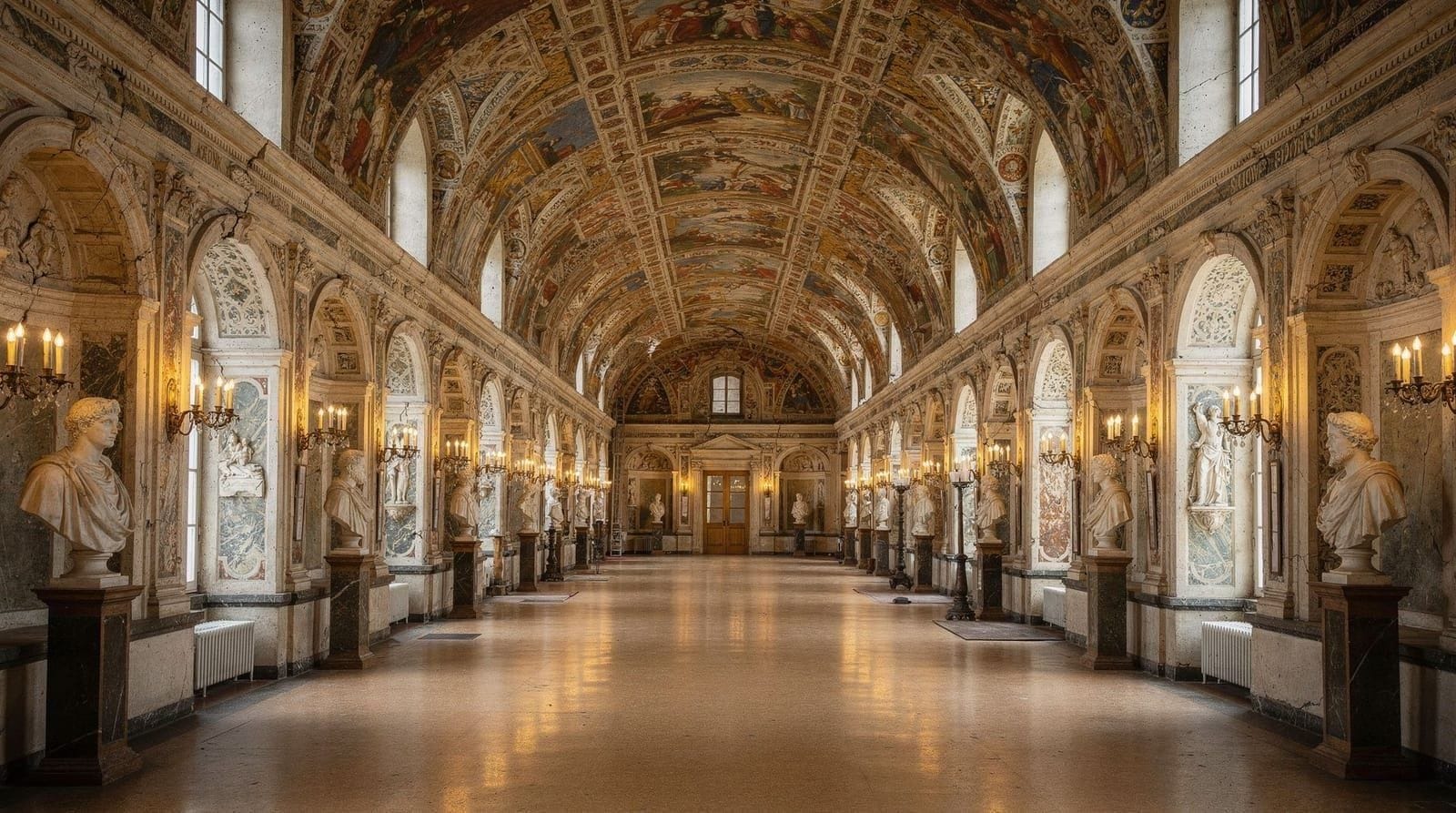
The Antiquarium — completed in 1571, this barrel-vaulted Renaissance hall runs 69 metres in length and is lined with ancient busts on shelves above windows — is one of the most impressive rooms in Munich and was the largest secular Renaissance interior north of the Alps when it was built.
The Ancestral Gallery and the Cuvilliés Theatre (a restored 18th-century rococo court theatre) are both exceptional. The Cuvilliés Theatre hosts performances; a separate entry ticket applies when events are running. Munich Residenz Palace and Hofgarten skip-the-line entry
Adjacent to the Residenz is the Hofgarten — a formal baroque garden with an octagonal domed pavilion (the Diana Temple) at its centre. The garden is free and makes a good five-minute detour between the Residenz and Marienplatz. See the full Munich Residenz guide for room-by-room advice.
BMW Welt and the Olympic complex
BMW Welt (BMW World) is a free showroom and event space adjacent to the BMW headquarters in Milbertshofen, about 10km north of the city centre. The building — designed by the Austrian firm Coop Himmelb(l)au and opened in 2007 — is architecturally striking: a double cone connected to a sweeping roof canopy. Inside, the ground floor displays current BMW production models with a focus on electric vehicles and the MINI range. Vehicles on display change regularly.
BMW Welt is free. The adjacent BMW Museum costs €10 per adult and covers the company’s 100-year history through vehicles, engines, and interactive displays. The BMW Factory Tour costs extra and must be booked well in advance (available Tue–Fri; minimum age 6 years). The BMW Welt and Museum guide has booking details.
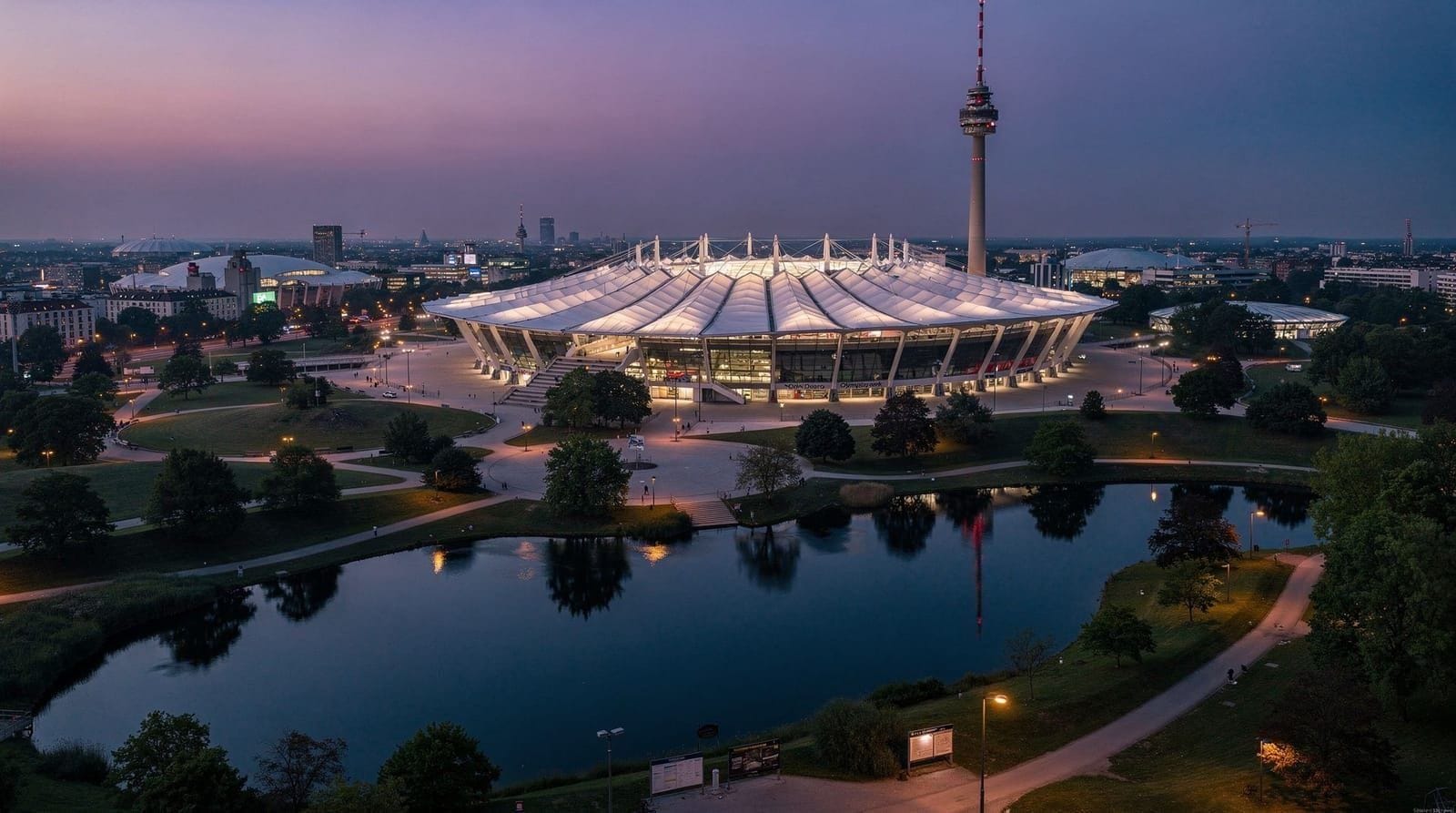
The Olympiapark is immediately south of BMW Welt and covers the site of the 1972 Summer Olympics. The tent-roofed sports complex — one of the most influential stadium designs of the 20th century — still functions as an active venue. The park itself is free; the Olympic Tower (Olympiaturm) observatory costs €9.50 per adult. The views from 186 metres are the best in central Munich. See the dedicated Olympiapark guide and the Munich viewpoints guide for comparison with other city viewpoints. Munich BMW Welt, Allianz Arena, and Olympic Park tour
Viktualienmarkt
The Viktualienmarkt is Munich’s main outdoor food market and has operated on the same site just south of Marienplatz since 1807. It runs Monday to Saturday (approximately 08:00–20:00), with most stalls open by 08:30. Around 140 stalls sell produce, meat, cheese, flowers, herbs, and specialist Bavarian foods. The market is not a tourist attraction in the theme-park sense — it is a functioning market where city residents shop — which gives it a more authentic feel than many city markets.
A small beer garden at the centre of the market operates during good weather; unusually for Munich, it rotates between the six major breweries, with a new one featured each season.
The Viktualienmarkt food guide covers what to look for and what to try. It pairs well with a visit to Marienplatz and the Altstadt.
The Pinakotheken (three art museums)
The Museum Quarter (Kunstareal) in Maxvorstadt contains three of the finest art museums in Germany within a short walk of each other.
Alte Pinakothek (Old Masters, 14th–18th century): one of the oldest and most important art museums in the world, with exceptional collections of Rubens, Dürer, Raphael, and Titian. Entry €8.50, reduced to €7 on Sundays. Closed Mondays.
Neue Pinakothek (19th-century art): currently closed for renovation — check current status before visiting; a temporary exhibition space is in operation. Entry €8.50 when open.
Pinakothek der Moderne (20th and 21st century art, architecture, design): a large modern building with rotating collections across four departments including the famous graphic design and applied arts holdings. Entry €12. Closed Mondays.
For €1 on Sundays, you can enter the Alte Pinakothek — one of the best value-for-money museum days available in any European city. The Pinakotheken museums guide covers all three in detail and includes the nearby Lenbachhaus (Expressionism, Blue Rider group) and Museum Brandhorst (contemporary art).
For a structured introduction to the Alte Pinakothek with expert commentary on the highlights, a guided tour is worthwhile. Alte Pinakothek guided tour with entry
Frauenkirche
The Frauenkirche (Cathedral of Our Lady) is Munich’s most recognisable skyline element — two octagonal brick towers capped with copper onion domes, visible from most elevated points in the city. The cathedral was built between 1468 and 1488 in late Gothic style; the onion domes were added in 1525.
The interior is relatively plain by German cathedral standards — the original furnishings and much of the decoration were lost in World War II bombing. The notable elements are the stained glass windows, the stone Devil’s Footprint near the entrance (linked to a popular legend about the cathedral’s construction), and the tomb of Holy Roman Emperor Ludwig IV.
The south tower observation platform is at 99 metres and historically offered views of the Alps on clear days. As of 2026, the south tower may still be under renovation — check current status before visiting. When open, entry is €5.50 per adult via elevator. The Frauenkirche guide has current information.
Hofbräuhaus
The Hofbräuhaus am Platzl is one of the most visited beer halls in the world and is a legitimate piece of Munich history, but it helps to know what it actually is before you go. The current building dates to 1897; before that there was an earlier hall on the same site. The Hofbräuhaus was established in 1589 as the royal court brewery — not a medieval tavern, but a state enterprise. The famous 1920 Nazi party meeting (the 25-point programme) happened here, which the venue does not publicise prominently.
Today the Hofbräuhaus holds around 3,500 people and runs from 09:00 to 23:30 daily. A Maß (1 litre) of HB beer costs approximately €11–12. An oompah band typically plays from mid-morning. It is loud, busy, and full of tourists, which is fine if you know what you are booking into. The communal tables mean you will be sitting with strangers.
For a more local Hofbräu experience, the Hofbräukeller in Haidhausen (Innere Wiener Strasse 19) is quieter, cheaper, and has a genuine beer garden. The Hofbräuhaus guide covers both venues.
Dachau Concentration Camp Memorial
Dachau, about 16km northwest of central Munich, was the first concentration camp established by the Nazi regime, opened in March 1933. It operated for 12 years and held more than 200,000 prisoners from across Europe; around 41,500 people died there. The site is now a memorial and museum.
Entry is free. The museum building with its permanent exhibition is detailed and well organised. The reconstructed barracks, the roll-call square, the watchtowers, and the crematoria are all accessible. Allow a minimum of three hours; many people find it takes four or five.
Access from Munich: S-Bahn line 2 to Dachau station, then bus 726 to the memorial — about 45 minutes in total from central Munich. No private vehicles are necessary. The site is not appropriate for very young children; older children who understand the historical context can visit.
Planning your visit
The question of how to sequence all of this depends on your interests and available time. For a first visit, the order that generally works best is: start with the Altstadt (Marienplatz, Frauenkirche, Viktualienmarkt) on day one, followed by the Englischer Garten; use day two for one major museum (Deutsches Museum or Pinakotheken); add the Residenz and Nymphenburg for day three; and save BMW Welt and Olympiapark for day four.
For help planning across multiple days, the Munich trip planning guide and the how many days in Munich guide are useful starting points. The Munich 1-day itinerary, Munich 2-day itinerary, and Munich 3-day itinerary give ready-to-use routes.
If you are on a tight budget, the Munich budget guide shows how to cover most of the major sights for under €30 per day using free sites, Sunday museum discounts, and the Munich City Pass at the right tier. The Munich public transport guide is essential reading for getting between sites efficiently.
For visitors who want to cover the highlights without researching each individually, a private full-day tour with included tickets is a time-efficient option. Munich best-of private 1-day tour with tickets included
Attractions ranked by value for time spent
| Attraction | Entry cost | Time needed | Value |
|---|---|---|---|
| Englischer Garten | Free | 2–3 hrs | Excellent |
| Marienplatz + Glockenspiel | Free | 30–45 min | Excellent |
| Viktualienmarkt | Free | 1 hr | Excellent |
| Residenz | Around €9–18 | 2–3 hrs | Very good, undervisited |
| Deutsches Museum | Around €14 | Half day+ | Very good |
| BMW Welt | Free | 1–2 hrs | Very good |
| Nymphenburg grounds | Free (palace €8) | 1–3 hrs | Very good |
| Hofbräuhaus | Free entry, pay for drinks | 1 hr | Good once, not repeatable |
Attractions that reward a second look
A few sights on this list are worth returning to on a longer trip rather than treating as one-and-done. The Englischer Garten changes character completely between a summer afternoon at the Eisbach wave and a quiet autumn walk, and the English Garden guide covers both. The Pinakotheken rotate exhibitions regularly enough that a repeat visit months later can show genuinely different work, and Sunday’s €1 entry makes repeat visits close to free. If you’re weighing which attractions to skip on a tight schedule, the Munich tourist traps guide flags the ones that consistently disappoint relative to their reputation.
Pairing attractions with a day trip
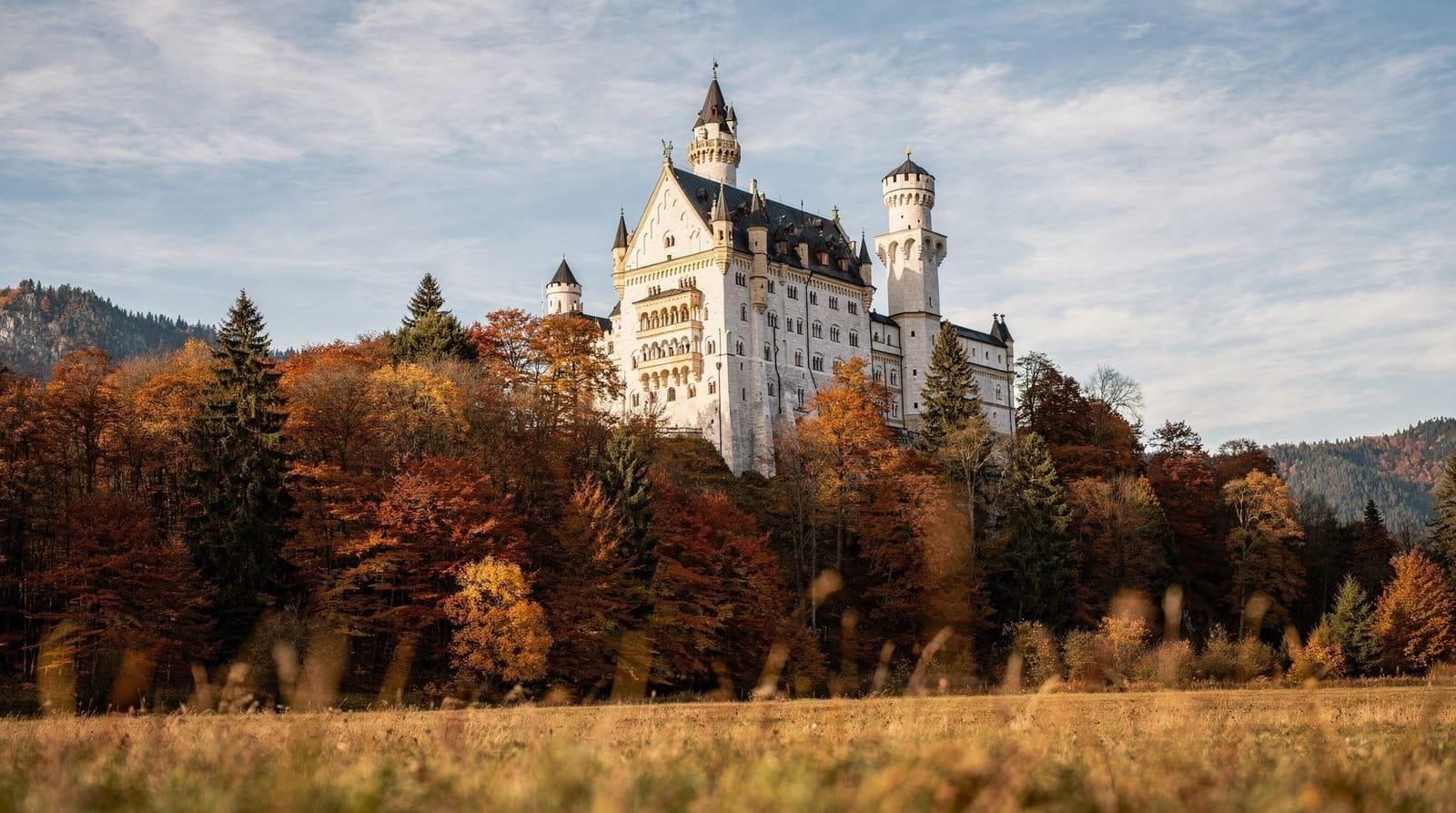
Several of Munich’s best experiences sit just outside the city rather than inside it. The best day trips from Munich guide rounds up the top options, and if castles are the priority, the best castles near Munich guide ranks Neuschwanstein against Linderhof, Herrenchiemsee and Hohenschwangau. Both pair naturally with a day or two focused on the in-city attractions above.
Frequently asked questions about Munich’s best attractions
What is the best order to visit Munich’s attractions in one day?
Start at Marienplatz by 09:00 (before crowds build), walk to the Residenz (opens 09:00), then the Hofgarten. Take the U-Bahn north to the Deutsches Museum or Pinakotheken after lunch, then end the day with the Englischer Garten and the Eisbach surfers. This covers the core Altstadt, a major museum, and the park in one day, though it is a long day. The Munich 1-day itinerary maps this out in detail.
Are Munich’s attractions walkable from each other?
The central attractions — Marienplatz, Frauenkirche, Hofbräuhaus, Viktualienmarkt, Residenz, Hofgarten — are all within about 15 minutes’ walk of each other. The Englischer Garten is a 15-minute walk from Marienplatz. The Pinakotheken are about 20 minutes north on foot or two stops by U-Bahn. Nymphenburg, BMW Welt, and Olympiapark require public transport (15–25 minutes). The Munich hop-on hop-off guide is useful for covering the more spread-out sites.
Is the Munich City Pass worth it?
It depends on your itinerary. The pass covers 45 attractions including the Deutsches Museum, BMW Welt, Sea Life, Olympiapark, and unlimited public transport. If you plan to visit three or more paid sites plus use public transport, the 1-day pass (approximately €25–30) typically pays for itself. For families, the savings are significant as children’s entry is included. The Munich museums pass guide compares options.
Which Munich attractions are best for kids?
The Deutsches Museum has a dedicated children’s science museum (Kinderreich) for ages 3–8, and many of the main exhibits — the mining shaft, the aircraft, the ships — appeal to older children. Sea Life Munich, BMW Welt (free and visually engaging), and the Olympiapark are also good family options. The Munich with kids guide has a full list with age recommendations.
Is it worth visiting the Olympic site from the 1972 games?
Yes, particularly if you have an interest in modern architectural history or sports history. The 1972 Olympic Games have a specific historical significance — the massacre of 11 Israeli athletes by Palestinian militants — and the memorial within the park acknowledges this soberly. The tent roof stadium and the surrounding parkland are beautiful and have been adapted as active public spaces. See the Munich 1972 Olympics history guide for context.
What are Munich’s most overrated attractions?
The Hofbräuhaus is excellent if you know what to expect, but some visitors arrive expecting a historical medieval tavern and find a large tourist venue instead. The Glockenspiel is worth watching once but does not require much time. The Frauenkirche interior is less impressive than its exterior, particularly if the tower is closed for renovation. The Munich tourist traps guide is direct about which sights are worth the effort.
What is the best time of year to visit Munich’s attractions?
Spring (April–May) and early autumn (September–early October) offer the best weather with manageable crowds. Summer (July–August) is busy and hot, but the beer gardens and Englischer Garten are at their best. October means Oktoberfest, which changes the character of the city significantly. December has Christmas markets but cold weather. Winter (January–February) is quiet, cheap, and good for museums. The best time to visit Munich guide breaks this down month by month.
Which Munich attraction gives the best return for the least money?
The Englischer Garten, without much competition — free entry, several hours of genuine interest between the Eisbach wave, the beer gardens and the lakes, and it works in every season. Marienplatz and Viktualienmarkt are close seconds, both free and both central.
Are Munich’s attractions worth visiting if I only have a layover or one afternoon?
Yes, in a limited way. A focused two-to-three-hour window covering Marienplatz, the Frauenkirche exterior and Viktualienmarkt gives a genuine taste of the city without requiring a full day. The how many days in Munich guide has a specific short-stay suggestion for exactly this situation.
Top experiences
Bookable activities with verified prices and instant confirmation on GetYourGuide.