English Garden Munich guide: Eisbach surfers, beer gardens and what to do
Munich: Segway or bike tour with English Garden and Palace
What is the English Garden in Munich famous for?
The Englischer Garten (English Garden) is one of the world's largest urban parks at 3.7 square kilometres — larger than Central Park in New York. It is famous for the Eisbach river wave where surfers ride year-round in the city centre, the Chinesischer Turm beer garden (7,000 seats), the Monopteros Greek temple with city views, and the Japanisches Teehaus on an island. Entry is free.
Munich’s enormous free park: how to navigate it and what to actually do
The Englischer Garten is one of those urban parks whose scale becomes clear only when you are inside it. From the south entrance at Prinzregentenstrasse — where the Eisbach surfers ride within sight of the street — to the northern edge beyond the A9 motorway, the park stretches for 5 kilometres. It is 3.7 square kilometres in total, marginally larger than New York’s Central Park, and serves as Munich’s primary green lung for a city that otherwise has relatively little parkland in its dense inner districts.
Understanding the park’s structure before you arrive prevents the common experience of wandering from the south entrance with a vague plan, spending 40 minutes reaching the Chinese Tower, and then realising you are hungry with no return transport plan. The park rewards deliberate navigation.
| Where | 5km park, south entrance at Prinzregentenstrasse |
| Cost | Free entry; beer garden meals around €10–18 |
| Time needed | 1–2 hours south section, half-day for the full park |
| Getting there | U4/U5 to Lehel, or U3/U6 to Münchner Freiheit |
| Best time | Weekday mornings for quiet, weekend afternoons for atmosphere |
What the English Garden actually is
The Englischer Garten was created from 1789 onward under the direction of Count Rumford (Benjamin Thompson, an American-born scientist and administrator in Bavarian service) and the landscape architect Ludwig von Sckell. It was designed as an English-style landscape park — the antithesis of the formal French geometry of Versailles-influenced gardens like the Nymphenburg gardens — with winding paths, naturalistic plantings, artificial hills and a series of water features drawn from the Isar river system.
The name refers to the English landscape garden style, not to any British ownership or association. The concept of the English landscape garden — natural-looking, informal, with carefully composed vistas rather than geometric axes — was fashionable across Europe in the late 18th century. The Munich version was one of the earliest and largest examples of its kind.
The park was opened to the public from the beginning, which was unusual for its time: most European royal parks were private or restricted to the court. The Englischer Garten was explicitly designed as a civic amenity.
Today it is managed by the Bavarian Palace Administration and is free, open year-round and 24 hours.
The south section: Eisbach, Monopteros, Museum Haus der Kunst
The Eisbach wave: At the southern tip of the park, where the Eisbach channel passes under the Prinzregentenstrasse bridge, a fixed concrete sluice creates a standing wave approximately 1 metre high. Munich surfers discovered this wave in the 1970s and have ridden it year-round ever since. Today, the Eisbachwelle is a recognised surf spot — the only one in the world located in a city park, within sight of a busy street, reachable in a 20-minute walk from the city centre.
Surfing the Eisbach is restricted to experienced surfers (the current is extremely powerful and the space is limited). Watching is entirely free and open: stand on the bridge or the channel walkway directly next to it. A single surfer at a time uses the wave; there is usually a queue of surfers waiting on the bank. The audience gathers spontaneously throughout the day. On weekends, 20–30 people may be watching at any given time. In winter, you will see surfers in full wetsuits.
The wave is accessible all year, at any hour. It is genuinely one of Munich’s most distinctive spectacles and costs nothing.
The Monopteros: A 5-minute walk north and slightly east from the Eisbach brings you to an artificial hill topped by the Monopteros — a Greek circular temple (rotunda) built in 1838 by Leo von Klenze for Crown Prince Ludwig. The structure has 10 Ionic columns and an open interior; it is not a building you go inside but a decorative architectural folly positioned for visual effect.
The view from the hill is excellent: across the park’s meadows to the south, with the Frauenkirche towers visible above the treeline. On sunny days, the grassy slope is covered with sunbathers — Munich’s informal sunbathing culture is well established and the area around the Monopteros is one of the most concentrated examples of it. The meadows here are used as FKK (nude) sunbathing areas in warm weather; this is accepted local practice and not unusual.
Museum Haus der Kunst: Directly at the south entrance, facing the park on Prinzregentenstrasse, is the Haus der Kunst — a contemporary art exhibition space housed in a large 1930s building (built 1933–37 as the House of German Art, one of the Nazis’ first monumental building projects). It now functions as a non-collecting exhibition venue for major contemporary and modern art shows. Opening hours and exhibitions vary; check the website for current programming. Entry to exhibitions is typically €12–€16.
The central section: Chinesischer Turm and beer garden
The Chinesischer Turm (Chinese Tower) is the park’s most famous structure and a reference point for the whole park. Built in 1789–90, the five-storey wooden pagoda was inspired by the English fashion for Chinese garden ornaments and represents the same late-18th-century enthusiasm for exoticism that produced similar structures across European parks. It was rebuilt in 1952 after war damage; the current structure is a postwar replica of the 1790 original.
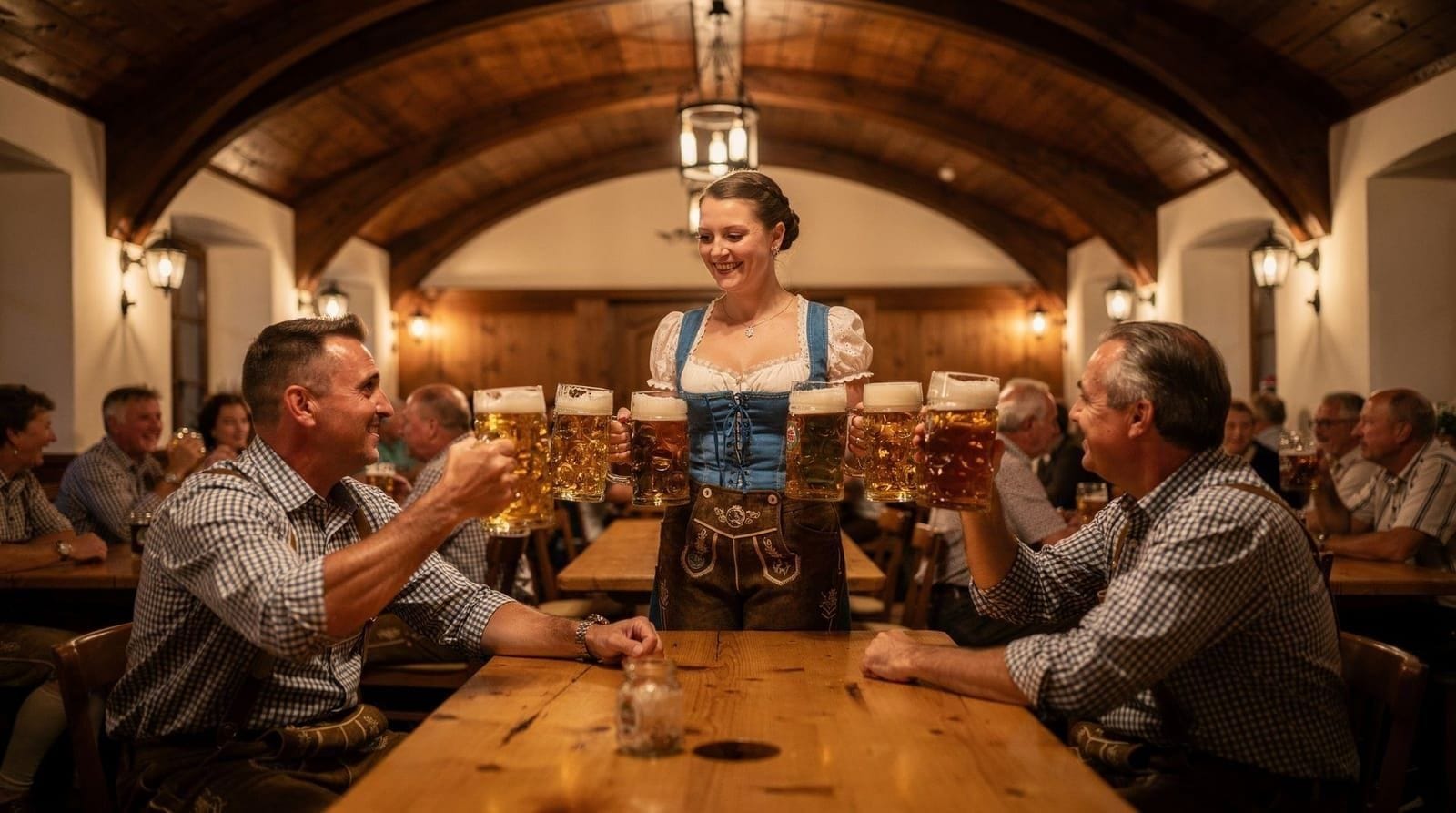
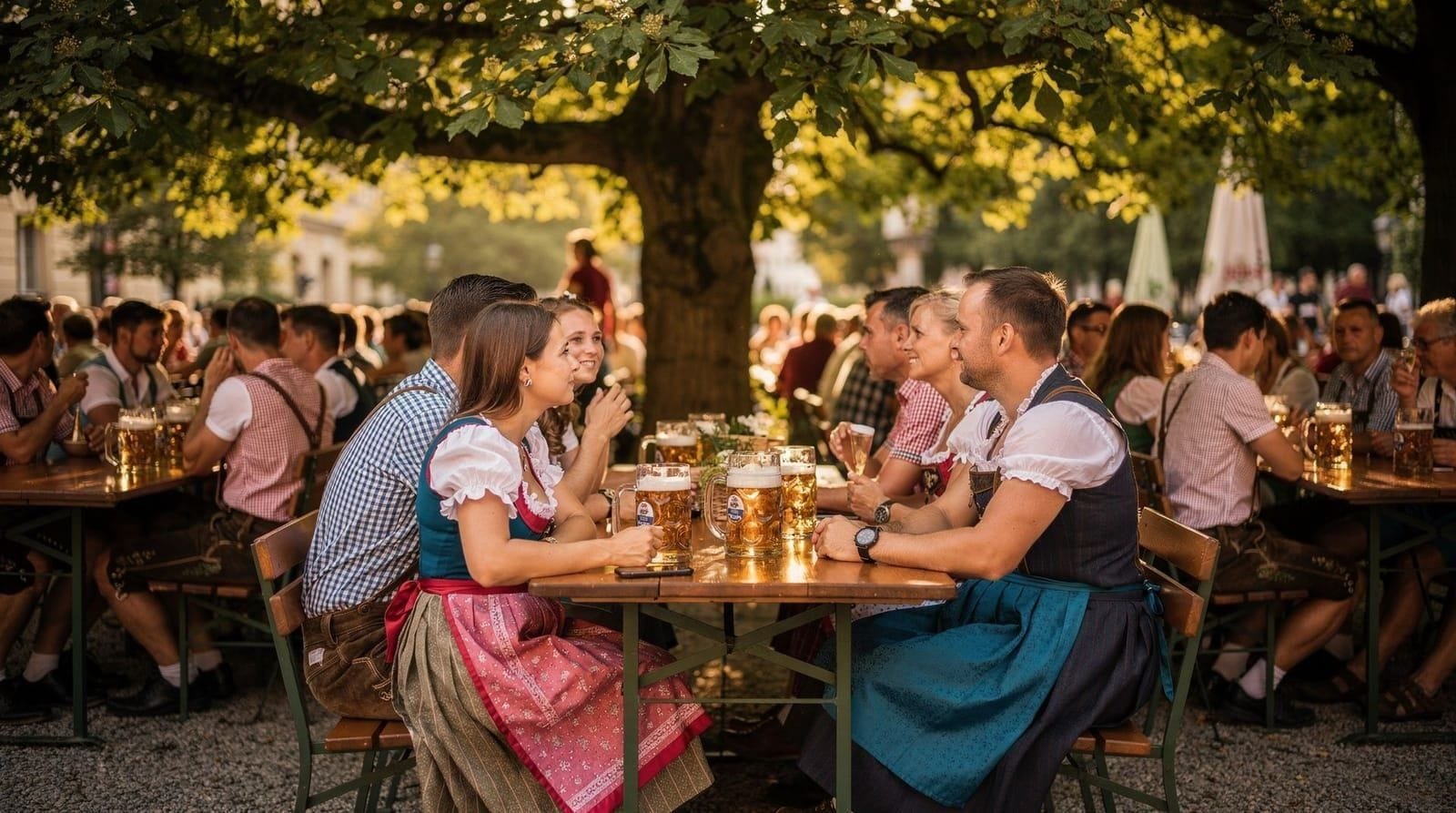
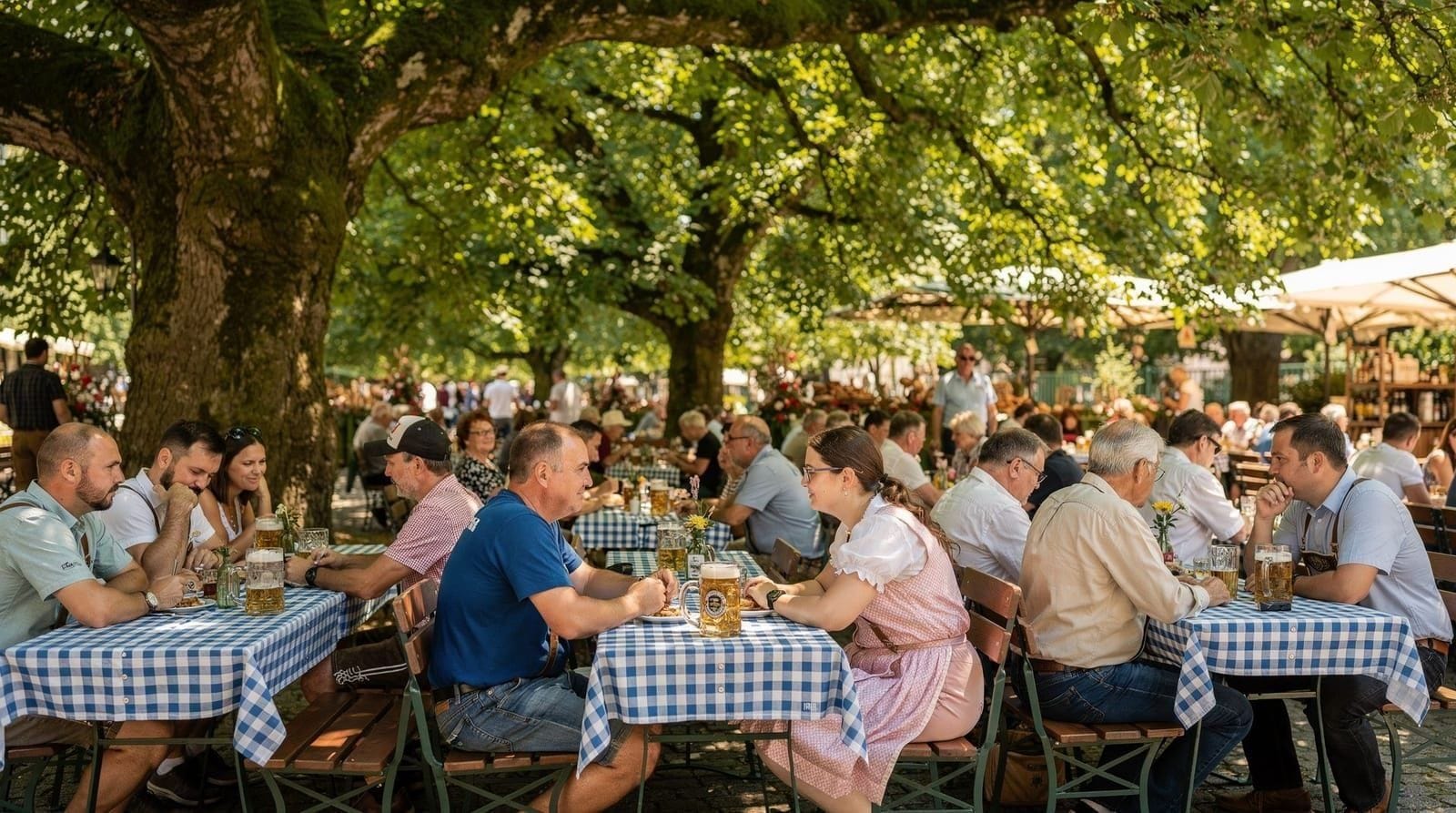
Around the tower is Munich’s second-largest beer garden, with approximately 7,000 seats under chestnut trees. A brass band plays from the tower’s first floor on weekends. Several Bavarian food stalls supply the classic beer garden menu: roast chicken, Steckerlfisch (grilled fish on a stick), Obatzda, pretzels.
Honest assessment of the Chinesischer Turm beer garden: It is genuine — the beer is authentic Munich draught (rotating selection from different Munich breweries), the format is historically rooted in Munich beer garden culture, and the setting is undeniably pleasant on a warm afternoon. But it skews heavily toward tourists and international visitors during summer. This is not where you will find a predominantly local crowd. Prices are slightly above average Munich beer garden prices.
For a more local experience, Munich’s neighbourhood beer gardens — Augustinerkeller on Arnulfstrasse, Seehaus in the Englischer Garten’s northern section (by the Kleinhesseloher See), or Hirschgarten in the Nymphenburg direction — draw more mixed local audiences. Munich bike tour with English Garden and beer garden
Getting to the Chinesischer Turm from the south entrance: About 1.7 kilometres north of the Eisbach (25-minute walk through the park on the main path). Alternatively, bus 154 from Münchner Freiheit U-Bahn station stops near the Chinese Tower. The walk through the park is pleasant enough that most visitors prefer it.
The northern section: Kleinhesseloher See and Seehaus
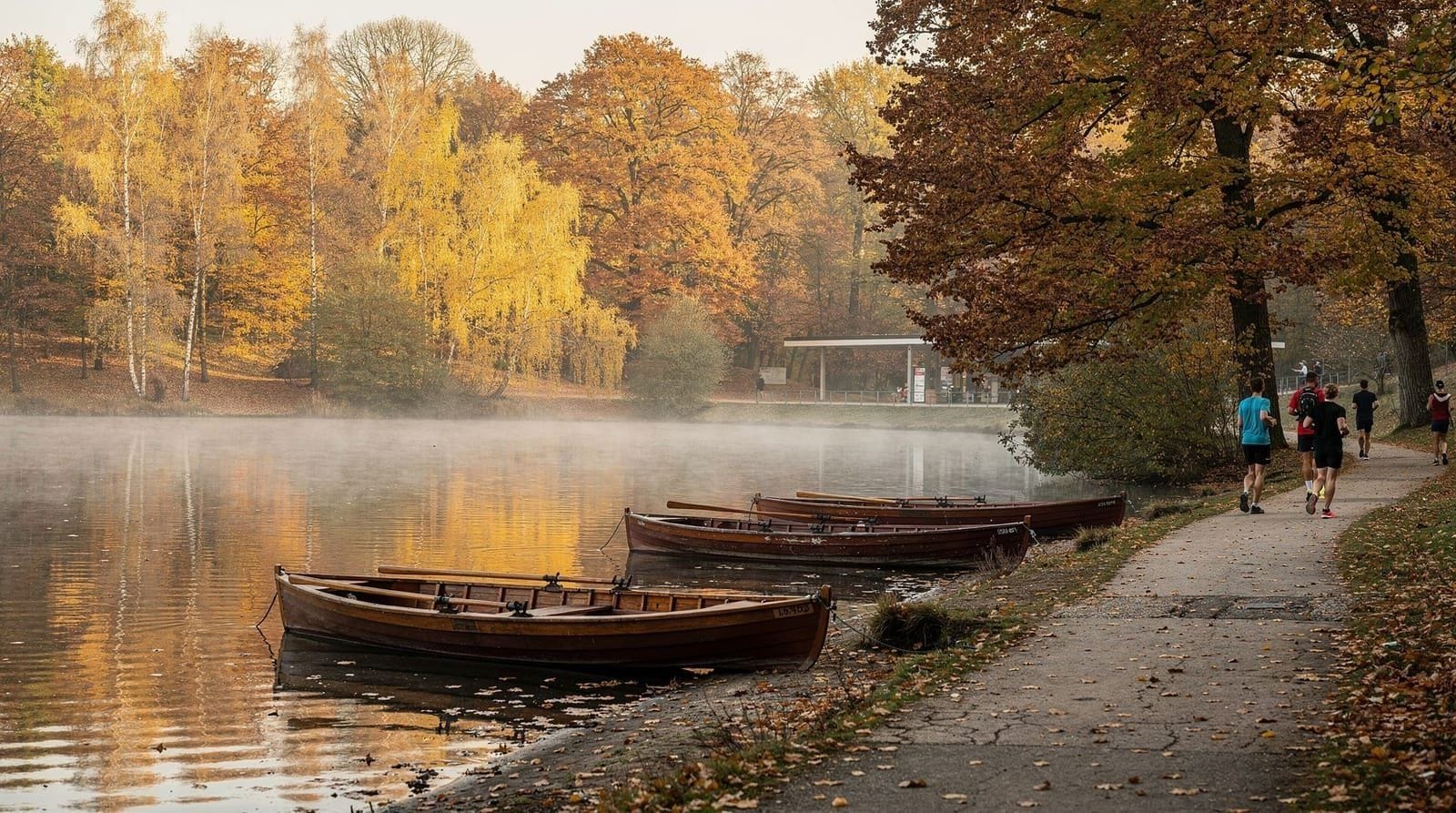
The northern half of the English Garden is less visited and more genuinely park-like — quieter, with less infrastructure and more woodland. The main attraction is the Kleinhesseloher See (Kleinhesseloher Lake), an artificial lake created in the park’s original construction. It is used for rowboat hire in summer and has a popular beer garden, the Seehaus, on its north bank.
The Seehaus beer garden is one of Munich’s best for a local atmosphere — further from the tourist core, it draws more residents from the Maxvorstadt and Schwabing neighbourhoods (see Schwabing neighbourhood guide). The water setting is pleasant.
Rowboats can be hired on the lake. The walk from the Chinesischer Turm to the Kleinhesseloher See is about 15 minutes north.
Beyond the lake, the park continues further north to the outer ring road, becoming more wooded and less structured. The surfing spots at Auer Mühlbach (a second smaller wave further north) attract a smaller, more local surfing community.
The Japanisches Teehaus (Japanese Tea House)
On the Auer Mühlbach island, south of the lake, sits the Japanisches Teehaus — a genuine traditional Japanese teahouse donated to Munich by Japan for the 1972 Olympic Games. It is surrounded by a traditional Japanese garden with stone lanterns and a small bridge.
The teahouse is not a commercial venue; it is used for authentic Japanese tea ceremony events, which are open to the public on certain Sundays (usually the last Sunday of the month, April–October). Admission to the ceremony is €8–€10. Check the Japanisches Teehaus website (or the park’s official information) for current ceremony dates.
Outside ceremony times, the surrounding garden and the exterior of the teahouse can be viewed freely from the path. The garden is one of the more serene spots in the park and often uncrowded. Segway or bike tour through the English Garden and Palace
Practical navigation
Walking times within the park:
- South entrance (Eisbach) to Monopteros: 5 minutes
- Monopteros to Chinesischer Turm: 20 minutes
- Chinesischer Turm to Kleinhesseloher See (Seehaus): 15 minutes
- South entrance to northern end (full park length): approximately 70 minutes at a leisure pace
Entry points:
- South: Prinzregentenstrasse / Widenmayerstrasse (Eisbach surfers)
- West: Multiple access points from Maxvorstadt and Schwabing
- North: Oberföhring area
By public transport:
- U4/U5 to Lehel: 5-minute walk to south entrance
- U3/U6 to Münchner Freiheit: 15-minute walk to central park / Chinesischer Turm, or bus 54/154
- Tram 17 to Tivolistrasse: 10-minute walk to park west side
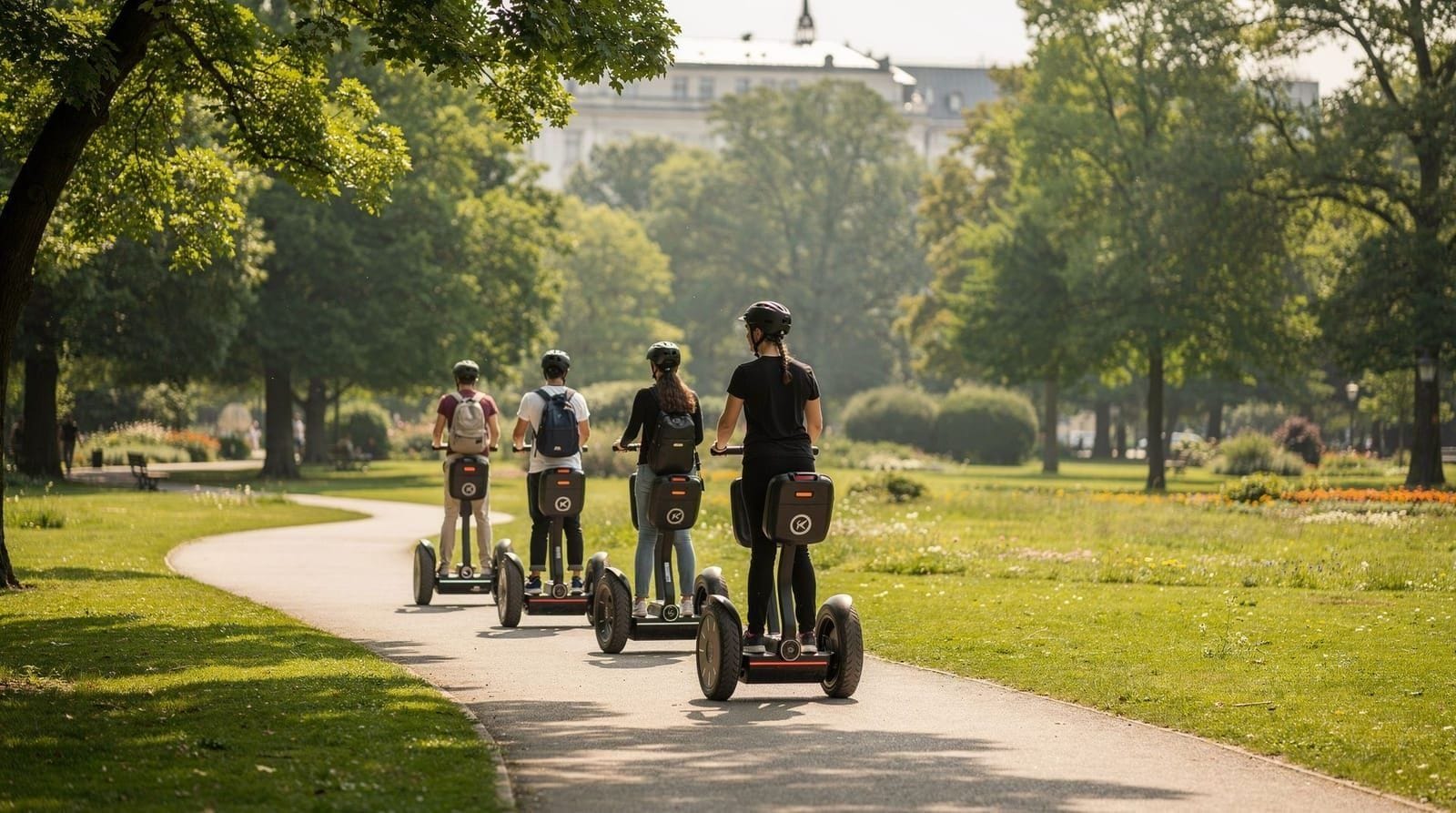
By bike: The Englischer Garten is excellent for cycling. Munich has a public bike hire system (MVG Rad) with stations throughout the city. The main paths through the park accommodate cyclists; off-path cycling is discouraged. For a guided cycling experience, several operators offer Munich bike tours with the English Garden as a stop. The Munich bike rental guide covers rental options.
Year-round use of the park
The Englischer Garten is one of those rare parks that functions in every season:
Spring (March–May): Beer gardens open from late March (weather permitting). Cherry blossom near the Japanisches Teehaus garden area. The park fills with locals after the long winter — a true Munich seasonal event.
Summer (June–August): Peak activity — sunbathers, beer gardens, Eisbach surfers, the Japanese Tea House ceremonies. The park is at its busiest. Arrive early (before 11am) for the southern meadows if you want space.
Autumn (September–October): The chestnut trees around the Chinesischer Turm turn colour in September. Beer gardens typically close in October (exact dates depend on weather). Oktoberfest runs simultaneously at Theresienwiese — the park is noticeably quieter than during Oktoberfest weekend when visitors are concentrated elsewhere. See the Munich autumn guide.
Winter (November–February): The park is still beautiful — frosted paths, bare trees. The Eisbach surfers continue year-round. The Kleinhesseloher See sometimes freezes in January/February, drawing ice skaters. Beer gardens are closed; the park cafés at the Seehaus and Chinesischer Turm may offer warm drinks in reduced-hour operation.
Photography and picnic spots
The Monopteros hill at golden hour is the single most photographed viewpoint in the park, with the Frauenkirche towers framed above the meadow — arrive 30–45 minutes before sunset in summer to get a good spot on the slope. For a quieter picnic away from the crowds, the meadows between the Eisbach and the Monopteros are large enough to spread out even on busy weekends, and the northern section near the Kleinhesseloher See offers shaded grass close to the water. Bring your own blanket; benches are limited relative to the park’s size.
Connecting the English Garden to the rest of Munich
To Marienplatz: Walk south from the park’s Prinzregentenstrasse entrance, cross the Isar via Maximiliansbrücke or walk through the Au-Haidhausen neighbourhood — about 25 minutes on foot, or U4/U5 Lehel to U3/U6 connection.
To the Residenz: Walk west from the south entrance through the Hofgarten (free formal garden adjacent to the Residenz, 10 minutes on foot). The Munich Residenz is at the far western end of the Hofgarten.
To the Maxvorstadt/Pinakotheken: Exit the park on the west side through the Schwabing/Maxvorstadt neighbourhoods. The Pinakothek museums are about 20 minutes west on foot. Munich city highlights Segway tour — English Garden included
What to bring and what to expect
Food and drink: The beer garden at Chinesischer Turm permits you to bring your own food (a traditional Munich beer garden right). You can buy food from the stalls and bring your own bread, cheese, and snacks. Beer and non-alcoholic drinks must be purchased at the garden. Pack a picnic for the meadows if you prefer to eat away from the crowd.
Dogs: Dogs are welcome in the park; they must be on a lead near the beer gardens.
Cycling on paths: Permitted on designated cycling paths. Walking paths are for pedestrians; please yield appropriately.
Sunset: The view from the Monopteros hill at sunset in summer is worth specifically timing a visit around — the light over the park is exceptional and photographs well.
Which beer garden should you choose?
The park has three distinct beer garden experiences, and picking the right one for your priorities matters more than most visitors realise.
| Beer garden | Atmosphere | Best for |
|---|---|---|
| Chinesischer Turm | Lively, tourist-heavy, brass band | First-timers, easy access, big groups |
| Seehaus (Kleinhesseloher See) | Local, lakeside, quieter | Locals-adjacent atmosphere, families |
| Augustinerkeller (Arnulfstrasse, edge of park) | Traditional, mixed local crowd | Authenticity over convenience |
For a wider citywide comparison beyond the park, see the best beer gardens in Munich guide.
Combining the park with a wider Munich day
The English Garden works well as the centrepiece of a half-day that also takes in the Residenz’s Hofgarten and the Altstadt — see how many days in Munich for how to fit it into a 2–4 day trip, and Munich’s best attractions for how it ranks against the museums and churches. If you’re visiting in summer specifically, the Munich in summer guide covers how the park’s peak season overlaps with other outdoor options like the lakes around Munich.
Frequently asked questions about the English Garden
Is the English Garden really bigger than Central Park?
Yes, marginally. The Englischer Garten covers approximately 3.7 square kilometres (370 hectares) versus Central Park’s 3.4 square kilometres (341 hectares). It is also longer and more narrow — running 5 kilometres from north to south versus Central Park’s 4 kilometres.
Is it legal to surf in the English Garden?
The Eisbach surf wave is technically in a grey legal area in Munich’s bylaws — it developed informally from the 1970s and has been tolerated and eventually formally accepted by the city. Surfing the wave itself is not prohibited but comes with conditions: only experienced surfers, one at a time, and at your own risk. The current is extremely strong. There are no lifeguards.
What time do the beer gardens in the English Garden open?
The Chinesischer Turm beer garden typically opens at 10am when weather permits, from late March through October. Last orders are usually 10–11pm. The Seehaus has similar hours. Both are weather-dependent and may close early or not open during cold or wet days.
Is nudity common in the Englischer Garten?
Topless and nude sunbathing is practised in certain meadow areas of the park, particularly around the Monopteros and on some islands. This is a longstanding Munich tradition (FKK culture) and is not considered unusual by locals. The areas where it occurs are not fenced or signed — visitors simply accept the social norm of the space.
Can you rent boats on the lake in the English Garden?
Yes. Rowboats and pedal boats can be rented at the Kleinhesseloher See from spring through autumn (typically April–October). The hire point is on the west bank of the lake near the Seehaus beer garden. Rental is by the hour at market rates.
Is the English Garden free?
Yes, entirely. There is no entry fee for the park itself. Individual attractions within the park may charge: boat hire is paid, the Japanese Tea House ceremonies charge admission, and the Haus der Kunst exhibitions charge entry. The beer gardens charge for what you consume but there is no cover charge.
How do I find the Eisbach surfers?
From the Prinzregentenstrasse entrance to the park, look for the concrete channel on your left (north side of Prinzregentenstrasse) immediately before or after the Maximiliansbrücke / Prinzregentenbrücke. GPS: 48.1439° N, 11.5884° E. You will hear the rushing water before you see the wave. The viewing area is from the embankment directly above the channel.
Is the English Garden safe at night?
The park is open 24 hours, but like most large urban parks it is quieter and less monitored after dark. The southern section near Prinzregentenstrasse stays reasonably busy into the evening in summer; the northern woodland sections are better avoided alone late at night. Most visitors stick to daytime and early evening visits.
Can I visit the English Garden as part of a bike tour?
Yes, and it’s one of the most popular ways to see the park’s full length without exhausting yourself on foot. Guided options combine the park with nearby sights. Munich bike tour with English Garden and beer garden stop
Top experiences
Bookable activities with verified prices and instant confirmation on GetYourGuide.