Schwabing neighborhood guide: cafes, English Garden and bohemian Munich
Munich: Segway or bike tour with English Garden and Palace
What is Schwabing like as a Munich neighbourhood?
Schwabing is Munich's traditionally bohemian neighbourhood north of the city centre, known for the Leopoldstrasse boulevard, proximity to the English Garden, student cafes and a literary history (Kandinsky, Thomas Mann and other early-20th-century artists lived here). Today it is upscale rather than edgy — rents are high, the restaurants are good quality and the streets are pleasant. It is not cheap or gritty. The English Garden edge makes it one of the better areas to stay for parks and outdoor culture.
What Schwabing actually is in 2026
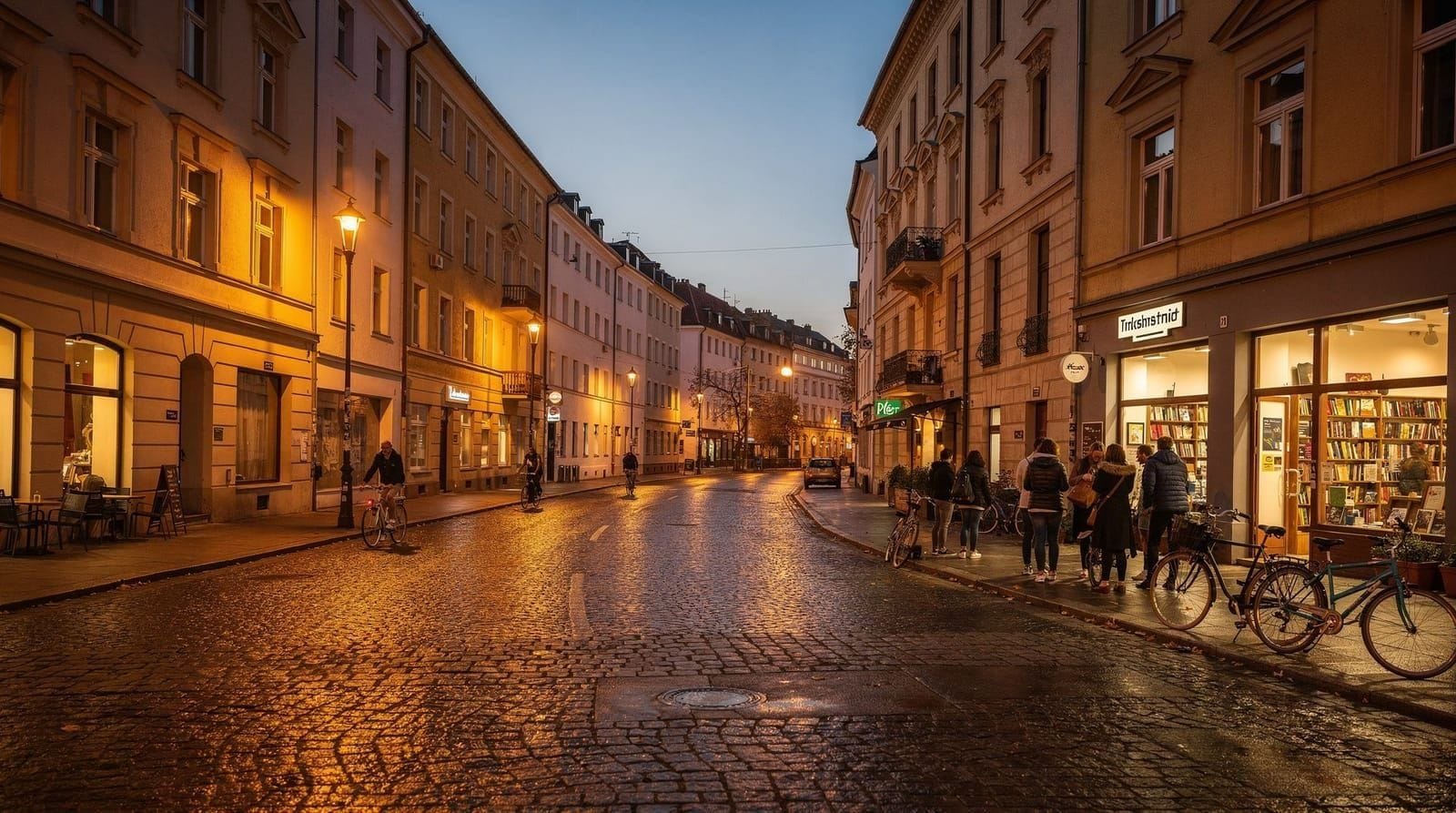
Schwabing is the neighbourhood that Munich’s reputation for bohemian intellectual life is built on — and the neighbourhood that has largely left that reputation behind in favour of prosperity. Rents are high, boutiques are polished, and the Leopoldstrasse café terraces are filled with young professionals rather than the impoverished artists and writers of the early 20th century. This is not a criticism: Schwabing is a genuinely pleasant, liveable neighbourhood with excellent restaurants, good transport links and one of Munich’s great assets — the English Garden — running along its eastern edge.
The disconnect between Schwabing’s artistic myth and its current reality is worth understanding before you visit. Travellers who arrive expecting something gritty or edgy will find a prosperous, tree-lined neighbourhood that happens to have a bohemian history. That history is real and the neighbourhood’s character — independent shops, café culture, a density of bookshops relative to most Munich districts — still reflects it, but Schwabing today is comfortably upper-middle-class Munich.
| Where | North of Maxvorstadt, along Leopoldstrasse, bordering the English Garden |
| Cost | Free to walk; beer garden Masskrug around €12–13.50; hotels €100–300+/night |
| Time needed | Half day for the boulevard and side streets; add English Garden time separately |
| Getting there | U3/U6 to Münchner Freiheit or Giselastrasse, ~10 min from Marienplatz |
| Best time | Summer weekday afternoons for terraces without weekend crowds |
Getting oriented: Schwabing’s geography
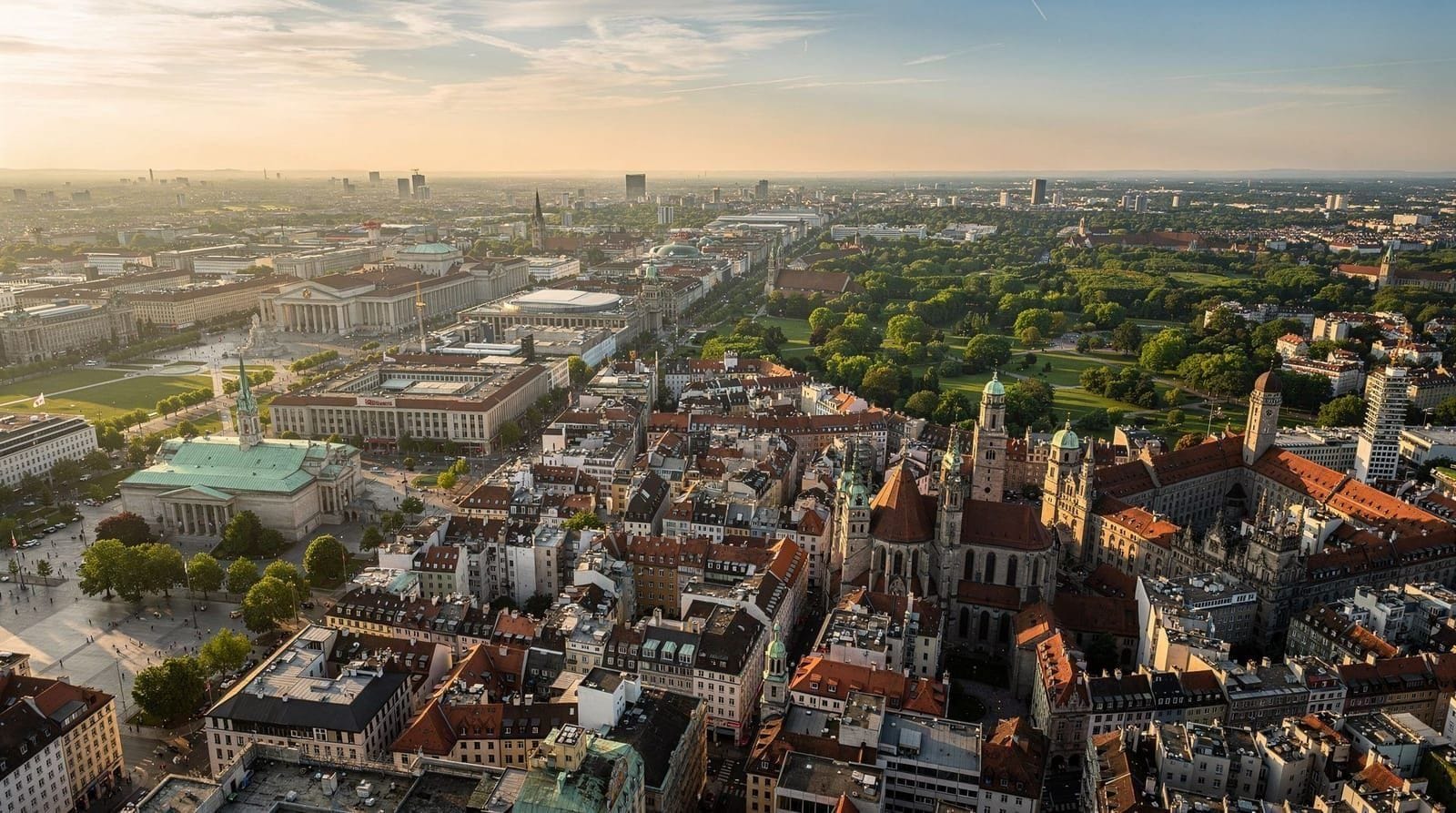
Schwabing occupies a long north-south strip directly above the Maxvorstadt (museum quarter) and the Ludwig-Maximilians-Universität (LMU). Its main axis, Leopoldstrasse, runs approximately 1.5 kilometres from the university area at its south end to Münchner Freiheit square at the north.
The district’s eastern boundary is the Englischer Garten — arguably Schwabing’s greatest amenity. The western boundary is less precise: Schwabing blends into Maxvorstadt to the south and into the Schwabing-West residential districts to the northwest.
U-Bahn access is excellent. The U3 and U6 lines run directly under Leopoldstrasse, with stops at Giselastrasse, Münchner Freiheit and (shared with other lines) Universität. Journey time from Marienplatz: around 10 minutes.
Leopoldstrasse: the boulevard
Leopoldstrasse is wide — seven lanes of traffic plus generous pavements — and planted with mature plane trees that provide shade in summer. The pavement cafés and restaurant terraces along its length are among Munich’s most popular outdoor dining spots from April through October.
What’s actually on Leopoldstrasse: the mix is international restaurants (Italian, Greek, Japanese, Lebanese), pavement cafés, boutique clothing shops, a few chain stores and several bars that transition from café to nightlife venue in the evening. Quality is variable — some excellent spots, some that are trading on the street’s reputation rather than the quality of what they serve.
Worth noting: The southern end of Leopoldstrasse (near Giselastrasse) tends to be quieter and more local. The stretch north toward Münchner Freiheit is more commercial and tourist-aware. The intersection around Münchner Freiheit itself has the highest density of outdoor tables and is the most animated section in summer evenings.
The English Garden: Schwabing’s great advantage
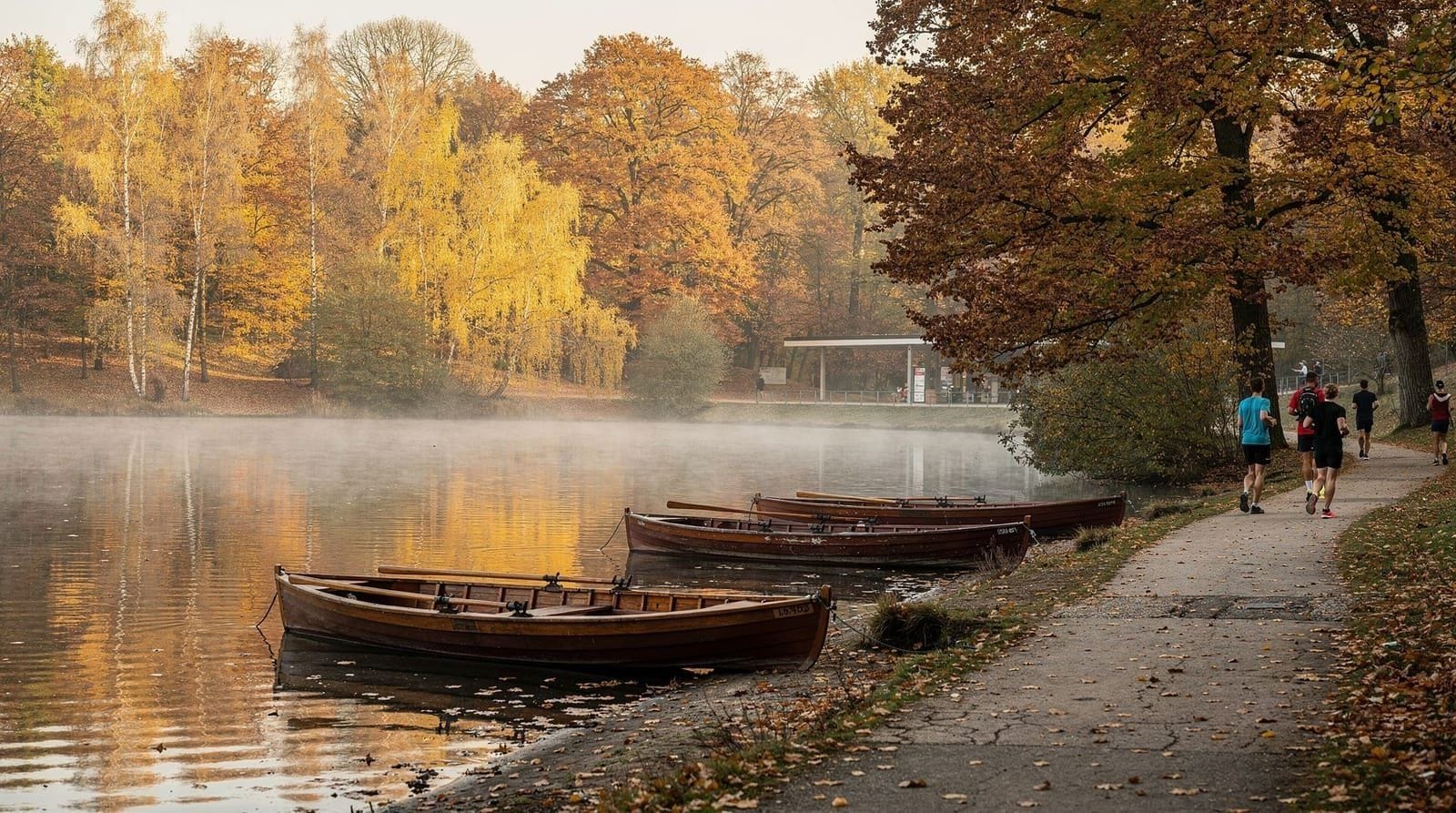
The English Garden (Englischer Garten) is Munich’s largest urban park — larger than Central Park in New York — and Schwabing sits directly against its western edge. This proximity is the neighbourhood’s clearest practical advantage for visitors.
The English Garden entry from Schwabing is easiest via:
- Feilitzschstrasse (from Münchner Freiheit): Cross east over the Leopold canal to reach the northern section of the park, near the Aumeister beer garden.
- Giselastrasse station: Exits lead toward the central English Garden, near the Kleinhesseloher See lake.
- Veterinärstrasse: South entry near the Chinesischer Turm (Chinese Tower beer garden) — the park’s most visited section.
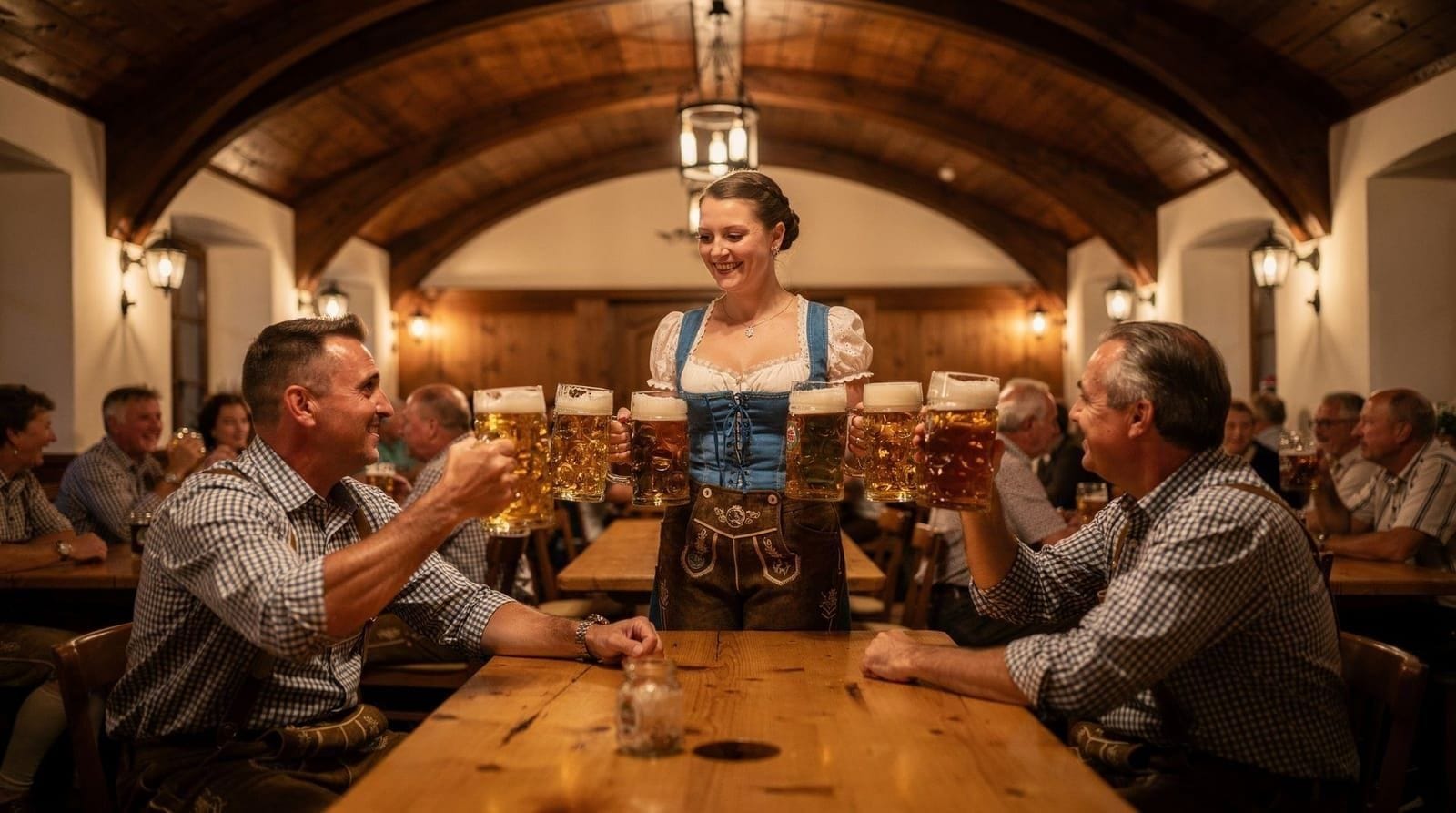
The Chinesischer Turm beer garden seats 7,000 people and is the most popular in Munich. A Masskrug (litre) of beer costs €12–13.50 in 2026. The beer garden is operated by the Hofbräuhaus brewery. It is very busy on summer weekends but functions well at those scales. Bring your own food (allowed) or buy from the food stalls at the site.
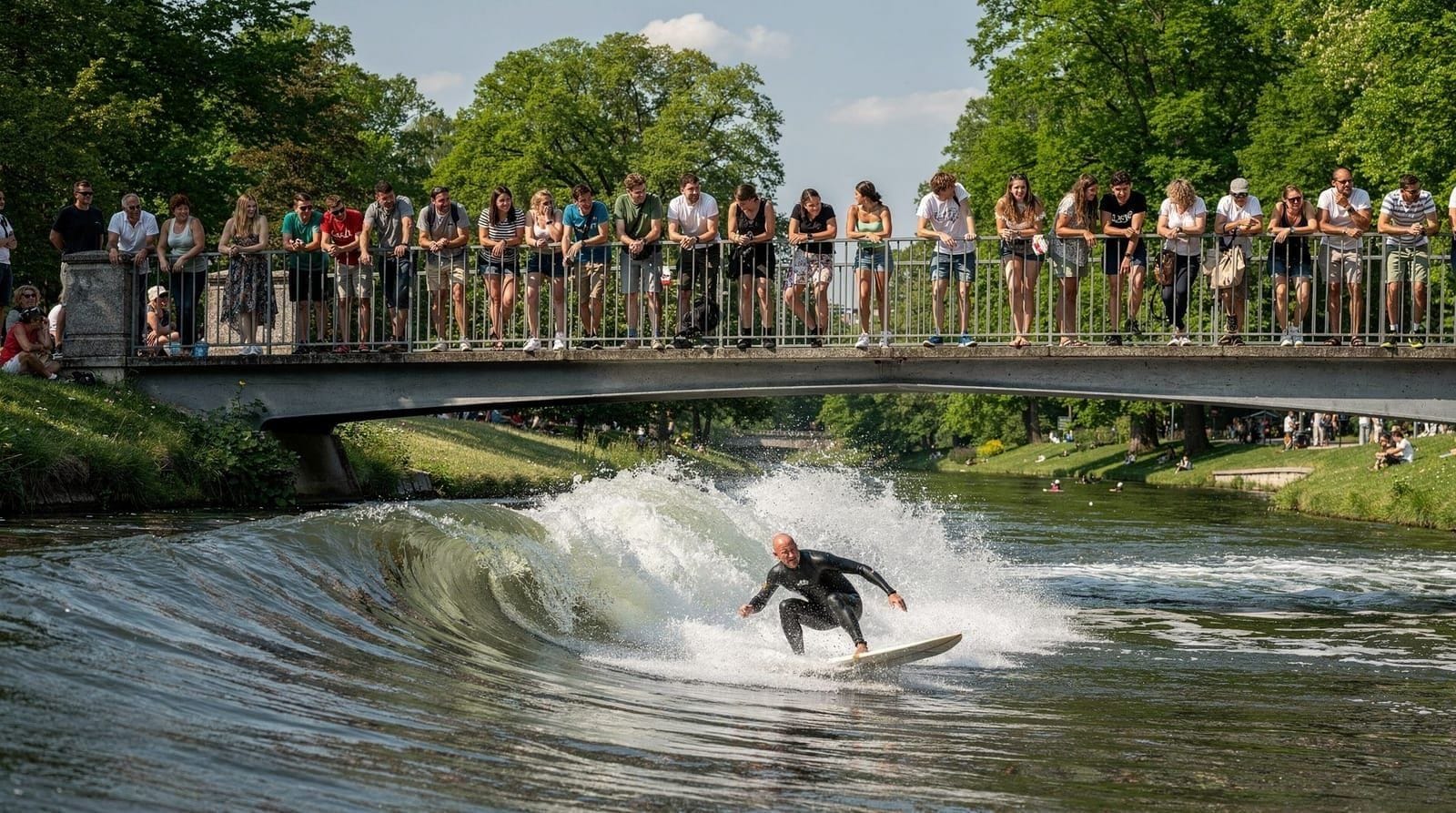
The English Garden is also where Munich’s famous Eisbach surfing wave is located — at the southern end of the park, just below the Museum of Fine Arts. The standing wave is artificial, created by the Eisbach stream being channelled under the Prinzregentenstrasse bridge. Surfers queue to ride it year-round; it is free to watch and a genuinely surreal Munich sight. For a full account of the park and its sections, see the English Garden guide. English Garden and Nymphenburg Palace bike or segway tour
Münchner Freiheit: the neighbourhood hub
Münchner Freiheit square at the northern end of Leopoldstrasse is the social centre of Schwabing. The U3/U6 station makes it a significant transit point; the large open square has outdoor café seating at multiple venues and generally a lively atmosphere from late morning through the evening.
A weekend flea market operates near Münchner Freiheit — check local listings for exact dates and times, as the location and schedule shifts seasonally. The Saturday market on Elisabethplatz (a few blocks west in the Maxvorstadt/Schwabing border zone) is a genuine local market with organic produce, cheese and flowers alongside second-hand goods.
The square itself is named “Munich Freedom” in connection with the city’s postwar democratic reconstitution. The name has a certain irony given that Schwabing was also the neighbourhood most associated with the early Nazi cultural movement in the 1920s — the city where Hitler’s artistic and political career began.
Schwabing’s bohemian history: what actually happened here
The historical reputation is worth understanding because it is genuine, even if the neighbourhood has moved on. From roughly 1890 to 1935, Schwabing was the centre of Munich’s cultural avant-garde.
Artists and writers who lived in Schwabing:
- Wassily Kandinsky (founded the Blaue Reiter group in 1911 with Franz Marc; developed abstract painting in his studio on Ainmillerstrasse)
- Paul Klee (lived and worked here before his Bauhaus period)
- Thomas Mann (lived in Schwabing before his move to Bogenhausen)
- Rainer Maria Rilke (lived here in the early 1900s)
- Vladimir Lenin (lived briefly at Kaiserstrasse 46 in 1900–1901, before his exile in Switzerland)
The Simplicissimus magazine (founded 1896) was published in Schwabing and represented the satirical intellectual culture of the era — politically progressive and culturally avant-garde by Munich standards. The magazine was banned by the Nazis in 1933.
Today, no dedicated museum covers this history, though the Lenbachhaus museum at the edge of Maxvorstadt holds the world’s largest collection of Blaue Reiter works. The Lenbachhaus guide covers this in detail.
Where to eat and drink in Schwabing
Genuine local options:
Café Puck (Türkenstrasse, on the Schwabing/Maxvorstadt border): A legendary Schwabing institution — bookshop-café atmosphere, good breakfast and lunch, local clientele. Not the most efficient service but genuinely atmospheric.
Tantris (Johann-Fichte-Strasse): One of Munich’s most serious restaurants, opened in 1971 and still Michelin-starred. The 1970s Brutalist building is itself worth seeing. Expensive (€120–180 per person for a menu) but one of the best in the city for modern German cuisine.
Usher (various Schwabing locations): Local small-batch coffee roaster with cafés in Schwabing and Maxvorstadt — some of Munich’s best espresso.
Biergarten am Chinesischen Turm (in the English Garden, accessible from Schwabing): The 7,000-seat beer garden mentioned above. Best for a relaxed outdoor afternoon rather than a quick drink.
Avoid: The most prominent large-terrace restaurants on the main Leopoldstrasse stretch nearest to Münchner Freiheit can be tourist-facing with corresponding price inflation for average food. The further you go from the main boulevard onto the side streets (Georgenstrasse, Ainmillerstrasse, Wilhelmstrasse), the more interesting and local the options become. Munich bike tour to beer gardens — city highlights by bicycle
Side streets worth exploring
The character of Schwabing is best found off Leopoldstrasse:
Ainmillerstrasse: A quiet residential street that was the address of choice for many early-20th-century artists. It connects west from Leopoldstrasse through a pleasant residential area toward the Maxvorstadt boundary.
Georgenstrasse: Parallel to Leopoldstrasse one block west — local shops, a good bakery, quieter atmosphere.
Feilitzschstrasse: Runs east from Münchner Freiheit toward the English Garden. Has independent restaurants and bars, more local in character than the main boulevard.
Hohenzollernstrasse: West of Leopoldstrasse, this street has independent boutiques, bookshops and delis that serve the local residential population.
Getting around Schwabing
U-Bahn: U3 (direction Moosach) and U6 (direction Klinikum Großhadern or Garching) both stop at Münchner Freiheit and Giselastrasse. These lines connect directly south through Maxvorstadt (Universität station), to the city centre (Marienplatz) and beyond.
Cycling: Schwabing is extremely cycle-friendly. The English Garden has dedicated cycle paths. Municipal bike rental (MVG Rad, the city’s bike-share scheme) stations are distributed throughout the neighbourhood. A bicycle is the best way to cover the distance from Schwabing to Marienplatz (15–20 minutes) while also seeing the English Garden.
On foot: The neighbourhood is walkable but distances are real. From Münchner Freiheit to Marienplatz is approximately 4 kilometres on foot — a 50-minute walk, pleasant along the English Garden paths.
Where to stay in Schwabing: price guide
Hotels in Schwabing tend toward the mid-range to upper-mid-range. The neighbourhood has fewer budget options than areas near the Hauptbahnhof.
Budget: Hostel options are limited. The nearest budget cluster is around the Hauptbahnhof (3 km south).
Mid-range (€100–180/night): The area has several independent hotels and design guesthouses. The Hotel Olympic (Hans-Sachs-Strasse, technically Glockenbachviertel but close) and similar independent properties offer better value than Schwabing proper.
Mid-upper (€180–300/night): Several boutique hotels on Leopoldstrasse and side streets fall in this range. The Cortiina and similar Munich boutique hotels offer polished accommodation without the large-hotel feel.
Luxury (€300+/night): The Bayerischer Hof and Mandarin Oriental are in the city centre rather than Schwabing. In Schwabing proper, upscale options are limited.
For a full breakdown of where to stay by area and traveller type, see the where to stay in Munich guide.
Shopping in Schwabing
Schwabing’s retail character sits somewhere between the chain stores of the city centre and the design-forward boutiques of Glockenbachviertel. Leopoldstrasse itself has a mix of international fashion brands and a handful of long-running independent shops that have survived rising rents. The more interesting shopping is on the side streets: Hohenzollernstrasse for boutiques and delis, and the streets around Elisabethplatz for the Saturday market’s produce and flower stalls alongside a scattering of small home-goods and vintage shops. Bookshops remain a genuine Schwabing strength relative to the rest of Munich — a legacy of the neighbourhood’s literary history — with several independent stores still operating on and around Leopoldstrasse.
Weekday vs weekend: when the neighbourhood feels different
| Weekday | Weekend | |
|---|---|---|
| Leopoldstrasse terraces | Relaxed, easy to get a table | Busy from midday, especially in summer |
| Chinesischer Turm beer garden | Moderate, mostly locals | Very busy, arrive early for a table |
| Münchner Freiheit square | Commuter traffic, quieter evenings | Lively all day, flea market some weekends |
| English Garden paths | Quiet, good for cycling | Crowded near the lake and beer gardens |
Schwabing for families
Schwabing works well for families largely because of the English Garden on its doorstep — playgrounds, open lawns for picnics, and the Kleinhesseloher See lake for feeding ducks and, in summer, boat rental. The neighbourhood’s cafés are generally relaxed about children, and the wide Leopoldstrasse pavements make pushchairs easy to manage compared with the narrower Altstadt streets. The Chinesischer Turm beer garden has a playground directly adjacent, which makes it a practical stop for families rather than just a drinking destination. For a broader view of family-friendly options across the city, see the Munich with kids guide.
Frequently asked questions about Schwabing
Is Schwabing walkable from the city centre?
From Marienplatz, the walk north to Münchner Freiheit (the heart of Schwabing) is approximately 3.5–4 kilometres — a 45-minute walk passing through the Maxvorstadt. This is worth doing once as an orientation walk. For daily movement, the U3/U6 covers the distance in 10–12 minutes.
What’s the difference between Schwabing and Maxvorstadt?
The boundary between the two is the Ludwig-Maximilians-Universität campus and Leopoldstrasse at the Geschwister-Scholl-Platz. Maxvorstadt is the museum quarter (Pinakotheken, Lenbachhaus, Glyptothek) and has a denser, more institutional character. Schwabing north of the university is more residential and café-oriented. In practice, the area around the university overlaps considerably in character. The Maxvorstadt guide covers the museum quarter in detail.
When is the best time to visit Schwabing?
Summer (June–August) is the optimal time — the Leopoldstrasse café terraces are fully operational, the English Garden is at its best (including the Eisbach surfers), and the general outdoor culture of Munich is in full effect. Winter Schwabing is quieter and less distinctive unless you are attending a specific event. April–May and September–October offer pleasant weather with fewer crowds.
Can I cycle through the English Garden from Schwabing?
Yes. The English Garden has a network of cycling paths running north-south through the park. From a Schwabing entry point, you can cycle south through the park to emerge near the Haus der Kunst and Prinzregentenstrasse in about 15–20 minutes. See the English Garden guide for map details and cycling rules within the park.
What nightlife does Schwabing have?
Schwabing’s nightlife is centred on bars and restaurants that stay open late rather than dedicated clubs. Leopoldstrasse and Feilitzschstrasse have numerous bars; the area around Münchner Freiheit has the highest density. For dedicated club nightlife, the Glockenbachviertel is better suited — see the Munich nightlife guide for the full picture.
Is Schwabing a good base for a first-time visit to Munich?
It works well if the English Garden and a quieter, greener neighbourhood matter more to you than being a five-minute walk from the Altstadt. First-timers who want to be within easy walking distance of Marienplatz and the main sights may find other central areas more convenient, since Schwabing adds a 10–15 minute U-Bahn ride to most city-centre attractions.
Top experiences
Bookable activities with verified prices and instant confirmation on GetYourGuide.