Maxvorstadt guide: Munich's museum quarter, Kunstareal and university area
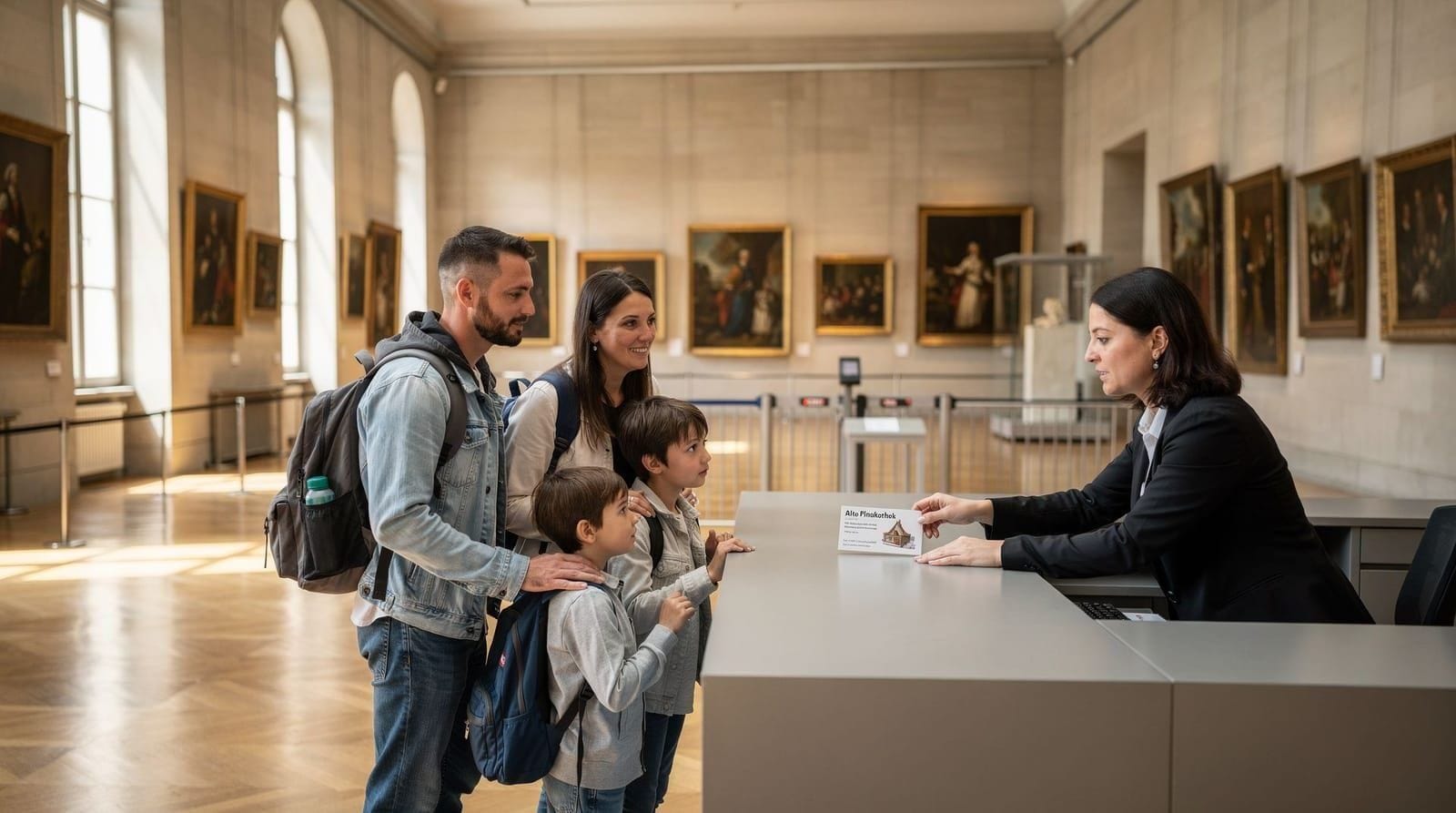
Munich: guided tour of the Alte Pinakothek
What is Maxvorstadt and why should I visit it?
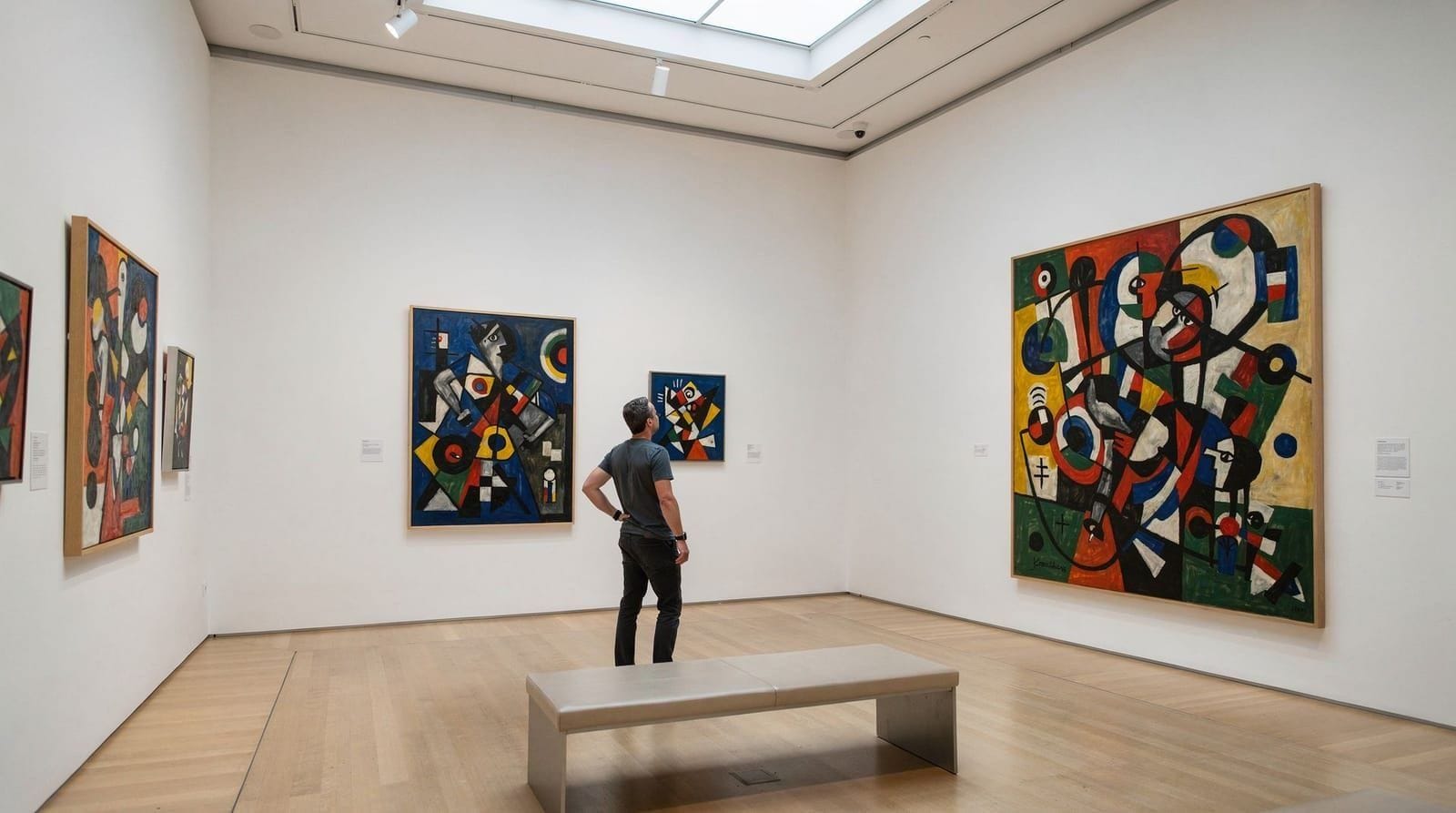
Maxvorstadt is Munich's museum quarter (Kunstareal), containing the Alte Pinakothek, Neue Pinakothek, Pinakothek der Moderne, Glyptothek, Museum Brandhorst and Lenbachhaus within a walkable area of about 1 square kilometre. It is also home to the Ludwig-Maximilians-Universität (LMU) campus, giving the neighbourhood a student and academic character. For art and culture, it is the most concentrated museum district in Germany.
Munich’s museum quarter: what Maxvorstadt contains
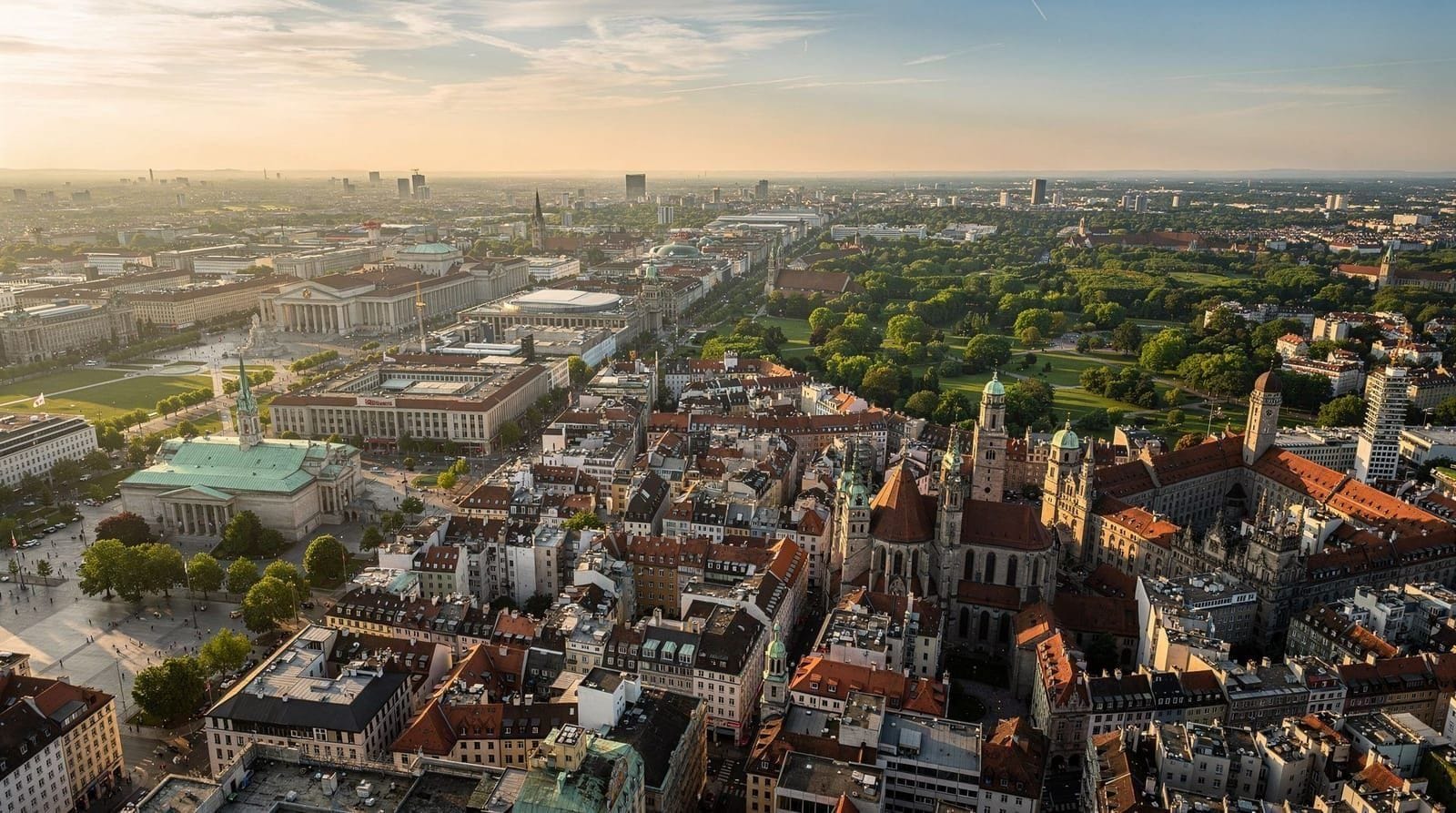
Maxvorstadt is the district directly north of the Altstadt and west of Schwabing, and it is the most art-dense neighbourhood in Germany by museum concentration. Within an area of roughly 1.5 by 1.5 kilometres, it contains six major state museums, the Ludwig-Maximilians-Universität campus, the Technical University of Munich (TUM) core buildings and a neighbourhood culture of cafés, bookshops and student life that reflects its academic identity.
| Where | north of the Altstadt, U2 to Theresienstrasse/Königsplatz or U3/U6 to Universität |
| Cost | free to walk; museums around €7–10 each, or €1 on Sundays |
| Time needed | half a day for one or two museums; 2–3 days for the full Kunstareal |
| Getting there | U-Bahn or Tram 27 from the Altstadt or Hauptbahnhof |
| Best time | Sunday for €1 admission (busier) or weekday afternoons for quieter galleries |
The museum cluster has a name: the Kunstareal (Art Area). The name was applied to the museum quarter when the Pinakothek der Moderne opened in 2002 as a way of branding the area for visitors. It is a functional descriptor — the density of major art institutions here is extraordinary even by European capitals standards. The Prado, the Louvre and the Uffizi are individual institutions; the Kunstareal is a district-scale concentration.
The neighbourhood itself is pleasant and walkable. The streets west of Theresienstrasse are largely residential; the university area around Geschwister-Scholl-Platz has student cafés and independent restaurants. Königsplatz, the neoclassical square at the western end, is a large open public space used for open-air concerts in summer (and famously for Nazi rallies in the 1930s and 1940s).
The Alte Pinakothek: what to see in a focused visit
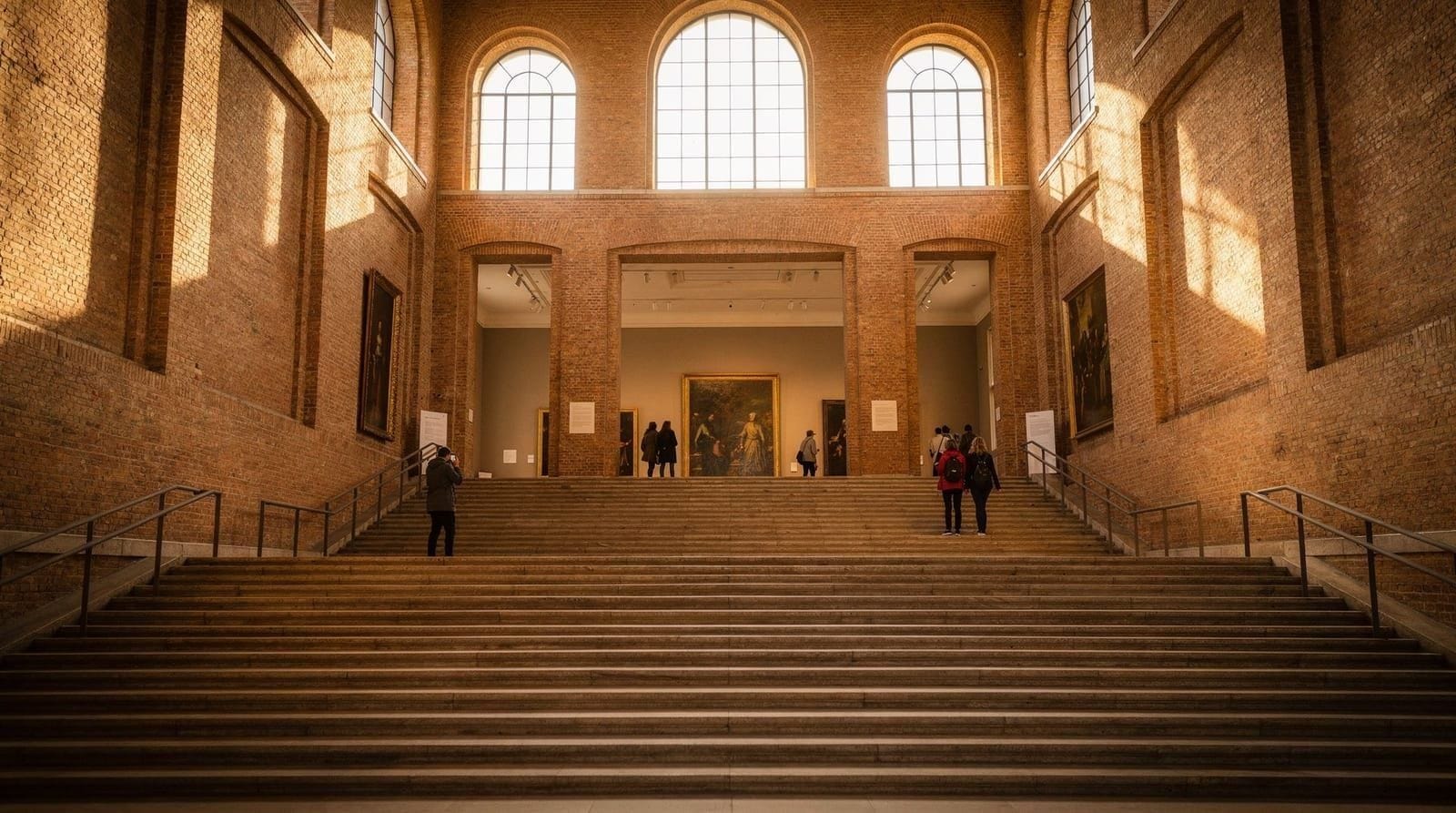
The Alte Pinakothek (Old Picture Gallery) is Munich’s most important single museum. Founded by Ludwig I and opened in 1836 in a purpose-built building by Leo von Klenze, it holds one of the world’s great collections of European painting from the 14th to 18th centuries.
The collection strength is in:
- Early Netherlandish and German Renaissance: Albrecht Dürer (Self-Portrait with Fur Coat, 1500 — probably the most reproduced work in the collection), Raphael, Cranach, Grünewald
- Flemish Baroque: The largest collection of Rubens in the world — over 60 works, including the Rape of the Daughters of Leucippus and the Rubens and Isabella Brandt self-portrait
- Italian Renaissance: Leonardo, Raphael, Titian, Tintoretto
- Dutch Golden Age: Rembrandt, Vermeer, de Hooch
The building itself — a severe neoclassical structure with a long loggia — was heavily damaged in World War II and rebuilt by 1957. The top-floor galleries have skylights that provide natural light for viewing paintings, following 19th-century museum conventions.
Practical notes (2026): Admission €7, Sunday €1. Open Tuesday–Sunday 10am–6pm (Thursday to 8pm), closed Monday. The museum has a café on the ground floor. Allow 2–3 hours for a focused visit of the highlights; a thorough visit requires a full day. Alte Pinakothek guided tour — Old Masters with an expert guide
Pinakothek der Moderne: four collections under one roof
The Pinakothek der Moderne (Gallery of Modernity), opened in 2002, is Munich’s most visited museum and covers four distinct collections:
Staatsgalerie moderner Kunst (State Gallery of Modern Art): Twentieth-century and contemporary painting, sculpture and installation. Highlights include significant Picasso, Braque, Dali, Magritte and German Expressionist works (Kirchner, Nolde, Beckmann). Strong in postwar German art — Beuys, Richter, Baselitz.
Neue Sammlung — The Design Museum: Applied design from the early industrial era to the present. Significant collection of Bauhaus objects, automobile design history (cars are displayed in the museum), graphic design and product design. One of the best design museums in Europe.
Architekturmuseum der TU München: Architecture drawings, models and photographs documenting architectural history from the early 19th century to the present. The historical archive is particularly strong on 19th-century Bavarian and Munich architecture.
Museum für Zeichnung und Druckgraphik (Museum of Drawings and Prints): Works on paper from the Old Masters to the contemporary — drawings, watercolours, prints, posters. The collection of around 400,000 items is one of the largest of its kind; rotating exhibitions show selections.
Practical notes: Admission €10, Sunday €1. Tuesday–Sunday 10am–6pm (Thursday to 8pm). The building by Stephan Braunfels (2002) is notable — a large glass rotunda with radial galleries extending from it.
Museum Brandhorst: contemporary art at its best in Munich
Museum Brandhorst (opened 2009) is the newest building in the Kunstareal and holds one of Germany’s best private contemporary art collections. The Brandhorst collection was donated to Bavaria by Udo and Anette Brandhorst and focuses on art from the 1950s to the present.
Highlights of the collection:
- Cy Twombly: The largest collection of Twombly’s work in the world — dedicated rooms on two floors covering his major periods
- Andy Warhol: A significant group of major works including Marilyn Monroe series and Electric Chair variations
- Mike Kelley, Damien Hirst, Sigmar Polke: Major works in a contemporary collection that is genuinely contemporary rather than retrospective
The building’s exterior — tiled with 36,000 coloured ceramic rods in a palette of 23 shades — is striking and immediately identifiable.
Practical notes: Admission €7, Sunday €1. Tuesday–Sunday 10am–6pm (Thursday to 8pm).
Lenbachhaus: Blaue Reiter and Munich’s Expressionist heritage
The Lenbachhaus is a yellow-ochre villa that was the studio-house of portrait painter Franz von Lenbach, donated to the city and opened as a museum in 1929. Its current significance lies in the Blaue Reiter collection — the world’s largest holding of works by Wassily Kandinsky, Franz Marc, Gabriele Münter, August Macke and the other members of the Blaue Reiter group that formed in Munich/Schwabing in 1911.
The collection was primarily assembled by Gabriele Münter, who stored the works through the Nazi period and donated them to Munich in 1957. Kandinsky’s development of abstract painting is documented in a sequence of works from realistic early paintings through the first abstract watercolour (1910) to mature abstraction.
The Lenbachhaus also holds important works by the Munich Jugendstil movement and has a contemporary art programme in a new extension building by Norman Foster (opened 2013).
Practical notes: Admission €10. Tuesday–Sunday 10am–6pm (Tuesday to 8pm). The Lenbachhaus guide covers the collection in detail. Skip-the-line Alte Pinakothek guided tour
Glyptothek and Königsplatz: ancient sculpture and neoclassical space
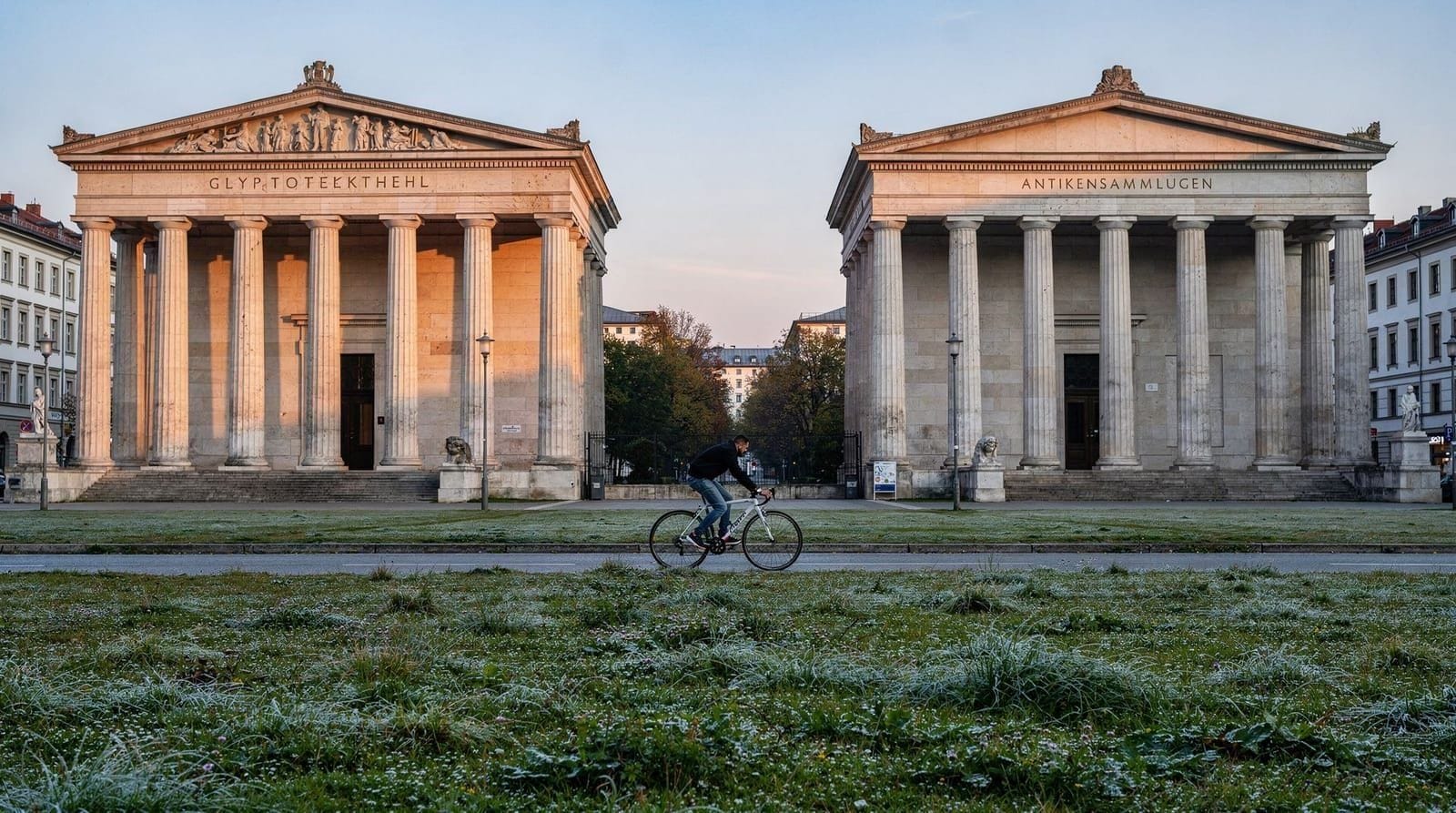
Königsplatz is one of Munich’s most impressive architectural set pieces — a long rectangular space flanked by neoclassical buildings, open at the east end to a parkland. Ludwig I commissioned it in the 1810s to give Munich a civic space that referenced ancient Athens and Rome; the buildings were completed through the 1830s–1860s.
The Glyptothek (east side of Königsplatz) was the first purpose-built public sculpture museum in Germany, designed by Leo von Klenze in a Greek temple style and completed in 1830. The collection focuses on ancient Greek and Roman sculpture. The most important works are the pediment sculptures from the Temple of Aphaia on the island of Aegina (490 BC) — figures of warriors in various states of motion, originally coloured and now displayed in restored form with reconstruction models showing their original polychromy. The Roman portrait gallery on the upper floor has exceptional individual pieces.
The Staatliche Antikensammlungen (directly opposite) covers Greek pottery (one of the finest collections in the world for Attic red-figure ware), bronze objects, jewellery and ceremonial objects. The building itself (by Georg Friedrich Ziebland, 1838) is in Corinthian temple style.
Practical notes: Glyptothek €8 (Sunday €1); Antikensammlungen €8 (Sunday €1); combined day ticket €13. Both Tuesday–Sunday 10am–5pm (Wednesday to 8pm).
The Nazi history of Königsplatz and Maxvorstadt
This history is significant and should not be glossed over. The Königsplatz and the surrounding area had specific importance to the National Socialist movement:
In the 1930s, two Ehrentempel (Honour Temples) were built on the east end of Königsplatz to house the remains of the 16 Nazis killed in the Beer Hall Putsch of 1923. The square was paved over for mass rallies (the paving stones are visible in historical photographs of the enormous NSDAP gatherings). The temples were demolished by the US occupation forces after the war.
On Meiserstrasse (adjacent to Königsplatz), the Nazi party’s administrative headquarters occupied three neoclassical buildings built under Ludwig I: the Führerbau (Hitler’s Munich office, where the Munich Agreement was signed in 1938), the NSDAP Verwaltungsbau and the Hochschule für Musik. The Führerbau is now the Hochschule für Musik und Theater München. These buildings are still in use; a small documentation plaque exists at the Führerbau but there is no systematic historical interpretation of the site. The Munich Third Reich tour guide covers the full geography of Nazi Munich including these buildings.
The Weisse Rose (White Rose) memorial at the LMU campus (Geschwister-Scholl-Platz) commemorates the student resistance group that distributed anti-Nazi leaflets in 1942–1943 until being arrested and executed. A permanent exhibition in the main university building (Lichthof) covers the White Rose group. The White Rose resistance guide provides the full historical context.
Eating and drinking in Maxvorstadt
The neighbourhood around the university has a good density of inexpensive and independent food options oriented toward students and academic staff:
Alter Simpl (Türkenstrasse): A historic Munich institution — a wood-panelled pub and restaurant that has been running since 1903. Good Bavarian food at reasonable prices, strong beer selection, genuinely local atmosphere.
Café Münchner Freiheit (Leopoldstrasse border): The transition point between Maxvorstadt and Schwabing has multiple café options; this one is known for its outdoor seating and straightforward café food.
The area around Amalienstrasse and Türkenstrasse has numerous kebab shops, Vietnamese restaurants, falafel stands and affordable cafés serving the university population. Some of Munich’s best casual food for the price is in this strip.
Museum cafés: The Pinakothek der Moderne café is the best of the museum cafés — good quality and open to non-museum visitors.
Jewish history in Maxvorstadt
The area around Maxvorstadt and Schwabing was significantly Jewish in Munich’s early-20th-century cultural life. The Munich Jewish history guide covers this in detail. Within Maxvorstadt specifically:
The Kunstareal area has a small remembrance trail. The Pinakothek der Moderne building stands on land that includes the site of a former Jewish community building.
The Jewish Museum München is not in Maxvorstadt but in the Altstadt (near Jakobsplatz/Marienplatz) — a separate museum that covers the full history of Munich’s Jewish community. Jewish history and museum quarter guided tour of Munich
Practical guide to visiting Maxvorstadt
How much time to allow: A single Pinakothek visit (Alte or der Moderne) takes 2–3 hours. Visiting all Kunstareal museums thoroughly requires 2–3 days. Most visitors on a city trip allocate one half-day to the museums and one to the Königsplatz area.
Best day for the museums: Sundays offer €1 admission to the state museums — an exceptional value but the museums are noticeably busier. Weekday afternoons (Tuesday–Friday, 2–5pm) tend to be quietest.
What to visit on a tight schedule: If you have one museum slot, choose the Alte Pinakothek for historical depth or the Pinakothek der Moderne for contemporary breadth and the excellent design collection. The Brandhorst is the best single building for contemporary art. The Glyptothek is the best for ancient art.
Getting between museums: The main Kunstareal museums are clustered on Barer Strasse and can be reached on foot from each other in 5–10 minutes. The Glyptothek is slightly further (10 minutes from the Pinakotheken). Tram 27 connects the area efficiently.
Which museum should you actually choose
| Museum | Best for | Time needed | Cost |
|---|---|---|---|
| Alte Pinakothek | Old Masters, Dürer, Rubens | 2–3 hours | around €7, €1 Sunday |
| Pinakothek der Moderne | Modern art, design, architecture | 2–3 hours | around €10, €1 Sunday |
| Museum Brandhorst | Contemporary art, Twombly, Warhol | 1–1.5 hours | around €7, €1 Sunday |
| Lenbachhaus | Kandinsky, Blaue Reiter | 2 hours | around €10, €1 Sunday |
| Glyptothek + Antikensammlungen | Ancient sculpture, Greek pottery | 2 hours combined | around €13 combined, €1 Sunday each |
Frequently asked questions about Maxvorstadt
Can I do all the Pinakotheken in one day?
With the Neue Pinakothek closed for renovation, the active Kunstareal museums are the Alte Pinakothek, Pinakothek der Moderne and Museum Brandhorst. Doing all three in one day is possible but exhausting — you will cover each at a surface level. Better to choose two and spend genuine time in each. The day ticket (€22) covers all three plus Brandhorst.
Is there a free day at the Munich state museums?
Sundays offer admission of €1 per museum at all state museums including the Pinakotheken, Glyptothek, Antikensammlungen and Brandhorst. This is not technically free but is effectively so. Museums are busier on Sundays, particularly in summer. See the Munich museums pass guide for all admission details.
What is the Kunstareal map and where can I get it?
A printed Kunstareal map is available at all the participating museums. It shows the layout of the museum district, walking routes between buildings and opening hours. The Kunstareal website (kunstareal.de) has an interactive version.
Where is the nearest S-Bahn or U-Bahn to the Pinakotheken?
The closest U-Bahn stations are Theresienstrasse (U2) and Königsplatz (U2) for the western Kunstareal, and Universität (U3/U6) for the eastern part near LMU. There is no S-Bahn in the immediate area. Tram 27 runs through the neighbourhood and connects to Schwabing to the north and the Hauptbahnhof area to the south.
Is Maxvorstadt good for kids?
The Pinakothek der Moderne has a well-regarded education programme and a design collection that children can engage with. The Glyptothek has family-friendly guided tours. The Deutsches Museum (a few kilometres east on the Isar island) is the best Munich museum for children. For family planning, see the Munich with kids guide.
How does Maxvorstadt compare to Schwabing as a place to stay?
Maxvorstadt is more academic and museum-focused, with a quieter, studious atmosphere driven by the LMU campus; Schwabing next door is livelier, with more bars, boutiques, and a bohemian reputation dating to its early-20th-century artist community. Both are walkable to the Altstadt. Choose Maxvorstadt if museums are your priority and you want to be steps from the Kunstareal; choose Schwabing for a more residential, café-culture evening base — see where to stay in Munich for the fuller comparison.
Can I combine Maxvorstadt with the Altstadt in one day?
Yes, easily — Maxvorstadt sits directly north of the Altstadt and both are connected by a 15–20 minute walk or a short U-Bahn ride. A common pattern is a morning at the Alte Pinakothek followed by an afternoon in the Altstadt around Marienplatz, or the reverse if you prefer museums later in the day when crowds thin.
Top experiences
Bookable activities with verified prices and instant confirmation on GetYourGuide.