Munich's Pinakothek museums guide: Alte, Neue, Moderne and beyond
Munich: Alte Pinakothek skip-the-line and guided walking tour
Which Pinakothek museum should I visit in Munich?
If you have one visit: Alte Pinakothek for old masters (Dürer, Rubens, Raphael). If you have two: add Pinakothek der Moderne for 20th-century art and design. The Neue Pinakothek is currently closed for major renovation (expected to reopen 2028–2029). On Sundays all open Pinakothek museums charge just €1 admission — take advantage of this.
Munich’s art museum district: what’s there and how to plan your visit
Munich is not primarily known as an art city, but it arguably houses the finest concentration of European painting between Vienna and Amsterdam — and very few visitors realise it. The Pinakothek district in Maxvorstadt, about 1 kilometre north of the Altstadt, contains four major art museums within walking distance of each other, plus additional venues that together constitute a museum quarter of genuine international significance.
Understanding the difference between the buildings saves planning time and prevents the common mistake of arriving at the Neue Pinakothek (closed since 2018 for renovation) expecting to see Van Gogh.
| Where | Maxvorstadt, about 1 km north of the Altstadt |
| Cost | Around €8–12 adult per museum; €1 for each on Sundays |
| Time needed | Half day (3–4 hrs) for one or two museums; full day for the whole cluster |
| Getting there | U2/U8 to Theresienstraße, or tram 27 to Pinakotheken |
| Best time | Sunday mornings for the €1 rate, before the midday rush |
The Alte Pinakothek: old masters from the 14th to 18th century
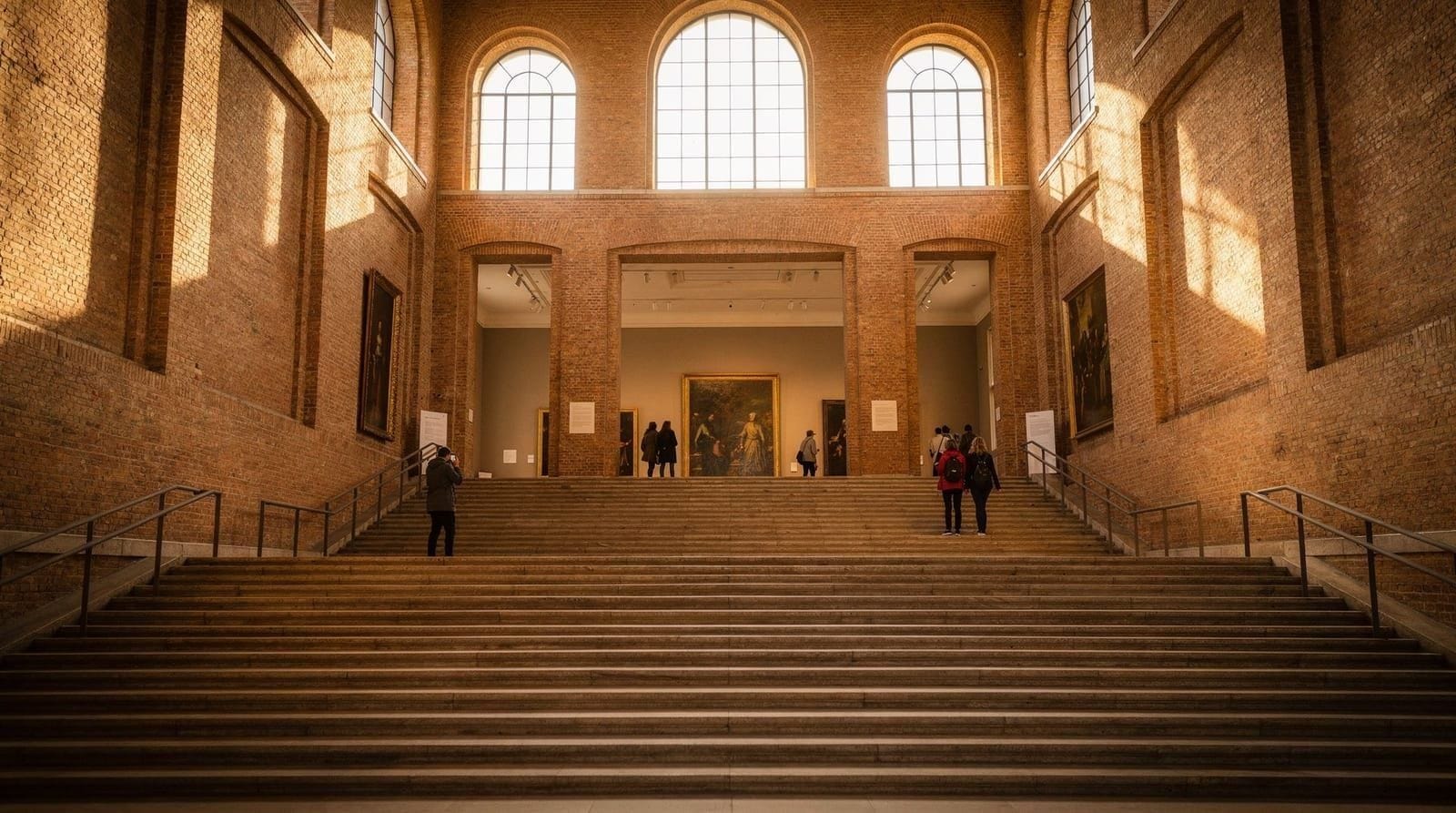
The Alte Pinakothek is Munich’s founding art museum, opened in 1836 in a building designed by Leo von Klenze. The collection was assembled primarily by the Wittelsbach electors and dukes from the 16th century onward and covers European painting from approximately 1300 to 1800.
Opening hours: Tuesday–Sunday, 10am–6pm. Extended to 8pm on Tuesdays. Closed Mondays.
Admission: €8 adults, €1 on Sundays. Under 18 free every day.
The collection’s greatest strengths:
German painting (rooms 1–3): The single strongest section in the museum. Works by Albrecht Dürer include the self-portrait of 1500 — one of the most studied paintings in German art history — and a series of apostle panels. Matthias Grünewald’s Mocking of Christ, Lucas Cranach portraits, Hans Holbein — the concentration of early German painting here is unmatched outside of Berlin.
Flemish and Dutch 17th century (rooms 4–9): The Rubens collection is the most substantial outside Belgium. The Great Last Judgement (1617), a massive altarpiece, and several mythological canvases of enormous scale occupy a dedicated Rubens wing. Van Dyck, Jan Brueghel, Rembrandt and Hals are represented with major works.
Italian (rooms 10–14): Raphael’s Holy Family (La Canigiani), Leonardo da Vinci’s attributed Madonna with Carnation, Botticelli, Titian, Tintoretto and several works attributed to the Raphael school. The Italian collection is uneven but has genuine highlights.
Spanish: Murillo’s self-portrait and works by El Greco. The Spanish holding is smaller than the German or Flemish.
French: Poussin, Claude Lorrain. Good quality but not the primary reason to visit.
Planning a visit to the Alte Pinakothek:
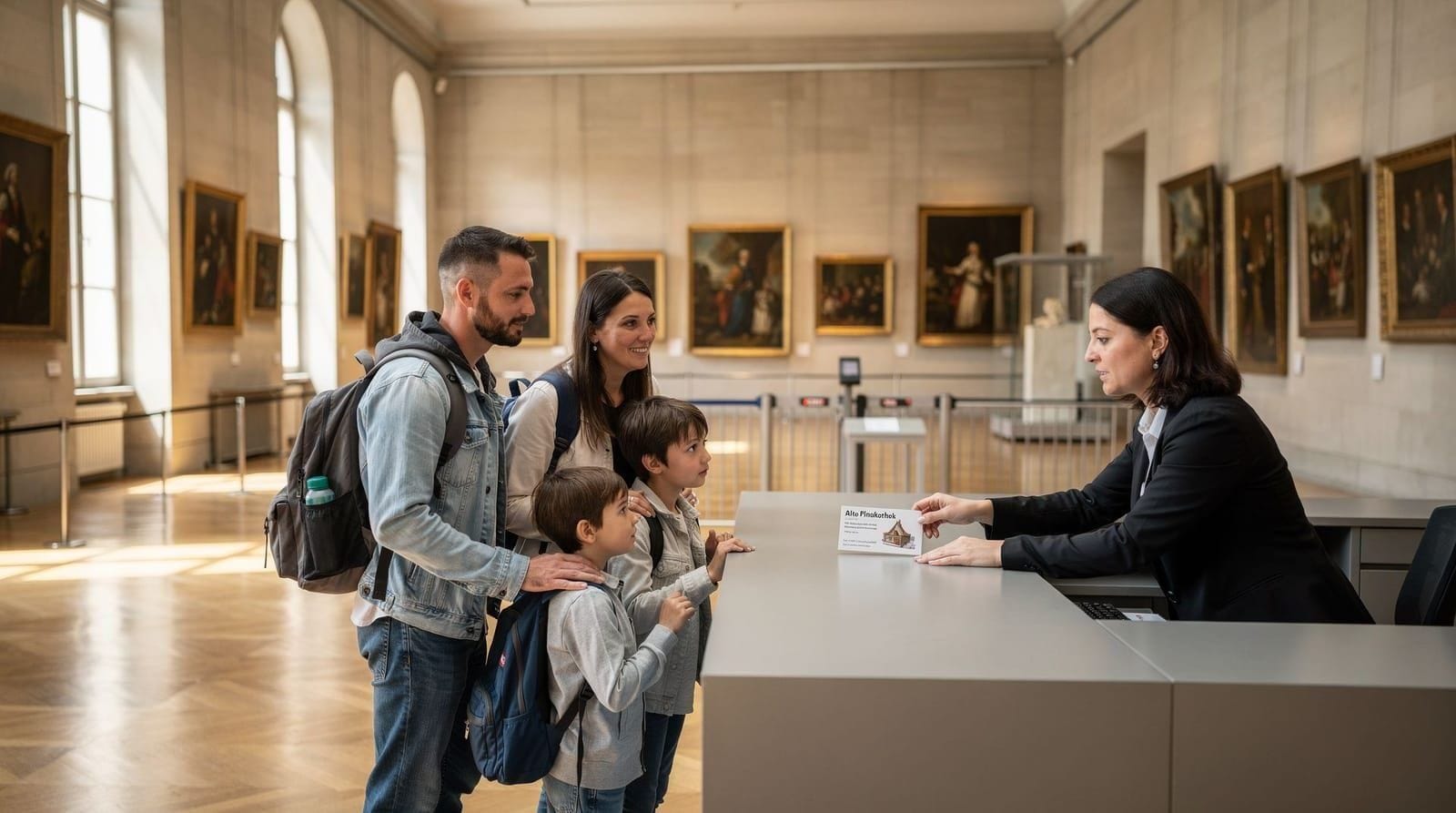
A selective visit (Dürer + Rubens + Raphael) takes about 1.5 hours. A thorough visit takes 3 hours. The museum is not overly crowded outside of Sunday afternoons. The audioguide is available in English and adds useful context for the major works. Skip-the-line guided tour of the Alte Pinakothek
The Sunday €1 admission is the single best value deal in Munich’s museum landscape. On a Sunday morning, arriving at 10am, you can visit the Alte Pinakothek and Pinakothek der Moderne — both €1 each — for a combined cost of €2. The museums are rarely packed on Sunday mornings (the midday rush starts around 12pm).
The Neue Pinakothek: currently closed for renovation
The Neue Pinakothek — which covers 19th-century European painting, from Romanticism to Impressionism and Symbolism — has been closed since 2018 for a major structural renovation. Current estimates suggest a reopening in 2028–2029, though these timelines have been pushed back previously.
What you are missing (and where to find it in 2026):
- Van Gogh’s Sunflowers — displayed at the Alte Pinakothek in a temporary arrangement during renovation
- Cézanne’s Seated Peasant and Still Lifes — check current Alte Pinakothek installation
- Klimt, German Romanticism (Friedrich, Spitzweg), French Impressionism (Monet, Manet, Renoir)
- The Schack Collection (Prinzregentenstrasse 9) partially covers 19th-century German Romantic and late Romantic painting while the Neue Pinakothek remains closed
If 19th-century European art is your priority, Munich is currently less strong than it will be post-renovation. Vienna (Kunsthistorisches Museum, Belvedere) is the regional alternative.
Pinakothek der Moderne: art, design and architecture since 1900
The Pinakothek der Moderne is the newest of the three main buildings, opened in 2002 to designs by Stephan Braunfels. The building itself — a white concrete structure with a large circular skylight over the central staircase — is considered one of Germany’s best contemporary museum buildings.
Opening hours: Tuesday–Sunday, 10am–6pm. Extended to 8pm on Thursdays. Closed Mondays.
Admission: €12 adults, €1 on Sundays. Under 18 free.
The building houses four independent collections:
Staatsgalerie moderner Kunst (Modern Art): 20th and 21st-century fine art. Picasso, Kandinsky (who was a Munich resident and painted much of his pioneering abstract work here), Ernst, Klee, Warhol, Beuys, Richter. The German postwar section — particularly Georg Baselitz, Anselm Kiefer and Sigmar Polke — is exceptional.
Die Neue Sammlung (Design Museum): One of the largest design collections in the world. Housed in the basement and lower floors, it covers applied arts and industrial design from the early 20th century (Bauhaus furniture, Thonet bentwood chairs) to contemporary product design and typography. The collection includes Charles and Ray Eames chairs, Braun/Dieter Rams designs, and extensive graphic design archives. This section is frequently overlooked by visitors who focus on the fine art floors but is genuinely world-class.
Staatliche Graphische Sammlung: Drawings and prints from the Renaissance to the present — one of the largest graphic art collections in Europe, though only a fraction is on display at any time. The emphasis is on works on paper rather than paintings or sculptures.
Architekturmuseum der TU München: Architectural drawings, models and photographs from the 19th century to the present, with particular strength in German modernism and postwar architecture. This collection occupies gallery space within the building and rotates exhibitions. Guided tour of the Alte Pinakothek
For visitors interested specifically in Kandinsky and the Munich abstract painting tradition, the Lenbachhaus is the more important destination. The Lenbachhaus holds the largest collection of Blue Rider (Blaue Reiter) paintings in the world — Kandinsky, Franz Marc, August Macke, Gabriele Münter — assembled in the house where Münter lived. It is 10 minutes’ walk from the Pinakothek cluster.
Museum Brandhorst: the best of postwar contemporary art
Museum Brandhorst, opened in 2009 and designed by Sauerbruch Hutton architects (recognisable by its facade of multi-coloured ceramic rods), sits adjacent to the Pinakothek der Moderne and is worth an hour on any serious art itinerary.
Opening hours: Tuesday–Sunday, 10am–6pm. Extended to 8pm on Thursdays. Closed Mondays.
Admission: €10 adults, €1 on Sundays. Under 18 free.
The collection is private — assembled by Udo and Anette Brandhorst — and focuses on postwar and contemporary art. The Warhol holdings are extensive (over 700 works). The permanent Twombly room, purpose-built for the 12-canvas Lepanto cycle (2001), is one of the best single-room gallery experiences in Germany. Cy Twombly’s late calligraphic style is well represented; this is the right setting for his work. Also: Damien Hirst, Mike Kelley, Joseph Kosuth and a strong photography collection.
The Glyptothek and Antikensammlungen: ancient art on Königsplatz
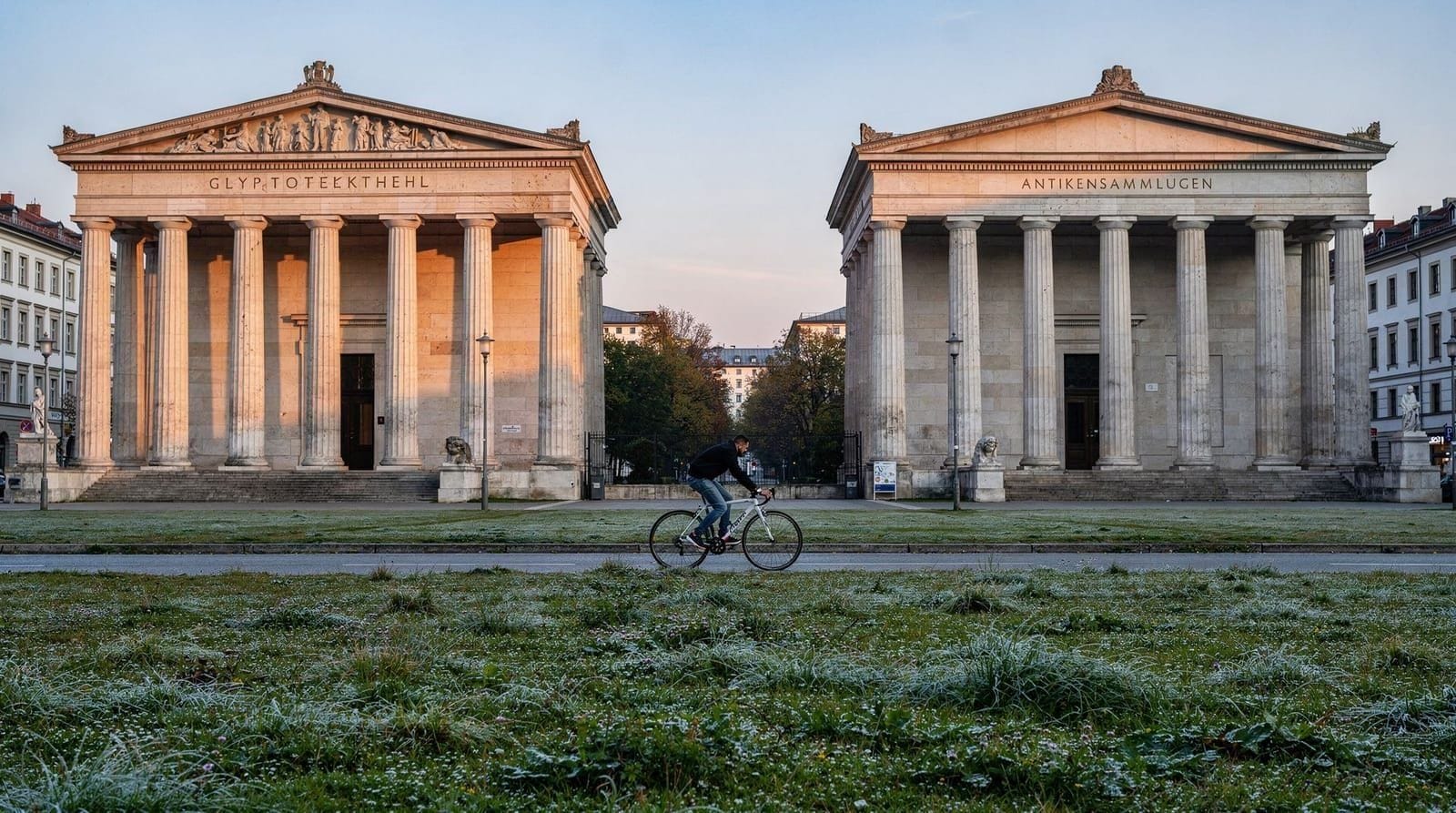
The Glyptothek on Königsplatz (1830, also designed by Leo von Klenze) is the oldest public sculpture museum in Germany. It holds a collection of Greek and Roman sculpture assembled for Ludwig I, including:
- The Aegina marbles: pediment sculptures from the Temple of Aphaea on Aegina, acquired in 1812. Among the best-preserved Greek temple sculptures in existence.
- The Barberini Faun: a 3rd-century BCE Hellenistic marble sculpture of a sleeping, drunken satyr. One of the great pieces of ancient sculpture.
- Roman portrait busts and copies of Greek bronzes
Admission: €6 (€1 on Sundays). Open Tuesday–Sunday, 10am–5pm (to 8pm on Thursdays).
Directly across Königsplatz, the Antikensammlungen (State Collection of Antiquities) displays ceramics, bronzes, jewellery and glass from Greek, Etruscan and Roman cultures. It is more object-scale than the Glyptothek. Admission is also €6 (€1 Sundays).
How to plan a Maxvorstadt museum day
Half day (3–4 hours): Alte Pinakothek in the morning, Pinakothek der Moderne in the afternoon. Skip the design basement of the Moderne unless you have a specific interest. Total cost: €20 regular, €2 on Sundays.
Full day (6–7 hours): Alte Pinakothek (10am–12pm), lunch at the Pinakothek restaurant or a nearby café on Türkenstrasse, Pinakothek der Moderne design collection (1pm–2:30pm), Museum Brandhorst (2:30pm–4pm), Glyptothek or Lenbachhaus (4pm–5pm). This is achievable but demanding.
Sunday strategy: Buy all museum tickets on Sunday at €1 each. Budget roughly €5–€8 for everything including the Glyptothek and Brandhorst. This is one of the genuinely exceptional cultural deals in Europe. Alte Pinakothek and Old Town private walking tour
Where to eat in the Pinakothek district
Pinakothek der Moderne Café: Good quality, reasonable prices by Munich museum standards. The outdoor terrace in summer is pleasant.
Café Jasmin (Steinheilstrasse 20): A reliable neighbourhood café a 5-minute walk from the Alte Pinakothek — simple food, no tourist markup.
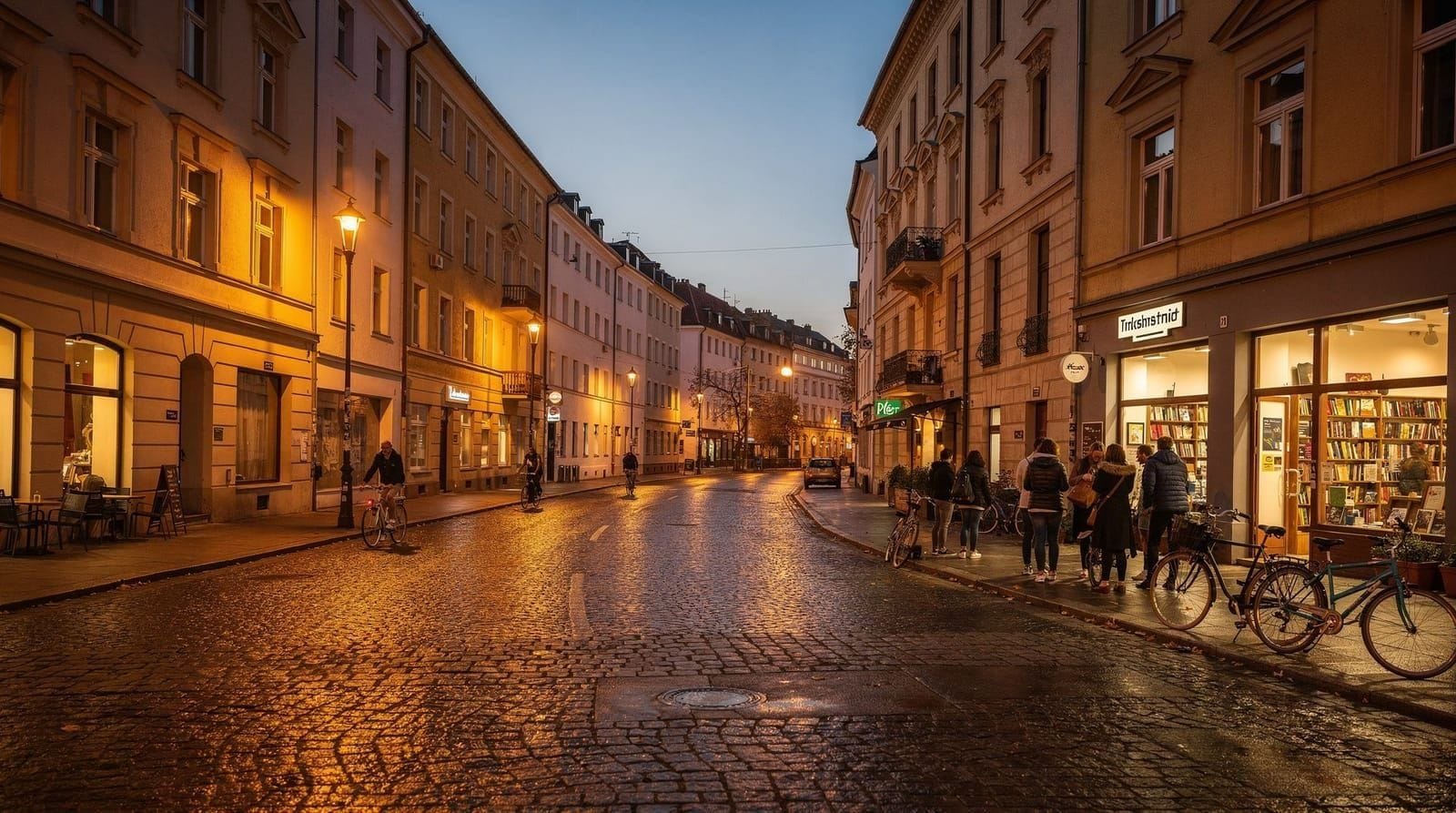
Türkenstrasse and Schellingstrasse: The streets immediately north of the Pinakotheken (in the Schwabing-Maxvorstadt border zone) are full of student-oriented cafés, beer gardens and restaurants at mid-range prices. The neighbourhood functions as the university quarter and has a different feel from the Altstadt tourist economy.
Getting around the Maxvorstadt museum district
All three Pinakothek buildings plus the Brandhorst and Glyptothek are within a 10-minute walk of each other. The walking order that minimises backtracking:
Glyptothek/Antikensammlungen on Königsplatz → Alte Pinakothek (5 minutes east) → Museum Brandhorst (adjacent to Pinakothek der Moderne) → Pinakothek der Moderne → Lenbachhaus (5 minutes back toward Königsplatz)
The Maxvorstadt neighbourhood guide covers the full area including the university buildings, bookshops and bars that make this one of Munich’s most interesting neighbourhoods beyond the museum cluster.
Is the Munich Museums Pass worth it for the Pinakothek cluster?
If you are visiting three or more of the Bavarian State Museums on a non-Sunday, the Munich Museums Pass usually works out cheaper than paying individual admission, and it also removes the need to plan around the €1 Sunday crowds. It is best value for visitors combining the Pinakothek cluster with the Munich Residenz or other state-run sites over several days. If your whole museum visit is confined to a single Sunday, buying individual €1 tickets is cheaper than the pass — do the maths on your specific itinerary before buying.
Best time to visit to avoid crowds
| Day/time | Crowd level | Notes |
|---|---|---|
| Sunday before 11am | Low | €1 admission, best combination of value and quiet |
| Sunday 12pm–4pm | High | The €1 rate draws the biggest crowds of the week |
| Weekday mornings | Low | Regular admission price but consistently quiet |
| Weekday afternoons | Moderate | School groups common in term time |
| Thursday evenings (Moderne, Brandhorst) | Low-moderate | Extended hours to 8pm, good for a quieter late visit |
Accessibility at the Pinakothek museums
All three main buildings — the Alte Pinakothek, Pinakothek der Moderne and Museum Brandhorst — have step-free access and lifts between floors. The Glyptothek’s entrance involves a shallow flight of steps at the main portico, though an accessible side entrance is available on request. Wheelchairs are available to borrow at each museum’s information desk, and accessible toilets are provided throughout. Munich’s architecture guide has more on how the museum buildings themselves were designed, including the Pinakothek der Moderne’s step-free circular atrium.
Frequently asked questions about the Munich Pinakotheken
Is the Munich €1 Sunday museum discount real?
Yes, it is entirely real and applies to all Bavarian State Museums (Bayerische Staatsgemäldesammlungen), including the Alte Pinakothek, Pinakothek der Moderne, Museum Brandhorst, Glyptothek and several others. On Sundays, adult admission to each is €1. Children under 18 are free every day. There are no restrictions on the Sunday discount beyond standard museum rules.
Where is Sunflowers by Van Gogh in Munich?
Van Gogh’s Sunflowers (1888) is normally in the Neue Pinakothek collection but is currently displayed at the Alte Pinakothek while the Neue Pinakothek undergoes renovation. Confirm its current display location before visiting — the Bayerische Staatsgemäldesammlungen website lists current locations of major works.
What is the Lenbachhaus and is it part of the Pinakothek complex?
The Städtische Galerie im Lenbachhaus is a separate municipal museum (not part of the Bayerische Staatsgemäldesammlungen, which runs the Pinakotheken). It is about 10 minutes’ walk west from the Alte Pinakothek and holds the world’s largest Blue Rider (Blaue Reiter) collection — Kandinsky, Franz Marc, Münter, Macke. Admission is €15 (no Sunday discount applies, as it is a city museum rather than state museum). See the Lenbachhaus guide for details.
How long is the Alte Pinakothek visit?
A focused visit covering the Dürer and Rubens highlights takes about 1.5 hours. A thorough visit of the full collection is 2.5–3 hours. The museum is large but manageable in a half-day for most visitors.
What is the Pinakothek der Moderne best known for?
Its dual strengths are the 20th-century fine art collection (particularly the German Expressionist and postwar sections) and the Neue Sammlung design collection in the basement — one of the largest applied arts and industrial design collections in the world. The Kandinsky and Klee holdings are good but are surpassed by the Lenbachhaus collection for the Blue Rider specifically.
Are there lockers at the Pinakothek museums?
Yes. All three buildings have coin-operated lockers for bags and coats. Large bags and backpacks are generally not permitted in the gallery spaces.
Can I take photographs inside the Alte Pinakothek?
Photography for personal use is permitted without flash in most areas. Special exhibitions may have additional restrictions. Video tripods and professional equipment require written permission in advance.
How does the Pinakothek district fit into a broader Munich museum trip?
The Pinakothek cluster pairs naturally with the Munich Residenz and the Altstadt museums for a two- or three-day museum-focused visit, or with the Munich architecture guide if your interest is the buildings as much as the collections. For general trip pacing, the Munich trip planning guide and the best time to visit Munich guide help decide how many museum days to budget against everything else the city offers. The Munich museum quarter history covers how Maxvorstadt became a purpose-built museum district in the first place.
Top experiences
Bookable activities with verified prices and instant confirmation on GetYourGuide.