Lenbachhaus guide: Kandinsky, Blue Rider and the villa museum
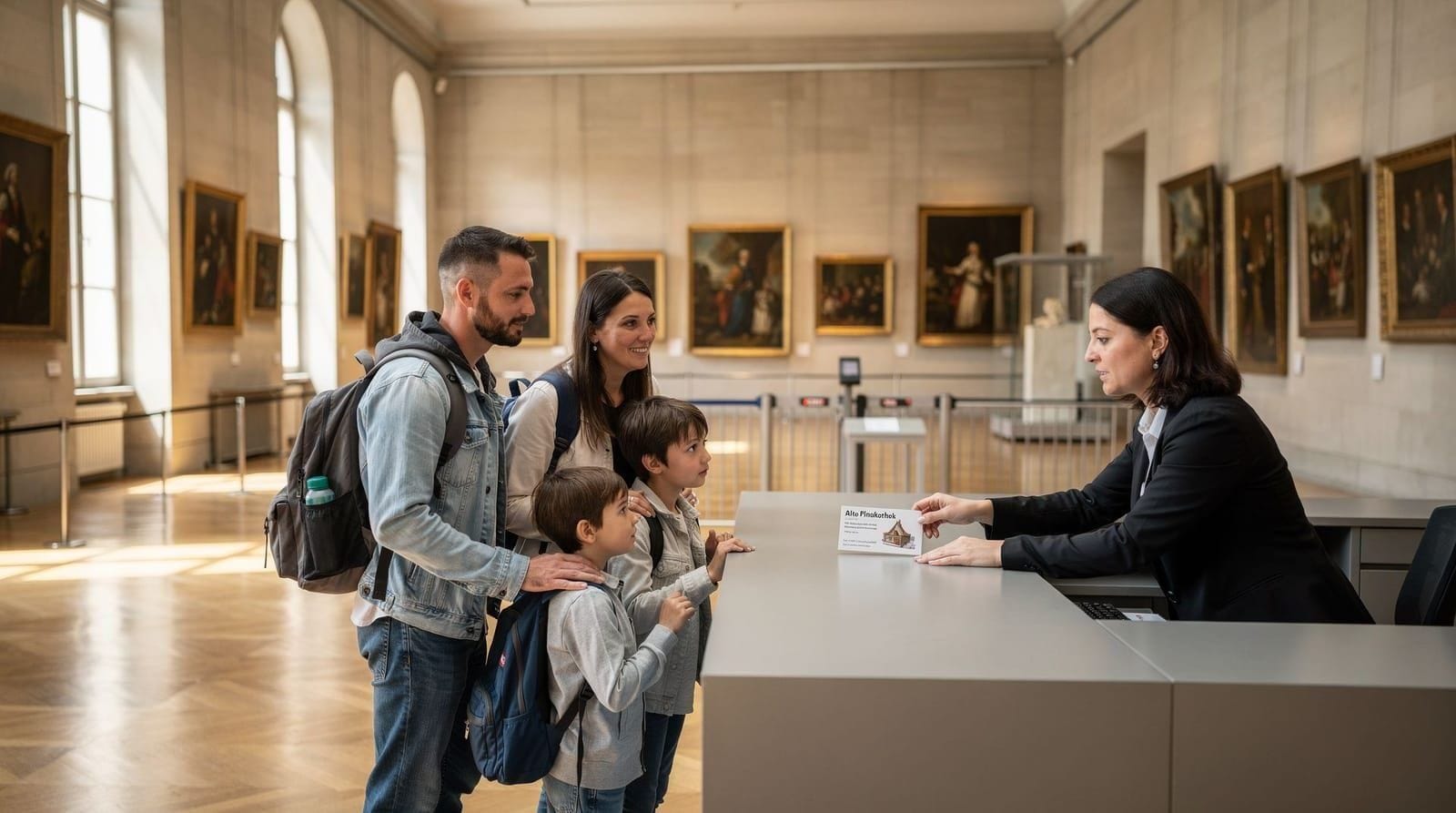
Munich: guided tour of the Alte Pinakothek
Is the Lenbachhaus worth visiting in Munich?
Yes, especially for anyone interested in early 20th-century art. The Lenbachhaus holds the world's largest collection of Wassily Kandinsky's work and is the definitive home of the Blauer Reiter (Blue Rider) movement. At €15 for adults, it is less crowded than the Pinakotheken and offers a genuinely different kind of museum experience inside a 19th-century painter's villa extended by a striking Foster + Partners wing. Allow 2–3 hours.
The world’s largest Kandinsky collection, inside a painter’s villa
Most visitors to Munich’s museum quarter walk straight to the Pinakotheken. The Lenbachhaus, a few minutes further along Luisenstrasse, tends to get bypassed — which is genuinely puzzling once you understand what is inside. The Städtische Galerie im Lenbachhaus holds the world’s largest collection of Wassily Kandinsky’s paintings, plus a comprehensive archive of Blauer Reiter art that has no equivalent anywhere else. If early 20th-century abstraction, Expressionism and the history of the avant-garde interest you at all, this museum is not optional.
| Where | Luisenstrasse 33, Maxvorstadt, near Königsplatz (U2) |
| Cost | around €15 adult, €7.50 student, €1 on Sundays |
| Time needed | 2 hours for the permanent collection, up to 3 with the Kunstbau |
| Getting there | Tram 27 to Karolinenplatz, or U2 to Königsplatz |
| Best time | Sunday morning at opening for the €1 admission with fewer crowds |
The building itself is worth a word before you step inside. Franz von Lenbach — the most celebrated portrait painter in 19th-century Germany — built his villa here in 1887, modelling it on a Florentine Renaissance country house. He wanted it to function simultaneously as a grand private home, an artist’s studio and a showplace for entertaining the Bavarian elite. The result is a three-winged complex around a garden courtyard, with a loggia, a Pompeiian hall and elaborately frescoed rooms that now display Lenbach’s own work alongside Biedermeier painting and Munich Secession canvases.
Then there is the golden wing. In 2013, after years of renovation, Foster + Partners added a cubic extension clad in perforated brass-coloured metal that wraps the historic villa on three sides. The two structures are connected internally but have entirely different spatial characters: the villa is intimate and decorative; the modern wing is open, day-lit and architecturally austere. Whether you find this combination harmonious or jarring is a matter of taste, but it is never boring.
The Blauer Reiter: how the collection came together
The story of the Lenbachhaus’s defining collection begins not with a museum director or a government purchase, but with a private act of generosity. Gabriele Münter — painter, photographer and Wassily Kandinsky’s companion for many years — kept a large cache of their shared work safe in her house in Murnau throughout World War II. In 1957, on the occasion of her 80th birthday, she donated roughly 90 Kandinsky canvases, hundreds of drawings and watercolours, and a significant body of her own work and that of other Blauer Reiter members to the City of Munich. That single gift transformed the Lenbachhaus from a regional painting gallery into a museum of international importance.
The Blauer Reiter almanac was published in 1912; the group held two exhibitions in Munich in 1911–12. Its core members — Kandinsky, Franz Marc, August Macke, Münter, Paul Klee, Alexej von Jawlensky and Heinrich Campendonk — were united less by a single style than by a shared conviction that art could express spiritual truths that realist or Impressionist painting could not. Kandinsky was already moving toward pure abstraction. Marc was painting animals in saturated primary colours as symbols of innocence and energy. Klee was developing the private graphic language he would refine for the rest of his career.
The movement was cut short by the First World War. Franz Marc and August Macke were both killed in 1916. Kandinsky, as a Russian national, had to leave Germany at the outbreak of war and did not return permanently. The Lenbachhaus collection therefore captures a specific and unrepeatable moment — the months between 1908 and 1914 when these artists were in Munich together and when the ideas that would shape the whole of 20th-century abstract art were being worked out on canvas, in letters and in the almanac’s essays.
Navigating the permanent collection
The permanent galleries are spread across both the historic villa and the modern wing. The visit divides roughly into four sections, though the museum’s floor plan allows you to move between them freely.
Lenbach and 19th-century Munich painting. The ground floor of the villa covers Franz von Lenbach’s own portraits — his monumental images of Bismarck, Kaiser Wilhelm I and Bavarian aristocrats demonstrate the social function portraiture served in this period. Alongside them are Biedermeier genre paintings and works from the Munich Secession, the reform movement that challenged the conservative Academy in the 1890s. This section is quieter and less visited than the Blauer Reiter galleries, which means you can spend time with the Biedermeier material — intimate domestic scenes, botanical studies, landscapes — without competition.
The Blauer Reiter galleries. The heart of the museum occupies the upper floors and the modern wing. The Kandinsky works range from the early figurative paintings he made when he arrived in Munich in 1896, through the loosening of form in works like “Improvisation 28” (1912), to the full abstractions of the Bauhaus years. The progression is legible and instructive in a way that a single-painting encounter in a mixed collection cannot be.
Franz Marc’s animal paintings are here in force — horses, deer and foxes in fields of cobalt and vermilion that feel simultaneously decorative and urgent. Münter’s self-portraits and portraits of Kandinsky show a painter with a distinct visual intelligence that has often been overshadowed by the fame of her male colleagues. August Macke’s work, present in smaller quantity but significant quality, shows what a loss his early death was to European painting.
Paul Klee is represented across several periods, from early graphic work through the Bauhaus years and into the late symbolic paintings made after his diagnosis with scleroderma. The museum holds enough Klee to trace a career, which is unusual outside Bern.
Joseph Beuys installations. The Lenbachhaus holds several works by Beuys, including elements related to his famous dictum “Jeder Mensch ist ein Künstler” (“Every person is an artist”). Beuys’s felt-and-fat installations occupy a specific section of the modern wing and require a different kind of attention than the paintings: slower, more conceptual, less immediately legible. If you are coming primarily for the Blauer Reiter, it is reasonable to give these works 20–30 minutes rather than more.
Contemporary collection. The museum actively collects contemporary art, and the modern wing includes rotating displays of work acquired in recent decades. The quality is uneven — as it is in any active collection — but this section ensures that the Lenbachhaus does not function purely as a historical document. Guided tour of the Alte Pinakothek — combine with a Lenbachhaus visit on the same day
The Kunstbau: the underground gallery at Königsplatz
Your Lenbachhaus ticket also covers the Kunstbau, a 120-metre-long exhibition hall built into the mezzanine level of Königsplatz U-Bahn station. The entrance is on the street-level plaza between the two U-Bahn exits. The space was originally a wartime air-raid tunnel and was converted into a gallery in 1994.
The Kunstbau is used exclusively for temporary exhibitions, typically monographic shows or thematic surveys that would not fit in the villa’s rooms. Shows in recent years have covered Daniel Richter, Tomma Abts and the social history of colour in modern painting. The programme changes roughly every four months — check the Lenbachhaus website before your visit to see what is showing.
The physical experience of the Kunstbau is unusual: a long, narrow, naturally cave-like space with art displayed along its sides and a ceiling that follows the curve of the U-Bahn tunnel above. Some visitors find it atmospheric; others find it slightly claustrophobic. Either way it is free with your ticket and takes about 45 minutes depending on the exhibition.
Practical planning: what to know before you go
Admission. €15 for adults; €7.50 for students; free under 18. Sunday admission is €1 for all — the same policy as the Alte Pinakothek and Pinakothek der Moderne, making Sunday the obvious day for a Maxvorstadt museum sprint on a tight budget. See the Munich museums pass guide for a full comparison of pass and single-ticket options.
Hours. Tuesday 10:00–20:00; Wednesday–Sunday 10:00–18:00; closed Monday. The Tuesday late opening is useful if you are filling an evening after an afternoon elsewhere in Maxvorstadt.
Photography. Permitted without flash throughout the permanent collection. Selfie sticks are not allowed. Some temporary exhibitions prohibit photography — check signage at the gallery entrance.
Café. The museum café on the ground floor serves coffee, cakes and light lunches at reasonable prices. It is a pleasant place for a break between the villa and the modern wing.
Time needed. Two hours covers the permanent collection comfortably if you move at a moderate pace. Add 45 minutes for the Kunstbau if there is an active exhibition. Art enthusiasts who want to spend time with individual Kandinsky works or read the detailed wall texts should allow 3 hours.
Crowds. The Lenbachhaus is significantly less crowded than the Deutsches Museum or the Residenz. Even in July and August, the Blauer Reiter galleries are rarely full. This is part of what makes it such a good museum to visit during peak season.
Getting there from the museum quarter
The Lenbachhaus is at Luisenstrasse 33, at the corner of Katharina-von-Bora-Strasse. From the Pinakothek museums on Barer Strasse, it is a 5–8 minute walk west and slightly south. From Königsplatz U-Bahn (U2), the walk is about 8 minutes northeast along Luisenstrasse.
Tram 27 is the most direct option from the city centre: alight at Karolinenplatz, then walk 5 minutes along Brienner Strasse to Luisenstrasse. From Hauptbahnhof, the same tram runs regularly and takes about 8 minutes.
There is no parking directly outside the museum. The nearest public car park is at Königsplatz, but public transport is significantly more practical for this area.
Combining with nearby museums
The Lenbachhaus sits in one of the highest concentrations of museums in Europe. Within 15 minutes’ walk you can reach:
- Alte Pinakothek — Old Masters from van Eyck to Rubens (7 min walk)
- Pinakothek der Moderne — design, architecture, drawing and modern art (8 min walk)
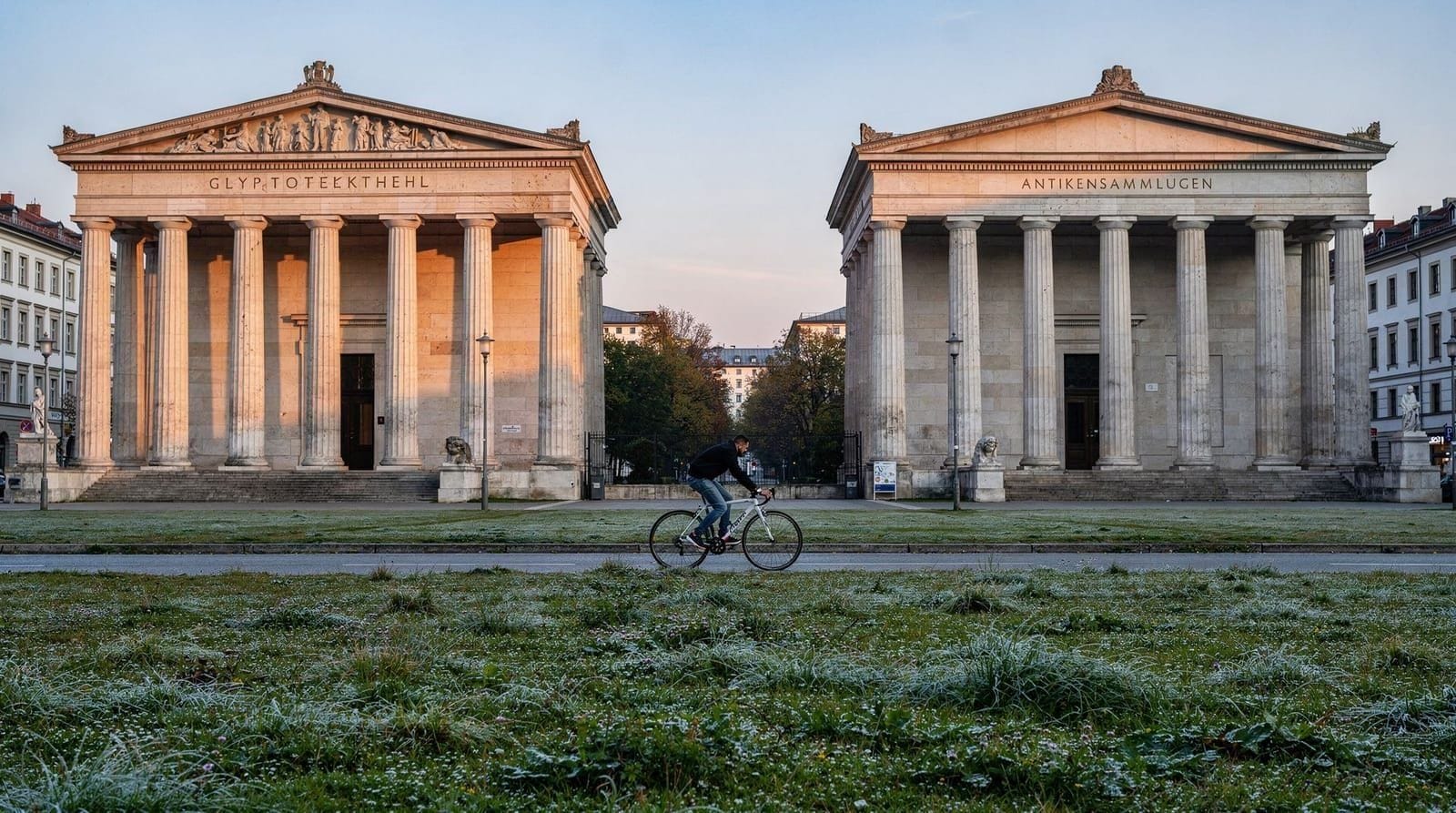
- Glyptothek and Antikensammlungen — Greek and Roman sculpture on Königsplatz (5 min walk)
If you are planning a full museum quarter day, the Lenbachhaus works well as either an opening visit (the pace is gentler than the Alte Pinakothek’s encyclopaedic scope) or an afternoon follow-up after a morning with Old Masters. Guided tour of Munich’s museum quarter including the Jewish Museum
How the Lenbachhaus fits into Munich’s art history
Munich was one of Europe’s most important art cities in the 19th century — larger than Berlin as an art centre for much of that period, and a magnet for painters from across Europe and America. The Maxvorstadt neighbourhood grew up partly to house the collections and academies that served this community.
The Blauer Reiter was both a product of this culture and a rebellion against it. Kandinsky and his circle rejected the academicism of the Munich Kunstakademie and looked instead to Bavarian folk art, Russian Orthodox icons and French Post-Impressionism for their visual language. The Lenbachhaus collection makes this synthesis visible: the folk-art quality of Münter’s Murnau landscapes, the icon-like flatness of early Kandinsky, the Expressionist intensity of Marc’s animals.
Understanding this context makes the collection more interesting rather than less. The Blauer Reiter artists were not working in isolation from Munich’s cultural life — they were in constant dialogue with it, whether in opposition or in conversation. The city they lived in, the cafés they worked in near Schwabing, the landscapes of the Alpine foothills they visited in summer: all of this is present in the paintings even when the images themselves have become purely abstract.
Honest assessment
The Lenbachhaus charges €15 — more than the Alte Pinakothek’s standard weekday price of €7, less than the Deutsches Museum. For that price you get access to a world-class collection of a specific and coherent kind that has no equivalent in Germany. The building is pleasant to be in, the crowds are manageable, and the Sunday €1 deal makes it one of the best-value museum experiences in Europe on the right day.
The museum is not for everyone. If modern and abstract art leave you cold, the Blauer Reiter collection will not convert you, and the 19th-century painting sections — though historically interesting — are not strong enough to carry a visit on their own. But if you have any interest in how abstract art came into being, or in the specific intellectual and social world of pre-war Munich, the Lenbachhaus is a genuinely important stop.
It is also, in a practical sense, easy to fit into a museum quarter itinerary without overextending your day. Two hours here plus two hours at the Alte Pinakothek makes a full but not exhausting afternoon. See the Munich trip planning guide for how to structure a multi-day itinerary that includes the museum quarter properly. Munich City Pass — covers the Deutsches Museum, Nymphenburg and other major attractions
What the Lenbachhaus does not have
Two things worth noting before your visit. First, the Neue Pinakothek — which held Munich’s 19th-century collection including important Lenbach contemporaries — has been under renovation and the new building has faced delays. Check its status before planning a combined visit. Second, the Lenbachhaus’s contemporary collection, while active, is uneven in quality and not a primary reason to visit; if contemporary art is your main interest, the Pinakothek der Moderne offers a stronger and more international programme.
Neither of these is a reason to skip the Lenbachhaus. They are simply honest qualifications to help you plan the visit that is right for you. For anyone serious about modern art in Munich, the Lenbachhaus is not a footnote — it is essential.
Frequently asked questions about the Lenbachhaus
Is the Sunday €1 admission really just €1 for everything?
Yes. On Sundays the Lenbachhaus charges €1 for all visitors, including adults, and this covers the full permanent collection plus the Kunstbau. It does not cover special ticketed events. The same policy applies at the Alte Pinakothek, Pinakothek der Moderne and several other state and city museums. Sunday mornings (opening at 10:00) are the quietest window; late Sunday afternoon can be busier as day-trippers arrive.
Can I visit the Lenbachhaus with children?
The museum is free for under-18s. The Blauer Reiter collection, with its bright colours and animal paintings, tends to engage children more than Renaissance or Baroque galleries. Franz Marc’s blue horses and red deer are particularly good with younger visitors. The museum does not have a dedicated children’s programme, but the colourful, visually direct nature of much of the collection makes it more accessible than the Residenz or Deutsches Museum for shorter attention spans.
Is the Lenbachhaus better than the Pinakotheken?
They are not directly comparable — they cover entirely different art history. The Alte Pinakothek covers Old Masters from the 14th to 18th centuries; the Lenbachhaus covers 19th-century Munich painting and early 20th-century avant-garde art. If you have time for only one museum, the Alte Pinakothek has a broader scope and a stronger international reputation. If you have time for both and any interest in modern art, visit the Lenbachhaus — you will have it significantly to yourself by comparison.
What temporary exhibitions does the Lenbachhaus typically host?
The Lenbachhaus runs three to four major temporary exhibitions per year, typically focusing on artists connected to the Blauer Reiter tradition or to broader strands of German and European modernism. Recent shows have covered artists such as Vija Celmins, Maria Lassnig and retrospectives of Gabriele Münter’s photography. The Kunstbau hosts separate, often larger-scale shows. Check the official programme at lenbachhaus.de before your visit — a major temporary show can add significant value to the €15 ticket.
Is the Lenbachhaus accessible?
Yes. The modern Foster + Partners wing is fully wheelchair accessible with lifts between all floors. The historic villa has some narrow corridors and threshold steps, but the main galleries are accessible. The museum provides wheelchairs on request at the reception desk. The Kunstbau at Königsplatz station is accessible via the station lift.
How does the Lenbachhaus compare in terms of crowds to other Munich museums?
It is consistently among the least crowded of Munich’s major museums. Even in peak summer, the Blauer Reiter galleries rarely feel congested. This is in contrast to the Residenz (which can be very busy in summer), the Deutsches Museum (extremely popular with families) and Neuschwanstein (notoriously crowded year-round). The Lenbachhaus’s relative obscurity among general tourists is, from a visitor’s perspective, an advantage.
Should I book tickets in advance?
Walk-in admission is nearly always possible. The only times advance booking is worth considering are during major temporary exhibitions that have attracted significant publicity, or during public holidays when some Munich attractions get unusually busy. For a standard weekday or weekend visit, arriving at the box office is fine.
How much time should I budget if I’m combining the Lenbachhaus with the Pinakotheken?
Allow a full day if you want to do the Lenbachhaus justice alongside the Alte Pinakothek — roughly 2 hours at each, plus walking time and a lunch break, comes to 5–6 hours total. If you only have half a day in Maxvorstadt, prioritize one museum properly rather than rushing both; the Pinakothek museums guide covers how to choose.
Is the Lenbachhaus worth visiting if I only have one day in Munich’s museum quarter?
If modern art or the Blauer Reiter specifically interests you, yes — pair a focused 2-hour Lenbachhaus visit with a shorter Alte Pinakothek highlights visit rather than trying to see everything in depth. For a single-day museum-quarter itinerary, see the Munich trip planning guide for realistic pacing.
Top experiences
Bookable activities with verified prices and instant confirmation on GetYourGuide.