Munich with kids — the complete family travel guide
Munich: self-guided sightseeing scavenger hunt for families
Is Munich a good destination for families with children?
Yes — Munich offers a strong mix of interactive museums, parks, a world-class zoo, and easy public transport. The Deutsches Museum alone could occupy curious kids for an entire day. Bayern Tickets and KinderTickets keep travel costs reasonable, and most major attractions offer family ticket discounts.
Why Munich works so well for families
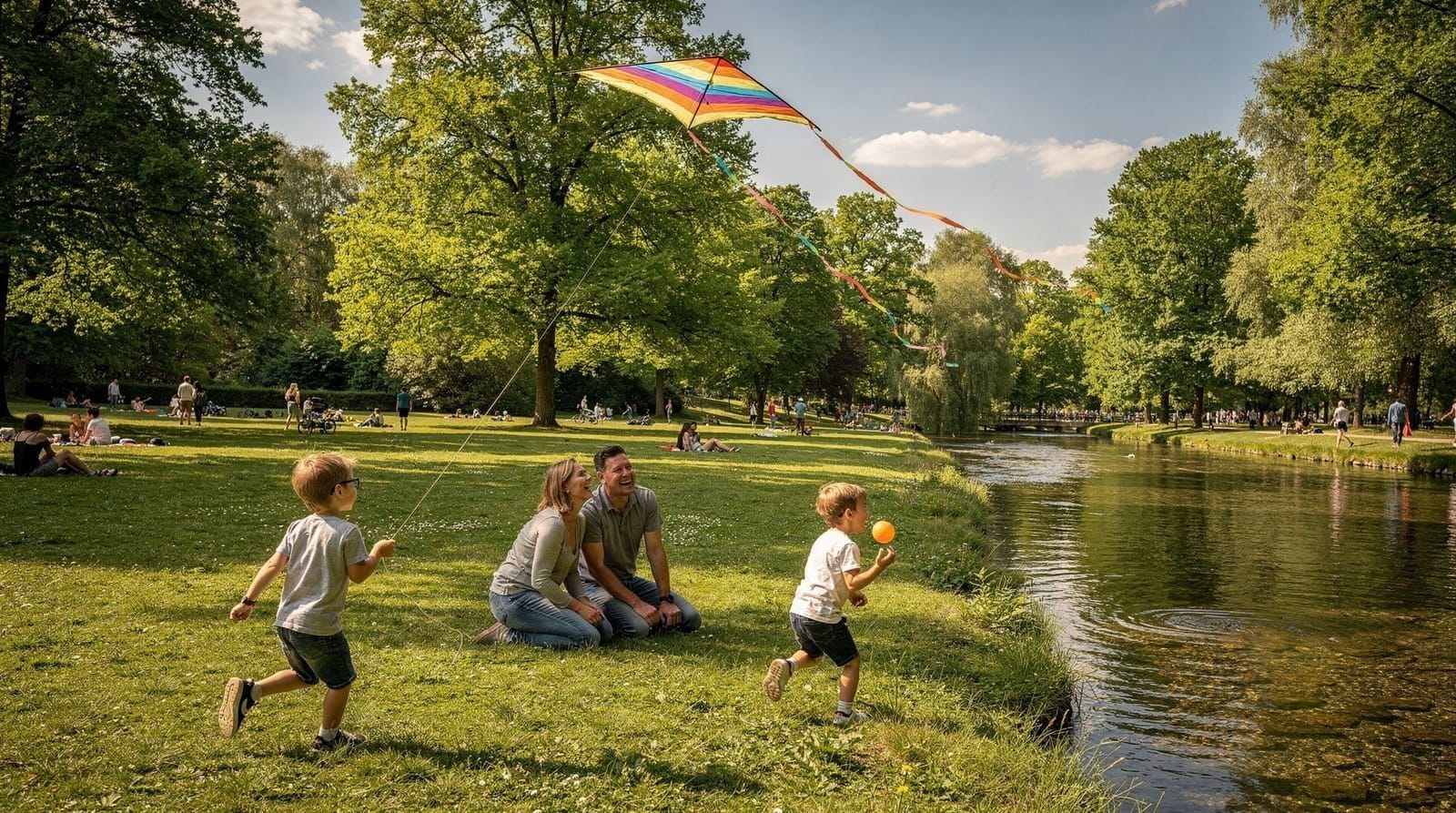
Munich has a reputation as a beer-and-Oktoberfest city, but beneath that surface it is one of the most genuinely family-oriented destinations in Central Europe. The public transport network is clean, punctual, and easy to navigate even with small children and luggage. Most major museums offer substantial discounts or dedicated family tickets. The English Garden — larger than New York’s Central Park — provides enormous green space within the city limits. And the range of indoor options means a rainy afternoon does not derail your plans.
What makes Munich particularly practical is the compact geography. Hellabrunn Zoo, the Deutsches Museum, the English Garden, and Marienplatz are all reachable from most central hotels within 20-30 minutes by tram or U-Bahn. You do not need to spend half the day in transit.
This guide covers the main family attractions in detail, transport options and passes that save money, suggested day-by-day itineraries, and some honest notes on what is overrated or genuinely worth the price.
| Best for ages | 4–12 for the widest attraction range; teens do fine too |
| Top indoor pick | Deutsches Museum — allow 4–6 hours |
| Top outdoor pick | English Garden — free, all ages |
| Family transport | KinderTicket (6–14) EUR 3/day; Bayern Ticket for day trips |
| Booking ahead | Hellabrunn, Sea Life, Deutsches Museum in July–August |
The Deutsches Museum — Munich’s top indoor family attraction
The Deutsches Museum (Museum Island, Museumsinsel 1) is the world’s largest science and technology museum and one of the best things Munich offers families with school-age children. The collection spans aviation, marine engineering, electricity, chemistry, mining, musical instruments, and astronomy across multiple floors.
For children aged 7 and older, the highlights are the original Junkers Ju 52 aircraft in the aviation hall, the walk-through German submarine (U1), and the electricity demonstrations with a high-voltage Tesla-style generator — held several times a day and reliably popular. The dedicated Kinderreich section on the ground floor is aimed at children aged 3-8 and offers hands-on activities including a giant wooden ship they can board, water-table experiments, and simple construction challenges.
Entry in 2026: adults EUR 15, children under 6 free, children 6-17 EUR 3.50, family ticket (2 adults + children) EUR 29. Plan at least four hours; six is not excessive for interested families.
The museum is a 10-minute walk from Isartor S-Bahn station or reachable directly by tram 16 from the city centre. See the Deutsches Museum guide for timed entry tips and which sections to prioritise.
Hellabrunn Zoo — one of Europe’s finest geo-zoos
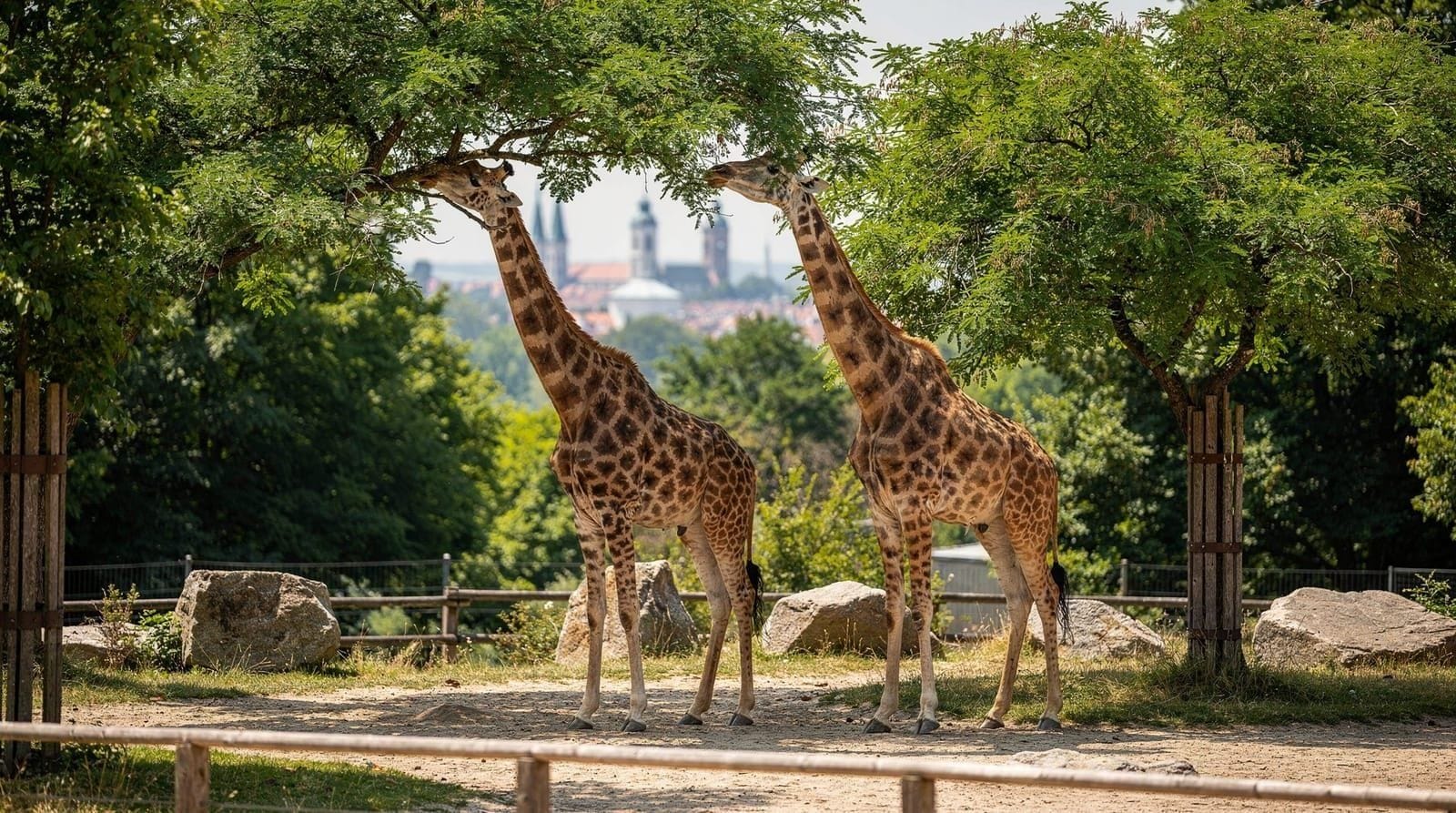
Hellabrunn (Tierparkstraße 30, 81543 Munich) is a large zoo organised by geographic region rather than species type — the Geo-Zoo concept means animals are grouped by continent and ecosystem rather than by taxonomy. For children, the immediate effect is that the zoo tells a story: you move through African savannah, Asian jungle, polar tundra, and so on, which provides genuine educational structure.
The zoo covers 40 hectares and houses over 750 species. In 2026, family ticket prices (2 adults + up to 4 children) are EUR 47.50. Individual adult entry is EUR 22, children 4-14 EUR 9, children under 4 free.
Highlights for families: the polar world exhibit with polar bears, the new elephant savannah with direct viewing platforms, and the Kinderdorf, a petting farm section near the entrance where younger children can interact with goats, sheep, and rabbits. The playground area near the Kinderdorf has climbing structures and sandpits suitable for ages 2-10.
Reach Hellabrunn by tram 17 from Sendlinger Tor (direction Thalkirchen), which takes around 20 minutes. The full guide at Hellabrunn Zoo guide covers the best walking route around the zoo and which sections tend to be crowded at peak times.
Sea Life Munich — aquarium near Olympiapark
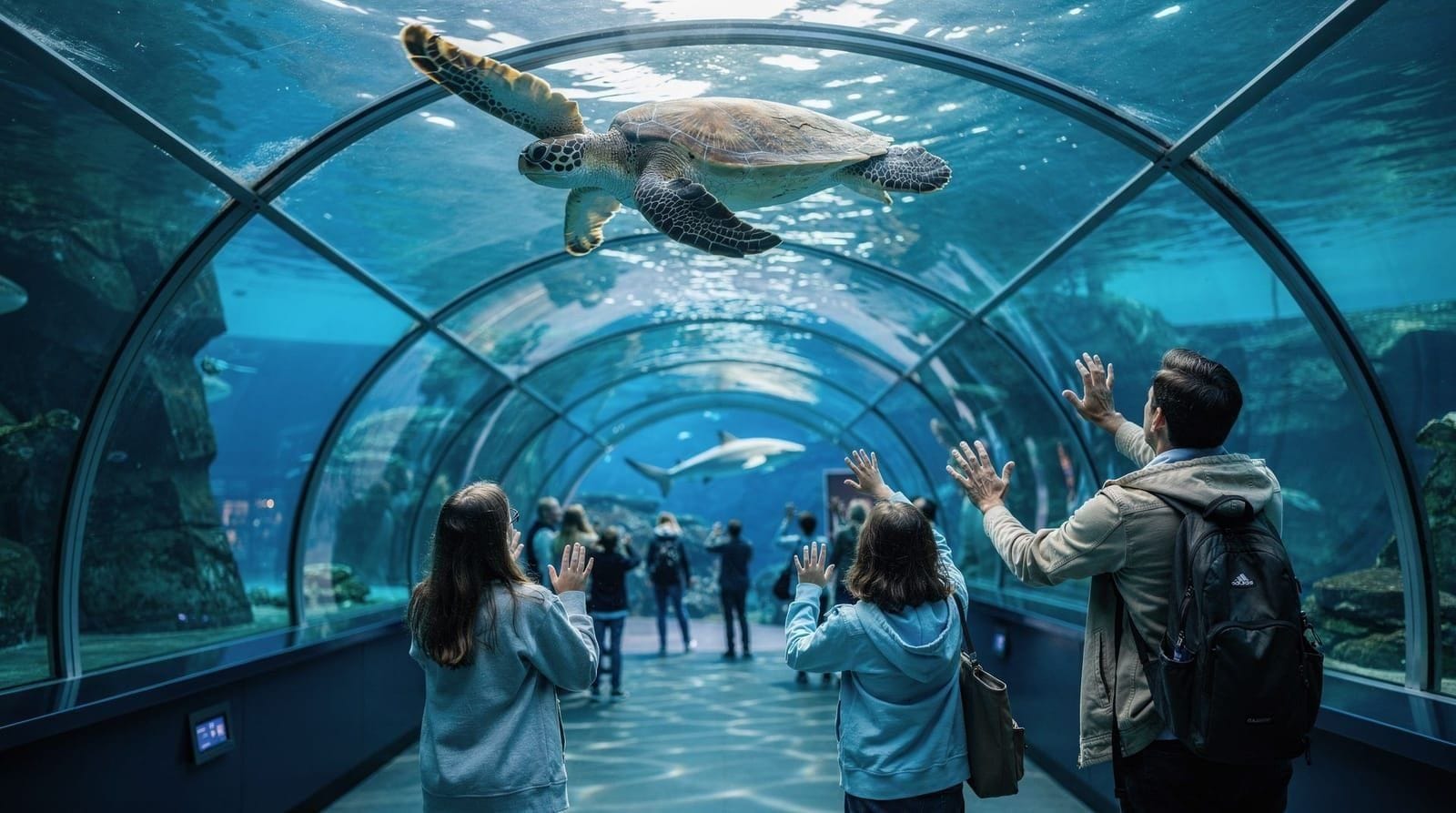
Sea Life Munich (Willi-Daume-Platz 1, near Olympiapark) is a walkthrough aquarium with a 360-degree underwater tunnel, touch tanks, and themed zones covering freshwater, tropical coral reef, and North Sea environments. It is fully indoor, climate-controlled, and takes roughly 90 minutes to move through at a pace that suits children.
The highlight for most families is the ocean tunnel, where sharks, rays, and large grouper swim overhead. Touch pools near the entrance allow children to handle starfish and sea cucumbers under supervision. Feeding presentations (for the sharks and tropical fish) happen twice daily at set times posted at the entrance.
Tickets in 2026: adults EUR 22.50, children 3-15 EUR 16.50. Booking in advance online saves approximately EUR 3-4 per ticket and lets you skip the queuing. The detailed Sea Life Munich guide covers combined tickets with Olympiapark. Book Sea Life Munich skip-the-line tickets
English Garden — Munich’s great outdoor family space
The Englischer Garten (English Garden) runs for 3.7 km north of the city centre and is one of the few urban parks in Europe that still feels genuinely wild in sections. For families, the key areas are:
Eisbach wave (at the southern entrance near Prinzregentenstraße): a standing wave created by a fast-flowing channel where surfers ride year-round. Children and adults alike can watch for free from the low bridge, and on warm days dozens of surfers queue for a ride. This requires no ticket and is reliably entertaining for 20-30 minutes.
Chinesischer Turm beer garden: the largest beer garden in Munich seats 7,000. Children are welcome and there is a small fairground carousel nearby that operates spring through autumn. Parents can drink Augustiner Helles at EUR 10-11 per litre Masskrug while children use the adjacent playground. The beer garden serves hot food including Steckerlfisch (grilled fish on a stick), Brathendl (roast chicken), and Obatzda.
Kleinhesseloher See: a small lake near the northern section of the garden with rowing boats available to hire from April to October — roughly EUR 8-12 per boat per hour. The surrounding meadows are good for picnics.
The garden is fully accessible by U-Bahn (U3/U6 to Universität or U4/U5 to Lehel). See the English Garden guide for a recommended walking route through the park.
Olympiapark — history, heights, and outdoor fun
Olympiapark (Spiridon-Louis-Ring 21) was built for the 1972 Summer Olympics and is now one of Munich’s most versatile family spaces. The grounds themselves are free to enter, covering a large lake, rolling hill (Olympiaberg), and open meadows used for concerts and events throughout summer.
Within the park, the Olympic Tower (Olympiaturm) offers the best panoramic view in Munich at 291 metres. A fast lift reaches the observation deck in under a minute. Entry in 2026: adults EUR 11, children 6-18 EUR 5.50, under 6 free. The revolving restaurant above the observation deck is a reasonable place for a family lunch if you book a table — prices are mid-range rather than exorbitant.
The Munich Olympic History experience on the lower level tells the story of the 1972 Games including the tragic events of September 5, handled carefully and appropriate for children over about 12. The Olympiapark guide has full ticketing details including combined passes.
Nymphenburg Palace — baroque gardens and a child-friendly layout
Nymphenburg Palace (Schloß Nymphenburg 1) is 6 km west of the city centre and reachable by tram 17. The palace complex includes the main baroque building, four pavilions scattered through the extensive grounds, the Marstallmuseum (royal carriages), and the Porcelain Museum. For families, the grounds are the main draw — children can run freely across the formal French gardens, explore the wooded section at the back, and discover the pavilions (Amalienburg, Badenburg, Pagodenburg, Magdalenenklause) hidden in the landscape.
Entry to grounds only: free. Combination ticket for main palace + pavilions: adults EUR 15, children 6-18 EUR 6. Spring and early summer are the best times — the fountains run on specific days and the chestnut trees are in full bloom. See Nymphenburg Palace guide for the full pavilion schedule.
Munich’s best playgrounds and parks for young children
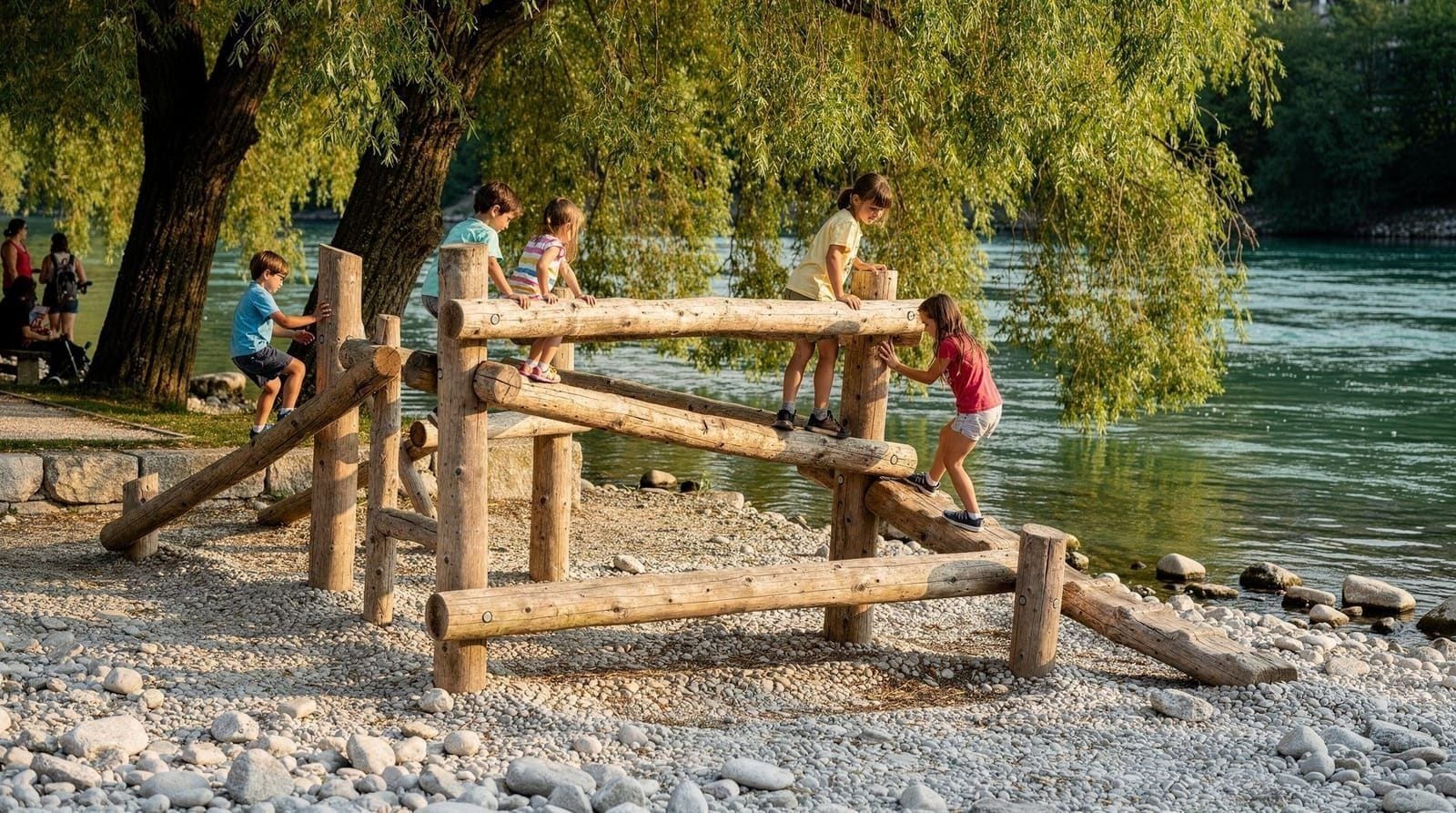
Beyond the English Garden, Munich has a network of well-maintained public playgrounds. The best central options include the Westpark adventure playground near Thalkirchen (large climbing structures, zip line, and separate toddler area), Taxisgarten playground in Neuhausen (located inside a popular beer garden, so parents are catered for simultaneously), and the Isar riverbank between Wittelsbacherbrücke and the Marienklausen, where a sandy beach forms naturally in summer for paddling. Full details at Munich playgrounds and parks.
Suggested day-by-day family itineraries
Two-day family itinerary
Day 1 — City core and Deutsches Museum
Morning: take the U-Bahn to Marienplatz and spend 45 minutes at the main square. The Glockenspiel performs at 11:00 daily (and at 17:00 from March to October). Walk through the Viktualienmarkt for a mid-morning snack — the Bavarian cheeses and pretzels are a good introduction to local food.
Late morning to afternoon: head to the Deutsches Museum via tram 16 or on foot across the Isar. Prioritise the Kinderreich section for younger children, then the aviation hall and the submarine. Allow 4-5 hours.
Evening: dinner near Museum Island or return to the city centre. Augustiner am Platzl near Marienplatz serves reliable Bavarian food at mid-range prices with a family-friendly atmosphere.
Day 2 — Hellabrunn Zoo and English Garden
Morning: tram 17 to Hellabrunn. Arrive at opening (09:00 in summer) to see the zoo before crowds build. Start with the elephant savannah, move to the polar world, then the Kinderdorf in the late morning.
Afternoon: take tram 17 back to Sendlinger Tor, then U4/U5 to Lehel. Enter the English Garden at the southern end. Watch the Eisbach surfers, walk north to the Chinesischer Turm beer garden for a late-afternoon drink and snack.
Three-day family itinerary
Days 1-2 as above, then:
Day 3 — Olympiapark and Sea Life
Morning: U3 to Olympiazentrum. Spend 2 hours in the park — the Olympiaberg hill has a sledding slope in winter and great views year-round. Lunch at one of the food stalls inside the park.
Afternoon: walk 5 minutes to Sea Life Munich (Willi-Daume-Platz 1). Allow 90 minutes for the aquarium. If children still have energy, the BMW Welt showroom (free entry) is a 10-minute walk across the park — the car exhibition and the ramp structure are surprisingly engaging for older children. See the BMW Welt and Museum guide.
Four-day itinerary with day-trip to LEGOLAND
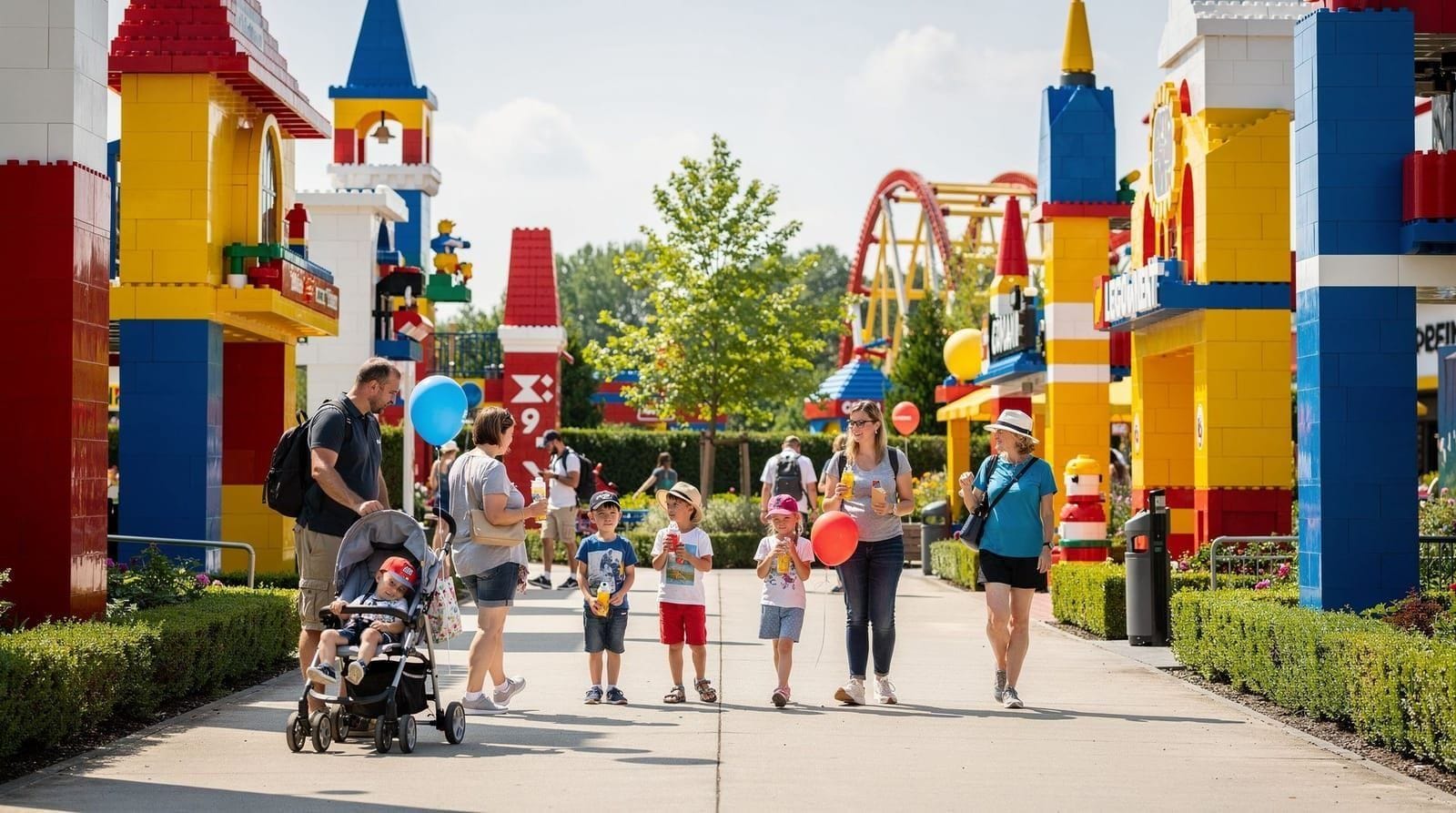
Add a day trip to LEGOLAND Deutschland in Günzburg (1.5 hours from Munich Hauptbahnhof by direct train). The Bayern Ticket covers the journey. LEGOLAND works best for children aged 4-12; it is less compelling for teenagers. See the LEGOLAND Deutschland guide for advance ticket booking and timing advice.
Best time of year to visit Munich with kids
| Season | Weather | Crowds | Notes for families |
|---|---|---|---|
| Spring (Apr–May) | Mild, some rain | Moderate | Nymphenburg gardens and English Garden at their best; pack layers |
| Summer (Jun–Aug) | Warm, occasional storms | High, especially Aug | Beer gardens and outdoor pools open; book museums ahead |
| Autumn (Sep–Oct) | Mild, clear spells | High during Oktoberfest | Oktoberfest is more adult-oriented; visit before or after for families |
| Winter (Nov–Feb) | Cold, sometimes snowy | Low outside Christmas markets | Christkindlmarkt is magical for ages 6+; museums are quieter |
Late spring (May) and early autumn (mid-September, before Oktoberfest crowds build, or late October after they clear) are the sweet spots for families who want good weather without peak-summer heat or Oktoberfest congestion.
Toilets, nursing rooms, and other practical logistics
Public toilets are available at all major attractions (Deutsches Museum, Hellabrunn, Sea Life, Olympiapark) and inside department stores like Galeria on Marienplatz, which also has a baby-changing room on an upper floor. Supermarkets and cafés are generally relaxed about non-customers using toilets if you ask. Nursing mothers will find dedicated quiet rooms at the Deutsches Museum and at Hellabrunn Zoo; elsewhere, cafés are the practical fallback.
Stroller-friendly routes are the norm in central Munich — the Altstadt’s pedestrianised core, the English Garden’s paved paths, and Olympiapark are all easy going. The main friction points are older U-Bahn stations without lifts (check the MVV accessibility map before relying on a specific station) and cobblestones in parts of the Altstadt, which are manageable but bumpier than asphalt for a stroller.
Baby food and formula are widely available at Rossmann and dm drugstores throughout the city, including organic ranges, so travelling with a full supply from home is rarely necessary. Supermarkets close on Sundays as everywhere in Munich, so restock on Saturday if self-catering with an infant.
Transport for families: Bayern Ticket, KinderTicket, and CityTourCard
Bayern Ticket: EUR 30 (1 person) up to EUR 38 (2-5 people), valid from 09:00 to 03:00 the following day on all regional trains, S-Bahn, U-Bahn, trams, and buses within Bavaria. For a family day-trip to LEGOLAND, Neuschwanstein, or Berchtesgaden, this is significantly cheaper than individual tickets. Buy at Munich Hauptbahnhof or via the DB Navigator app. The Bayern Ticket guide explains the rules in detail.
KinderTicket (ages 6-14, accompanied by an adult): EUR 3 per day for all inner-zone MVV transport. This covers U-Bahn, S-Bahn, tram, and bus within the inner ring. Buy at any MVV ticket machine or at the DB ticket counter.
CityTourCard Family: covers one adult and up to three children under 15 for unlimited travel in the inner zones. Available for 1, 2, or 3 days at EUR 21.90, EUR 31.90, and EUR 41.90 respectively. Does not cover regional trains to day-trip destinations. Buy at MVV machines or tourist information offices. See Munich public transport guide for comparison.
Prams and pushchairs: all Munich public transport permits prams free of charge. Most U-Bahn stations have lifts (check the MVV accessibility map; a handful of older stations are lift-free). Tram 17 towards Hellabrunn is a modern low-floor tram with easy pram access.
Practical tips for families in Munich
Booking tickets in advance: Hellabrunn, Sea Life, and the Deutsches Museum can all be pre-booked online. In peak summer (July-August) and during Oktoberfest season, queues at the Deutsches Museum can reach 30-45 minutes at the entrance. Online pre-booking is worth EUR 2-3 per person to avoid this.
Eating with children: Munich restaurants are generally tolerant of families, though the late dinner culture (most restaurants fill after 19:30) can be challenging with young children. The major beer gardens all welcome families until late afternoon. For quicker meals, the Viktualienmarkt has numerous food stalls with reliable options. Avoid tourist-oriented restaurants on Marienplatz — the food quality drops sharply and prices rise.
Weather: Munich summers (June-August) are warm and sometimes very hot (30°C+), but afternoon thunderstorms are common. Pack a light rain jacket even in July. Winters are cold and occasionally snowy; the Christkindlmarkt runs from late November to December 24 and is genuinely magical for families with older children.
Medical: pharmacies (Apotheke) are found throughout the city and can provide basic medication advice without an appointment. The main children’s hospital is the Dr. von Haunersches Kinderspital near the city centre (Lindwurmstraße 4). For minor issues, most pharmacists speak enough English to recommend an appropriate over-the-counter remedy without needing a doctor’s visit.
Pickpocketing: Munich city centre has a low but non-zero pickpocket risk, particularly on trams and at Marienplatz during Oktoberfest. Keep bags zipped and positioned in front of the body on crowded transport. Family scavenger hunt through Munich’s old town
Screen-free downtime: Munich’s beer gardens double as an easy reset point for families — order a drink, let children run in the gravel or grass while food arrives, and there is rarely pressure to move on quickly. The Chinesischer Turm, Hirschgarten, and Viktualienmarkt beer gardens all have playgrounds or open space immediately adjacent, which makes them a practical stop between sightseeing blocks rather than a dedicated outing.
Language for families: Basic phrases help with children specifically — “Gibt es einen Hochstuhl?” (Is there a highchair?) and “Wo ist die Toilette?” (Where is the toilet?) cover the two most common needs. Most service staff in tourist-facing venues speak enough English regardless.
Family-friendly areas for accommodation
Maxvorstadt / Schwabing: close to the Pinakothek museums and the English Garden, with good U-Bahn connections. Mid-range hotels predominate. Suitable for families focused on museums and the city core.
Lehel / Au: walking distance to the Deutsches Museum and tram 17 (Hellabrunn). Quieter than the immediate city centre, with some apartment-style accommodation suitable for families with self-catering needs.
Olympiadorf area: near Olympiapark and Sea Life, with easy U3 access to the centre. Particularly useful if Olympiapark is a main focus or if you are attending a concert in the park.
The Where to stay in Munich guide covers all central areas with honest notes on noise levels and family suitability.
Day trips suitable for families
Munich’s position in Bavaria means excellent day trips are possible without a car:
LEGOLAND Deutschland (Günzburg, 1.5h by train): best for ages 4-12. Covered in detail at LEGOLAND Deutschland guide.
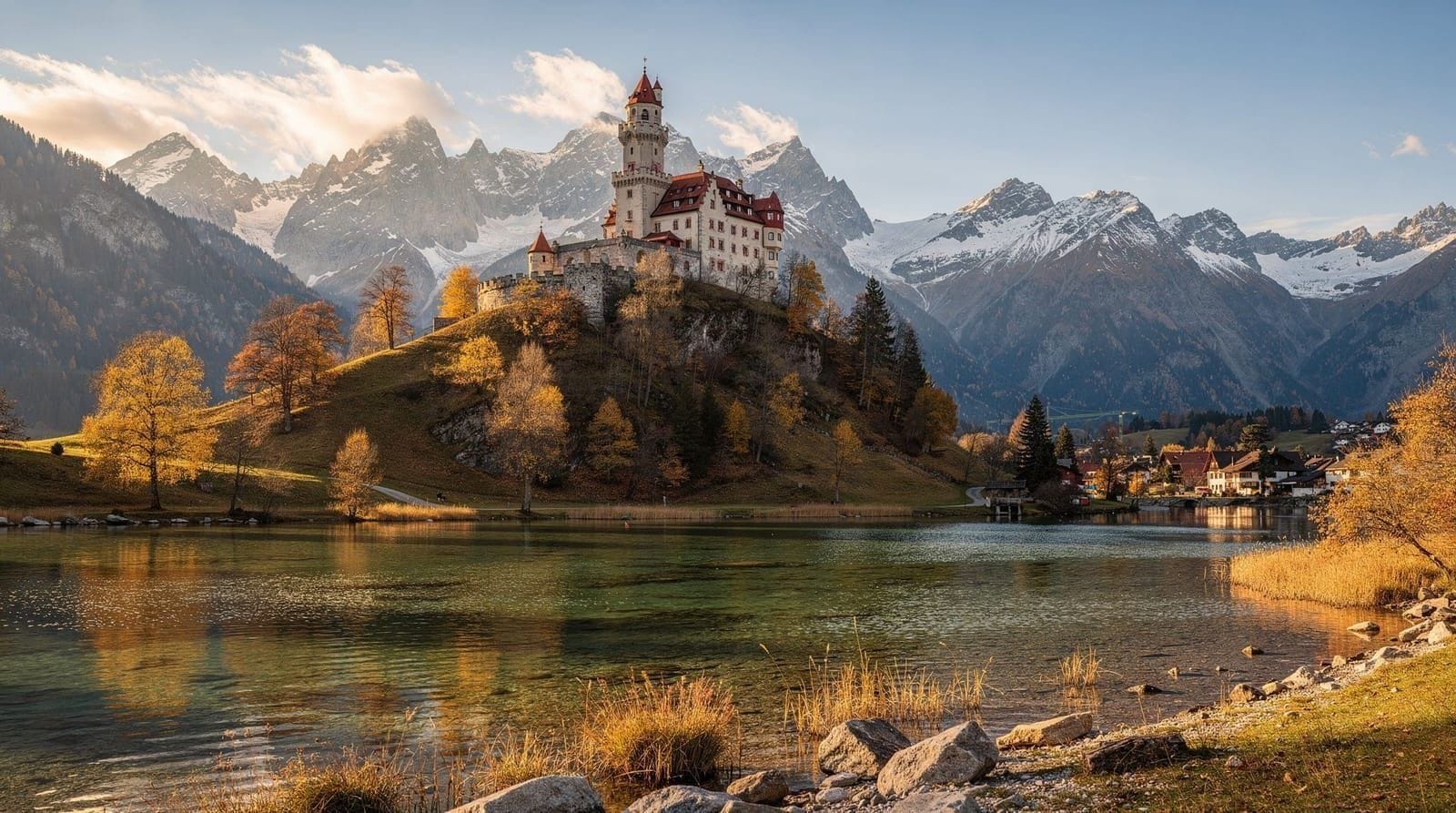
Neuschwanstein Castle (Schwangau, 2h by train then bus): spectacular for children over 8 who can manage the 20-minute uphill walk to the castle. Timed entry tickets must be booked in advance — see Neuschwanstein tickets guide.
Chiemsee lake (1h by train): the lake itself and the island palace of Herrenchiemsee can be combined with beach time. Low difficulty, good for all ages. See Chiemsee lake guide.
Zugspitze (1.5h by train to Garmisch-Partenkirchen, then cogwheel train): Germany’s highest peak at 2,962 m. The summit is spectacular in clear weather. Bring layers — it can be 20°C colder at the top than in Munich. See Zugspitze day trip guide.
Frequently asked questions about Munich with kids
Is Munich safe for families with young children?
Munich is one of Germany’s safest cities. Traffic is well-managed, public spaces are clean, and children’s safety standards in public facilities are high. The main practical concern is car traffic around busy tram stops — teach children to wait for the tram to depart before crossing behind it.
What is the Kinderreich at the Deutsches Museum?
Kinderreich (“children’s kingdom”) is a dedicated interactive section on the ground floor of the Deutsches Museum aimed at children aged 3-8. Activities include a large wooden boat, water-flow experiments, a construction site simulation, and sensory exhibits. It is included in the standard Deutsches Museum ticket.
Do Munich restaurants have highchairs?
Most sit-down restaurants and beer gardens keep a few highchairs (Hochstuhl) available. It is worth calling ahead for dinner reservations to confirm availability. Fast-food style Imbiss stalls and the Viktualienmarkt food counters do not generally provide seating, so these work better as snack stops rather than meal occasions.
Is there a children’s section on the S-Bahn or long-distance trains?
German ICE and IC long-distance trains have dedicated family carriages (Familienbereich) with activities for small children and a more relaxed noise policy. These must be booked when purchasing your ticket via the DB Navigator app or at the ticket counter. Standard S-Bahn regional trains do not have family carriages but the seating is comfortable and routes from Munich to day-trip destinations are short enough not to require one.
Can children visit Dachau Memorial?
The Dachau Concentration Camp Memorial (30 minutes from Munich by S-Bahn and bus) is open to visitors of all ages. However, the content is heavy and better suited to children over 13 who have some prior context about the Second World War. Younger children may find the material distressing. The memorial is free and the Dachau memorial guide includes notes on how to approach the visit with older children.
What are the best souvenirs to buy with kids in Munich?
Practical and durable choices: Bavarian gingerbread hearts (Lebkuchenherzen) from the Viktualienmarkt, small painted wooden figures from shops in the old town, and Bayern Munich merchandise from the official store near Marienplatz. Avoid the low-quality Oktoberfest tat sold near tourist hotspots — it deteriorates quickly and is overpriced.
Is a rental car useful for families visiting Munich?
For the city itself, no — public transport is faster and avoids parking costs (EUR 2-4 per hour in central garages). For exploring rural Bavaria and smaller villages not on direct rail lines, a rental car is useful. The Munich to Bavaria by train guide at Munich to Bavaria by train lists which destinations are easily reached without a car.
What is the best month to visit Munich with young children?
May and mid-September are the strongest choices — mild weather, blooming gardens or clear autumn light, and crowds well below the July-August or Oktoberfest peaks. Late October is also good once Oktoberfest crowds have cleared, though days are shorter.
Are there family-friendly hotels with connecting rooms in Munich?
Yes, particularly in the Maxvorstadt and Schwabing hotel clusters, where several mid-range chains offer connecting or triple/quad rooms designed for families. Booking directly with the hotel and specifying a family configuration in advance gets better results than a generic online booking, since these rooms are limited in number. The where to stay in Munich guide covers neighbourhood options in more depth.
Top experiences
Bookable activities with verified prices and instant confirmation on GetYourGuide.