Munich public transport guide: MVV zones, tickets and how to get around
Munich: City Pass with 45+ top attractions and public transport
How does Munich's public transport work?
Munich uses the MVV (Münchner Verkehrsgesellschaft) integrated network, which covers U-Bahn, S-Bahn, trams, and buses across a zone-based system. Tickets must be bought before boarding and validated before travel. A single inner-zone ticket costs €3.70 in 2026, while a day ticket for the inner zone costs €9.20 for one adult.
How Munich’s MVV network actually works
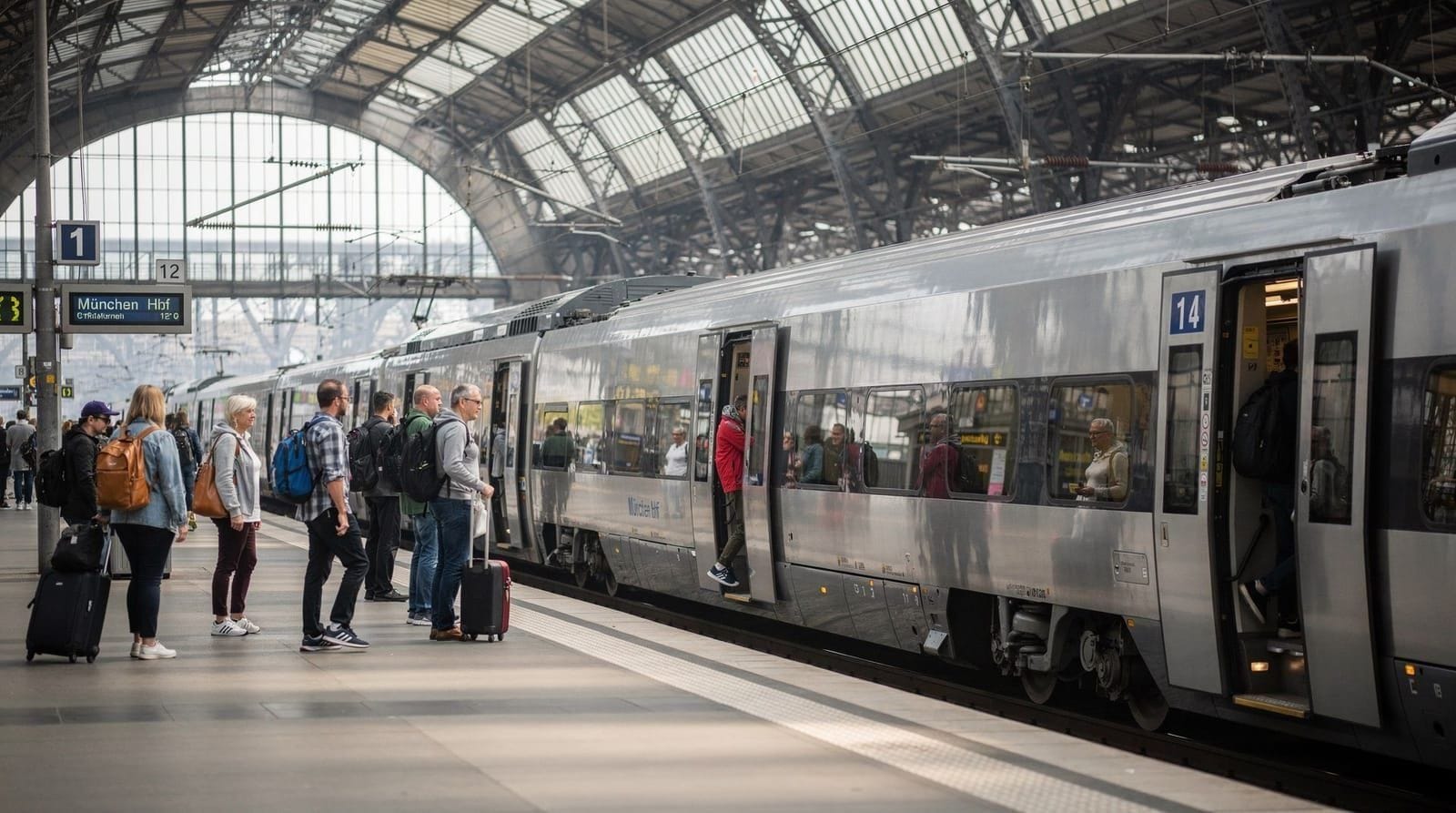
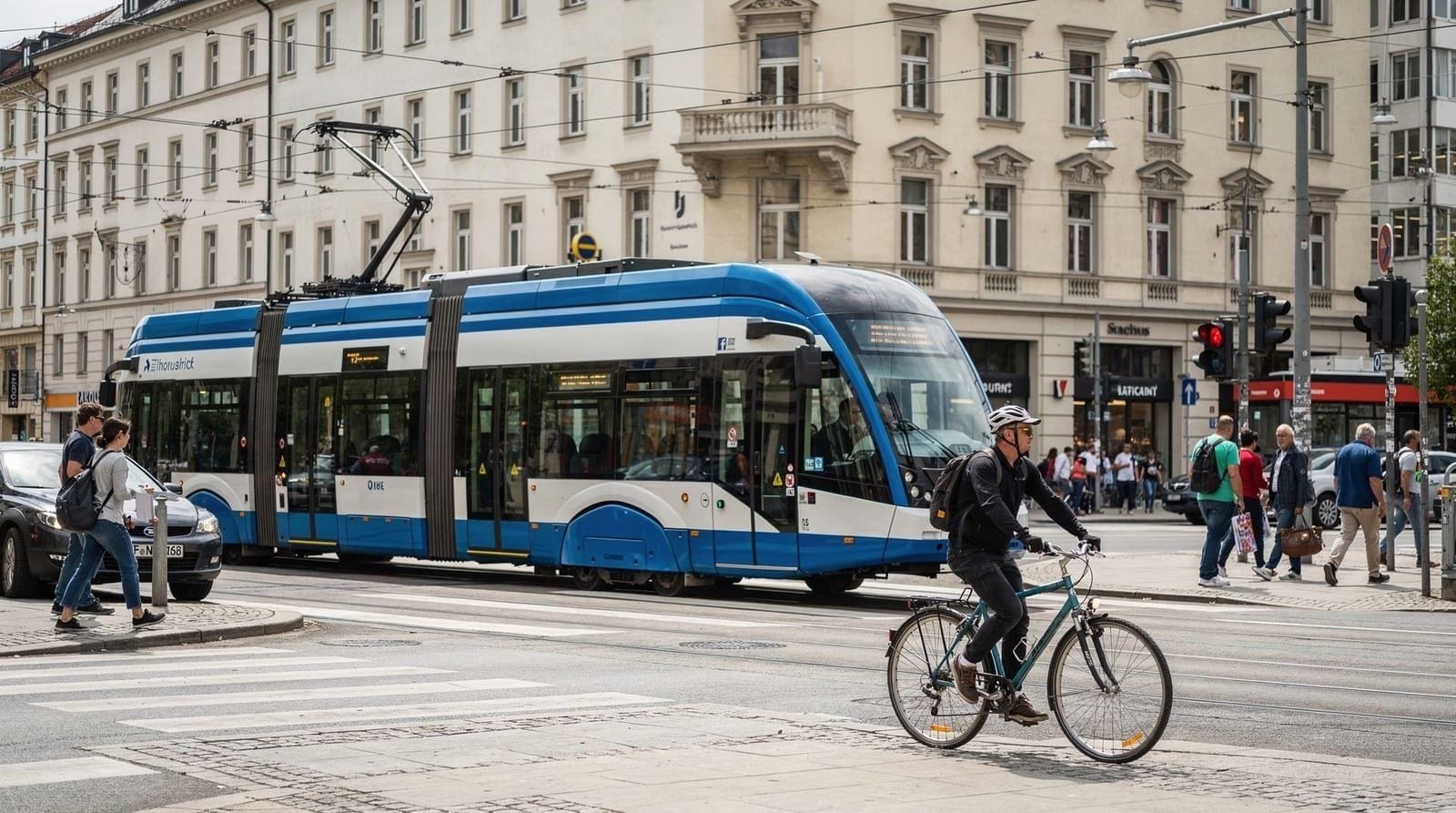
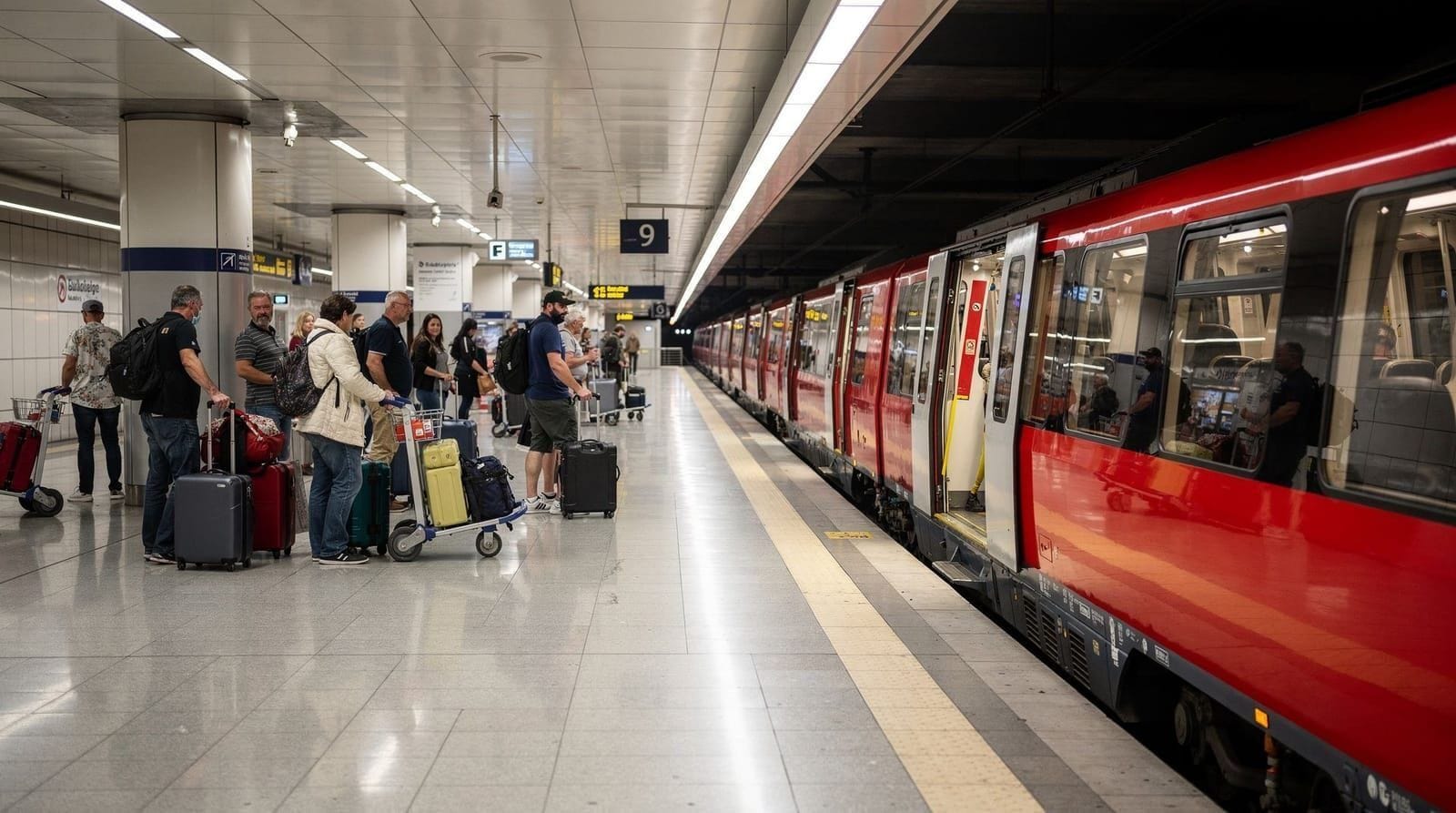
Munich has one of the most integrated urban transport systems in Germany. The MVV (Münchner Verkehrsgesellschaft) brings together U-Bahn metro lines, S-Bahn suburban rail, tram routes, and bus services under a single ticketing system. One ticket, one zone calculation, multiple modes of transport.
For visitors, this is mostly good news: you do not need to work out separate tickets for buses and trains. The main thing to understand is the zone system, which determines how much your ticket costs based on how far you are travelling.
| Network | MVV — U-Bahn, S-Bahn, trams, buses on one ticket |
| Zone you need | M–1 for almost all sightseeing |
| Cheapest day option | Single day ticket, around €9.20 |
| Validate before boarding | Yes, at blue Entwerter machines |
| Fine if caught unvalidated | €60, no exceptions |
The MVV zone system explained
The MVV network is divided into seven concentric zones, radiating outward from the city centre:
- Zone M — Munich city centre (Innenraum)
- Zone 1 — inner suburbs including Schwabing Nord, Sendling, Pasing, Neuhausen
- Zone 2 — outer suburbs including Dachau, Garching, Unterschleißheim, Germering
- Zone 3 — further out, including Markt Schwaben, Olching, Wolfratshausen
- Zone 4 — towns like Freising, Ebersberg, Starnberg
- Zone 5 — including Rosenheim, Landsberg am Lech, Erding
- Zone 6 — Munich Airport (Flughafen München) and far reaches of the network
For most of your time in Munich as a tourist, zones M and 1 cover everything you need: all central attractions, Nymphenburg Palace, the Olympiapark, the English Garden, and all the central U-Bahn and S-Bahn stations.
You only need additional zones if you are travelling to the airport (zone 6) or to destinations like Dachau (zone 2) or Starnberger See (zone 4).
Ticket types and 2026 prices
Single journey tickets (Einzelfahrkarte)
A single journey ticket is valid for one continuous journey (with changes allowed) within the zones purchased, for up to 90 minutes from validation. You cannot use it to travel out and back.
| Zone range | Price (2026) |
|---|---|
| Zones M–1 (inner zone, Innenraum) | €3.70 |
| 2 zones | €5.60 |
| 3 zones | €7.50 |
| 4 zones | €9.40 |
| 5 zones | €11.30 |
| 6 zones (airport from city) | €13.80 |
Children aged 6–14: half price. Under 6: free (with an adult).
Short journey ticket (Kurzstreckenticket)
For very short hops — up to 2 stops on U-Bahn/S-Bahn, or 4 stops on trams and buses — the Kurzstreckenticket costs €1.90 in 2026. Only useful if you are genuinely making a very short trip.
Day tickets (Tageskarte)
Day tickets are valid from first use until 6am the following day. This is one of the best-value options for tourists spending a full day sightseeing in Munich.
| Ticket type | Price (2026) |
|---|---|
| Single day ticket (zones M–1) | €9.20 |
| Group day ticket — up to 5 people (zones M–1) | €18.40 |
| Single day ticket (zones M–1–2, wider area) | €13.20 |
| Group day ticket (zones M–1–2) | €24.40 |
| Airport day ticket (all zones, single) | €19.60 |
| Airport day ticket (all zones, group) | €36.00 |
These prices are the ones that matter most for visitors. The group day ticket is particularly good value — if you are a couple or travelling with friends, it halves the effective per-person cost of a single day ticket.
3-day ticket
A 3-day Tageskarte is available for zones M–1 at €28.80 for a single person (2026). For a short city break of 2–3 days, this is competitive with buying daily tickets.
Week ticket (IsarCard Woche)
The 7-day IsarCard for zones M–1 costs around €39.60 in 2026. If you are staying for a week and using transit daily, this is better value than buying day tickets.
The Deutschland-Ticket: the big one
The Deutschland-Ticket (€58/month) is a national subscription pass introduced in 2023. For €58 per calendar month, you get unlimited travel on all local public transport across Germany: every U-Bahn, S-Bahn, tram, bus, and regional train (RE and RB class) in the entire country.
For travellers staying at least a week in Munich and planning day trips around Bavaria, this is exceptional value. A single day’s worth of MVV day tickets plus a Bayern-Ticket would cost more than €58.
The catch: it is a subscription, not a single-use ticket. You need to buy it through a German public transport app (MVV app, DB Navigator, or various bank apps) and you need a valid German payment method. Cancellation must happen before the end of the month to avoid being billed for the next month. For short visitors (under a week), this administrative overhead is not worth it.
The Deutschland-Ticket is not valid on:
- IC, ICE, or EC long-distance trains
- The Zugspitze Cogwheel Railway (Zahnradbahn)
- Special tourist trains
IsarCard monthly passes
For residents and frequent visitors, the MVV’s IsarCard is the standard monthly pass. Prices vary by zone and age category:
- IsarCard M–1 (inner zone, standard adult): around €57–89/month depending on specific configuration
- IsarCard senior (65+): reduced rates
- IsarCard 65+ (specific age category): discounted
- School/student cards: heavily discounted
Since the Deutschland-Ticket at €58 covers the same zones and more, the IsarCard is mainly useful for people who need zones not covered by Deutschland-Ticket or who have employer subsidies.
Which pass should you actually buy
The right choice depends entirely on how long you are staying and how much ground you plan to cover. Use this as a starting point rather than a rule:
| Trip length | Best option | Why |
|---|---|---|
| 1 day | Single or group day ticket | Cheapest for one day, no admin |
| 2–3 days | 3-day Tageskarte | Beats buying three separate day tickets |
| 4–6 days | 7-day IsarCard Woche | Best value once you pass roughly 4 days |
| 1 week+ with day trips | Deutschland-Ticket | Covers regional trains across Bavaria too |
| Just sightseeing sites, minimal transit | Munich City Pass | Bundles attraction entry with transport |
If your itinerary mixes museums, palaces and day trips, it is worth comparing a bundled option too:
Munich City Pass — 45+ attractions and transport includedFor visitors who want everything decided for them, a hop-on-hop-off route covers the main sights without needing to master the MVV zone map at all:
Munich hop-on-hop-off bus, 1-day or 2-day ticketWhere and how to buy tickets
Ticket machines
Yellow MVV ticket machines are located at every U-Bahn and S-Bahn station, and at major tram stops. They accept:
- Credit and debit cards (contactless works at most machines)
- Coins (exact change not required — machines give change)
- Some accept €50 notes; smaller notes are more reliable
Machines have English-language menus. Select your origin/destination or zone range, select ticket type, pay.
MVV app
The MVV app (iOS and Android) sells all ticket types digitally. Tickets are displayed on your phone and do not need physical validation. The app also shows live departure times and route planning.
DB Navigator app
The Deutsche Bahn app (DB Navigator) also sells MVV tickets for travel within Munich. Useful if you are already using it for long-distance train tickets.
On board trams and buses
You can buy tickets from the driver on buses (cash only) and from machines on trams. This is more expensive per journey and slower. Better to buy in advance at a station.
The validation rules — do not skip this
This is where many visitors trip up. In Munich’s transit system:
- Paper tickets from machines must be stamped in the blue validation machines (Entwerter) before you board. On trains, they are at the top of the escalators and stairs. On trams and buses, they are next to the doors.
- An unstamped ticket is invalid, even if you just bought it. Inspectors enforce this strictly and the fine is €60 (Erhöhtes Beförderungsentgelt), payable immediately. They are polite but firm.
- Digital tickets from the MVV or DB app do not need stamping — validation happens at purchase.
- Day tickets from machines need to be stamped once on first use.
- Weekly and monthly passes (including Deutschland-Ticket) do not need daily stamping — they are valid for their full period.
Fare zones for common tourist destinations
| Destination | Zone range | Approximate ticket cost |
|---|---|---|
| City centre to Marienplatz | M only | €3.70 single |
| City centre to Nymphenburg Palace | M–1 | €3.70 |
| City centre to Olympiapark | M–1 | €3.70 |
| City centre to English Garden (Englischer Garten) | M–1 | €3.70 |
| City centre to Dachau | M–2 | €7.50 |
| City centre to Starnberger See | M–4 | €9.40 |
| City centre to Munich Airport | M–6 | €13.80 |
Transit etiquette in Munich
Munich has a reputation for orderly public transport. A few unwritten rules:
- Do not eat on the U-Bahn — it is not explicitly prohibited on all lines but is strongly frowned upon
- Give up priority seats (marked blue) for elderly, pregnant, and disabled passengers
- Move to the centre of the carriage — do not block doors
- Validate your ticket first — even if the train is about to leave. Do not board and then try to validate
- Bikes on S-Bahn: allowed in designated carriages (marked with a bicycle symbol), but not during peak morning and evening rush hours (roughly 6–9am and 4–7pm)
- No dogs on seats — dogs travel on a lead and do not occupy seats
Accessibility
The MVV has been investing heavily in accessibility. All U-Bahn stations built or renovated after the early 2000s have lifts to all platforms. The older part of the U-Bahn network — particularly some U1 and U2 stations in the inner city — can still be patchy. The MVV website has a specific accessibility map.
S-Bahn stations vary, but major ones at Hauptbahnhof, Marienplatz, and the airport are fully accessible. Trams in Munich are mostly low-floor models. Buses are universally low-floor with ramps.
Night network
Regular S-Bahn and U-Bahn services stop roughly around 1am. After that, night buses (Nachtlinien) take over, running approximately every 30–40 minutes on key routes until early morning S-Bahn services resume. Night buses are included in the standard MVV ticket. For details on night transport, see the U-Bahn and S-Bahn guide.
Practical planning links
For travel to specific destinations in Bavaria by regional train, the MVV ticket system connects with the DB rail network. See our guide on Bayern-Ticket — the day ticket for regional trains across Bavaria, which can save significant money for day trips.
For getting from the airport to the city, see Munich airport to city.
For an overview of all ways to move around the city — including cycling and taxis — see getting around Munich.
A zone M–2 ticket also covers the S-Bahn out to Dachau, and a zone M–4 ticket reaches Starnberger See for a lakeside afternoon without a car. If you plan several day trips, our day trips by train from Munich guide maps out which destinations are realistic on public transport alone.
Alternatives to the MVV
Public transport is not the only way to get around. Munich’s bike rental scheme is a genuinely pleasant way to cover the Altstadt and the English Garden on a dry day, and e-scooters are widespread for short hops when the MVV timing does not line up. Taxis and rideshare apps exist but are expensive relative to the MVV and rarely necessary within the city centre — save them for late-night trips once the night bus network thins out. See our broader Munich travel tips for how transit fits into a wider trip budget.
Frequently asked questions about Munich’s MVV public transport
Is the MVV reliable?
By German and European standards, yes. Delays exist, particularly on S-Bahn lines, which share track with long-distance trains. U-Bahn delays are less common. Check the MVV app for live departure info — it is accurate.
What happens if I travel without a valid ticket?
Inspectors (Kontrolleure) check tickets regularly and show no mercy. The fine is €60 per person, payable on the spot or by post. There is no “tourist excuse” — everyone is held to the same standard.
Can I buy a Munich transit card at the airport?
Yes. MVV ticket machines at the airport sell all standard tickets and day passes. You can also buy the group airport day ticket there.
What is the difference between U-Bahn and S-Bahn?
The U-Bahn (Untergrundbahn) is Munich’s underground metro — fully underground in the city, dedicated tracks, part of the MVV. The S-Bahn (Stadtbahn) is the overground suburban rail network run by Deutsche Bahn but covered by MVV tickets — it runs partly underground through the city centre and then above ground out into the suburbs. Both are covered by the same MVV tickets.
Do taxi and rideshare apps accept MVV tickets?
No. Taxis and rideshares are separate and require separate payment. MVV tickets are only valid on MVV-network transport (U-Bahn, S-Bahn, tram, bus).
Is a day ticket or single tickets better for one day of sightseeing?
If you will take more than two rides in a day — for example Marienplatz, Nymphenburg, and back to your hotel — the single day ticket at around €9.20 almost always works out cheaper than buying individual €3.70 single tickets, and it removes the need to keep validating new tickets each time.
Can I use the same MVV ticket for a group?
Only the group day ticket (up to 5 people) is designed for this, and it must be validated once and then held by whoever is checked. Single and 3-day tickets are for one named rider each; travelling as a group of 3 or more on single tickets is usually more expensive than the group day pass anyway.