Getting around Munich: walking, transit, bike and car compared
Munich: hop-on hop-off sightseeing tour 1-day or 2-day ticket
What is the best way to get around Munich?
Munich's MVV public transport network (U-Bahn, S-Bahn, tram, bus) is the most practical option for most journeys. The city centre is compact and walkable for distances under 20 minutes. Cycling is popular and infrastructure is good. Driving into central Munich is slow, expensive to park, and unnecessary.
The reality of getting around Munich
Munich is not a difficult city to navigate, but it has enough transport options that it is worth thinking through which one suits each type of journey. The short version: use transit for most things, walk in the centre, rent a bike if you have a free afternoon, and leave the car out of it unless you are heading into rural Bavaria.
This guide covers each mode honestly, with practical details on when each one is and is not worth using.
| Where | City centre + MVV network across Munich and suburbs |
| Cost | Around €9.20/day inner zone, or €58/month Deutschland-Ticket |
| Time needed | Most central trips under 25 minutes |
| Getting around | Walk in the Altstadt, transit for everything else |
| Best option | MVV day ticket for most first-time visitors |
Quick comparison of every option
| Mode | Best for | Cost | Watch out for |
|---|---|---|---|
| Walking | Altstadt, Schwabing, Maxvorstadt | Free | Nymphenburg is too far to walk |
| MVV transit | Anything over 25 min, airport | ~€9.20/day | Validate tickets — inspectors fine €60 |
| Cycling | English Garden, Isar riverside | Bike share per-minute rates | Stick to cycle lanes, not pavements |
| Taxi/rideshare | Late night, airport with luggage | €12–18 for 3–4km | Surge pricing on rideshares |
| Car | Remote Alps, multi-village day loops | €25–45/day parking | Unnecessary and slow in the centre |
On foot: better than you might expect
Munich’s old town (Altstadt) is compact and genuinely pleasant to walk. The main pedestrian zone stretches between Marienplatz and Karlsplatz (also called Stachus), and the surrounding streets are navigable without constant map-checking after your first morning.
Key walking distances from Marienplatz:
- Viktualienmarkt: 3 minutes
- Frauenkirche: 5 minutes
- Hofbräuhaus: 8 minutes
- Residenz: 8 minutes
- Deutsches Museum: 15 minutes (across the Isar)
- Englischer Garten (southern entrance, Eisbach surfing): 20 minutes
- Nymphenburg Palace: 45–50 minutes (not practical — use transit)
- Olympiapark: 50 minutes (use transit)
Walking is the right choice for any distance under 20–25 minutes, especially in the Altstadt, Schwabing, and Maxvorstadt. The streets are safe at all hours, well lit, and interesting. Munich’s neighbourhoods are best understood on foot — maps make the city look more spread out than it feels when you are in it.
MVV public transit: the backbone of getting around
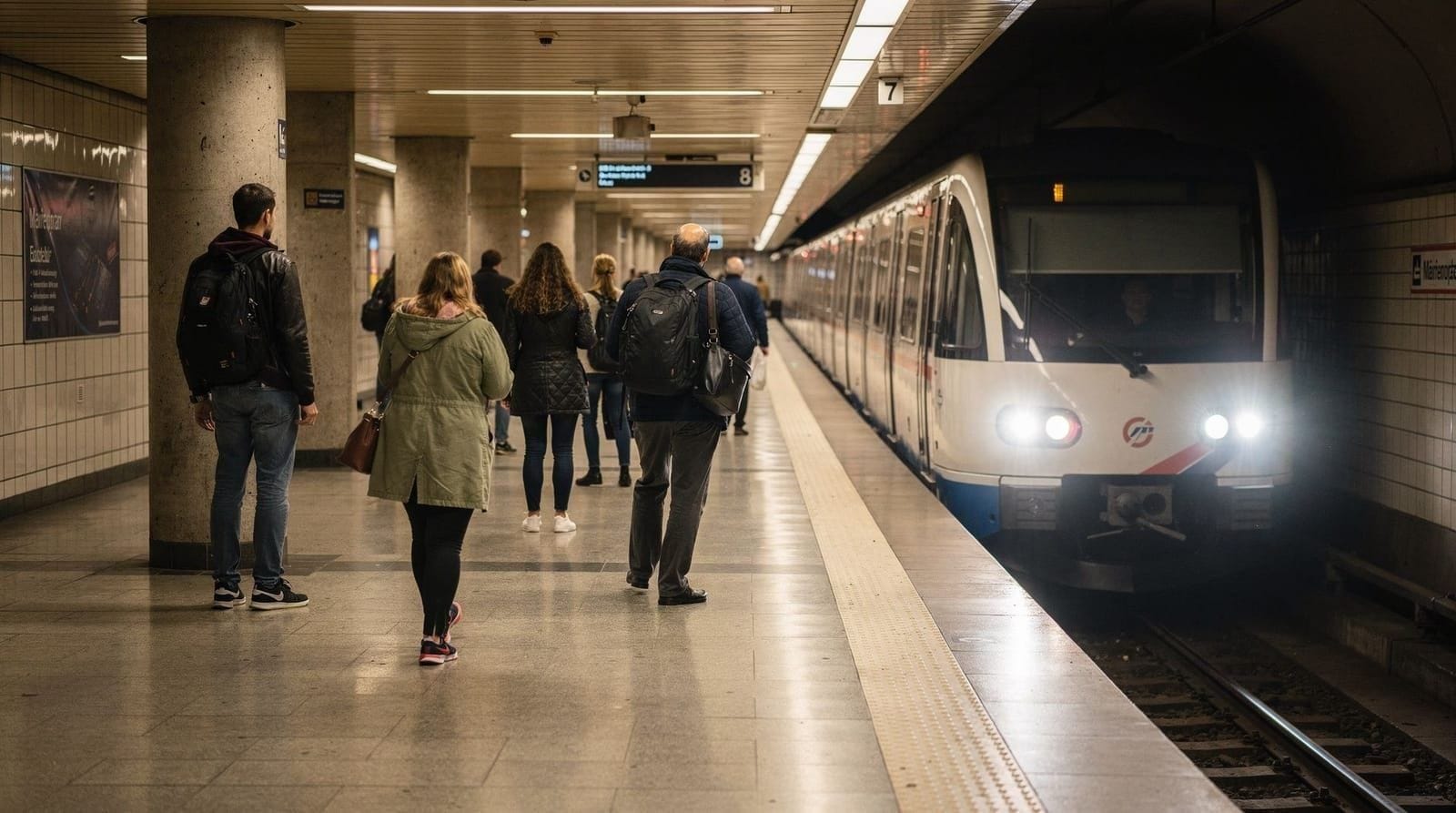
For any journey over 25 minutes or involving crossing the city, Munich’s MVV network (U-Bahn, S-Bahn, tram, bus) is the right choice. It covers the entire city and most surrounding areas, runs frequently, and is clean and reliable by European standards.
The key facts:
- U-Bahn (metro) covers most tourist destinations in the city
- S-Bahn covers outer suburbs and the airport
- Trams serve some areas not well covered by U-Bahn, particularly in northern and eastern Munich
- Buses fill the gaps
A day ticket for the inner zone (M–1) costs €9.20 for one person in 2026, or €18.40 for a group of up to 5. This covers everything in central Munich all day until 6am the next morning.
For full details on zones, ticket types, and validation rules, see the Munich public transport guide. For the S-Bahn and U-Bahn network specifically, see the Munich U-Bahn and S-Bahn guide.
Cycling: seriously good infrastructure
Munich is one of Germany’s most bike-friendly large cities. The cycling network has been expanded significantly and most central streets have dedicated, separated cycling lanes. The riverbanks along the Isar are excellent for cycling — the Isar-Radweg (Isar cycling path) runs for many kilometres north and south through the city.
When to cycle
- Exploring the English Garden: the park itself is massive (larger than Central Park in New York) and a bicycle is the best way to see the whole thing in one visit. Rental is available near the main entrance.
- Nymphenburg to Olympiapark loop: the western city is well connected by cycling routes through parks and residential streets.
- Along the Isar: the riverside path south to the swimming meadows or north through Schwabing is one of Munich’s pleasures.
- Schwabing to Maxvorstadt museum quarter: the flat, wide streets with dedicated lanes make cycling quick and comfortable.
Bike share
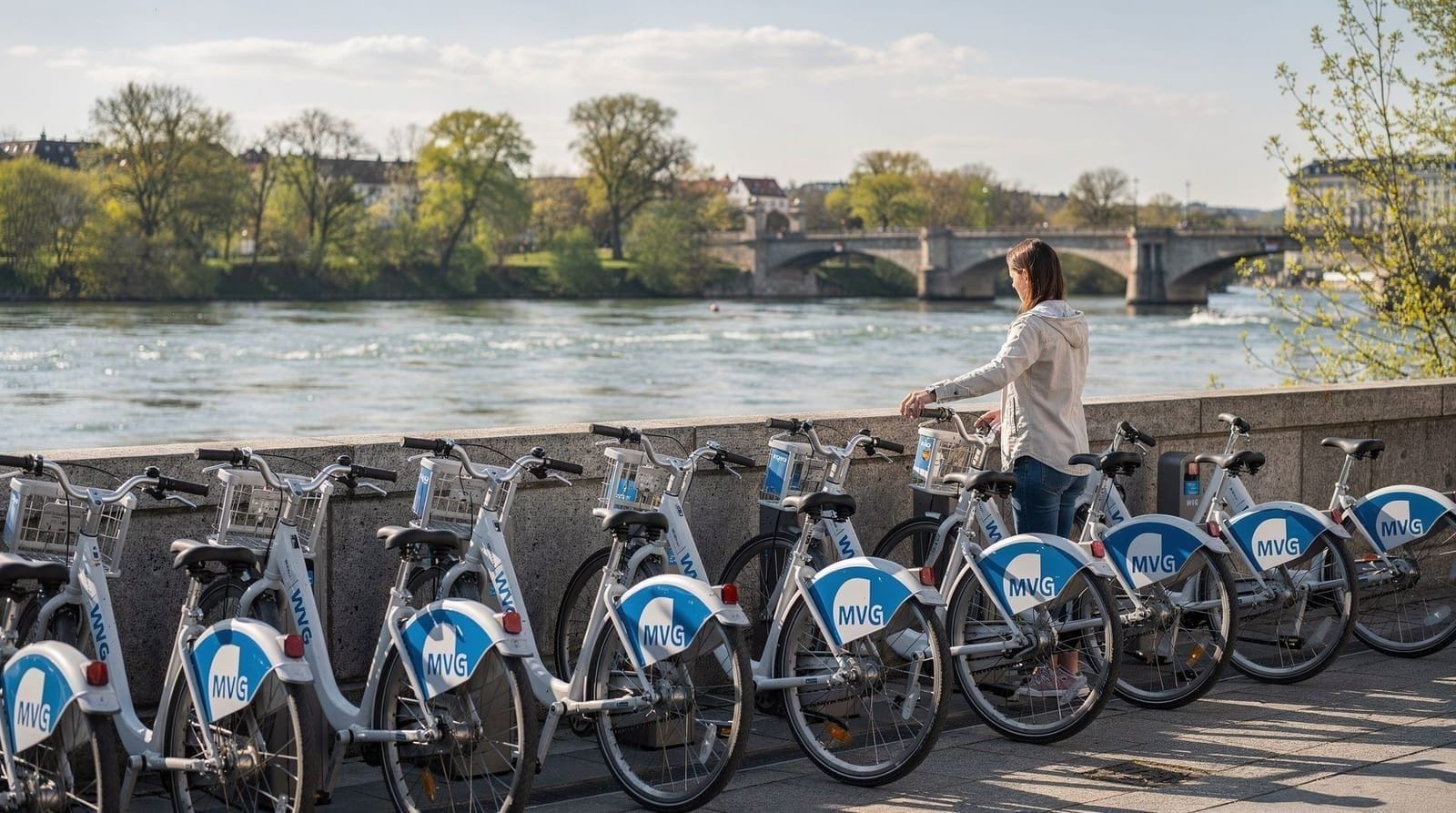
MVG Rad is the city’s main bike share. Available via the MVG Rad app (also bookable through the MVG main app). Unlock fee plus per-minute charges — the website has current rates, which change periodically. E-bikes are available in the fleet at a slightly higher rate.
Nextbike also operates a network, particularly in outer areas.
Traditional rental shops near the Hauptbahnhof and Marienplatz area rent by the day or half-day, which is often cheaper if you plan to cycle for more than a couple of hours.
Cycling safety notes
- Cycle in the cycling lane, not the pavement (Radweg, not Gehweg) — pedestrians and cyclists coexist uneasily on some paths
- Lights are legally required after dark — rental bikes include them; bike-share bikes are equipped
- Helmets are not legally required for adults but are sensible
- Locks: secure your bike to a fixed point. Bike theft in Munich is not extreme but common enough
Taxis and rideshares
Taxis
Munich has a well-regulated taxi market. All cabs are metered, with a flag-fall of around €4.50 and a per-kilometre rate. For a city-centre journey of 3–4 km, expect to pay €12–18.
Taxis can be hailed in the street, found at official ranks (marked with a T sign and a queue system), or ordered via the MyTaxi / FREE NOW app. Ordering via app shows you the estimated cost before confirming.
Taxis are worth considering:
- Late at night when transit is reduced
- For airport arrivals with heavy luggage (see Munich airport to city)
- When travelling to a destination not well served by transit
Rideshares (Uber, Bolt)
Both Uber and Bolt operate across Munich. Pricing is dynamic — generally similar to taxis off-peak, sometimes slightly cheaper, sometimes more expensive with surge pricing. Both apps show estimated price before confirming.
The practical difference between a taxi and a rideshare in Munich is small. Use whichever you prefer — both are reliable.
Car: necessary for some trips, not for most
You do not need a car in Munich city. The centre is slow to drive through, parking is scarce, and the environmental zone (Umweltzone) adds a sticker requirement. A day of parking in a central garage runs €25–45.
When a car genuinely makes sense:
- Reaching remote Alpine valleys not served by trains
- Combining multiple Bavarian villages in one day (e.g., Andechs monastery + Starnberger See + Bad Tölz in a loop)
- Travelling with large amounts of equipment (skiing, hiking)
- Going to places like Chiemgau region where trains are infrequent
For the most popular destinations — Neuschwanstein, Garmisch, Salzburg, Nuremberg, Regensburg — the train is better (faster, no parking stress, you can drink on the way home).
Full details on car rental and driving in Bavaria are in the Munich car rental guide.
Park and Ride (P+R)
If you are arriving by car from outside Munich and want to continue by transit, Munich has an excellent Park and Ride (P+R) system at many U-Bahn and S-Bahn stations on the outer ring. You park your car, buy a P+R transit ticket at a reduced rate, and take the train into the city.
P+R sites are clearly marked on the MVV map and at motorway exits. They are free or very cheap to use with a valid MVV day ticket purchased the same day. Capacity fills up early during commuter rush hour, so arriving before 8am is advisable if you plan to use this on a weekday.
This is particularly useful during Oktoberfest when city-centre parking is effectively impossible and traffic is extremely congested.
Neighbourhoods and how they relate to getting around
Altstadt (Old Town)
The historic core — Marienplatz, Frauenkirche, Viktualienmarkt, Hofbräuhaus, Residenz. Entirely walkable. Do not bother with transit for getting between attractions here.
For a guide to the neighbourhood, see Munich Altstadt guide.
Maxvorstadt
The museum and university quarter northwest of the old town. Walking distance from Marienplatz (15–20 minutes) or U2/U3 to Königsplatz or U3/U6 to Odeonsplatz. Home to the Pinakothek museums, Lenbachhaus, and the university. Very walkable internally.
Schwabing
North of Maxvorstadt, the bohemian neighbourhood of cafes, independent shops, and the southern end of the English Garden. Walkable from the old town in 25 minutes or U3/U6 to Münchner Freiheit.
Au-Haidhausen
East of the Isar, south of Ostbahnhof. Less touristy, local beer gardens, pleasant cafes. U5 to Max-Weber-Platz or S-Bahn to Ostbahnhof.
Schwabing-Maxvorstadt boundary
The Englischer Garten’s southern entrance is here — U3/U6 to Giselastrasse, then walk east.
Nymphenburg
West of the centre. The Palace and its park are here. Tram 17 from Hauptbahnhof or tram 12 from Rotkreuzplatz (U1) is the cleaner option.
Distances and time reference points
A few real-world time comparisons to calibrate expectations:
- Marienplatz to Hauptbahnhof: 12-minute walk, 4 minutes on U-Bahn/S-Bahn
- Marienplatz to Olympiapark: 8 minutes on U3 to Olympiazentrum
- Hauptbahnhof to Nymphenburg Palace: 30 minutes total (U1 + tram 12 + walk)
- Marienplatz to English Garden (north, Chinese Tower): 30 minutes by tram, 50 minutes walking
- City centre to Dachau Memorial: 40 minutes by S2 to Dachau, then bus 726
These reference times assume no delays and normal daytime frequency.
What not to do
- Do not hire a car just to navigate Munich city — you will spend more time looking for parking than at any attraction
- Do not board U-Bahn or S-Bahn without a validated ticket — inspectors are active and fines are €60
- Do not assume cycling infrastructure is everywhere — check Google Maps cycling mode before committing to a route on unfamiliar streets
- Do not walk to Nymphenburg Palace unless you enjoy a very long flat walk through pleasant but unremarkable suburbs
Hop-on hop-off buses: worth it for a first day?
For visitors on a tight schedule who want an orientation lap of the city without navigating the U-Bahn map on day one, a hop-on hop-off bus covers the main sights with commentary and lets you get off wherever looks interesting. It is not the cheapest way to move around and it is slower than the U-Bahn between stops, but as a first-morning orientation tool combined with an MVV day ticket for the rest of the trip, it has genuine value. Munich hop-on hop-off bus, 1-day or 2-day ticket
Combining transit with day trips
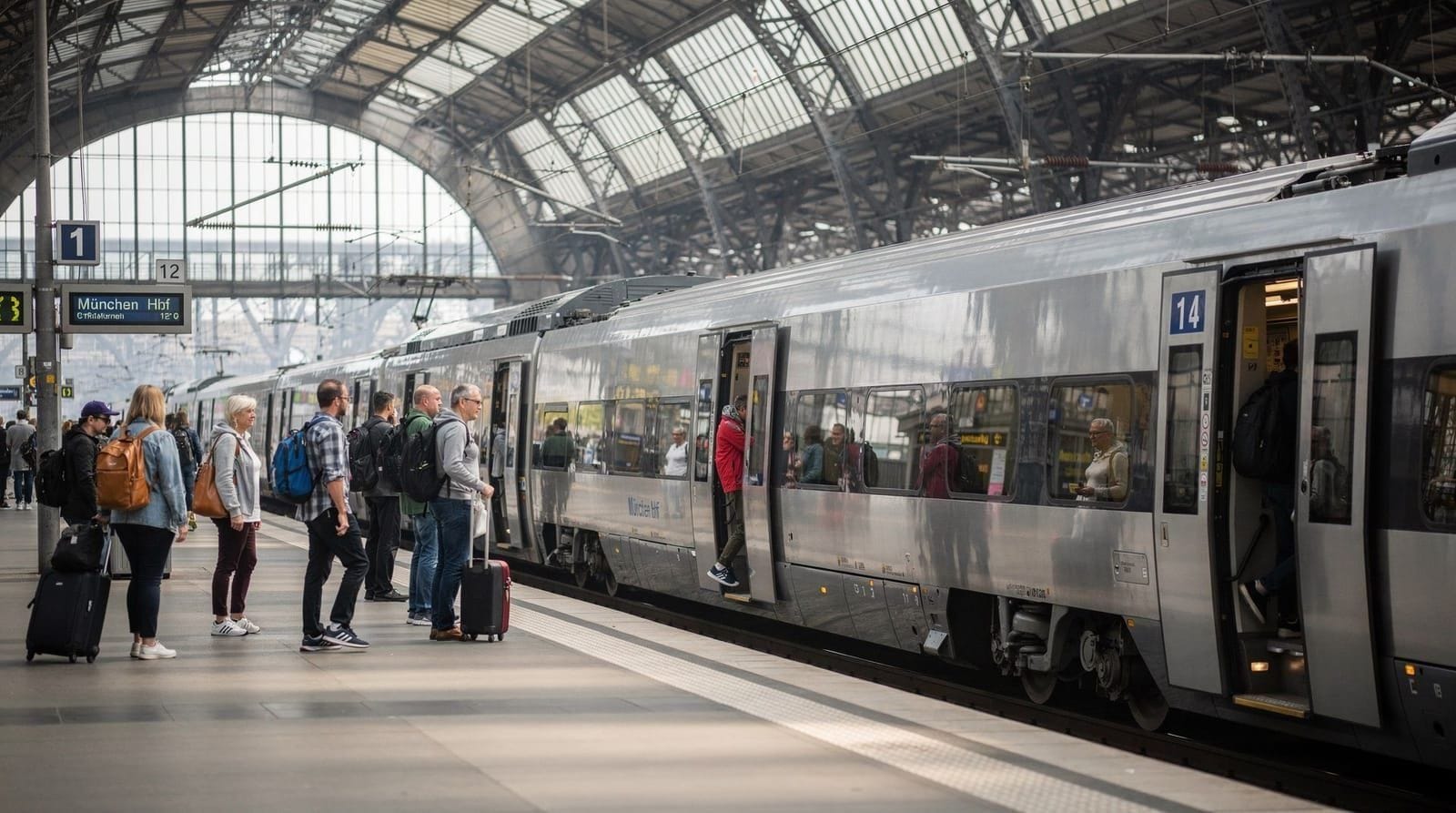
Most of Munich’s best day trips — Neuschwanstein, Garmisch, Salzburg, Dachau, Nuremberg — run on the same regional and long-distance rail network you’ll already be using inside the city, often covered partly or fully by a Bayern-Ticket. This is one of Munich’s genuine advantages as a base: you rarely need a car even for trips well outside the city, and the transport logic (validate before boarding, check the zone) stays consistent whether you’re going three stops on the U-Bahn or two hours to the Alps.
Frequently asked questions about getting around Munich
Is Munich a walkable city?
The centre is very walkable. Beyond the Altstadt and into Schwabing and Maxvorstadt, walking remains pleasant. For anything more than 25 minutes, transit or cycling is faster.
Is Munich safe to walk at night?
Yes. Munich’s crime rate is low and central streets are busy until late. Standard urban awareness applies but the city does not have areas visitors need to actively avoid.
How far is Marienplatz from Hauptbahnhof?
About 1 km — around 12 minutes walking. You will likely make this walk multiple times during a Munich visit. The direct walking route through the pedestrian zone is straightforward.
Can I get around Munich with a Deutschland-Ticket?
Yes. If you have a Deutschland-Ticket subscription (€58/month), it covers all U-Bahn, S-Bahn, trams, and buses in Munich. It is excellent value for a week-long visit. See the Munich public transport guide for details.
What is the best way to get to Neuschwanstein from Munich?
By train from Hauptbahnhof to Füssen (about 2 hours), then bus to the castle. See the Munich to Neuschwanstein day trip for the full breakdown.
Is a hop-on hop-off bus worth it if I’m also buying an MVV ticket?
It can be, for the first morning of a trip — it gives orientation and commentary that a plain transit ticket doesn’t, and you can hop off at sights and continue on foot or by U-Bahn from there. Most visitors don’t need it beyond day one once they’re comfortable with the transit map.
Do I need separate tickets for day trips outside Munich?
Usually yes, though a Bayern-Ticket often covers regional trains to popular day-trip destinations like Garmisch, Füssen or Berchtesgaden from 9am. Check the specific day-trip guide for your destination, since some routes (like Salzburg, which crosses into Austria) need a different ticket.