Munich car rental guide: when it makes sense and what to expect
From Munich: Neuschwanstein Castle full-day trip by train
Should I rent a car in Munich?
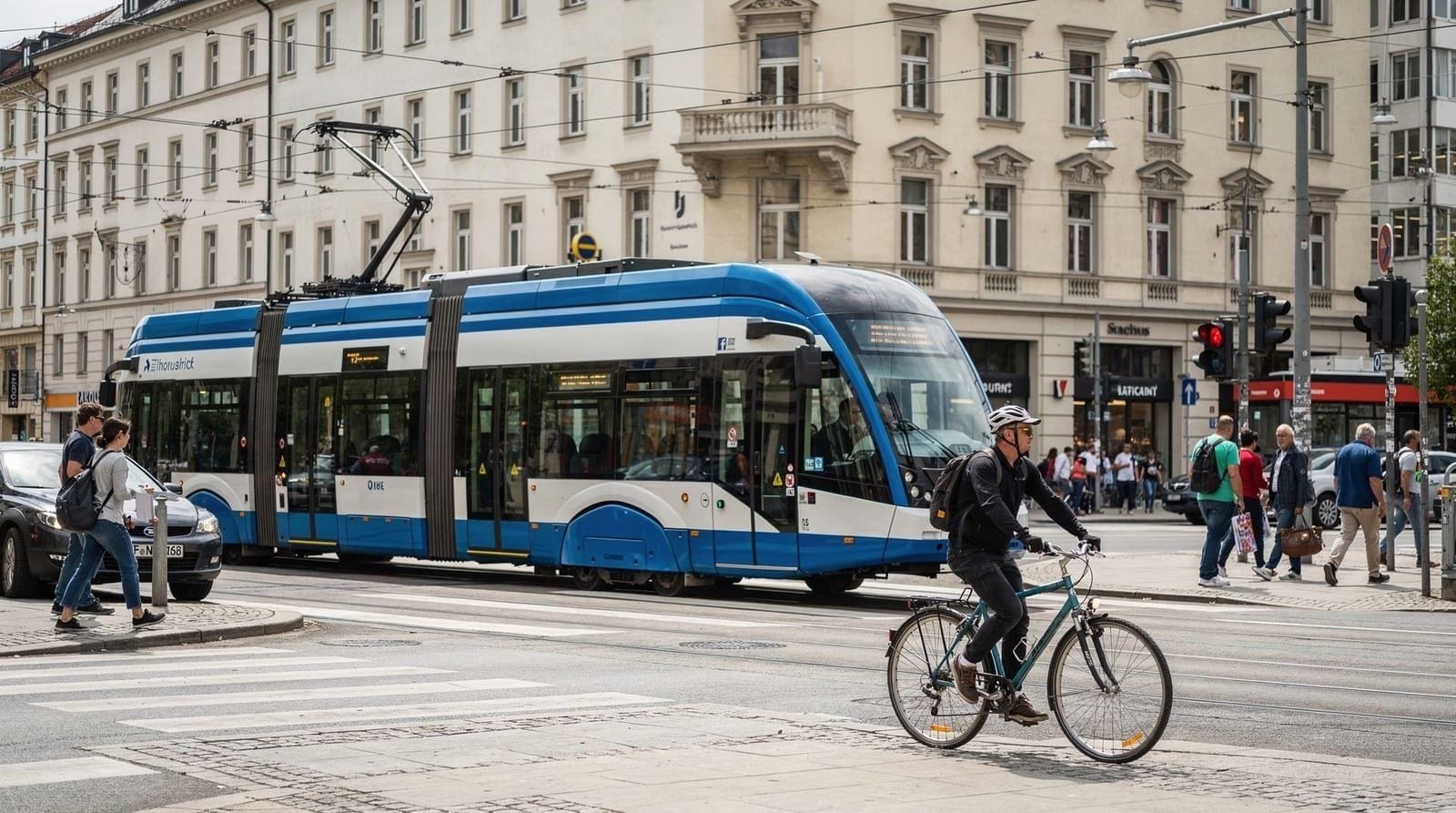
For the city itself, no — Munich's public transport is excellent and driving in the centre is slow and expensive to park. A rental car makes sense if you plan to explore remote Alpine areas, combine multiple Bavarian villages in one day, or reach destinations that trains serve poorly. Most major tourist destinations in Bavaria are accessible by train.
The honest starting point: do you actually need a car?
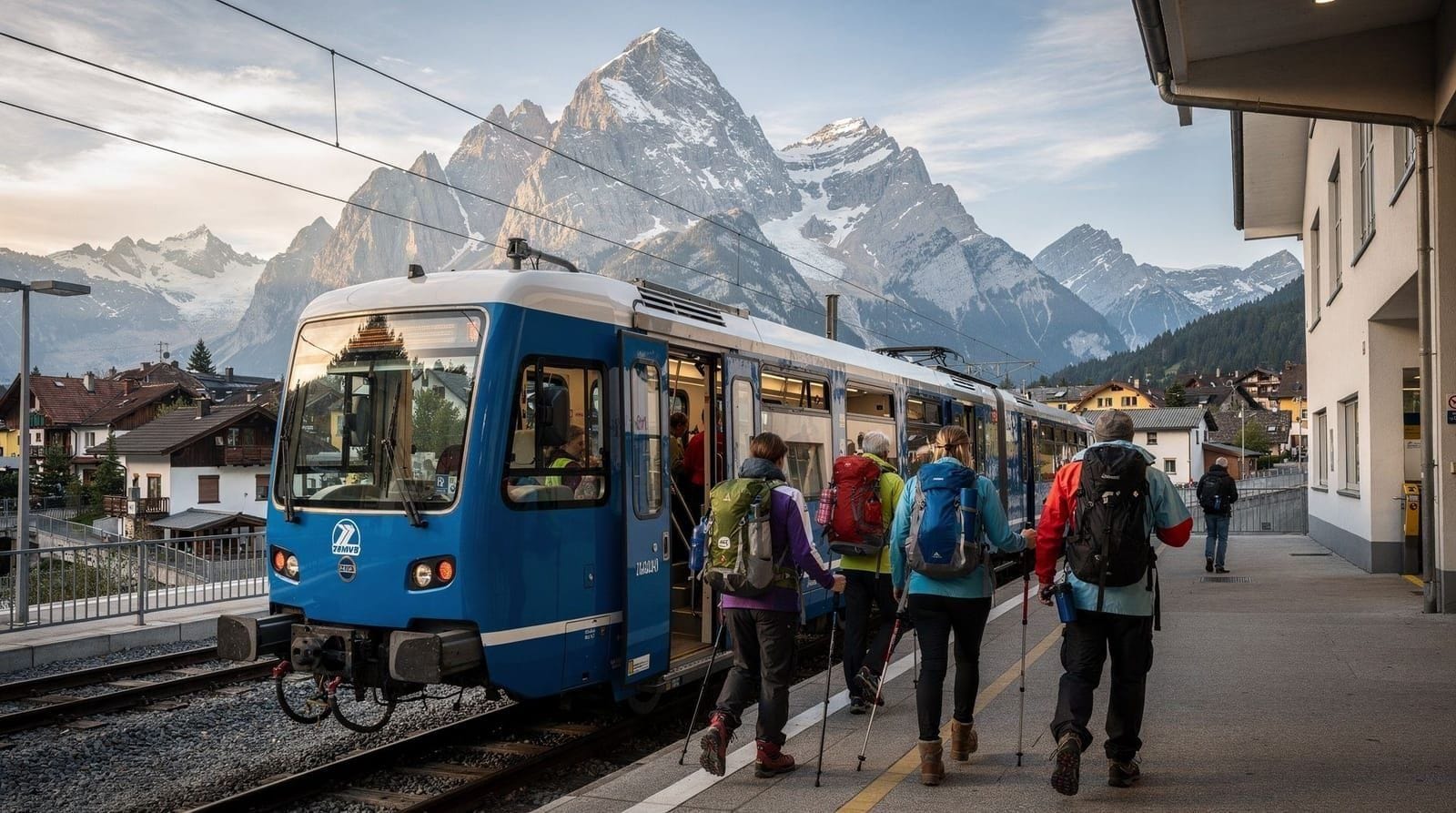
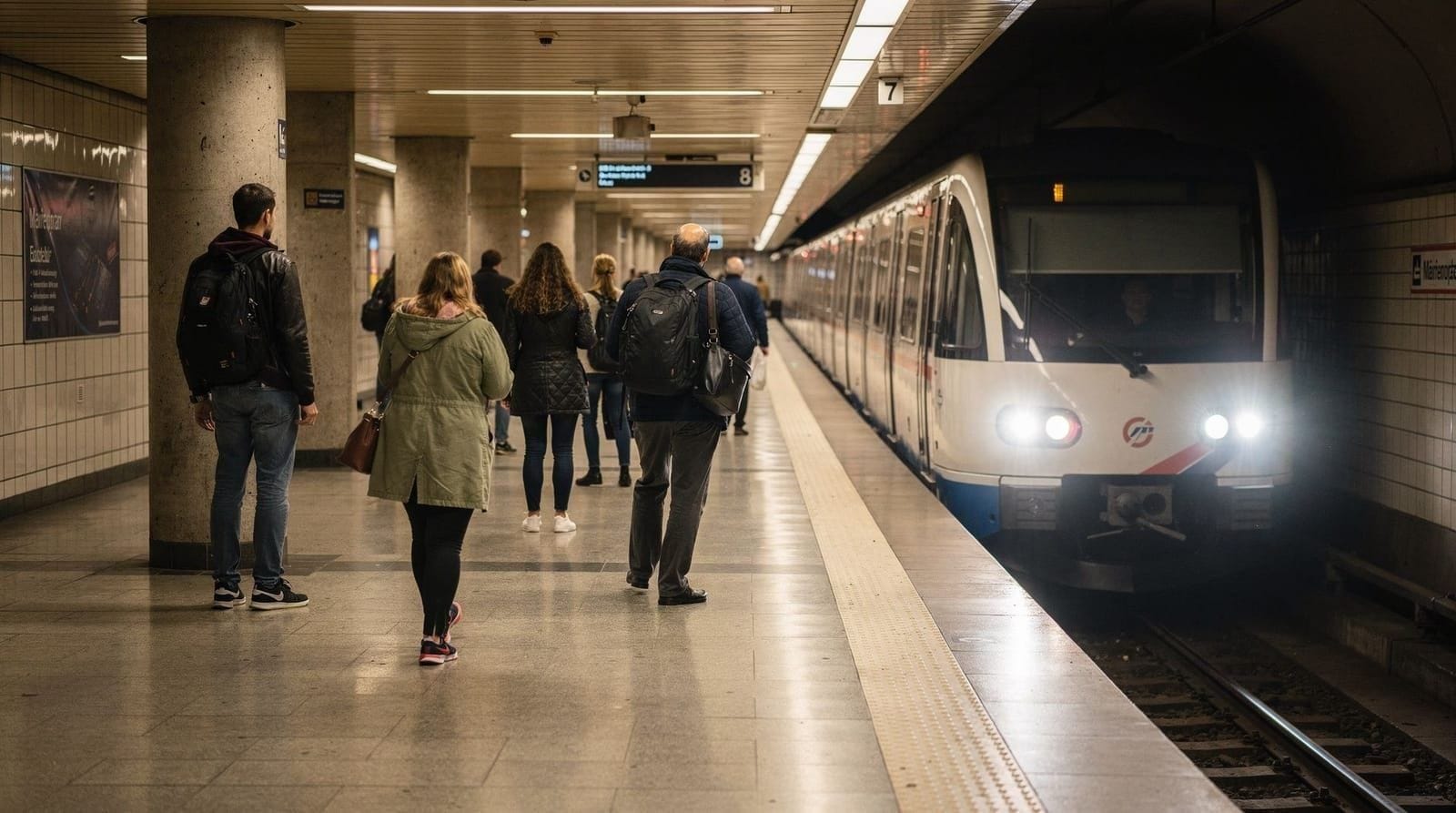
Most visitors to Munich do not need to rent a car. The city’s public transport covers the centre comprehensively, and the DB and BRB rail network reaches the most popular day-trip destinations — Neuschwanstein, Garmisch, Salzburg, Nuremberg, Regensburg — efficiently and without parking costs.
That said, a car genuinely changes what you can do in Bavaria. Certain combinations of villages, remote Alpine lakes, and off-the-beaten-path monasteries simply cannot be strung together in a satisfying day by train. This guide explains when a car is worth it and what to expect when you rent one.
| Need a car for the city? | No — public transport covers the centre comprehensively |
| Need a car for day trips? | Only for multi-stop routes trains don’t connect well |
| Typical 1-day rental | €45–75 plus fuel and parking |
| Umweltzone sticker | Rental cars from major companies already carry it |
| Minimum age | 21, with a young-driver surcharge under 25 |
| Best alternative for single-destination trips | Train + Bayern-Ticket |
If a single, well-served destination like Neuschwanstein is your only day-trip plan, the train remains the simpler and often cheaper option — see the Neuschwanstein day trip from Munich by train for that route specifically. Neuschwanstein day trip from Munich by train
When renting a car in Bavaria actually makes sense
Combining Neuschwanstein and Hohenschwangau with other stops
By train, you go to Füssen and back. By car, you can add Oberammergau, Linderhof Palace, and Ettal Monastery in the same day — all within 50 km of each other. The train does not connect these efficiently.
Reaching remote Alpine destinations
Places like Mittenwald, Oberstdorf, the Zugspitze area’s smaller walking trails, or the smaller lakes of the Allgäu require either very long bus connections or a car. If your interest is hiking in less-visited Alpine terrain, a car is the right tool.
The Chiemsee islands
You can reach Prien am Chiemsee by train, but a car makes it easier to combine the lake with nearby Berchtesgaden, Königssee, and the Eagles’ Nest — all in a single day out from Munich.
Rural Bavarian villages and monasteries
Andechs monastery (lovely beer garden, hilltop setting), Wessobrunn, Wies Church (a UNESCO-listed pilgrimage church in a field), and the Romantic Road villages between Augsburg and Füssen all benefit from having a car. Bus services exist but are infrequent.
Multi-day road trips around Bavaria
If your trip is 7+ days and you want to cover the Alps, the lakes, the historic cities, and some villages, a car from day 3 or 4 onwards (after the Munich city part of the trip) makes logistical sense.
When a car is not worth it
- Munich city sightseeing: The city centre has an Umweltzone, limited parking, high garage costs, and slow traffic. You will spend more on parking than the car is worth.
- Oktoberfest: If you are attending Oktoberfest, you should not be driving. Parking near the Wiesn is essentially impossible, and alcohol is involved.
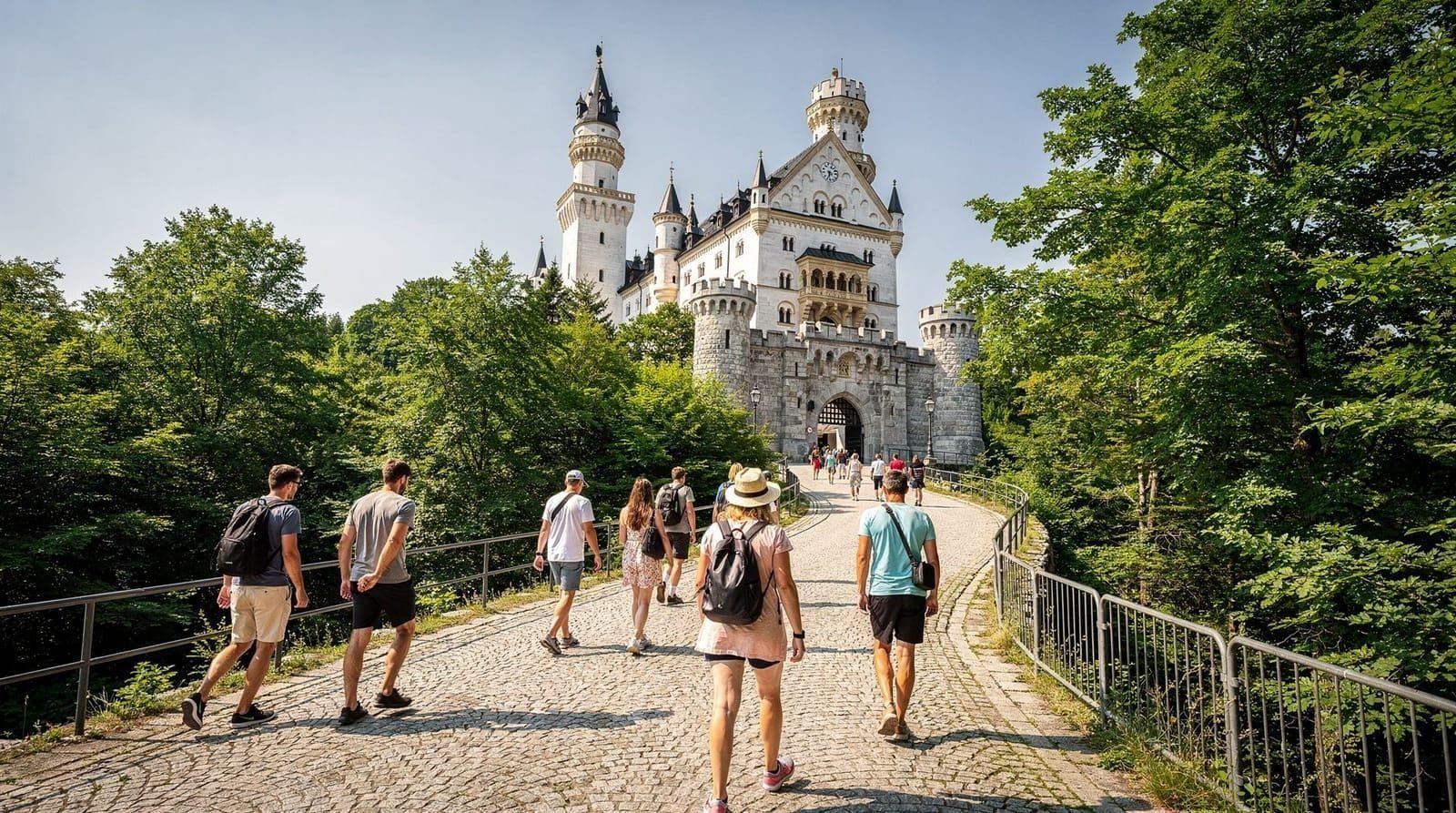
- Neuschwanstein alone: The train to Füssen and then bus 73/78 to the castle gets you there as fast as a car (given parking at Hohenschwangau can be backed up in summer), and the Bayern-Ticket makes it cheap.
- Salzburg or Nuremberg: Both are faster and cheaper by ICE train. City driving and parking in both cities is unpleasant.
Where to pick up a rental car
Munich Airport (MUC)
All major international and German rental companies have desks in Terminal 1 and Terminal 2 arrivals areas:
- Sixt — Germany’s largest rental company, often competitive on price for German pickups, strong local service network
- Hertz — broad fleet, reliable, some premium pricing
- Avis — standard international pricing
- Europcar — French company, competitive rates
- Enterprise/National — good for US travellers with brand loyalty
- Budget — typically the cheapest major brand on basic models
Airport pickup is convenient if you are arriving by plane and heading directly into Bavaria. Note that airport surcharges (Flughafenzuschlag) add €15–30 to most airport rentals.
Munich city stations
If you do not need the car immediately on arrival and are spending a day or two in Munich first, pick up from a city location to avoid the airport surcharge:
- Sixt Hauptbahnhof: large station, broad fleet, open 7 days
- Hertz Schillerstrasse: central, near Hauptbahnhof
- Europcar Sendlinger Strasse: convenient to the Altstadt
- Several other company branches are within 15 minutes’ walk of the main station
Booking directly from company websites or comparison sites (Check24, Rentalcars.com) typically yields better prices than walking up.
The Umweltzone: what you need to know
Munich’s city centre is designated as an Umweltzone (low-emission zone). Vehicles entering the zone must display a valid Umweltplakette (emission sticker) — specifically the green (best emissions) sticker for Munich’s zone.
For rental cars: Virtually all rental cars from major companies operating in Germany are already equipped with the green Umweltplakette sticker. Confirm this when booking, but you are very unlikely to encounter a rental car without it.
For your own car from Germany: If you are driving a registered German vehicle, the sticker is issued by the TÜV or registration office based on your vehicle’s emissions class.
For non-German vehicles: EU vehicles with the right emissions standard can get the sticker before arriving. Check the Umweltplakette website (umwelt-plakette.de) in advance. Fines for entering without a valid sticker are €80.
The Umweltzone boundary covers the inner ring road (Mittlerer Ring). If you are only doing Autobahn driving and parking at a Park+Ride outside the zone, you do not need to worry about it.
Parking in Munich
City centre garages (Parkhäuser)
Expect to pay €3–5 per hour or up to €35–45 for a full day at central garages near Marienplatz, Hauptbahnhof, and Schwabing. The city operates several park-and-ride facilities at reduced rates.
Central garages to note:
- Parkhaus Ettstrasse — close to the old town
- Tiefgarage Marienplatz — directly under Marienplatz, expensive but central
- Parkhaus Am Hauptbahnhof — multiple operators around the main station
Park and Ride (P+R)
Munich’s P+R system is the smart choice if you have a car but want to explore the city centre. P+R facilities are located at outer U-Bahn and S-Bahn stations (marked with a blue P+R sign on motorway exits). Parking is free or very cheap (€2–4 per day) when combined with a valid MVV day ticket. The transit takes you straight into the centre.
Key P+R stations: Fröttmaning (U6), Dülferstrasse (S3), Petershausen (S2), and many others on the ring.
During Oktoberfest, using P+R is essentially mandatory for any visitor arriving by car — city-centre parking is completely unavailable and the MVV runs extra services.
At major Bavarian destinations
Neuschwanstein (Hohenschwangau parking): Large paid car parks near the castle base village charge €8–10 per day. They fill up by 9–10am in summer. Arriving before 8:30am is advisable if going by car in peak season.
Garmisch-Partenkirchen: Reasonable paid car parks in town, several free or cheap options within walking distance of the train station and town centre.
Rothenburg ob der Tauber: Paid car parks just outside the old town walls; the historic centre is closed to traffic. Park and walk in.
Driving in Bavaria: practical tips
Autobahn
Bavaria’s sections of the A8, A9, A92, A93, and A95 are typical German Autobahn — stretches without speed limits alternate with sections limited to 100–130 km/h. Construction zones (Baustellen) are common and have strict limits of 60–80 km/h, with cameras and heavy fines for violations.
Driving at speeds over 200 km/h is technically possible on unrestricted sections but requires the right car and conditions. Rental cars typically have governors or are simply not suited to high-speed driving. Drive at a pace that feels comfortable and legal.
Alpine roads
Mountain roads in the Bavarian Alps are generally well maintained but can be narrow, have sharp bends (Kehren), and require caution in poor weather. Satellite navigation is useful but check for altitude-dependent road closures in winter. Mountain passes may be closed in snow — check the Bayerisches Staatsministerium traffic information before heading into the Alps in November through April.
Fuel
Germany runs on premium 95-octane (Super) and 98-octane (Super Plus) petrol, as well as diesel. Petrol stations (Tankstellen) are common on Autobahn and in towns. Prices in 2026 are typically higher at Autobahn service areas (Raststätten/Autohöfe) — if possible, fill up in town.
Approximate costs for a Bavaria driving day
This is a rough real-world estimate for renting a car for one day to cover the Neuschwanstein + Hohenschwangau + Oberammergau route:
| Item | Approximate cost |
|---|---|
| Compact car rental, 1 day | €45–75 |
| Fuel (Munich round trip ~200 km) | €20–30 |
| Parking at Hohenschwangau | €8–10 |
| Parking in Oberammergau | Free / €3 |
| Neuschwanstein castle ticket | €21 (timed entry) |
| Hohenschwangau castle ticket | €21 |
| Total (excluding food) | approximately €115–160 for the day |
By comparison, the same journey by train using a Bayern-Ticket (2 adults) would cost €39 total for all transport, with the castle tickets on top. The car adds convenience but costs more.
Renting from outside the EU
US, Canadian, and Australian drivers: your national licence is accepted in Germany, but rental companies typically ask for an International Driving Permit (IDP) alongside your home licence. Obtain an IDP from your national automobile association (AAA in the US, CAA in Canada, NRMA in Australia) before travelling. Credit card insurance coverage for rentals varies — check with your card issuer.
Minimum age: Most companies require drivers to be at least 21, with a young driver surcharge for under-25s. Some companies require 25+ for larger vehicles.
Car versus train versus guided tour: an honest comparison
For most of the destinations covered in this guide, a rental car is one of three genuine options, and each has a different trade-off.
| Rental car | Train (+ Bayern-Ticket) | Guided minivan/bus tour | |
|---|---|---|---|
| Best for | Multi-village combos, remote Alps | Single well-connected destinations | No driving/parking hassle, local context |
| Cost (2 people, day trip) | €115–160 (fuel, parking, rental) | ~€39 transport + tickets | €60–120 per person, tickets often included |
| Flexibility | Full control of route and timing | Fixed by timetable | Fixed by group itinerary |
| Effort | Highest — driving, parking, navigation | Low | Lowest |
| Good example route | Neuschwanstein + Oberammergau + Linderhof | Neuschwanstein alone, Salzburg, Nuremberg | Neuschwanstein + Linderhof full-day |
If the appeal of a car is really about avoiding logistics rather than reaching somewhere trains can’t, a guided tour often delivers the same relaxed day at a comparable or lower total cost. The Munich castles day trip guide covers both the self-drive and guided options for the Neuschwanstein–Linderhof combination in detail.
When public transport genuinely beats a car
It is worth being specific about where the train wins outright, since this guide spends a lot of time on when a car makes sense.
Neuschwanstein alone: parking at Hohenschwangau fills by 9–10am in summer and costs €7–10; the train plus local bus, covered by the Bayern-Ticket, is comparable in time and cheaper for a solo traveller or couple.
Salzburg: the ICE/RJ train from Munich Hauptbahnhof takes about 1h30 direct with no parking or Umweltzone concerns on arrival — city driving and parking in Salzburg’s old town is genuinely unpleasant.
Nuremberg and Regensburg: both are faster city-centre to city-centre by ICE or regional train than by car once Munich traffic and parking are factored in.
Oktoberfest: covered above, but worth repeating — do not drive if your day includes Oktoberfest. Parking near Theresienwiese during Wiesn is effectively unavailable, and drink-driving enforcement is strict.
Frequently asked questions about renting a car in Munich
Can I take a German rental car into Austria?
Yes, generally — but confirm with your rental company. Cross-border travel to Austria, Switzerland, and other EU countries is usually permitted but sometimes requires an additional fee or insurance extension. Austria requires a motorway vignette, which can be bought at petrol stations near the border (10-day vignette costs around €9.90 in 2026).
Is the Sixt card worth it for a Munich rental?
Sixt’s loyalty programme (Sixt Express) can speed up pickup and offers some discounts. For a one-off rental, the difference is minor. For frequent Germany travellers, a Sixt loyalty account is useful.
Can I pick up a car in Munich and drop it in a different city?
One-way rentals are possible within Germany (e.g., Munich pickup, Frankfurt drop-off) but attract a one-way fee that can be significant (€100–250 or more depending on distance and company). One-way between Germany and Austria is often not permitted or very expensive.
What kind of car is best for the Bavarian Alps?
A standard compact or mid-size works fine on main Alpine roads. Mountain-specific roads rarely require 4WD in summer. In winter (November–April), winter tyres are legally required in Germany when conditions demand it — rental cars should already have these fitted in winter months; confirm when booking.
Is it better to book direct or through a comparison site?
Comparison sites (Rentalcars.com, Kayak, Check24) often surface the best prices across multiple companies. However, reading the fine print on included insurance and fuel policy matters. CDW (collision damage waiver) is often not included in the lowest quoted price — always check the full-cost breakdown before booking.
Is it cheaper to rent a car for a single day trip or book a guided tour instead?
For a solo traveller or couple doing a single castle day trip, a guided tour is usually cheaper once fuel, parking, and the rental itself are added up — a rental day for the Neuschwanstein–Oberammergau–Linderhof route runs €115–160 excluding food, while guided full-day tours covering similar ground often run €70–110 per person with tickets included. For groups of three or more sharing one car, self-driving usually becomes the cheaper option.
Do I need snow tyres or chains to drive in the Bavarian Alps in winter?
German law requires winter tyres (not chains) whenever winter conditions are present, from roughly November to April. Rental cars picked up in Germany during these months should already have winter tyres fitted as standard — confirm this explicitly when booking rather than assuming, particularly for early or late-season bookings near the boundary dates. Snow chains are rarely required on main roads but can be mandatory on some higher Alpine passes during heavy snowfall; check current conditions before departure.