Garmisch and Zugspitze day trip from Munich
From Munich: Zugspitze mountain van tour with Garmisch town
How do you get from Munich to Garmisch-Partenkirchen?
Take the Bayerische Oberlandbahn (BOB) train from Munich Hauptbahnhof direct to Garmisch-Partenkirchen. Journey takes about 1 hour 22 minutes. The Bayern-Ticket covers this route and costs €29 for 1 person, €6 per additional person up to 5 total.
Why Garmisch-Partenkirchen deserves a full day
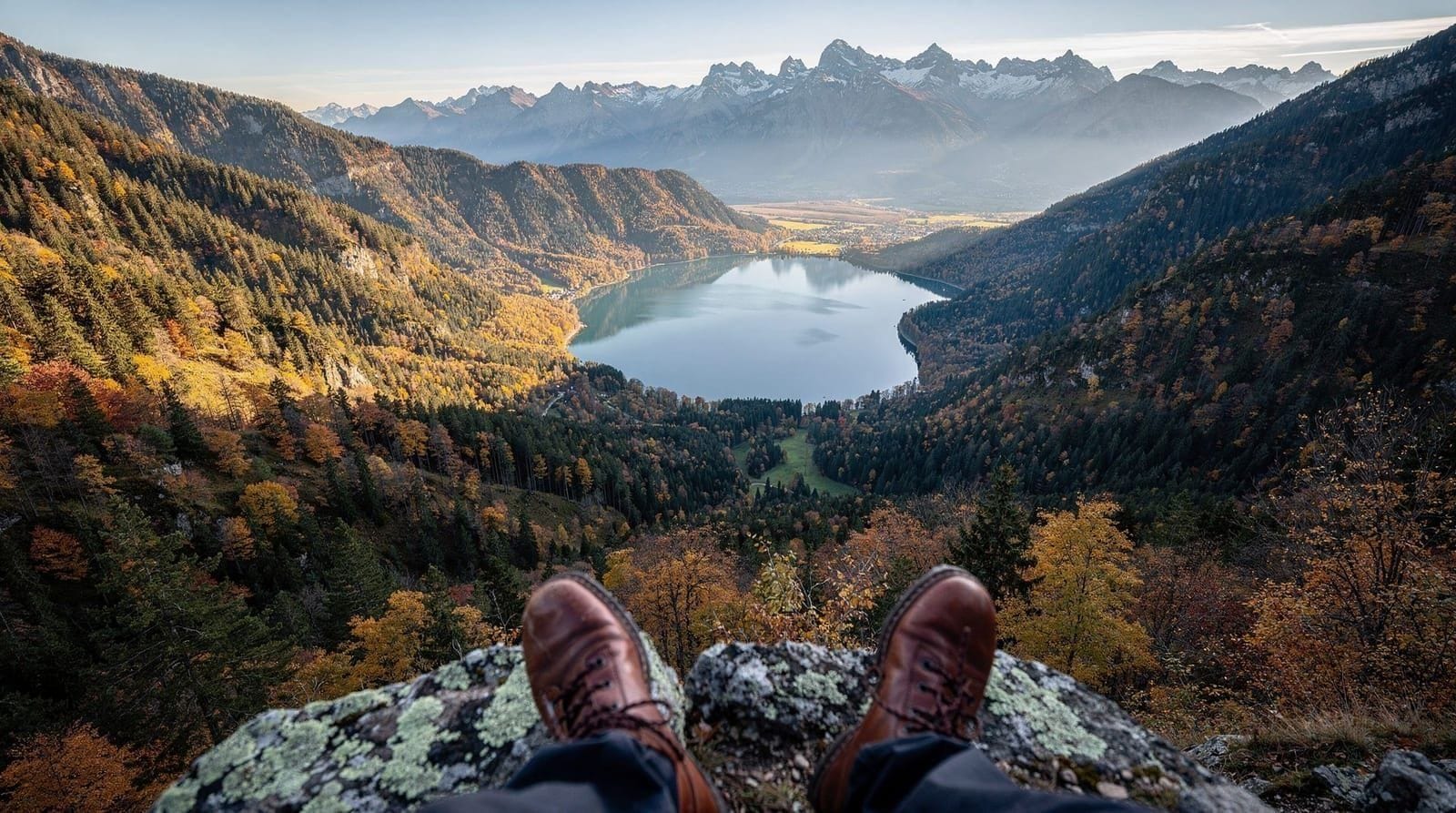
Ninety kilometres south of Munich, the road runs out of flat. The Bavarian Alps rise abruptly from the foothills and the valley that holds Garmisch-Partenkirchen is ringed on three sides by peaks that would be headline destinations anywhere else in Europe. Here, they are a train ride away.
Garmisch-Partenkirchen is actually two towns fused by bureaucratic necessity in 1935 ahead of the Winter Olympics. Garmisch, to the west, has the train station, most of the restaurants, and a relaxed pedestrianised centre. Partenkirchen, ten minutes’ walk east, is quieter, lined with painted Lüftlmalerei facades, and feels more like the market town it once was. Together they form a base for what is arguably the best single day out from Munich: a morning on Germany’s highest mountain and an afternoon wandering a Bavarian town that has not yet been fully digested by tourism.
The Zugspitze at 2,962 metres is the obvious draw. But this guide is about more than the summit cable car. It covers the train journey, the full range of things to do around Garmisch-Partenkirchen, honest advice about the Zugspitze experience (including when the summit is likely to be in cloud), and how to structure a day that is not simply a queue to the top and back.
| Where | Garmisch-Partenkirchen, 90km south of Munich |
| Cost | Bayern-Ticket ~€29; Zugspitze return ~€69.50 adult |
| Time needed | Full day recommended |
| Getting there | Direct train, around 1h22 (Bayern-Ticket valid) |
| Best time | June–September for summit weather; check webcam before committing to the cable car |
Getting from Munich to Garmisch-Partenkirchen by train
The train connection is direct and straightforward. The Bayerische Zugspitzbahn runs from Munich Hauptbahnhof to Garmisch-Partenkirchen in approximately 1 hour 22 minutes. Trains run roughly every hour throughout the day, with the first departures around 6:00–6:30 and the last return from Garmisch well into the evening.
The key ticket to know is the Bayern-Ticket. At €29 for a single traveller and just €6 for each additional person up to a maximum of five, it is one of the best-value public transport passes in Germany. The ticket covers all regional DB trains in Bavaria for an entire day — which means the full journey to Garmisch and back is included. On weekdays the ticket is valid from 9:00 onwards; on weekends and public holidays it is valid all day from the start of service.
A practical note: if you want to catch an early morning train on a weekday to maximise summit time, you will need a standard point-to-point ticket for the first leg (typically until 9:00). The standard single fare from Munich to Garmisch is around €20 each way without a Bayern-Ticket. On weekends, the Bayern-Ticket gives you full flexibility from the first train.
The train journey itself is worth anticipating. The line out of Munich passes through the lake district of the foothills — Starnberg, Tutzing — before climbing into increasingly dramatic scenery past Murnau. By the time you reach Garmisch, snow-capped peaks are visible from every window on a clear day.
The Zugspitze: what the summit actually involves
Germany’s highest point is not simply a cable car destination. Understanding how the mountain works saves considerable time and money.
There are two main ascent routes from Garmisch:
The rack railway (Zahnradbahn) from Garmisch station. This historic cogwheel train departs from a dedicated station immediately beside the main Garmisch-Partenkirchen Bahnhof. It climbs through the Reintal valley, past the Eibsee lake, and enters a long tunnel bored through the rock before emerging at the Zugspitzplatt glacier plateau at around 2,600 metres. From there, a short cable car ride lifts you the final 300 metres to the summit at 2,962 metres. Journey time from Garmisch to the top is approximately 75 minutes.
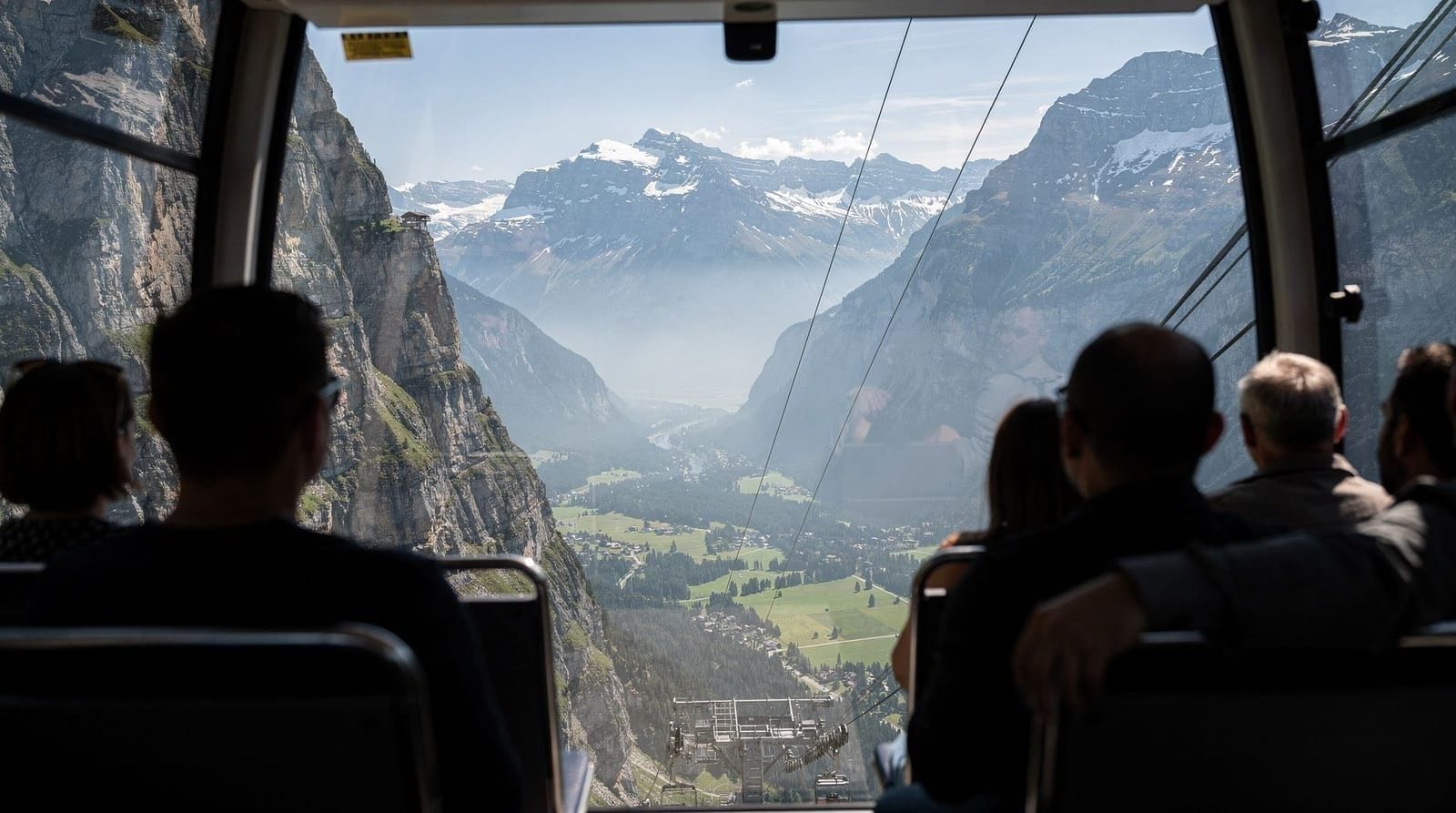
The Eibsee cable car. Eibsee is a turquoise alpine lake sitting at 1,000 metres, about 10 minutes by bus from Garmisch station. The Eibsee cable car — technically the Zugspitze Seilbahn — soars 1,945 vertical metres in one continuous span, reaching the summit in about ten minutes. It is one of the most dramatic cable car rides in the Alps.
The standard Zugspitze return ticket for 2026 is priced at €69.50 for adults and €38.50 for children aged 6–15. Children under 6 ride free. This combined ticket allows you to travel up via the rack railway and descend via the Eibsee cable car (or the reverse), giving you both experiences in a single day without paying twice.
Important: the Bayern-Ticket does NOT cover Zugspitze railway tickets. These are separate purchases at the Zugspitze Bahnhof or online in advance.
During peak summer weeks — particularly late July and August — queues for both the rack railway and the Eibsee cable car can be substantial. Booking tickets online in advance is strongly advised. Early starts also help: the first rack railway departure from Garmisch is before 7:00, and the summit is often at its clearest before 11:00. 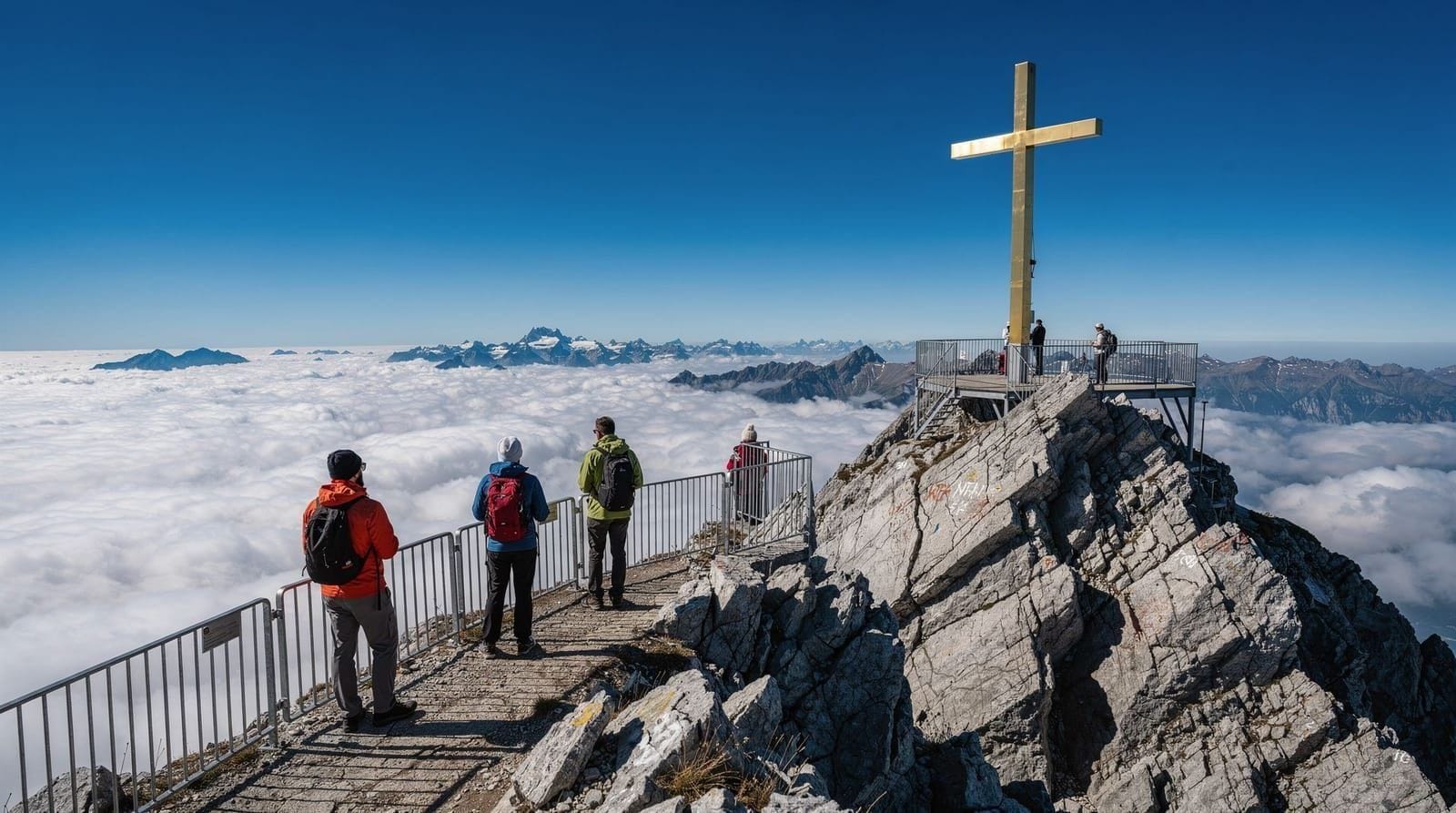 tour of Germany's highest peak ZugspitzeCheck availability
What to do at the Zugspitze summit
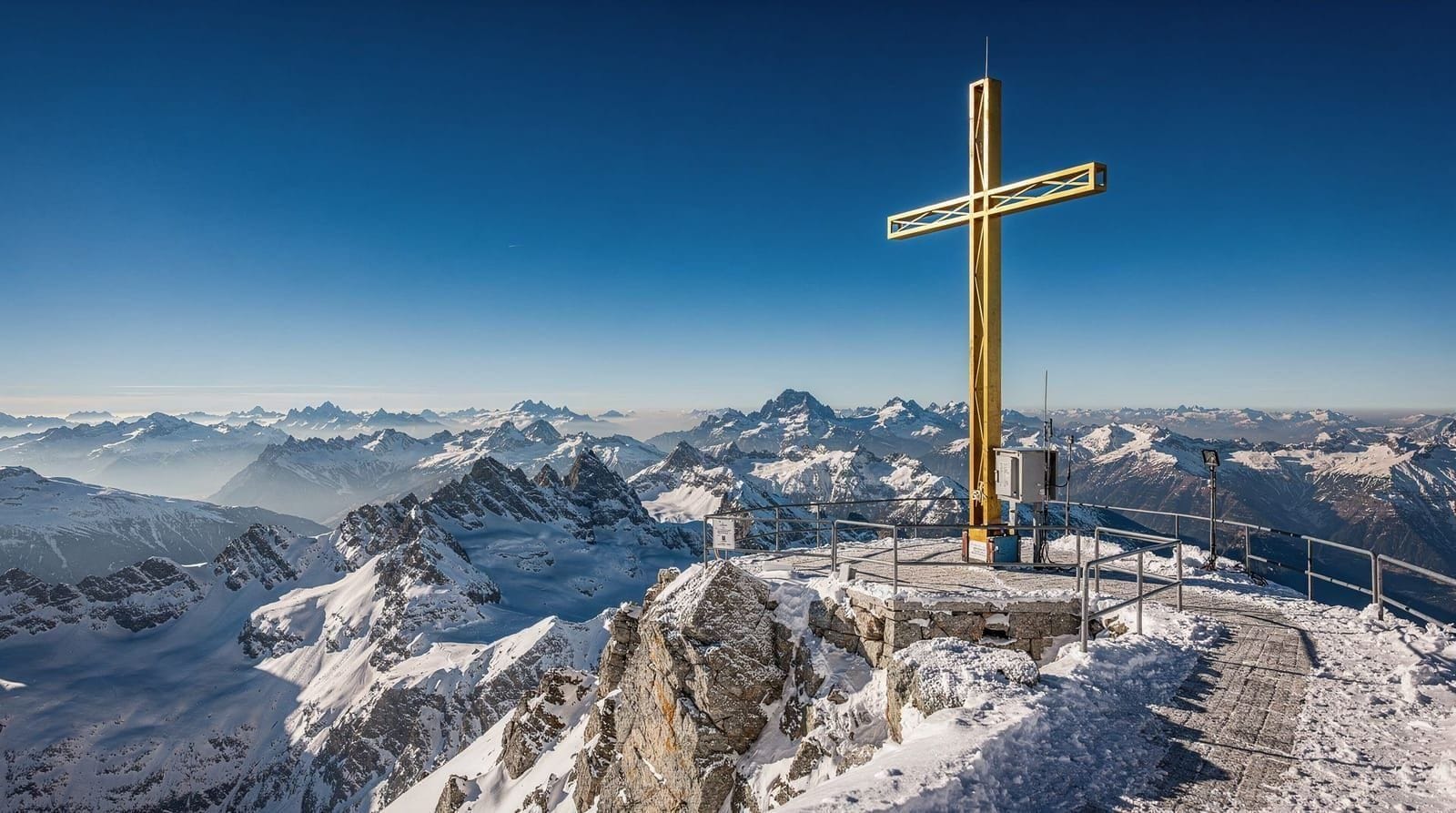
The summit complex is extensive for a mountain top. There are two restaurant terraces, an indoor panorama restaurant, a small glacier observation area, and the famous German-Austrian border marker at the very peak. On a clear day the 360-degree views span four countries: Germany, Austria, Switzerland, and Italy.
The glacier itself — the Zugspitzplatt — is visibly retreating year by year. What once looked like a permanent snowfield is now a managed remnant with artificial snowmaking covering the ski runs in winter. The experience is still striking but worth setting expectations: the glacier is not the vast white expanse it appears in older photographs.
Allow 2–3 hours at the summit if you plan to eat, walk the accessible paths between the two summit stations, and watch conditions change. The exposed summit terrace is spectacular but genuinely cold even in summer. Temperatures at 2,962 metres in July hover around 2–6°C and the wind chill can be severe. Pack a proper jacket regardless of the weather in Munich or Garmisch below.
One honest caveat: the Zugspitze summit sits in cloud with surprising frequency, even on days when the valleys are clear. Check the summit webcam on the Zugspitze website the morning of your visit. If you see cloud at the top, consider delaying departure by a few hours or switching to an alternative plan for the morning. The view from a cloud-covered summit is grey concrete and nothing else.
For a broader look at how the Zugspitze compares with other Bavarian Alps cable cars — including cheaper and less crowded alternatives on clear days — the comparison guide covers six mountains in detail.
The Eibsee: worth the stop even without the Zugspitze
If the summit is in cloud, or if budget is a concern, the Eibsee alone justifies the trip to Garmisch.
The lake sits in a shallow bowl carved by glaciers, and its colour — a clear turquoise-green from the rock flour suspended in the snowmelt — is striking even by alpine lake standards. A well-marked path circles the entire lake in about 1.5–2 hours, passing through lakeshore forest with constant views up to the Zugspitze walls above. There is a lakeside hotel and beach area with rental boats, making it a viable half-day destination in its own right.
The bus from Garmisch Bahnhof to the Eibsee takes around 10 minutes. If you are going to the Zugspitze via the Eibsee cable car, allow time for at least a short lake walk before or after the ascent.
The Partnachklamm gorge: the underrated alternative
Not everyone wants to spend €69.50 on a cable car. The Partnachklamm gorge is one of Bavaria’s most dramatic natural features and costs almost nothing to visit.
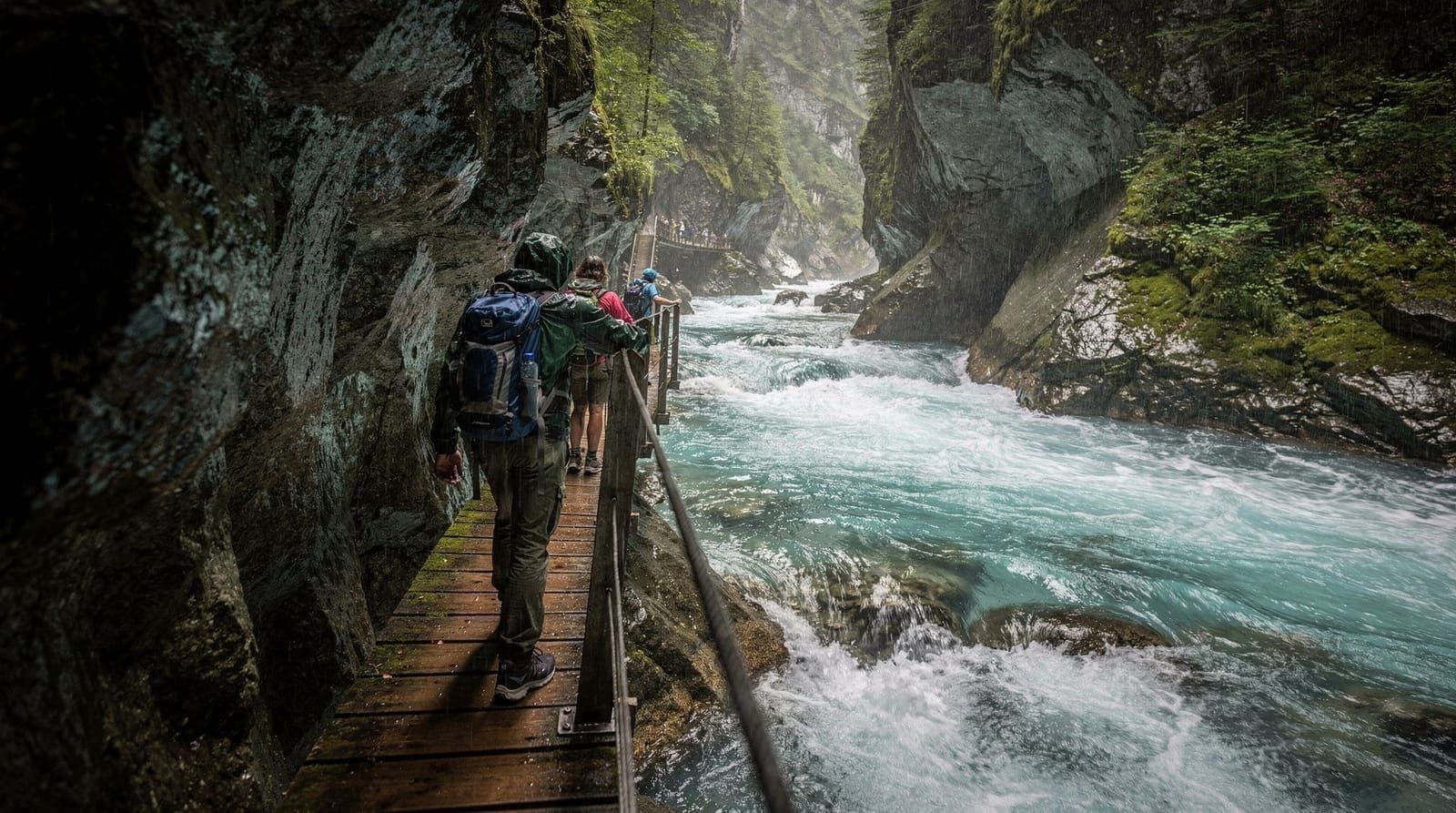
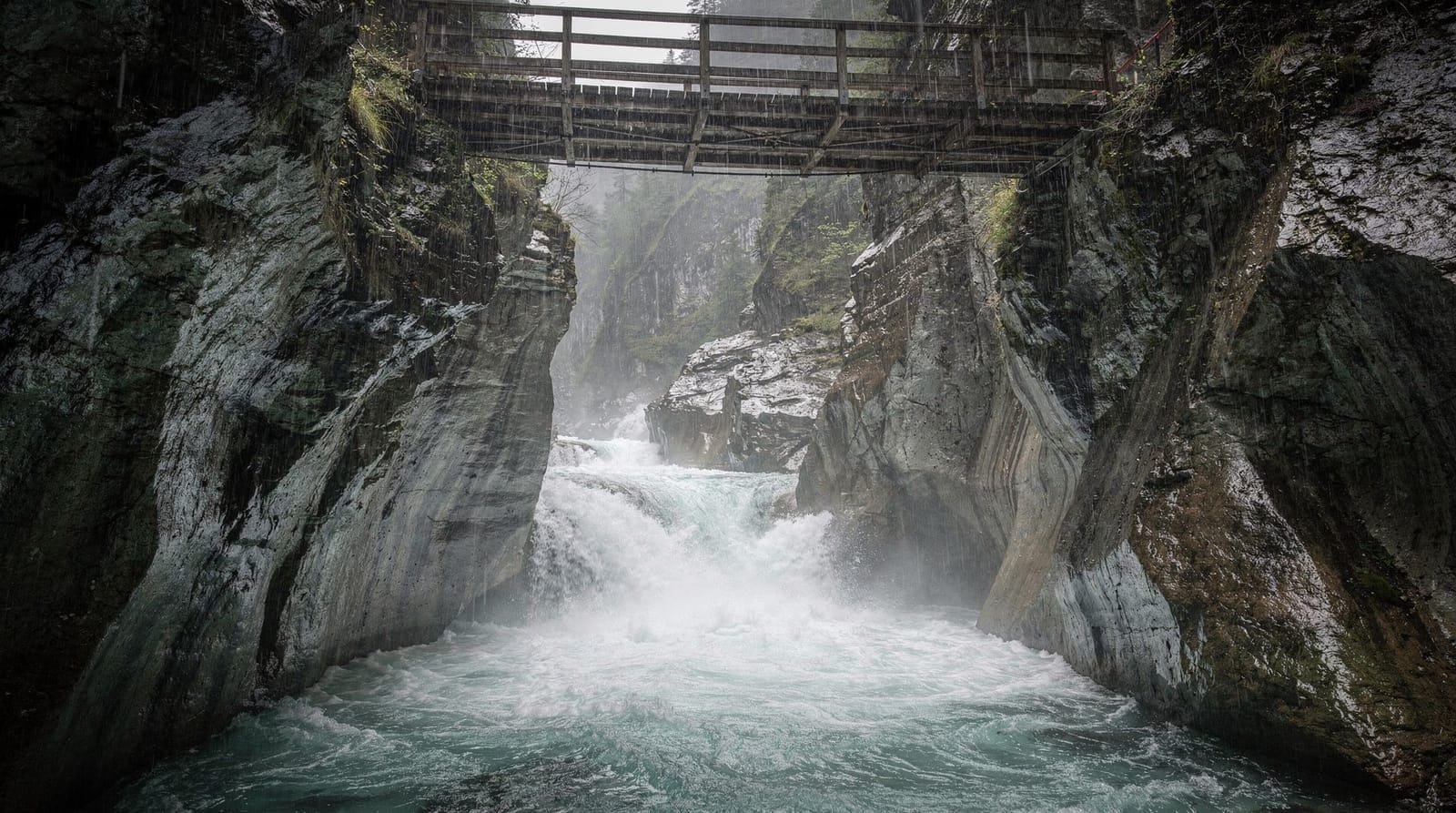
The gorge starts about 1.5 kilometres south of Garmisch town centre — a 30-minute walk or a short horse-drawn carriage ride from the main square. A small entrance fee applies at the gorge mouth (typically around €5 for adults), and from there a carved path follows the Partnach river for roughly 700 metres through a canyon where sheer limestone walls rise up to 80 metres on either side.
In summer the gorge fills with the noise of the river; in winter sections freeze into spectacular ice formations. The path is wet and occasionally narrow but not technically demanding — good shoes with grip are the main requirement. The full circuit including the walk from town and back takes about 1.5–2 hours.
The Partnachklamm pairs well with a morning on the Zugspitze: take the mountain early, return to Garmisch for lunch, and walk to the gorge in the afternoon before catching an evening train back to Munich.
For a dedicated guide to Partnachklamm and other Garmisch trails, more detail on the path conditions and seasonal differences is covered there.
Garmisch town: how to spend the afternoon
After a morning in altitude, the town centre earns its place in the itinerary. The pedestrianised old town in Garmisch has good cafés, traditional bakeries with Bavarian pastries, and a range of restaurants that serve better food at lower prices than the touristy zones around Munich’s main attractions.
The Lüftlmalerei paintings on the facades of older buildings in Partenkirchen — elaborate religious and pastoral scenes covering entire exterior walls — are specific to this corner of Bavaria and genuinely worth a slow walk to see properly. The Olympic ski stadium from the 1936 Winter Games sits on the edge of town and is open for visits; the original jump ramps and wooden stands have been preserved in part.
For walkers with energy remaining, the Garmisch hiking guide covers routes ranging from valley walks requiring no special equipment to ridge approaches to peaks above 2,000 metres.
Eating well in Garmisch: Restaurants in the pedestrianised centre and Partenkirchen’s old quarter generally offer better value than similar spots in central Munich, partly because the town caters to hikers and skiers who want a substantial meal rather than tourists paying a location premium. Traditional Bavarian dishes — Schweinshaxe, Kaiserschmarrn, fresh trout from local streams — are widely available, and bakeries near the main square are a good, cheap option for a quick lunch between activities. If you are combining the Zugspitze with an afternoon in town, a late lunch after 2pm generally means shorter waits than the midday rush.
Organised tours: when they make more sense than the train
The train-and-cable-car combination is the right choice for independent travellers comfortable navigating German public transport. For groups, families with young children, or visitors who want the logistics handled, a guided day tour from Munich removes the planning entirely.
Small-group minibus tours to Garmisch and the Zugspitze typically include direct hotel pickup in Munich, round-trip transport, and a guide who explains the mountain geography and Bavarian culture throughout the day. They also often include a stop at the Eibsee that is easy to miss on a self-guided itinerary. Zugspitze mountain van tour with Garmisch townCheck availability
Private options are worth considering for families or groups of four or more, where the per-person cost becomes competitive with public transport once cable car tickets are factored in. A private tour to Zugspitze and Eibsee also allows flexible timing — useful when managing summit weather windows.  Eibsee Lake and Zugspitze Mountain private alpine tourCheck availability
Suggested itineraries: structuring your day
Early-start Zugspitze focus
Catch the 6:30 train from Munich Hauptbahnhof (standard fare applies before 9:00 on weekdays). Arrive Garmisch around 7:50. Board the 8:02 rack railway from Zugspitze Bahnhof. Reach the summit by 9:15. Spend 2.5–3 hours at the top and descend via the Eibsee cable car around 12:00. Walk the Eibsee shore path for an hour. Bus back to Garmisch by 13:30. Lunch in the old town, afternoon walk to Partnachklamm, return to Munich on the 17:00 or 18:00 train. Full day, high mileage, best views.
Relaxed weekend day
Take a Bayern-Ticket and catch the 9:00 or 9:30 train from Munich. Arrive Garmisch around 10:50. Walk directly to Partnachklamm for a morning gorge visit. Back for lunch at noon. Afternoon: take the bus to Eibsee for swimming or walking. Return to Garmisch for an early dinner and a 19:00 or 20:00 train back. This version skips the Zugspitze cable car but costs very little beyond the Bayern-Ticket and gives a genuinely Bavarian day without crowds.
Full alpine immersion with Zugspitze
For those combining the Zugspitze day trip with surrounding areas: take the early train, ascend Zugspitze via the rack railway, descend to the glacier plateau for the walking paths, take the Eibsee cable car down, walk the lake, bus to Garmisch, visit Partnachklamm, and end with dinner in Partenkirchen. This is a long, satisfying day that uses every hour of daylight in summer.
Combining Garmisch with other nearby destinations
Garmisch-Partenkirchen sits in the centre of the Bavarian Alps and connects easily with other destinations on the same line or nearby.
Mittenwald is two stops further south on the same train line — a picture-perfect town of Lüftlmalerei facades and violin workshops at the foot of the Karwendel massif. It works as a 40-minute add-on to a Garmisch day if you want to see a town that has retained more of its traditional character. The Mittenwald destination guide covers the town and its immediate hiking options in detail.
For a different experience on another visit from Munich, the alpine lakes at Tegernsee and Chiemsee offer lake swimming and mountain scenery with lower elevation and less hiking-boot energy. Both are easier days with young children.
The best alpine views near Munich guide brings together all the summit options — including those not requiring a full day’s commitment — ranked by ease of access and view quality.
Winter visits: skiing on the Zugspitze glacier
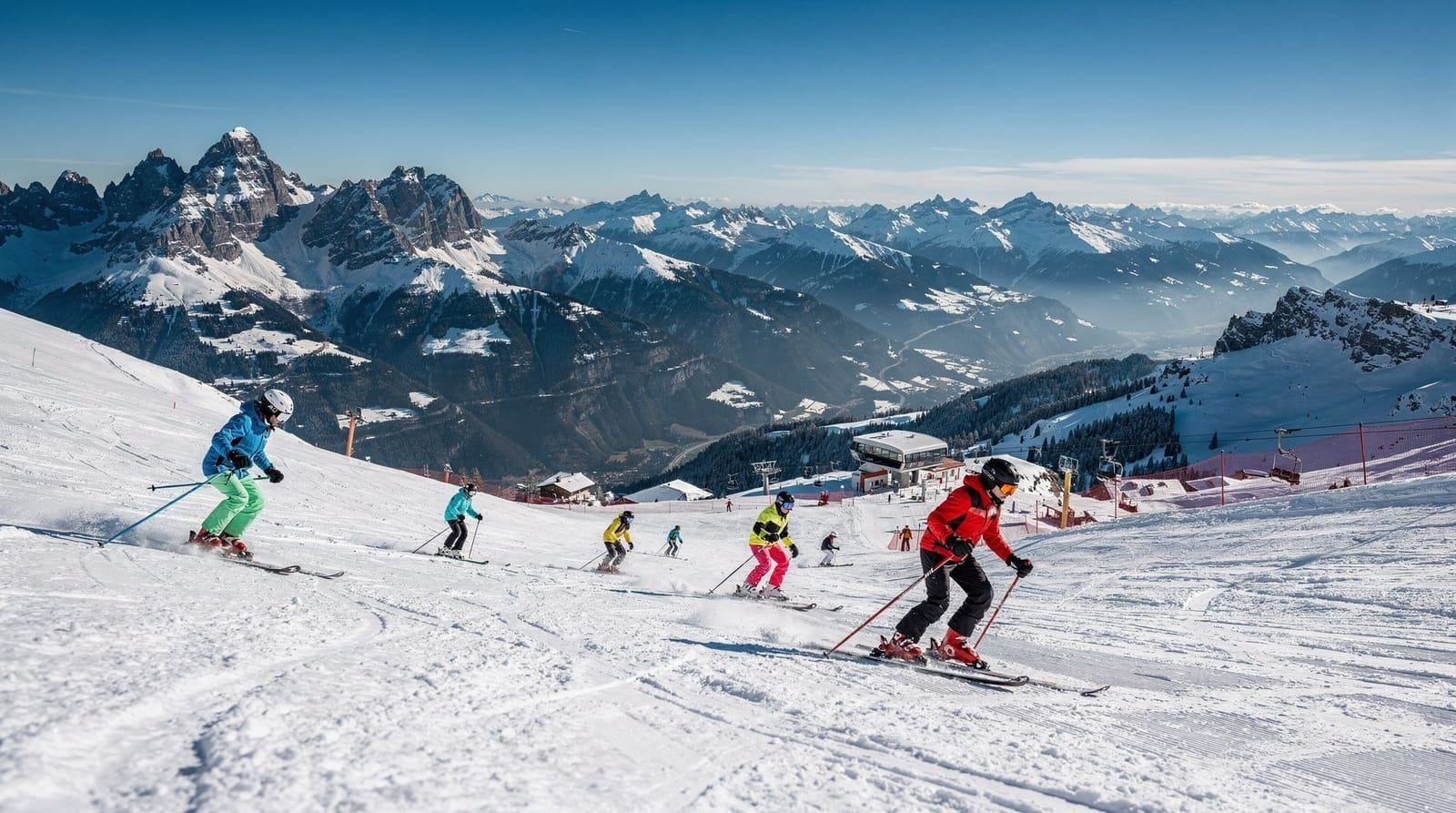
Garmisch-Partenkirchen in winter is a different destination. The town hosted the 1936 Winter Olympics and the infrastructure from that era is still visible in the Olympic stadium and original ski jumps. Today the Garmisch-Classic ski area covers the slopes of the Alpspitze and Kreuzeck with a reliable snow record, while the Zugspitze glacier runs at the top remain open for skiing even in low-snow seasons.
The Zugspitze glacier ski area is Germany’s highest and one of the few places in the country with near-guaranteed snow in December and January. Lifts access runs between 2,700 and 2,950 metres. It is small — experienced skiers will lap it in a morning — but the altitude experience and the views of the Austrian Tirol below make it unlike any other German ski day.
The Munich skiing day trips guide covers Garmisch alongside other options including Oberstdorf and Berchtesgaden with comparative lift pass prices and access details.
Garmisch and the Zugspitze by season
| Month | Weather | Crowds | Notes |
|---|---|---|---|
| Dec–Mar | Cold, snowy, glacier skiing open | Moderate, ski-focused | Best for winter sports; town has a different, quieter charm |
| Apr–May | Mild valley, still snow at altitude | Low | Partnachklamm may have restricted inner access; good value |
| Jun | Warming, generally clear mornings | Moderate | One of the best balances of weather and crowds |
| Jul–Aug | Warmest valley weather, frequent afternoon summit cloud | High | Book Zugspitze tickets online in advance; go early |
| Sep | Clear, cooling, stable | Moderate | Arguably the best month for summit visibility |
| Oct–Nov | Cooling fast, early snow possible at altitude | Low | Some cable car sections may reduce frequency |
Practical information for 2026
Train: Bayerische Zugspitzbahn from Munich Hauptbahnhof. Direct service, journey time approximately 1h 22min. Frequency roughly every 60 minutes throughout the day. Bayern-Ticket valid weekdays from 9:00, weekends all day. Single Bayern-Ticket €29, additional person €6 each, maximum 5 people.
Zugspitze tickets 2026: Adults €69.50 return, children 6–15 years €38.50 return, under-6 free. Combined ticket includes rack railway ascent and Eibsee cable car descent (or reverse). Book online at zugspitze.de, especially in July and August.
Eibsee bus: RVO bus 9606 from Garmisch Bahnhof to Eibsee, approximately 10 minutes. Check current timetable at garmisch-partenkirchen.de or RVO website.
Partnachklamm: Entrance approximately €5 adults, €3 children. Open year-round, though winter access to the inner gorge may be restricted. 30-minute walk from the town centre, or horse-drawn carriage from Olympia-Eislaufzentrum.
Weather: Check summit webcam at zugspitze.de before departure. Morning visits statistically offer clearest conditions. Summit temperature in summer 0–6°C regardless of valley conditions. Layer up.
Garmisch altitude: 720 metres. No acclimatisation needed for the town. The Zugspitze at 2,962 metres can cause mild altitude symptoms in some visitors, particularly headaches and shortness of breath. Drink water, ascend slowly, and descend if symptoms worsen.
For those comparing the Zugspitze with the Nebelhorn near Oberstdorf — a less crowded alternative with views nearly as good — the Zugspitze vs Nebelhorn guide gives a direct comparison on price, access, and summit experience.  Munich, Zugspitze, Eibsee and Austria private tourCheck availability
Is it worth it?
On a clear day, the Zugspitze is one of the most memorable experiences accessible from Munich. The rack railway is a genuine engineering curiosity, the summit views are vast in a way that photographs do not quite capture, and the combination of Germany’s highest point with a beautiful Bavarian town below makes for a day that earns its effort.
On a cloudy day, the €69.50 ticket is poor value. The gorge, the lake, and the town are all enjoyable in any weather and cost a fraction of the cable car price. Building weather contingency into your plan is not pessimism — it is how experienced visitors to the Bavarian Alps get the most out of their time.
Either way, the journey south from Munich is worth making. The Garmisch-Partenkirchen destination page has further detail on the town’s history, accommodation options, and the wider calendar of events including the New Year ski jumping competition on the Schattenberg that draws crowds from across Bavaria every January.
Frequently asked questions about Garmisch and Zugspitze day trip from Munich
Is the Bayern-Ticket valid to Garmisch-Partenkirchen?
Yes. The Bayern-Ticket covers all regional trains in Bavaria including the route from Munich to Garmisch-Partenkirchen. A single Bayern-Ticket costs €29 (€6 per extra person, up to 5 people). It's valid Monday–Friday from 9:00 and all day on weekends.How much does the Zugspitze cable car cost in 2026?
The Zugspitze summit return ticket costs €69.50 for adults and €38.50 for children (6–15) in summer 2026. This includes the rack railway (Zahnradbahn) from Garmisch and the cable car descent. Book online in advance during peak season.Can you do Garmisch and the Zugspitze in one day from Munich?
Yes, but it requires an early start. Take the first train (around 6:30 from Munich Hbf), spend 3–4 hours at the Zugspitze summit, then explore Garmisch town in the afternoon. Return trains run until late evening.What is the Eibsee and is it worth visiting?
Eibsee is a pristine alpine lake at the foot of the Zugspitze, a 10-minute bus ride from Garmisch. It's stunning and easily combined with a Zugspitze visit — the cable car departs directly from Eibsee. Allow 1–2 hours if you plan to walk the shore path.What should I wear for a Zugspitze day trip in summer?
Even in July, the summit sits at 2,962 metres and temperatures hover around 0–5°C with possible snow. Bring a warm jacket, layers, and closed shoes. Sunscreen is essential at altitude. The terrace is exposed and wind can be biting.Are there hiking options around Garmisch beyond the Zugspitze?
Many. The Partnachklamm gorge is a 45-minute walk from town and one of Bavaria's most dramatic gorges. The Alpspitze via the Alpspitzbahn cable car is another option for walkers. The town itself sits in a valley ringed by peaks with well-marked trails at every level.What is the best month to visit Garmisch and the Zugspitze?
June and September offer the best balance of clear summit weather and manageable crowds. July and August have the warmest valley weather but the highest crowds and the most frequent afternoon cloud on the summit. Winter (December to March) suits skiers, with the Zugspitze glacier offering near-guaranteed snow.Can I visit Garmisch without doing the Zugspitze at all?
Yes, and it is a genuinely good day out on its own. The Partnachklamm gorge, the Eibsee lake walk, and the town's old centre with its Lüftlmalerei facades together fill a full day for a fraction of the Zugspitze ticket price, with no weather risk.
Top experiences
Bookable activities with verified prices and instant confirmation on GetYourGuide.