Mittenwald — violin-making village in the Karwendel Alps
Discover Mittenwald's painted houses, violin workshops, Karwendel cable car, and mountain hiking — a genuine Bavarian village 90 min from Munich.
From Munich: Zugspitze mountain van tour with Garmisch town
Quick facts
- Distance from Munich
- 90 km (55 mi) south
- Train journey
- ~90 min (BRB / Zugspitze-Express, direct)
- Altitude
- 920 m (3,020 ft) village; 2,244 m (7,362 ft) Karwendel summit
- Cable car return ticket
- EUR 29 adults, EUR 18 children (2026)
- Best season
- June–October (hiking); December–March (skiing)
- Population
- ~7,400
A village that paints its walls and carves its own instruments
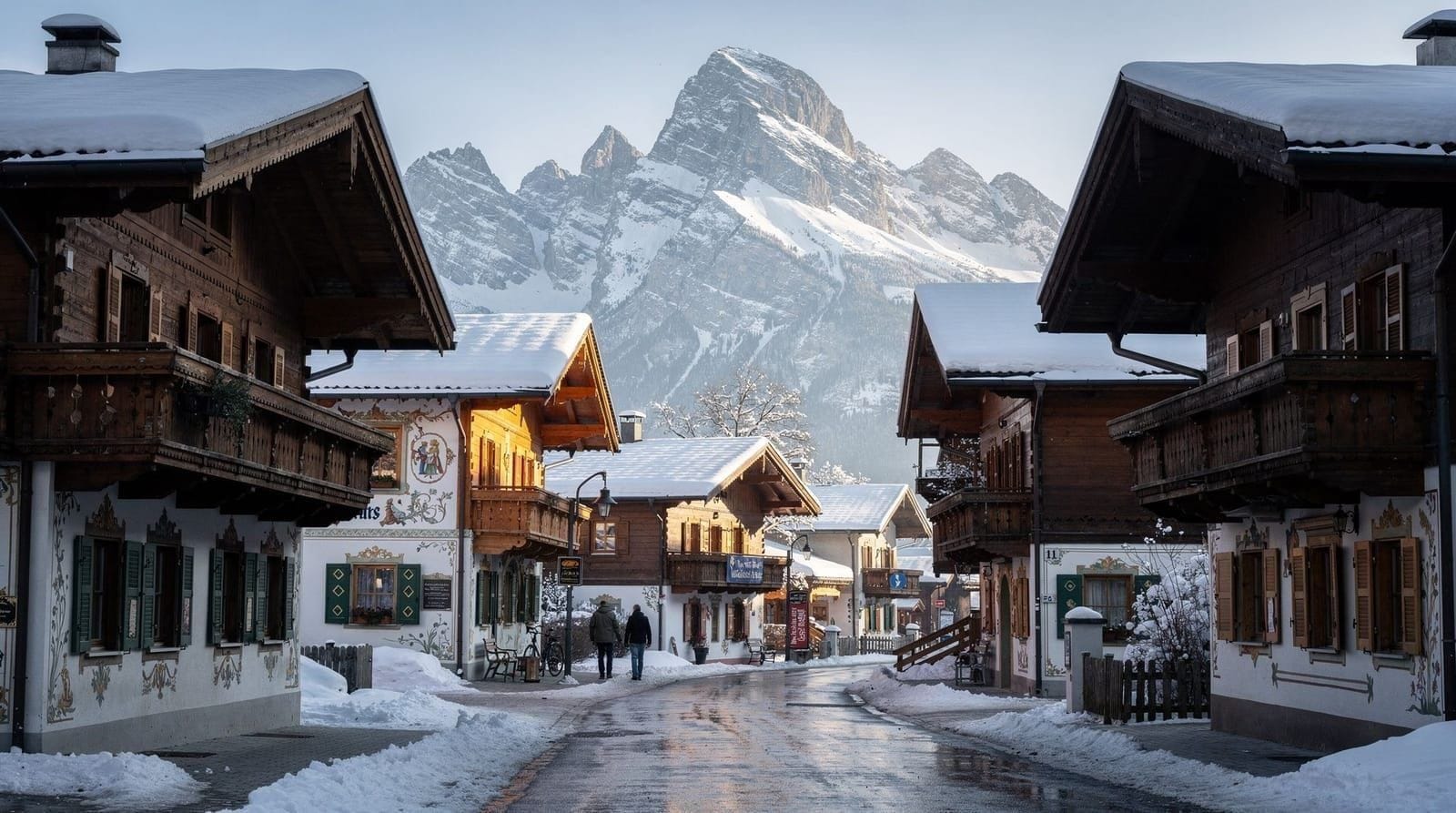
Mittenwald sits at the foot of the Karwendel massif like a village from a storybook — and unlike many tourist destinations in Bavaria, it has actually remained that way. The painted facades covering almost every house in the old centre, the smell of varnish drifting from workshop doorways, and the view of 2,000-metre limestone crags from the main street make it distinctive in a region already full of attractive towns.
quickAnswer — Is Mittenwald worth the trip from Munich? Yes, especially if you want something quieter than Garmisch-Partenkirchen. The 90-minute direct BRB train is straightforward, the Karwendel cable car gives you alpine views without a full-day commitment, and the village itself is compact enough to cover in a few hours. Budget EUR 60–90 per person for a day trip including cable car, lunch, and train tickets.
The town has two claims to fame that rarely overlap: it is one of the most important centres of violin and string-instrument making in the German-speaking world, and its street murals — known as Lüftlmalerei — are among the finest examples still visible in Bavaria. You can cover both in a half-day, then spend the afternoon in the mountains.
| Where | 90 km south of Munich, foot of the Karwendel |
| Cost | Around EUR 60–90/person incl. cable car & train |
| Time needed | Half day minimum, full day with hiking |
| Getting there | Direct BRB train from Munich Hbf, ~90 min |
| Best time | Jun–Oct hiking; Dec for quiet Christmas mood |
Getting there
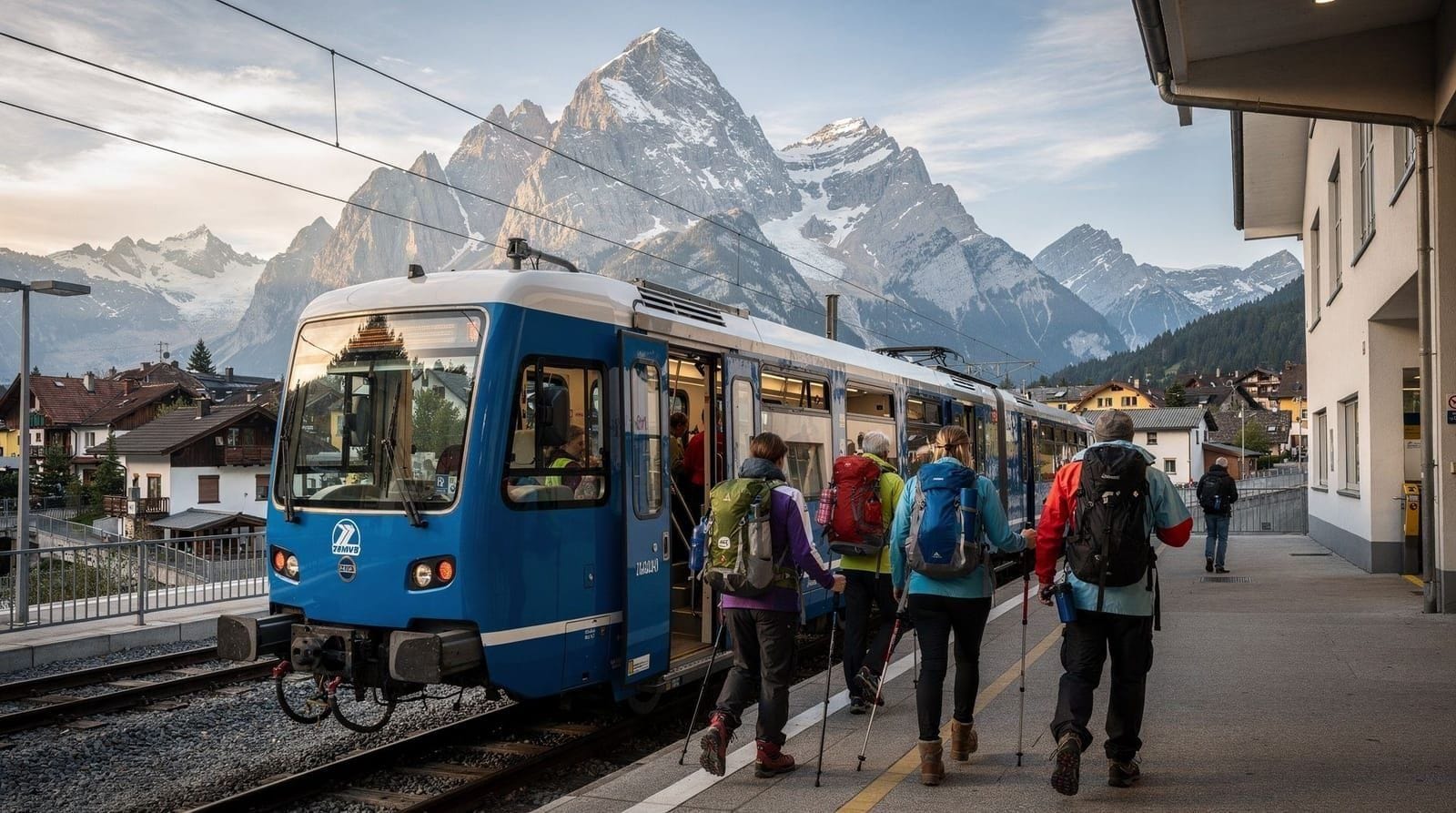
By train: The BRB (Bayerische Regiobahn) operates direct trains from Munich Hauptbahnhof to Mittenwald, journey time approximately 85–95 minutes. The Zugspitze-Express also stops here. Trains run roughly every hour. A Bayern-Ticket (EUR 29 per day, valid from 9:00, up to 5 people on one ticket) covers the entire journey and is far cheaper than a standard return. See the Bayern-Ticket guide for current pricing and rules.
By car: Take the A95 Munich–Garmisch motorway, then the B2 south to Mittenwald — about 90 minutes in normal traffic. Parking is available at the Karwendelbahn cable car station (EUR 4/day in 2026) or in the village centre (pay-and-display). A car is worth considering if you want to combine Mittenwald with Garmisch-Partenkirchen or Seefeld on the same day.
From Garmisch-Partenkirchen: Just 16 km south on the B2, about 20 minutes by car or a short BRB connection. If you are visiting Zugspitze and want a quieter overnight, Mittenwald is the logical base.
Honest note: Mittenwald has no direct shuttle or tour bus from Munich specifically — most organised day tours from Munich cover the Zugspitze or Neuschwanstein area. If you prefer guided transport, the Zugspitze and Garmisch tours below stop near the area: Zugspitze and Garmisch van day tour from Munich
Lüftlmalerei and the old town
The Lüftlmalerei style — large-scale outdoor frescoes depicting religious scenes, architectural trompe-l’oeil, or pastoral landscapes — originated in this corner of Bavaria and Tyrol in the late 17th century. Mittenwald has some of the most elaborate examples surviving, partly because the town’s prosperity from the instrument trade gave residents the money to commission them.
The most photographed is the Geigenbaumuseum building (Ballenhausgasse 3), which shows the patron saint Nikolaus of Myra and scenes from village life, repainted to the original design in 2021. Walk down Obermarkt — the main pedestrian street — and you will see frescoes on almost every third building. The best light for photography is morning, when the facades face east.
The Pfarrkirche St. Peter und Paul (parish church) at the north end of Obermarkt is worth a short visit. The interior has elaborate stucco work by Joseph Schmutzer, typical of the Bavarian Rococo style. Entry is free; the church is usually open 8:00–18:00.
The old town is compact — walking the full length of Obermarkt and back takes about 25 minutes. There are no major entrance fees, no crowds comparable to Rothenburg or Neuschwanstein, and the streets are still used daily by residents rather than being entirely given over to tourism.
Violin making in Mittenwald
Mittenwald became a violin-making centre through a single decisive act: in 1683, Matthias Klotz returned from several years apprenticed under Nicola Amati in Cremona and began teaching the craft to local families. By the 18th century, over 80 workshops were operating in the town, producing violins, violas, and cellos exported across Europe.
The tradition has contracted but not disappeared. Around 30 certified luthiers still work here, and Mittenwald remains one of the few places in the world with a dedicated state school of violin making — the Staatliche Berufsfachschule für Geigenbau on Partenkirchner Strasse, which trains students from around Europe in a 3-year programme.
Geigenbaumuseum Mittenwald (Museum of Violin Making), Ballenhausgasse 3: open Tuesday–Sunday 10:00–17:00 (closed Mondays). Entry EUR 5 adults, EUR 3 children. The collection documents the Klotz family and their successors, with around 200 instruments on display including some exceptional 18th-century pieces. The explanatory panels are in German and English. Budget 45–60 minutes.
Some workshops on Obermarkt and the surrounding streets accept visitors by appointment. Workshop Betz (Obermarkt 9) and Werkstatt Hornsteiner (Dekan-Karl-Platz) are two well-known names — email or call ahead, as most luthiers work in small studios. Do not expect a retail shop experience; these are working craftspeople’s spaces. Prices for a student-grade instrument start around EUR 800–1,200; professional-grade bowed instruments run EUR 5,000–25,000+.
If you are curious about the trade but not buying, the museum is the right starting point. The workshops are primarily for serious players or collectors.
Karwendelbahn cable car
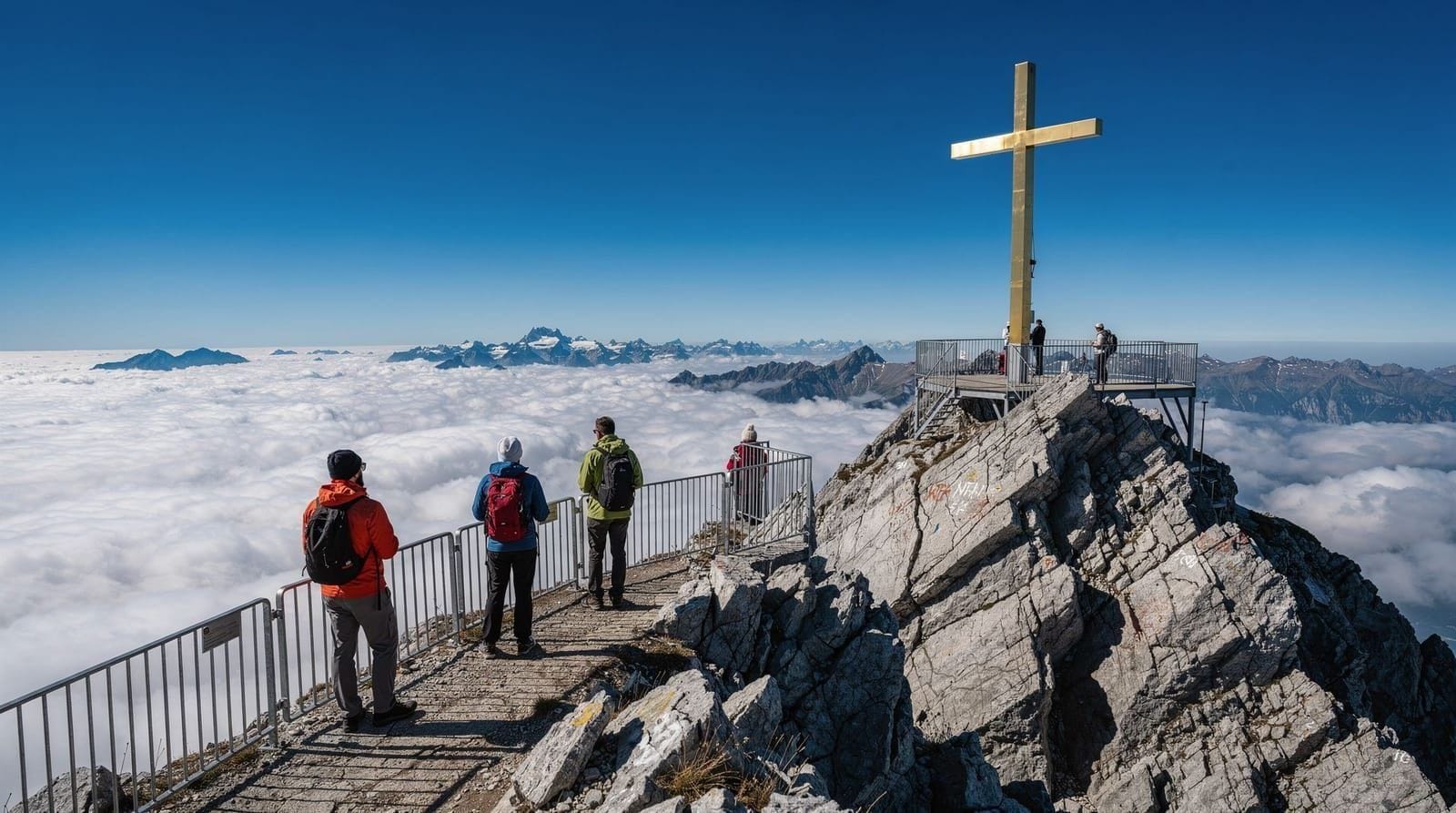
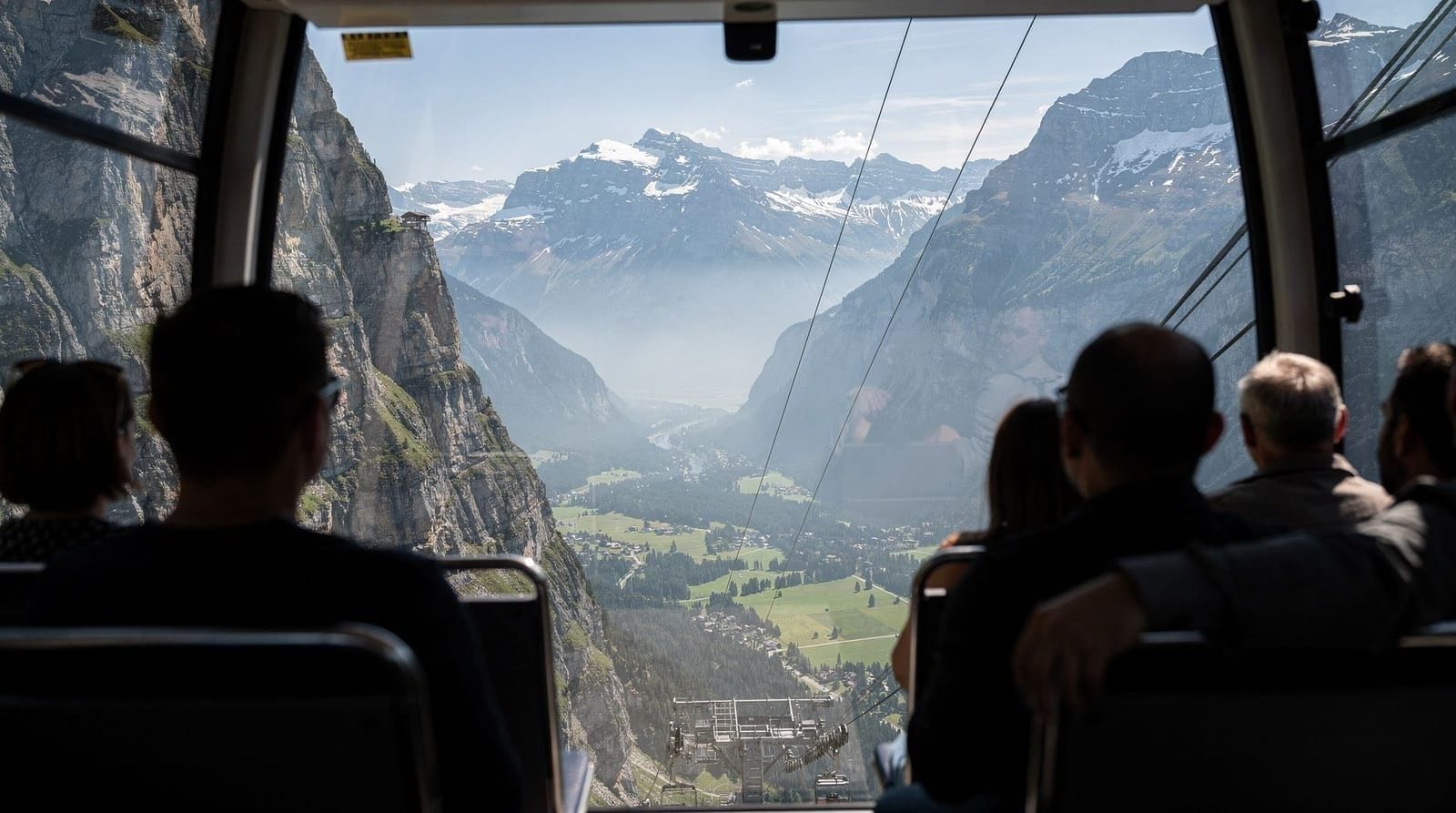
The Karwendelbahn (cable car) lifts you from the edge of the village (elevation 920 m) to the Karwendelspitze summit at 2,244 m in about 7 minutes. The views across the Isar valley, the Inn valley in Austria, and the full sweep of the northern limestone Alps on a clear day are genuinely impressive — arguably better than more crowded viewpoints because there are far fewer visitors.
Practical details (2026):
- Adult return ticket: EUR 29
- Children (6–15): EUR 18
- Children under 6: free
- Operating hours: daily 8:30–17:00 (last ascent 16:30); closed for maintenance approximately 2 weeks in November
- The ticket office is at the base station, about 10 minutes’ walk southeast of the village centre
At the top, there is a mountain restaurant (Karwendelhaus) open when the cable car runs, serving Bavarian standards (Weisswurst, Brotzeit platters, hot drinks). Prices are predictably elevated (EUR 4.50 for a coffee, EUR 14–18 for a hot dish), which is standard for a cable-car summit.
Honest assessment: On a cloudy or hazy day, the cable car costs you EUR 29 for limited visibility. Check the webcam at karwendel.de before committing. The best views are on days with a Föhn wind (warm southerly airflow), which typically produces crystal-clear conditions. Day tour to Zugspitze — Germany’s highest peak (Munich departure)
Hiking around Mittenwald
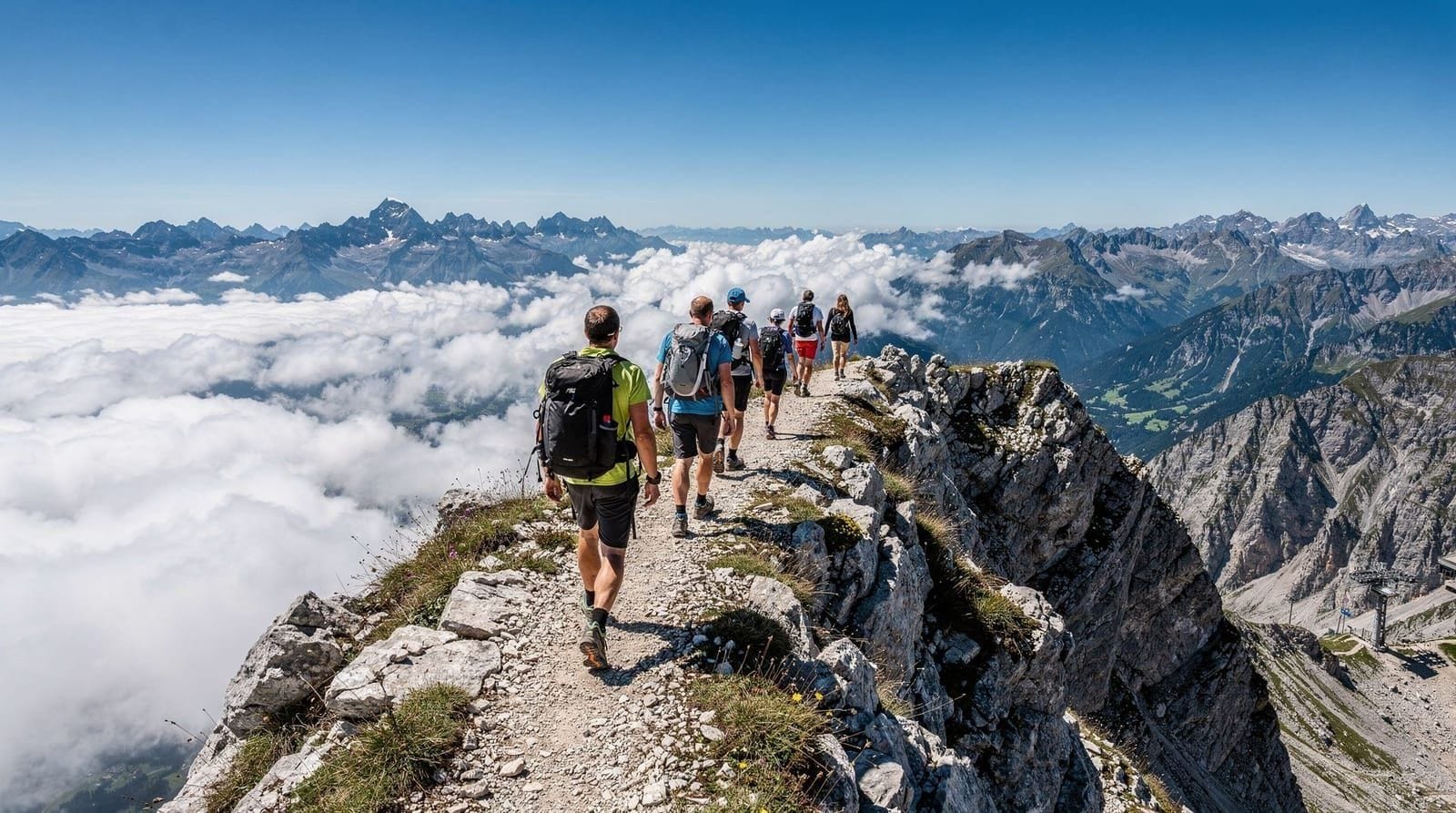
Mittenwald has an extensive network of marked trails, covering terrain from easy valley walks to full-day alpine routes. The Bavarian Alps trail markings are generally reliable; download the Bergfex or Komoot app before you go and save routes offline.
Easiest walks (no cable car needed):
- Lautersee (lake): 40-minute walk from the village centre through forest. Small, peaceful mountain lake, no entrance fee. Good for families; path is mostly flat gravel.
- Ferchensee (lake): 50-minute walk slightly uphill from the village. Wilder and less visited than Lautersee. You can combine both lakes in a 2.5-hour circuit.
Medium difficulty (some elevation gain):
- Kranzberg (1,391 m): 90-minute hike from the village or take the Kranzberglifte chairlift (EUR 12 return, summer season). Popular with families; panorama bench at the summit with views of Mittenwald and the Wetterstein range.
- Dammkarlsteig: A via ferrata (fixed-rope route) for those with basic climbing experience. Departs from the Karwendelbahn base area; not suitable for beginners or children.
Longer routes:
- The Mittenwald–Scharnitz valley trail follows the upper Isar to the Austrian border and back — roughly 4 hours return, gentle gradient, excellent in June when the meadows are in flower.
- Experienced hikers can combine the Karwendelbahn summit station with multi-day routes into the Karwendel massif (overnight at Karwendelhaus or Hochlandhütte, both mountain huts with booking required in summer).
A word on conditions: most trails above 1,500 m can carry snow until late May and again from October. Check the Berchtesgadener Land or Alpenvereinssektion München websites for current conditions before heading up.
Where to eat in Mittenwald
Mittenwald has a relatively small food scene compared to Garmisch — which is an accurate reflection of its size. The quality is generally solid, prices are slightly lower than Garmisch-Partenkirchen.
Gasthof Alpenrose (Obermarkt 1): The most central traditional Gasthof, open for lunch and dinner. Bavarian classics — Schweinsbraten (roast pork, EUR 16–19), Käsespätzle (cheese egg noodles, EUR 13), and good draft Ettaler beer. Reservations recommended for weekends in summer.
Restaurant Arnspitze (Innsbruckerstrasse 68): Slightly more upmarket, known for fresh fish dishes alongside the Bavarian staples. Good Forelle (trout, EUR 18–22) sourced from local streams. Closed Wednesdays.
Café Görög (Dekan-Karl-Platz 14): The best coffee in the village, plus house-made cakes (Apfelstrudel, Zwetschgenkuchen). Prices EUR 4–8 for pastries and coffee. This is a local place, not a tourist café.
Practical note: Most restaurants in Mittenwald have limited evening hours and often close on one or two weekdays. Check current hours before going; the village does not have the density of options you find in Munich.
For a full day out combining Garmisch and the wider area, the Bavarian Alps 3-day itinerary includes meal suggestions and logistics.
Where to stay in Mittenwald
Mittenwald has a small but functional accommodation offer. As a mountain resort, it has traditionally served both summer hikers and winter skiers, so most places have good facilities for outdoor-oriented travellers.
Hotel Post (Obermarkt 9): The most central option, in a traditional Gasthof building on the main street. Double rooms EUR 90–130 per night in 2026, breakfast included. The attached restaurant is one of the better options in the village. Bikes available for rental.
Gästehaus Franziska (Innsbruckerstrasse 24): Family-run guesthouse with simple, clean rooms. Good value at EUR 70–95 per night double. No restaurant, but close to the centre.
Camping Isarhorn (just south of the village): For those with camper vans or tents — well-maintained site on the Isar with mountain views. Pitches from EUR 28–35 per night including 2 adults and vehicle. Showers, laundry. Open May–October.
In summer (July–August) and during school holidays, accommodation books out quickly. If you are planning a stay rather than a day trip, reserve at least 6–8 weeks in advance.
Practical planning information
Mittenwald card (Gästekarte): Overnight guests in Mittenwald receive a Gästekarte (guest card) from their accommodation. This covers free travel on local mountain buses, reduced prices on some cable cars, and access to certain leisure facilities. Worth asking your host about it.
Currency: All businesses in Mittenwald accept cash and major debit/credit cards (Visa, Mastercard). Contactless payment is now widely available. There is an ATM on Obermarkt.
Mobile coverage: Good 4G coverage in the village and on the cable car. Coverage drops in the higher alpine terrain of the Karwendel massif.
What to bring: In summer — sun protection (altitude intensifies UV), a windproof layer for the cable car summit (temperatures 8–12°C cooler than the valley even on warm days), and solid walking shoes at minimum. In winter — full winter kit; conditions can deteriorate rapidly.
A brief history of the violin trade
Matthias Klotz’s decision to bring the Cremonese violin-making tradition back to his home village in 1683 turned a modest farming and trading community into a specialist manufacturing centre almost overnight by pre-industrial standards. Within two generations, Mittenwald violins were being exported across German-speaking Europe and beyond, and the town’s prosperity — visible today in the substantial merchant houses along Obermarkt, many carrying elaborate Lüftlmalerei — was built almost entirely on this single craft. The trade survived industrialisation better than most, partly because high-end violin making resisted mechanisation, and partly because the state school founded in 1858 institutionalised training in a way that kept skills passing between generations even as workshop numbers declined from the 18th-century peak of over 80. Today’s roughly 30 luthiers represent a much smaller but more specialised industry, producing instruments that sell internationally to professional musicians and serious students.
Combining Mittenwald with nearby destinations
Mittenwald pairs naturally with Garmisch-Partenkirchen (20 minutes by car or train), which offers more restaurants, the Zugspitze, and the Partnach Gorge. If you have two days, a practical split is: day 1 Mittenwald (old town, violin museum, Karwendelbahn), day 2 Garmisch and Zugspitze.
Heading north toward Munich, Tegernsee is about 60 km by road — not the most direct combination by public transport, but doable with a car.
The Bavarian Alps cable cars guide compares all the main lift systems in the region, including the Karwendelbahn, Zugspitze, and Nebelhorn, with honest notes on value and weather dependency. Private alpine tour: Eibsee Lake and Zugspitze from Garmisch
Frequently asked questions about Mittenwald
How do I get from Munich to Mittenwald by train?
Take the BRB from Munich Hauptbahnhof (platform 27–36, lower level) toward Innsbruck or Mittenwald. Direct trains run approximately every 60 minutes; journey time is 85–95 minutes. The Bayern-Ticket (EUR 29, valid from 09:00 on weekdays) covers the return trip and is the cheapest option for up to 5 people.
Is the Karwendelbahn worth the EUR 29 ticket price?
On a clear day, yes — the panorama from 2,244 m is among the best accessible viewpoints in the Bavarian Alps. On a cloudy or foggy day, you gain little beyond a cold mountain-top café experience. Check the webcam at karwendel.de before buying your ticket.
Can I visit Mittenwald on a half-day trip from Munich?
Technically yes — you can leave Munich at 08:30, arrive by 10:00, see the old town and violin museum, take the cable car, have lunch, and return by 16:00. But 6 hours feels rushed; a full day is more comfortable, especially if you want to do any hiking.
Where can I see a violin-making workshop?
The Geigenbaumuseum (Ballenhausgasse 3) is the most accessible option — it is open to all visitors, EUR 5 entry. Individual luthier workshops require advance contact; most do not welcome drop-in visitors during working hours. The Staatliche Berufsfachschule für Geigenbau runs occasional open days, usually in autumn — check their website for dates.
Is Mittenwald good for families with children?
Yes, with some caveats. The Lautersee and Ferchensee lake walks are suitable for all ages. The cable car is exciting for children; the summit is exposed and can be cold even in summer, so pack layers. The Geigenbaumuseum is engaging for children aged 10 and above; younger children may find it slow.
What is the best time of year to visit Mittenwald?
June to September for hiking and cable car (wildflowers in the alpine meadows peak in July). December is quiet and atmospheric with some Christmas decorations; the Christmas market is small but not overcrowded. Avoid late October and November — many restaurants and facilities operate reduced hours or close.
Can I ski at Mittenwald?
There is a small ski area on the Kranzberg (7 runs, maximum vertical 450 m) — suitable for beginners and families, but not comparable to Garmisch-Partenkirchen. Day pass approximately EUR 35 adults. For serious skiing, Garmisch-Partenkirchen with its access to the Zugspitze area is the better base.
Is Mittenwald or Garmisch-Partenkirchen the better base for the Bavarian Alps?
It depends on what you want. Garmisch has the Zugspitze, a larger ski area, and more restaurants and hotels — it’s the better choice for an active, activity-packed stay. Mittenwald is smaller, quieter, and arguably more visually charming, with better-preserved Lüftlmalerei and a genuine village atmosphere rather than a resort feel. Many visitors base themselves in Garmisch for logistics and take the 20-minute train to Mittenwald for a quieter day.
Does Mittenwald get crowded like Neuschwanstein or Rothenburg?
No. Mittenwald sees a fraction of the coach-tour traffic that hits the major sights — there’s no single blockbuster attraction pulling in tour buses, so even in peak summer the old town and Karwendelbahn queues stay manageable. This is part of its appeal: a genuine Bavarian mountain village rather than a managed tourist set piece.
Mittenwald vs Garmisch-Partenkirchen vs Oberammergau
Choosing a base in the western Bavarian Alps often comes down to these three:
| Village | Character | Distance from Munich | Best for |
|---|---|---|---|
| Mittenwald | Quiet, painted houses, violins | 90 km / ~90 min train | Slow travel, photography, hiking |
| Garmisch-Partenkirchen | Larger resort, most infrastructure | 90 km / 1h20 train | Zugspitze, skiing, restaurants |
| Oberammergau | Passion Play village, woodcarving | 95 km / ~1h40 with change | Craft shops, Linderhof access |
Mittenwald is the pick for travellers who want fewer crowds and a genuinely local feel without sacrificing easy train access from Munich. See the best alpine views near Munich guide for how the Karwendelbahn compares to other regional viewpoints.
Families and accessibility
Mittenwald works well for families thanks to two easy lake walks — Lautersee (40 minutes, flat gravel) and Ferchensee (50 minutes, slightly uphill) — that need no cable car and no entrance fee. The Karwendelbahn cable car is straightforward for children, though the summit is cold and exposed even in summer, so pack a windproof layer. The old town’s pedestrian streets are stroller-friendly and largely traffic-free. The Geigenbaumuseum suits children from around age 10 upward; younger children tend to move through it quickly. None of the village’s main sights require significant walking on uneven terrain, which makes Mittenwald one of the more manageable Bavarian Alps day trips with young children.
Top experiences
Bookable activities with verified prices and instant confirmation on GetYourGuide.