Tegernsee — alpine lake resort with a famous brewery
Visit Tegernsee's lake promenade, Bräustüberl monastery brewery, and spa facilities — a classic Bavarian escape just 50 minutes from Munich by BRB train.
From Munich: Zugspitze mountain van tour with Garmisch town
Quick facts
- Distance from Munich
- 48 km (30 mi) south
- Train journey
- ~50 min (BRB to Tegernsee, change at Miesbach or Schliersee)
- Altitude
- 740 m (2,430 ft)
- Lake size
- 8.9 km long, 2.3 km wide
- Water temperature
- 20–23°C in July–August (swimmable)
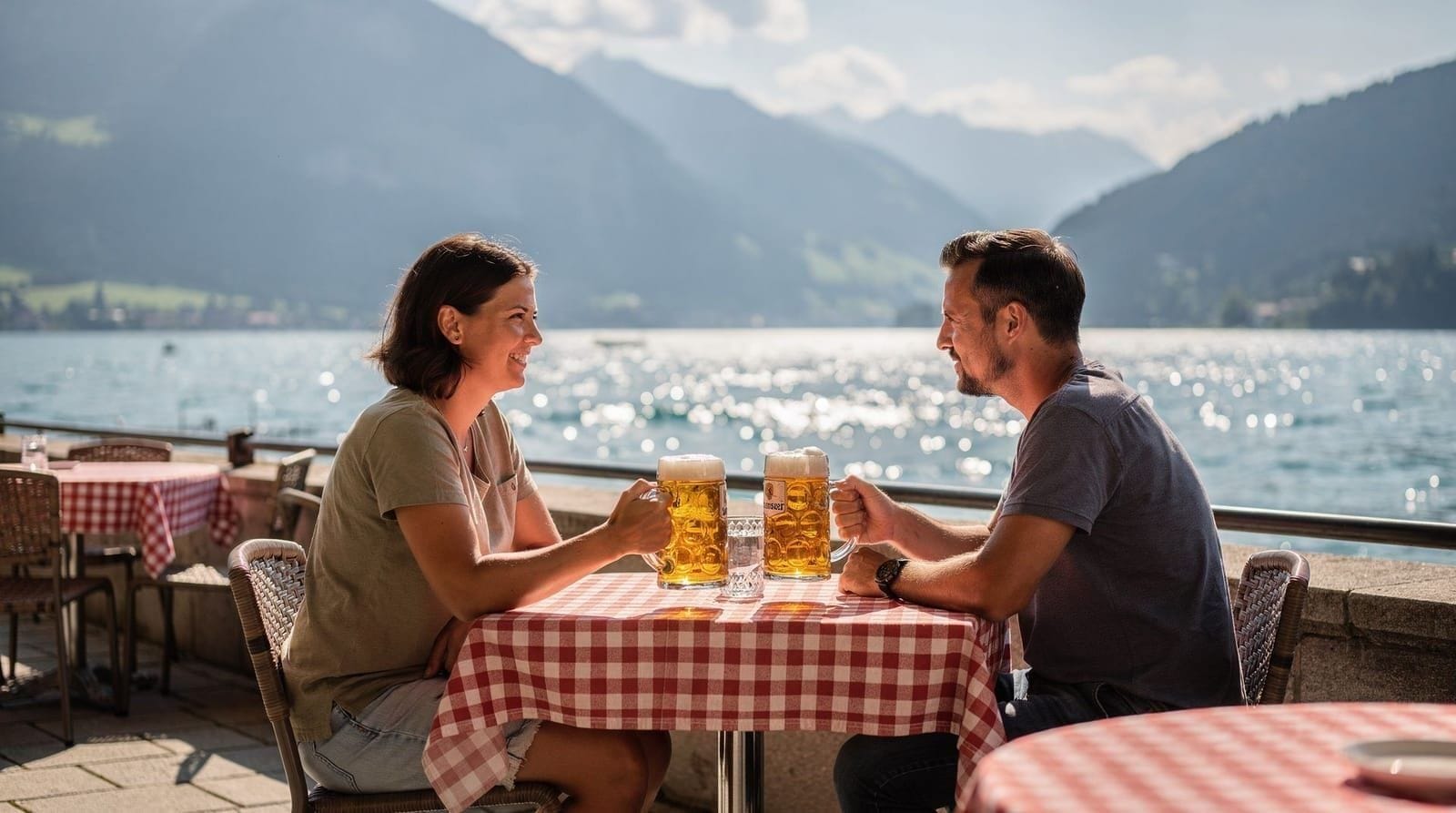
- Bräustüberl beer (Mass)
- EUR 9.50–10.50 (2026)
Bavaria’s favourite lake resort, 50 minutes from Munich
Tegernsee has been Bavaria’s preferred escape for Munich residents since the 19th century, when King Maximilian II converted the former Benedictine monastery into a royal summer palace. Today the lake town draws a mix of Munich professionals on day trips, spa weekends, and retirees who have relocated permanently — it has a reputation as one of the most expensive postal codes outside Munich itself.
quickAnswer — Is Tegernsee worth a day trip from Munich? Yes. The combination of lake swimming (or walking the promenade), a genuinely good monastery brewery, and easy BRB train access makes it one of the most effortless half- or full-day escapes available. Expect to spend EUR 40–70 per person for transport, a meal at Bräustüberl, and a boat ticket — more if you factor in spa entry.
The town itself is small — the Tegernsee stop (as opposed to Bad Wiessee, Rottach-Egern, or Gmund) covers the monastery brewery, the lakefront, and the royal residence. Walking the full promenade from the BRB station to the boat pier takes under 20 minutes. The rest of the day can be spent on the lake, in the surrounding hills, or circling to the neighbouring villages by boat.
| Where | 48 km south of Munich, Bavarian Alps foothills |
| Cost | Around EUR 29 Bayern-Ticket return; Bräustüberl meal + Mass ~EUR 20 |
| Time needed | 1 day trip; 2 days for an overnight spa stay |
| Getting there | BRB from Munich Hbf via Holzkirchen, about 50–60 min |
| Best time | June–September for swimming; December for the Bad Wiessee Advent market |
Getting there
By train (recommended): BRB (Bayerische Regiobahn) from Munich Hauptbahnhof to Holzkirchen, then change to the BRB branch line to Tegernsee. Total journey time is approximately 50–60 minutes depending on connection. Trains run roughly every hour. The Bayern-Ticket (EUR 29, valid from 09:00) covers the entire journey and is substantially cheaper than a standard return ticket — see the Bayern-Ticket guide for details.
The BRB terminus is Tegernsee station, which leaves you a 3-minute walk from the monastery and lake. This is one of Bavaria’s easier day-trip connections; no transfers to buses or further transport required.
By car: Take the A8 Munich–Salzburg motorway to Rosenheim, then the B307 west to Miesbach and south to Tegernsee — about 55–70 minutes in normal traffic. Parking near the monastery can be scarce in summer (July–August weekends); the car parks on Seestrasse fill quickly. Arriving before 10:00 or using the Park+Ride at Tegernsee station is more reliable.
Note on the Bayern-Ticket: This ticket is excellent value for groups. Two adults travelling together pay EUR 14.50 each — far below what any dedicated tour or private car would cost. The Bavaria by train guide covers the full logistics.
Bräustüberl — the monastery brewery
The Herzogliches Bräustüberl Tegernsee (Duke’s Brewery Tap) is the main draw for most visitors, and it deserves the reputation. The Benedictine monastery at Tegernsee has a brewing history dating to 1050. After secularisation in 1803, the monastery was converted into the Wittelsbacher royal summer residence, but the brewing tradition survived — the Wittelsbach family (Bavarian royals) still own the brewery and operate the Bräustüberl today.
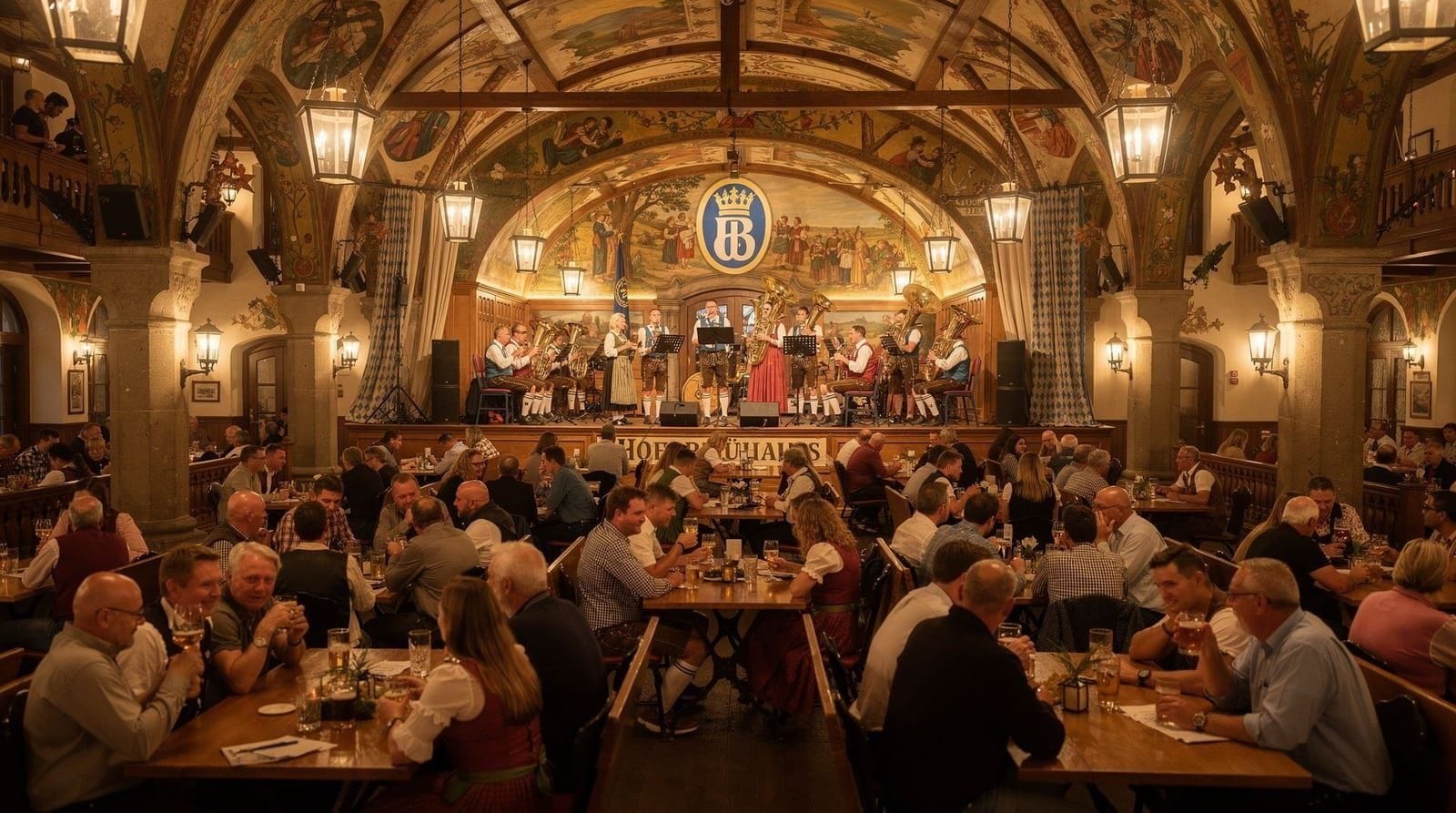
What it is: A large, traditional beer hall and garden attached directly to the monastery building, with indoor seating for several hundred people and an outdoor garden terrace overlooking the town. It is not a tourist simulacrum of a beer hall — this is where locals from the lake villages actually drink, and the atmosphere on a summer afternoon with the mountains in the background is legitimately pleasant.
Beer: The Tegernseer Hell (lager, 4.8%) is the house speciality and is genuinely excellent — clean, slightly sweet, with a long finish. The Mass (1-litre stein) costs EUR 9.50–10.50 in 2026. A 0.5-litre Halbe is available for EUR 5.20–5.80. The Dunkel (dark lager) and the Spezial (stronger lager) are also available seasonally.
Food: Bavarian standards — Obazda (beer-cheese spread with pretzels), Weisswurst served before noon by tradition (EUR 4.80 per pair), Schweinshaxe (roast pork knuckle, EUR 19–23), Brotzeit platters (EUR 12–16). The kitchen is solid rather than exceptional, but the setting elevates everything.
Practical details:
- Address: Schlossplatz 1, 83684 Tegernsee
- Opening hours: daily 09:00–24:00 (kitchen typically 11:00–22:00); hours can change seasonally
- No reservations for the beer garden; the indoor hall takes reservations by phone
- Gets very busy on summer weekends after 12:00 — arrive before 11:30 or after 14:00
Honest note: The Bräustüberl has been famous long enough that it attracts tour groups alongside locals. If you visit on a sunny Saturday in July at 13:00, you will be competing for tables. Weekday visits are noticeably more relaxed. Munich: Bavarian beer walking tour with samples and food
Lake and promenade
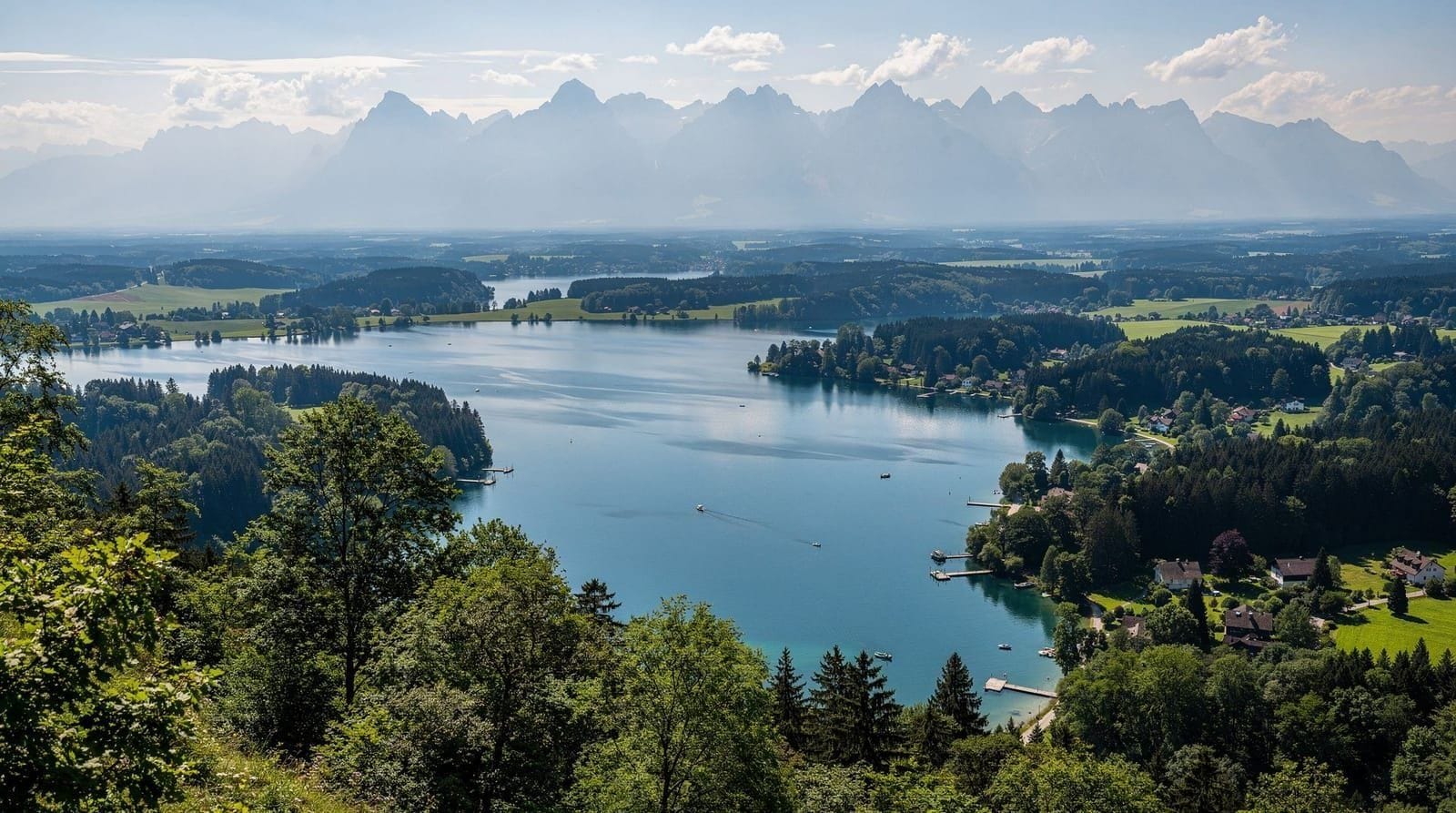
The Tegernsee lake (Schliersee and Spitzingsee are nearby, smaller alternatives) is 8.9 km long and 2.3 km wide, surrounded by forested hills rising to peaks above 1,700 m. The water quality is consistently high — the Bavarian State Office for the Environment monitors it regularly and it meets EU bathing water standards.
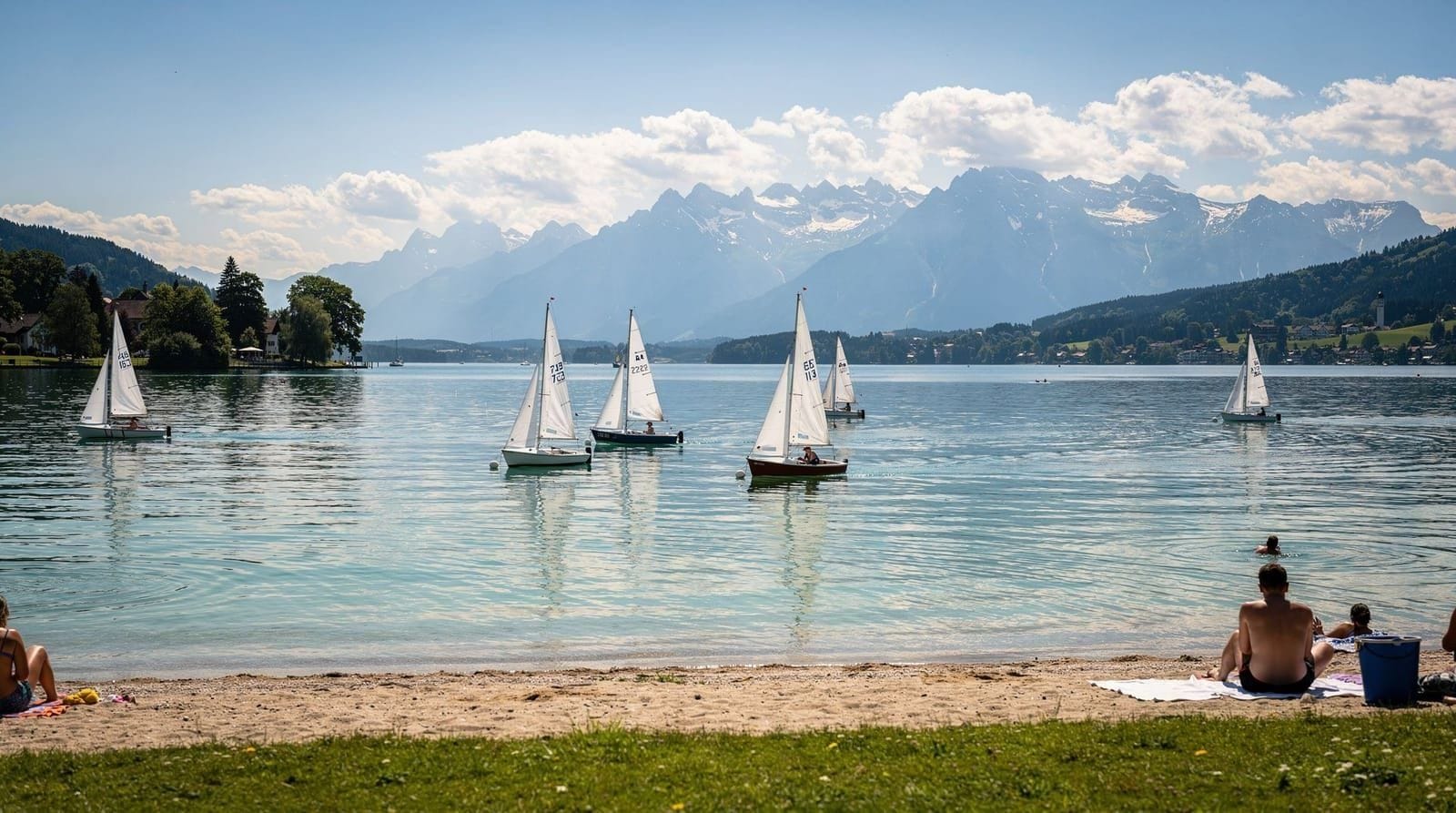
Swimming: There are free public bathing spots along the eastern shore between Tegernsee town and Rottach-Egern. The grass area at Strandbad Tegernsee (just south of the station) has a small entry fee in peak season (EUR 4 adults, EUR 2.50 children in 2026). The private lido at Bad Wiessee is larger with a sauna facility. Water temperatures reach 20–23°C in July and August.
Walking the promenade: The lakeside path from Tegernsee station south to Rottach-Egern (approximately 5 km one-way) is flat, paved, and takes 60–70 minutes at a leisurely pace. Return by the boat service (see below) or walk back. This is the most popular activity on the lake and rightly so — the views across the water to the opposite shore and the hills beyond are excellent in clear weather.
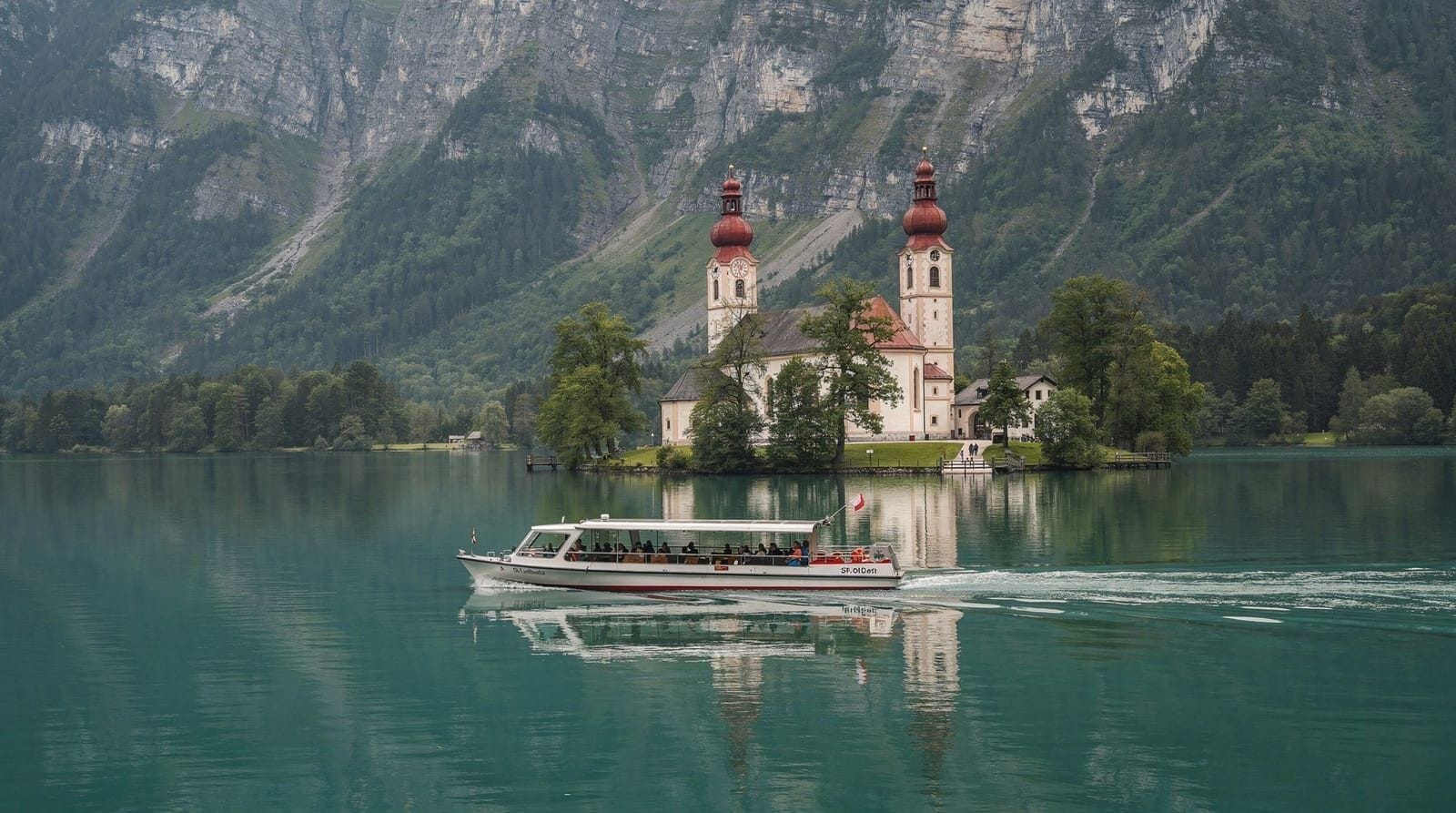
Boat services: Bayerische Seenschifffahrt operates regular passenger boats calling at Tegernsee, Gmund, Bad Wiessee, and Rottach-Egern from May through October. A single adult ticket is EUR 4.50–7 depending on distance; a day pass EUR 13. The boat is a practical and scenic alternative to walking between villages.
Spa and wellness
Tegernsee and the adjacent town of Bad Wiessee (literally “spa Wiessee”) have been associated with spa treatments since iodine-sulphur springs were discovered in Bad Wiessee in the 1920s.
Jod-Schwefel-Therme Bad Wiessee (Iodine-Sulphur Thermal Baths): The main spa facility in the area. Indoor and outdoor thermal pools, sauna areas, treatments. Day entry EUR 18–24 adults (2-hour ticket), EUR 30+ for full-day access. This is a functional medical spa, not a luxury resort; the facilities are good but the aesthetic is municipal rather than boutique. Located 10 minutes from Tegernsee station by boat or 20 minutes on foot.
Althoff Seehotel Überfahrt in Rottach-Egern: 5-star hotel with a full spa, open to non-residents for day packages. A much higher price point (EUR 80–120 for a half-day spa access), but the facilities and setting on the lake are exceptional. Book well in advance for summer or Christmas periods.
Tegernsee Tal Therme (being expanded as of 2026): A new municipal thermal bath under development — check current status before planning a visit specifically around it.
For a broader overview of lake options near Munich, see the Munich lakes guide.
Around the lake
Gmund: At the northern end of the lake, smaller and quieter than Tegernsee town. A pleasant 40-minute walk (flat, lakeside path) from Tegernsee station. There is a small beach and the Café am See for coffee and cake.
Bad Wiessee: South of Tegernsee town on the western shore. The spa town character is evident — hotels, therapy centres, quiet streets. The afternoon market on Wednesdays is popular with local residents.
Rottach-Egern: At the southern end of the lake, the most upmarket of the lake villages, with designer boutiques, the Überfahrt hotel, and several good restaurants. The Malerwinkel viewpoint above Rottach gives an elevated view of the whole lake.
Wallberg mountain: A cable car from Rottach-Egern (operating May–October, EUR 21 adults return) lifts you to 1,722 m for panoramic views over the Tegernsee and toward the Austrian Alps. Worth the extra hour if weather is clear.
Combining with Schliersee: Schliersee (a smaller, slightly less crowded alpine lake) is 15 km east of Tegernsee. By car it is 25 minutes; by public transport it requires a bus or backtracking to Holzkirchen. Doable but not the most efficient day-trip combination. Munich: old town walking tour — good first Munich orientation before heading south
Winter at Tegernsee
Tegernsee does not close down outside the summer swimming season. The lake town has a modest but genuine Advent market in Bad Wiessee through December, smaller and less crowded than Munich’s Christmas markets, set against the spa town’s quiet streets. Cross-country skiing (Langlauf) tracks are groomed around the lake and in the surrounding valleys when snow allows, and the Wallberg cable car continues operating into the ski season for downhill skiing and sledging on the mountain’s marked runs — a genuine alternative to the bigger Alpine resorts further south for a half-day trip from Munich. The Bräustüberl stays open year-round and is, if anything, more atmospheric with a fire going and fewer tour groups. Winter is also when hotel rates around the lake drop noticeably from summer peaks, making it a reasonable time for a budget-conscious overnight spa stay.
Where to eat and drink beyond the Bräustüberl
Klostergasthof Wiessee (Freiherr-von-Cramer-Klett-Strasse, Bad Wiessee): More intimate than the Bräustüberl, with a garden terrace and good regional dishes (EUR 14–22 for main courses). Less crowded on summer weekends.
Seehaus am Tegernsee (Seestrasse 71): Directly on the lake, excellent for fish dishes — Renke (whitefish from the lake, EUR 22–26) is the local speciality. The terrace seats fill fast on warm evenings.
Café Werdenfels (Hauptstrasse 3, Tegernsee): The best Kaffee und Kuchen option in town. Bavarian cream cakes and good espresso in a traditional setting. Prices EUR 4–9.
Supermarkets: There is a Spar on Hauptstrasse for picnic supplies if you prefer eating by the lake — bread, Obazda, and drinks assembled from the supermarket is entirely normal and cheaper than restaurant prices.
Where to stay around Tegernsee
The lake is surrounded by hotels ranging from basic Gasthöfe to 5-star resorts, with prices reflecting one of Bavaria’s most desirable addresses.
Budget (EUR 80–130/night): The smaller guesthouses in Gmund at the north end of the lake offer the lowest prices while still being on the lakefront. Gästehaus Riegsee and Pension Seeblick (both Gmund) have double rooms in this range. They are less convenient for the Bräustüberl (30–40 minute walk) but quieter.
Mid-range (EUR 130–220/night): Hotel Tegernseer Hof in Tegernsee town is well-positioned near the station and monastery, with good lake views from upper-floor rooms. Landhotel Bachmair Weissach in Rottach-Egern is a popular spa hotel with direct lake access — an honest 4-star operation with consistently good reviews.
Luxury (EUR 350+/night): Althoff Seehotel Überfahrt in Rottach-Egern is the reference address — a proper 5-star hotel with a Michelin-starred restaurant (Überfahrt restaurant, head chef Christian Jürgens until 2024), full spa, and private lake frontage. If you are considering a special occasion stay in the Bavarian Alps, this is the benchmark. Book 6–8 weeks ahead for summer, 3+ months for the Christmas period.
Note on pricing: Tegernsee is genuinely expensive for accommodation. Weekends in July and August command premiums even at mid-range properties. If budget is the priority, consider staying in Munich and doing the lake as a day trip — the 50-minute BRB connection makes this entirely comfortable.
Practical planning details
Bayern-Ticket and public transport: The BRB connection from Munich is direct and reliable. If you are visiting in a group of 3–5, the Bayern-Ticket (EUR 29 total for the group) is excellent value. Individual BRB return tickets from Munich cost approximately EUR 22 per person in 2026 — the Bayern-Ticket is cheaper for 2 or more people travelling together.
Best day of the week: Weekdays are substantially quieter than weekends. If you are flexible, a Tuesday or Wednesday visit to the Bräustüberl and lake will be noticeably less crowded than a Saturday in July.
Cyclists: The lake circumference is approximately 20 km on mostly flat paths. Bikes are available for rent at several locations in Tegernsee and Bad Wiessee (EUR 18–25/day for a standard bike, EUR 35–50 for an e-bike). This is an extremely pleasant way to see all four lakeside villages in one day without relying on the boat schedule.
Tegernsee-Schliersee Karte: If you are staying overnight, ask about the regional guest card — it covers unlimited public bus transport in the Tegernsee-Schliersee area and reductions at certain facilities.
Tegernsee for hiking beyond Wallberg
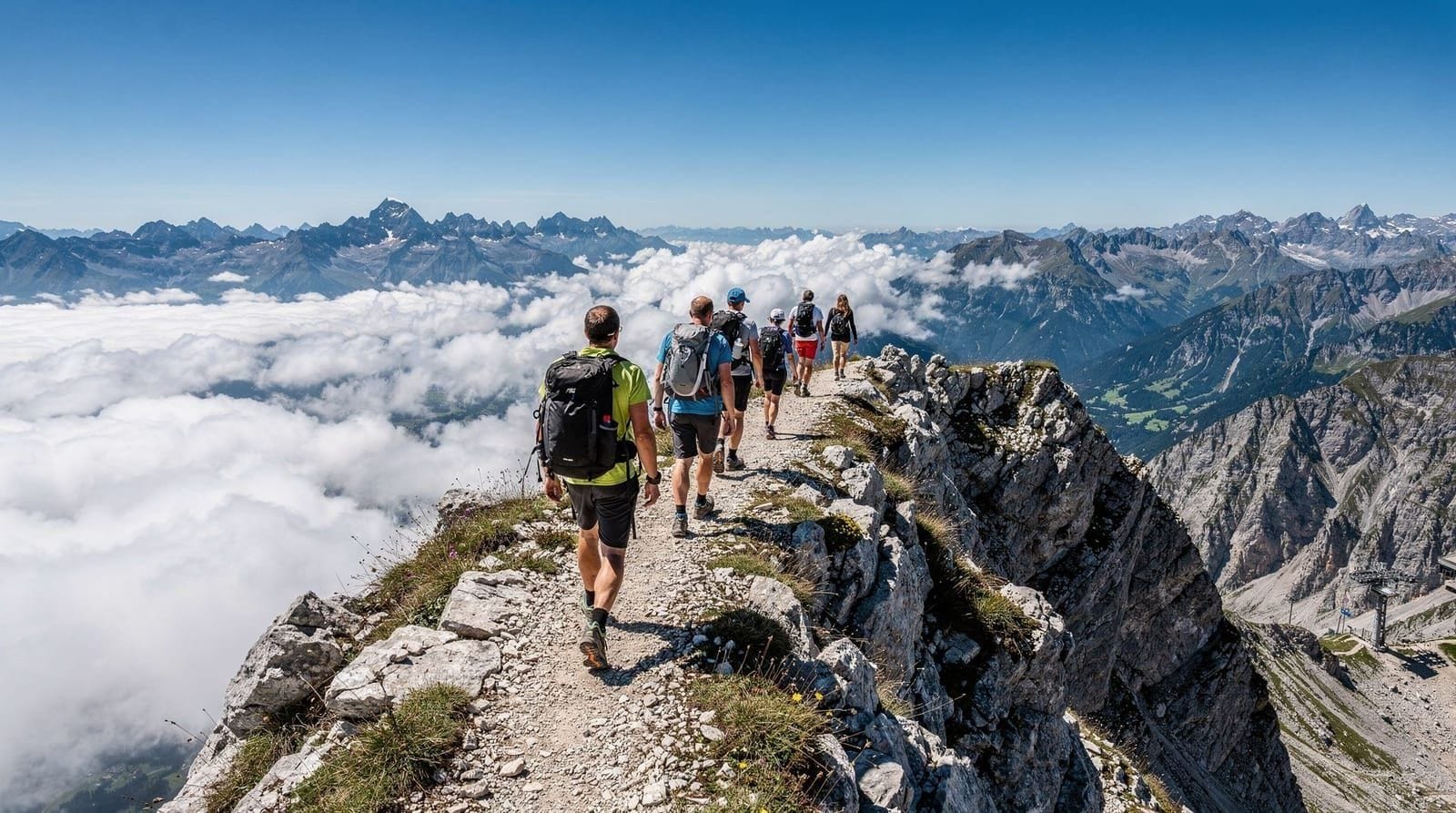
The Wallberg cable car gets the most attention, but Tegernsee sits at the edge of a genuinely good hiking network that rewards a bit more effort. The Riederstein above Rottach-Egern is a shorter, steeper alternative to Wallberg — about 90 minutes up on a well-marked path, with a small chapel and a view over the lake that many locals prefer to the cable-car summit because it is quieter. The Baumgartenschneid, reachable from Kreuth at the lake’s southern end, is a half-day round trip (around 4–5 hours) through forest to an open ridge with panoramic Alpine views, with a mountain hut (Baumgartenschneidhaus) serving food partway up. For a gentler option, the flat lakeside path already described doubles as an easy family walk with no elevation gain at all. None of these require technical gear — sturdy shoes and normal fitness are enough for the shorter routes; the Baumgartenschneid is a proper day hike.
Frequently asked questions about Tegernsee
How do I get from Munich to Tegernsee by train?
BRB from Munich Hauptbahnhof toward Holzkirchen, then change to the Tegernsee branch line. Total journey approximately 50–60 minutes, trains every hour. The Bayern-Ticket (EUR 29 for up to 5 people) is the best value for groups and covers the full return journey.
Do I need to book a table at the Bräustüberl?
For the outdoor beer garden, no reservations are taken — it is first-come, first-served. For the indoor restaurant, reservations by phone are possible and recommended for weekends. The best strategy is to arrive before 11:30 or after 14:00 to avoid the worst of the midday rush.
Can I swim in the Tegernsee?
Yes. The lake has several free public bathing spots and a small paid beach (Strandbad Tegernsee, EUR 4 adults). Water temperatures reach 20–23°C in July and August. The quality is consistently high and publicly monitored.
Is Tegernsee expensive?
The Bräustüberl is competitively priced for what it is — a Mass of excellent beer costs EUR 9.50–10.50, comparable to Munich’s central beer halls. Hotel prices around the lake are high (EUR 150–300+ per night for mid-range; EUR 400+ at the Überfahrt). As a day trip the cost is very manageable.
What is the difference between Tegernsee, Bad Wiessee, and Rottach-Egern?
All three are villages on the same lake. Tegernsee town has the monastery, the Bräustüberl, and the train station. Bad Wiessee has the spa facilities (iodine-sulphur baths) and is quieter. Rottach-Egern at the southern tip is the most upmarket, with the 5-star Seehotel Überfahrt. The boat service connects all three.
What else is near Tegernsee?
The Bavarian Alps 3-day itinerary includes Tegernsee alongside Garmisch-Partenkirchen and Berchtesgaden. The Wallberg cable car above Rottach-Egern is a natural add-on for a full day. Schliersee is 15 km east by car.
Is the Tegernsee suitable for children?
Very much so. The lake beaches and swimming areas are child-friendly, the Bräustüberl has garden seating that works well for families, and the flat promenade walk is suitable for all ages. The boat rides between villages are popular with children.
Can I hike near Tegernsee without taking the Wallberg cable car?
Yes. The Riederstein above Rottach-Egern is a shorter, steeper walk (about 90 minutes up) to a chapel with lake views, and the Baumgartenschneid from Kreuth is a half-day hike to an open Alpine ridge with a mountain hut partway up. Both are well-marked and need only normal fitness and sturdy shoes for the shorter route.
What is the best month to visit Tegernsee if I don’t plan to swim?
May, September, or October. The lake and hills are at their most photogenic without peak-summer crowds, the Bräustüberl beer garden is still pleasant on mild days, and hiking conditions on routes like the Baumgartenschneid are cooler and more comfortable than midsummer.
Is Tegernsee worth visiting in winter?
Yes, if you enjoy a quieter, colder version of the same setting. The Bad Wiessee Advent market, cross-country ski tracks around the lake, and skiing or sledging on the Wallberg keep the area active outside summer, and the Bräustüberl is arguably more atmospheric with a fire lit and far fewer visitors. Hotel rates are also noticeably lower than in July and August.
Top experiences
Bookable activities with verified prices and instant confirmation on GetYourGuide.