Skiing day trips from Munich: Garmisch-Classic, Sudelfeld, Brauneck and more
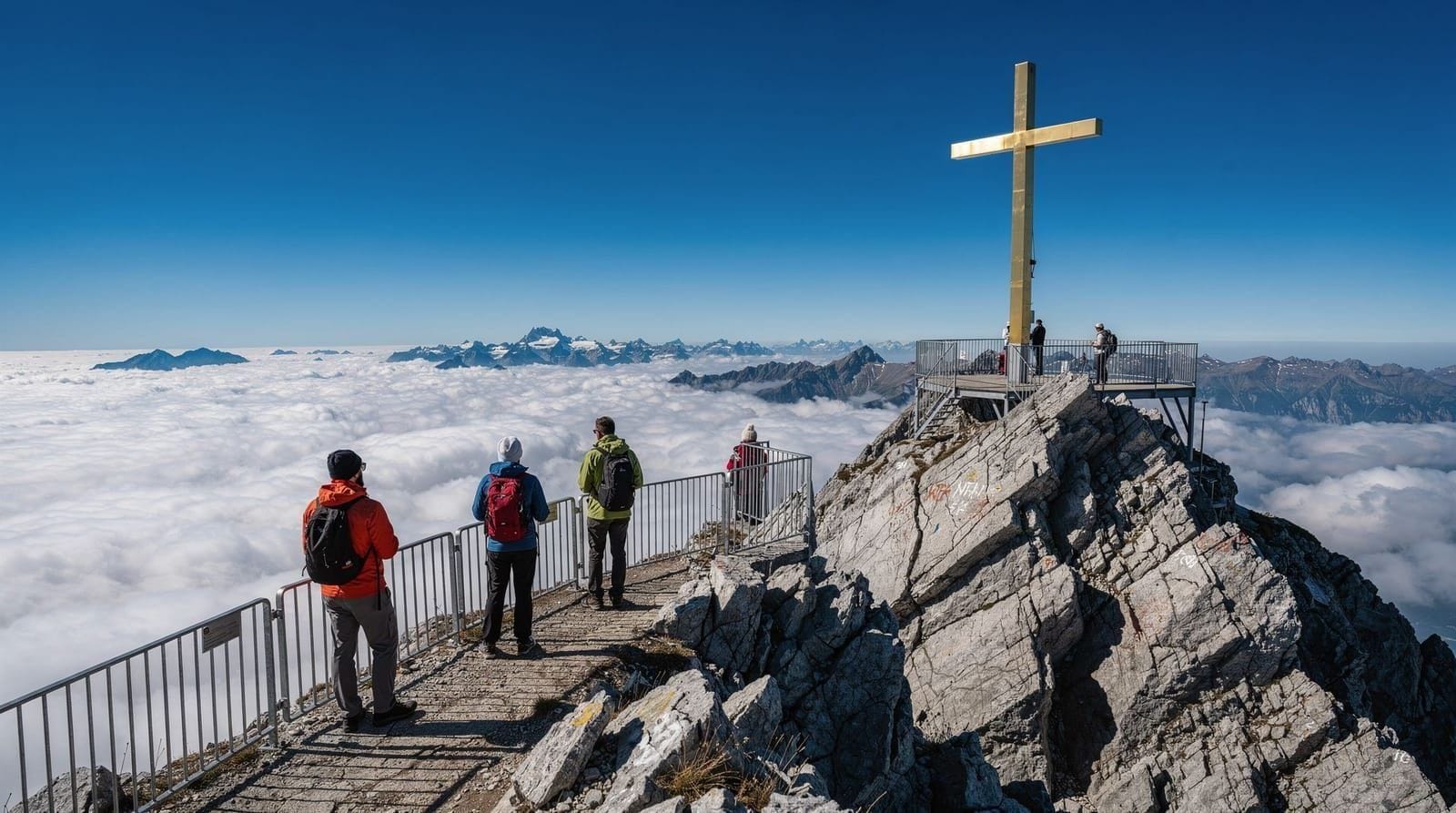
From Munich: Zugspitze mountain van tour with Garmisch town
What is the closest ski area to Munich for a day trip?
Sudelfeld near Bayrischzell is the closest at around 70 km from Munich city centre and is reachable by public transport. Brauneck above Lenggries is similarly close. Both are suitable for day trips without a car on a Bayern Ticket. Garmisch-Classic is larger but around 90 km and more crowded on weekends.
Skiing from Munich: what the city’s geography makes possible
Munich sits at around 530 metres above sea level at the northern edge of the Bavarian foothills. Within 70-90 kilometres to the south, the Alps begin properly — and within that distance, Bavaria concentrates an unusual number of ski areas that are directly reachable from the city without a multi-day commitment.
This combination — a major city within easy train reach of multiple ski resorts — is not common in Europe. It means a credible ski day from Munich is achievable with relatively little planning: take an early morning train, ski from roughly 9am to 3pm, return in the late afternoon. No overnight accommodation, no car necessarily, no inflated ski resort food prices if you pack lunch.
The resorts within meaningful day-trip range are Garmisch-Classic, Sudelfeld (Bayrischzell), Brauneck (Lenggries), and the Spitzingsee-Tegernsee area. Each has a distinct character. This guide covers what to expect at each, the logistics from Munich, and the honest trade-offs.
| Closest resort | Sudelfeld, around 70 km |
| Cost | Around €42–57 per day pass |
| Time needed | Full day, early train out |
| Getting there | BOB train + ski bus, Bayern Ticket |
| Best months | February, March |
Resort comparison at a glance
| Resort | Journey from Munich | Day pass (2025/26) | Best for |
|---|---|---|---|
| Garmisch-Classic | ~75–80 min train | ~€57 adults | Big terrain, glacier reliability |
| Sudelfeld | ~80 min door to slope | ~€45 adults | Value, local atmosphere |
| Brauneck | ~65 min train + short walk | ~€42 adults | Families, beginners |
| Spitzingsee-Tegernsee | ~90–100 min with bus | ~€52 adults | Snow reliability, variety |
The ski season: when and how reliable it is
Snow reliability near Munich is the first caveat to address honestly. The ski areas within 90 km of Munich sit between roughly 800 and 2,962 metres elevation. At lower elevations (Brauneck, Sudelfeld base stations), snow cover can be unreliable in warm winters — particularly the lower runs, which may have thin or artificial snow cover in December and early January before temperatures drop consistently.
The key distinction is between altitude-dependent reliability and artificial snow coverage:
- Garmisch-Classic glacier (above 2,600 m): Most reliable snow, typically open from late October or early November through April or May. The glacier area rarely has insufficient natural snow.
- Garmisch-Classic lower areas (Hausberg, Alpspitze), Sudelfeld, Brauneck: Heavily supplemented by artificial snowmaking but dependent on temperatures cold enough for snow guns to operate. Reliable from mid-December in most years, less so in the first weeks of December and in late March.
- Spitzingsee: At a relatively high base elevation (1,084 m), snow reliability is better than Sudelfeld or Brauneck’s lower sections.
The practical implication: before making a day trip specifically for skiing, check the resort’s snow report and piste status on the day before. Most resort websites publish real-time piste opening percentages. On poor snow years, trips in late January and February are safer than December.
Garmisch-Classic: the big resort option
Garmisch-Partenkirchen is Bavaria’s most famous winter sports destination and hosted the 1936 Winter Olympics. The Garmisch-Classic ski area is the collective name for the Zugspitzplatt glacier, the Alpspitze-Hausberg area, and the Wank — though in practice most skiers focus on the Zugspitzplatt and Alpspitze-Hausberg sectors, which are directly linked.
What’s there: 40 km of marked pistes across blue, red, and black grades. The glacier runs above 2,600 metres are almost exclusively wide, open red terrain — scenic and long rather than technically demanding. The Alpspitze area (around 1,700-2,050 m) has more varied terrain including some genuinely challenging red and black runs. The Kandahar downhill run, which hosted World Cup and Championship races, is the standout route for strong skiers — long, sustained, and demanding.
Getting there from Munich: Direct Bayerische Oberlandbahn (BOB) trains from Munich Hauptbahnhof to Garmisch-Partenkirchen run roughly every hour, taking around 75-80 minutes. A Bayern Ticket covers the train (both directions). From Garmisch station, the Hausberg lift base is accessible by ski bus; the Zugspitzbahn departure for the glacier is a short walk from the main station. The glacier area does not require the main Zugspitze summit ticket — Garmisch-Classic lift passes cover the glacier ski area separately.
Day pass pricing (2025/26 season): Approximately €57 adults, €33 children (6-15). Under-6s are typically free with an accompanying adult. The glacier area is included in the standard Garmisch-Classic pass.
Honest assessment: Garmisch is the most developed and polished ski experience near Munich, but also the most crowded on weekends. Saturday queues at the main lifts in Hausberg can be 20-30 minutes in peak season. The resort is dominated by German and Austrian skiers who know the mountain — it is not the place to take complete beginners without ski school support, particularly on the glacier. Book a private alpine tour to Zugspitze and Garmisch area
Sudelfeld: the local favourite above Bayrischzell
Sudelfeld is Bavaria’s most visited ski area by local skiers from Munich — and least visited by international visitors who tend not to know it. This imbalance creates one of the more pleasant day ski experiences within the day-trip range.
The resort sits above the Mangfallgebirge above Bayrischzell, with runs between approximately 830 and 1,563 metres. The ski area has around 31 km of pistes and covers a broader range of terrain than its relatively modest altitude might suggest — there are genuinely challenging sections on the north faces. The base facilities (rental, restaurants, ski school) are solid but not lavish. The atmosphere is resolutely local Bavarian rather than tourist resort.
Getting there from Munich: Take the BOB from Munich Hauptbahnhof to Bayrischzell — journey time is around 65-70 minutes. A Bayern Ticket covers the train. From Bayrischzell station, a free ski bus runs to the Sudelfeld base (around 10 minutes). The whole journey from Munich Hauptbahnhof is thus about 80 minutes door to slope.
Day pass pricing (2025/26 season): Approximately €45 adults, €27 children. Under-6s free. Sudelfeld represents notably better value per piste-kilometre than Garmisch for those who want primarily intermediate skiing.
Honest assessment: Not spectacular terrain, but very good for its category — intermediate skiers and above who want a competent ski day close to Munich without the Garmisch crowds. Beginners can learn here too, but the gentlest beginner slopes are limited. For a first-timer, Garmisch’s ski school infrastructure is stronger.
Brauneck: accessible and family-oriented above Lenggries
Brauneck (1,559 m summit) above Lenggries is the third main option and suits families and beginner-to-intermediate skiers particularly well. The ski area is smaller than Sudelfeld or Garmisch but the terrain is genuinely suited to learners — wide, gentle runs on the lower sections — and the resort infrastructure has good ski school provision.
Getting there from Munich: BOB from Munich Hauptbahnhof to Lenggries — around 65 minutes. Bayern Ticket covers the journey. From Lenggries station, the cable car base is around 1 km; a ski bus operates, or it is walkable. The Brauneck Seilbahn gondola rises to the mid-station and upper terrain.
Day pass pricing (2025/26 season): Approximately €42 adults, €25 children — the most affordable of the main day-trip resorts.
Honest assessment: Brauneck’s smaller size (around 22 km of pistes) limits it for stronger or expert skiers who will exhaust the terrain by midday. As a family resort or a base for occasional skiers who don’t need challenge, it is excellent — comfortable, manageable, and not overcrowded. The views from the Brauneck summit toward the Karwendel range and south toward the Austrian border are among the better summit panoramas accessible from a ski resort near Munich.
Spitzingsee-Tegernsee: the snow-reliable option
The Spitzingsee ski area, connected to the Tegernsee slopes, operates at a higher base elevation (Spitzingalm at 1,084 m) than Sudelfeld or Brauneck, which makes it more consistently snow-reliable in marginal seasons. The connected area covers around 50 km of piste between the Spitzingsee lake basin and the Tegernsee slopes above Rottach-Egern.
Getting there from Munich: BOB from Munich Hauptbahnhof to Schliersee (around 60 minutes), then bus toward Spitzingsee (around 30-40 minutes on the ski bus). Alternatively, the BOB to Miesbach and then bus connections. Journey time is similar to Garmisch. Bayern Ticket covers trains and regional buses.
Day pass pricing (2025/26 season): Spitzingsee-Tegernsee combined approximately €52 adults. The connected area offers more variety than either sector independently.
Honest assessment: The best snow reliability of the non-glacier options near Munich, and the connected terrain gives the area more variety than Brauneck. Less well-known than Garmisch or Sudelfeld to English-speaking visitors, which means less crowding at peak times. The bus connection from Schliersee station is the logistical weak point — check bus times in advance.
Equipment and logistics: what to know before you go
Renting versus bringing: Carrying ski equipment on Munich’s S-Bahn and then the regional train is possible but awkward, particularly at rush hour. Most people who ski the day-trip resorts regularly either rent at the resort, or have equipment stored at a friend’s or in sport shops near the mountain. For a first or occasional day trip, renting at the resort is the practical choice. Budget €25-40 per day for a standard package.
Clothing: Full ski clothing is essential — wool base layer, insulating mid layer, waterproof outer. Temperatures on summit lifts in January are typically -5 to -15°C with wind chill. Helmets are legally required for skiers under 15 in Bavaria; they are strongly advisable for all ages and available for rental alongside equipment.
Starting early: Lifts typically open at 8:30am or 9am. Arriving at the resort for first lift is the single most effective way to avoid queues and have the best snow condition (before afternoon sun softens the piste surface). For Garmisch, this means a 6:30-7am departure from Munich. For Sudelfeld or Brauneck, departure around 7am gets you there for opening.
Lunch on the mountain: Restaurant prices at Bavarian ski resort huts are expensive — typical main courses €18-25, drinks €5-7. Packing a sandwich and using the restaurant for warm drinks only reduces cost significantly. Most resorts have outdoor seating areas with views where picnics are acceptable.
Phone signal and navigation: Coverage is generally reliable across all four resorts, but battery drains faster in cold temperatures — carry a small power bank if you plan to use your phone for photos or navigation throughout the day.
Bayern Ticket logistics: The Bayern Ticket (€29 single, or group versions) covers all standard regional train and bus legs to and from all the resorts above. It does not cover the Bayerische Zugspitzbahn (the dedicated train to the Zugspitze summit). For day ski trips to Garmisch, the Bayern Ticket covers the main-line train both ways; the Garmisch-Classic lift pass is purchased separately.
When to go and when not to
January and February are peak season — best snow reliability, but busiest weekends. If you can ski midweek, February is arguably the sweet spot: often brilliant blue-sky weather, good snow, and noticeably fewer weekend crowds.
December is variable. The first two weeks of December are frequently uncertain snow-wise at lower resorts. If planning a December trip, focus on Garmisch glacier or Spitzingsee for snow reliability.
March can be outstanding. Spring skiing in good snow years gives long daylight hours (lifts run until 4-4:30pm), warm sunny temperatures at altitude, and rapidly decreasing crowds after German school holidays end. Ice on south-facing runs in the afternoon is the trade-off.
Avoid school holiday Saturdays. Bavarian school holidays (Weihnachtsferien in December-January, Faschingsferien in February) generate peak demand. Queues at Garmisch and Sudelfeld on these Saturdays can be severe. The same weeks on a Tuesday are perfectly manageable.
For the summer perspective on the same mountains, see our Bavarian Alps cable cars guide and best alpine views near Munich. Book a private Zugspitze and Eibsee mountain experience from Garmisch
If skiing is not for everyone in your group
Mixed-ability groups are common on a Munich ski day trip, and it is worth planning for non-skiers rather than assuming everyone will be on the slopes. Garmisch and the Zugspitze area have the best non-ski options nearby — the Eibsee lake circuit walk and the Partnach Gorge both work as a full alternative day for a non-skier while the rest of the group is on the mountain; see the Partnach Gorge guide for details. At the smaller resorts (Brauneck, Sudelfeld), non-skiers have fewer structured options and are better served spending the day in Munich instead, using our best day trips from Munich guide to plan something separate.
Choosing between skiing and a non-ski Alpine day
If you are undecided about committing to a full ski day, it helps to know the honest trade-off: a ski day is more physically demanding and requires more upfront logistics (rental, clothing, an early start) than a standard Alpine sightseeing day trip, but it delivers a different kind of experience entirely — active rather than observational. For visitors who are unsure or travelling without ski experience, the Zugspitze day trip guide covers the non-ski version of reaching Germany’s highest peak by cable car, which remains open and popular throughout the winter season alongside the glacier ski area.
Frequently asked questions about skiing day trips from Munich
When does the ski season start near Munich?
Most resorts open in December, with Garmisch-Classic typically from late November if snow conditions allow. Season runs until late March or early April. Zugspitze glacier skiing can run from October to May.
Can you ski near Munich without a car?
Yes. Sudelfeld, Brauneck, and Spitzingsee are reachable by BOB train and ski bus. Garmisch-Classic is reachable by direct train from Munich Hauptbahnhof. A Bayern Ticket covers the train and bus legs.
How much does a day ski pass cost near Munich in 2026?
Garmisch-Classic approximately €57 adults; Sudelfeld approximately €45; Brauneck approximately €42; Spitzingsee-Tegernsee approximately €52. Prices vary by season — check resort websites for current rates.
What is Garmisch-Classic ski area like?
Bavaria’s largest resort with 40 km of pistes including glacier skiing above 2,600 m. Suits beginners through advanced. The Kandahar run is the standout for strong skiers. Weekends are busy; midweek recommended.
Is Sudelfeld good for beginners?
Sudelfeld has a good range from gentle blue runs to black slopes and is well-regarded for its relaxed atmosphere. Good ski school options. The terrain suits beginners through intermediate skiers more than advanced.
What ski equipment rental is available at these resorts?
All major resorts have ski rental shops at the base. Basic rental package prices typically range from €25-40 per day. Helmets are available separately and are mandatory for under-15s in Bavaria.
Is cross-country skiing possible as a day trip from Munich?
Yes. The Jachenau valley, Reit im Winkl area, and fields around Mittenwald have extensive cross-country trail networks accessible by public transport. Mittenwald is reachable by direct train from Munich.
Which resort is best for a first-ever ski day?
Brauneck, for the gentlest learning terrain and solid ski school infrastructure without Garmisch’s crowds. If snow reliability is a bigger concern than terrain gentleness in your travel window, Spitzingsee is the safer bet for beginners in a marginal snow year.
Do I need travel insurance specifically for skiing?
Standard travel insurance policies often exclude winter sports unless you add a specific rider — check your policy before a day trip, since mountain rescue and medical evacuation costs in the Alps can be significant. This applies even for a single day trip, not just multi-day ski holidays.
Top experiences
Bookable activities with verified prices and instant confirmation on GetYourGuide.