Sea Life Munich — tickets, what to see, and family tips for 2026
Munich: day ticket to Sea Life aquarium
Is Sea Life Munich worth visiting?
Sea Life Munich is a solid rainy-day option for families with children aged 3-12. The 360-degree ocean tunnel and touch pools are the highlights. Allow 60-90 minutes. Booking tickets online in advance saves EUR 3-4 per person and avoids peak-season queues. It pairs well with a visit to Olympiapark, which is a 5-minute walk away.
Getting to Sea Life Munich
Sea Life Munich sits on the northern edge of the Olympiapark complex at Willi-Daume-Platz 1, approximately 4 km north of Munich Hauptbahnhof. The building is not immediately obvious from the main Olympiapark entrance — follow signs for the Olympia-Eissportzentrum and you will see the Sea Life signage shortly after.
| Where | Willi-Daume-Platz 1, Olympiapark, ~4km north of Hauptbahnhof |
| Cost | Around EUR 19.50 adult / EUR 14.50 child online; more at the gate |
| Time needed | 60–90 minutes |
| Getting there | U3 to Olympiazentrum, ~15–20 min from Marienplatz |
| Best time | Weekday mornings, or any time on a rainy day |
By U-Bahn: U3 to Olympiazentrum is the most direct route. From Marienplatz, the U3 runs every 5-10 minutes and the journey takes about 15-20 minutes. Exit the station, cross Spiridon-Louis-Ring, and follow the pedestrian path towards the park’s northern section. Sea Life is visible from the path.
By tram: Trams 20 and 21 serve the Olympiapark area from the city centre. Tram 21 from Hauptbahnhof stops at Petuelring, from which Sea Life is a 10-minute walk.
On foot from Olympiapark: if you are already visiting Olympiapark (grounds, Olympic Tower, or another park attraction), Sea Life is a 5-minute walk from the Olympic Tower base.
Parking: the Olympiapark has a large car park accessed from Georg-Brauchle-Ring (EUR 3-4 per hour). Weekend car park queues are common on summer afternoons.
Tickets and prices 2026
Sea Life Munich is run by Merlin Entertainments, the same company that operates Madame Tussauds, the London Eye, and LEGOLAND parks. Ticket prices follow the standard Merlin dynamic pricing model — online bookings are consistently cheaper than walk-up prices.
Online advance tickets: adults EUR 19.50, children aged 3-15 EUR 14.50, children under 3 free.
Gate prices: adults EUR 22.50, children aged 3-15 EUR 16.50.
Family bundle (2 adults + 2 children): EUR 58 online. Additional children can be added.
Annual pass: the Merlin Annual Pass covers Sea Life Munich plus other Merlin attractions in Germany and Europe at various price tiers starting around EUR 99. Worth considering only if you plan to visit multiple Merlin attractions throughout the year.
Combination tickets: Sea Life occasionally partners with the Olympic Tower for a combined entry deal. Check both websites before booking, as this is not always available year-round.
Booking online saves EUR 2.50-3 per ticket and lets you choose a timed entry slot, which reduces congestion inside. On busy summer weekends, timed entry helps distribute visitors through the day and shortens the queue at the ocean tunnel. Book Sea Life Munich tickets online — skip the queue
What you will find inside Sea Life Munich
Sea Life Munich is arranged as a single prescribed route through interconnected themed zones. You cannot backtrack, so see everything as you go. The route takes most families 60-90 minutes at a measured pace.
Freshwater Bavaria section
The journey begins in the freshwater section, themed around Bavarian rivers and lakes. Tanks contain pike, perch, carp, catfish, and freshwater crayfish native to Bavarian waterways including the Isar and Starnberger See. Interpretive panels explain the ecology of Bavarian freshwater systems — more engaging than it sounds when the fish are large and active.
This section also introduces the Isar River habitat with native species including brown trout and European eel. For children who know the rivers and lakes of Bavaria, recognising familiar species is a useful connection.
Amazon River zone
The tropical freshwater section transitions into a recreation of an Amazonian river environment. Tanks contain piranhas (always a hit with children), red-bellied pacu, and various cichlid species. The dim lighting and dense aquatic vegetation give this section a genuinely atmospheric feel.
Arapaima — large prehistoric-looking fish that can reach 3 metres in the wild — are housed in a tank of their own. These are impressive regardless of age.
Touch pools
The touch pool station is typically located near the midpoint of the route. Children can handle starfish, sea cucumbers, and hermit crabs in a shallow open tank under supervision from Sea Life staff. Staff provide brief educational commentary about each species. This tends to be the most popular section with younger children — expect to spend 10-15 minutes here.
Sea cucumbers, despite the repulsion they initially generate, are reliably fascinating to children once they discover how they feel. Sea Life staff are patient about explaining why these animals are important to the marine ecosystem.
Coral reef and tropical ocean
The route moves into the deep tropical ocean sections — large tanks with grouper, angelfish, triggerffish, lionfish, and moray eels in coral reef settings. The lighting here shifts to simulate deeper water. Larger tanks contain Caribbean reef sharks. Interpretive panels cover coral bleaching and conservation — the framing is science-forward rather than alarmist, which works for the primary-school age range.
The ocean tunnel
The 360-degree ocean tunnel is the centrepiece of Sea Life Munich. A conveyor walkway moves visitors through a transparent acrylic tube while fish, rays, and sharks swim above, below, and around you. The tunnel is approximately 15 metres long and can be walked back and forth on the path beside the conveyor if your children want another look.
Species in the tunnel include nurse sharks, sandbar sharks, leopard sharks, southern stingrays, and green sea turtles. The turtles tend to generate the most excitement from children — they are slow enough to watch closely and come close to the tunnel surface.
The tunnel has a quiet seating area on one side for parents with very young children who need a rest. Photography inside the tunnel without flash produces reasonable results with a phone — use portrait mode or adjust exposure slightly under the aquarium lighting.
Jellyfish section
The jellyfish section near the exit showcases moon jellyfish in cylindrical tanks with coloured lighting that cycles through blue, purple, and green. This is a visually striking section and tends to captivate parents as much as children. Photographic results here are excellent with a phone camera on portrait mode.
The jellyfish section also contains a small seahorse display — another reliable favourite with children aged 4-8.
The exit — predictably, through the gift shop
The exit route passes through the standard Merlin gift shop selling Sea Life branded merchandise and marine biology educational kits. Prices range from EUR 8-9 for small plush animals to EUR 40+ for model kits. The educational ocean science kits (tide pools in a box, etc.) represent better value than branded plush if you want something with lasting engagement.
Feeding times and presentations
Sea Life Munich holds feeding presentations on a regular schedule. Feeding the sharks in the ocean tunnel and the tropical fish in the coral reef section are the most popular. The schedule for the day is typically posted on a board near the entrance and on the Sea Life Munich website.
Feeding presentations are brief (10-15 minutes) but educational. Arrive at the relevant tank 5 minutes early — the area around the tunnel fills quickly during feeding sessions.
Check the current feeding schedule on the Sea Life Munich website when planning your timed entry. On busy days, the presentations attract crowds that make viewing difficult from the back.
Combining Sea Life Munich with Olympiapark
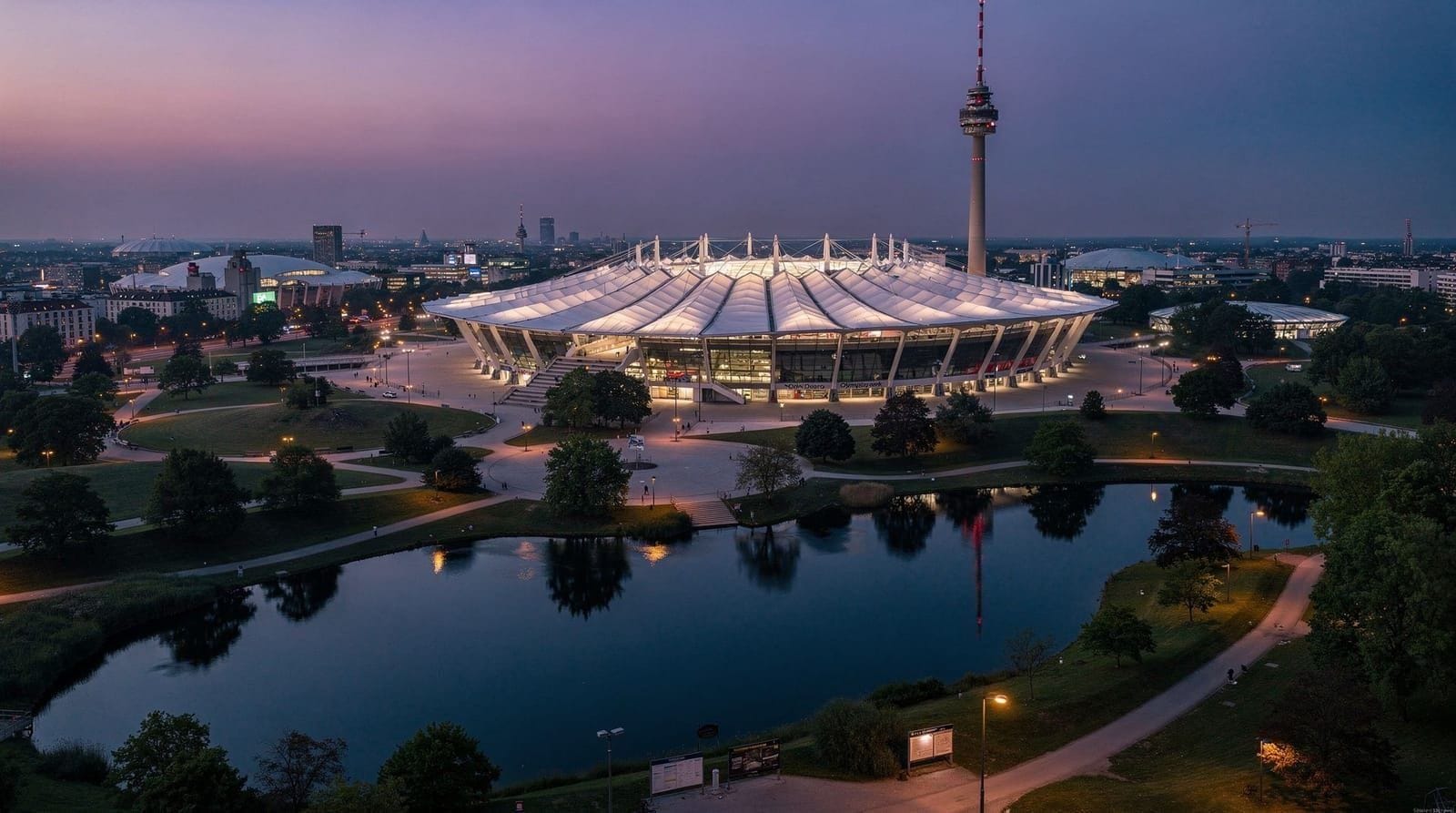
Olympiapark is the obvious companion visit. The park grounds are free and offer a different scale of activity — open air, hills to climb, the lake, and the Olympic Tower.
Suggested half-day combination:
Morning: arrive at Olympiazentrum by 10:00 when Sea Life opens. Complete the aquarium in 90 minutes. Exit via the gift shop onto Willi-Daume-Platz.
Mid-morning to early afternoon: cross into Olympiapark. Climb the Olympiaberg hill (free) for panoramic views. If budget allows, take the lift to the Olympic Tower observation deck (EUR 11 adults, EUR 5.50 children). Have lunch at one of the park food stalls — the Imbiss near the lake offers Würste, sandwiches, and drinks at reasonable prices.
Afternoon: if children still have energy, the Olympiapark outdoor swimming facility (Olympia-Schwimmhalle, EUR 6-9 per person) is a 5-minute walk and has multiple pools including a leisure pool suited to families. Full details at Olympiapark guide.
BMW Welt extension: BMW Welt (free entry) is a 10-minute walk north of Olympiapark. The showroom contains the latest BMW, Mini, and Rolls-Royce vehicles in a spectacular contemporary building. Older children (10+) with an interest in cars find it engaging. The BMW Museum adjacent (EUR 10 adults, EUR 7 children) covers automotive history. See BMW Welt and Museum guide.
Sea Life Munich for different age groups
Ages 2-4: well suited. Tanks are at appropriate heights, the route is pushchair-friendly, and the touch pools are a highlight. The ocean tunnel may feel overwhelming initially — go slowly and allow them to lead.
Ages 5-9: the core audience. The sharks and turtles in the ocean tunnel reliably generate the strongest reactions from this group. The jellyfish section and touch pools are secondary highlights.
Ages 10-14: will enjoy Sea Life more if they have prior interest in marine biology or conservation. For general visitors this age, the experience may feel brief. Pairing with a larger attraction (Deutsches Museum, Olympiapark) rounds out the day.
Adults without children: Sea Life is pleasant but primarily designed for families. The science content is genuine but not deep. Consider it a 60-minute addition to an Olympiapark visit rather than a standalone destination.
Practical information for visiting Sea Life Munich
Accessibility: Sea Life Munich is fully wheelchair and pushchair accessible. The entire route is on one level with a gently sloping ramp replacing steps at the few elevation changes. Baby-changing facilities are available near the entrance.
Cloakroom: lockers are available near the entrance for EUR 1-2. Useful for large bags, prams, or coats if visiting on a warm day.
Photography: photography is permitted throughout (no flash). The tunnel, jellyfish section, and touch pools are the best photographic opportunities. Note that tank glass can produce reflections — position the lens close to the glass to eliminate glare.
Languages: most interpretive panels are in German with English translation. Sea Life staff can answer questions in English. Some panels have a French or Italian version.
Food and drink: Sea Life Munich does not have its own café or restaurant. The nearest options are in Olympiapark (food stalls) or a 10-minute walk to the Olympia-Einkaufszentrum (OEZ) shopping centre, which has various food court options. Plan to eat before or after rather than during the Sea Life visit.
Birthdays and groups: Sea Life Munich runs birthday party packages for children, typically including a themed room, entry for the group, and a member of staff to lead activities — book well ahead, as weekend slots fill up. School and group bookings receive discounted rates; contact the venue directly rather than booking through the standard online ticket flow for groups larger than about ten.
Stroller and buggy storage: while the route itself is pushchair-accessible throughout, some families prefer to use the free buggy park near the entrance rather than navigate a stroller through the touch pool area, where space is tighter than the rest of the route.
Honest assessment: what Sea Life Munich does and doesn’t do well
What works: the ocean tunnel is genuinely impressive, especially for children who have not seen a large shark in person before. The freshwater Bavarian section is more interesting than it sounds and provides a local ecological connection. The facility is clean and well-maintained, and staff are attentive at the touch pools.
What doesn’t work as well: the route feels short for the ticket price. At EUR 19.50 per adult, the price-to-experience ratio is lower than Hellabrunn Zoo (more species, more time, more space at EUR 22 per adult). Sea Life is best justified when combined with another activity nearby rather than as a standalone full-day attraction. The gift shop exit pricing is steep — manage expectations with children before entering.
Overall: a worthwhile 90-minute addition to a Munich family day, particularly on a rainy afternoon or as a complement to Olympiapark. Not a substitute for a zoo or a major museum, but a genuine quality aquarium within a short U-Bahn ride of the city centre.
Sea Life Munich vs Hellabrunn Zoo: which one for a family day?
Families often ask whether to choose Sea Life or Hellabrunn Zoo if time only allows one. They are not really substitutes for each other — Sea Life is a 60-90 minute indoor aquarium visit, while Hellabrunn is a half-day-plus outdoor zoo with far more animals and space.
| Sea Life Munich | Hellabrunn Zoo | |
|---|---|---|
| Time needed | 60–90 minutes | 3–5 hours |
| Cost (adult) | ~EUR 19.50 online | ~EUR 22 |
| Weather dependence | None — fully indoor | High — best in dry, mild weather |
| Best for | Rainy days, short visits, sharks/turtles | Full days out, wider range of species |
If you only have one slot in the itinerary and the weather is good, Hellabrunn generally offers more for a similar price. If the weather is poor or you only have 90 minutes free, Sea Life is the better fit. Many families do both across a multi-day Munich visit — see the Munich with kids guide for how to sequence family attractions across a longer stay.
Timing your visit to avoid queues
Sea Life Munich’s queues build predictably around school holidays and weekend afternoons. Bavarian school holidays are staggered from those in other German states, so check the current calendar before assuming a weekday will be quiet. In general, arriving at opening time (typically 10:00) on a weekday gives the shortest queues at both the entrance and the ocean tunnel. Weekend mornings are the second-best option; weekend afternoons, especially in school holiday periods, are consistently the busiest. Booking a timed entry slot online is the single most reliable way to control your queue time regardless of when you visit — it caps the number of visitors entering during your slot.
Frequently asked questions about Sea Life Munich
Can I visit Sea Life Munich on a rainy day?
Sea Life Munich is entirely indoors and therefore ideal for rainy days. It is one of the better city-centre wet-weather options for families with young children. The munich rainy day guide lists other fully indoor options.
Is Sea Life Munich expensive compared to other German aquariums?
Comparable to Sea Life centres in other German cities. Berlin’s Sea Life charges similar prices. The aquarium at Nuremberg’s Tiergarten is larger and better value, but that requires a full day trip. For Munich visitors, Sea Life is the only major aquarium option within the city.
Are there discounts for Sea Life Munich?
The most reliable discount is online advance booking (saving EUR 3 per ticket). Merlin Annual Pass holders enter free. Some Munich hotel concierges have discount vouchers — ask when checking in. The Munich CityTourCard does not cover Sea Life.
How far is Sea Life Munich from the city centre?
U3 from Marienplatz to Olympiazentrum takes 17-20 minutes. Walk to Sea Life adds 5 minutes. Total door-to-door travel from the city centre is approximately 25-30 minutes.
Is the ocean tunnel at Sea Life Munich wheelchair accessible?
Yes. The conveyor belt in the ocean tunnel can be bypassed via a parallel walkway for wheelchair users or pushchairs. Staff can assist if needed.
What species can you see in the Sea Life Munich ocean tunnel?
The tunnel contains nurse sharks, sandbar sharks, leopard sharks, southern stingrays, green sea turtles, grouper, and various reef fish. Species composition occasionally changes as animals are transferred between Merlin’s European aquariums. Current species are listed on the Sea Life Munich website under “our animals.” Family scavenger hunt through Munich — pair with Sea Life for a full day
How does Sea Life Munich compare to spending the same time in the park at Olympiapark?
They complement rather than compete — Olympiapark’s free grounds (Olympiaberg hill, the Olympiasee, the tent-roof structures) give an outdoor counterpoint to Sea Life’s indoor 90 minutes. Most families combine both in a single visit, as described above, rather than choosing one over the other. See the Olympiapark guide for the full combination itinerary.
Top experiences
Bookable activities with verified prices and instant confirmation on GetYourGuide.