BMW Welt and BMW Museum guide: what's free, what costs money
Munich: BMW Museum entry and BMW Welt private guided tour
What is the difference between BMW Welt and the BMW Museum?
BMW Welt is BMW's free public showroom and event space — no ticket needed, no time limit, with current and concept vehicles on display. The BMW Museum is a paid attraction (€12 adults) covering the brand's history from 1916 to today. Both are next to each other at the Olympic Park site. Most visitors do both; BMW Welt takes 1 hour, the Museum takes 1.5–2 hours.
Two buildings, two experiences: navigating the BMW campus in Munich
The northwest corner of Munich, where the 1972 Olympic Park meets the city’s residential fabric, contains one of the stranger collisions in urban tourism: an Olympic park designed as a symbol of open, democratic postwar Germany sitting alongside one of the world’s most recognisable corporate flagship experiences. BMW built its headquarters, factory, museum and public showroom on land it purchased directly adjacent to the Olympic site in the 1970s, and the result is a campus that draws more than 3 million visitors a year — many of whom arrive with no particular interest in cars and leave having spent 3 hours there anyway.
Understanding what you are walking into before you arrive makes the difference between a satisfying visit and a confused one. BMW Welt and the BMW Museum are separate buildings with separate entry arrangements. They are often conflated in travel writing, which leads to visitors turning up expecting to pay admission at BMW Welt (free) or expecting the Museum to be free (it is not).
| Where | Olympic Park area, U3 to Olympiazentrum |
| Cost | BMW Welt free; BMW Museum €12 adults (2026) |
| Time needed | 45 min–1h (Welt) plus 1.5–2h (Museum) |
| Getting there | U3 direct from Marienplatz, ~14 minutes |
| Best time | Weekday morning; closed Mondays |
BMW Welt: the free showroom
BMW Welt (BMW World) is not a museum. It is a brand experience centre — a permanent showroom, event venue and delivery centre where customers collect new vehicles. It happens to be open to the public for free, every day of the week except Monday.
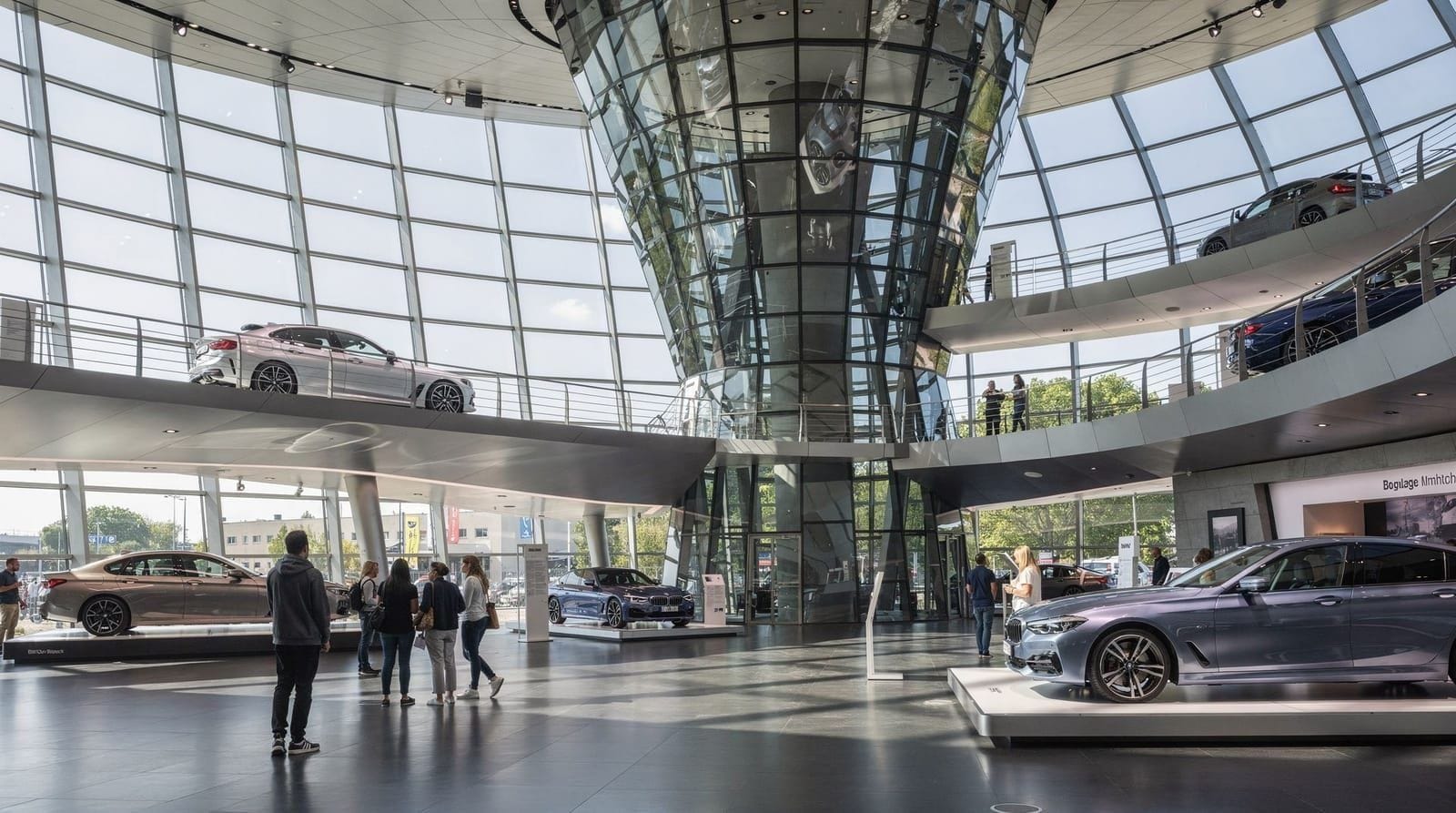
The building itself is a notable piece of contemporary architecture: a double-cone steel and glass structure designed by Austrian firm Coop Himmelb(l)au, opened in 2007. The Double Cone — the spiralling element visible from the outside — is the symbolic centrepiece, housing special exhibitions and events. The main floor contains the current BMW, MINI and BMW Motorrad lineup, displayed with generous space and good lighting.
What you will find inside BMW Welt:
- Current production vehicles across BMW and MINI ranges, with some displayed in driving configuration with doors open
- Concept cars and design studies, rotating with the calendar
- A motorcycle section covering the current BMW Motorrad lineup
- The “Junior Campus” — a hands-on space for children aged 7–13 covering mobility concepts (not always open; check beforehand)
- Several restaurants and cafés (Esszimmer, the BMW flagship restaurant, holds 2 Michelin stars)
- A BMW goods shop
The experience of BMW Welt is fundamentally about sitting in expensive cars in a handsome space. This sounds flippant, but it works: the combination of architectural quality and product presentation creates an atmosphere that is appealing even for visitors with no intention of buying anything. Car enthusiasts will spend an hour; non-enthusiasts can be happy with 20–30 minutes.
BMW Welt is also genuinely useful if you are collecting a new BMW — the glass building contains the customer delivery lounges and handover facilities, and new owners from across Europe travel to Munich specifically to take delivery of their cars here before driving home.
BMW Museum: the history collection
The BMW Museum is a separate circular building to the east of BMW Welt, connected by a pedestrian bridge. It opened in 1973 (designed by Karl Schwanzer, who also designed the four-cylinder headquarters building) and was substantially renovated and expanded in 2008.
Admission (2026):
- Adults: €12
- Students/seniors: €9
- Children 6–14: €6
- Under 6: free
Opening hours: Tuesday–Sunday, 10am–6pm. Closed Monday. Last admission 5:30pm.
The museum traces BMW’s history from its origins as an aircraft engine manufacturer (the Bavarian Motor Works was founded in 1916 making engines for World War I aircraft — the famous blue-and-white roundel logo represents a spinning propeller against the Bavarian sky) through motorcycles, cars, racing and the modern era.
The museum is organised into several themed “houses”:
House BMW: The company’s historical development, from aircraft engines to the first BMW motorcycles in the 1920s to the revival of the company after World War II devastation. The R 32 motorcycle of 1923 and the 328 sports car of 1936 are two particularly significant objects.
House BMW Motorsport: Racing history — Formula 1 engines, DTM cars, Art Cars (a rotating display of BMW vehicles painted by artists including Andy Warhol, Roy Lichtenstein and Jeff Koons). The Art Cars are genuinely interesting beyond automotive context.
House Design: How BMW’s visual language developed from decade to decade. Studio models, clay prototypes and design sketches reveal the iterative process behind iconic shapes. This is the section that has the most appeal for design-interested visitors who are not car enthusiasts.
House Technology: Engineering milestones — drive train development, electric vehicle history, aerodynamic research.
The Bowl: The original 1973 Schwanzer bowl — the sunken lower level of the original building — is preserved and used as event space. It gives a sense of what the museum looked like before the 2008 expansion. Private guided tour of BMW Museum and BMW Welt
The BMW Headquarters and Factory
The four-cylinder BMW headquarters tower (completed 1972, also by Karl Schwanzer) is not open to general public visits — it is a working office building. But the Factory Tour (Werk München) is available and provides a production-line view of how modern BMWs are assembled. Factory tours must be booked well in advance (they are extremely popular), are only available for adults and older teenagers (under-6 excluded), and run for approximately 2.5 hours. Check availability and book via the official BMW Group Classic or BMW Plant Munich website.
The factory tour is a separate product from the museum and BMW Welt visits and requires independent planning.
Combined visit with the Olympic Park
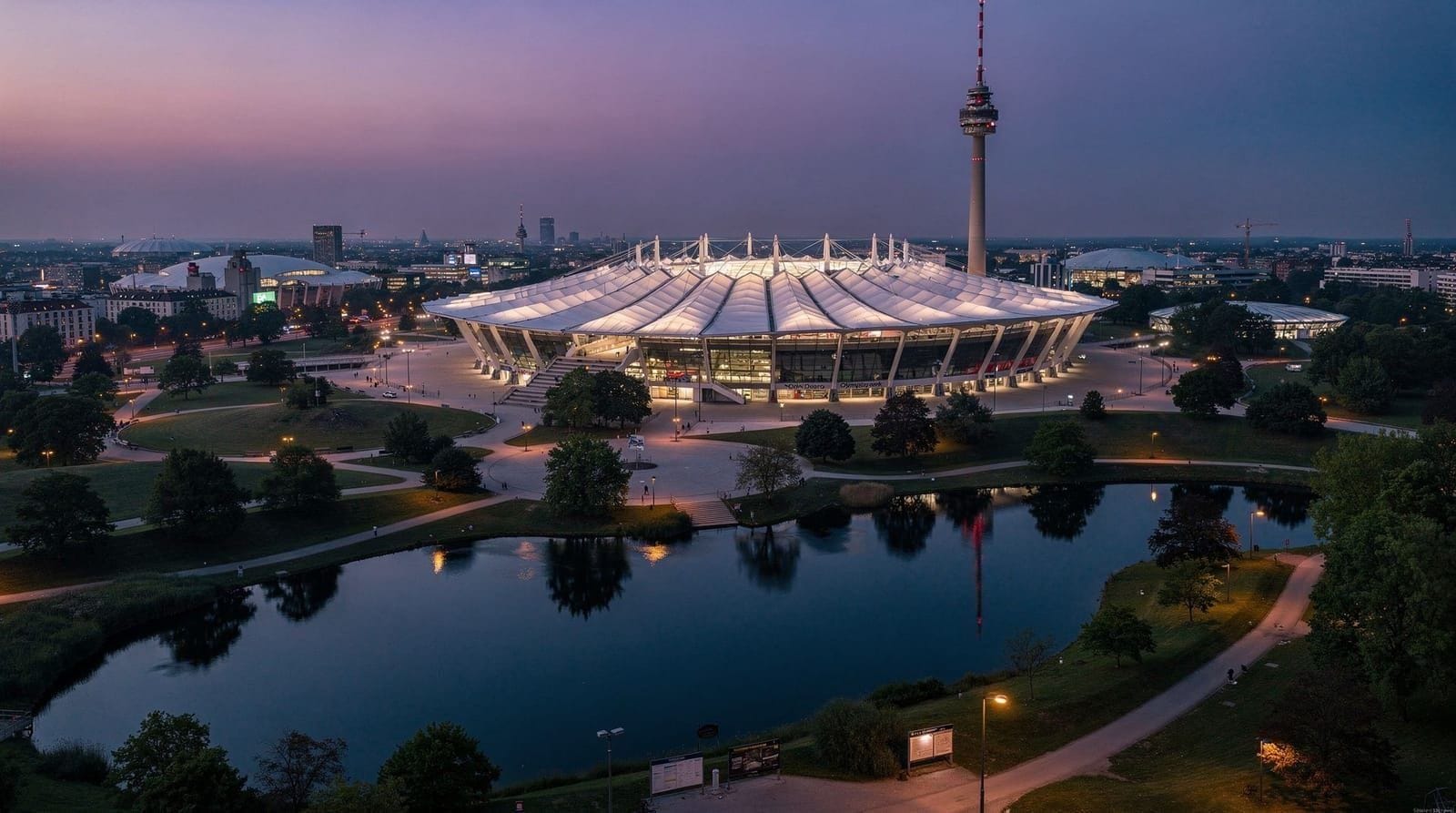
The BMW campus and the Olympic Park are adjacent, and visiting both on the same day is logical and rewarding. The 1972 Munich Olympics are a complex historical site: built to project a new, open Germany after the Nazi era, the Games were catastrophically overshadowed by the murder of 11 Israeli athletes by Palestinian gunmen (the “Munich Massacre”). The Olympic Park covers this history alongside the sporting legacy, the architecture (Günter Behnisch’s tensile roof structures remain influential) and the Olympiaturm.
From BMW Welt, cross the Olympic Park from the north entrance on Georg-Brauchle-Ring: it is about 15 minutes on foot to the main park areas and the Olympiaturm. The park has a lake, performance venues, concert halls and good open space. BMW Welt, Allianz Arena and Olympic Park tour
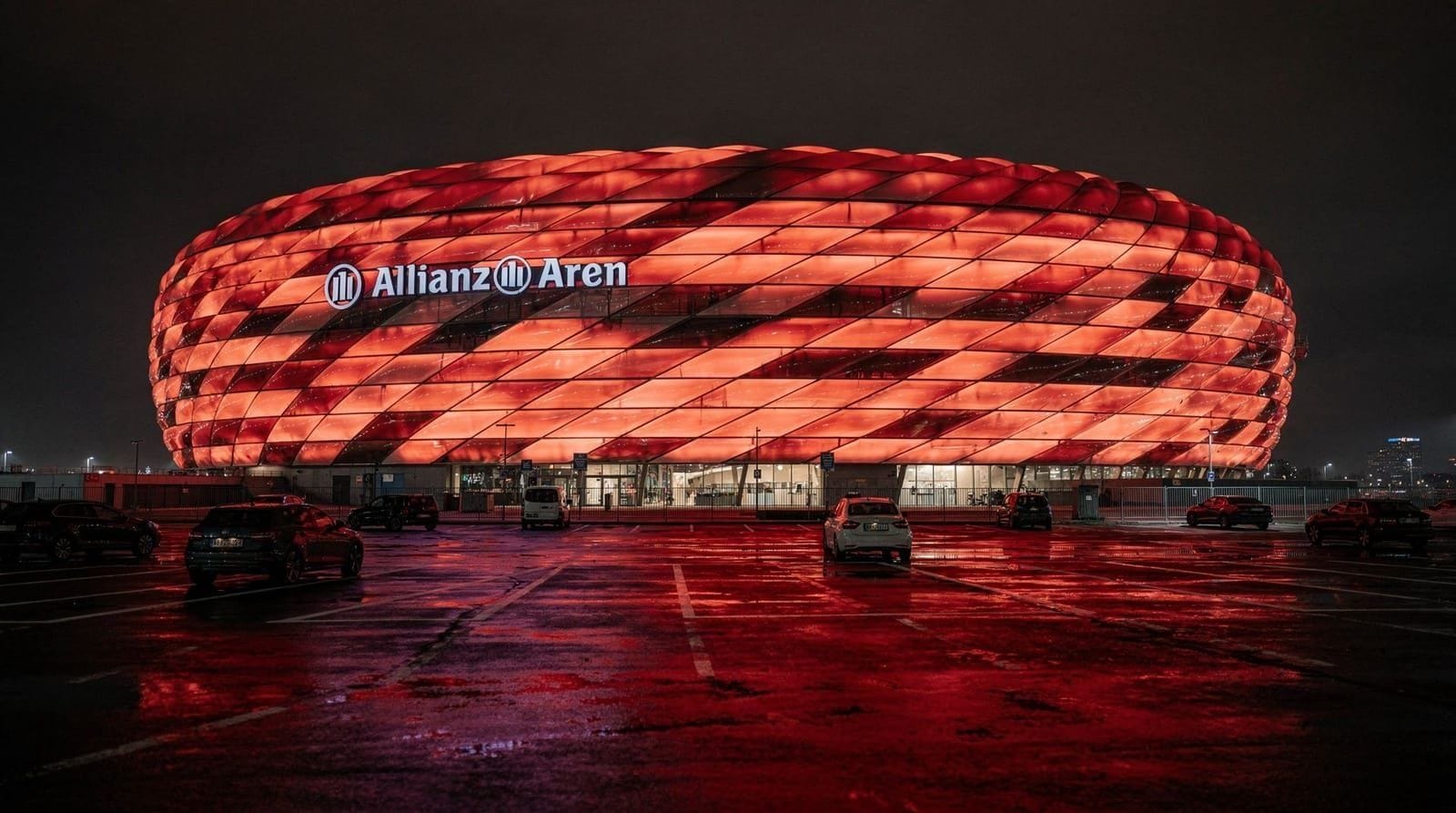
For football-focused visitors, the Allianz Arena and FC Bayern Museum is a further 10 kilometres north of the BMW campus — it does not combine naturally in a single walking day but is accessible on U-Bahn line U6 from Fröttmaning.
Practical logistics
Getting there:
- U3 to Olympiazentrum: 12–15 minutes from Marienplatz. BMW Welt is directly connected to the exit (follow signs “BMW Welt” from the U3 platform).
- No significant walking required — the entrance is at the top of the escalator.
- By car: A9 motorway, exit Schwabing Nord; follow BMW-Welt signage. Paid parking on site.
Eating on site:
- Esszimmer (BMW Welt, 2 Michelin stars): This is one of Munich’s best restaurants. Prices are accordingly high (tasting menus €180+). Booking weeks in advance is essential. Lunch service is available and slightly more accessible than dinner.
- Werkskantine style cafeteria on the BMW Welt ground floor: Reasonable prices, good for a quick lunch.
- The Olympic Park has several food options including a beer garden by the lake.
With children: BMW Welt is quite child-friendly — children enjoy sitting in the cars, and the architecture is dramatic. The BMW Museum is less immediately engaging for under-10s. The Olympic Park has more active options (boating on the lake, climbing the Olympiaturm, walking the roof structures). The Deutsches Museum on the other side of the city is generally considered Munich’s best museum for families with children.
Photography: Permitted throughout BMW Welt and the museum. The Double Cone exterior is best photographed in morning light. Inside the Museum, lighting on the Art Cars is good.
Is a guided tour worth it?
For BMW enthusiasts, a private guided tour unlocks significant additional context — production history, engineering detail, racing heritage — that the audioguide does not convey as vividly. For casual visitors, self-guided with the museum’s floor plan and display texts is perfectly adequate. Private walking tour with BMW Museum and BMW Welt entry
The most efficient approach for a typical visitor: start at BMW Welt (free, no booking), spend 45 minutes, then cross to the Museum (buy ticket at door) for 1.5 hours. This keeps the morning cost-effective and leaves the afternoon free for the Olympic Park.
What to see nearby
The Olympiapark is the obvious pairing. Beyond it:
- Olympiaturm (TV tower): Observation deck and rotating restaurant, €9 adults
- Sea Life München: Aquarium in the Olympic Park area, popular with families — see Sea Life Munich guide
- Englischer Garten northern section: 20 minutes south by U-Bahn, with the Chinese Tower beer garden
For visitors on a tight schedule, the BMW sites are most logically visited on a day when the central Altstadt attractions — Marienplatz, Frauenkirche, Munich Residenz — are saved for a separate day. The commute between the BMW campus and the Altstadt is manageable but takes time.
Comparing your options: Welt only, Museum only, or both
Not every visitor needs the full campus experience. A quick comparison for planning:
| Option | Time | Cost | Best for |
|---|---|---|---|
| BMW Welt only | 30–60 min | Free | Passing by, tight schedule, non-car-fans wanting a look |
| BMW Museum only | 1.5–2h | €12 adults | Genuine car and design history interest |
| Both, self-guided | 2.5–3h | €12 adults | Most first-time visitors |
| Both, private guided | 3h+ | €12 + guide fee | Enthusiasts wanting engineering/racing depth |
| Factory tour add-on | +2.5h, separate booking | Separate fee | Serious enthusiasts, book weeks ahead |
If you’re combining with Olympiapark: a realistic half-day plan
BMW Welt, the BMW Museum and the Olympic Park together make a full and satisfying half-day without feeling rushed. A workable sequence: arrive by U3 at Olympiazentrum around 9:30–10am, spend 45 minutes at BMW Welt, cross to the Museum for its 10am opening and spend 1.5–2 hours there, then walk into the Olympic Park for lunch and the Olympiaturm or lake area in the early afternoon. This avoids doubling back and keeps the whole loop within easy walking distance. For families balancing this with younger children, the Munich with kids guide has age-appropriate pacing suggestions for a museum-heavy day.
Frequently asked questions about BMW Welt and the BMW Museum
What is the BMW Welt opening time?
BMW Welt is open Tuesday–Sunday. The building opens at 7:30am, and the exhibition areas open at 9am. It closes at midnight. BMW Welt is closed on Mondays.
Can you see a BMW being assembled in Munich?
Yes, through the BMW Plant Munich factory tour. It must be booked in advance (often weeks ahead) via BMW’s official website. The tour lasts about 2.5 hours and is not included in museum or BMW Welt admission. Age restrictions apply (generally no children under 6).
Are there Art Cars on permanent display at the BMW Museum?
Yes. The BMW Art Car collection is part of the permanent museum display, with a rotating selection of vehicles on view. The full collection includes 19 cars painted by artists including Andy Warhol (1979), Roy Lichtenstein (1977), Calder (1975), Jeff Koons (2010) and Cao Fei (2017). Not all 19 are displayed simultaneously.
Is the BMW Museum included in the Munich City Pass?
The Munich CityTourCard does not include the BMW Museum. The Munich City Pass (the GYG-sold combined pass) does include it. Check current inclusions before buying, as pass contents change.
How far is BMW Welt from Marienplatz?
By U3 from Marienplatz to Olympiazentrum: approximately 14 minutes. It is a straightforward, single-line journey — no transfer needed.
Is there parking at BMW Welt?
Yes. Paid parking is available in the BMW Welt car park and the Olympic Park car parks nearby. Rates are typical Munich car park prices. Arriving by U-Bahn is easier and avoids the variable parking availability on busy weekends.
What age is the BMW Museum suitable for?
The museum is most engaging for ages 12 and up. Children interested in cars will enjoy it from around age 8. The Design and Art Car sections appeal to adults regardless of automotive interest. The Junior Campus in BMW Welt (when open) is designed for children aged 7–13 and is hands-on.
Top experiences
Bookable activities with verified prices and instant confirmation on GetYourGuide.