Frauenkirche guide: towers, Devil's Footstep and visiting tips
Munich: old town walking tour
Can you go up the Frauenkirche towers in 2026?
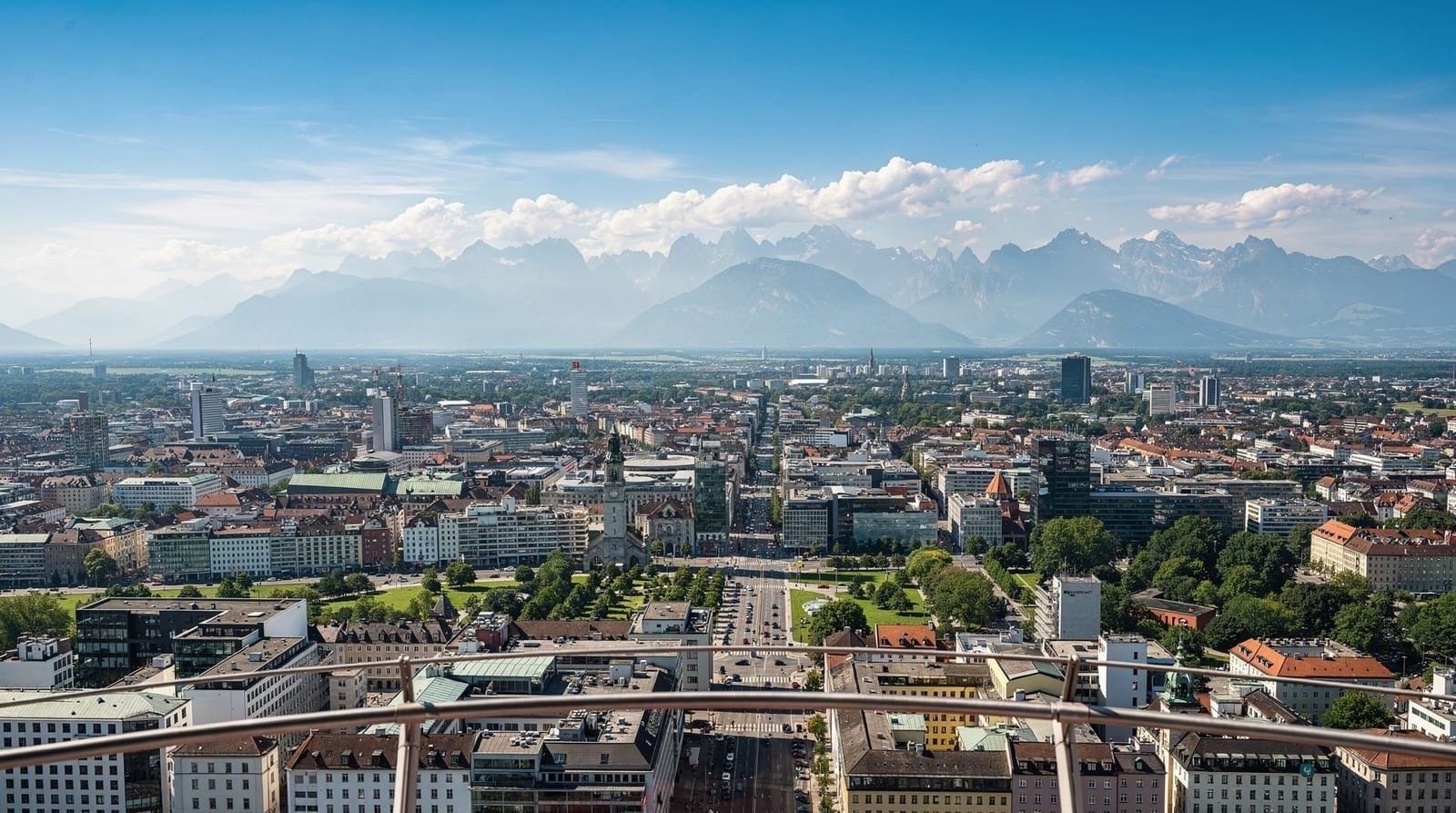
Yes, the south tower (Südturm) is open to visitors with a lift to the observation deck at 99 metres. Admission is €7.50 for adults and €3.50 for children. Opening hours are typically 10am–5pm Tuesday–Sunday. The north tower remains closed for ongoing restoration work as of 2026. The view from the south tower over Munich's rooftops and toward the Alps is excellent.
Munich’s twin-towered cathedral: architecture, legend and a view over the city
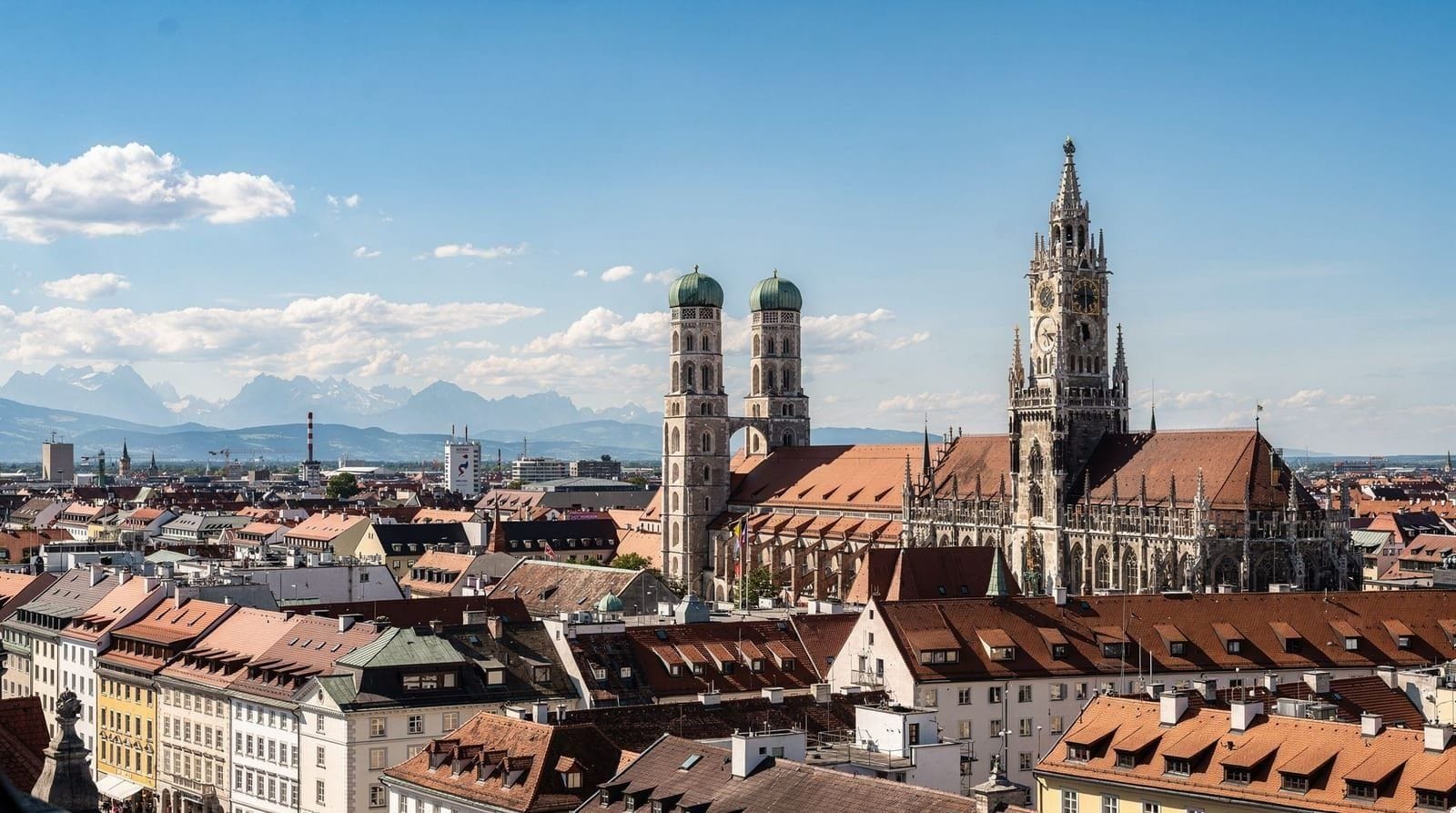
From almost any elevated point in Munich, the two green copper domes of the Frauenkirche are the reference mark. They appear behind you when you walk away from Marienplatz. They frame the view west from the English Garden. They are on every Munich photograph taken from the hills south of the city. The cathedral’s towers have defined Munich’s silhouette for over 550 years.
The Frauenkirche — formally the Cathedral of Our Dear Lady (Dom zu Unserer Lieben Frau) — is the seat of the Archbishop of Munich and Freising and the mother church of the Archdiocese of Munich. It is simultaneously a functioning religious building and one of the most visited architectural monuments in Bavaria. Understanding both dimensions of what it is makes for a more satisfying visit.
| Where | Frauenplatz, 5 min west of Marienplatz |
| Cost | Free interior; around €7.50 tower (adults) |
| Time needed | 30–45 min interior, +30 min for the tower |
| Getting there | Walk from Marienplatz, or U-Bahn to Marienplatz/Karlsplatz |
| Best time | Early morning (7–9am) for a quiet interior |
The building: construction history
The present Frauenkirche was built relatively quickly by the standards of medieval cathedral construction: from 1468 to 1488, just 20 years. The architect was Jörg von Halsbach (also known as Jörg Ganghofer), who also designed the Altes Rathaus on Marienplatz. The patron was Duke Sigismund of Bavaria.
The site was not vacant — a smaller Romanesque church stood here previously, and construction of the Gothic replacement began while the old church was still in use. By 1488, the main fabric was complete, though the distinctive domed towers were not added until 1525.
The towers’ domed caps — the characteristic Renaissance domes that crown the otherwise Gothic structure — were designed by Lukas Rottaler in 1525, replacing the intended Gothic spires that were never completed due to funding shortfalls. The combination of the red-brick Gothic body and the Renaissance domes is architecturally peculiar by strict stylistic standards, but it is precisely this combination that makes the Frauenkirche’s silhouette so recognisable.
The building survived World War II bombing with significant damage: roofs destroyed, windows shattered, the organ lost. The exterior was restored in the 1950s and the interior over subsequent decades. What you see today is a combination of original 15th-century stonework, mid-20th-century restoration and contemporary maintenance work.
The exterior and approaching the building
The Frauenkirche sits on Frauenplatz, a small square that opens off Kaufingerstrasse to the west of Marienplatz. The south facade — the main entrance facade — gives the full impression of the twin towers rising 99 metres.
The red brick facing is characteristic of the region — fired local clay rather than the carved stone used in French or English Gothic cathedrals. The surface is relatively plain, particularly compared to more ornate Gothic facades. The carved portal above the south entrance (depicting scenes from the life of the Virgin Mary) is the main sculptural programme; it is late 15th century, partially restored.
On a clear morning before the crowds arrive, Frauenplatz is one of the better spots in Munich to photograph the cathedral without people in the frame. Evening light on the towers from the east is also good.
The interior: a late-Gothic hall church
The Frauenkirche’s interior is a hall church (Hallenkirche) — a plan in which the nave and side aisles are approximately the same height, creating a wide, relatively egalitarian interior space rather than the tall soaring nave of French Gothic. The dimensions are substantial: 109 metres long, 40 metres wide, with a height of about 37 metres at the nave ceiling.
Twenty-two slender octagonal columns divide the space into three naves. The columns are proportioned so that when you stand near the entrance, their placement blocks sight lines to the windows in the ambulatory at the east end — the architectural trick that the legend of the Devil’s Footstep was built around.
What to look for inside:
The Bessererkapelle and choir stained glass: The choir windows at the east end contain Munich’s most important surviving medieval stained glass. The series dates primarily to the late 15th and early 16th century and depicts figures of prophets, apostles and scenes from the life of Mary. Much was damaged in World War II and has been restored; some original panels survive. Take time with these — they are genuinely exceptional.
The tomb of Ludwig IV (Holy Roman Emperor): Ludwig IV (also called Ludwig the Bavarian) was Holy Roman Emperor from 1328 to 1347 and the Wittelsbach ruler who established Munich as a significant centre of his court. His tomb monument is a black marble sarcophagus with a gilded canopy, located in the choir area. The tomb itself was installed in the 17th century; the original burial location was an earlier church on this site. Ludwig IV is a significant figure in both German imperial history and Bavarian dynastic history.
The organ: The current organ was installed in 1994 and rebuilt in 2010. It has 91 stops and is considered one of the finest instruments in Bavaria. The Frauenkirche gives regular organ concerts — check the schedule on the cathedral website if you are interested.
The Archbishop’s throne and choir stalls: The choir stalls are late Gothic woodcarving, partially original, partially 20th-century work. The canopied throne of the Archbishop is Baroque, installed in the 18th century.
Monument to Field Marshal Johann Tserclaes, Count of Tilly: Tilly commanded Catholic League forces in the Thirty Years’ War and was closely associated with the Wittelsbach court. His monument in the north nave is a significant piece of Baroque funerary sculpture.
The Devil’s Footstep (Teufelstritt)
Near the main entrance, set into the floor, is a dark depression roughly the shape of a large footprint. This is the Teufelstritt — the Devil’s Footstep.
The legend is a localised version of a widespread European folk tale in which the Devil is tricked into funding a church’s construction. In the Munich version, the architect Jörg von Halsbach agreed to build the cathedral without windows as the price of the Devil’s financial support. When the cathedral was complete, the Devil arrived to inspect it and stood at the entrance — at the position of the stone mark — and looked down the nave. From this specific vantage point, the octagonal columns are positioned so that they block sight lines to every window. The Devil, seeing only columns and no windows, believed he had been cheated of a church full of natural light. When he moved forward, the windows became visible around the columns. In his rage at being deceived, he stamped his foot — leaving the footprint.
In practice, the architectural effect is real: the columns are proportioned and positioned so that from the entrance position, the windows in the ambulatory around the choir are invisible. This is a genuine late-Gothic spatial manipulation, not myth. Whether the story of the Devil’s involvement is historical or entirely invented, the architectural device works.
The footprint mark itself is a depression in a stone slab, possibly created by repeated foot traffic in a well-worn spot rather than any deliberate construction. No contemporary documentary evidence dates its origin to the 15th century. Munich Old Town walking tour — includes Frauenkirche
The south tower: observation deck and views
The south tower (Südturm) has a lift that brings visitors to the observation gallery at approximately 99 metres. This is the best elevated view over the Altstadt and one of the better city views in Munich.
2026 details:
- Admission: €7.50 adults, €3.50 children (6–17), under-6 free
- Hours: Tuesday–Sunday, 10am–5pm (confirm on arrival as seasonal variation applies)
- Access: the tower lift entrance is to the left of the main south portal on Frauenplatz
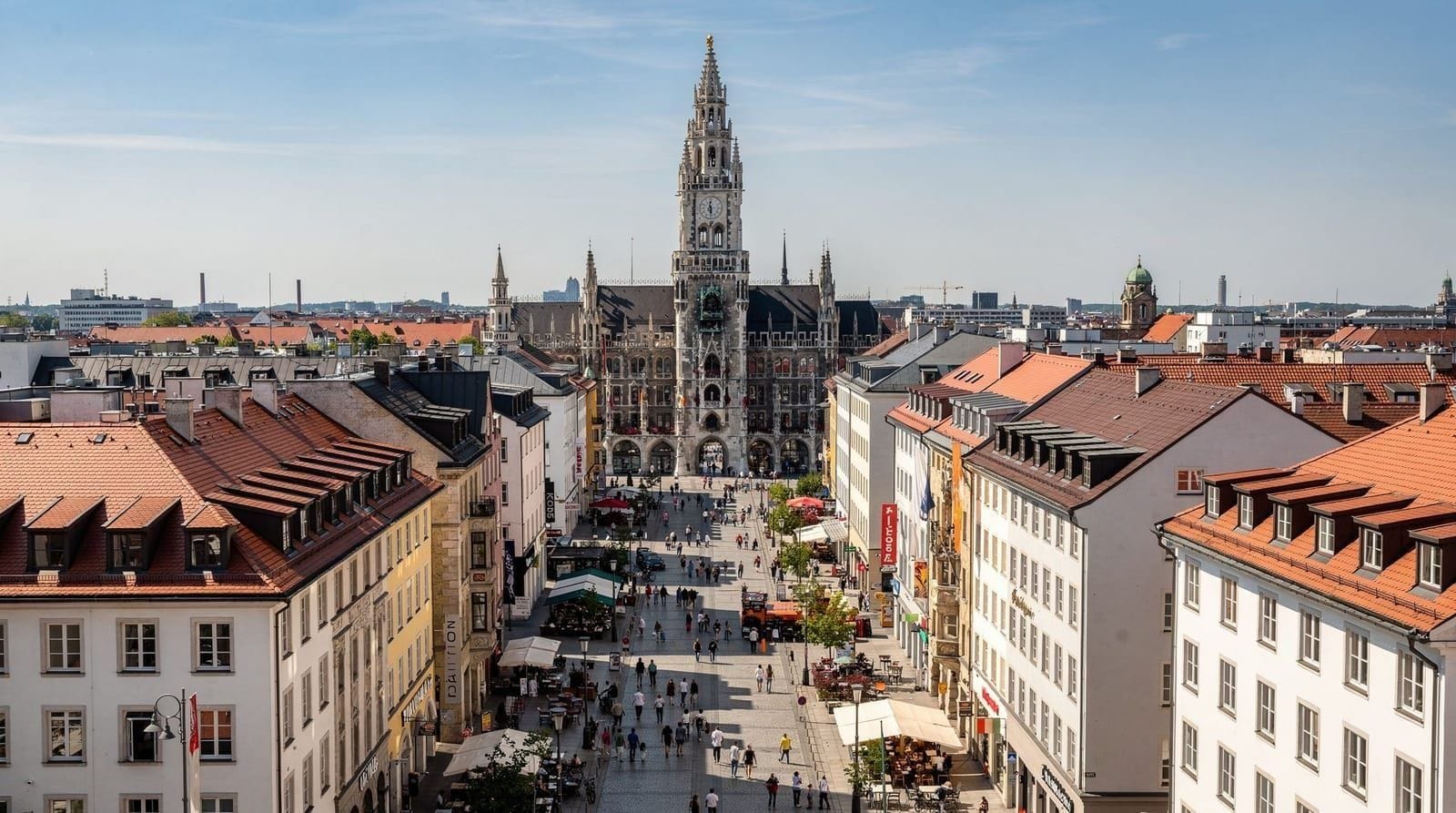
From the tower, the view takes in the Altstadt roofline, the Neues Rathaus tower, the Residenz complex to the northeast, the Englischer Garten to the north, and on clear autumn and winter days, the Alps to the south. The Alpine view is most reliable from October through April — summer haze frequently reduces it. The Munich height limit means there are no tall buildings in the foreground to interrupt the view.
The north tower: As of 2026, the north tower (Nordturm) is closed to visitors due to ongoing restoration works. Check current status at the cathedral or on the official website.
Comparing the Frauenkirche to the Peterskirche tower
Marienplatz has a second option for elevated city views: the Peterskirche (St. Peter’s Church), whose tower is often called Alter Peter (Old Peter) and is directly south of Marienplatz. The Peterskirche tower (Admission: €5 adults, €3 children; no lift — 302 steps) gives a view slightly lower than the Frauenkirche but with the twin towers of the Frauenkirche in the frame — it is arguably the classic Munich photograph. If your priority is photography, Peterskirche gives the better iconic shot. If your priority is the highest and broadest view, the Frauenkirche tower (with its lift) is more practical.
Both are worth including if you have a full day in the Altstadt. Munich Old Town historic walking tour
Planning your visit
Best time to visit: The cathedral is quietest in the early morning (7–9am) on weekdays. Tourist groups typically arrive from around 10am. The tower is less crowded in the first hour after opening (10am). For photography of the interior, morning light from the east windows into the choir is good.
How long to allow: Interior visit: 30–45 minutes. Tower: add 30 minutes (lift wait + time on the deck). Combined visit including time for the choir windows and the medieval tombs: 1.5 hours.
Religious services: The Frauenkirche is a functioning cathedral. Sunday masses, weekday masses, and special liturgical events are held throughout the year. During services, tourist visits may be restricted or visitors asked to observe quietly. Check the schedule on the cathedral website.
Accessibility: The main interior is accessible by wheelchair through the south entrance. The tower lift is accessible.
Photography rules: Non-flash photography is permitted throughout the interior for personal use; tripods and professional equipment require permission from the cathedral office in advance. During services, photography is discouraged out of respect for worshippers.
Nearby: The Frauenkirche is 5 minutes west of Marienplatz. The Michaelskirche (Jesuit church, one of the finest Baroque church interiors in Germany) is 5 minutes further west on Neuhauser Strasse. The Asamkirche is 10 minutes south — a private Baroque chapel of extreme decorative intensity and one of Munich’s most extraordinary small buildings.
What is unique about the Frauenkirche versus other Munich churches
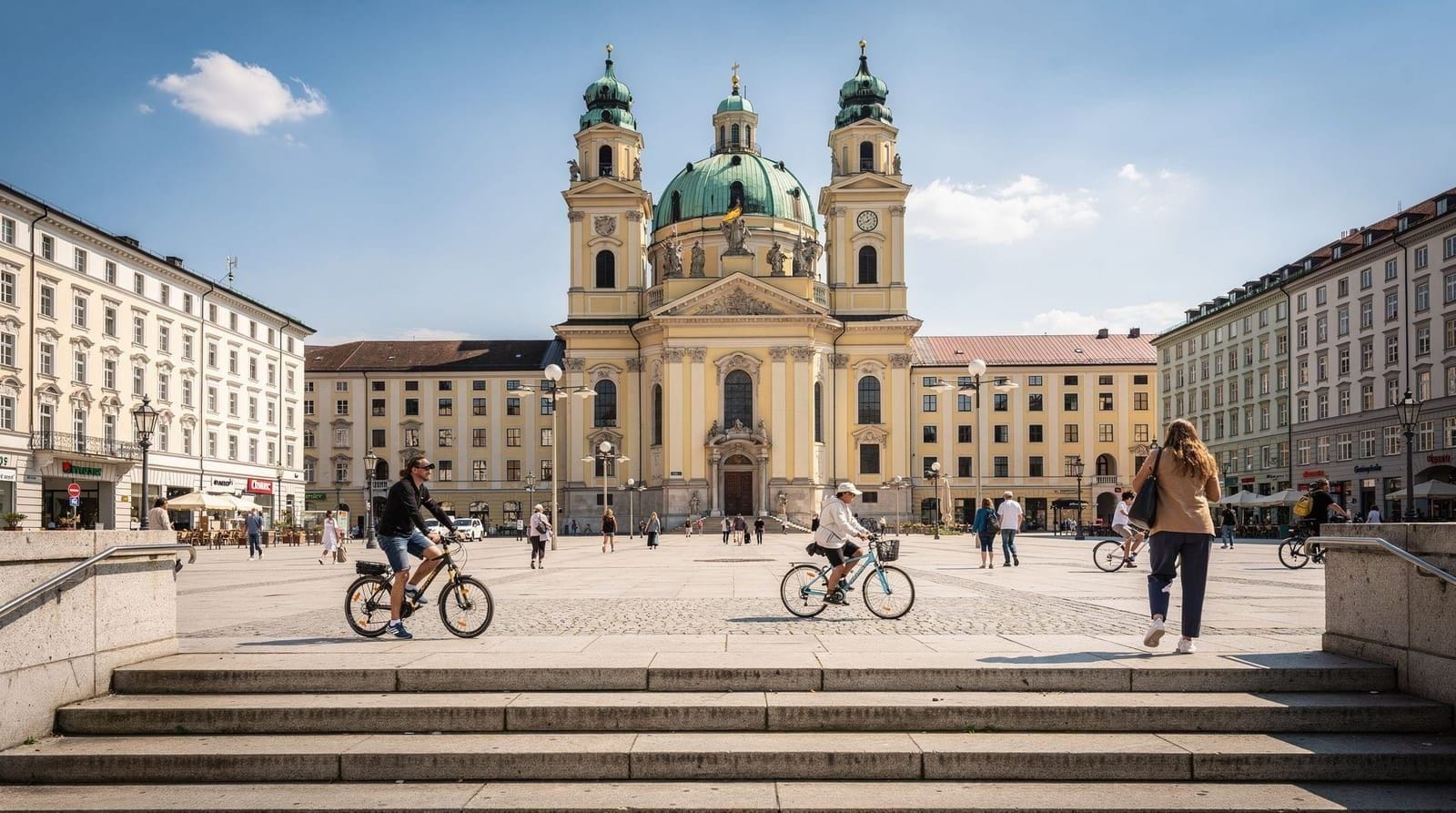
Munich has several churches that reward visiting. The Frauenkirche is the most important historically and architecturally — the cathedral and the dominant landmark. But in terms of interior richness and Baroque decoration, the Asamkirche (Sendlinger Strasse, 1733–46) is more intense; the Michaelskirche (Neuhauser Strasse, 1597) has a superb Renaissance vault; and the Theatinerkirche (Theatinerstrasse, 1663–75, yellow facade visible from Odeonsplatz) shows the Italian Baroque at its most exuberant.
A full Munich church itinerary can occupy half a day in the Altstadt; the Munich Altstadt guide maps the logical walking order between them. Munich Old Town guided walking tour in English
Self-guided route from Frauenkirche
After the Frauenkirche, the natural directions are:
- East to Marienplatz (5 minutes): Glockenspiel and Neues Rathaus tower
- South to Viktualienmarkt (8 minutes): Market and beer garden
- West to Karlsplatz/Stachus (10 minutes): Medieval city gate, tram hub, access to Maxvorstadt and the Pinakotheken
- Southeast to Asamkirche (10 minutes): The most unusual Baroque building in Munich
For visitors coming from the Frauenkirche who want to continue to the English Garden, the direct route is northeast via Theatinerstrasse and Brienner Strasse or through the Hofgarten — about 25 minutes on foot.
Frauenkirche versus Peterskirche: which tower to climb
If you only have time for one tower view in the Altstadt, the choice comes down to what you want from it.
| Frauenkirche (Südturm) | Peterskirche (Alter Peter) | |
|---|---|---|
| Height | 99m | Lower, but classic angle |
| Access | Lift | 302 steps, no lift |
| Cost | Around €7.50 adults | Around €5 adults |
| Best for | Broadest, highest view | The iconic photo with both Frauenkirche domes in frame |
Fit and time willing, doing both on the same day gives the fullest picture of the Altstadt from above — allow roughly 2 hours for both towers combined including queueing.
Building a longer Altstadt church walk
The Frauenkirche sits at the centre of Munich’s densest cluster of historic churches, and pairing it with one or two others turns a 30-minute stop into a genuinely rewarding half-day. The Munich old town history guide and Munich architecture guide put the cathedral in the context of the wider Altstadt streetscape, while a self-guided walk links it to Marienplatz, the Asamkirche and Viktualienmarkt in a single loop.
Frequently asked questions about the Frauenkirche
Why are the Frauenkirche domes green?
The green colour is oxidised copper — the same patina found on the Statue of Liberty and other large copper-clad structures. The domes were originally copper and turned green over decades of oxidation. This green patination is a natural process that also acts as a protective layer; it is deliberately maintained rather than removed.
When was the Frauenkirche built?
The main structure of the Frauenkirche was built between 1468 and 1488 — just 20 years, fast for a cathedral of this scale. The distinctive domed caps on the towers were added in 1525 by Lukas Rottaler, replacing planned Gothic spires that were never completed.
Can you attend a service at the Frauenkirche?
Yes. The Frauenkirche holds regular Catholic masses (daily) and is open to all visitors who wish to participate. Sunday Solemn Mass (Pontifikalamt) at 10am is the principal weekly service. Visitors attending for tourist purposes are expected to observe respectfully during services.
Is the Frauenkirche the tallest building in Munich?
The Frauenkirche towers at 99 metres are among the tallest structures in Munich’s historic core. The Olympiaturm (TV tower) in the Olympic Park at 291 metres is the tallest structure in the city. Munich’s building height regulations for the historic core limit new construction to 100 metres, preserved by public referendum.
What happened to the Frauenkirche in World War II?
The Frauenkirche was severely damaged by Allied bombing in 1944–45. The roof structure and windows were destroyed; the towers remained structurally intact. Restoration of the exterior was largely complete by the 1950s; interior restoration continued into the 1990s. Some original medieval glass survived in fragments and has been incorporated into restored windows.
Is there an entry fee for the Frauenkirche?
The cathedral interior is free to enter, with a donation box near the entrance. The south tower observation deck requires a ticket: €7.50 adults, €3.50 children (6–17), under-6 free.
What is the Munich Frauenkirche famous for?
The Frauenkirche is famous primarily for its twin towers with distinctive Renaissance domes, which form Munich’s most recognisable skyline element; for the legend of the Devil’s Footstep (Teufelstritt) at the entrance; and for the role the 99-metre tower height played in shaping Munich’s building height limit, which has preserved the city’s relatively flat, human-scale urban form.
How long should I budget for the Frauenkirche as part of a wider Altstadt walk?
Allow 30–45 minutes for the interior alone, or up to 1.5 hours including the tower. If you’re combining it with Marienplatz, the Asamkirche and Viktualienmarkt in one loop, budget a half-day for the full circuit at an unhurried pace — see the Munich Altstadt guide for the logical walking order.
Is the Frauenkirche worth visiting if I’m not religious?
Yes. It functions as much as an architectural and historical landmark as a place of worship, and the interior — the Devil’s Footstep, the medieval choir glass, Ludwig IV’s tomb — rewards a visit regardless of faith. Just be respectful and quiet if a service is underway.
Top experiences
Bookable activities with verified prices and instant confirmation on GetYourGuide.