Munich old town history — a guide to 900 years of the Altstadt
Munich: night watchman tour in English
How old is Munich's old town?
Munich was formally founded in 1158 when Duke Henry the Lion established a market and bridge toll point on the Isar river. The historic Altstadt occupies that original settlement core, though most visible buildings date from the 14th century onward; WWII bombing destroyed large sections that were rebuilt in the 1950s.
The layers of Munich’s historic centre
Munich’s Altstadt is a palimpsest — a text that has been written and rewritten over nearly nine centuries. What you walk through today is primarily the result of three building periods: the Gothic and Renaissance city of the 14th to 17th centuries, the Baroque and neoclassical expansion of the 18th and 19th centuries, and the postwar reconstruction of the 1950s that restored the Altstadt’s outward appearance after Allied bombing destroyed much of its substance.
Understanding these layers is the difference between seeing Munich as a picturesque stage set and understanding it as a city with a complex, sometimes tragic history.
| Where | Munich Altstadt, centred on Marienplatz |
| Cost | free to walk; Peterskirche tower around €3; night watchman tours around €15–18 |
| Time needed | 2–3 hours for a self-guided history walk |
| Getting there | U3/U6 or S-Bahn to Marienplatz |
| Best time | weekday mornings for fewer crowds around the main square |
Origins: monks, duke and river crossing (1158)
The name München appears in a document dated 1 June 1158, recording the settlement of a dispute at the Diet of Augsburg. Duke Henry the Lion of Saxony had destroyed a bridge over the Isar belonging to Bishop Otto of Freising at Oberföhring and erected his own bridge slightly downstream near a small settlement known as “Munichen” — by the monks — referring to a Benedictine community at that river crossing.
The monastery in question is debated by historians, but the name stuck. Henry collected bridge tolls from salt merchants moving between the Alpine mines and northern markets, established a mint, and created the conditions for a trading town. Munich was not a planned city; it grew organically around a market square that is still today’s Marienplatz.
In 1180, following Henry’s fall from imperial favour, Bavaria was reassigned as a fief to the Wittelsbach family — Otto I of Wittelsbach — who would hold it for 738 years.
The Wittelsbach city (1255 to 1700)
The move that sealed Munich’s fate as a significant city came in 1255 when Duke Ludwig II made it his primary residence. From that point, Munich’s trajectory was tied to the Wittelsbach dynasty’s ambitions.
The 13th and 14th centuries saw the construction of Munich’s first fortification wall, the granting of city rights, and the growth of the market on Marienplatz. The Peterskirche — Saint Peter’s Church, known locally as “Alter Peter” — is the oldest parish church in the city, with foundations from the 12th century. Its tower offers the best elevated view of the Altstadt; the Marienplatz guide covers this and other viewpoints.
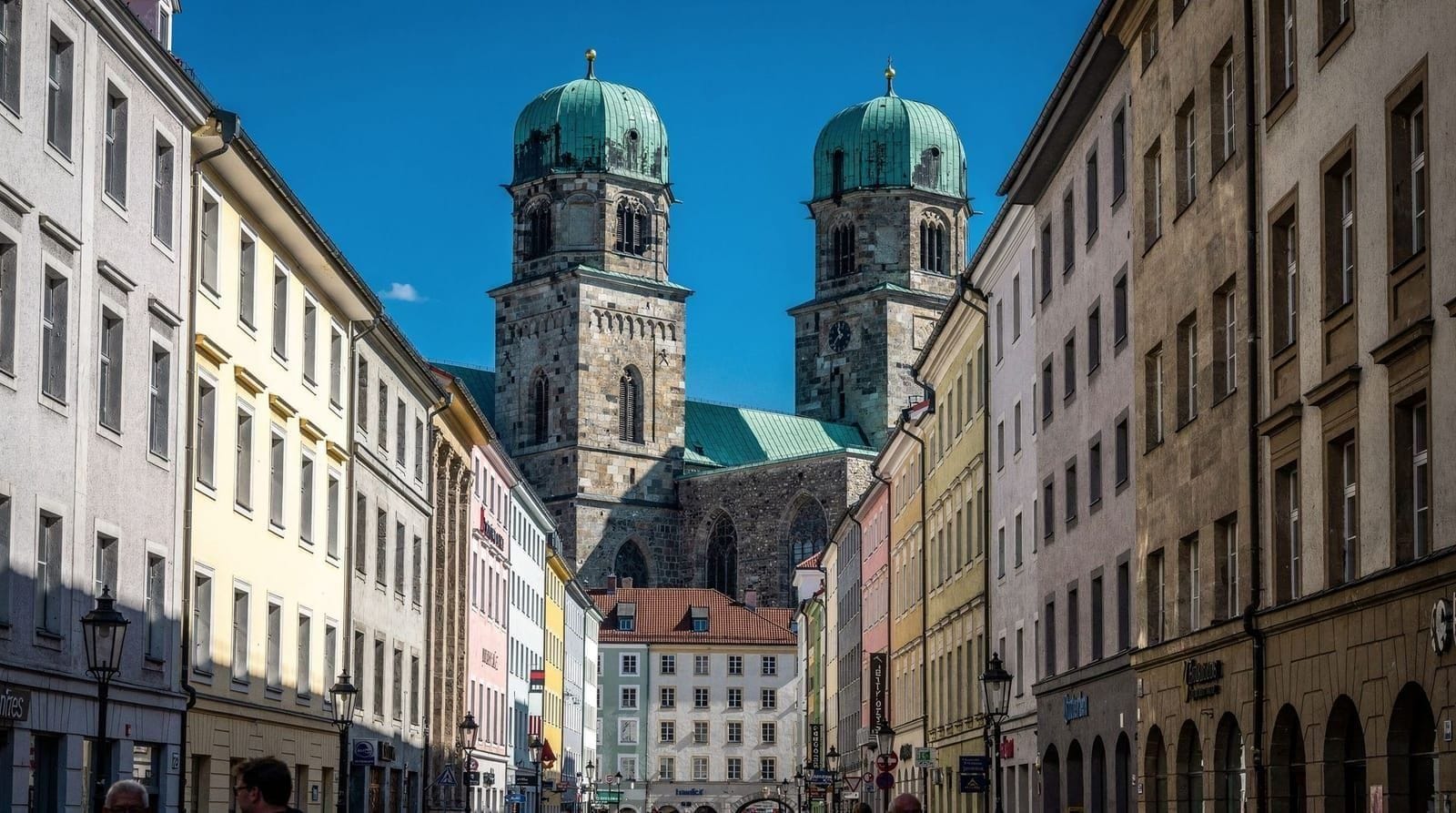
The Frauenkirche — formally the Cathedral of Our Lady — was constructed between 1468 and 1488 under Duke Sigismund. Its architect, Jörg von Halsbach, created one of the largest Gothic hall churches in southern Germany. The two onion-domed towers became Munich’s most recognisable skyline feature and, through a building height ordinance upheld until 2004, defined the city’s silhouette for over five centuries. The Frauenkirche guide covers the cathedral’s history and visiting details.
In 1385, the Wittelsbach Neuveste — a new castle at the northeast corner of the old city walls — began expanding into what would eventually become the Munich Residenz. Over subsequent centuries, successive rulers added wings, courts, throne rooms and treasure chambers until the Residenz became one of the largest palace complexes in Europe. The Munich Residenz guide documents the palace as it exists today.
The Thirty Years’ War and the Mariensäule (1618 to 1648)
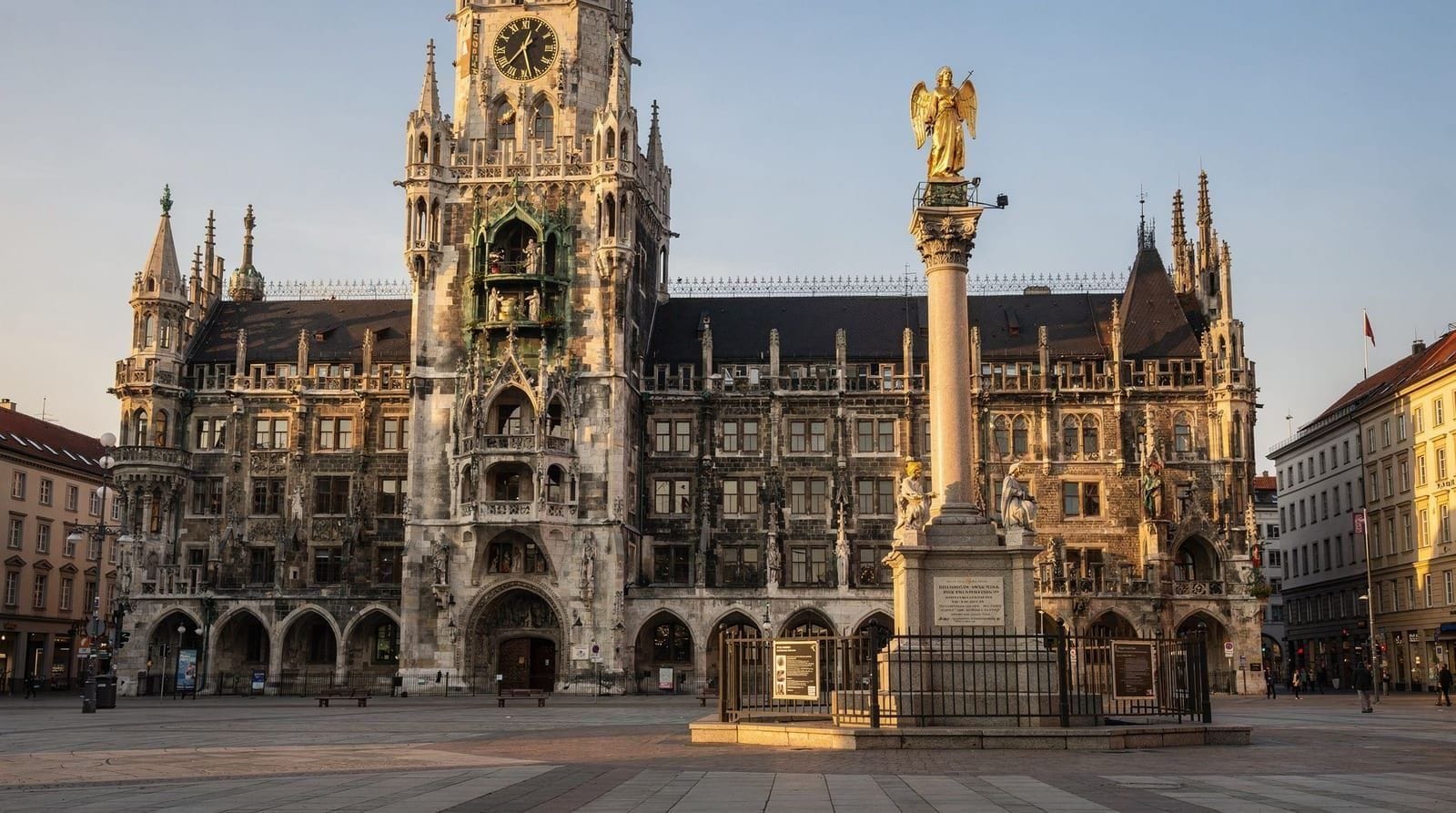
Munich survived the Thirty Years’ War (1618 to 1648) relatively intact compared with many German cities, though it was occupied by Swedish forces in 1632. Elector Maximilian I paid a substantial ransom to prevent plundering. The Mariensäule — the column of the Virgin Mary at the centre of Marienplatz — was erected in 1638 to mark Munich’s deliverance from Swedish occupation and from the plague that had swept the city in 1634 killing a third of the population. It is the oldest monument in Munich’s central area still standing in its original position.
Baroque Munich (1680 to 1800)
The late 17th and 18th centuries transformed Munich from a Gothic commercial city into a Baroque court capital. The Theatinerkirche — the yellow church on Odeonsplatz — was built from 1663 as a thanksgiving for the birth of an heir, designed by Italian architects and representing the first major Baroque church in Munich. Its twin towers and green cupola are among the most photographed features of the city’s skyline.
Elector Max Emanuel and later Elector Karl Albrecht (briefly Holy Roman Emperor as Karl VII) brought Italian and French architects to Munich. The Nymphenburg Palace complex to the west of the city was expanded significantly in this period. The Nymphenburg Palace guide covers this baroque royal complex in detail.
In 1780, Elector Karl Theodor opened the Englischer Garten — English Garden — as a public park on the Isar meadows north of the old city. Its 373 hectares make it one of the largest urban parks in the world. The decision to open the park to all citizens was progressive for its era and helped establish Munich’s relationship with outdoor public space that remains a defining feature of the city. See the English Garden guide.
Nineteenth-century Munich: art, industry and architecture
The 19th century reshaped Munich’s urban form more dramatically than any period since the medieval era. King Ludwig I (reigned 1825 to 1848) had a grand vision for Munich as a northern Athens and commissioned the neoclassical Königsplatz, the Glyptothek, the Alte Pinakothek, the Ludwigstrasse and the Feldherrnhalle. His court architect Leo von Klenze created a coherent neoclassical vision that still defines large parts of Maxvorstadt and the area around Odeonsplatz.
Ludwig I was forced to abdicate in 1848 following his scandalous relationship with the dancer Lola Montez, which had enraged Munich’s citizens and the Bavarian parliament. His son Maximilian II continued building: Maximilianstrasse, the Maximilianeum (now the Bavarian state parliament) and much of the urban fabric south of the Isar. Maximilian II’s architectural style mixed Gothic and Renaissance elements — what critics called “Maximilian style” — and it remains distinctive along the street that bears his name.
Ludwig II, the “fairy-tale king,” had his primary architectural passions focused on his Alpine castles — Neuschwanstein, Linderhof and Herrenchiemsee — and left relatively little mark on Munich itself compared with his predecessors. He drowned mysteriously in Starnberger See in 1886.
The late 19th century brought the first Oktoberfest (1810, originally a horse race for Crown Prince Ludwig’s wedding), the rail connection to Augsburg (1839), and Munich’s growth into a significant industrial and commercial city. By 1900, Munich’s population had reached 500,000.
Night watchman tours
 night watchman tour in EnglishCheck availability
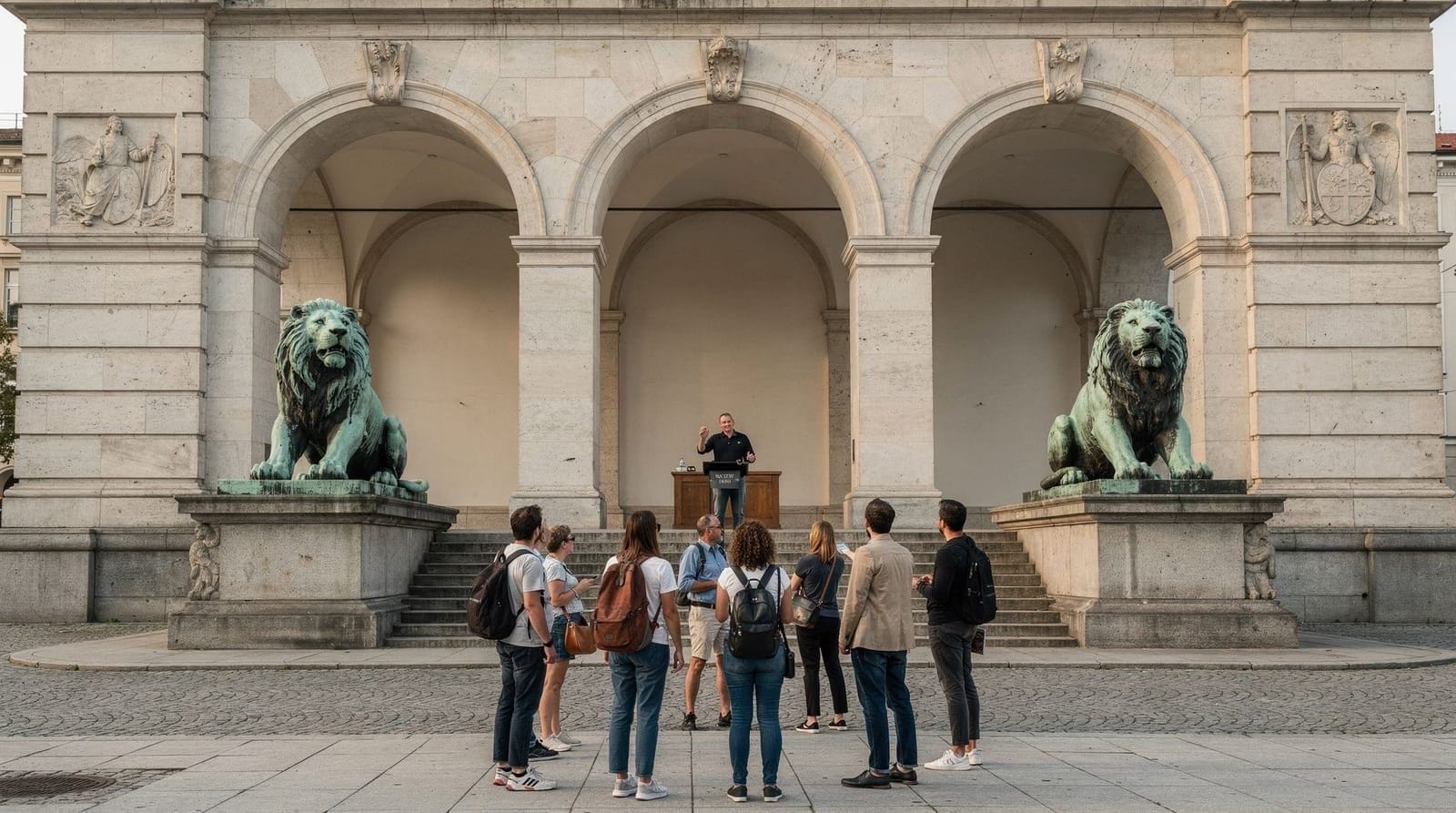
One of the most effective ways to understand Munich’s medieval layers is through the night watchman tour — a format in which a costumed guide leads visitors through the Altstadt by torchlight, narrating history in character as a medieval watchman. The format originated in Rothenburg ob der Tauber but Munich’s version covers the specific history of this city’s founding, its fires and floods, its plagues and its trading wealth. It is a legitimate historical experience rather than just theatrical entertainment. 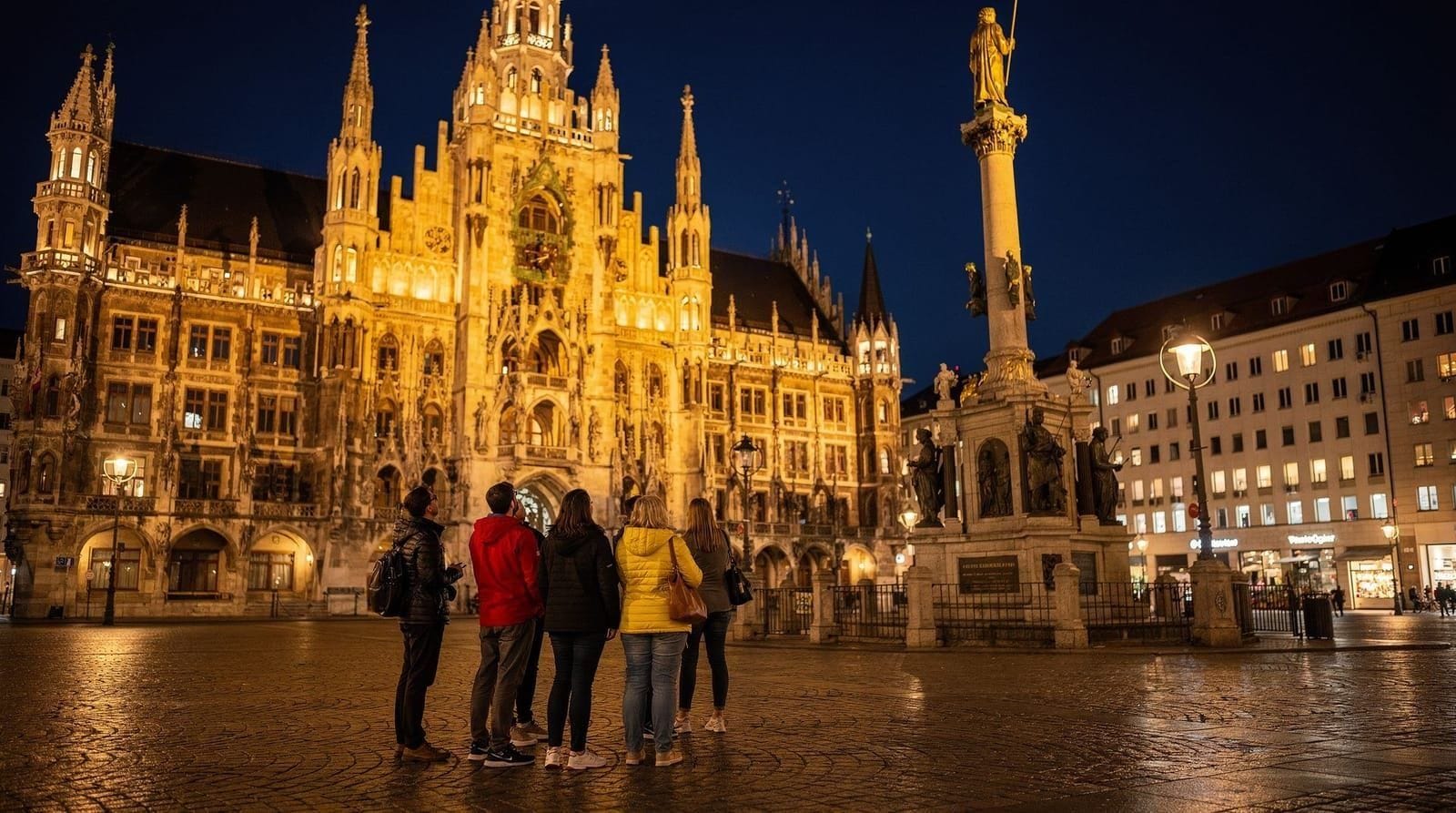 Middle Ages tour with night watchmanCheck availability
The Altstadt before and after WWII
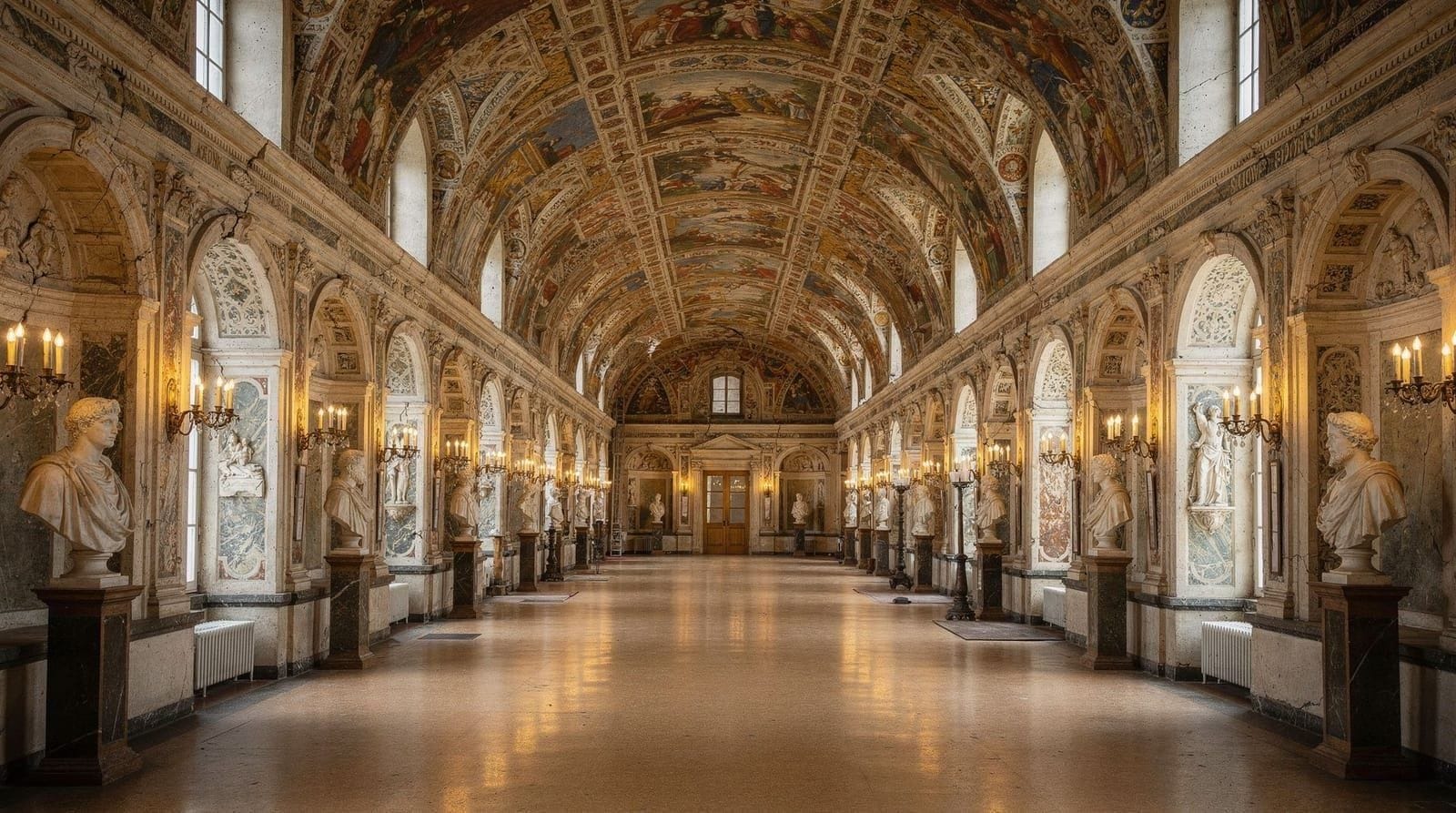
Munich’s Altstadt entered the Second World War as a remarkably well-preserved historic city. The Allied bombing campaigns of 1940 to 1945 — 74 raids in total — destroyed or severely damaged an estimated 50 to 60 percent of the city’s built fabric. The Frauenkirche lost its Gothic vault and roof structure. The Residenz burned for several nights in 1944, destroying irreplaceable interior rooms including the famous Antiquarium. The Altes Rathaus on Marienplatz was damaged. The Heiliggeistkirche on Tal was badly hit.
The reconstruction decisions made in the late 1940s and 1950s shaped the Munich visitors see today. The city chose to rebuild the Altstadt largely in its pre-war forms — “critical reconstruction” — rather than replacing historic fabric with modern architecture. The Frauenkirche was reconstructed using the original plans. The Residenz was rebuilt over decades, with some rooms only completed in the 1990s. The result is a city that looks much older than it is in its physical fabric — much of what appears medieval or 19th-century dates from the 1950s.
This is worth knowing because it changes how you see the Altstadt. The “historic” Munich visible today is partly a recreation of something lost, a collective act of historical memory in concrete and stone. The Munich architecture guide explores this reconstruction history in more detail.
Munich’s Altstadt timeline at a glance
| Period | Key event | What you can still see |
|---|---|---|
| 1158 | Henry the Lion founds Munich | Marienplatz market square layout |
| 1255–1385 | Wittelsbach dynasty establishes rule | Alter Peter, early Residenz core |
| 1468–1488 | Frauenkirche built | The cathedral and its towers |
| 1638 | Mariensäule erected | The column on Marienplatz |
| 1663–1780 | Baroque expansion | Theatinerkirche, English Garden |
| 1825–1848 | Ludwig I’s neoclassical vision | Königsplatz, Ludwigstrasse |
| 1940–1945 | WWII bombing | Damage still visible on some facades |
| 1950s | Postwar reconstruction | Most of today’s “historic” Altstadt |
Use this table to orient yourself before the walking route below — knowing roughly which century you are looking at changes how you read a facade on Marienplatz or Sendlinger Strasse.
Walking the historic Altstadt
For visitors who want to engage with Munich’s layered history on foot, the following sequence covers the key sites in logical order from Marienplatz.
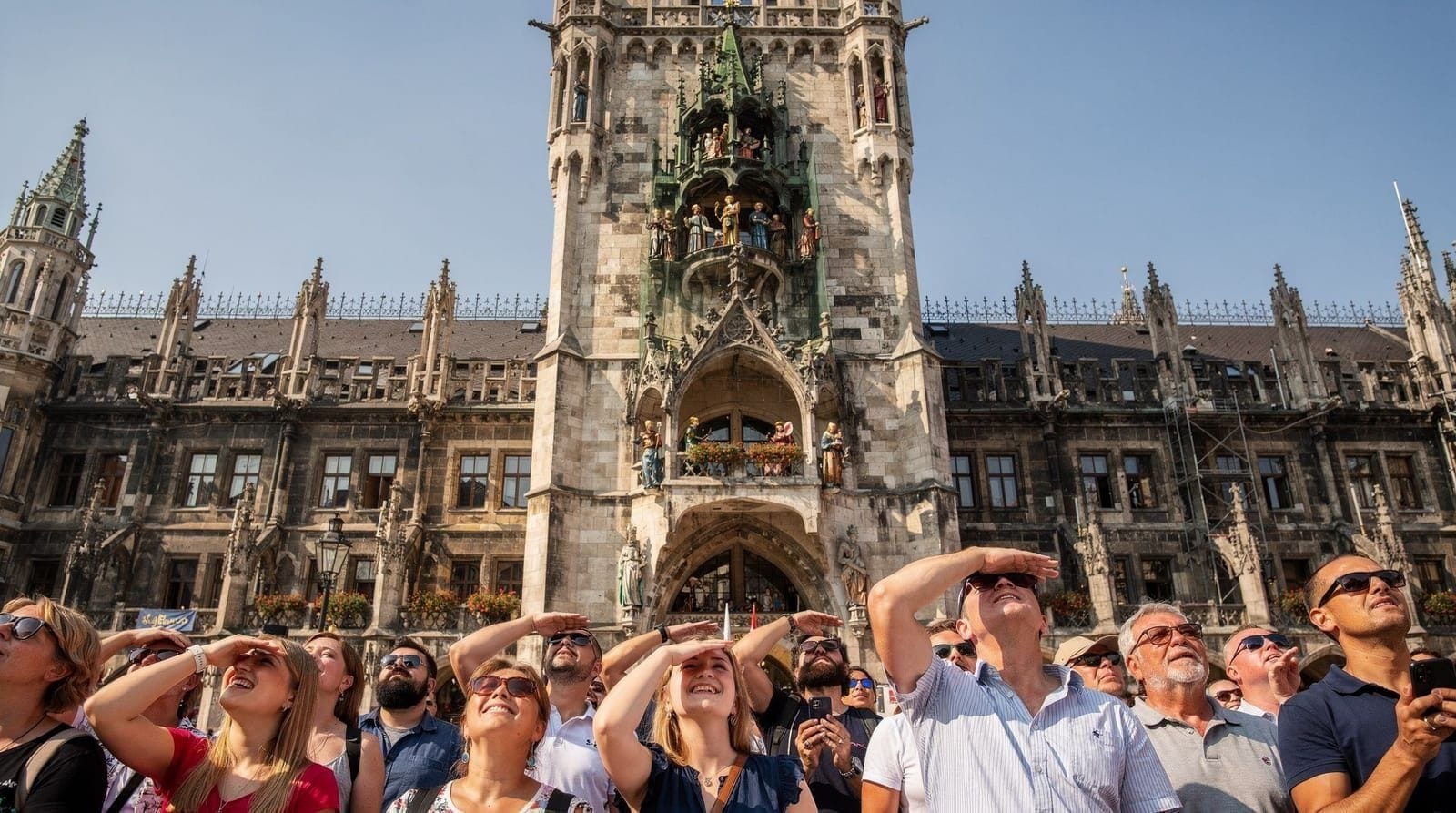
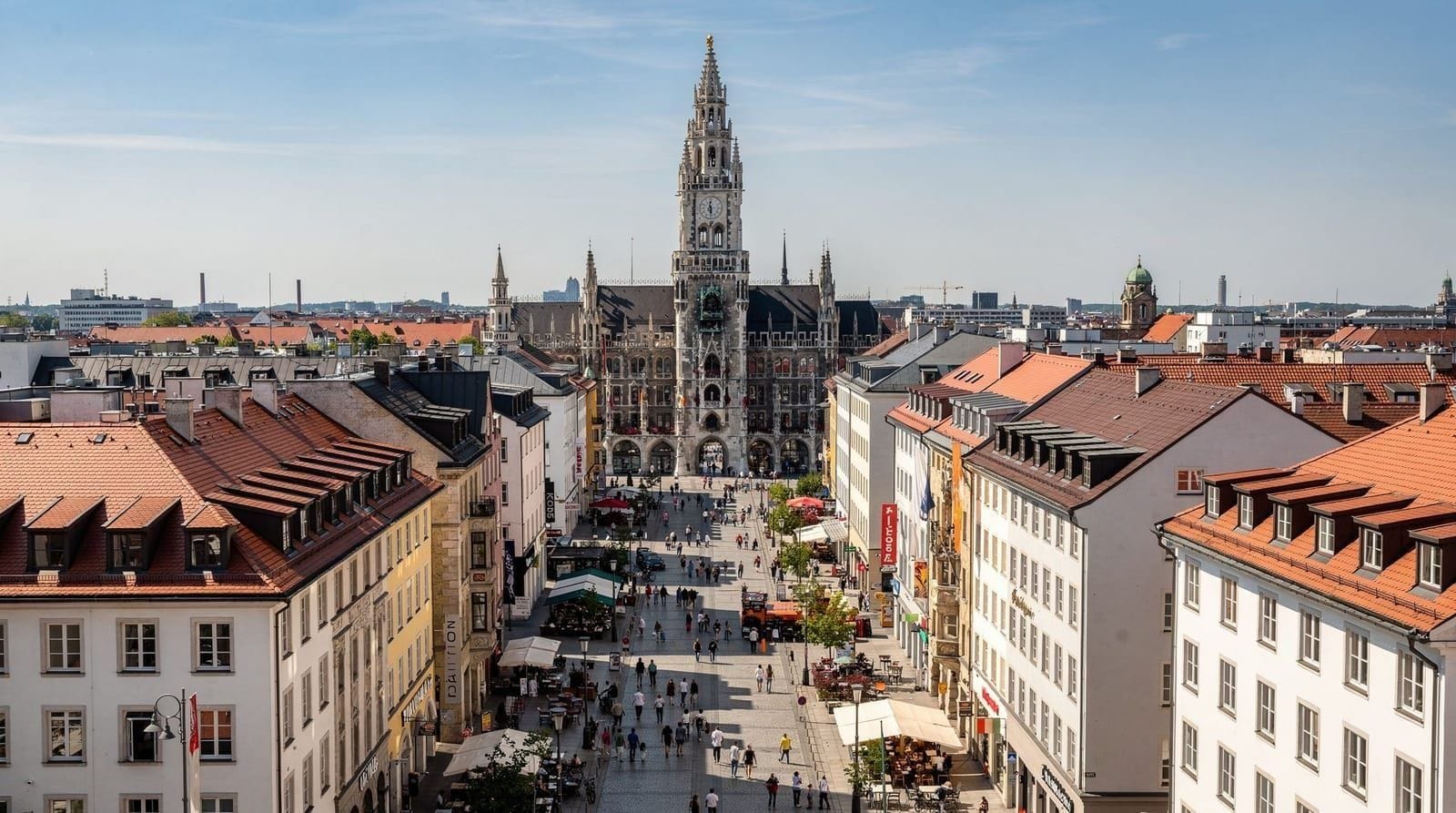
Marienplatz and the Mariensäule — the founding square, the 1638 column, the 1867 to 1909 Neues Rathaus with its Glockenspiel (carillon), and the 15th-century Altes Rathaus on the eastern end.
Peterskirche — climb the tower (3 euros, 2026 price) for the best close-up view of the Frauenkirche towers and the Altstadt roofline.
Viktualienmarkt — Munich’s main outdoor market, in operation since 1807 on this site. The Viktualienmarkt food guide covers what to find there.
Sendlinger Strasse and the Asamkirche — one of the most ornate Baroque churches in Germany, built as a private chapel by the Asam brothers in 1733 to 1746. The exterior dimensions are deceptive; the interior is astonishing in its decorative density. Free to enter. The Asamkirche guide covers it fully.
Burgstrasse — Munich’s oldest surviving street, with the Altes Rathaus at its Marienplatz end and the late Gothic Münzhof (former mint) courtyard midway along.
Odeonsplatz and Ludwigstrasse — the 19th-century neoclassical ensemble: the Theatinerkirche, the Feldherrnhalle, the beginning of Ludwigstrasse leading north toward the university and the Siegestor (triumphal arch, rebuilt after WWII with the inscription “Dedicated to victory, destroyed by war, calling for peace”).
The Munich walking tours guide covers organised options for exploring the Altstadt with a guide.
The Third Reich layer of Altstadt history
No account of Munich’s Altstadt is complete without acknowledging its role as the birthplace of the Nazi movement — the party’s earliest beer hall meetings and the 1923 Beer Hall Putsch both took place within or near the historic centre. This is a difficult but essential layer of the city’s story, distinct from but overlapping with the medieval and Baroque history covered above. The Munich Third Reich tour guide and the Munich WWII history guide cover this period specifically, including sites within walking distance of Marienplatz.
Jewish Munich in the old town
Munich’s historic Jewish community was closely associated with the Altstadt, particularly the area around Sendlinger Strasse and what is now Sankt-Jakobs-Platz. The original Ohel Jakob synagogue stood on Herzog-Max-Strasse and was destroyed during Kristallnacht on 9 November 1938. The current Ohel Jakob synagogue on Sankt-Jakobs-Platz was inaugurated in 2006. The Munich Jewish history guide documents this history fully.
Frequently asked questions about Munich’s old town history
What is the oldest building in Munich’s Altstadt?
The oldest surviving structures include the Peterskirche tower foundations (12th century) and elements of the medieval city walls, though most visible fabric has been rebuilt or modified many times. The Altes Rathaus on Marienplatz contains elements dating to the early 15th century. Much of what appears “original” medieval fabric dates from postwar reconstruction.
Why does Munich have two town halls?
The Altes Rathaus (Old Town Hall) on the eastern end of Marienplatz dates to the 15th century. By the 19th century it was too small for a growing city, and the Neues Rathaus (New Town Hall) was built on the northern side of Marienplatz between 1867 and 1909. The Altes Rathaus now houses the Spielzeugmuseum (Toy Museum). The Glockenspiel and tourist focus is on the Neues Rathaus.
What is the Münchner Kindl?
The Münchner Kindl (Munich child) is the city’s heraldic symbol — a crowned child monk in black and gold robes. It appears on the city’s coat of arms and logo, and atop the Neues Rathaus tower (the figure rotates to face the carillon during Glockenspiel performances). The name and symbol derive from the city’s monastic origins.
Were the Frauenkirche towers always topped with onion domes?
The Frauenkirche was initially completed with temporary lead caps on the towers. The characteristic onion domes were added in 1525, inspired by the Dome of the Rock in Jerusalem — a common reference for German architects of the Renaissance period. The towers were badly damaged in WWII and reconstructed in their current form during the 1950s.
How much of the Altstadt today is actually medieval?
Very little in a strict material sense. The street layout around Marienplatz and the general footprint of the medieval city walls survive, and a handful of structural elements — the Peterskirche foundations, parts of the Altes Rathaus — genuinely predate the 20th century. But the great majority of visible facades, including many that look convincingly Gothic or Renaissance, were rebuilt after WWII using historical plans and salvaged materials where possible. This does not make the Altstadt fake — critical reconstruction was a deliberate, carefully researched act of civic memory — but it does mean you are often looking at a faithful 1950s recreation rather than a genuinely unbroken medieval survival.
Can I see WWII bomb damage in the Altstadt today?
Yes, in a few specific places if you know where to look. Some building facades retain visible repair patches or slightly mismatched stonework where postwar reconstruction met surviving original fabric. The exposed brick sections on parts of the Kunstareal’s Alte Pinakothek, just north of the Altstadt, are a deliberate example of leaving damage visible rather than fully disguising it — see the Munich museum quarter guide for that specific building’s history.
What was Munich like before Henry the Lion founded it?
The Isar crossing at Munich was used by salt traders well before 1158. A small monastic settlement — the “munichen” referenced in the name — existed nearby. Archaeological finds from the area around Marienplatz show Roman-era activity. But the organised trading settlement with market rights and bridge tolls dates from Henry the Lion’s interventions in 1157 to 1158.
Top experiences
Bookable activities with verified prices and instant confirmation on GetYourGuide.