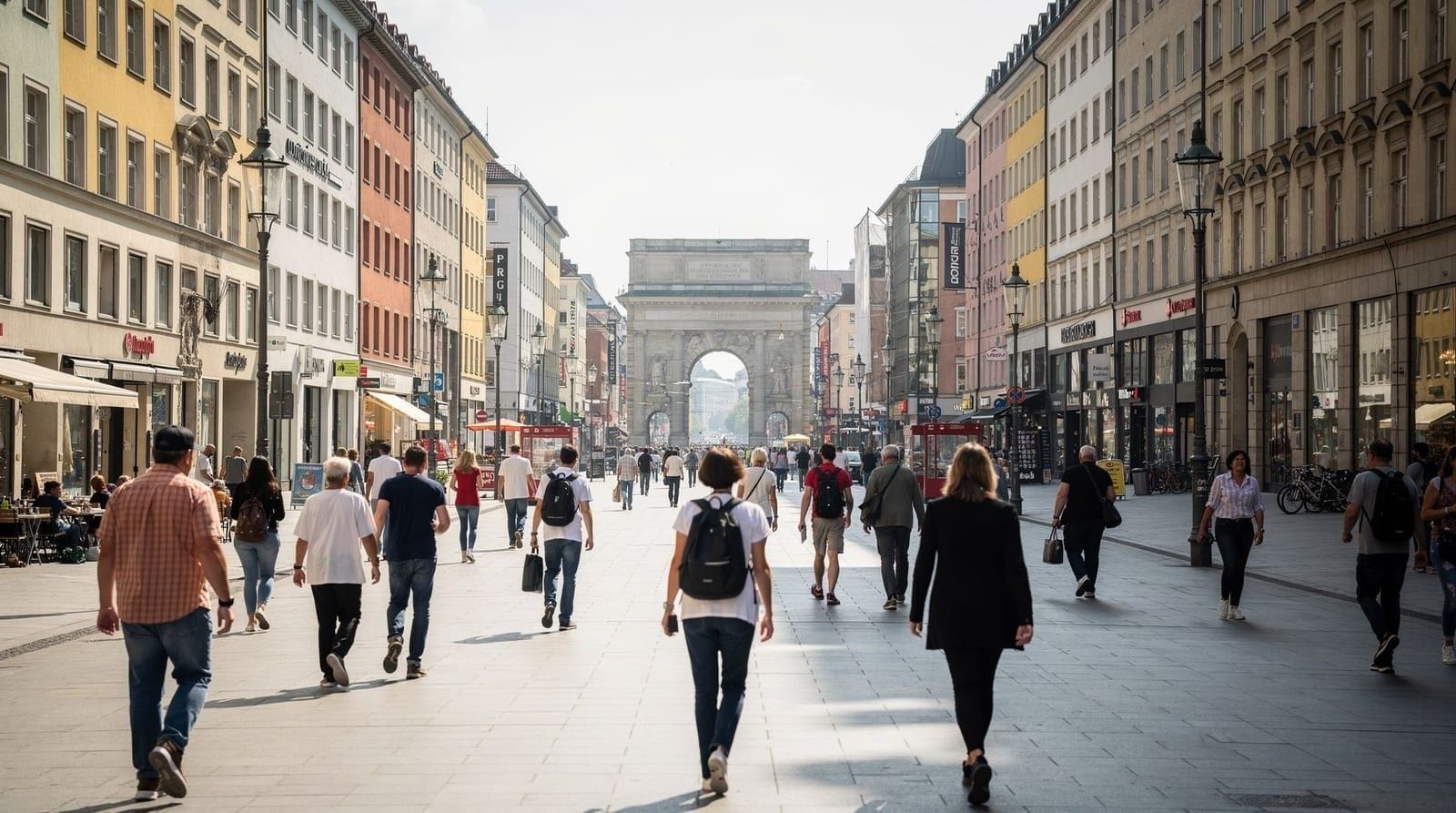
Munich walking tours — the honest guide for 2026
Munich: old town walking tour
What is the best walking tour in Munich?
For first-timers, a 2-hour old town guided tour covering Marienplatz, Frauenkirche and Viktualienmarkt gives the clearest historical context. Third Reich history tours are the best specialist option. Budget around €15–25 per person for a paid group tour; tip-based "free" tours are widely available but require a €10–15 tip to be fair.
Why Munich rewards exploration on foot
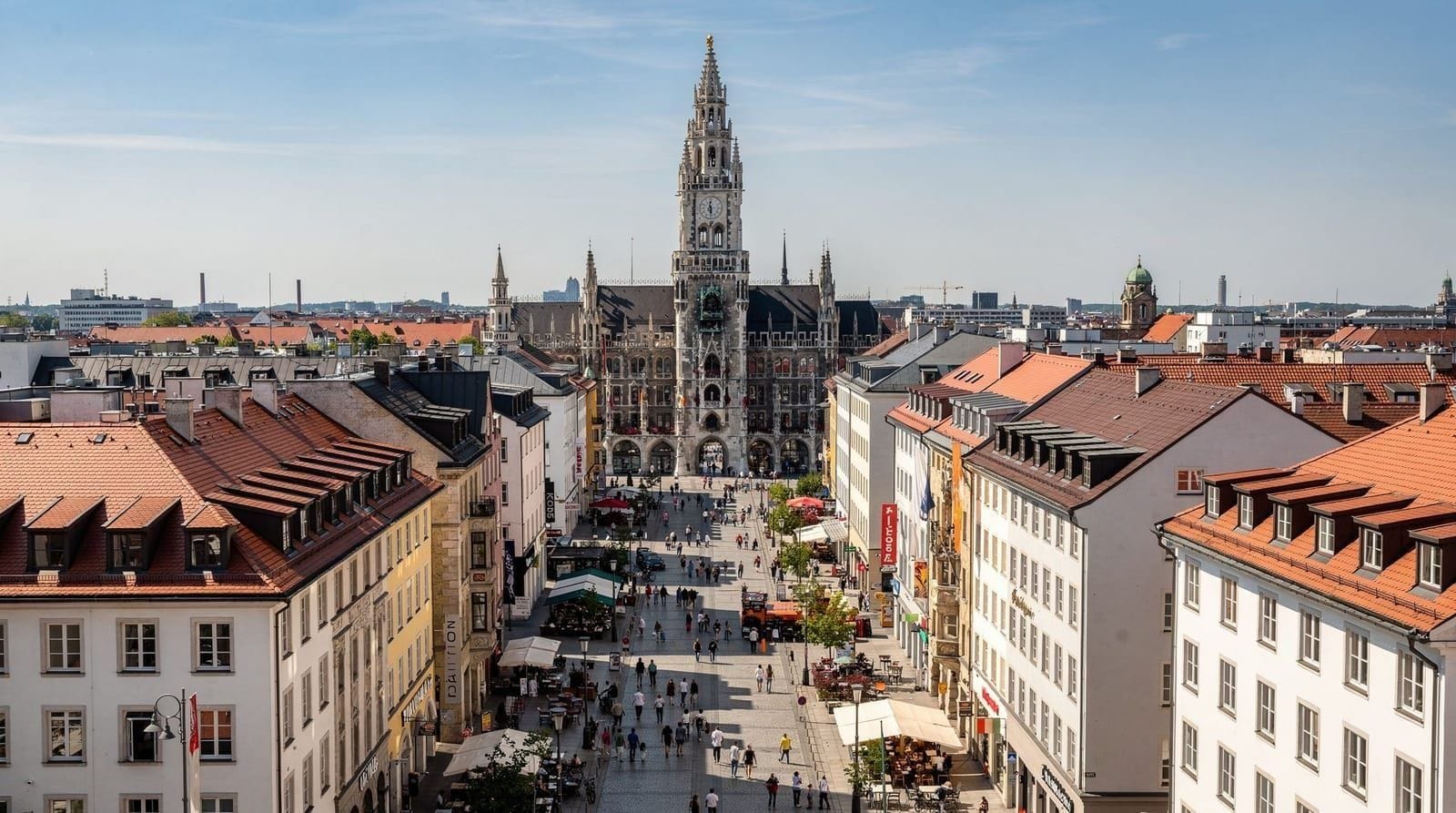
Munich is one of the most walkable major cities in Germany. The historic core — from Marienplatz west to the Residenz and south to Viktualienmarkt — fits comfortably into a 90-minute stroll, and the streets are largely flat. What a map cannot tell you is which of the ornate facades hides a beer cellar founded in 1589, or exactly where Hitler stood during the Beer Hall Putsch of 1923. That is where a good walking tour earns its cost.
This guide covers every type of walking tour available in Munich in 2026: paid group tours, free (tip-based) tours, specialist history tours, and how to build your own self-guided route if you prefer to go at your own pace.
| Standard length | 2–2.5 hours (old town), 2.5–3 hours (Third Reich history) |
| Group tour cost | €15–25 per person |
| Private tour cost | €80–150 for up to 4 people |
| Meeting point | Usually Marienplatz or Hauptbahnhof steps |
| Best months | April–June, September–October |
Old town tours — what you actually cover
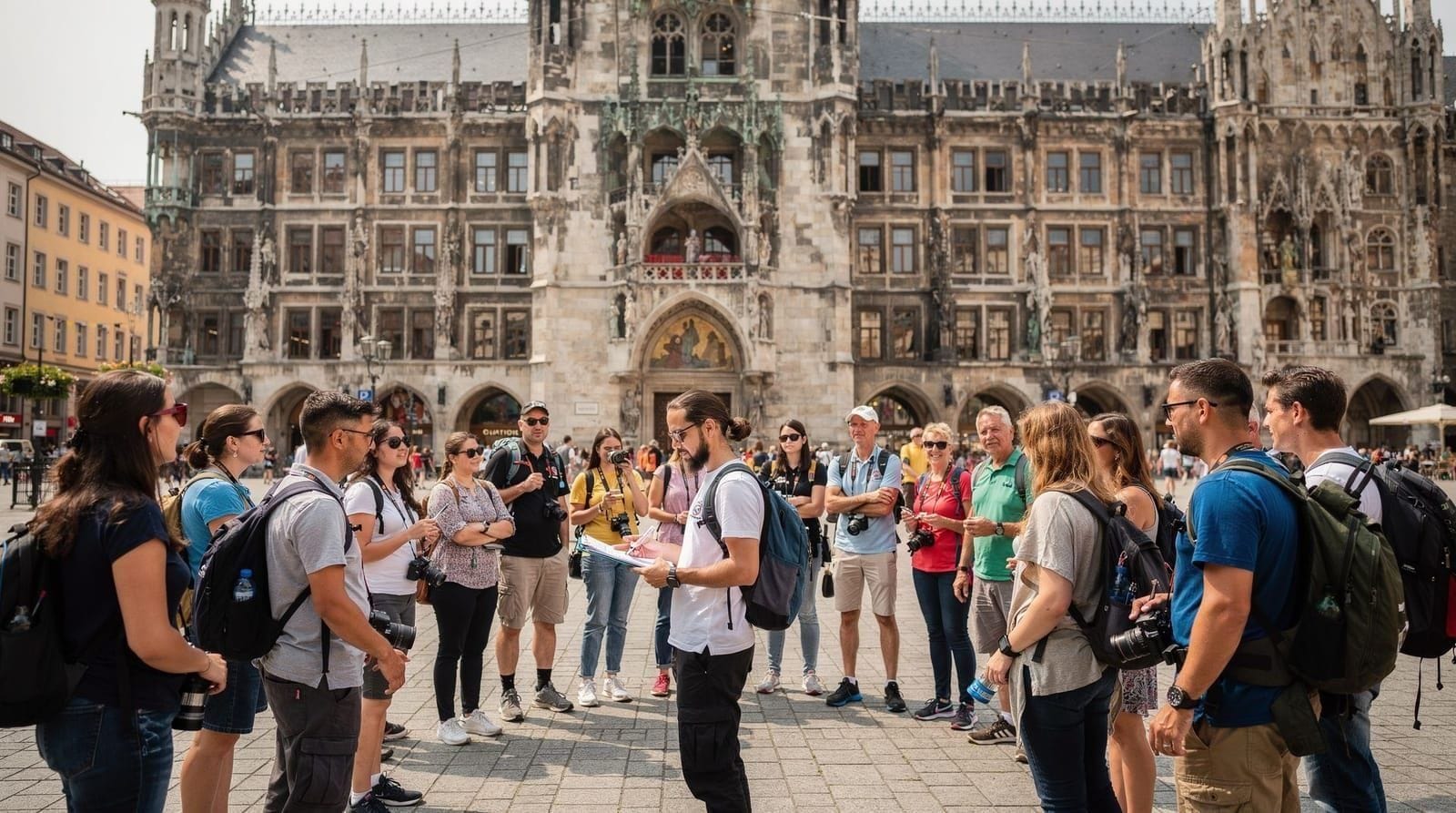
The standard Munich old town walking tour is a 2 to 2.5-hour circuit that starts at Marienplatz and works outward through the medieval street grid. Most English-language group tours include:
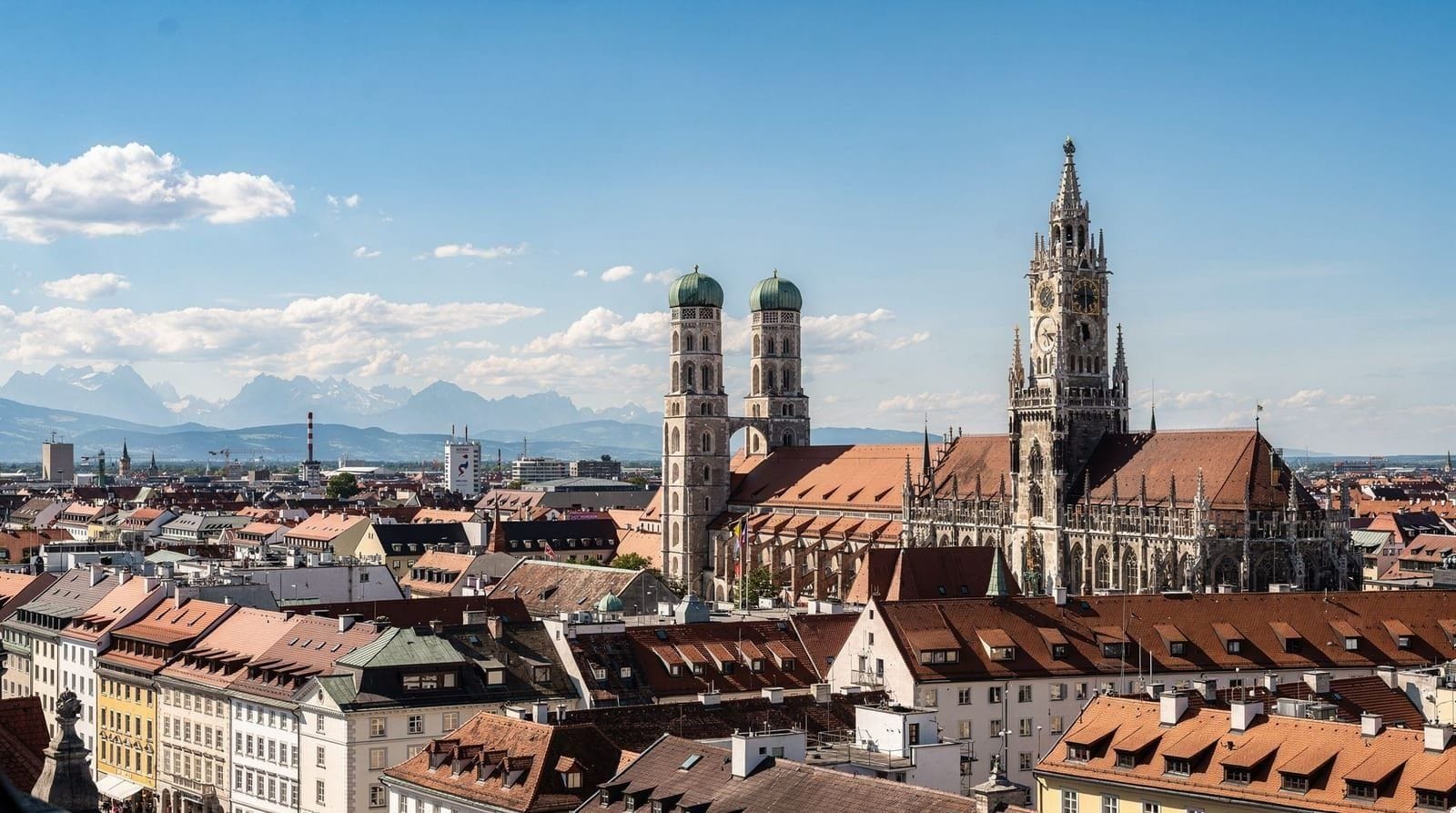
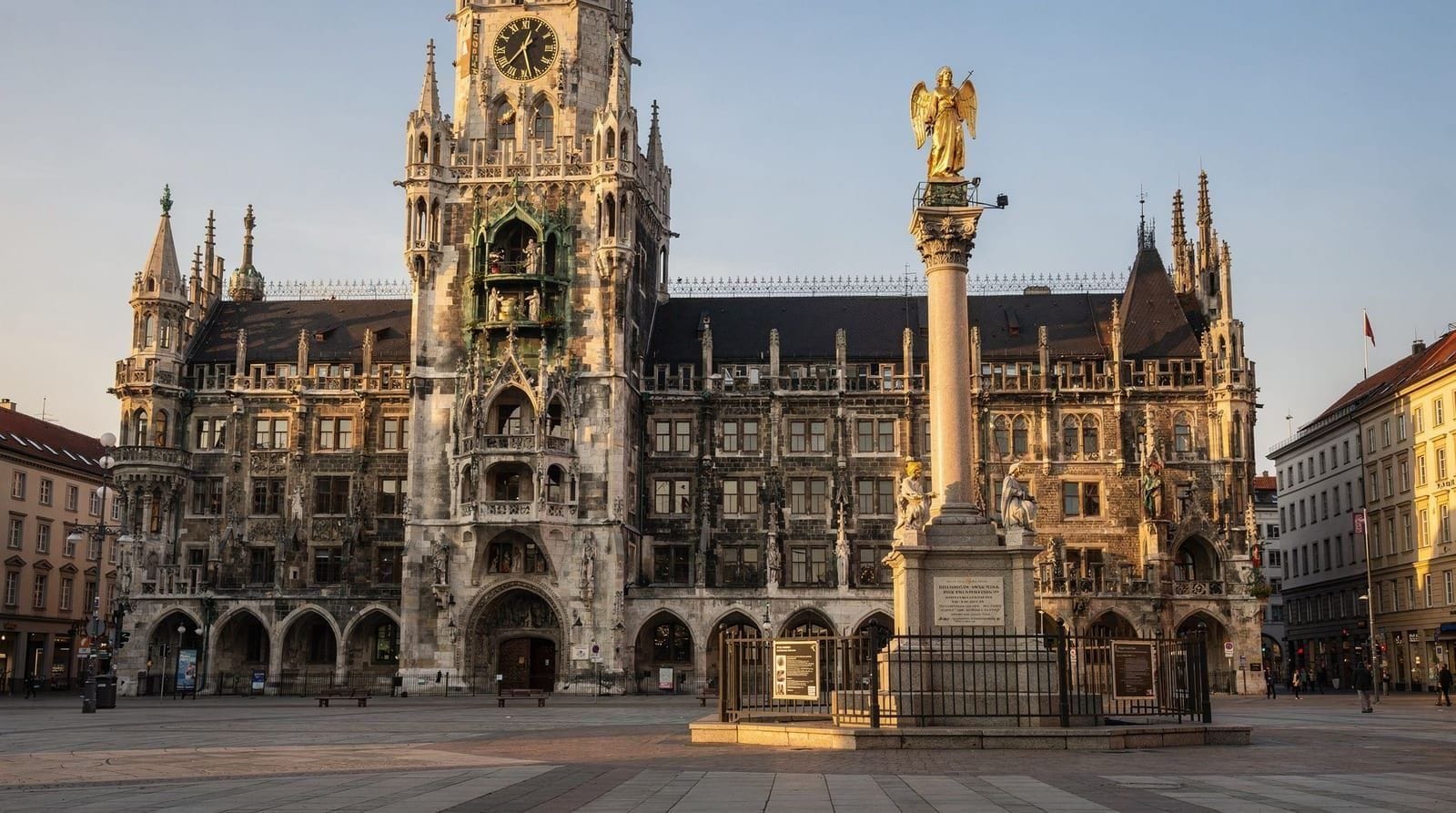
Marienplatz and the Neues Rathaus — The central square has been Munich’s civic heart since 1158. The neo-Gothic Neues Rathaus (New Town Hall) was completed in 1909 and houses the famous Glockenspiel, which performs at 11am and noon daily (also at 5pm from March through October). The chimes last 15 minutes and the figures re-enact a 16th-century joust. Worth watching once; skip it if you are pressed for time.
Frauenkirche — Munich’s cathedral, built between 1468 and 1488, is the visual landmark of the old town. The twin copper-green domes reach 99 metres and by a 1368 city ordinance no building in the historic centre may be taller. Most tours stop outside; entry is free and worth five minutes inside to see the Devil’s Footprint legend in the floor tiles.
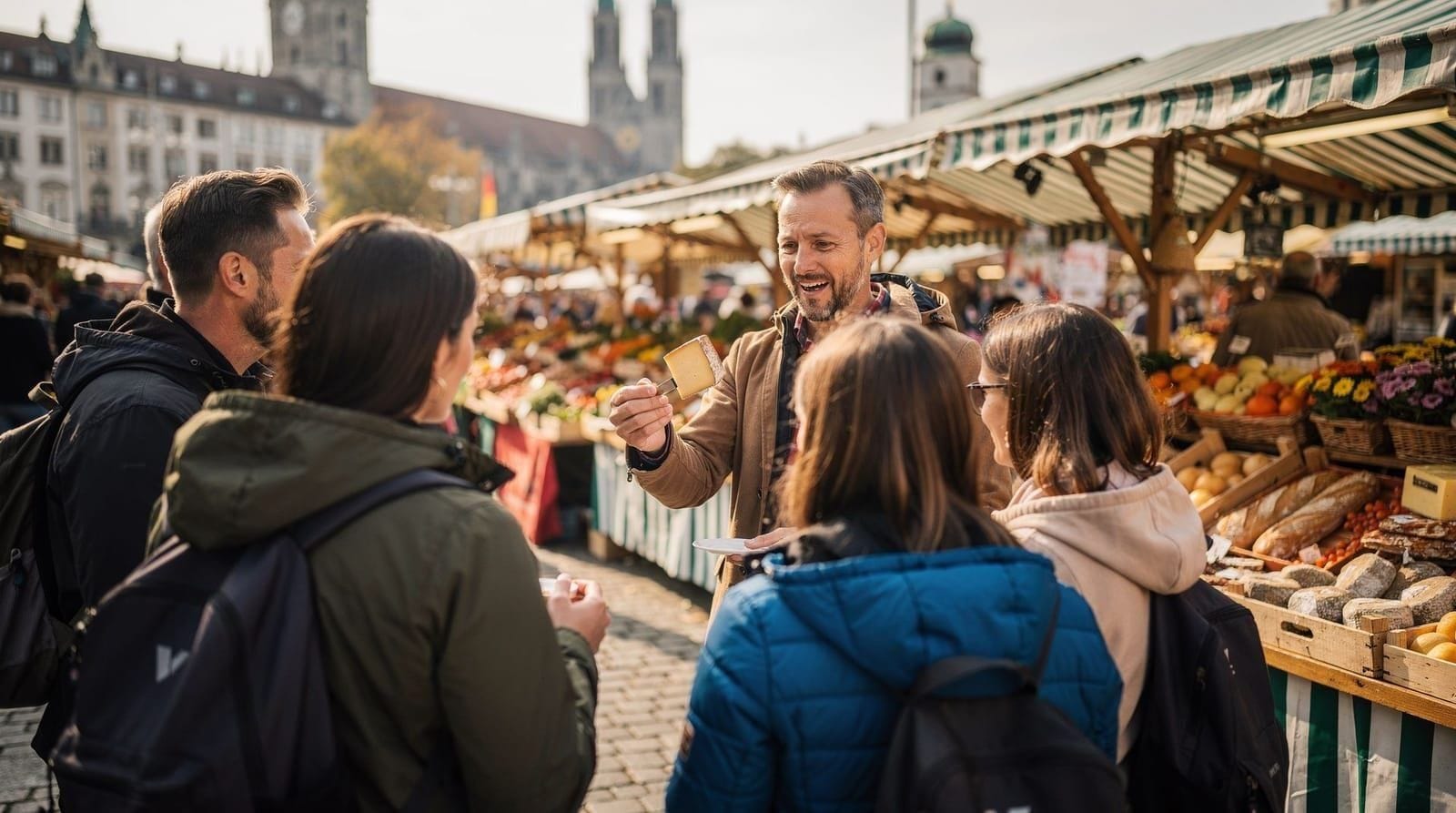
Viktualienmarkt — Munich’s covered and open-air food market has operated since 1807. A good walking tour guide will point out the beer garden at the centre (open year-round, daytime only), the stalls selling Obazda cheese spread and Weisswurst, and the statue of comedian Karl Valentin. This is also a good personal stop for breakfast before a morning tour.
Residenz exterior and Odeonsplatz — The Munich Residenz, the former Wittelsbach royal palace, anchors the northern edge of most old town tour routes. A ground-level explanation of the eight centuries of Bavarian royal history costs nothing at the exterior; entering the Residenz museum itself takes a separate 1–2 hours and an €9 ticket.
Hofbräuhaus vicinity — Most guides mention the Hofbräuhaus on Am Platzl without forcing a stop inside. The building’s 1897 interior is genuine but the tourist-to-local ratio is heavily skewed today. For a real beer hall experience, guides typically recommend nearby Augustiner-Keller or the Hofbräukeller on the other side of the Isar. Book the Munich old town walking tour
Third Reich and WWII history tours
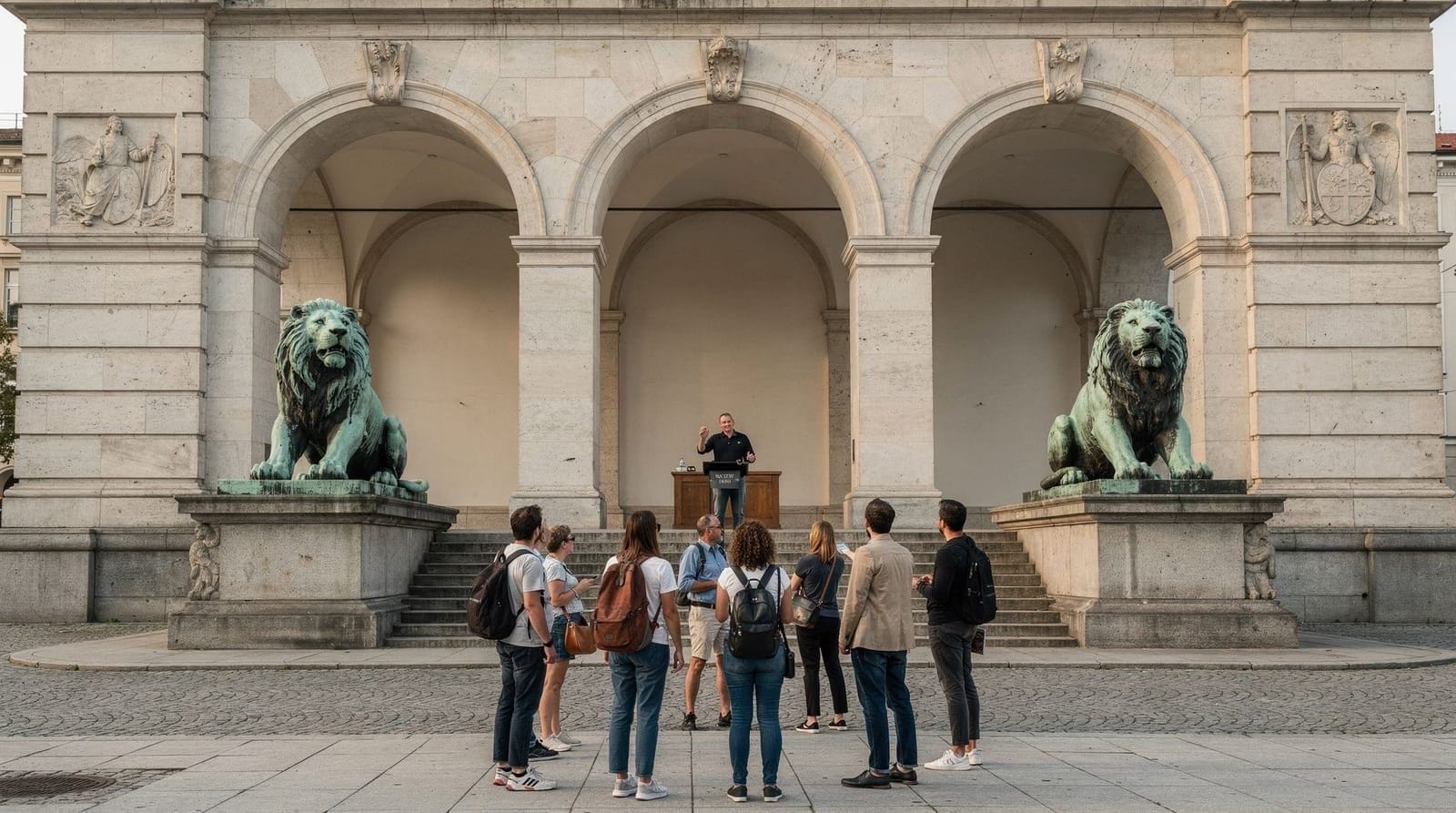
Munich’s role in the rise of National Socialism is not a comfortable subject, but it is historically essential. The city is where the NSDAP was founded, where the Beer Hall Putsch of November 1923 failed (and gave Hitler a platform), and where the 1938 Munich Agreement was signed, ceding Czechoslovakia’s Sudetenland to Germany in a decision now understood as catastrophic appeasement.
A specialist Third Reich walking tour covers sites that a standard old town tour does not linger on:
- Königsplatz — The Nazis transformed this neoclassical square into a ceremonial space. The two “honour temples” built to display the remains of Nazi “martyrs” were demolished after 1945, but the Propyläen gate and the surrounding museums remain.
- Führerbau (now the University of Music) — The building where the Munich Agreement was signed in 1938.
- Ettstraße 2 — The former Nazi party headquarters, now housing offices. The building looks unremarkable; the history is not.
- Feldherrnhalle — Where the Beer Hall Putsch ended in gunfire on November 9, 1923. Sixteen Nazis and four policemen were killed. The location is a 5-minute walk from Marienplatz.
- NS-Dokumentationszentrum — Munich’s documentation centre on National Socialism, opened in 2015. A dedicated stop here extends the tour by 1–2 hours. Entry is €7.
These tours typically run 2.5 to 3 hours. They are led by guides with specialist history backgrounds, not generalist city guides. The tone is factual and measured. You can read more detail in our Third Reich walking tour guide and the Dachau Memorial guide.
English Garden walking routes
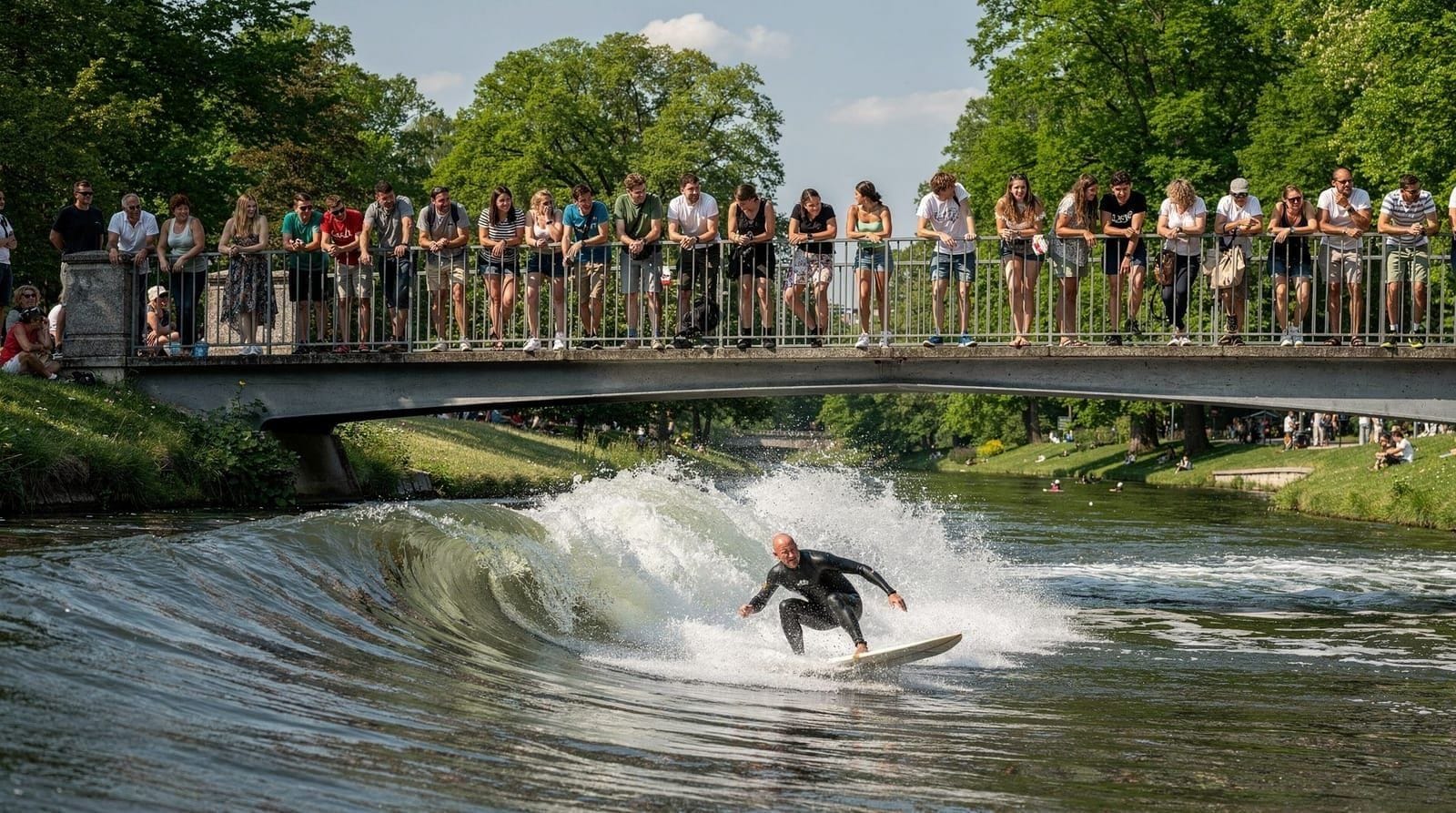
The English Garden (Englischer Garten) is the largest urban park in Germany — at 3.7 km long, it is larger than New York’s Central Park. Most city tour walking routes only graze the southern end near the Eisbach wave, where surfers ride a standing wave fed by the Eisbach stream year-round. This is worth seeing; the surfers operate at the Prinzregentenstraße bridge and the standing wave draws a crowd from early morning.
A longer walk into the English Garden northward takes you past:
- Japanisches Teehaus (Japanese Tea House) on the artificial island in the Kleinhesseloher See lake, built for the 1972 Munich Olympics
- Chinesischer Turm (Chinese Tower) — a 25-metre pagoda built in 1789, surrounded by Munich’s most famous beer garden with 7,000 seats
- Monopteros — a Greek-style temple on a small hill with a panoramic view back toward the Frauenkirche towers
This northern route adds 5–6 km to any walking tour and requires 2 extra hours. Most guided tours do not include it; it is better covered as a self-guided afternoon walk after a morning group tour. Our English Garden guide covers it in full.
Bavarian culture and neighbourhood walks
Beyond the old town circuit, several neighbourhood walks offer a different perspective on Munich:
Schwabing — The bohemian quarter north of the old town, where Kandinsky, Paul Klee and Thomas Mann lived in the early 20th century. The streets around Leopoldstraße and Georgenstraße reward slow walking. No organised tours focus exclusively on Schwabing, so this is self-guided territory.
Au-Haidhausen — East of the Isar, this working-class neighbourhood has gentrified without losing character. The Wiener Markt and Innere Wiener Straße are good anchors. The area is largely off standard tour routes, which is part of its appeal.
Maxvorstadt museum quarter — The dense cluster of major museums between the Königsplatz and the Odeonsplatz repays slow walking. The Pinakothek museums guide explains what is inside each building; walking the neoclassical facades alone is worthwhile even without entering.
Choosing between group and private tours
Group tours (6 to 20 participants) cost €15–25 per person and are the most common format. They are efficient for standard old town routes and adequate for Third Reich history tours where the guide talks to the group rather than personalising the content.
Private tours cost significantly more — typically €80–150 for 2 hours for up to 4 people — but allow you to set the pace, ask more specific questions and skip sections you already know. If you are returning to Munich, have specialist interests (architecture, WWII resistance movements, Jewish history), or are travelling with children who need a different pace, a private tour is genuinely worth the premium. Book an old town private walking tour
Self-guided walking route — old town in 2 hours
If you prefer to walk independently, here is a logical route covering the core sights:
- Start at Marienplatz (U-Bahn Marienplatz, lines U3/U6) — spend 15 minutes at the square and watch the Glockenspiel if it is close to 11am or noon.
- Walk north up Kaufingerstraße toward Frauenkirche (5 minutes). Enter if you want; allow 10 minutes inside.
- Head east on Neuhauser Straße back to Marienplatz, then south through the Rindermarkt to Viktualienmarkt — allow 20 minutes to browse.
- Walk east on Tal toward Isartor, one of Munich’s three surviving medieval gates (5 minutes).
- Head north on Rosenstraße toward Hofbräuhaus on Am Platzl — look inside, note the beer prices (currently around €13 for a 1-litre Masskrug), and decide whether to stop.
- Continue north on Maximilianstraße toward Odeonsplatz (10 minutes), noting the luxury shops and the Max-Joseph-Platz with the National Theatre.
- End at Odeonsplatz — the Feldherrnhalle is directly ahead, the Residenz to the right. Take the U-Bahn home from here.
Total distance: approximately 3.5 km. Allow 2 hours without stops, 3–3.5 hours with museum entries. The route is fully flat. Read our Munich self-guided walk for a more detailed version with map references.
What to look out for on any Munich walking tour
Beer garden etiquette — Munich’s beer gardens operate under a unique Bavarian tradition that allows guests to bring their own food (but not their own drink). A good guide will explain this. If yours does not, you now know.
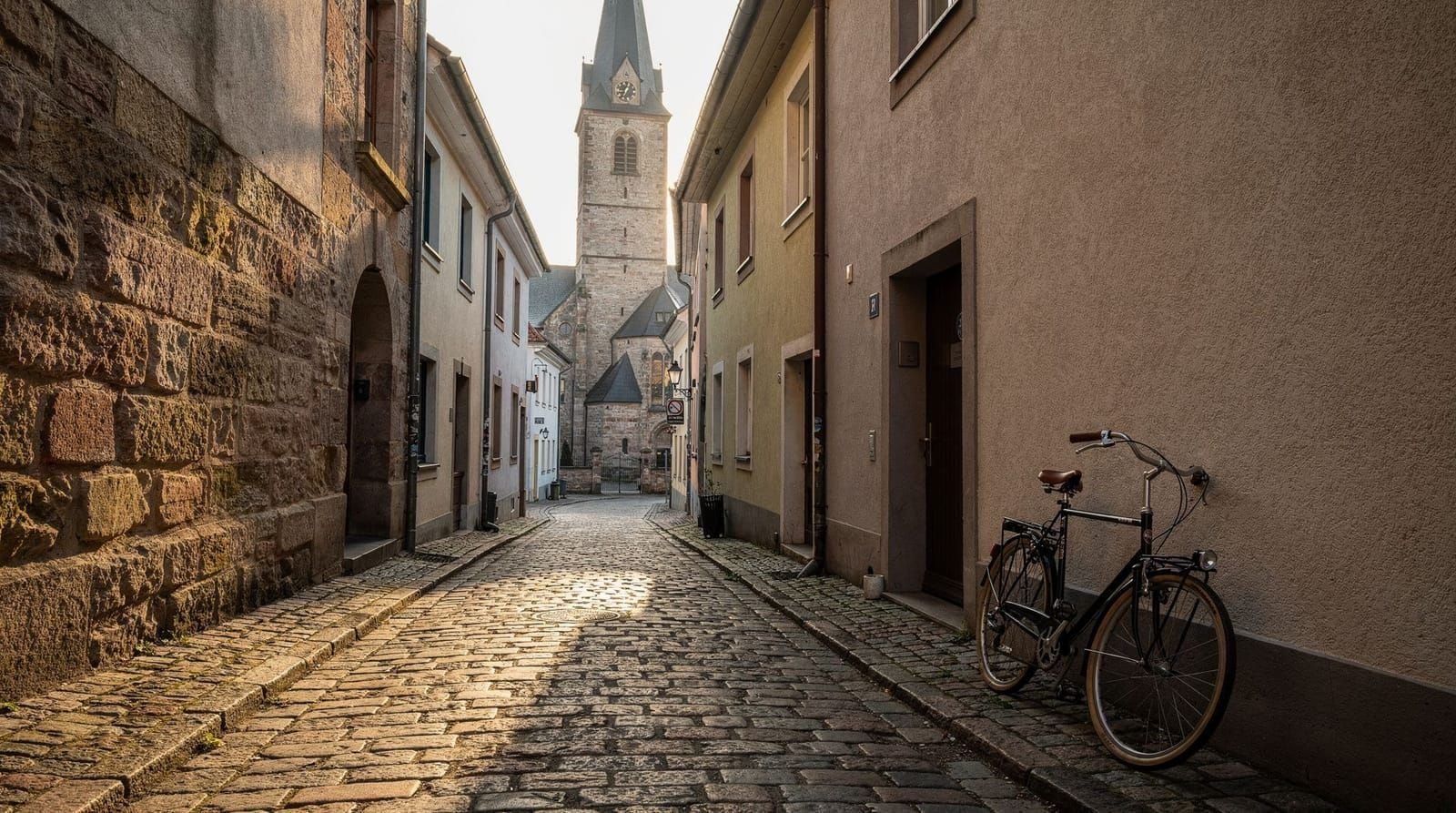
Cobblestones — The Altstadt streets are predominantly cobbled stone. This is authentic and uncomfortable after 2 hours. Flat-soled shoes or walking trainers are strongly advised over heels or dress shoes.
Church opening times — Several churches on standard tour routes close between noon and 2pm for a midday break. If your tour runs during this window, interior visits may not be possible. Check opening times at Frauenkirche (typically 7am–8.30pm) and Asamkirche (10am–6pm, closed midday) before planning stops.
Oktoberfest timing — If you are visiting during Oktoberfest (late September to early October), the city is significantly more crowded and tour group sizes can double. Book tours in advance and expect some routes to be diverted around the Theresienwiese festival grounds. Our Oktoberfest guide covers logistics in full.
How Munich walking tours compare to other city transport
Walking tours are the highest-information way to understand Munich but not always the most efficient way to cover ground. If you have limited time:
- A hop-on hop-off bus covers a wider geographic area but provides less depth
- A bike tour covers more ground in the same time with a guide
- The MVV public transport network (U-Bahn + S-Bahn) is fast and cheap but gives no context
For first-time visitors, combining a 2-hour guided walking tour in the morning with a self-guided afternoon walk covers most of the old town effectively without tour fatigue.
Walking tour operators in Munich — overview
Several operators run consistent daily English-language tours:
Radius Tours — Based near the Hauptbahnhof, Radius runs old town and Third Reich tours daily. Guides are typically postgraduate history students with strong English. Groups average 15–20 people. Paid tours at around €19–22 per person.
Sandemans Munich — Part of the international network. Offers tip-based tours departing Marienplatz. Large groups (sometimes 30+ people in summer). Quality is variable by guide. See our free walking tours guide for the honest take on this model.
Munich Walks — Smaller outfit running curated tours including a Jewish history walk and a White Rose resistance tour. Prices around €22–25. Better for specialist interest visitors.
Context Travel — Academic-level tours with professors and specialist guides. Premium pricing (€80–120 per person), smaller groups of maximum 6. Worth it for architecture or art history-focused visitors.
Night watchman and evening tours
A distinct category from the standard daytime circuits: the Night Watchman tour follows a costumed guide playing Munich’s historic Türmer (tower watchman) through the darkened old town, mixing folklore, ghost stories, and genuine local history in a way that daytime tours do not attempt. These run roughly 90 minutes, typically starting around 8pm from spring through autumn, and cost €12–18 per person. They work well as an alternative to a beer hall evening, and are a good option for travellers who found the Third Reich tour heavy and want something lighter for a second evening.
Torch-lit variants exist during the darker months (November–February), and some operators combine the night watchman route with a stop for a Maß of beer at a traditional tavern along the way — check the tour description for whether a drink is included or extra.
Audio guides and apps as a self-guided alternative
If a fixed tour time does not suit your schedule, several audio-guide apps cover the old town route with GPS-triggered commentary, letting you walk the same ground as a guided tour at your own pace, pausing for coffee or photos without holding up a group. These typically cost a few euros as an app purchase or are bundled free with a City Pass. The trade-off is real: an audio guide cannot answer a follow-up question or read the room the way a live guide can, and the Third Reich sites in particular benefit from a guide who can contextualise as questions come up. For a first visit to sensitive historical sites, a live guided tour is the stronger choice; for a return visit or a purely architectural walk, audio guides are a reasonable and cheaper substitute.
What to bring on a Munich walking tour
Comfortable, broken-in shoes matter more than anything else — the cobblestones punish new shoes within an hour. Bring a light rain layer regardless of season, since Munich showers arrive with little warning even on forecast-clear days. Cash is worth carrying for a mid-tour coffee, pretzel, or Viktualienmarkt snack, since several stalls on typical routes are cash-preferred. In summer, sun protection matters on the Third Reich route, which spends more time in open squares (Königsplatz, Odeonsplatz) than the shadier old-town lanes.
Practical information for 2026
Meeting points vary by operator but most English tours depart from Marienplatz (the central square, reachable on U3/U6 or S-Bahn Marienplatz). Book in advance in summer (June–September) and during Oktoberfest — popular tours sell out a week ahead.
Munich’s weather runs from -3°C average in January to 24°C in July. The most comfortable walking conditions are April–June and September–October. July and August are warm and crowded; December tours operate in early darkness but Christmas markets add atmosphere.
For more context on logistics before your visit, see our Munich trip planning guide and best time to visit Munich.
Frequently asked questions about Munich walking tours
How much do Munich walking tours cost in 2026?
Paid group tours run €15–25 per person for 2–2.5 hours. Private tours start at €80 for 1–4 people. Tip-based “free” tours require a €10–15 tip per person to be reasonable. Private specialist tours (Third Reich, architecture) can reach €120–150 per person for small groups with expert guides.
Where do Munich walking tours depart from?
Most English-language tours depart from Marienplatz or the steps of the Hauptbahnhof (central train station). The meeting point is listed in your booking confirmation. Both are on the U-Bahn network — Marienplatz (U3/U6) and Hauptbahnhof (U1/U2/U3/U4/U5/U6/U7/U8).
Are Munich walking tours suitable for children?
The standard old town tour is fine for children aged 10 and up at a moderate pace. Third Reich history tours are appropriate for ages 14 and above — the content is sobering and some descriptions are graphic. Private tours adapt better to children since the guide can adjust pace and content.
Is Munich walkable without a tour?
Yes. Munich’s Altstadt is compact and well-signed. The main sights are within 1.5 km of each other. That said, a guided tour provides context that maps and audio guides do not — particularly around the history of specific buildings and the Nazi period, which is not always well-explained in standard tourist signage.
How do I book a Munich walking tour?
You can book directly with operators (Radius Tours, Munich Walks) via their websites or through platforms like GetYourGuide. Booking in advance is recommended June through September and during Oktoberfest. Same-day walk-up spaces are sometimes available in the off-season.
Are there evening walking tours in Munich?
Yes. Night watchman torch tours and ghost/legend tours run in the evening, typically at 8pm from April through October. These are lighter on historical depth but popular as evening entertainment. The Third Reich and old town tours are daytime only.
Can I join a walking tour if I arrive late?
Most operators have a 5-minute grace period at the departure point. After that, tours proceed without late arrivals. If you book but cannot make the departure time, contact the operator — many allow rebooking without charge if notified more than 24 hours ahead.
Is an audio guide app a good substitute for a live tour?
For a return visit or a purely architectural interest, yes — it is cheaper and lets you set your own pace. For a first visit, especially to the Third Reich sites, a live guide is worth the extra cost, since they can answer questions and contextualise details that a fixed audio track cannot.
Do walking tours run in the rain?
Yes, generally. Munich weather changes quickly and operators do not cancel for light rain — bring a rain layer rather than expecting a reschedule. Only severe weather (storms, extreme cold) typically triggers a cancellation, and operators contact bookings directly if that happens.
Top experiences
Bookable activities with verified prices and instant confirmation on GetYourGuide.