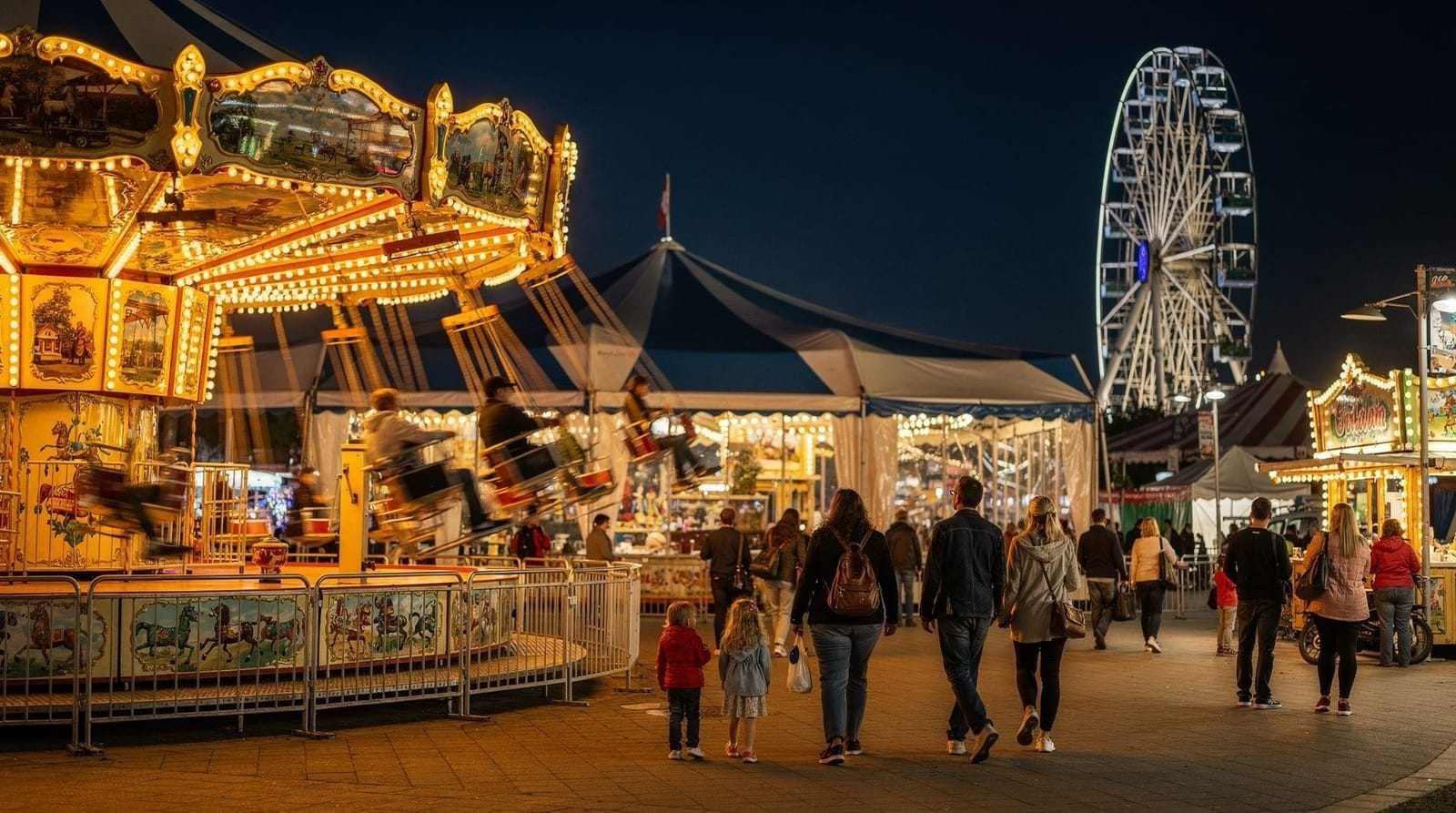
Oktoberfest 2026 — the complete guide
Munich: Oktoberfest tour with tent reservation, food and beer
When is Oktoberfest 2026 and how do I get tickets?
Oktoberfest 2026 runs September 19 to October 4 on Theresienwiese (U4/U5 Theresienwiese). Entry is free. Beer costs €15.70–€16.50 per Maß. Tent seats require reservations made months in advance via official brewery and Oktoberfest websites — avoid third-party resellers.
| Where | Theresienwiese (“the Wiesn”), U4/U5 Theresienwiese |
| Cost | free entry; around €15.70-16.50 per Maß of beer |
| Time needed | half a day minimum; a full day for tent-hopping |
| Getting there | U-Bahn U4/U5 to Theresienwiese, under 10 min from Hauptbahnhof |
| Best time | weekday afternoons (Tue-Thu) for the calmest tents |
What Oktoberfest actually is — and what most guides get wrong
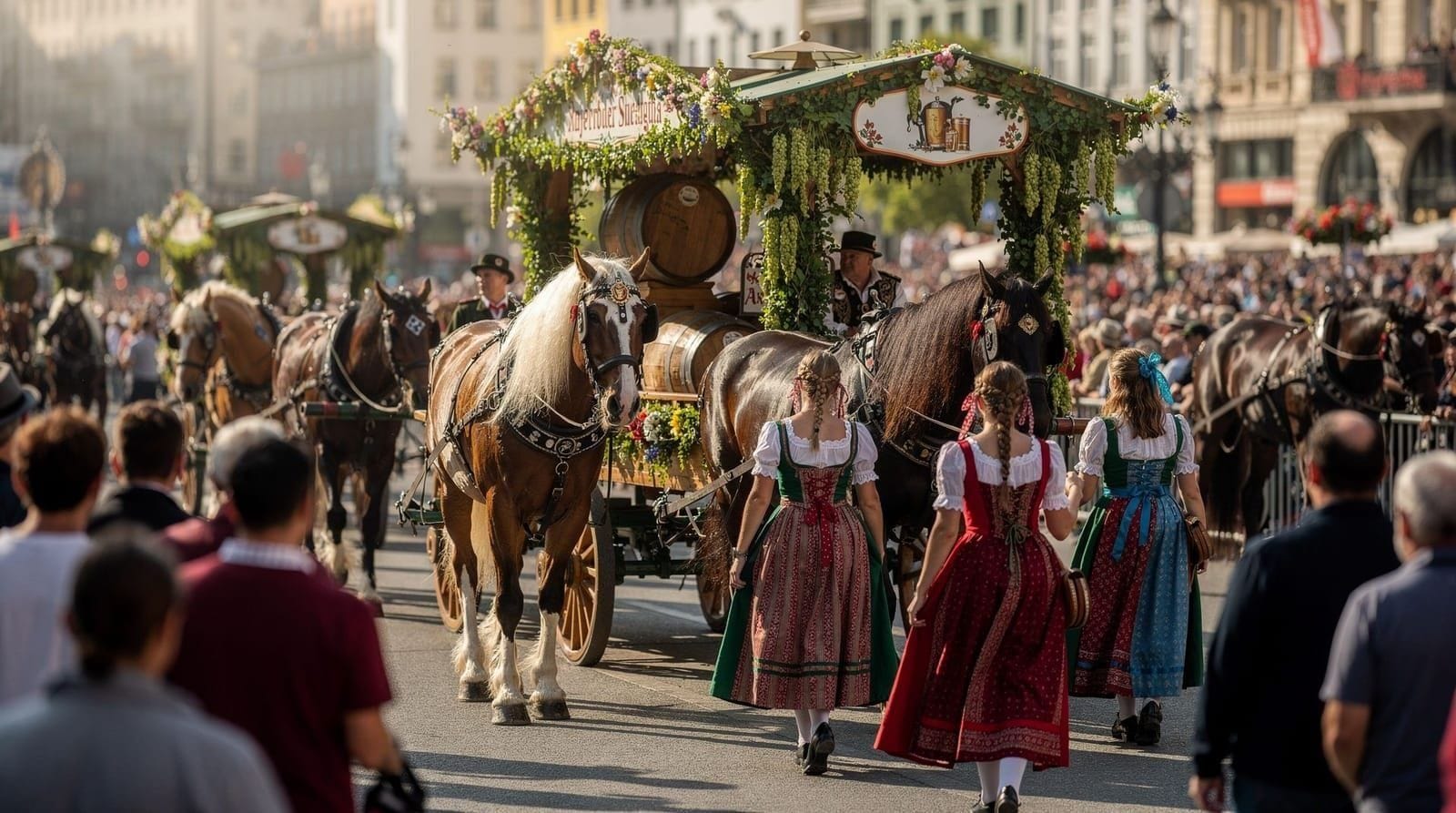
The world’s largest folk festival is not, strictly speaking, a beer festival. It began on October 12, 1810, as a horse race held on the fields outside Munich’s city gates to celebrate the marriage of Crown Prince Ludwig of Bavaria to Princess Therese of Saxony-Hildburghausen. The Munich citizens were invited to attend the festivities. The races were a success. The following year, the city decided to repeat them — and added an agricultural fair. Beer stalls and amusements followed incrementally over the next few decades. By the mid-19th century, Oktoberfest had taken on its recognisable shape: a combination of fairground rides, agricultural exhibitions, traditional music, and enormous tents serving beer from Munich’s established breweries.
The festival moved to earlier in September in the 1870s, partly to take advantage of better weather. Today it officially begins in mid-September and runs into the first week of October — which is why a festival called Oktoberfest has most of its days in September.
What remains constant is its scale. In a normal year, roughly 6–7 million visitors attend over the 16–18 day run. That figure includes tourists from around the world but also — and this is easy to forget — a substantial number of Bavarians who treat it as a genuine annual tradition, attending multiple times with family and friends. The beer tents are as much community gathering spaces as tourist attractions. Understanding that dual identity helps visitors navigate the festival more intelligently.
Oktoberfest 2026 dates and location
Dates: Saturday, September 19 to Sunday, October 4, 2026.
The opening ceremony takes place on the first Saturday, September 19. At noon, Munich’s Mayor taps the first keg in the Schottenhamel tent with the call “O’zapft is!” (“It’s tapped!”) — only after that signal may beer be served across the entire festival. The first day is the most ceremonially significant but also one of the most crowded.
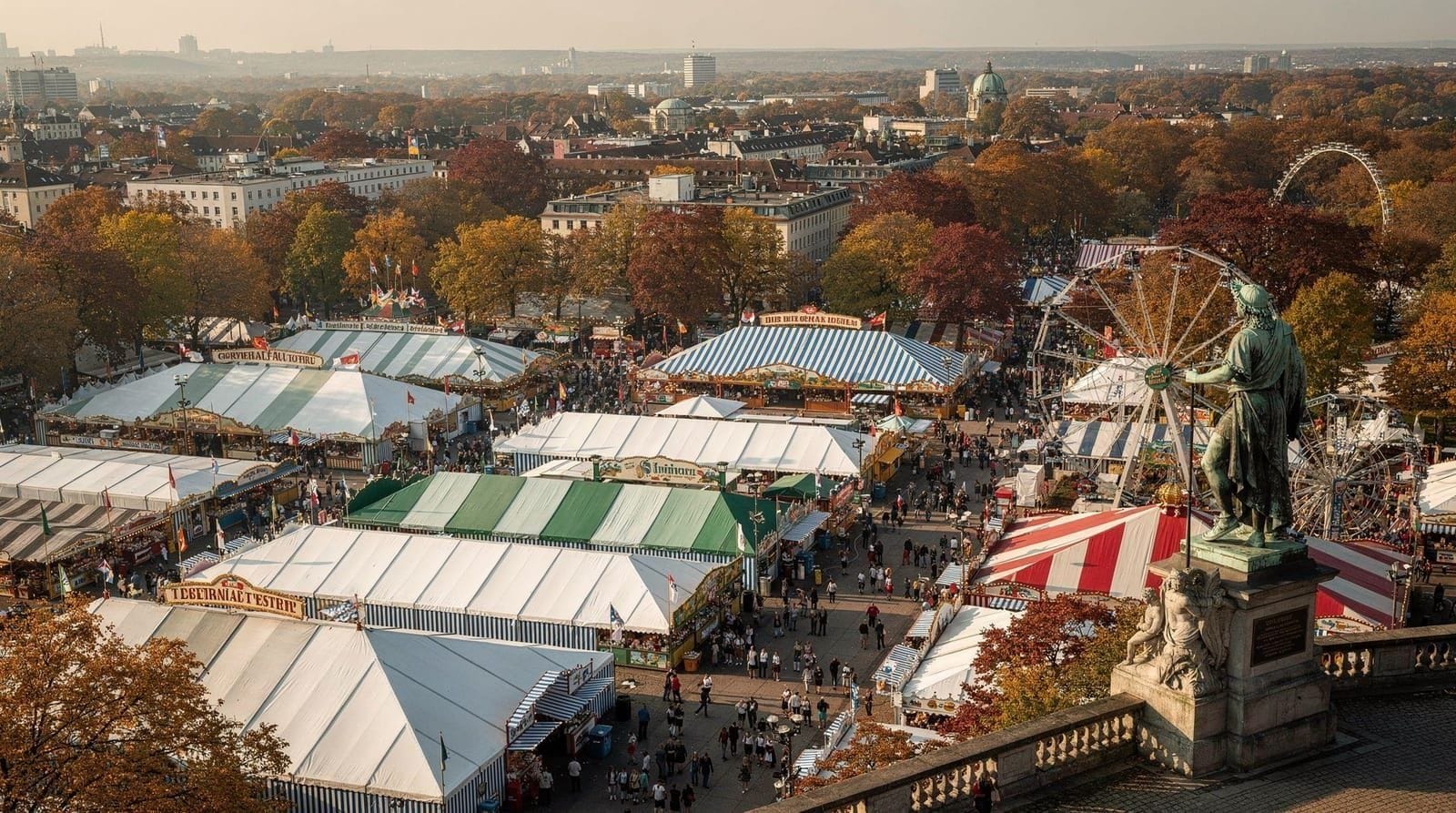
Location: Theresienwiese, Munich — universally called “the Wiesn” (pronounced “Vee-zn”). The grounds cover roughly 42 hectares southwest of the city centre. The Bavaria statue and Ruhmeshalle (Hall of Fame) on the western edge are visible from across the grounds.
Getting there: Take U4 (direction Theresienwiese / Westendstraße) or U5 (direction Laimer Platz) to Theresienwiese station. Both lines serve the stop. The walk from the station to the main festival entrance is under five minutes. Trains run at increased frequency during the festival.
Do not drive. Parking near the grounds is minimal, road closures are extensive on busy days, and taxis queue for 45–90 minutes after evening closing. The S-Bahn and U-Bahn combination from the main station (Hauptbahnhof) takes under 10 minutes. If you’re staying further from the centre, Hackerbrücke station on the S-Bahn is also a short walk from the northern entrance.
Festival hours: Gates open at 9:00 on Saturdays and Sundays, 10:00 on weekdays. Beer is served from 10:00 on Sundays and 12:00 on other days. The tents close at 23:30 (last beer served around 22:30). The Käfer Wiesn-Schänke and Weinzelt stay open until 01:00.
The major tents — who brews what, and where
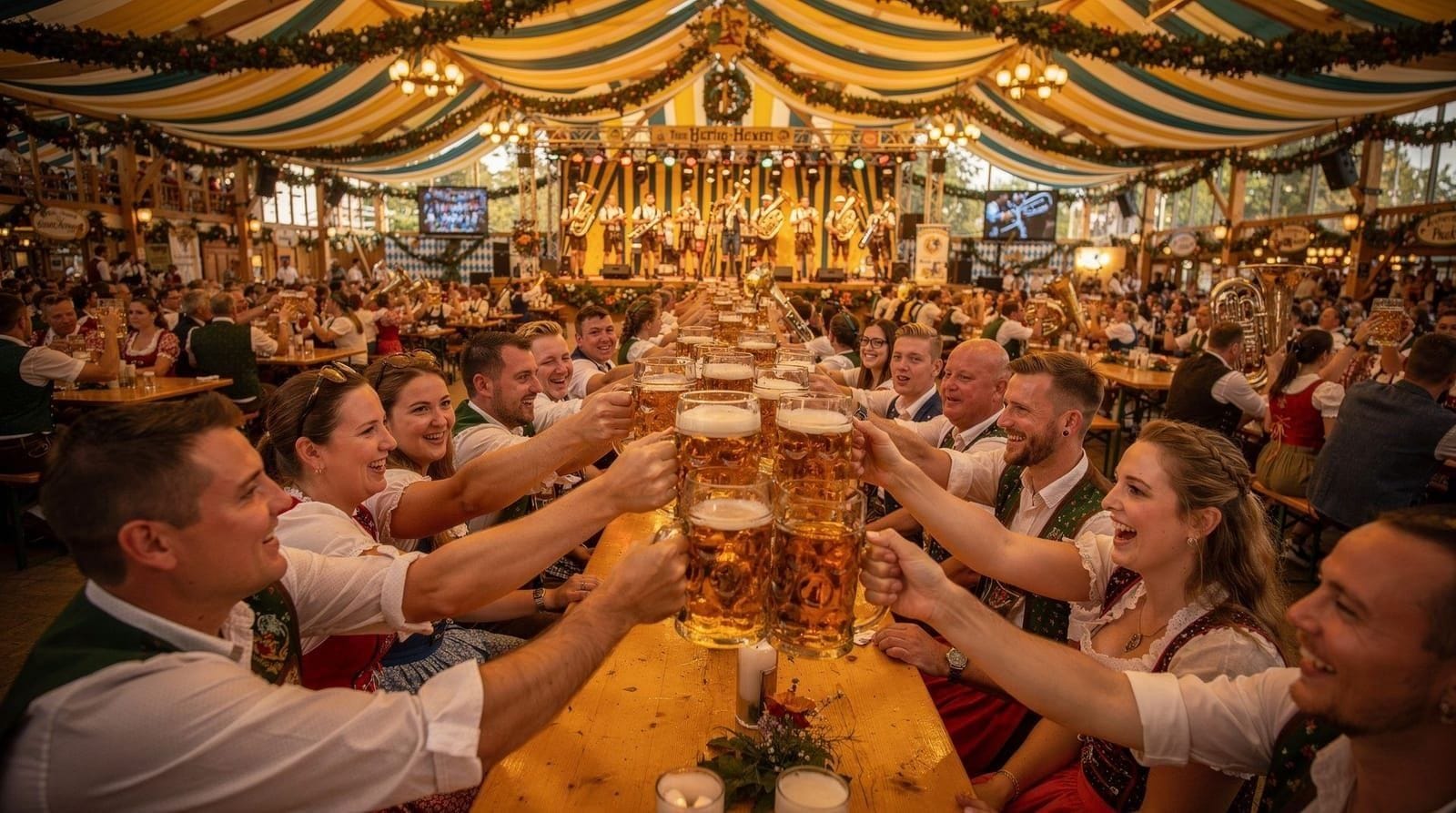
Oktoberfest has 14 large tents and about 20 smaller ones. The large tents each hold between 3,000 and 11,000 people. Each serves beer from one of Munich’s six official breweries: Augustiner, Paulaner, Hacker-Pschorr, Hofbräu, Löwenbräu, and Spaten. Only these six are permitted to operate the main tents, a rule that has held since 1818.
Schottenhamel — Capacity 10,000 (seated 6,000). This is where the Mayor taps the first keg on opening day, making it symbolically the most important tent. Serves Spaten beer. Traditionally popular with younger Bavarian locals, particularly students. Gets extremely crowded on the first weekend.
Hofbräu-Festzelt — Capacity 10,000. The festival tent of the state-owned Hofbräuhaus brewery. International crowd, very lively, famously good atmosphere for visitors who don’t speak German. Loud, energetic, and difficult to get into on weekends without a reservation.
Augustiner-Festhalle — Capacity 6,000 (seated 5,000). Widely regarded by Bavarians as the tent with the best beer — Augustiner is the oldest of the six Munich breweries (1328) and its Festbier is served from wooden casks rather than metal kegs, which purists insist produces a noticeably softer taste. Augustiner draws a more local crowd than the Hofbräu tent and tends to feel slightly less frantic.
Hacker-Festzelt — Capacity 9,300. Known for its painted “Bavarian sky” ceiling with clouds and a blue backdrop — a distinctive visual touch. Hacker-Pschorr beer. Lively atmosphere, popular with locals and international visitors alike.
Paulaner Festzelt — Capacity 8,450. Serves Paulaner Weißbier alongside the standard Festbier. Tends to attract a slightly older, more mixed crowd. Good oompah band. The Paulaner tent is on the southern edge of the grounds.
Löwenbräu-Festzelt — Capacity 5,700. Home to the Löwenbräu lion statue that roars periodically — a popular landmark for children. The Löwenbräu Festbier is well regarded. Gets particularly busy on weekend evenings.
Käfer Wiesn-Schänke — This smaller, upscale tent is the place for Oktoberfest gourmet food alongside the beer. Open until 01:00. Prices are significantly higher than the main tents. Celebrities, business guests, and anyone who prefers quieter surroundings tend to gravitate here.
For a guided introduction to the tents with reserved seating already arranged: 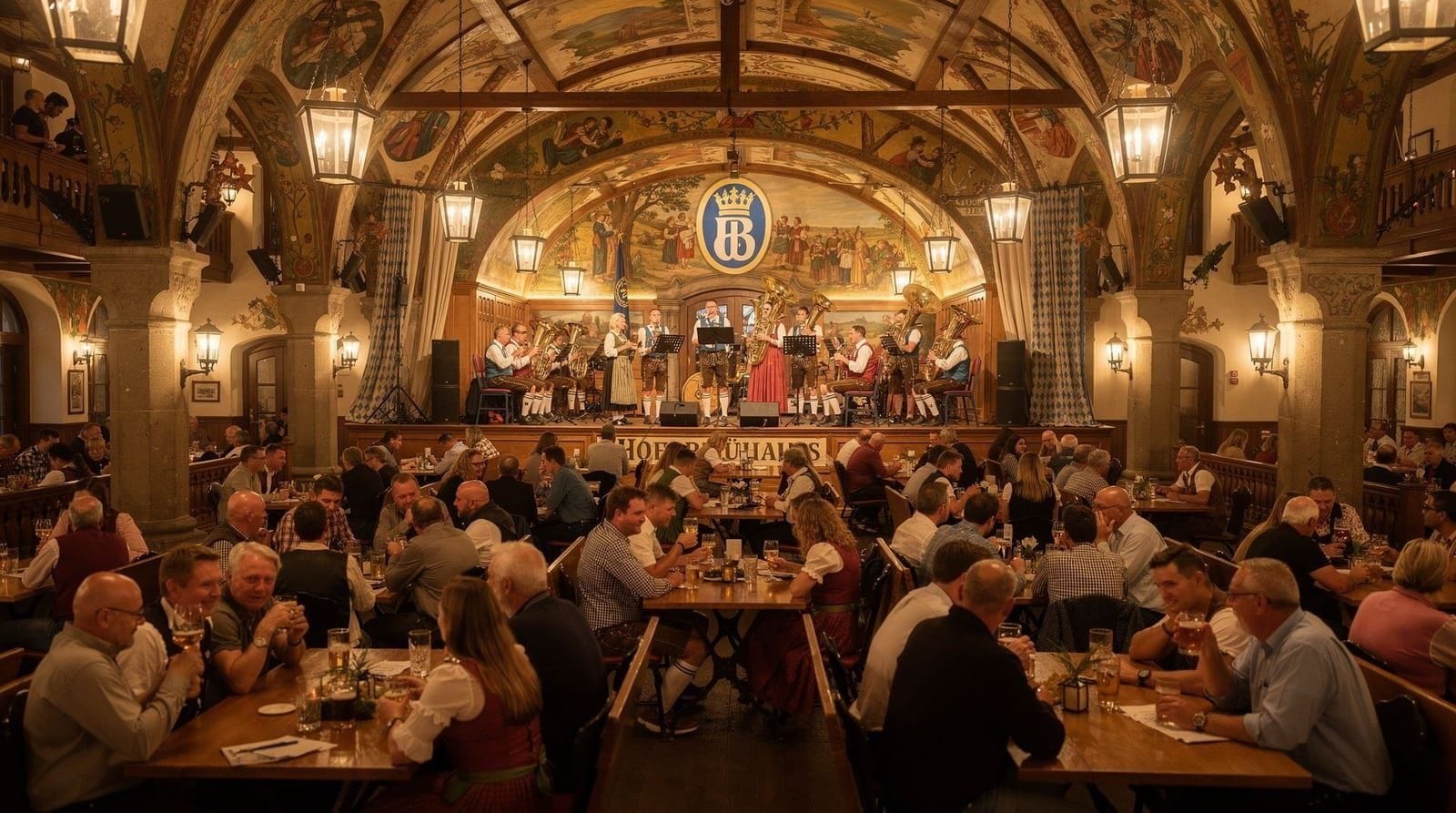 Oktoberfest tour with tent reservation, food and beerCheck availability
| Tent | Capacity | Character |
|---|---|---|
| Schottenhamel | 10,000 | Opening ceremony tent, younger Bavarian/student crowd |
| Hofbräu-Festzelt | 10,000 | Loudest, most international, hardest to enter without a reservation |
| Augustiner-Festhalle | 6,000 | Cask beer, considered the best by many locals, more relaxed |
| Hacker-Festzelt | 9,300 | Painted sky ceiling, balanced local/tourist mix |
| Paulaner Festzelt | 8,450 | Weißbier available, slightly older crowd |
| Löwenbräu-Festzelt | 5,700 | Roaring lion statue, popular with families and kids |
Entry, beer prices, and what to budget
Entry to the grounds is free. There are no admission gates or tickets required to walk around Theresienwiese, visit the fairground rides, browse the stalls, or enter the beer tents (subject to capacity).
Beer prices in 2026: A Maß (one full litre of beer in a ceramic stein) costs €15.70–€16.50 depending on the tent. Prices are set by each brewery and confirmed every spring. No half-litre servings are available in the main tents — it’s a full litre or nothing. Non-alcoholic options, soft drinks, and water are available at roughly €5–9.
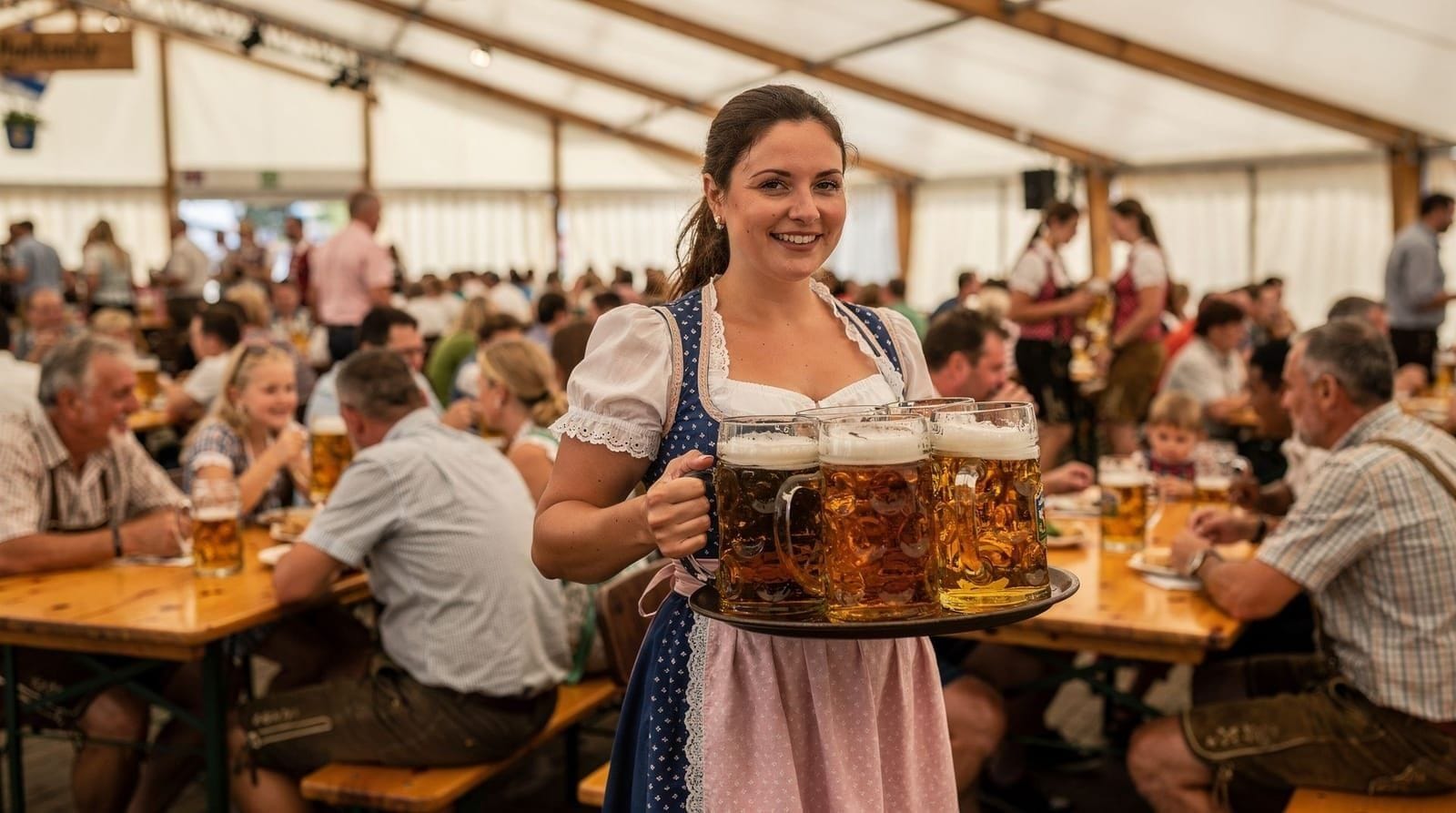
Tipping the servers (Bedienungen) is standard. They carry astonishing quantities of steins and work extremely long shifts. Adding €1–2 per Maß when ordering is considered normal; rounding up to the next euro is the minimum. Service without tipping is technically permitted but frowned upon.
Food prices: Oktoberfest food is expensive relative to what Munich usually charges, though the portions are substantial. Expect to pay €14–18 for a half roast chicken (Hendl), €10–14 for a Steckerlfisch (grilled fish on a stick), €12–16 for a Schweinsbraten (roast pork), and €5–8 for a Brezn (pretzel). Budget around €50–80 per person for a comfortable afternoon including two to three beers and a meal.
Cash: A significant number of food stalls and some smaller tents operate on cash only. Major tents now accept card payments, but smaller vendors often do not. Bring at least €60–80 in cash.
Reservation strategy — and why you need one
Getting into the festival grounds requires no reservation. Getting a seated table inside the main tents on a busy day — particularly any weekend — requires booking months ahead.
How reservations work: Each brewery releases its allocation of Oktoberfest tent reservations in late autumn or early winter for the following year. For Oktoberfest 2026, reservations for the major tents were largely available from November–December 2025. By January 2026, the most popular time slots were already sold out.
Reservations are booked per table (minimum 10 persons for most tents, sometimes 6) and include a set allocation of beer and food vouchers. You are not paying for a ticket to enter — you are paying for reserved seating and the obligatory consumption minimum (typically €30–50 per person in food/drink vouchers).
Where to book officially:
- The official Munich Oktoberfest website: oktoberfest.de (German and English)
- Each brewery’s own reservation system (linked from the official Wiesn website)
- Schottenhamel, Augustiner-Festhalle, and Hofbräu-Festzelt each manage their own booking portals
Scam warning: Third-party resellers (including many websites that appear legitimate at first glance, as well as eBay listings and social media sellers) charge 2–5x face value and frequently sell reservations that are non-transferable, fraudulent, or simply voided by the brewery if the name changes. The official stance: Oktoberfest reservations are tied to the account used to book them. If you cannot book through official channels, your fallback is arriving early on weekdays.
For groups who want a legitimate guided experience with pre-arranged seating and no reservation hassle: 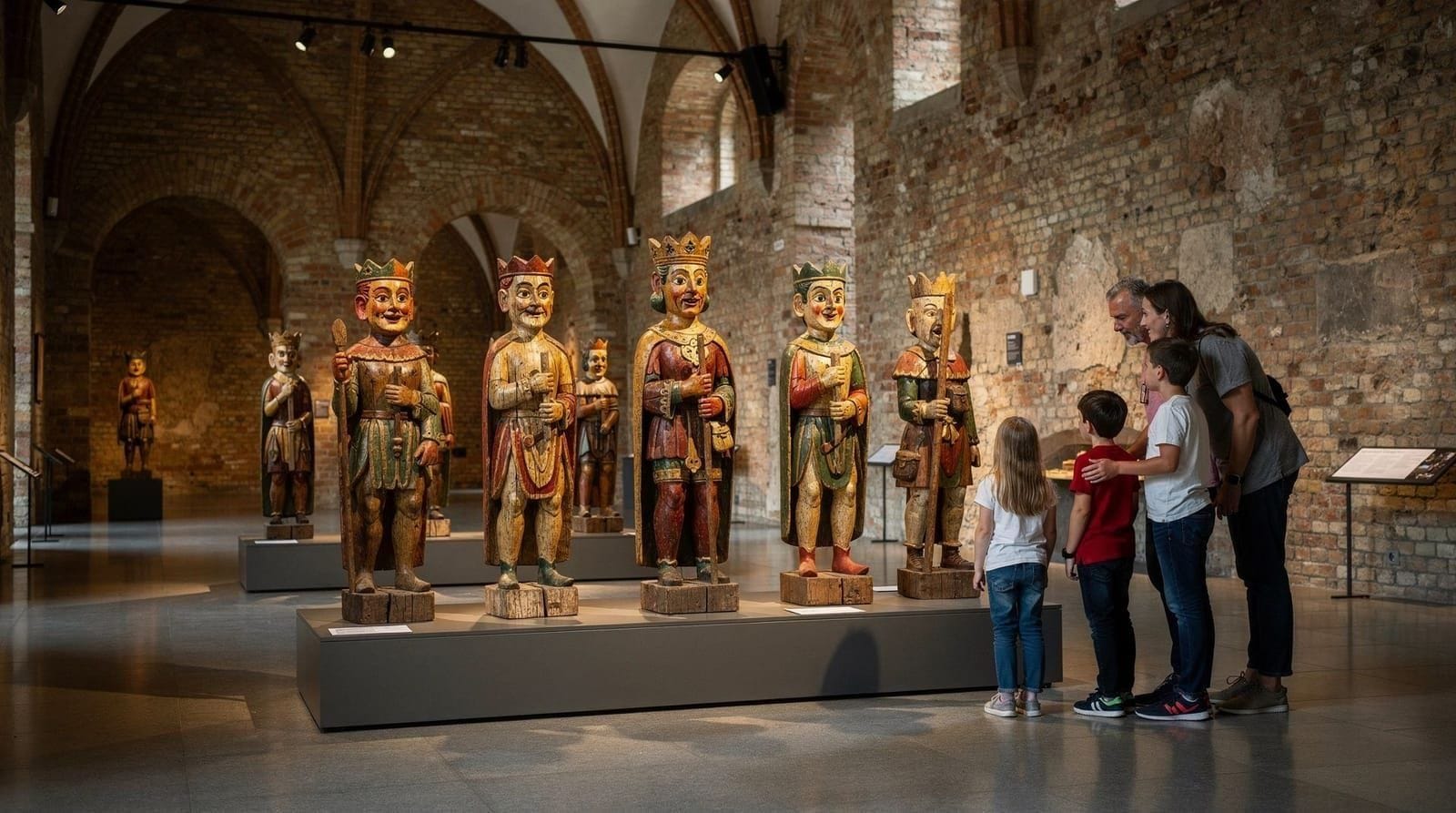 Oktoberfest Museum visit and beer tasting with sommelierCheck availability
What to wear — Dirndl, Lederhosen, and where to buy them
Traditional Bavarian dress is not required, but it is genuinely encouraged — and wearing it makes for a better experience. Locals in Dirndl and Lederhosen are not in costume; they are wearing what Bavarians actually wear to formal festivals. Showing up in the same clothes signals that you understand and respect the occasion.
For women: A Dirndl consists of a bodice, a blouse (usually white), a full skirt, and an apron. The bow of the apron communicates relationship status by local convention: bow on the left means available, right means taken, centre means uncertain, back means widowed or waitressing. Skirt length ranges from mini to full length; mid-length (just below the knee) is the most traditional.
For men: Lederhosen are leather shorts (or knee-length breeches) worn with braces over a checked shirt (Trachtenhemd), knee socks (Loferl), and sturdy shoes. The leather should look lived-in rather than brand new if possible; very stiff, shiny new Lederhosen can signal tourist status to sharp-eyed locals.
Where to buy: Munich has several established Trachten (traditional clothing) shops. Wenger (Kaufingerstraße 2) and Loden-Frey (Maffeistraße 7–9) are the most respected, with prices from roughly €200–600 for a full outfit. For shorter visits, several shops near Theresienwiese offer rentals for €40–80 per day.
Avoid cheap synthetic “Oktoberfest costumes” sold online — they look obviously artificial and tend to fall apart.
Timing your visit — crowds, weekdays, and the opening weekend
First weekend (September 19–20): The opening ceremony on Saturday is extraordinary to witness but draws the largest crowds of the entire festival. If you want to experience the tapping ceremony, arrive at Schottenhamel before 9:00. Expect packed grounds by 11:00. Sunday of the first weekend is equally busy. Only attempt this without a reservation if you arrive very early.
Weekday afternoons (Tuesday–Thursday, early October): These are the calmest periods. Tents are still lively but not at capacity. Arriving at 14:00–15:00 on a Tuesday or Wednesday gives a reasonable chance of finding unseated space at a shared table. The atmosphere is genuinely pleasant rather than chaotic.
Second and third weekends: Busy, but the lines for entry into specific tents tend to be shorter than on the first weekend. Saturday evenings remain very crowded.
Italian weekend (traditionally the second weekend): Draws an exceptionally large contingent of Italian visitors and becomes very boisterous in the Hofbräu tent in particular.
Last weekend (October 3–4): A sentimental closing atmosphere with Bavarians wanting to end the season on a high note. Gets busy again. The Sunday closing ceremony is worth watching.
General advice: Arrive before noon on any busy day. Tent doors close when capacity is reached. Staff will not let you in even if you have a reservation if your reservation time hasn’t started yet. Check the specific start time on your booking confirmation.
Visiting with children, and if you don’t drink
Oktoberfest is more family-friendly than its reputation suggests, particularly earlier in the day. The fairground rides on the main Wiesn operate throughout the festival hours, and many families visit in the afternoon before the evening drinking atmosphere sets in — the tents themselves have designated family areas in some cases, and staff are generally accommodating of children at tables until early evening. That said, by 19:00-20:00 the main tents shift decisively toward an adult, increasingly boisterous atmosphere, and most families are better served leaving or heading to the calmer Oide Wiesn section (covered below) by then. For non-drinkers, every tent serves non-alcoholic beer (Alkoholfreies Bier) and soft drinks at broadly similar prices to the alcoholic Maß, so skipping the beer doesn’t mean skipping the atmosphere — the music, food and general spectacle are just as accessible without a drink in hand.
The Oide Wiesn — Oktoberfest for everyone else
The Oide Wiesn (“Old Wiesn”) is a separate enclosed section within the festival grounds dedicated to traditional Bavarian culture. Entry costs €4 for adults, free for children under 14. Inside you’ll find:
- Historic carousels and traditional fairground rides from the 19th and early 20th centuries
- Folk music and dancing performances in the Herzkasperlzelt and Schichtl stages
- Exhibition tents showing the history of Oktoberfest through vintage photographs, original equipment, and memorabilia
- The Tradition Festzelt, a smaller beer tent with a calmer atmosphere and traditional brass band rather than the modern pop-song-led oompah of the main tents
For families with children, or anyone who finds the main tents overwhelming, Oide Wiesn is genuinely excellent. The historical fair rides are beautifully maintained, the atmosphere is a few degrees quieter, and the folk dancing performances are free once you’re inside.
Honest advice — pickpockets, crowds, and the rough edges
Pickpockets: Operate throughout the festival grounds, particularly at entry gates when crowds press together. Keep phones and wallets in front pockets or a cross-body bag. Do not leave bags on the floor under your bench. The inside of beer tents — densely packed, dimly lit, with people distracted by beer and music — is prime territory for bag theft.
Alcohol and crowd management: Munich’s police presence at Oktoberfest is significant and professional. However, by late evening on busy nights, the atmosphere inside some tents becomes rough. People who are visibly intoxicated are removed, but the path to that point can be unpleasant if you’re seated near rowdy groups. Leaving by 21:00–21:30 avoids the worst of the evening chaos.
Queuing for tents: When a tent reaches capacity, staff close the doors and form an external queue. Entry from the queue is granted as people leave. On busy evenings, queue times can be 45–90 minutes. Without a reservation, the practical strategy is to arrive well before capacity is reached (by noon on weekdays, by 10:00 on weekends).
Weather: September in Munich can be warm and sunny or cool and rainy — sometimes both in the same day. The tents are enclosed, which solves the rain problem but creates humidity. Bring a light layer for morning visits and evenings.
For visitors who want a structured introduction to the festival before tackling it independently:  beer and food tour with dinner and Oktoberfest MuseumCheck availability
Getting home after closing
The end of the night at Theresienwiese is one of the most predictable bottlenecks of the whole festival. When the main tents close at 23:30, tens of thousands of people head for the same U-Bahn station at once. U4 and U5 trains run at increased frequency during the closing rush, but platforms still get very crowded, and it’s common to let a couple of trains pass before there’s room to board comfortably. Taxi queues at the official ranks near the grounds routinely run 45-90 minutes late in the evening — not a reliable option if you need to leave promptly. If you’re staying centrally, walking part of the way toward the Hauptbahnhof or Sendlinger Tor before catching a train from a quieter station is often faster than waiting at Theresienwiese itself. Leaving by 21:00-21:30, before the closing crush, remains the simplest way to avoid the whole problem.
Planning your Oktoberfest visit from Munich
Oktoberfest fits naturally into a broader Munich itinerary. Most visitors combine festival visits with time in the city centre. The Hofbräuhaus is an obvious stop for context on Munich beer culture, though its year-round tourist pricing is worth understanding before you go. The Oktoberfest Museum on Tal 53 offers a compact and underrated history of the festival, open year-round.
If you’re planning your broader trip, the Munich 3-day itinerary integrates Oktoberfest with the city’s other highlights efficiently. For first-time visitors, the Munich first-time 3-day plan prioritises the most important decisions. If you’re heading into the festival for a full weekend, the dedicated Oktoberfest weekend itinerary handles logistics step by step.
Munich beer hall etiquette is worth reading before your first visit — the rules around table sharing, ordering, and tipping are not always intuitive. The best time to visit Oktoberfest guide covers the crowd patterns in more detail if you have flexibility on dates.
Oktoberfest is also one stop in a broader Munich beer festivals calendar that includes Starkbierfest in March and various neighbourhood festivals — worth knowing if you’re visiting outside September.
Frequently asked questions about Oktoberfest 2026
What are the exact Oktoberfest 2026 dates?
Oktoberfest 2026 runs from Saturday, September 19 to Sunday, October 4, 2026. The festival spans 16 days. The opening ceremony (keg tapping) is at noon on September 19 in the Schottenhamel tent.
How much does a beer cost at Oktoberfest 2026?
A Maß (one litre) costs €15.70–€16.50 depending on the tent. No half-litres are sold in the main tents. Budget approximately €50–80 per person for a reasonable afternoon including two to three beers and a meal.
Can I attend Oktoberfest without a reservation?
Yes. Entry to the festival grounds is free and open to all. However, getting a seat inside the main tents on weekends without a reservation is very difficult. Arrive before noon on weekdays for the best chance of finding space. If you have a reservation, confirm the exact start time on your booking — tent staff enforce it strictly.
Which Oktoberfest tent is best for first-timers?
The Augustiner-Festhalle is often recommended for visitors who want an authentic atmosphere with excellent beer. The Hofbräu-Festzelt is the most international-friendly and has a strong atmosphere, though it skews heavily tourist. The Hacker-Festzelt, with its sky ceiling, is visually distinctive and tends to have a balanced mix of locals and visitors.
Is Oktoberfest safe for solo travellers?
Generally yes. Munich’s police presence is professional and the festival is well-organised. Solo travellers should be particularly careful about pickpockets, and should avoid getting separated from their belongings in crowded tent entrances. Evenings can become rough — plan your exit before 22:00 on busy nights.
Where can I buy or rent traditional Bavarian clothing?
In Munich city centre: Wenger (Kaufingerstraße 2), Loden-Frey (Maffeistraße 7–9), and several shops in the Marienplatz area. Near the festival grounds, rental shops operate throughout the festival period at €40–80 per day. Book rentals in advance for the first weekend.
What is the German phrase for “cheers” at Oktoberfest?
The standard Bavarian toast is “Prost!” Clinking steins while making eye contact with everyone at the table is expected — skipping someone is considered rude. A longer phrase used at meals: “Auf Ihr Wohl” (to your health). If someone toasts you and you miss the eye contact, Bavarian folklore holds that this brings seven years of bad luck in love — which is mostly said as a joke, but locals do take the eye-contact rule seriously.
What’s the best way to leave Theresienwiese without a long wait?
Leave before the 23:30 closing rush if possible — U4 and U5 trains run more frequently in the closing period but platforms still get very crowded, and taxi ranks near the grounds routinely run 45-90 minutes behind. Walking toward a quieter station like Sendlinger Tor or the Hauptbahnhof before boarding is often faster than waiting at Theresienwiese itself during the peak exit window.
Top experiences
Bookable activities with verified prices and instant confirmation on GetYourGuide.