Munich beer hall etiquette: everything you need to know before you go
Munich: beer halls and breweries 3-hour guided tour
What are the key rules for drinking in a Munich beer hall?
Never sit at a table marked Stammtisch — it is reserved for regulars. Wave to get the server's attention rather than going to the bar. Make eye contact when you say Prost, and tap your glass on the table before drinking. Tipping by rounding up to the nearest euro is the standard.
| Golden rule | Never sit at a table marked Stammtisch |
| Ordering | Wait for table service, don’t go to the bar |
| Tipping | Round up to the nearest euro, hand over the total |
| Toasting | Eye contact with “Prost”, tap the mug on the table |
| Dress code | None required; Tracht is appreciated, not expected |
Walking into a Munich beer hall for the first time is one of travel’s great pleasures — the smell of malt and hops, the clatter of ceramic mugs, the roar of a room full of people genuinely having a good time. It can also be mildly intimidating if you do not know the unspoken rules. Germans take their Bierkultur seriously, and Bavarians take it even more seriously than most Germans. This guide covers everything you need to know to drink like a local, avoid the obvious tourist mistakes, and have the kind of experience you come to Munich for.
The Stammtisch rule: the most important thing to know
Walk into any traditional Gasthaus or beer hall in Munich and you will likely see a round or rectangular table with a small sign in the centre or hanging above it reading “Stammtisch.” This table is reserved — not for a specific time slot, but permanently, for a rotating group of regular customers who meet there habitually, sometimes weekly, sometimes daily. These might be retired men who have been meeting every Tuesday for 40 years, or a group of colleagues from the local fire station, or a neighbourhood card-playing club.
Do not sit at a Stammtisch. This is the cardinal rule. It is not enforced by bouncers or formalities, but breaking it will cause genuine offence and mark you immediately as someone who does not understand how things work here. Simply choose any other table — there will always be one available, or you can ask a server which tables are free.
The Stammtisch tradition reflects something deeper about Bavarian pub culture: these spaces are community institutions, not just commercial venues. The regulars who gather there are not obstacles to your experience; they are its heart.
Ordering: how it actually works
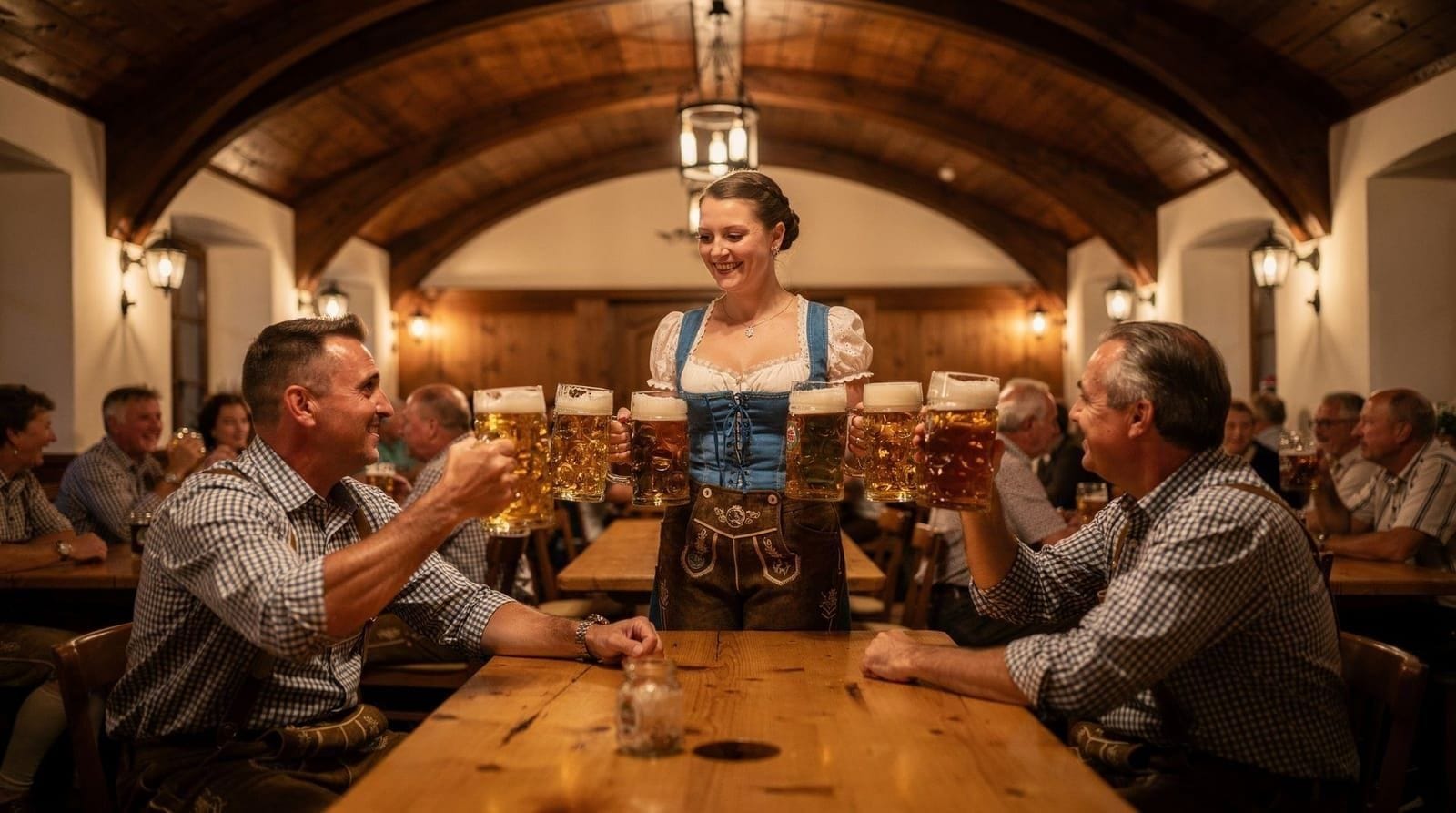
In a Munich beer hall, you do not go to the bar. Beer halls operate on table service, and the server (Bedienung) will come to you. This can take longer than you might expect in a busy hall — experienced servers carry extraordinary numbers of Maß mugs at once (some veterans can carry 10 or more in one hand) and cover large sections of floor at high speed. Be patient.
To get your server’s attention:
- Make eye contact and raise a hand briefly — do not wave frantically or snap fingers
- Hold up the number of fingers corresponding to how many beers you want
- Say simply “Eine Maß bitte” (one litre, please) or “Eine Halbe bitte” (half litre, please)
- If you want to specify a style: “Eine Maß Helles” or “Eine Weißbier”
The server will often keep a running tally of your drinks on a small notepad or, in traditional halls, by marking your beer mat with a pencil line for each drink. You pay at the end, not after each round. When you are ready to leave, catch your server’s attention and say “Zahlen bitte” (the bill, please).
Food ordering works the same way — the server comes to you, you order from the menu (often printed on paper or a chalkboard), and it arrives at your table.
The Maß vs the Halbe: what to order
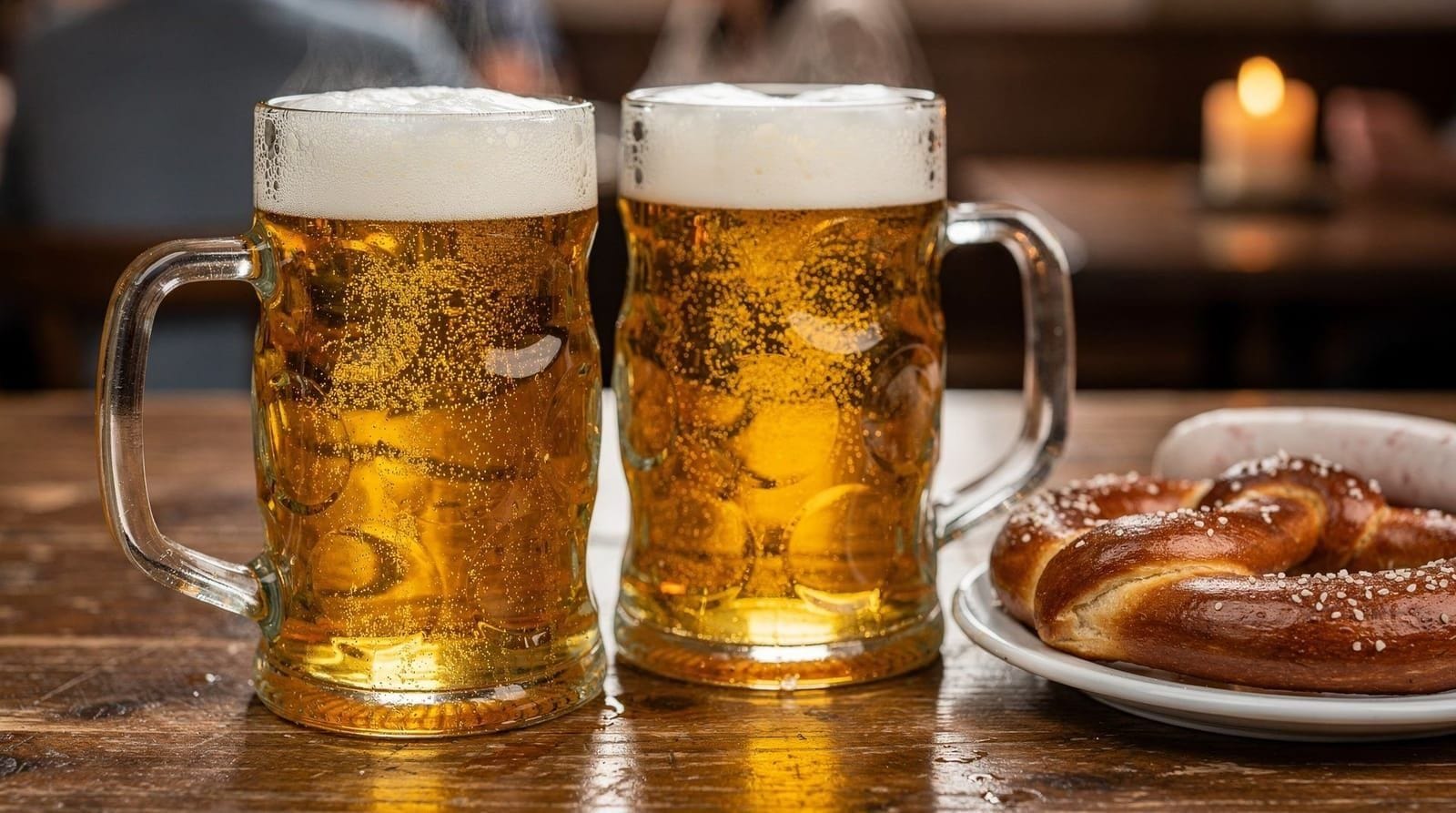
The standard measure in a Munich beer hall is the Maß — a one-litre ceramic or glass mug. This is what most people order, and what the beer culture is built around. At a regular Munich beer hall in 2026, expect to pay €10–12 per Maß of Helles or Dunkel.
The Halbe (literally “half”) is a 500 ml measure. It is entirely acceptable to order a Halbe — some people prefer it because it stays colder in the time it takes to drink, or simply because a full litre is too much in the afternoon. Do not feel pressured to order the Maß if you would rather have the smaller size.
Weißbier (wheat beer) is typically served in a 500 ml tall glass rather than a ceramic mug, because the carbonation needs room to breathe. A full-litre Weißbier is called a Maßkrug Weißbier and is available but less common.
At Oktoberfest, the Maß costs significantly more — approximately €14–15 in 2026 — and you will rarely be able to order a Halbe in the festival tents.
The Prost ritual: how to toast correctly
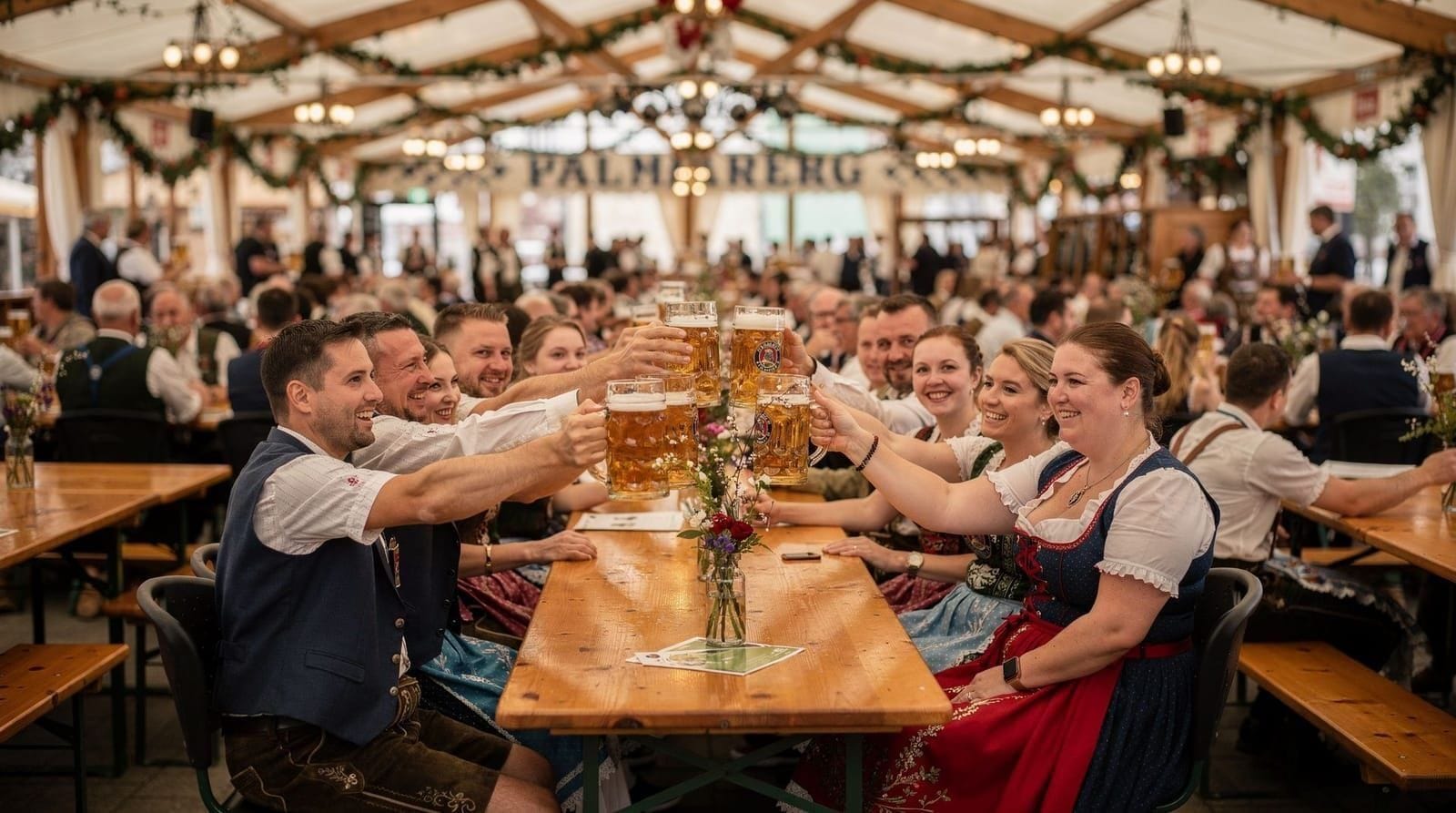
Toasting in a Bavarian beer hall is governed by a specific etiquette that Germans take seriously. The rules:
- Say “Prost!” (cheers) or “Prost Mahlzeit!” if you are eating as well
- Make direct eye contact with each person you clink glasses with — sweeping eye contact across the whole table if it is a large group
- Clink glasses at the sides (not the bottom rim)
- Tap your glass lightly on the table before drinking
The eye contact rule is the one most visitors overlook. In Bavarian tradition, failing to make eye contact during a toast is rude — and there is a folk saying that it brings bad luck in a certain domain of life for seven years. Whether or not you believe that, skipping the eye contact will be noticed, and making it shows respect for the people you are drinking with.
You do not need to toast every single sip. One toast when drinks first arrive is standard; subsequent toasts happen organically when someone new joins the group or a new round arrives.
Sharing tables: it is expected
Communal seating at long wooden Biertische (beer tables) and Bierbänke (benches) is fundamental to the beer hall experience. You will routinely find yourself sitting next to complete strangers, and this is entirely normal. If the hall is filling up, someone may approach your table and ask “Ist hier noch frei?” (Is this seat still free?). The correct answer, if the seat is available, is “Ja, bitte” and a slight gesture toward the bench.
Conversation with your table neighbours is welcomed but not obligatory. Many a good evening in a Munich beer hall has started with a shared joke about the football, a question about where you are from, or simply a mutual Prost as new mugs arrive. Do not be surprised if your neighbours turn out to be excellent company.
The one thing to avoid: reserving seats by leaving jackets or bags on chairs when the hall is busy and there are people waiting to sit. This is considered antisocial in a culture where the communal table is sacred.
Beer hall vs beer garden: different rules
The etiquette above applies to indoor beer halls. Beer gardens (Biergärten) have slightly different customs:
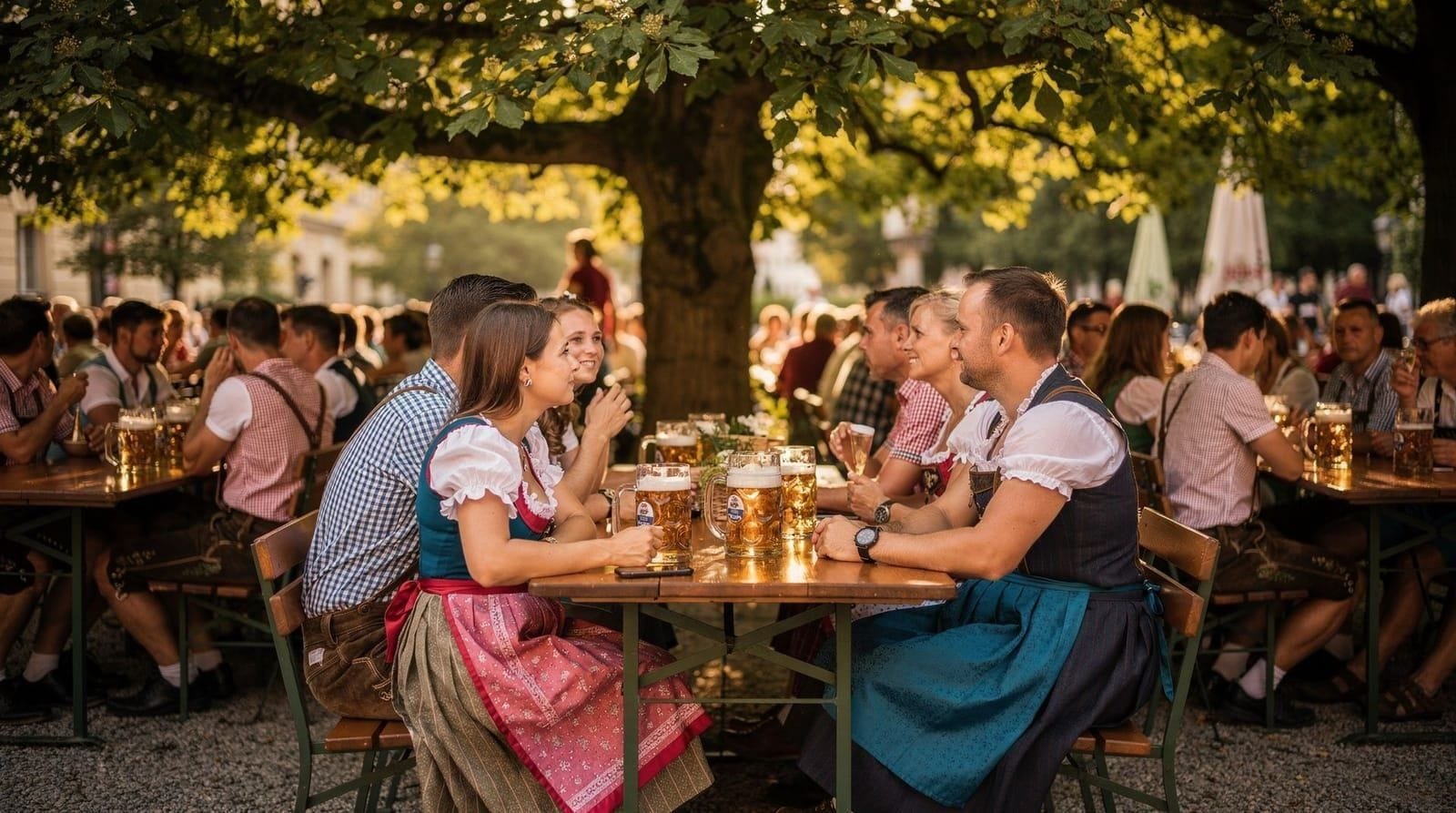
In a traditional Munich beer garden, you seat yourself — there is no maitre d’ and no host. Choose a table, sit down, and a server will come to you. In busy gardens like the Augustinerkeller or the Chinese Tower Biergarten in the English Garden, this can take 10–15 minutes during peak hours.
The other key difference: in traditional beer gardens, you are allowed to bring your own food from outside. This is a protected tradition in Bavaria, dating back centuries. You are expected to buy drinks from the garden, but if you want to bring sandwiches or a picnic from the Viktualienmarkt, that is completely acceptable — and many locals do. Look for a section of the garden without table service (often indicated with “Selbstbedienung” or “Mitbringen erlaubt” signs).
At the Viktualienmarkt beer garden in central Munich — one of the most popular daytime drinking spots — you can buy Leberkäse (Bavarian meatloaf), pretzels, and other snacks from the surrounding market stalls and bring them to your table. See the Viktualienmarkt beer garden guide for more on this particular spot.
Dirndl and Lederhosen: should you wear them?
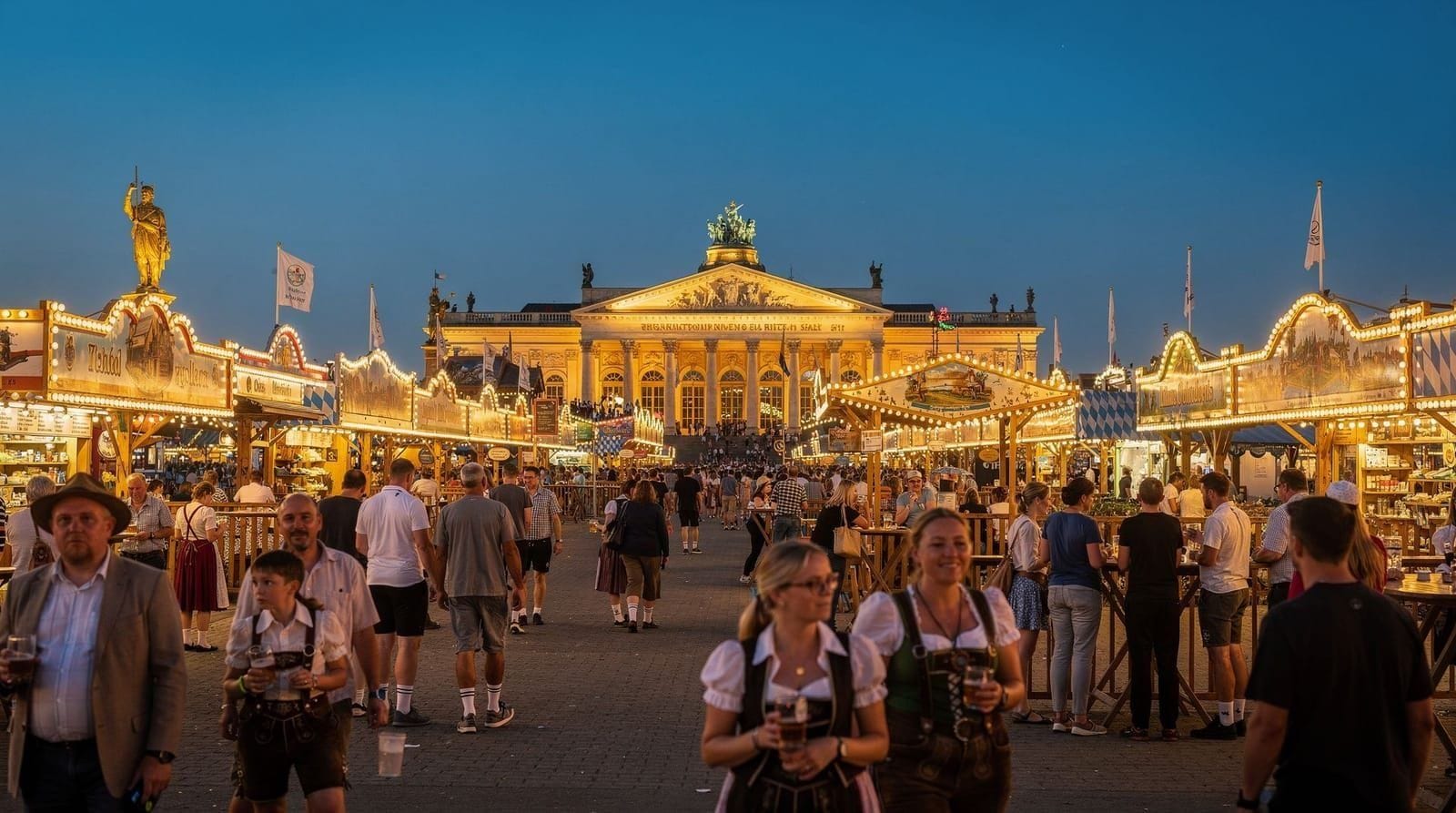
Traditional Bavarian dress is not required in any Munich beer hall or beer garden. You will not be refused entry, given odd looks, or treated differently if you arrive in jeans and a t-shirt — the majority of patrons at most venues outside of Oktoberfest are in ordinary clothes.
That said, arriving in a Dirndl (women) or Lederhosen (men) is genuinely appreciated, especially at traditional venues and particularly during Oktoberfest. It is a sign of respect for Bavarian culture rather than mere costume, and locals respond warmly to visitors who make the effort. During Oktoberfest, it is increasingly expected rather than optional — particularly in the more traditional tents.
If you are considering renting or buying, Lederhosen rental shops operate throughout Munich during the Oktoberfest period, and there are permanent shops in the Altstadt year-round. Buying genuine Lederhosen in Munich is a reasonable investment if you plan to visit Bavaria more than once — quality leather lasts decades.
Tipping correctly
Germany does not have the American tipping culture, but tips are expected in beer halls, typically 5–10%. The standard method:
When your server tells you the total (e.g., “Das macht 23 Euro 50”), you hand over cash and tell them the amount you want to pay, including the tip: “Fünfundzwanzig bitte” (25, please). The server makes change and keeps the difference. Never leave coins on the table and walk away — this is considered dismissive.
For large groups (6+) where the service has been attentive, 10% is appropriate. For quick, high-volume service at a busy Oktoberfest tent where your server is barely stopping, rounding up a euro or two per round is fine.
Food etiquette: what to eat and when
Traditional beer hall food is designed to pair with beer: salty, filling, and structured to slow the absorption of alcohol. The classics:
Brezn (pretzels) — The giant Bavarian Brezn bear no resemblance to the thin packaged pretzels sold elsewhere. Served warm with butter or alongside Obatzda (a soft cheese blend with paprika and caraway). Often available all day without ordering from the kitchen.
Weißwurst (white veal sausage) — The classic Munich breakfast food, made fresh each morning and supposed to be eaten before noon (before the church bells ring noon, in traditional lore). Served in a bowl of hot water with sweet Weißwurst mustard and a Brezn. Peel the skin before eating or slice it along the side. The best Bavarian food guide covers this and more in detail.
Obatzda — A spreadable blend of ripe soft cheese, butter, onion, caraway, and paprika. One of the great beer garden snacks. Usually served at room temperature on a wooden board with Brezn.
Rettich (radish) — A whole white radish, cut into a spiral with a special tool so it fans out, then salted. It wilts slightly with the salt and becomes pleasantly pungent. A traditional beer garden snack that pairs well with Helles.
The Viktualienmarkt food guide lists places to pick up quality versions of all of the above before heading to a beer garden.
A guided introduction to Munich beer culture
If you want to understand the etiquette and history in context — with a local guide explaining the background as you go — a structured beer hall tour is an efficient and enjoyable introduction. Munich beer halls and breweries guided tour (3 hours)
For a more social experience that includes multiple stops with food pairings: Munich private beer hall hopping with 3-course menu and tasting
Seasonal notes: Oktoberfest and Starkbierfest
The general etiquette above applies year-round, but two festival contexts have additional specific customs:
Oktoberfest (mid-September to early October, at Theresienwiese) involves reserved table sections within each tent (you need a table reservation for weekends), a faster-paced service style, and higher prices. Standing is common near the entrance of tents if you do not have a reservation, but server access is easier with a table. See the Oktoberfest guide for tent-by-tent details.
Starkbierfest (March, primarily at Nockherberg/Paulaner and various beer halls) is a more relaxed, locals-oriented festival featuring strong doppelbock beers at 7–9% ABV. The etiquette is the same as regular beer halls, but pace yourself — the strong beer is deceptive. The Starkbierfest guide has dates and venue recommendations.
Key phrases you actually need
| German | Pronunciation | Meaning |
|---|---|---|
| Prost! | prohst | Cheers |
| Eine Maß bitte | eye-nuh mahss bit-uh | One litre, please |
| Eine Halbe bitte | eye-nuh hal-buh | Half litre, please |
| Zahlen bitte | tsah-len bit-uh | Bill, please |
| Ist hier noch frei? | ist heer nokh fry | Is this seat free? |
| Ja, bitte | yah bit-uh | Yes, please |
| Danke | dahn-kuh | Thank you |
| Prost Mahlzeit | prohst mahl-tsait | Cheers, enjoy your meal |
Etiquette across settings: hall, garden and festival tent
The core rules hold everywhere, but the details shift depending on where you are.
| Setting | Seating | Service | Notable difference |
|---|---|---|---|
| Indoor beer hall | Find any free table (never Stammtisch) | Table service, pay at the end | Toast ritual observed closely |
| Beer garden | Self-seat at communal benches | Self-service kiosk or waiter section | Outside food allowed in self-service areas |
| Oktoberfest tent | Reserved or first-come standing | Fast, high-volume table service | Standing on benches tolerated, tipping still expected |
Common etiquette myths worth clearing up
A few things visitors worry about turn out not to matter much. You do not need to speak German to be served politely — most central beer halls handle English easily, though a few words go a long way in the less touristy spots. You are not expected to finish an entire Maß before ordering another — asking for a Halbe instead is completely normal and not seen as a lesser choice. And contrary to what some guides imply, nobody will judge you for skipping Lederhosen or a Dirndl outside of Oktoberfest — see the Munich beer halls guide for how the dress-code expectations shift specifically during festival season.
Where to practise all of this
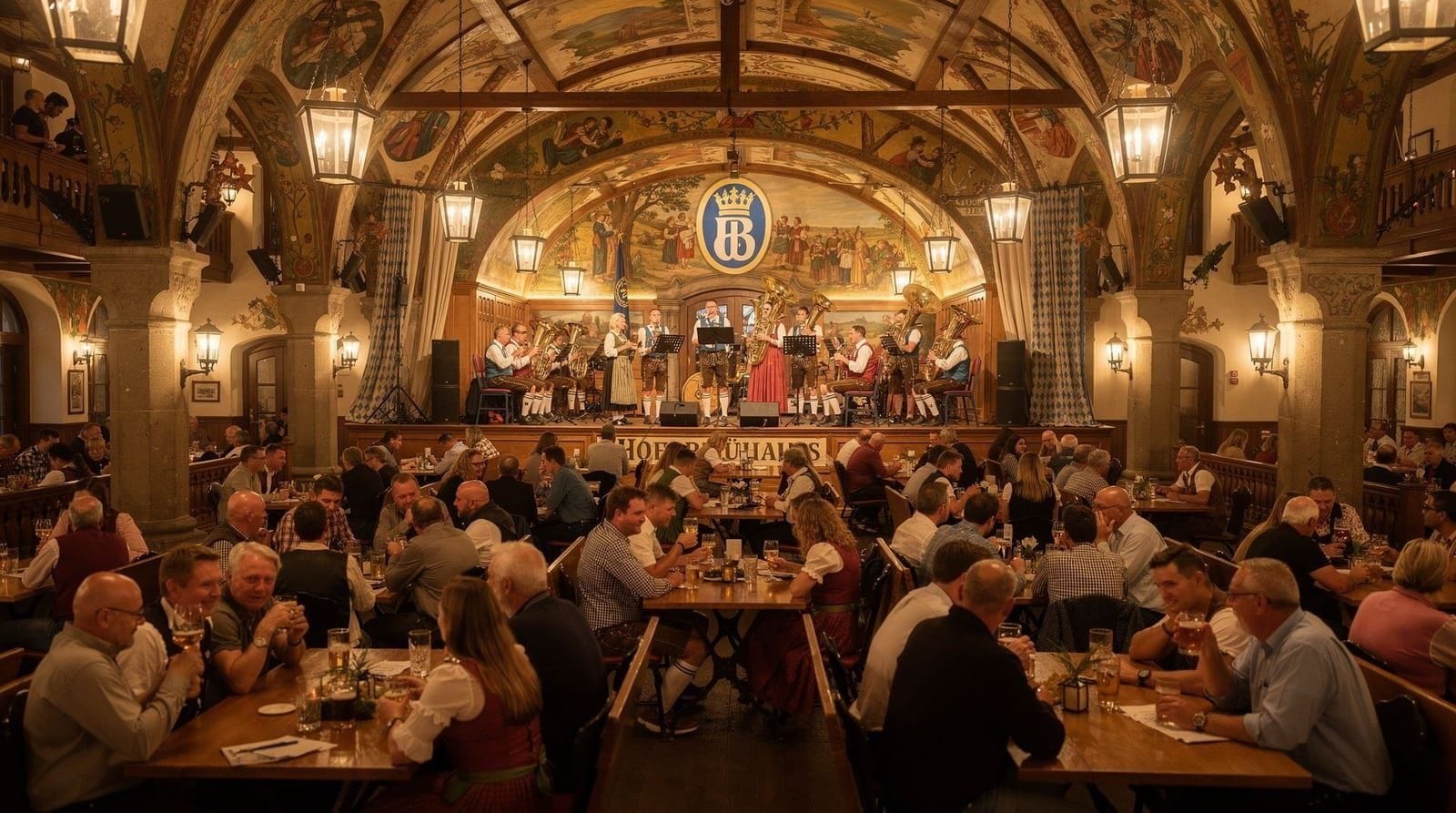
The rules above apply consistently whether you’re at a grand hall like Hofbräuhaus or a neighbourhood Wirtshaus. For a structured first outing that puts the etiquette into practice with a guide explaining the background, the Munich brewery tours guide and the Munich food tour guide both cover options that combine beer culture with food, and the Munich walking tours overview lists tours that route through the old town’s historic beer halls as part of a broader sightseeing route. If this is your first visit to Munich altogether, the Munich trip planning guide helps slot a beer hall evening into the rest of your itinerary.
Frequently asked questions about Munich beer hall etiquette
Can I bring children to Munich beer halls?
Children are welcome in most beer halls and beer gardens. Munich beer culture is family-oriented, and you will regularly see families with children at outdoor beer garden tables. Children cannot be served alcohol, but they can sit at any table. The Augustinerkeller beer garden and the Englischer Garten beer gardens are particularly family-friendly. Beer hall interiors late in the evening are noisier and less suitable for young children.
What happens if I accidentally sit at a Stammtisch?
If you sit at a Stammtisch and the regulars arrive, they will politely (and sometimes less politely) let you know the table is reserved. Simply apologise, gather your things, and move. No drama is required. Avoid this by looking for the Stammtisch sign when you enter — it is usually displayed prominently.
Is it acceptable to take photos inside Munich beer halls?
Generally yes, in a discreet way. Taking wide shots of the hall or quick photos of your food and drinks is fine. Aggressively photographing other tables or singling out locals for portraits without asking is not appropriate. During Oktoberfest, photography is extremely common and generally accepted, but always be considerate of people’s privacy.
Do I need a reservation for a Munich beer hall?
For regular beer halls outside of Oktoberfest, no reservation is needed — you can walk in and find a table at most times of day. For Oktoberfest weekends, tent reservations are essential (booked months in advance). The Oktoberfest tickets and tables guide explains the reservation system in detail.
What is the right way to handle the Maß mug?
Carry it by the handle, not the body. The ceramic mug is heavy (especially full), so using the large handle is both practical and correct. Do not wrap both hands around the body of the mug — that is not how it is done. When you want a refill, leave your empty mug on the table and the server will collect and replace it.
How do I know what type of beer to order if I’m not sure?
Ask the server for a recommendation or a small taste. Most Munich beer halls are happy to let you try a small sample of their Helles and Weißbier before you commit. A standard starting point for first-timers is a Helles (pale lager, light and easy-drinking) or a Weißbier (wheat beer, slightly fruity). The Munich beer halls guide gives a full breakdown of styles at each major venue.
Is it true you can get in trouble for clinking glasses wrong?
Nobody will throw you out of the beer hall. But Bavarians genuinely care about the toast ritual, and a half-hearted Prost without eye contact will be noted. If you are drinking with locals, making the effort to toast properly signals respect and will be warmly received. At Oktoberfest especially, the communal energy around the toast is one of the most memorable parts of the experience.
Does the etiquette change much between different beer halls?
The core rules — Stammtisch avoidance, table service, tipping by rounding up, the Prost ritual — hold at every traditional venue. What changes is how strictly it’s enforced: a quiet neighbourhood Wirtshaus with regulars will notice lapses faster than a busy tourist-oriented hall used to explaining the basics to first-timers.
Is it rude to leave a beer hall without finishing your Maß?
No. Leaving beer unfinished when you’re ready to go is completely normal and nobody will comment on it. Ordering a Halbe instead of a full Maß in the first place is an equally acceptable way to avoid the issue.
Top experiences
Bookable activities with verified prices and instant confirmation on GetYourGuide.