Augustiner vs Hofbräu: Munich's two great breweries compared
Munich: beer halls and breweries 3-hour guided tour
Is Augustiner or Hofbräu better in Munich?
Augustiner is the locals' favourite — lighter, less carbonated, and brewed by Munich's oldest independent brewery (founded 1328). Hofbräu is the more famous tourist icon, owned by the Bavarian state since 1589. Both are excellent, but the two offer very different experiences.
| Founded | Augustiner 1328; Hofbräu 1589 |
| Style | Augustiner: softer, low-carbonation Helles; Hofbräu: crisper lager, standout Weißbier |
| Price | Around €10–12/Maß at both, €14–15 at Oktoberfest tents |
| Best venue | Augustinerkeller (locals) vs Hofbräuhaus am Platzl (icon) |
| Booking | Walk-in for both outside Oktoberfest; reserve ahead for Wiesn tents |
Munich has six major breweries — the famous Brauereien that together supply every drop of beer sold at Oktoberfest under the terms of the Wiesn licence. Among them, two names dominate the debate at every stammtisch: Augustiner and Hofbräu. Ask a Münchner which is better and you will almost always hear “Augustiner.” Ask a first-time visitor what beer hall to try and they will almost certainly say “Hofbräuhaus.” Both answers are understandable. This guide explains why the two exist in such different worlds, what distinguishes their beers, and how to make the most of both.
Two very different histories
The difference between Augustiner and Hofbräu starts with who founded them and why.
Augustiner was established in 1328 by Augustinian monks at their monastery near the Neuhauserstrasse. For centuries it produced beer primarily for the monastery’s own needs and local distribution. After secularisation in the early 19th century, the brewery passed into private hands, and it has remained privately owned ever since. Today it is the last of the six major Munich breweries to operate as an independent company, not part of a multinational group. That independence matters to Münchners in a way that is hard to overstate — it feels like something genuinely local in a city that has been globalised like everywhere else.
Hofbräuhaus was founded in 1589 by Duke Wilhelm V of Bavaria as the royal court brewery, literally a Brauhaus for the Hof (court). It was a state enterprise from day one, designed to supply the Wittelsbach royal family with dark Weißbier. In 1828 it opened its doors to the public, and by the late 19th century it had become a popular institution. Today it is owned by the Free State of Bavaria — it is, technically, a government-run pub. That does not diminish the experience, but it does explain a certain commercial scale and efficiency about the operation.
The beer: what is actually different
On paper, both breweries produce standard Munich beer styles following the Reinheitsgebot purity law of 1516, which limits German beer to water, malt, hops, and yeast. Both make a Helles, a Weißbier, a Dunkel, and seasonal offerings. So why do serious beer drinkers insist Augustiner is superior?
Augustiner Helles is widely regarded as the finest example of the style in Munich. It pours a pale gold, with a fine white head and an aroma that is softly malty with just a whisper of noble hops. The carbonation is deliberately restrained, giving it a smoothness that makes the first Maß feel dangerously easy. The bitterness is very low — around 16 IBU — making it approachable for lager drinkers of any background. At a standard beer hall it costs around €10–11 per Maß (1 litre).
Hofbräu Helles is a competent, well-made Munich lager, but it is crisper and more carbonated than Augustiner. It drinks faster, feels lighter, and has a slightly more neutral finish. That is not inherently bad — it is exactly what many people want — but compared to Augustiner, experienced beer drinkers typically find it less distinctive.
Where Hofbräu genuinely excels is its Weißbier. The HB Weißbier has a bold banana-and-clove character that is well balanced and widely exported for a reason. If you prefer wheat beer to lager, Hofbräu is a strong choice.
Both breweries also produce a Dunkel (dark Munich lager), a malt-forward, lightly sweet beer that is excellent with food. Augustiner Dunkel is exceptional — rich and bready without being heavy, at around €10–11 per Maß.
For the adventurous, both brew seasonal beers: Märzenbier (amber, served at Oktoberfest), Maibock (strong pale spring beer), and various winter specials. Augustiner’s Maximator, a doppelbock at 7.5% ABV, is one of the city’s great strong beers, especially popular during Starkbierfest in March.
Where to drink Augustiner
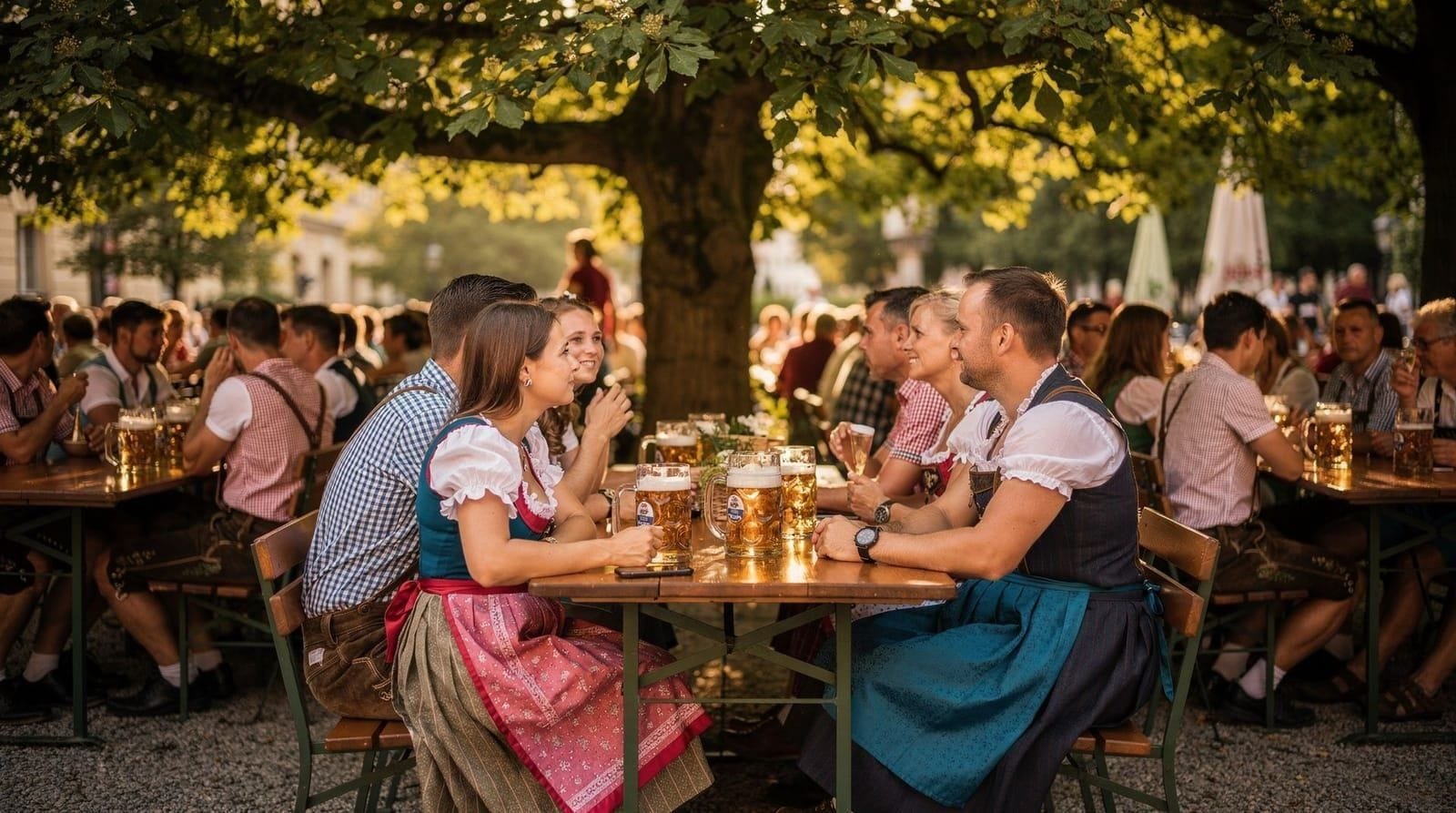
Augustinerkeller (Arnulfstrasse 52, near Hauptbahnhof) — This is the main event. A sprawling beer garden with chestnut trees and one of Munich’s largest indoor beer halls. The garden seats around 5,000 people in summer, and the atmosphere on a warm evening is as good as Munich gets. Arrive early (from 10:00) if you want a table under the trees. The kitchen serves proper Bavarian food: Schweinebraten (roast pork), Obatzda (Bavarian cheese dip), and Brezn (pretzels). It is a 10-minute walk from the Hauptbahnhof or a 3-minute S-Bahn ride.
Augustiner am Dom (Frauenplatz 12) — Directly beside the Frauenkirche, this is the most central Augustiner establishment. More touristy than the Keller but well run, with quick service and a good range of food. Useful if you are already in the Altstadt and want to compare the beer without a detour.
Augustiner Stammhaus (Neuhauser Strasse 27) — The original location near the monastery. Atmospheric interior with traditional decoration, good for a quieter meal and beer.
If you want to explore multiple Augustiner venues with context from a local guide, a structured beer hall tour is a good way to do it. These typically cover 3–5 stops with explanation of the brewing history and tasting notes along the way. Munich beer halls and breweries guided tour (3 hours)
Where to drink Hofbräu
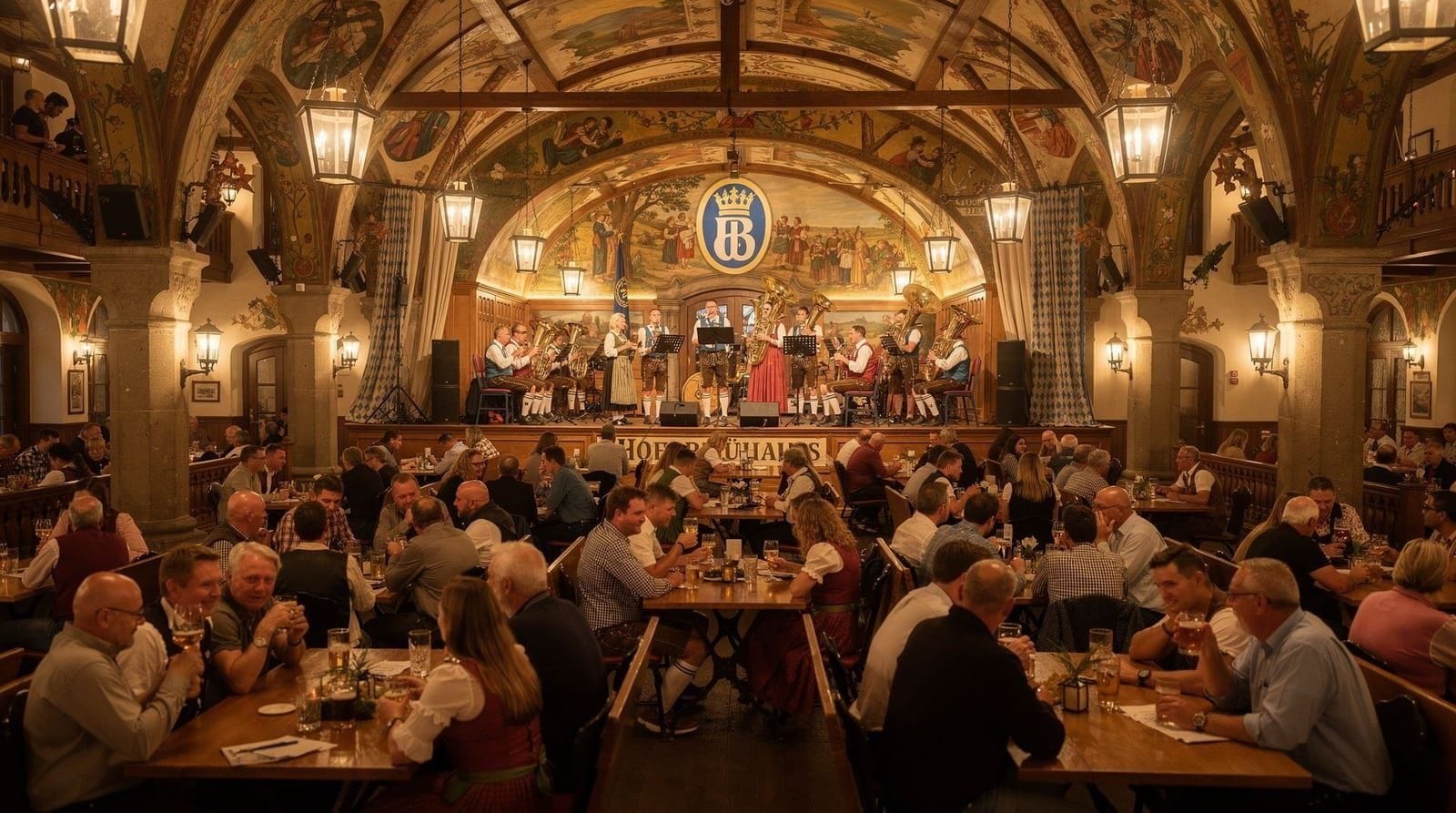
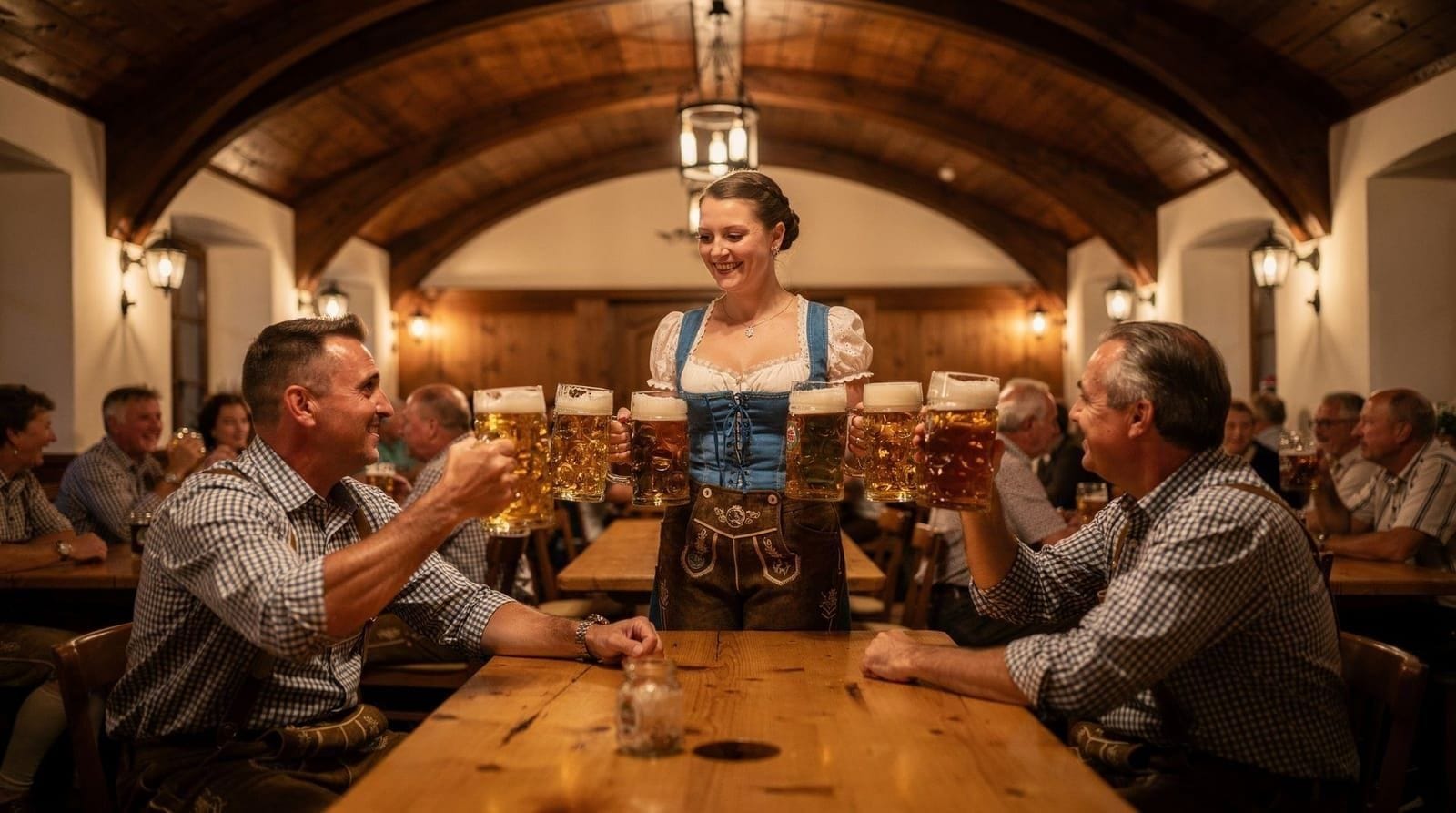
Hofbräuhaus am Platzl (Platzl 9, Altstadt) — The original and famous Hofbräuhaus, a 10-minute walk from Marienplatz. The building dates to 1897 and holds around 3,500 people across three floors and a beer garden courtyard. It is loud, festive, and genuinely impressive architecturally. An oompah band typically plays from mid-morning onward. The most atmospheric room is the Schwemme (ground floor), where the long communal tables fill up fast.
The honest caveat: the Hofbräuhaus is full of tourists, and prices reflect that. A Maß costs around €11–12 here, slightly above the city average. The food is adequate but not the best Bavarian kitchen in Munich. Think of it more as an experience than a destination for refined dining.
For a guided introduction to the Hofbräuhaus, a short guided tour with a beer included is a good way to get the historical context alongside the obvious pleasures of drinking there. Hofbräuhaus guided tour with 1 beer included
Hofbräukeller (Innere Wiener Strasse 19, Haidhausen) — This is the Hofbräu venue that locals prefer. Across the Isar in the Au-Haidhausen neighbourhood, it is quieter, less touristic, and has a lovely chestnut beer garden. The building itself dates to 1892 and has a beautiful painted interior. If you want Hofbräu beer in a more authentic setting, this is the place to go.
At Oktoberfest: tent by tent
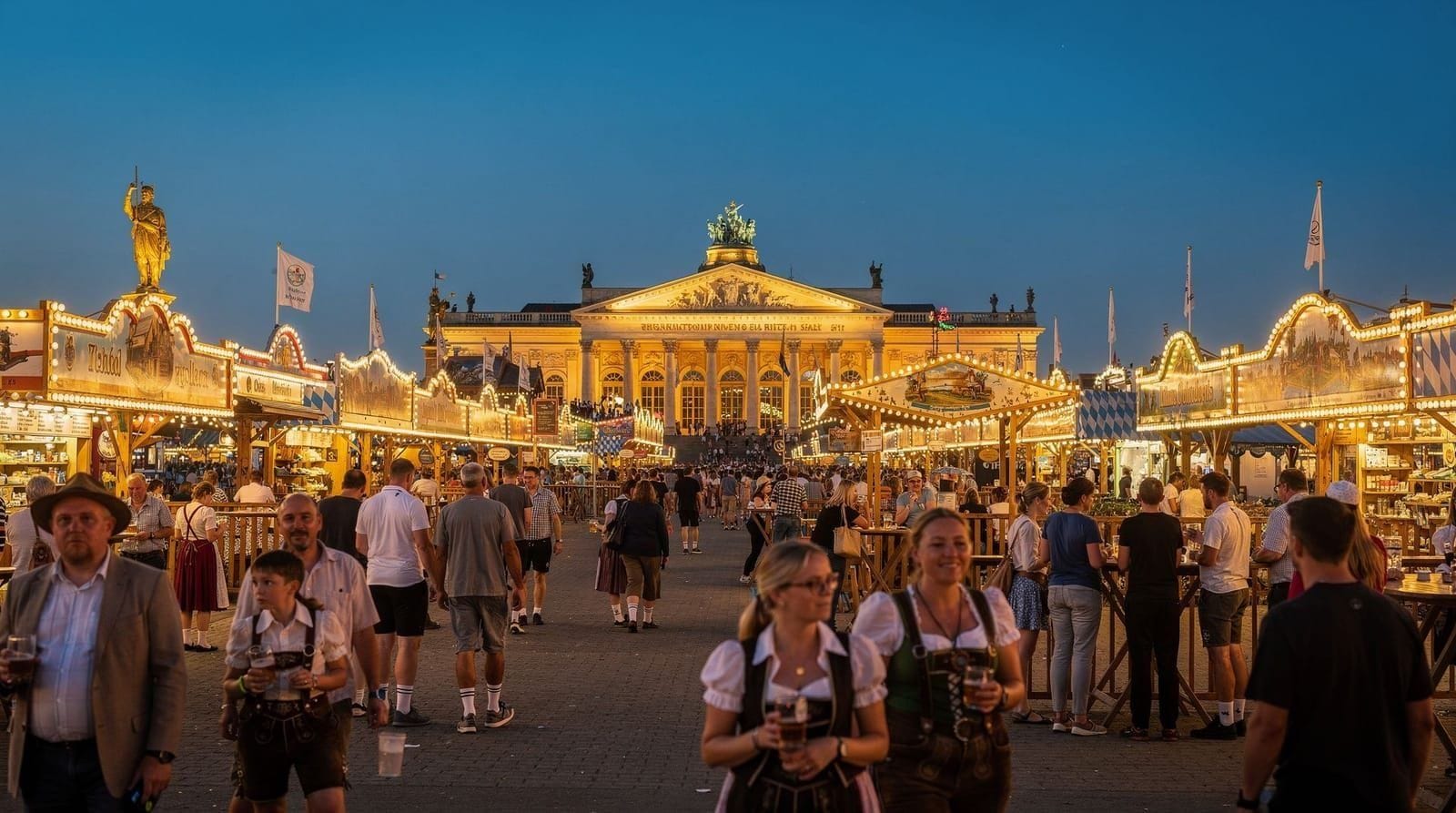
Both breweries have dedicated tents on the Wiesn (Theresienwiese) during Oktoberfest.
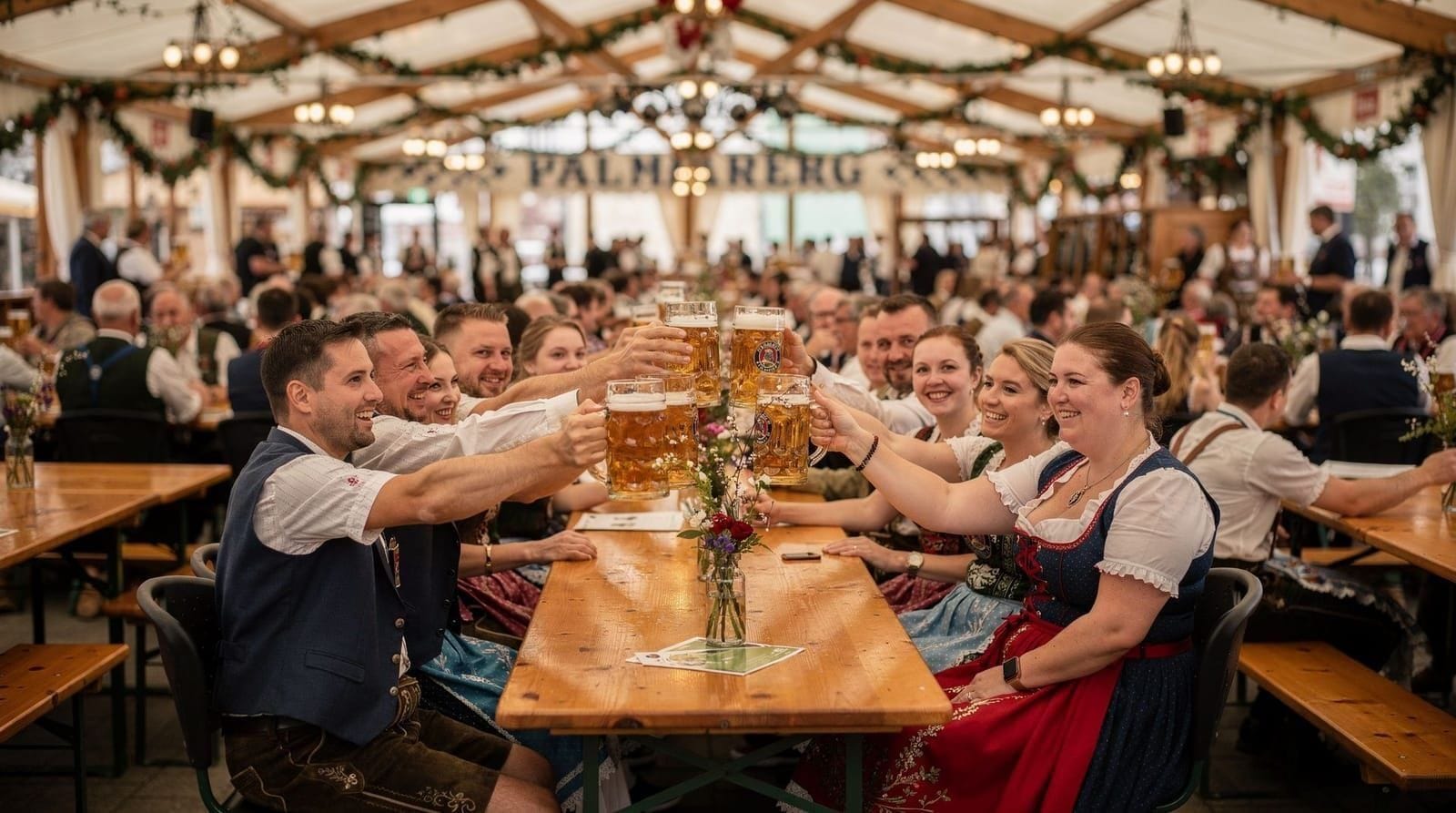
Augustiner-Festhalle — One of the more highly regarded tents at Oktoberfest, partly because Augustiner still serves its beer from traditional wooden barrels (Holzfässer) rather than stainless steel kegs. This is believed by many to produce a slightly softer, more nuanced pour. The tent holds around 6,000 people and tends to attract a mix of locals and informed visitors who know about the wooden barrel tradition.
Hofbräu-Festzelt (HB-Festzelt) — One of the largest and most famous tents on the Wiesn, holding around 10,000 people across two floors. It is party-forward: loud music, intense atmosphere, and a very international crowd. A Maß of Hofbräu Märzenbier at Oktoberfest 2026 costs approximately €14–15. The upper gallery tends to be slightly less intense than the Schwemme below.
For reserved table access at Oktoberfest with food included, advance booking is essential — particularly for weekends, which sell out months in advance. Munich Oktoberfest tour with tent reservation and food
Side-by-side comparison
| Augustiner | Hofbräu | |
|---|---|---|
| Ownership | Independent, privately held since secularisation | Owned by the Free State of Bavaria |
| Signature beer | Helles — softer, low carbonation, ~16 IBU | Weißbier — bold banana-and-clove character |
| Best beer garden | Augustinerkeller (Arnulfstrasse) | Hofbräukeller (Au-Haidhausen, local favourite) |
| Most famous venue | Augustiner am Dom, Frauenplatz | Hofbräuhaus am Platzl, Altstadt |
| Crowd | Mixed locals and informed visitors | Mostly international visitors |
| Oktoberfest tent | Augustiner-Festhalle, wooden barrels | Hofbräu-Festzelt, largest and loudest |
| Food quality | Stronger kitchen, notably Schweinebraten | Adequate but not a dining destination |
The verdict: which to choose
Choose Augustiner if you want to understand Munich beer at its finest. The Helles is the reference point for the style. The Augustinerkeller beer garden is one of the most genuinely pleasurable places to spend an afternoon in Munich. And if you are comparing notes with local Münchners at the table next to you, Augustiner is almost certainly what they are drinking.
Choose Hofbräuhaus if you want the iconic experience — the historic building, the oompah music, the festive communal atmosphere that draws visitors from around the world. It is a legitimate piece of Munich culture, even if the crowd around you is mostly from elsewhere.
The best answer, of course, is to try both. Start with a Maß at the Augustinerkeller in the afternoon (quieter, more reflective, better for tasting), then walk to the Hofbräuhaus in the evening for the spectacle and energy. That two-stop crawl covers more Munich beer culture in four hours than a week of research could.
If you want a structured tour that covers multiple beer halls and explains the nuances of Munich’s brewing heritage, a guided beer hall hop is well worth it. Munich Bavarian beer walking tour with samples and food
The verdict: which to choose
Practical details
Augustinerkeller: Arnulfstrasse 52. Open daily 10:00–01:00 (kitchen until midnight). Beer garden open weather permitting, typically April–October. S-Bahn to Hackerbrücke or 10-min walk from Hauptbahnhof. See also: best beer gardens in Munich and Munich beer halls guide.
Hofbräuhaus am Platzl: Platzl 9. Open daily 09:00–23:30. Just off Marienplatz, 2 minutes on foot from Marienplatz. Reservations available for larger groups.
Both venues are also accessible from any of the Munich public transport guide routes in the Altstadt. For itinerary planning, the Munich 2-day itinerary includes a stop at both.
For context on beer hall customs before you go — how to order, what the Stammtisch signs mean, when to say Prost — the Munich beer hall etiquette guide covers everything you need.
And if your trip coincides with Oktoberfest (mid-September to early October), the Oktoberfest guide has full details on tents, tickets, and planning.
Frequently asked questions about Augustiner vs Hofbräu
Which brewery do locals in Munich actually prefer?
Augustiner, by a significant margin. In informal surveys and in any conversation with Münchners about their beer preferences, Augustiner Helles comes up first. The brewery’s independence, the lightness of the Helles, and the traditional atmosphere at the Augustinerkeller all contribute to local loyalty that is genuine rather than habitual.
Are both Augustiner and Hofbräu available outside the famous beer halls?
Yes. Both beers are served at a wide range of bars and restaurants throughout Munich. Augustiner in particular is served at many traditional Gasthäuser across Bavaria. Hofbräu is exported more widely internationally, so if you have had German beer abroad, there is a reasonable chance it was Hofbräu.
Is one brewery better for food?
Augustinerkeller has a better kitchen than the Hofbräuhaus for traditional Bavarian food. The Schweinebraten and Haxe (pork knuckle) at Augustinerkeller are consistently reliable. The Hofbräuhaus kitchen serves the basics competently but is not a destination for eating.
What is the price difference between the two?
Prices are similar. Expect to pay €10–12 per Maß at Augustinerkeller and €11–12 at Hofbräuhaus, slightly depending on the season and day of week. At Oktoberfest, both tents charge €14–15 per Maß (2026 prices), which is standard across all six Wiesn breweries.
Can I do a self-guided beer hall crawl covering both?
Easily. Augustinerkeller is about a 20-minute walk from Hofbräuhaus, or you can take the S-Bahn one stop from Hackerbrücke to Marienplatz. A logical crawl: Augustinerkeller in the afternoon, then walk through the Munich Altstadt toward Platzl for the evening. For a guided version covering more stops, see the Munich beer tasting tours guide.
Does either brewery offer tours?
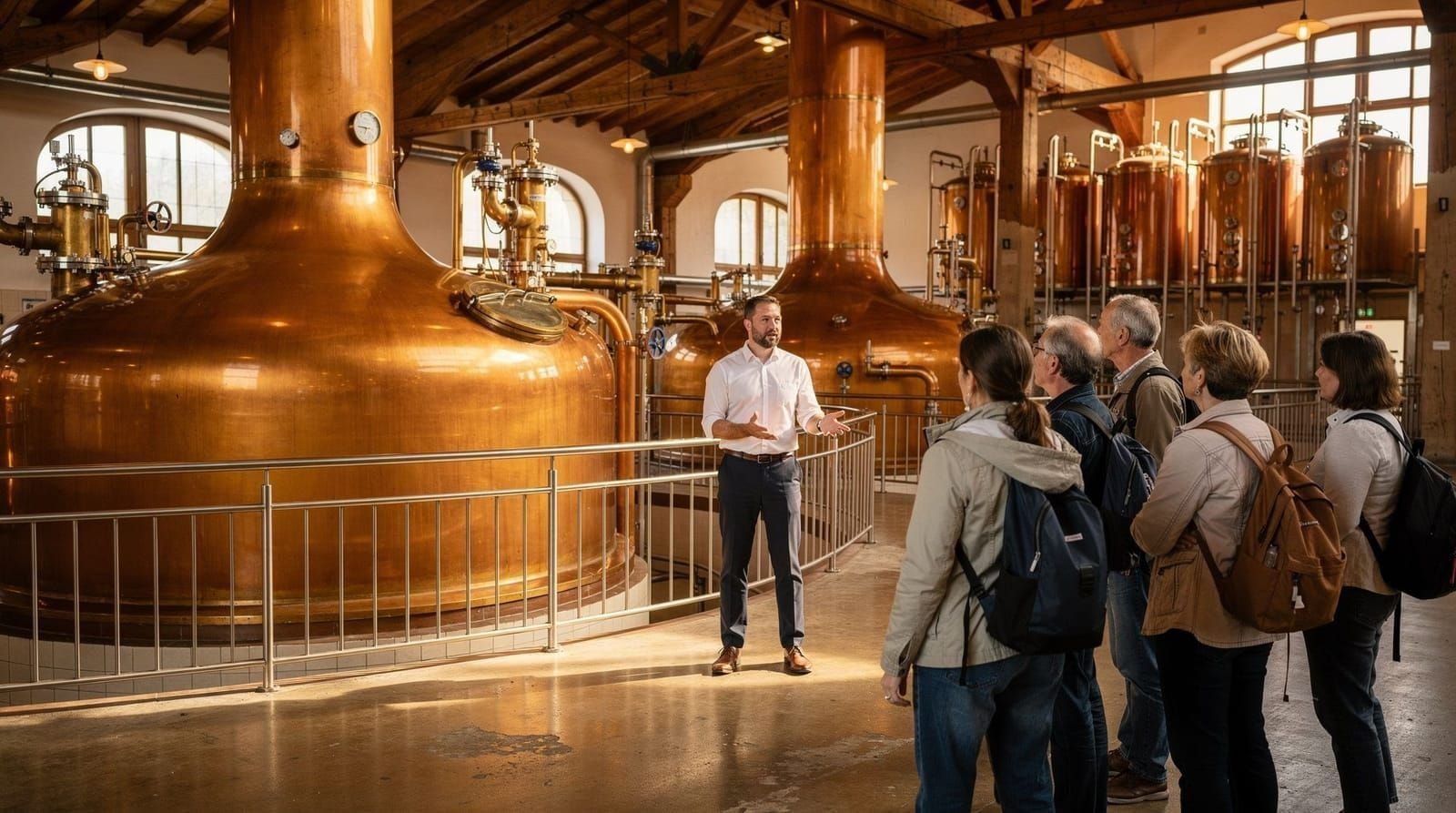
Augustiner does not offer regular public brewery tours. Hofbräuhaus has a small exhibit area but no full industrial tour. Several private tour operators run structured visits that include the Hofbräuhaus as part of a wider beer hall itinerary — see the Munich brewery tours guide for options.
What should I order besides beer?
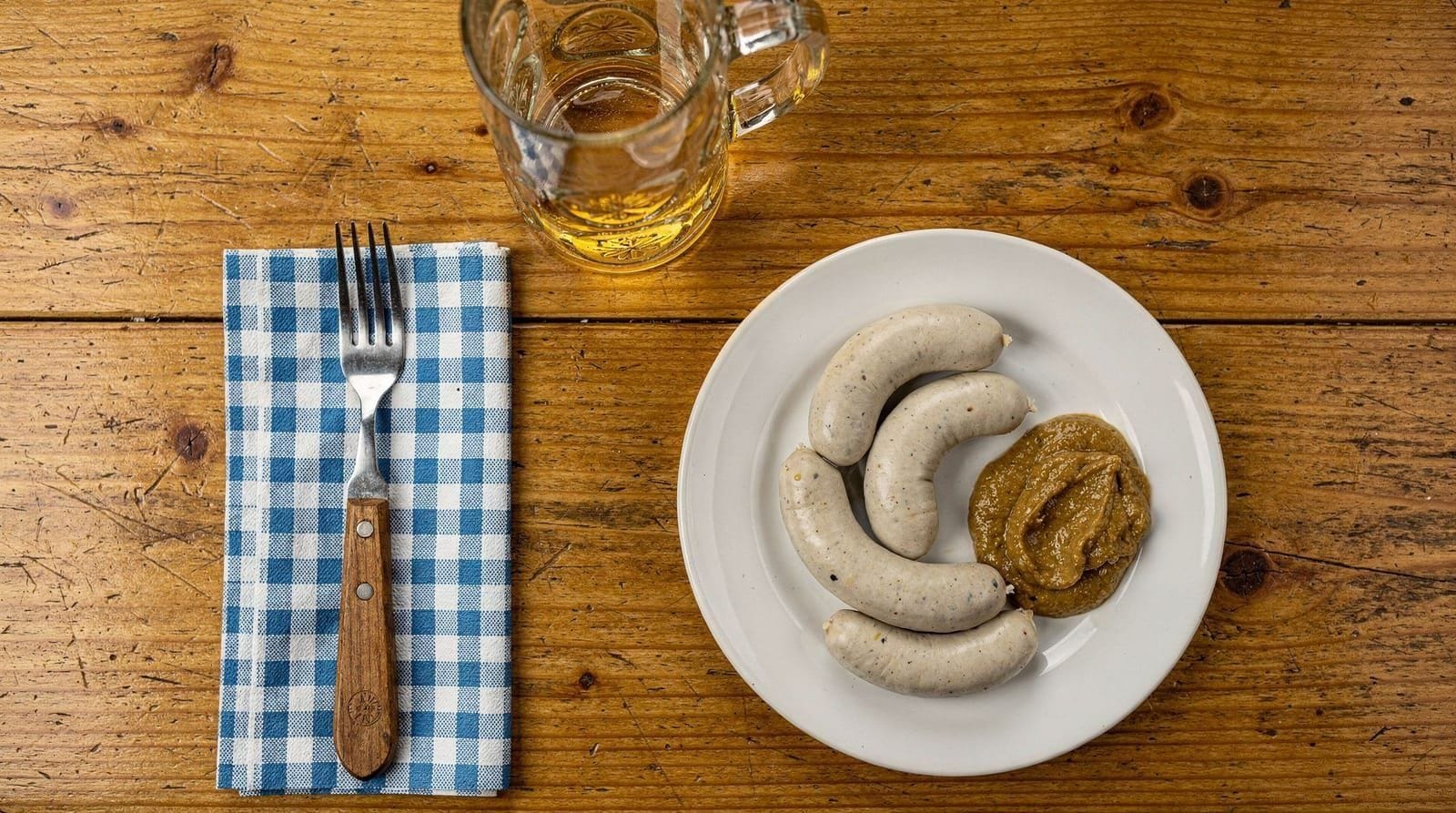
At either venue, Obatzda (a blend of soft cheese, paprika, and beer) with Brezn (pretzels) is the classic accompaniment. Weißwurst (white veal sausage, served before noon with sweet mustard) is the traditional Munich breakfast alongside a Weißbier. Rettich (white radish, sliced in a spiral) with salt is another classic beer garden snack found at many Munich venues. The best Bavarian food in Munich guide has more detail.
Does the Augustiner vs Hofbräu debate matter outside Oktoberfest season?
Yes — the comparison is a year-round Munich topic, not just a Wiesn one. Augustiner’s Maximator doppelbock is a highlight of Starkbierfest in March, while Hofbräu’s Weißbier is a strong pick any time of year. For the fuller rhythm of Munich’s beer calendar, see the Munich beer festivals calendar.
Which brewery is better for a first Oktoberfest visit?
Hofbräu-Festzelt is the easier entry point for first-timers — it’s large, welcoming to international visitors, and delivers the classic “Oktoberfest tent” atmosphere people expect. Augustiner-Festhalle rewards those who already know what they’re looking for, particularly the wooden-barrel serving tradition. Either way, book ahead: see the Oktoberfest guide for tent reservations and the Oktoberfest tickets and tables guide for how table bookings actually work.
Top experiences
Bookable activities with verified prices and instant confirmation on GetYourGuide.