Munich brewery tours — the complete guide for 2026
Munich: brewery tour at Paulaner Bräuhaus with beer tasting and snacks
Can you tour a real brewery in Munich?
Yes — Paulaner Bräuhaus at Am Nockherberg offers the best proper grain-to-glass tour (~€30–40, ~2h including tasting). For historical context, Hofbräuhaus runs a guided hall tour (~€20). Day trips to Weihenstephan in Freising (30 min by S1) and Andechs monastery (45 min) add genuine brewing heritage that Munich's city breweries can't match.
Six official breweries, one city — and surprisingly few tours
Munich is home to six breweries that hold the coveted right to serve beer at Oktoberfest: Augustiner, Paulaner, Hacker-Pschorr, Hofbräu, Löwenbräu, and Spaten. Between them they represent over seven centuries of brewing in this city. Yet if you arrive hoping to walk into a working production brewery and watch beer being made, you will quickly discover that most of them do not offer public tours at all.
This guide cuts through that gap. It covers exactly what you can actually see in 2026, what each option costs, what you genuinely learn from each one, and where to go outside the city if you want the full grain-to-glass experience — particularly Weihenstephan in Freising, which has been brewing since 1040, and Andechs monastery, where Benedictine monks have been serving beer since the 15th century.
For a full overview of Munich’s beer hall culture and how to navigate it, see our Munich beer halls guide. For the festival context, the Oktoberfest guide covers everything from dates to tent etiquette.
| Best real brewery tour | Paulaner Bräuhaus, Am Nockherberg (~€30–40, ~2h) |
| Best history-only tour | Hofbräuhaus hall tour (~€20) |
| Best day trip | Weihenstephan, Freising (30–35 min by S1, from ~€12–18) |
| Best beer garden (no tour) | Andechs monastery (45 min by S-Bahn + bus/walk) |
| Booking window | 3–6 weeks ahead for weekend summer/Oktoberfest slots |
| Language | German and English standard; other languages on private tours only |
The six official Munich breweries — histories and visitor access
Understanding what these breweries are, and what they aren’t, saves a lot of confusion when planning visits.
Augustiner-Bräu (Landsberger Straße 35) is Munich’s oldest surviving brewery, founded by Augustinian monks in 1328. It is the only one of the six that remains fully family-independent — no corporate ownership. Augustiner’s beer is widely regarded as the most traditional of the six, lightly carbonated and served from wooden barrels at Oktoberfest. The production facility on Landsberger Straße does not offer public tours. Your access to Augustiner is through their beer halls and the famous Augustiner-Keller beer garden on Arnulfstraße.
Paulaner (Hochstraße 77) was founded by Pauline monks in 1634 in the Am Nockherberg area south of the city centre. It is now owned by Heineken, though it maintains Munich production. Paulaner Bräuhaus, adjacent to the main brewery site, is where the public brewery experience actually happens — more on this below.
Hacker-Pschorr emerged from a brewery founded by Josef Pschorr in the late 18th century. The Hacker and Pschorr breweries merged in 1972; today both names appear under one legal entity, which shares ownership with Paulaner under the Heineken umbrella. Production is at the Paulaner site. No standalone visitor programme exists for Hacker-Pschorr.
Hofbräu München (Hofbräuallee 1, in the Haidhausen district) is the state brewery — founded by Duke Wilhelm V in 1589 as a private brewery for the Bavarian court. It was later opened to the public, and the Hofbräuhaus on Am Platzl became, over centuries, the world’s most visited beer hall. The production brewery in Haidhausen is a working industrial facility. A guided experience at the Hofbräuhaus itself — the hall and museum — is available and described below.
Löwenbräu (Nymphenburger Straße 7) dates from 1383. It has been part of the same ownership group as Spaten since 2003 and is now under AB InBev. The production site is in Munich’s west end. No public visitor programme.
Spaten-Franziskaner (Marsstraße 46) is one of Munich’s oldest commercial breweries, with roots in the 14th century. Spaten merged with Franziskaner-Leist in 1922. There is a small brewery museum at the Marsstraße site that can be visited by appointment (primarily for groups) — contact through Spaten directly. This is not a walk-in experience.
Paulaner Bräuhaus — the best proper brewery tour in Munich
If you want to see how beer is actually made in Munich, Paulaner Bräuhaus at Am Nockherberg is your clearest option. The Bräuhaus is a brewpub that sits alongside the main Paulaner production site, and its guided tours take you into the actual brewing facility — not a sanitised visitor centre with scale models.
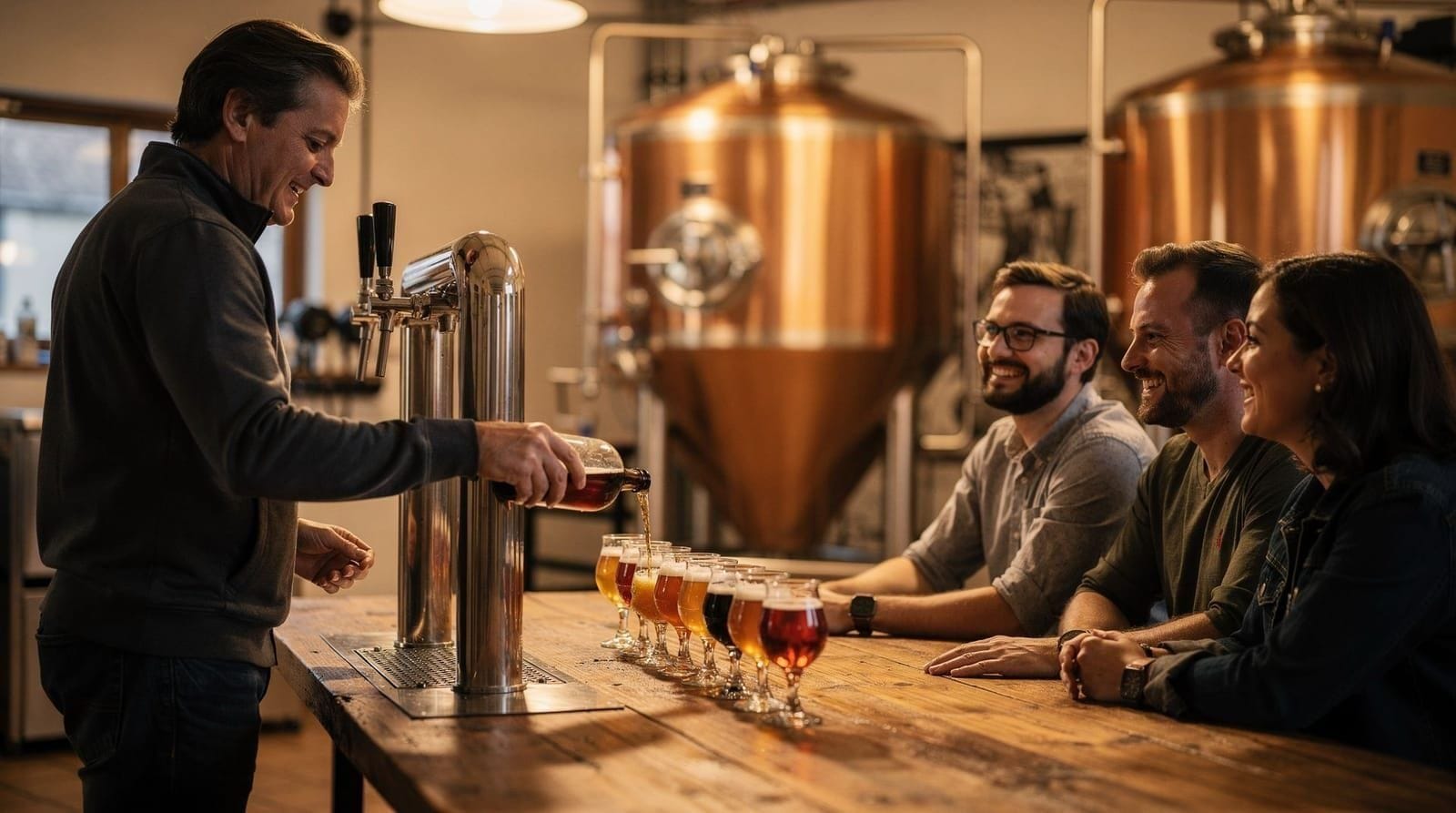
What’s included: Guided tours typically run for approximately 2 hours and cover the malting and grain process, the mash tuns and kettle brewing, primary fermentation, lagering in cool cellars, and the filtration and packaging stages. A tasting session at the end is included — usually 2–3 Paulaner beers with light snacks. The guide explains the Reinheitsgebot (the 1516 Bavarian purity law requiring only water, malt, hops, and yeast) in context of how Paulaner actually applies it.
Price: Approximately €30–40 per person in 2026, depending on the specific tour format and whether a meal is included. Private group tours with extended tastings run higher — €50–70 per person.
Booking: Tours run on fixed weekly schedules, with limited group sizes (typically 12–18 people). Book directly through the Paulaner Bräuhaus website or via guided tour platforms. Weekend slots fill 3–6 weeks ahead in summer and during Oktoberfest season.
Practical notes: The Am Nockherberg location is a 15-minute walk from Munich Hbf or accessible by tram 17 to Nockherberg. The Bräuhaus itself serves Paulaner’s full range, and it hosts the famous Starkbierfest every March — see our Starkbierfest guide for that specific event. Paulaner Bräuhaus brewery tour with tasting
Hofbräuhaus — a hall tour rather than a brewery tour
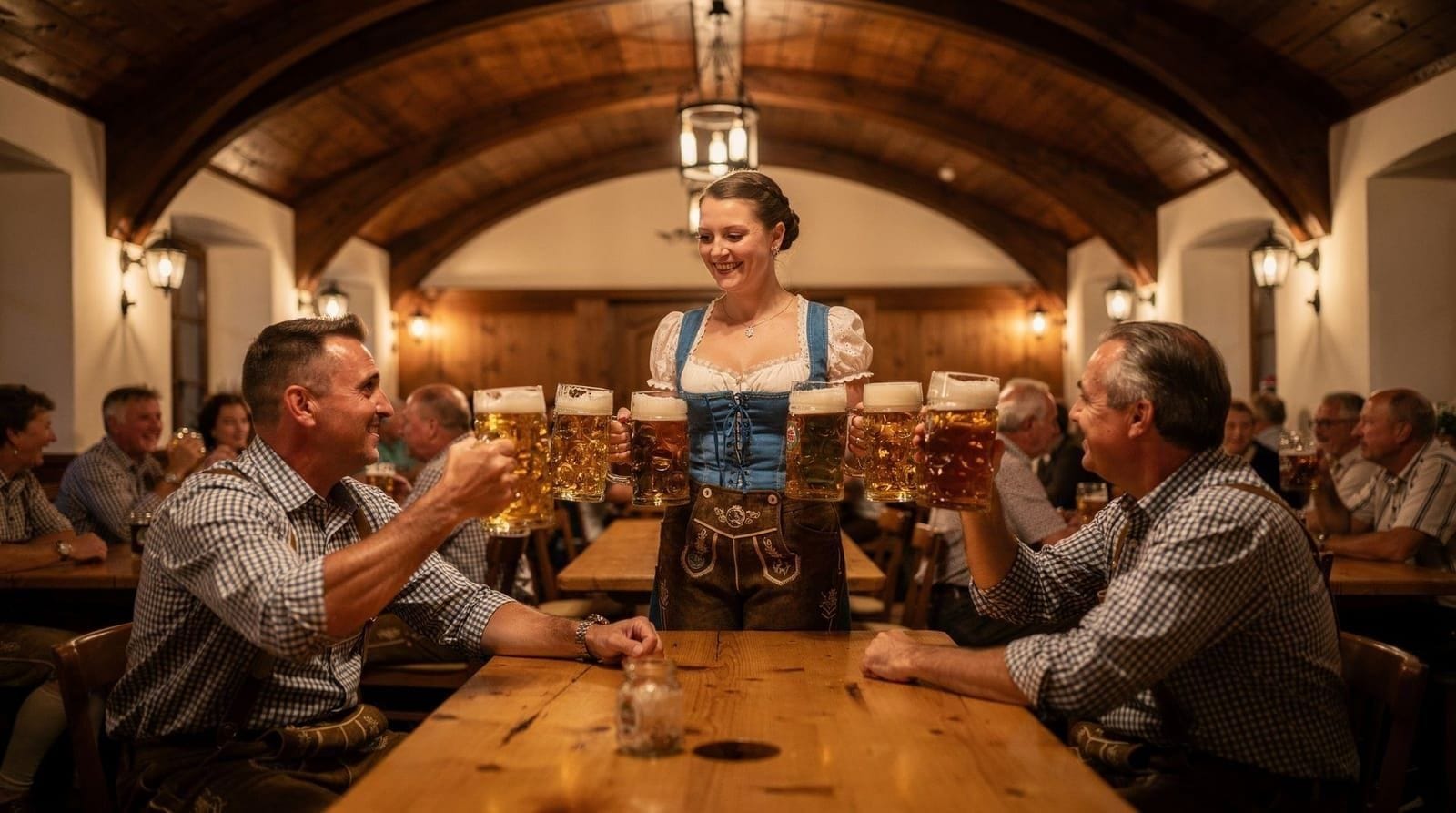
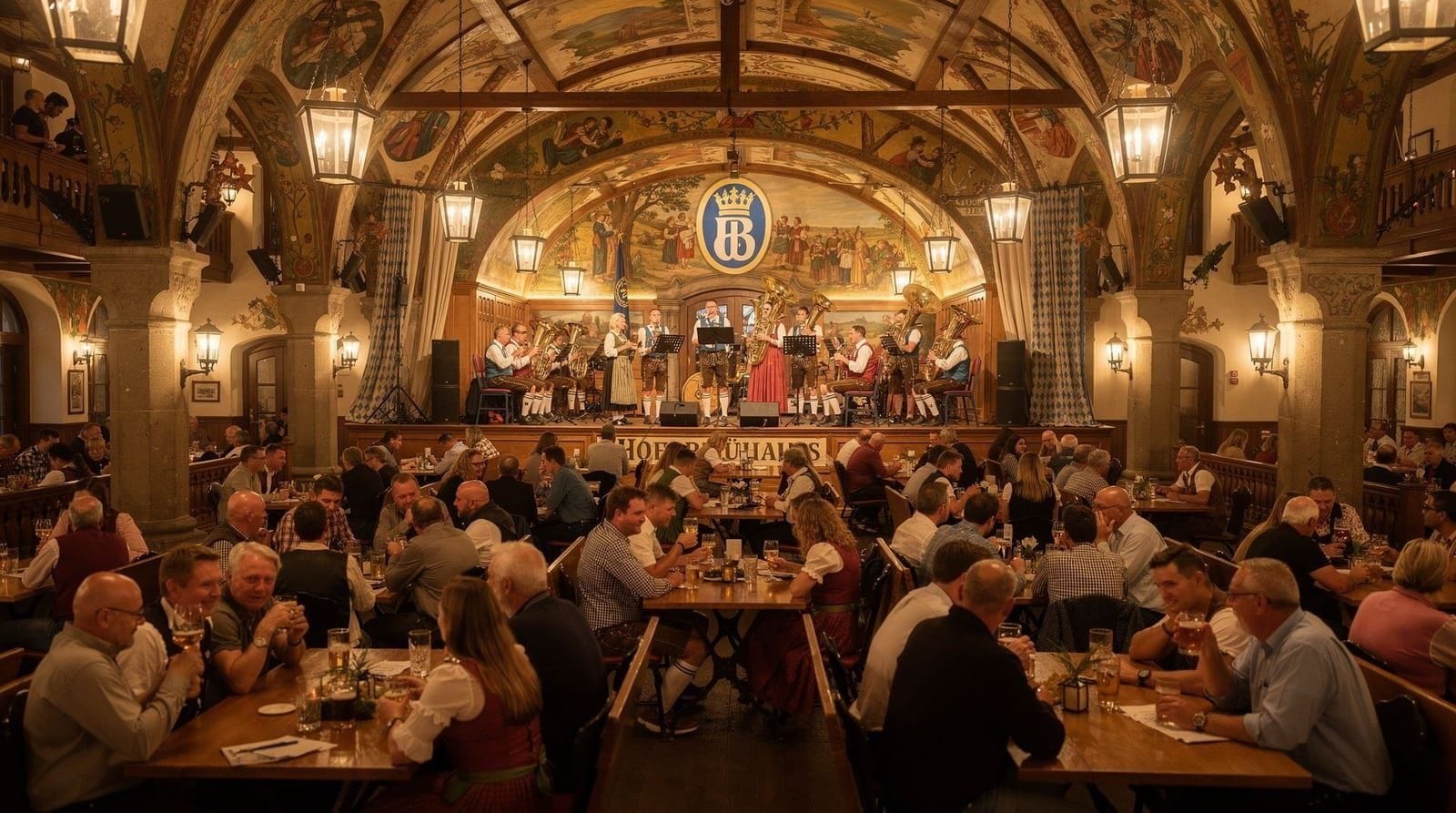
The Hofbräuhaus on Am Platzl is not a working brewery. Beer production moved out of the city-centre building long ago to the Hofbräu production facility in Haidhausen. What remains at Am Platzl is the historic beer hall, which is genuinely worth experiencing, but visitors should understand what they are getting.
The guided Hofbräuhaus tour (approximately €20 per person) focuses on the hall’s history: its construction in 1644, its role as a working-class social institution, the 1920 speech by Adolf Hitler in the Festsaal upstairs, the political turbulence of the Weimar years, and the hall’s post-war reopening and evolution into a tourist institution. The tour includes a Maß of beer.
What it is and isn’t: You will not see brewing equipment. You will get a well-researched history of one of the world’s most politically layered beer halls, told in a setting that genuinely looks the part. The Festsaal (first floor) is architecturally impressive and usually quieter than the ground floor main hall. For pure history, this is worthwhile. For brewing process, it is not.
The Hofbräuhaus guide covers the hall in full detail if you’re planning a visit.
Walking tours — beer history across multiple venues
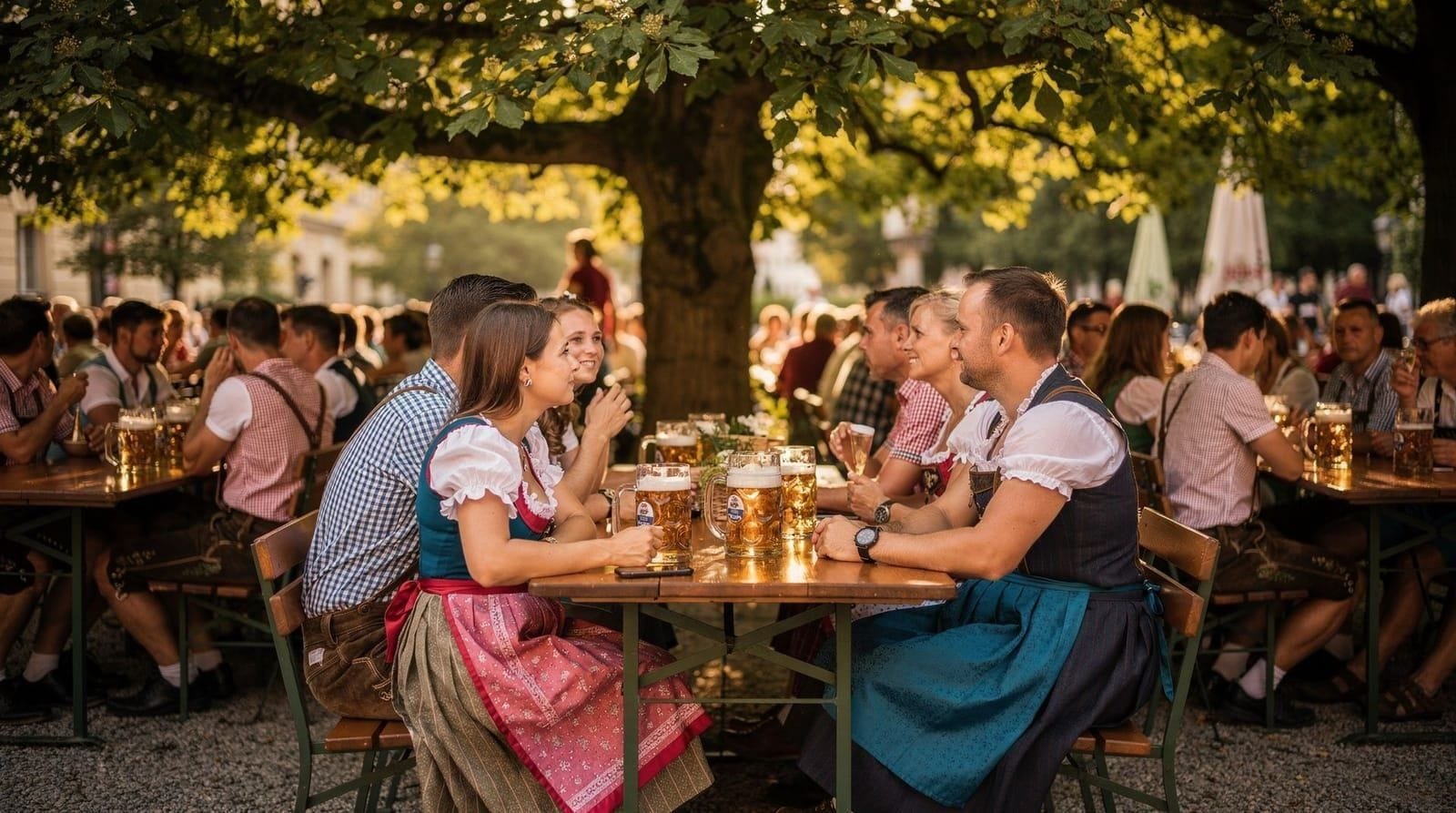
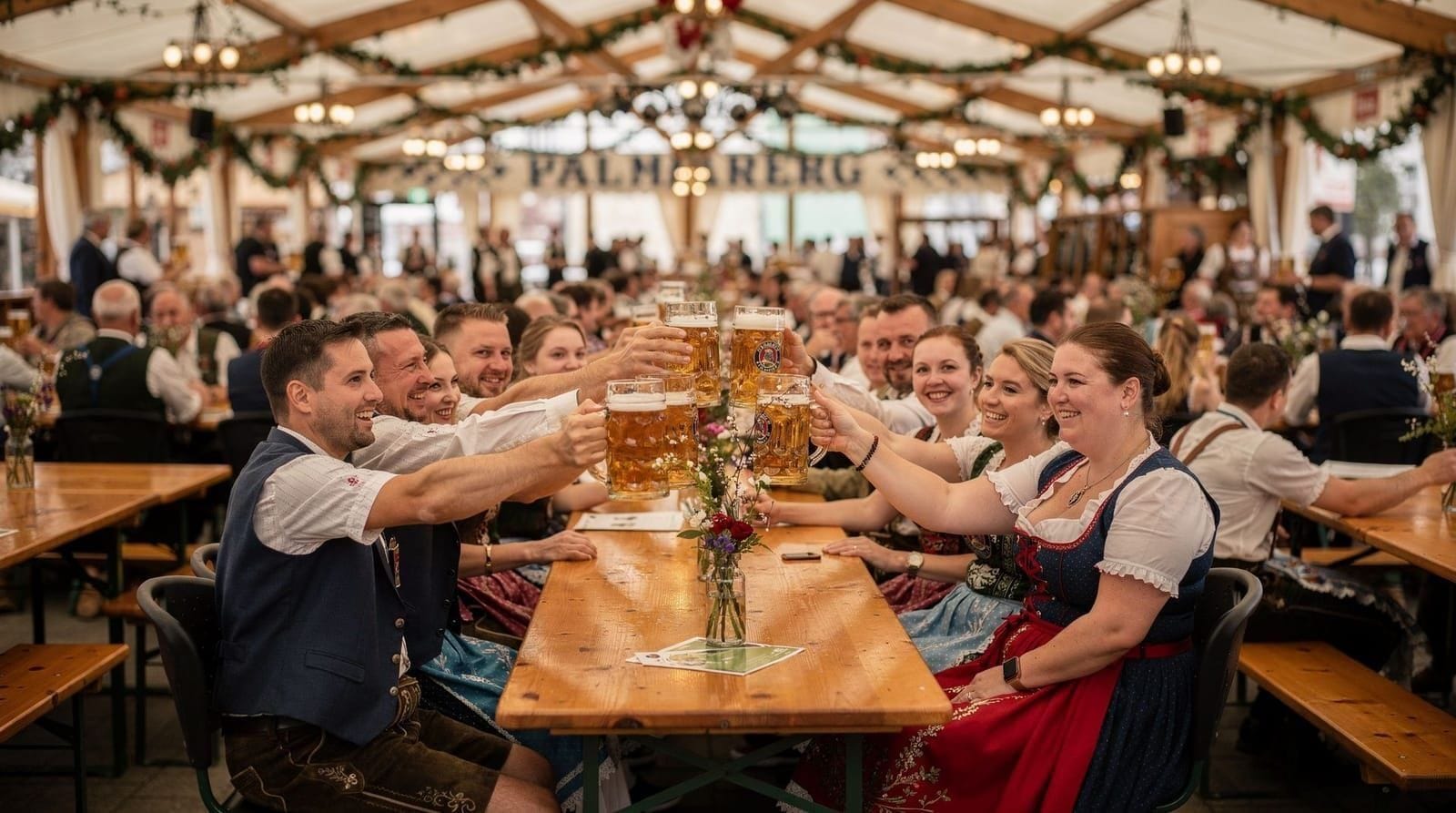
Munich’s guided beer walking tours are probably the most popular structured beer experience in the city, and for good reason: they move you through the beer hall landscape in a way that self-navigation rarely achieves on a first visit.
The typical format covers 3 to 4 venues over 3 hours, includes 2–4 tastings (usually half-litre portions), and weaves in the history of Munich’s brewing guilds, the Reinheitsgebot, the distinction between the six official breweries and smaller producers, and practical etiquette (how to signal a Brezn, why you don’t clink glasses at the bottom, what Gemütlichkeit actually means in practice).
The better-run tours include at least one stop that isn’t the Hofbräuhaus — Augustiner-Keller, Löwenbräukeller on Stiglmaierplatz, or Schlenkerla (though technically from Bamberg). The worst ones are a tourist circuit of the most photographed bars. Reading tour reviews for current-year quality is worth the time.
Price range: €25–45 per person for standard guided walking tours. Evening tours with a 3-course Bavarian meal included run €60–100. Group sizes vary from 8 to 20 people. Munich beer halls and breweries 3-hour guided tour
For beer hall etiquette before any of these tours, Munich beer hall etiquette is worth ten minutes of reading.
Private tastings and sommelier-led experiences
For those wanting a more focused educational session — particularly useful for people with genuine interest in beer styles, fermentation science, or the comparative character of Munich’s six main beers — private tasting sessions led by certified beer sommeliers are available.
These sessions typically take place in a dedicated tasting room or at the Oktoberfest Museum (Sterneckerstraße 2, near Isartor), which houses one of the better beer history exhibitions in the city. A sommelier walks you through 4–8 beers with structured tasting notes, explains the difference between bottom-fermented Lager, Märzen, Dunkel, and Helles, and covers the historical reasons why Munich’s beer culture developed differently from, say, Belgium or the UK.
Price: €45–70 per person for a private 2-hour session. Minimum group sizes of 2 apply on most private bookings. Munich private beer tasting at the Oktoberfest Museum
Evening beer hall hopping — 3 to 4 venues with food
A distinct category from the afternoon walking tour is the evening beer hall hopping experience: a guided itinerary of 3–4 Munich beer halls over 3–4 hours, moving through different styles of venue and including a 3-course Bavarian meal alongside the beer.
These tours work best as an introduction to Munich’s beer culture for first-time visitors, or as a structured social event for groups. The food component — usually Brezn, Obatzda, Weisswurst, and a main course like Schweinshaxe or Schnitzel — provides practical anchoring against the beer intake.
Good operators will vary the venue selection: one large traditional beer hall, one quieter Wirtsgarten, possibly one historic cellar. The worst are entirely in tourist zones. Ask before booking whether the tour includes the Hofbräuhaus as one of four stops — if it does, that’s a sign they’re optimising for convenience rather than quality.
For evening beer culture and Augustiner vs Hofbräu character differences, our comparison guide explains what to order where.
Day trip option: Weihenstephan in Freising
Weihenstephan is the practical choice if you want to visit what is widely cited as the world’s oldest continuously operating brewery. The documentation for brewing on this site dates to 1040 AD, though monastic activity on the Weihenstephaner hill goes back to the 8th century.
Today, Weihenstephan is owned by the Free State of Bavaria and operates as both a commercial brewery and an academic institution — the Technical University of Munich has a brewing and food technology faculty on-site, which means this is a place where actual brewing science is taught and researched, not just practised commercially.
Getting there: Take the S1 S-Bahn from Munich Hauptbahnhof towards Freising or Flughafen München. Journey time is approximately 30–35 minutes to Freising station. The brewery is a 15-minute uphill walk from the station.
Tours: Guided brewery tours run on weekdays and must be booked well in advance — the brewery is a working production and academic facility, and group sizes are strictly limited. Expect to pay €12–18 per person for a standard tour with tasting. The tour covers the complete production process, the history of the site, and typically ends in the Weihenstephaner restaurant, which serves their full range alongside traditional Bavarian food.
What’s genuinely educational: This is as close as most visitors get to a serious brewing science environment. The contrast between the modern production technology and the 1,000-year site history is striking and not something the Munich city tours can replicate.
Day trip option: Andechs monastery
Andechs is a Benedictine monastery on a hill overlooking the Ammersee lake, about 45 minutes from Munich. The monks have brewed beer here since the 15th century, and the monastery brewery continues to produce beer — Andechs Vollbier Hell, Doppelbock Dunkel, and the Bergbock among others — using the original spring water from the hill.
Getting there: S5 to Herrsching (last stop, approximately 50 minutes from Munich Hbf). From Herrsching, there is a bus service (line 951) that runs periodically to Andechs, or a pleasant 45-minute walk through meadows and forest. The walk is well-marked and most visitors in decent weather prefer it.
The experience: Unlike Paulaner or Weihenstephan, Andechs does not run public brewery tours. What it offers instead is the Klosterbräustüberl — the monastery pub — and a large outdoor terrace with views across the Ammersee valley. You order directly from the counter, carry your own beer, and sit in one of the best beer garden locations in Bavaria. A half-litre (0.5L) of Andechs Vollbier costs approximately €4.20 in 2026; a full litre runs about €8.
This is not an educational brewery visit. It is an exceptionally pleasant place to drink very good Bavarian beer on a hillside with monks in the background.
If you’re planning time in this area, the Andechs destination page covers the monastery and the Ammersee region.
Self-guided versus guided — honest comparison
The question of whether to book a guided tour or simply visit beer halls independently deserves a direct answer.
Self-guided costs: A Maß at Munich’s main beer halls and beer gardens costs approximately €10–13 in 2026. Three beers across an afternoon costs €30–40 — roughly the same as a guided walking tour — but you get no historical context, no curation of venues, and no help deciphering a menu that assumes you know what Weizenbock, Märzen, and Helles mean.
Where guided tours add value: First-time visitors benefit significantly from the historical framing, particularly for the political and social history that sits behind Munich’s beer culture. The Reinheitsgebot, the role of beer halls in Bavarian social life, the difference between the six official brewery characters — these are things that significantly change how you experience the beer you’re drinking.
Where self-guided is fine: If you already know your way around Bavarian beer styles, you’ve visited Munich before, or you’re simply going for a relaxed afternoon in a beer garden, the best beer gardens in Munich and the Viktualienmarkt beer garden guides give you enough to navigate independently.
For broader Munich planning, Munich trip planning guide and best time to visit Munich cover the seasonal context.
Booking tips for 2026
A few practical notes that apply to all of the above:
Book early for Paulaner and Weihenstephan. Both run fixed schedules with small group limits. Weekend slots in summer fill 3–6 weeks ahead. If you have a fixed travel date, book as soon as you confirm your Munich trip.
Oktoberfest season (September 19 – October 4, 2026): Every guided beer experience in Munich is harder to book during Wiesn. The Munich beer tasting tours guide covers what still runs during festival weeks and what books out months in advance.
Language: Most guided tours in Munich operate in German and English. If you need another language, confirm this when booking — private tours can usually accommodate French, Italian, or Spanish with advance notice.
Group size: Private brewery tours typically require a minimum of 6 people to run. If you’re a couple or solo traveller, public tour formats (walking tours, hall tours) are more practical.
Cancellation: Most operators accept cancellation 48 hours before the tour for a full refund. Check individual terms, particularly for private bookings during Oktoberfest where operators impose stricter policies.
Brewery tour and tasting prices at a glance (2026)
| Experience | Typical price per person | Duration |
|---|---|---|
| Paulaner Bräuhaus brewery tour with tasting | €30–40 (private €50–70) | ~2h |
| Hofbräuhaus guided hall tour | ~€20 | ~1h |
| Beer halls walking tour (3–4 venues) | €25–45 | 3h |
| Evening beer hall hopping with 3-course meal | €60–100 | 3–4h |
| Sommelier-led private tasting | €45–70 | 2h |
| Weihenstephan guided tour with tasting | €12–18 | ~1.5h |
| Andechs (no tour — pay only for what you drink) | €4.20–8 per beer | Open-ended |
Prices vary by season and group size; private and small-group formats sit at the top of each range. Cross-check the exact figure on the operator’s booking page before travelling, particularly for tours during Oktoberfest weeks when some operators apply a seasonal surcharge.
Which brewery experience actually fits you
The options above cover very different needs, and picking the wrong one is the most common mistake visitors make — booking a “brewery tour” expecting production and getting a history lecture, or vice versa.
| If you want | Book this | Skip this |
|---|---|---|
| To actually see beer being made | Paulaner Bräuhaus or Weihenstephan | Hofbräuhaus tour |
| The most famous name, hall history | Hofbräuhaus guided tour | Expecting production equipment |
| A structured first evening out | Beer hall walking tour (3–4 venues) | A single-brewery deep dive |
| Serious tasting and technical detail | Sommelier-led private tasting | A big-group walking tour |
| A pure beer garden afternoon, no lecture | Andechs monastery | Any of the paid tours above |
| Brewing science and the oldest site | Weihenstephan, Freising | Andechs (no tours run there) |
Deciding factor: if the word “tour” needs to mean production equipment and process to you, only Paulaner and Weihenstephan qualify. Everything else in Munich proper is a hall, a hopping circuit, or a tasting session dressed up as a “tour.”
Combining a brewery visit with the rest of your trip
A brewery tour rarely needs to stand alone. Paulaner Bräuhaus sits close enough to central Munich that a morning at the Deutsches Museum or a walk through Haidhausen pairs naturally with an afternoon tour and tasting. Weihenstephan and Andechs both work best as half-day excursions combined with a relaxed lunch rather than squeezed alongside a full Munich sightseeing day — factor in the S-Bahn journey time both ways when planning.
If your trip includes Oktoberfest itself, note that a Paulaner or Weihenstephan tour booked during Wiesn week competes for the same limited guide capacity as festival-goers wanting brewery context before their tent booking — book both well apart on your calendar rather than back to back.
Frequently asked questions about Munich brewery tours
Is there a free brewery tour in Munich?
No true production brewery tour is free. Some beer halls — particularly the Augustiner-Keller — offer self-guided exploration, and you can walk into any beer hall and read the historical plaques without paying, but access to working brewery facilities requires a paid guided tour. The Andechs monastery experience is effectively free (you pay only for what you drink) but it is not a brewery tour in the production sense.
What is the Reinheitsgebot and is it still enforced?
The Reinheitsgebot (German Beer Purity Law) was enacted by Duke Wilhelm IV of Bavaria in 1516 and required that beer be brewed using only water, malt, and hops (yeast was added to the list once its role was understood). Within Germany, the Reinheitsgebot is still enforced for beers produced and sold domestically. Imported beers and some craft beers sold under different categorisations are exempt. Munich’s six official breweries all brew to the Reinheitsgebot for their traditional ranges.
Can I tour the Spaten brewery at Marsstraße?
The Spaten-Franziskaner site at Marsstraße 46 has a small brewery museum that can be visited by appointment, primarily for groups. It is not a walk-in attraction. Contact Spaten directly through their corporate website if you are organising a group visit of 10 or more. The museum covers Spaten’s history from 1397 to the present AB InBev ownership.
What beer should I try on a Munich brewery tour?
Helles (pale lager, 4.7–5.0% ABV) is the definitive Munich style — light golden, malt-forward, subtly hoppy, extremely easy to drink. Most people who visit Munich and drink only Helles leave satisfied. Beyond that: Märzen (amber, medium-bodied, 5.5–6.0%, associated with Oktoberfest), Dunkel (dark lager, roasted malt, 4.5–5.5%), and Weissbier/Weizen (wheat beer, banana and clove esters, usually 5.0–5.5%). The augustiner vs hofbrau guide compares the two most distinctive house characters.
Are children allowed on brewery tours?
Children are generally permitted on walking beer history tours as observers, though tour operators set their own age policies. Paulaner Bräuhaus tours are adults-only (18+) as they are held in licensed premises with tasting components. Weihenstephan tours are also adult-only. For families, the Munich food tour guide covers mixed food and drink experiences that work with children.
Is a brewery tour worth it if I’m only in Munich for two days?
Only if beer is a genuine priority over the city’s other sights. A Paulaner Bräuhaus tour takes half a day once travel and tasting are included, which is a meaningful chunk of a short trip. If your time is tight, a shorter 3-hour beer halls walking tour delivers most of the cultural context in less time, leaving room for the Munich trip planning guide essentials like Marienplatz and the Residenz.
Do I need to book Andechs in advance?
No — Andechs has no tour to book because it does not run one; you simply turn up at the Klosterbräustüberl and order at the counter like any beer garden. The only planning that matters is the S5-to-Herrsching timing and, in poor weather, checking whether the connecting bus (line 951) is running, since the alternative is a 45-minute walk.
Top experiences
Bookable activities with verified prices and instant confirmation on GetYourGuide.