Best time to visit Munich: month-by-month guide for 2026
Munich: Oktoberfest tour with tent reservation, food and beer
When is the best time to visit Munich?
May, June, and September are the best months to visit Munich — warm weather, manageable crowds, and reasonable hotel prices. Avoid Oktoberfest dates (September 19 – October 4, 2026) unless the festival itself is the goal. December is excellent for Christmas markets but cold. January through March is low season with low prices.
Munich is a year-round destination — every season has something genuine to offer — but the experience varies enormously depending on when you go. The month you choose affects not just the weather but the price of accommodation, the character of the crowds, and which activities are at their best. This guide breaks it down month by month with honest trade-off analysis.
| Best months | May, June, September |
| Avoid unless intended | Oktoberfest dates (Sept 19–Oct 4) for hotel prices/crowds |
| Cheapest months | January–March, hotel prices 40–50% below summer |
| Warmest lakes | July–August, water 20–23°C |
| Christmas markets | Late November to December 24 |
Munich’s climate at a glance
Munich sits at 520 metres above sea level in a wide basin south of the Alps. The Alpine proximity means weather is changeable — sunny mornings can give way to afternoon thunderstorms in summer, and the Föhn wind (a warm, dry Alpine wind) can bring unusually warm days in autumn and spring with striking atmospheric clarity. In winter, cold air from the Alps can settle into the basin and create conditions that feel colder than the temperature suggests.
Average monthly highs and precipitation:
| Month | Avg high | Precipitation | Notes |
|---|---|---|---|
| January | 2°C | 48mm | Cold, short days, low-season |
| February | 4°C | 42mm | Still cold; Fasching (Carnival) |
| March | 9°C | 55mm | Variable; early spring |
| April | 14°C | 57mm | Improving; Frühlingsfest opens |
| May | 19°C | 85mm | Excellent; beer gardens open |
| June | 22°C | 100mm | Peak warmth begins |
| July | 24°C | 107mm | Hottest month; crowded |
| August | 24°C | 100mm | Still hot; late-season rush |
| September | 19°C | 76mm | Best balance pre-Oktoberfest |
| October | 13°C | 57mm | Oktoberfest; cooling quickly |
| November | 6°C | 58mm | Grey; pre-Christmas quiet |
| December | 2°C | 53mm | Christmas markets |
Spring: April and May
April is transitional. Weather is improving but unpredictable — cold spells can persist into mid-April. The Frühlingsfest (Munich Spring Festival) runs at Theresienwiese from late April, a smaller, local version of Oktoberfest with significantly shorter queues and lower hotel prices. If you like folk festival atmosphere without the international crush, the Frühlingsfest is worth considering.
May is excellent. Average temperatures reach 19°C, beer gardens begin filling, and the Englischer Garten is at its most visually appealing — chestnut trees in bloom, the creek surfers at Eisbach, and long evenings. Hotel prices are reasonable compared to summer peak. May is arguably the most underrated month for Munich.
Early summer: June
June is warm (averaging 22°C) with long days. The city is busy but not at peak summer saturation. Outdoor sights — Nymphenburg Palace gardens, the English Garden, Lake Starnberg — are at their best. Beer gardens operate in full swing from late afternoon, and evening temperatures are comfortable enough to sit outside until 21:00 or later.
Rain is possible in June, usually in short afternoon thunderstorms that clear quickly. Carry a light waterproof. Hotel prices are elevated from June onward — expect to pay 20–30% more than April/May.
Peak summer: July and August
Munich’s high season. Temperatures regularly reach 25–28°C, and the surrounding lakes — Starnberger See, Ammersee, Tegernsee — are warm enough to swim. The Alps are in their prime hiking season, with high-altitude trails snow-free and the Zugspitze accessible without specialist equipment.
The trade-offs are significant. Hotels are at their most expensive (30–50% above shoulder season). The major attractions — Neuschwanstein, Deutsches Museum, Nymphenburg — are at their busiest. If you visit Neuschwanstein in July or August without pre-booked tickets, expect frustration.
Practical advice for summer: Book accommodation at least 6–8 weeks ahead. Buy Neuschwanstein tickets online before you travel. Start sightseeing early (museum opening time, typically 09:00–10:00) to beat tour groups. Use the lakes as afternoon relief from the city heat.
The September window: September 1–18
September 1–18 is the best-kept secret in Munich travel. The weather is typically still warm (averaging 19°C), the summer crowds have thinned, and hotel prices begin to drop from August peaks. Beer gardens are in full operation, the Alps are excellent for day trips, and the city has a particularly pleasant energy as the local rhythm resumes after school holidays.
The catch: Oktoberfest reservation dates. Munich hotels know exactly what is coming on September 19, so accommodation rates for September 15–19 are already elevated. Book well ahead if you want this window.
Oktoberfest: September 19 – October 4
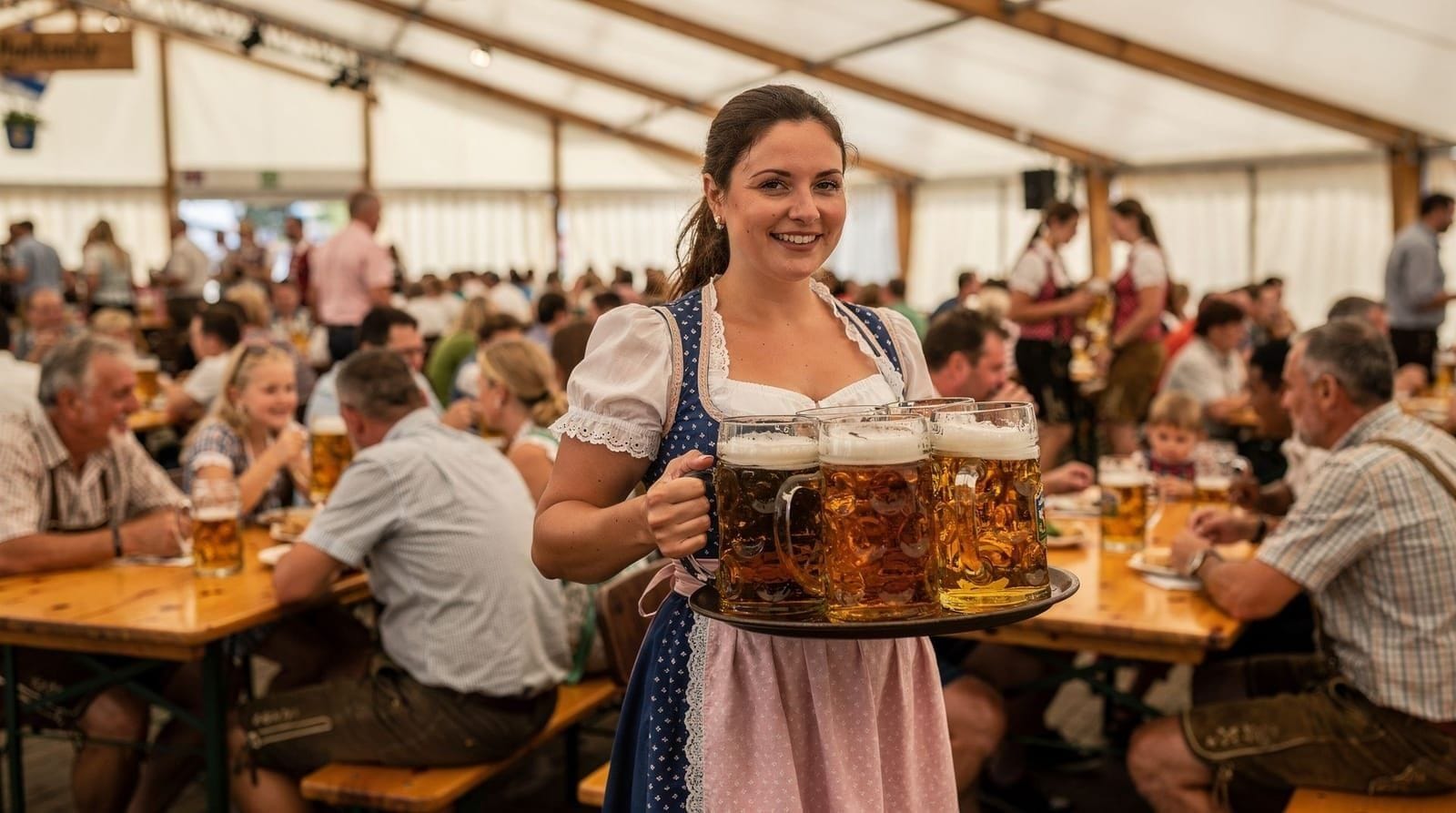
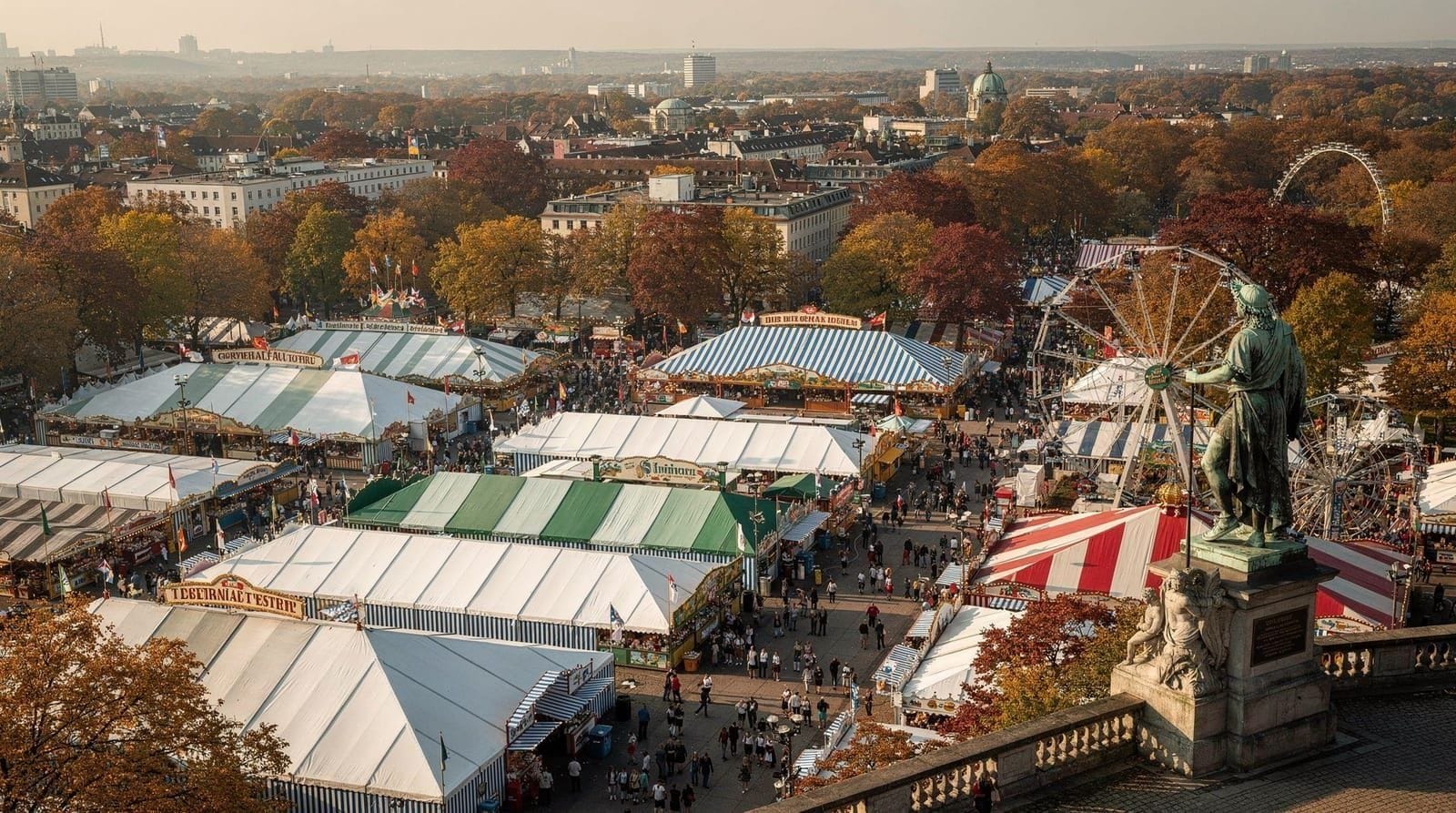
Oktoberfest is the most significant event in the Munich calendar and the one that most shapes visitor planning. The festival itself — six million visitors over 16 days at the Theresienwiese — is genuinely extraordinary if the festival is what you came for. The Oktoberfest guide and best time for Oktoberfest cover the festival in full.
If Oktoberfest is not your primary interest, these two weeks are best avoided. Hotels within central Munich are 200–400% above normal prices. The city is extremely crowded. Most public transport is packed for much of the day. Munich Oktoberfest with reserved tent table, food and beer — guaranteed seating
Autumn: October (post-Oktoberfest) and November
From October 5 (the day after Oktoberfest closes) onward, Munich immediately returns to normal. Hotel prices drop sharply, crowds thin, and the city takes on an autumnal character — golden light in the English Garden, fallen leaves along the Isar, warm interiors in traditional restaurants.
Mid-October through November is undervalued by many visitors. The daytime temperatures (10–13°C in mid-October, falling to 5–8°C in November) are brisk but manageable. Indoor attractions are at their least crowded. The Residenz, Alte Pinakothek, and Lenbachhaus can be visited in near-solitude on a November weekday.
November is grey and can feel heavy. The real draw of November is the beginning of pre-Christmas atmosphere in the second half of the month, when the Christmas markets set up.
December: Christmas markets
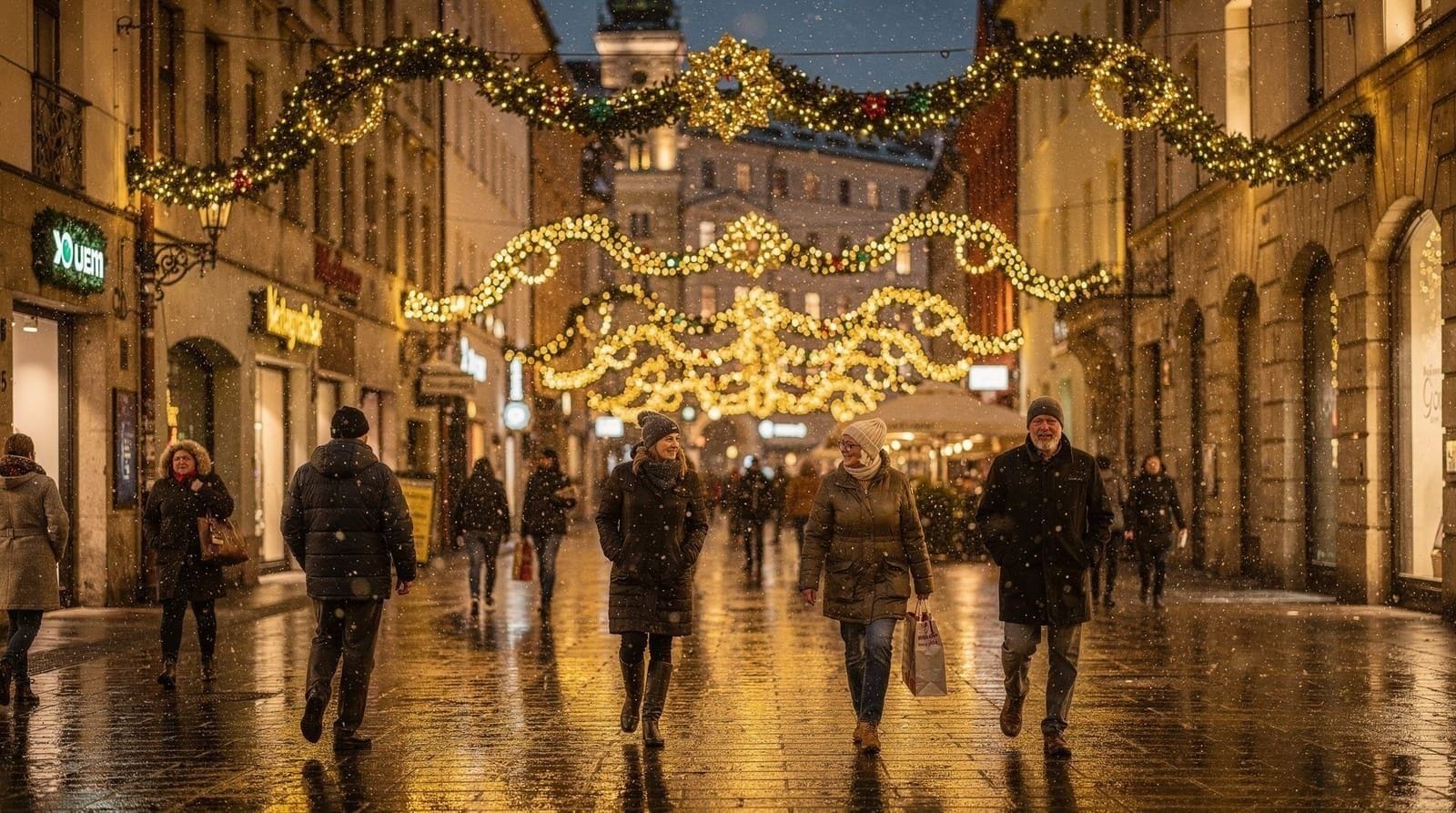
Munich’s Christmas markets are among the best in Germany — less relentlessly commercialised than some and anchored in a genuine tradition. The main Christkindlmarkt on Marienplatz runs from late November to December 24, as does the medieval market near the Residenz and the Tollwood Winter Festival at Olympiapark.
December 1–24 in Munich is a genuinely magical experience for those who enjoy the Christmas market atmosphere: warm Glühwein, roasted chestnuts, hand-crafted decorations, and Munich’s impressive Altstadt as a backdrop. Temperatures are cold (averaging 2°C) but the markets create their own warmth. Hotel prices are moderate — elevated compared to January–March, but nothing like Oktoberfest rates.
December 25–31 is quiet and cold, with many restaurants and attractions operating on reduced hours.
Winter low season: January–March
January through early March is Munich at its quietest and cheapest. Hotel prices can be 40–50% below summer rates. The Deutsches Museum, Pinakothek museums, and Residenz are as impressive in winter as summer and far less crowded. The Fasching carnival season peaks in February with parades and events.
For skiers, this is the peak season for Garmisch-Partenkirchen and the surrounding Alpine resorts, accessible by direct regional train.
The honest trade-off: Munich in January is cold, often grey, with days that end before 17:00. Beer gardens are closed. Outdoor sightseeing requires appropriate clothing. But for those who prioritise museums and cultural depth over outdoor atmosphere, winter is a surprisingly good time.
Event calendar for 2026
| Date | Event |
|---|---|
| Late April | Frühlingsfest (Spring Festival at Theresienwiese) |
| May–September | Beer gardens fully operational |
| June | Streetlife Festival, Mariahilfplatz |
| July–August | Tollwood Summer Festival, Olympiapark |
| September 19 – October 4 | Oktoberfest 2026 |
| Late November | Munich Christmas markets open |
| December 24 | Christmas markets close |
| December 31 | New Year at Marienplatz |
What to know about Alpine day trips by season
The Zugspitze and other Alpine day trips from Munich operate year-round but the experience differs significantly:
- Summer (June–September): Hiking season; high trails accessible; lakes warm for swimming; Zugspitze glacier viewable without ski equipment
- Autumn (October): Foliage season; larch forests turn gold; fewer hikers; excellent photography conditions
- Winter (December–March): Ski season at Garmisch; Zugspitze ski area open; cable cars and trains operate normally; summit is colder and more exposed
- Spring (April–May): Variable; snow can linger at altitude; mid-May onward is reliable for moderate hiking
Planning around Munich’s major annual events
Beyond Oktoberfest and Christmas markets, Munich’s calendar has events that affect the visit experience:
Fasching (Carnival): February–March. Bavaria’s carnival season is more restrained than Cologne or Düsseldorf but includes parades in the Altstadt and costume events in bars and restaurants. The Faschingsdienstag (Shrove Tuesday) is the main day, with street parades.
Frühlingsfest (Spring Festival): Late April–early May, at Theresienwiese (the same grounds as Oktoberfest). Often called the “mini-Oktoberfest” — much smaller, mainly attended by locals, with shorter queues and lower hotel prices. Beer is the same Bavarian quality; the fairground is smaller but entirely manageable. This is the best Oktoberfest-style experience for visitors who cannot attend in September.
Starkbierfest: March, at various Munich brewery venues. The “Strong Beer Festival” features Starkbier (6.5–7.5% ABV double bock beer), traditional performances, and fewer tourists than Oktoberfest. The Paulaner am Nockherberg is the most famous venue. The Starkbierfest guide covers this event in detail.
Tollwood Summer Festival: June–July, at Olympiapark. Arts, world music, organic food, and an alternative-to-Oktoberfest atmosphere. Popular with local Munich residents and international visitors interested in world music and arts.
Long Night of the Museums (Lange Nacht der Museen): October. Dozens of Munich museums open until midnight, covered by a single ticket. One of the best-value cultural evenings in the Munich calendar.
Munich Opera Festival (Opernfestspiele): July, at the Bayerische Staatsoper (Bavarian State Opera). The opera house presents its major productions during this three-week festival. Tickets sell out months in advance — book well ahead if this is a priority.
For full scheduling of these events, the Munich Tourism website (muenchen.de/tourism) is the authoritative source with confirmed dates each year.
The Föhn effect: Munich’s unique weather phenomenon
The Föhn is a warm, dry Alpine wind that periodically blows north through the Alps into the Munich basin, particularly in spring and autumn. Its effects on Munich are distinctive:
What it does: Brings unusually warm temperatures (15–20°C in late autumn when surrounding regions are cold), exceptionally clear visibility — on Föhn days, the Alps are visible from Munich with photographic clarity, a sight that shocks visitors not expecting mountains on the city skyline — and a particular quality of sharp, bright light.
How to use it: If a Föhn day coincides with your visit, it is the ideal day for viewpoints (Peterskirche tower, Olympiaturm) where the Alpine panorama is visible. It is also excellent for the Zugspitze day trip, where the clear air makes the views from the 2,962m summit extraordinary.
The downside: Some people experience Föhn headaches — a physiological response to the pressure change and dry air. Staying hydrated helps. The effect is not severe enough to derail a trip, but worth knowing about.
Föhn conditions are not predictable far in advance. Check the Munich weather forecast the day before and look for “Föhn” in the forecast — if the Alps are unusually visible on arrival day, take advantage of viewpoints and day trips before the weather shifts.
Choosing your month by what you want to do
For visitors deciding purely by interest rather than by the calendar:
Beer gardens as the priority: May through September, with May and June offering the best combination of good weather and lower prices before the summer peak.
Alpine day trips and hiking: June through September for high-altitude trails; the Zugspitze day trip guide and Garmisch hiking guide cover trail conditions by month.
Museums and indoor culture: November through March, when the Residenz, Pinakothek museums and Deutsches Museum are at their quietest and most enjoyable.
Christmas market atmosphere: Early-to-mid December, avoiding December 24 (closing day, crowded) and the days immediately after Christmas (many markets closed).
Oktoberfest specifically: September 19–October 4, 2026, ideally on a weekday in the first ten days — see the best time for Oktoberfest guide for a full day-by-day breakdown.
Skiing and winter Alps: December through March at Garmisch-Partenkirchen, with the Zugspitze ski area typically open into April in good snow years.
Booking lead times by season
Accommodation and ticket lead times vary significantly across the year:
| Period | Hotel booking lead time | Neuschwanstein tickets |
|---|---|---|
| July–August | 6–8 weeks | Book online weeks ahead |
| Oktoberfest (Sept 19–Oct 4) | 3+ months | Book online well ahead |
| May–June, September | 2–4 weeks | Book a few days ahead |
| October–March | 1–2 weeks, often less | Walk-up usually fine |
Frequently asked questions about the best time to visit Munich
Is Munich too hot in summer?
Munich is rarely uncomfortably hot by Central European standards. July and August temperatures of 25–28°C are warm rather than oppressive, and evenings are cool. The lakes around Munich provide easy relief. Compared to southern Europe, Munich summer heat is manageable.
What should I avoid in Munich?
Avoid central Munich during Oktoberfest if you are not attending the festival — prices and crowds are at their worst. Avoid scheduling the Neuschwanstein day trip on a weekend in July or August without pre-booked tickets. Avoid arriving by car for Oktoberfest — Munich’s public transport is far more practical.
How does the Föhn wind affect visiting Munich?
The Föhn is a warm, dry Alpine wind that periodically affects Munich, particularly in spring and autumn. It produces exceptionally clear air and can make the Alps visible from the city with striking clarity — a rare condition worth taking advantage of for photography and Alpine day trips. Some people experience headaches during Föhn conditions; it is not severe enough to derail a trip.
Can I swim in lakes near Munich?
Yes, throughout July and August. The closest are Starnberger See (30 minutes by S6 S-Bahn), Ammersee (40 minutes by S8), and Tegernsee (60 minutes by BOB regional train). All have public beaches. Water temperatures reach 20–22°C in summer.
Is it worth visiting Munich for just a weekend?
A weekend (Saturday–Sunday arrival) gives you roughly 36–40 hours, which covers the main Munich sights comfortably: Marienplatz, English Garden, either Nymphenburg or the Residenz (not both in depth), and at least one good beer garden or hall. A day trip is not realistic on a weekend. For Neuschwanstein or the Alps, a minimum of 3–4 days is needed.