Ammersee — Bavaria's quieter lake and Andechs hill
Ammersee is a calmer alternative to Starnberger See — reach Herrsching by S8, hike to Andechs Monastery, sail, swim, and escape Munich's crowds in 45
Munich: Bavarian beer walking tour with samples and food
Quick facts
- Distance from Munich
- 35 km west
- By S-Bahn
- S8 from Munich Hbf → Herrsching, approx. 45 min
- Lake size
- 47 km², depth up to 82 m
- Andechs hike
- 6 km return from Herrsching, ~90 min one way
- Swimming season
- June–September (water 18–21°C peak)
Bavaria’s lake for people who don’t like crowds
The Ammersee is 10 km shorter and about 15 minutes further from Munich than the Starnberger See. This single fact produces most of its appeal: the beaches are quieter, the waterfront restaurants are less hectic, the cycling is more peaceful, and the villages around the shore have not been entirely bought up by wealthy Munich commuters. It is a working lake — there are still commercial fishermen — rather than an amenity lake.
Quick answer: Ammersee is the best choice when you want a lake with hiking attached. The S8 S-Bahn runs to Herrsching on the north shore in 45 minutes from Munich, and from Herrsching a well-marked pilgrim path climbs through forest to the Andechs Monastery, one of the most atmospheric hilltop abbeys in Bavaria. The combination — lake in the morning, monastery and brewery in the afternoon — is one of the most satisfying day trips available from Munich by public transport.
| Where | Herrsching am Ammersee, 35 km west of Munich |
| Cost | MVV day ticket around €15.40, plus €4 beach entry and €10 for a Mass at Andechs |
| Time needed | Full day (7–9 hours) for lake plus Andechs hike; half day for lake only |
| Getting there | S8 S-Bahn from Munich Hbf to Herrsching, around 45 min, every 20 min |
| Best time | June and September for warm water with fewer crowds |
Getting to Ammersee
The S8 S-Bahn line from Munich Hauptbahnhof to Herrsching am Ammersee takes approximately 45 minutes with departures every 20 minutes during the day. The S8 also stops at intermediate stations serving the east shore at Weßling and Seefeld-Hechendorf, though Herrsching is the main terminus and most useful entry point.
Ticket options: An MVV day ticket for the full network (covering all S-Bahn zones within the Greater Munich area) costs around €15.40 per adult and is valid for unlimited return travel. Alternatively, the Bayern-Ticket (€29 for one person, +€6 each additional) covers the S8 and any connecting buses, and includes the Ammersee ferry services.
By car: The B2 road connects Munich to Herrsching via Starnberg — approximately 40 km, usually 40–50 minutes. Parking in Herrsching fills quickly on summer weekends; the lakeside car park (€3–5 per day) has limited capacity. Coming by S-Bahn avoids this problem entirely.
Boat services on the lake: Bayerische Seenschifffahrt runs passenger ferries from Herrsching south along the west shore to Dießen am Ammersee (journey approximately 1 hour). The ferry stops at several villages — Utting, Schondorf, Buch, and Dießen — and provides an easy way to see more of the lake without cycling the whole perimeter. Fares: Herrsching to Dießen approximately €9 single, €14 return.
Herrsching am Ammersee
Herrsching is a small Bavarian town of about 10,000 people that serves as the gateway to the lake. The centre is 5 minutes’ walk from the S-Bahn station and the lakefront is a further 3 minutes beyond that. There is a small harbour with rowing boat hire, a fish restaurant (Fischmeister, directly on the waterfront, Renke and Forelle dishes at €18–24), and the Kurpark — a lakeside park with lawns and benches where Munich residents stake out their afternoon spots on warm Sundays.
The Kunsthaus Herrsching gallery (Herzog-Wilhelm-Strasse, open Thursday–Sunday) is a small municipal gallery specialising in the 19th-century Ammersee landscape painters who worked here — less well-known than the Chiemsee painters but worthwhile for those with an interest in German Romantic landscape painting.
The Ammersee Klärwerk wetland park north of town is an unusual site: a restored wetland created around the sewage treatment plant that is now one of the best birdwatching locations in Bavaria (free entry, boardwalk trails, information panels). It sounds uninviting; it is genuinely worth 30 minutes if you have binoculars.
The Andechs Monastery hike
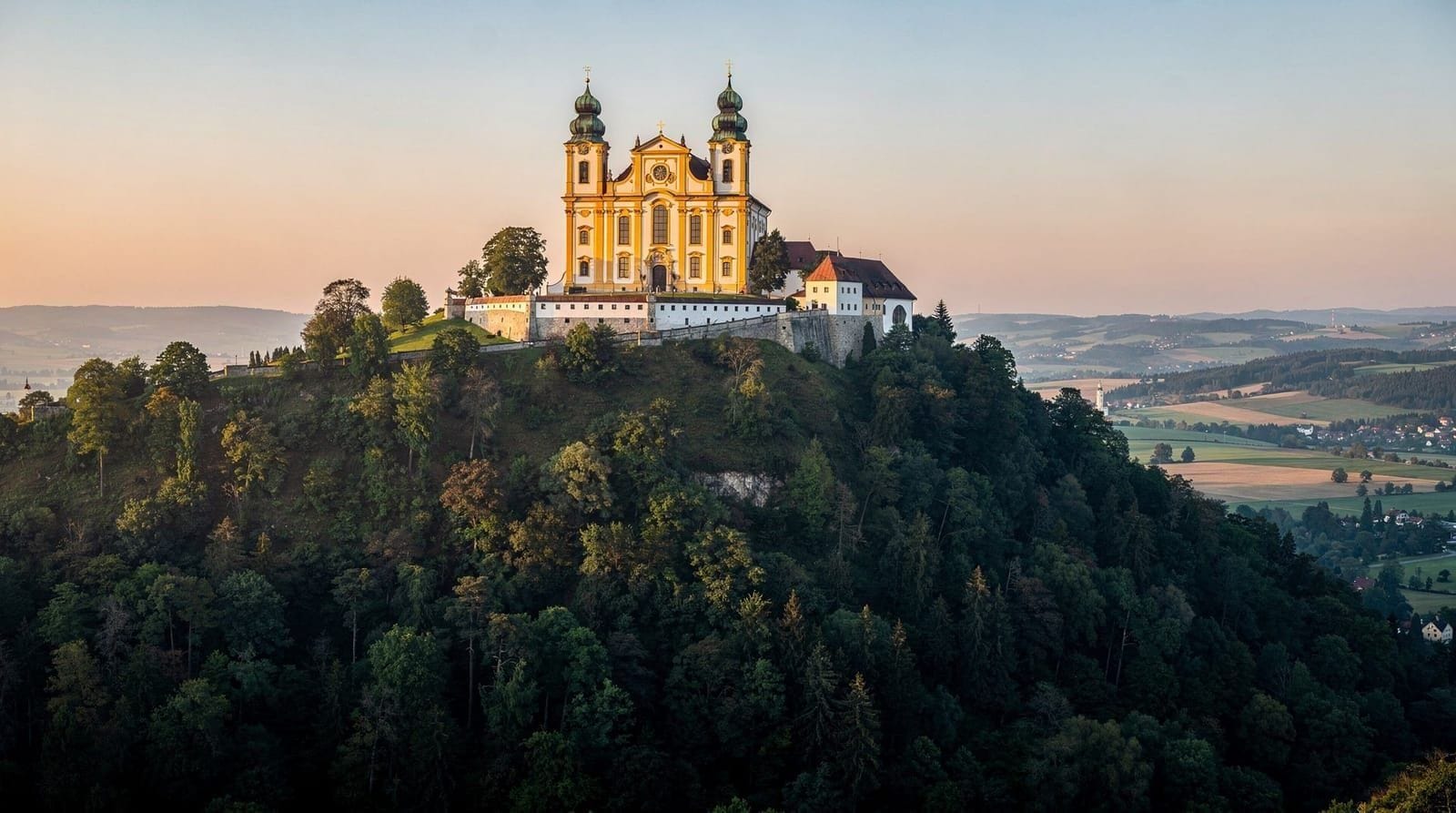
From Herrsching station, the signed pilgrimage path to the Andechs Monastery (Wallfahrtskirche Andechs) climbs 200 metres through forest to the Heiliger Berg (Holy Mountain) above the lake. The one-way distance is approximately 6 km; allow 90 minutes to walk it comfortably, 75 minutes if you are moving faster. The path is well marked throughout and avoids roads for most of its length.
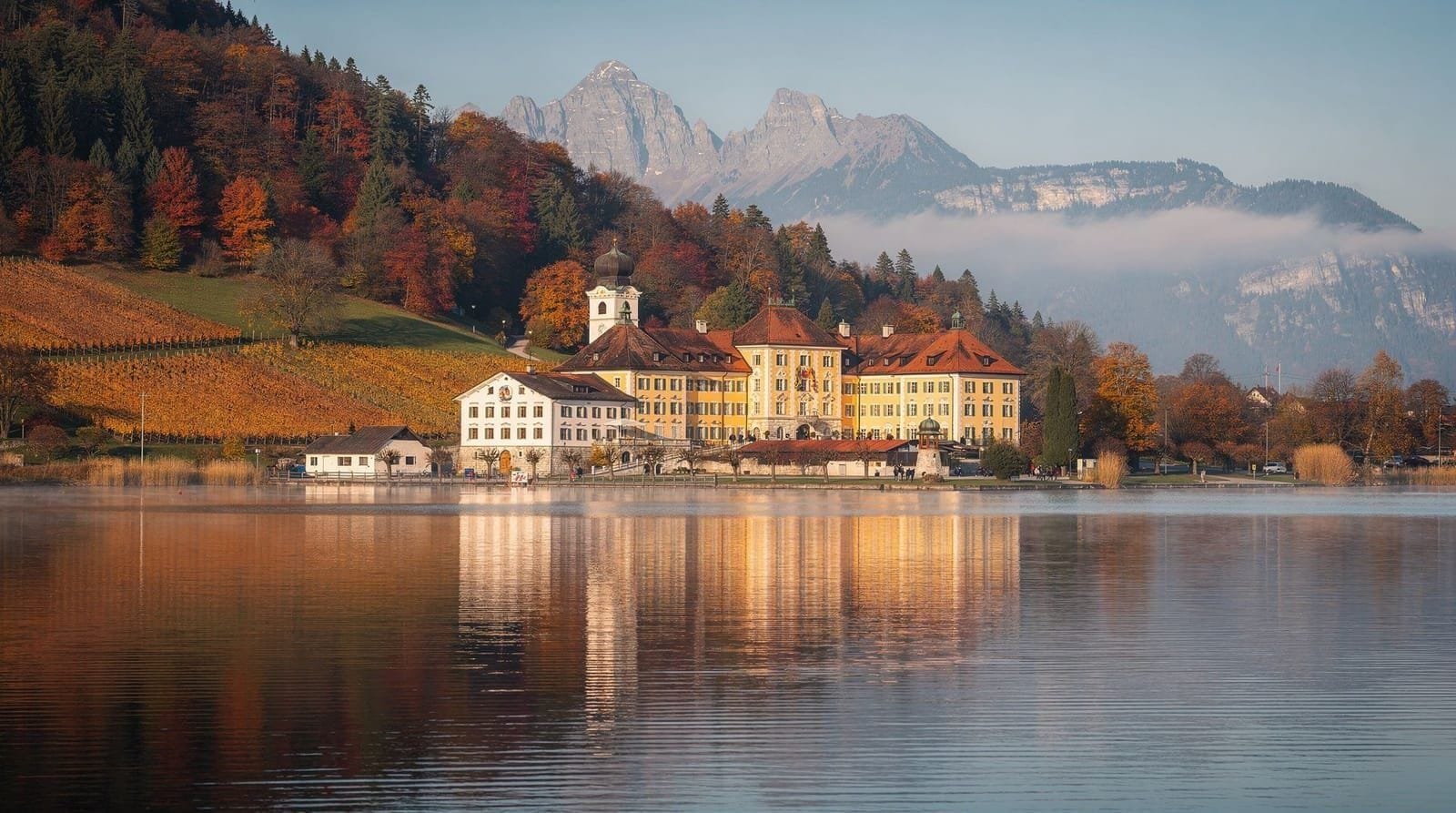
The monastery at the top has been a place of Christian pilgrimage since the 14th century, when holy relics — including a chalice claimed to have been used at the Last Supper — were said to have been discovered there. The current church, rebuilt in late Gothic and Baroque style, contains important works of Bavarian Baroque art. Entry to the church is free, and the interior — gilded altars, fresco ceilings, pilgrimage votive tablets — is genuinely impressive without any commercial framing.
The Andechs Benedictine monastery also operates one of the most famous monastery breweries in Bavaria. The Klosterschänke (monastery restaurant) serves the brewery’s beers — Doppelbock Dunkel, Hell, Weissbier, and seasonal varieties — directly below the church. A Mass Helles (1 litre) costs approximately €10; a half Mass is available. Food is Bavarian pub style at €14–22 per main course: Leberkäs (Bavarian meatloaf), Obatzda (soft cheese spread), cold meats. The terrace below the church looks south over the Ammersee and the Bavarian Alps. In summer the tables fill by early afternoon and there may be a wait for a seat.
Returning to Herrsching: you can walk back the same path (downhill, 60 minutes), or in summer take bus 951 from outside the monastery car park down to Herrsching station (approximately 15 minutes, standard MVV fare). The bus runs regularly in season — check schedules with MVV before relying on it.
For more detail on the monastery itself, including its art and brewing history, see the dedicated Andechs destination page.
Sailing, swimming and the lake
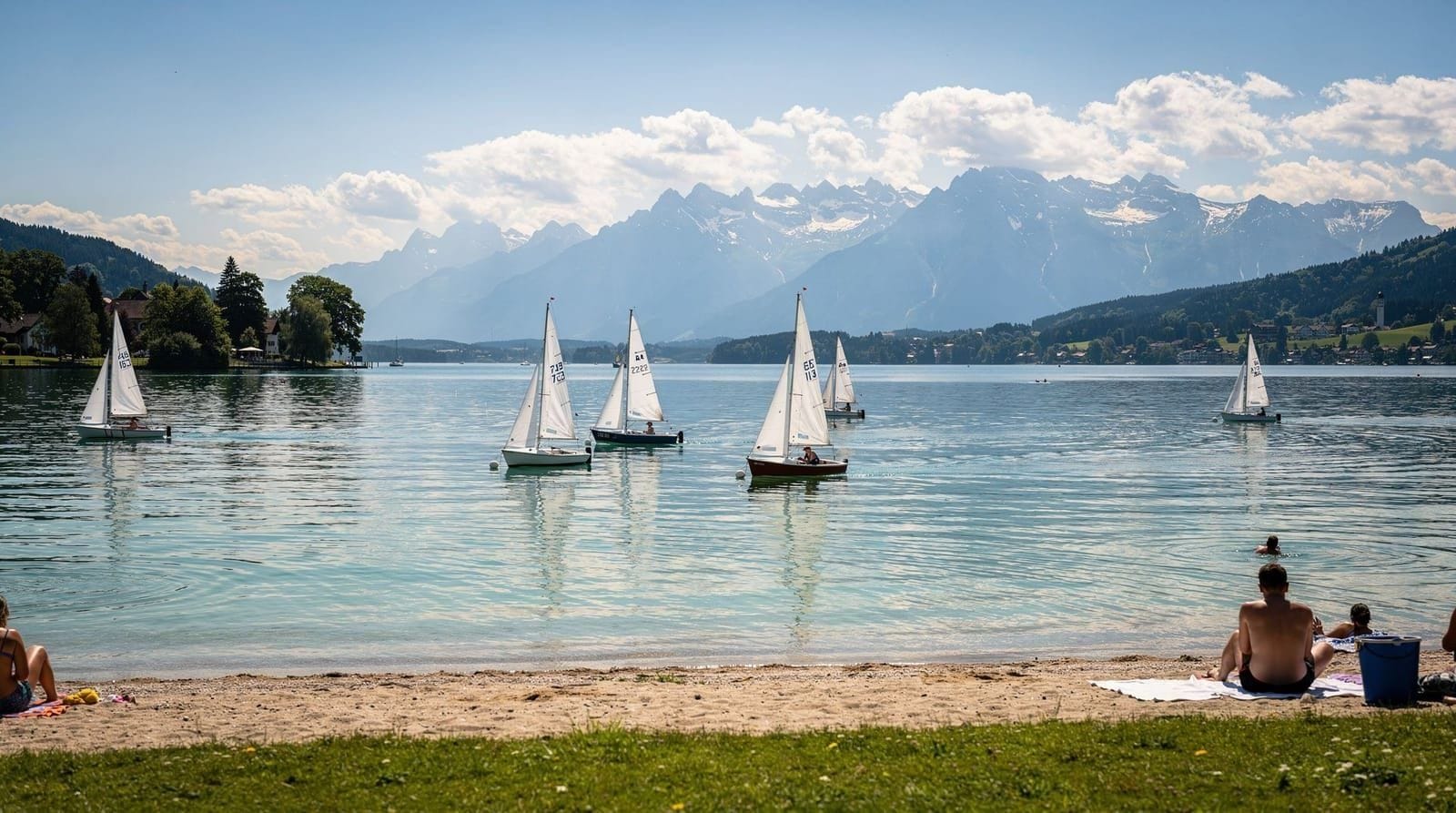
Swimming: The Ammersee has cleaner water than most Bavarian lakes — it receives no significant river runoff carrying agricultural waste and the shoreline is largely undeveloped outside the main villages. Public beaches at Herrsching (Strandbad, entry approximately €4), Utting, and Dießen provide facilities. The water temperature in summer peaks at 18–21°C in July and August, reliably swimmable from mid-June. The south end of the lake near Dießen is calmer and shallower, better for children.
Sailing: The Ammersee has a strong sailing tradition — the lake produces consistent westerly winds (the Föhn effect from the Alps) that make it popular for dinghy and keelboat racing. Several clubs based at Herrsching and Utting offer sailing courses (typically €80–130 per half day for instruction) and boat hire for those with a sailing qualification. Windsurfers use the open centre of the lake; the northern end near Herrsching is better sheltered for beginners.
Kayaking and stand-up paddleboarding: Rentals available from the Herrsching harbour area (approximately €12–18 per hour). Kayaking to the reedy southern bays is particularly good for birdwatching — great crested grebes, herons, and reed warblers are common.
Cycling: A 46 km cycling circuit runs around the entire lake on mostly quiet roads and dedicated paths. The west shore path is mostly flat; the east shore has some gentle rises through vineyard country near Seefeld. Bike rental in Herrsching is available from a hire point near the station (approximately €15/day standard, €30 e-bike). The route passes through Dießen, which has a particularly beautiful Baroque church (Stiftskirche Marienmünster, 18th century, free entry) worth a stop.
Practical tips for Ammersee
Best day structure: Take the S8 from Munich by 09:00. Walk to the lakefront and have a coffee at Herrsching. Start the Andechs hike at 10:00, arriving at the monastery around 11:30. Lunch and a beer at the Klosterschänke (book or arrive before noon to get a table). Descend by bus or foot. Swim at the Strandbad Herrsching 14:00–16:30. Take the S8 back to Munich. This fills a day satisfyingly without rushing.
Crowds: Weekday visits are noticeably quieter than weekends at Herrsching. The Andechs Klosterschänke is packed on Sunday afternoons in summer — arriving before 12:00 or after 14:30 for lunch is more comfortable.
What to bring: The hike to Andechs is not demanding but involves a 200-metre climb. Sturdy walking shoes are more comfortable than sandals on the forest path. Sun protection is important on the lake beach. The monastery restaurant does not take credit card reservations for standard lunch service — just arrive.
Food beyond the monastery: Herrsching has several restaurants. The Fischmeister on the waterfront is the best for lake fish. For something different, the Café am See (lakeside, informal) serves coffee and cake and has good terrace views. In Dießen, the Gasthof Zur Post on the main square serves local food at moderate prices.
Combining with Munich: Because the S8 is direct with no changes, Ammersee is an easy afternoon option even from a busy Munich itinerary. The train back from Herrsching to Munich centre takes 45 minutes, making it possible to reach the lake, swim, and be back for dinner in the city without a full-day commitment. Munich Bavarian beer walking tour — if you want to continue the beer theme back in the city
Frequently asked questions about Ammersee
How do I get from Munich to Ammersee by public transport?
Take the S8 S-Bahn from Munich Hauptbahnhof direct to Herrsching am Ammersee. Journey time is approximately 45 minutes; trains run every 20 minutes during the day. An MVV day ticket covers the return journey. No changes are needed.
How far is the hike from Herrsching to Andechs Monastery?
The signed pilgrim path from Herrsching to Andechs is approximately 6 km one way and climbs about 200 metres through mixed forest. Allow 75–90 minutes for a comfortable ascent. The return can be made on foot (60 minutes downhill) or by bus 951 in summer.
Is the Ammersee better or worse than Starnberger See?
Different rather than better or worse. Starnberger See is closer to Munich (S6, 36 minutes vs. 45 minutes) and has more developed infrastructure. Ammersee is quieter, less commercialised, and combines naturally with the Andechs hike. For a pure beach day, Starnberger See is slightly easier; for a hiking-plus-lake day, Ammersee wins clearly.
Can I swim in the Ammersee?
Yes. The lake has excellent water quality. Official beaches at Herrsching and other villages charge approximately €4 entry. Water temperature peaks at 18–21°C in July and August. Swimming from public shoreline outside the paid beaches is also permitted. The south end of the lake is calmer and shallower — better for children.
Is Andechs brewery worth visiting?
The monastery brewery and restaurant at Andechs is one of the genuine highlights of the Munich region — not because it is a tourist attraction but because the beer is genuinely good, the setting above the lake is spectacular, and the combination of medieval monastery church and Bavarian beer garden is uniquely Bavarian. The Doppelbock Dunkel is particularly distinctive. Plan to arrive before noon on weekends to get a table.
How long does a full Ammersee day trip take?
A day that includes the S-Bahn from Munich, the Andechs hike, lunch at the monastery, a swim at Herrsching, and the return train comfortably fills 8–9 hours. Start by 09:00 from Munich and return by 18:00–19:00. Half-day variants (lake only, no hike) are also viable — the S8 return trip is fast enough that even an afternoon excursion works.
What are the boat services on the Ammersee?
Bayerische Seenschifffahrt operates ferries from Herrsching south along the west shore to Dießen am Ammersee, with stops at several villages. Boats run April–October; schedules and fares at bayerische-seenschifffahrt.de. The fare from Herrsching to Dießen is approximately €9 single. The service is not high-frequency — check timetables before planning to use it as part of your itinerary.
Is Ammersee worth visiting in winter?
Yes, for a different kind of visit. The lake is not swimmable and the ferry does not run, but the Andechs hike is quieter and the forest is atmospheric in snow, and the Klosterschänke stays open year-round (moving indoors when the terrace closes). Confirm opening hours before travelling, since winter service can be curtailed in poor weather.
Can I combine Ammersee with Andechs and Munich in one day without rushing?
It is possible but tight. The realistic version is lake and Andechs together, filling 8–9 hours from Munich; adding a substantial Munich activity afterwards means starting very early or accepting a shorter visit to one of the three. Most visitors treat Ammersee-and-Andechs as a complete day on its own rather than combining it with the city.
Dießen am Ammersee — the south shore town
The ferry terminus at Dießen am Ammersee is worth more than a turnaround point. Dießen is a small market town (population around 10,000) with a disproportionately good cultural infrastructure — a result partly of its long history as an artists’ community, partly of the quality of the Stiftskirche Marienmünster that anchors the town.
The Stiftskirche Marienmünster is an 18th-century Baroque church designed by Johann Michael Fischer — the same architect responsible for the pilgrimage churches at Ottobeuren and Zwiefalten. The interior contains ceiling frescoes by Johann Georg Bergmüller and stucco work of exceptional quality. Entry is free. The church is considerably less visited than the main tourist churches in Munich, which means you can stand in front of the high altar without competition. Fischer’s interior demonstrates why Bavarian Baroque deserves its own category: the spatial manipulation, the light management, and the combined effect of fresco, stucco, and carved wood produce something qualitatively different from Italian or French equivalents.
Dießen potters and artists: Dießen has sustained an artists’ community since the 19th century and is particularly associated with ceramics. The Töpfermarkt (pottery market) held annually in late April draws ceramic artists from across Germany and Austria. Several studios are open year-round and sell directly to visitors. If you arrive in Dießen on the boat and walk the main street, several workshops are visible through open doors.
Practical: Dießen has several restaurants and cafes in the town centre, 5 minutes’ walk from the ferry landing. The Gasthof Zum Stern on the main square serves reliable Bavarian food at non-tourist prices (main courses €13–19). A return ferry to Herrsching makes a logical day structure: take the morning boat from Herrsching to Dießen, spend 2 hours in the town, return on the afternoon ferry, swim at Herrsching.
The Fünfseenland — Bavaria’s lake district
The Ammersee is part of the Fünfseenland (Five Lakes Land), a loose designation for the cluster of Bavarian lakes southwest of Munich: Ammersee, Starnberger See, Pilsensee, Wörthsee, and Weßlinger See. The two smaller lakes (Pilsensee and Wörthsee) are reachable by a short bike ride or bus from S-Bahn stations on the S6 line and are almost entirely unknown to non-German visitors.
Wörthsee, in particular, is a quiet, small lake with a family beach (Strandbad Wörthsee, entry approximately €3) and a lakeside footpath. It receives a fraction of the visitors of the Starnberger See and offers a more local, less structured experience. Combined with Ammersee on the same day, it would require a car; by public transport, treat it as a separate short excursion.
For those planning a broader Bavaria itinerary, the best day trips from Munich covers the full range of options. The Munich lakes guide compares all the lakes by distance, character, and what to do at each. For hiking context, the Garmisch-Partenkirchen and Mittenwald destinations extend the Alpine hiking into more serious mountain terrain if the Andechs hill has whetted appetite for more elevation. Munich food and beer walking tour — for urban contrast after a quiet lake day
Ammersee by season
The Ammersee changes character sharply through the year, and the right month depends on what you want from the visit — swimming, hiking, or a quiet off-season walk.
| Month | Water temp | Hiking conditions | Crowds |
|---|---|---|---|
| April–May | Too cold to swim (10–14°C) | Good, forest still cool | Quiet |
| June | 17–19°C, swimmable | Warm, ideal for the Andechs hike | Moderate, busy weekends |
| July–August | 19–21°C, peak swimming | Warm, can be hot on the exposed meadow near Andechs | Busiest, especially Klosterschänke |
| September | 17–19°C, still swimmable | Excellent, cooler and clearer | Quiet again |
| October–March | Not swimmable | Muddy in wet spells; the forest walk is still worthwhile | Very quiet, Andechs terrace mostly indoors |
Winter and early spring visits trade the lake for a quieter version of the Andechs hike and a near-empty Klosterschänke interior — a legitimate way to see the monastery without the summer crowds, provided you check that the restaurant is open before making the trip specifically for it.
Staying overnight around Ammersee
Most visitors treat Ammersee as a day trip, but an overnight stay suits anyone combining it with Garmisch-Partenkirchen hiking or simply wanting an unhurried lake evening. Herrsching has several guesthouses and small hotels near the S-Bahn station and lakefront, generally quieter and cheaper than equivalent options in Munich. Dießen am Ammersee, at the south end of the lake, is the more atmospheric base for those interested in the artists’ community and ceramics tradition — several Gasthöfe near the Stiftskirche Marienmünster offer simple, good-value rooms. Booking a lake-view room at least a few weeks ahead is sensible for July and August weekends, when Munich residents treat Ammersee as their own backyard.
An overnight stay also opens up an early-morning option that day-trippers miss entirely: walking the Andechs pilgrim path before 08:00, when the forest is quiet, the light through the trees is at its best, and the Klosterschänke terrace is empty at opening time. For photographers in particular, this is a meaningfully different experience from the midday crowds most visitors see. A one-night stay in Herrsching, dinner at the Fischmeister, an early Andechs walk the next morning, and a late swim before the train back to Munich makes a relaxed two-day version of the standard day trip.
Top experiences
Bookable activities with verified prices and instant confirmation on GetYourGuide.