Andechs — Bavaria's Holy Mountain and monastery brewery
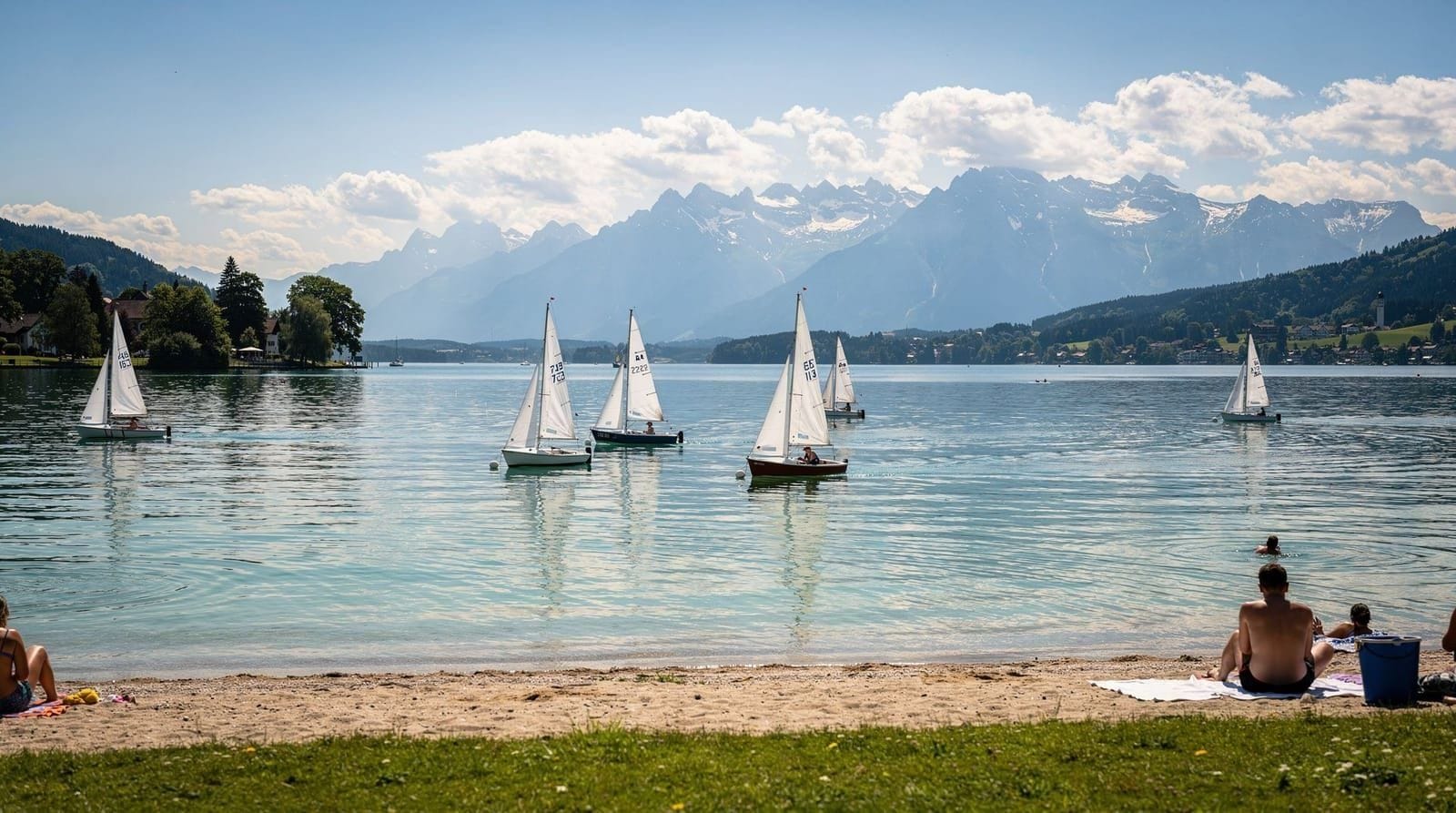
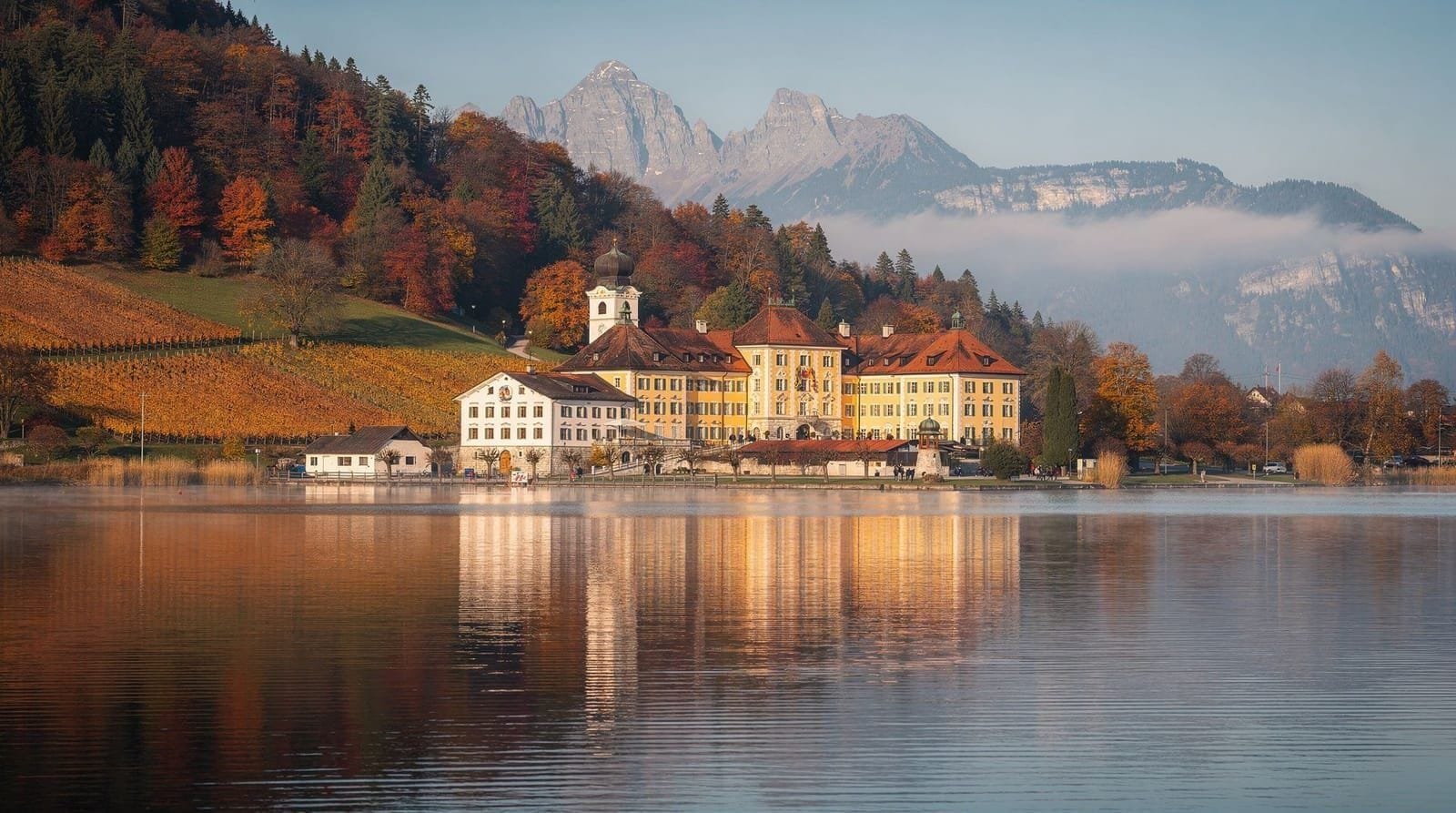
Andechs Monastery above the Ammersee — hike from Herrsching (S8), visit the Baroque church, and drink the monks' Doppelbock on the hilltop terrace.
Munich: Bavarian beer walking tour with samples and food
Quick facts
- Distance from Munich
- 40 km southwest
- By public transport
- S8 to Herrsching (~45 min), then 6 km hike or bus 951
- Monastery brewery
- Klosterschänke open daily from 10:00; terrace capacity ~2,500
- Church entry
- Free; open daily 08:00–18:00
- Brewery beers
- Mass Helles ~€10; Doppelbock Dunkel available year-round
A medieval hill, a Baroque church, and a Mass of beer
The Heiliger Berg — Holy Mountain — above the Ammersee is 711 metres high, forested on all sides, and topped by a Benedictine monastery that has operated here in continuous succession since 1455. The monastery brews some of the most respected beer in Bavaria. On summer afternoons, the terrace below the church is filled with several hundred people drinking it. This combination — legitimate pilgrimage church, genuine monastic life, and acclaimed brewery — is not a contradiction in Bavaria. It is deeply characteristic of the region.
Quick answer: Andechs Monastery is one of the finest half-day outings from Munich. The journey is straightforward by public transport — S8 to Herrsching, then a 6 km forest hike or a 15-minute bus ride. The Baroque pilgrimage church is historically significant and architecturally beautiful. The Klosterschänke (monastery restaurant) serves the monastery’s own beer, brewed on site by the Benedictine community. The Doppelbock Dunkel, in particular, is among the best dark beers in Germany. The terrace has views across the Ammersee to the Alps. Plan to arrive before noon on summer weekends if you want a table.
| Where | Heiliger Berg above the Ammersee, 40 km southwest of Munich |
| Cost | Free church entry; around €10.50 for a Mass of Doppelbock Dunkel, €14–22 for a main course |
| Time needed | Half day from Herrsching; 6–7 hours total including the S8 from Munich |
| Getting there | S8 to Herrsching (~45 min), then a 6 km hike (75–90 min) or bus 951 (~15 min) |
| Best time | Weekday mornings for a table without a wait; May–October for the terrace |
Getting to Andechs
By S-Bahn and hiking (recommended): Take the S8 from Munich Hauptbahnhof to Herrsching am Ammersee — journey approximately 45 minutes, trains every 20 minutes during the day. From Herrsching station, the signed pilgrim path to Andechs is well marked and approximately 6 km long, climbing 200 metres through forest and meadow. Allow 75–90 minutes for a comfortable ascent. The path is unpaved in sections — sturdy shoes are more comfortable than sandals.
By bus: Bus 951 runs between Herrsching station and the Andechs Klosterhof (monastery courtyard) approximately every 20 minutes during the day in summer. Journey approximately 15 minutes. This is the practical option for those who don’t want to hike up (many visitors take the bus up and walk down, or vice versa). Check current MVV timetables before relying on the bus — service frequency changes seasonally.
By car: From Munich, take the A96 motorway towards Lindau/Garmisch, exit at Wörthsee or Herrsching, and follow signs to Andechs. The monastery has a large car park (free). Journey from Munich: approximately 45 minutes in light traffic. Arriving by car on a busy Sunday afternoon in summer means the car park may be full — public transport is more reliable.
By S-Bahn and bike: Bicycles are permitted on the S8 (not during weekday rush hours). From Herrsching, cycling to Andechs is possible but the climb is steep enough that most cyclists push their bikes for the upper section. A more enjoyable bike option is cycling the Ammersee shoreline to Dießen and taking the bus or returning by ferry, keeping Andechs as a separate uphill excursion.
The hike from Herrsching
The pilgrimage path from Herrsching is the proper way to arrive at Andechs for those who have time. The route begins at Herrsching station (follow yellow pilgrimage signs reading “Andechs”) and passes through the southern part of Herrsching village before entering the forest.
The first 2 km are through light woodland on a broad path. After the small hamlet of Machtlfing the path narrows and the ascent becomes more continuous, following old pilgrimage markers (small wooden wayside crosses dating to the 18th and 19th centuries) through mixed forest of beech, oak, and spruce. The climb of 200 metres is spread over approximately 3 km, making it gradual rather than steep.
The final approach emerges from the forest into the open meadow south of the monastery, with the church tower visible above and the Alps appearing behind it on clear days. This arrival — from forest to open hilltop, with the view suddenly expanding — is a genuinely good moment.
The path is maintained and marked throughout. In wet weather some sections become muddy; grip-soled shoes are advisable after rain. The path is suitable for older children who are comfortable with a 90-minute walk. Pushchairs are not practicable; the bus is the appropriate option for families with small children.
The pilgrimage church
The Church of the Assumption of the Virgin (Wallfahrtskirche Mariä Himmelfahrt) at Andechs is a late-Gothic church substantially remodelled in Baroque style between 1751 and 1755 by Johann Baptist Zimmermann, one of the most important Baroque artists in Bavaria (he was also responsible for the Wieskirche near Steingaden, a UNESCO World Heritage site). The frescoes and stucco work are Zimmermann’s finest late work.
The church has been a pilgrimage destination since the 14th century, when a trove of holy relics — including three consecrated hosts (Eucharistic wafers) and objects claimed to date to the Carolingian period — was said to have been discovered in a sealed strongbox buried on the hill. The relics, kept in an ornate Gothic reliquary, are still displayed in the church and remain the object of pilgrimage.
Entry to the church is free and it is open daily from 08:00 to 18:00. The interior is compact — the nave is not large — but the density of artistic work makes it feel richer than many bigger churches. The high altar, the ceiling frescoes, and the side altars all repay close attention. During Mass times (Sunday mornings in particular) the church is in active liturgical use and visitors are welcome but should behave accordingly.
The monastery complex around the church includes the living quarters of the Benedictine community (not accessible to visitors), the brewery buildings, the administrative offices, and the Klosterladen (monastery shop) where the monks’ products are sold.
The brewery and Klosterschänke
The Andechs brewery has operated since at least 1455, making it one of the oldest monastic breweries in Bavaria. Today it produces approximately 100,000 hectolitres per year — a significant commercial output, though still small compared to the major Bavarian commercial breweries — and its beers are available in Munich restaurants and supermarkets as well as at the monastery itself.
The beers brewed at Andechs:
Spezial Hell: The standard light lager. Clean, malt-forward, 4.8% ABV. The most approachable beer for those not familiar with Bavarian styles.
Weissbier Hell (Hefeweizen): The classic Bavarian wheat beer. Banana and clove notes from the yeast, 5.5% ABV. Well-made and consistent.
Doppelbock Dunkel: The signature beer of Andechs and the one most worth seeking out. A dark double-bock at 7% ABV — rich, roasted malt character with some sweetness and a long finish. Historically brewed for Lent as “liquid bread” by fasting monks. Available year-round at the monastery despite the Lenten association. A Mass (1 litre) costs approximately €10.50. If you order only one beer, order this.
Bergbock Hell: A lighter version of the Doppelbock concept. 6.9% ABV, golden, less complex than the Dunkel.
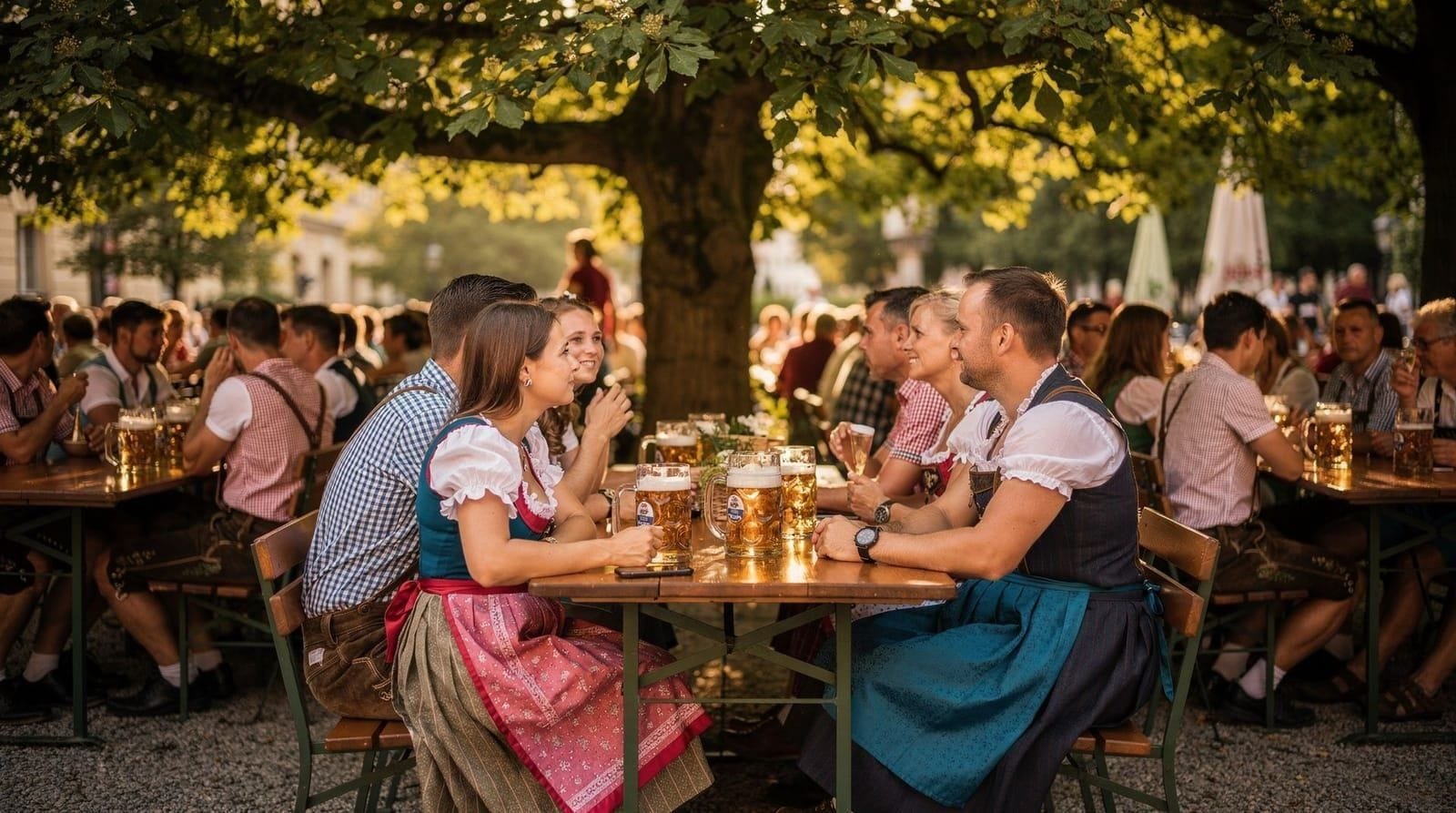
The Klosterschänke (monastery restaurant) is open daily from 10:00, weather permitting. The terrace seats approximately 1,000 people in the main section; an overflow area extends the capacity further on peak days. Food is traditional Bavarian: Schweinshaxe (pork knuckle, €18–22), Leberkäs (Bavarian meatloaf, €12–16), Obatzda cheese spread with bread (€8–10), and cold meat platters (Brotzeit, €12–15). The quality is reliable rather than exceptional — the food is there to accompany the beer, and in that role it does the job.
Table service: The terrace operates table service rather than self-service. In practice, on busy summer weekends, service can be stretched and tables difficult to find. Arriving before 11:30 gives the best chance of a table. Groups larger than 6 or 7 should consider splitting between tables — the staff are busy and reserved seating is not generally available for walk-in visitors.
Non-beer options: Alcohol-free Andechs beers exist, and standard soft drinks and coffee are available inside the Klosterschänke building. The terrace is pleasant without drinking beer; the view is free.
Practical tips for Andechs
Best day structure: Take the S8 from Munich at 09:00. At Herrsching by 09:50. Begin the hike at 10:00, arriving at Andechs by 11:30. Visit the church (30 minutes). Lunch and beer at the Klosterschänke (arrive before noon to get a table). Descend by bus or on foot to Herrsching by 14:30. Optional: swim at the Herrsching Strandbad. S8 back to Munich arriving 16:30–17:00.
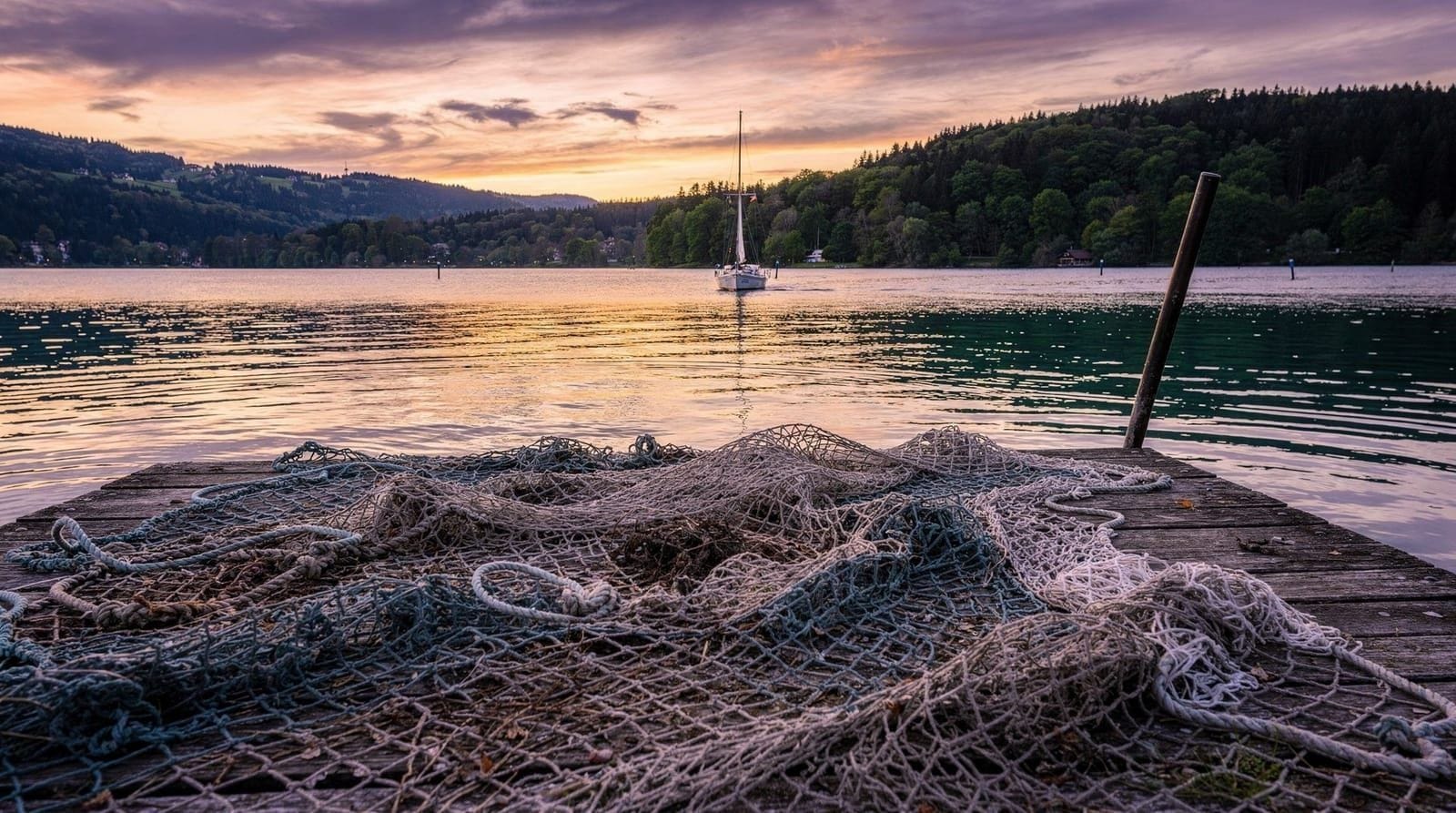
Combining with the Ammersee: Andechs and Ammersee work naturally as a single day — the hike from Herrsching is the connection between them. See the Ammersee destination for full information on the lake, including the ferry service to Dießen and the swimming beaches.
The monastery shop (Klosterladen): Adjacent to the church entrance, the shop sells the monks’ own products: beer (bottles and crates to take home), honey, herb liqueurs, specialty vinegars, and candles. Beer to take home is significantly cheaper here than in Munich supermarkets (a 0.5-litre bottle of Doppelbock Dunkel approximately €1.50). The shop closes earlier than the Klosterschänke — typically by 17:00.
Walking back down: The descent on the pilgrimage path takes approximately 60 minutes to Herrsching. The path is clear and easy to follow downhill. In good weather this is the preferred return route — the forest walk after an afternoon at the monastery has its own quality, and you arrive back at the S-Bahn station directly.
Photography in the church: Photography is permitted in the church for personal use. Flash photography during Mass or prayer services is inconsiderate and should be avoided. The monastery asks for silence and appropriate demeanour inside the church building, which is actively used for liturgy.
Seasonal notes: The terrace closes in cold or rainy weather. In spring and autumn the Klosterschänke moves primarily inside. Winter visits are quieter and the forest walk in snow is atmospheric, though check that the Klosterschänke is open before making the journey specifically for it. Munich Bavarian beer walking tour — if you want to compare monastery beer with city beer hall tradition Munich beer halls and breweries 3-hour guided tour — the Munich city counterpart to Andechs
Frequently asked questions about Andechs
How do I get from Munich to Andechs Monastery?
Take the S8 S-Bahn from Munich Hauptbahnhof to Herrsching am Ammersee (approximately 45 minutes), then either walk the 6 km signed pilgrimage path up the hill (75–90 minutes), or take bus 951 from Herrsching station to the Klosterhof (approximately 15 minutes). An MVV day ticket covers the S8 and connecting bus.
Do I need to pay to visit Andechs Monastery?
Entry to the church is free. The Klosterschänke (monastery restaurant/beer garden) operates at standard restaurant prices — expect to pay €10–11 per Mass (1 litre) of beer and €12–22 for food. The monastery shop sells products at market prices.
What is the best beer to try at Andechs?
The Doppelbock Dunkel is the signature beer of Andechs and the one that best represents the monastery’s brewing tradition — a rich, roasted dark double-bock at 7% ABV. The Spezial Hell is the best option if you want a lighter, more approachable beer. Both are brewed on site by the Benedictine community.
Can I visit Andechs without doing the hike?
Yes. Bus 951 from Herrsching station runs to the monastery courtyard in approximately 15 minutes. Many visitors take the bus up and walk down (or vice versa), which gives the full experience without committing to the uphill walk. The monastery car park is also accessible by car.
How long does a visit to Andechs take?
A typical visit — hiking up from Herrsching, visiting the church, and having lunch at the Klosterschänke — takes 4–5 hours from Herrsching and 6–7 hours total including the S8 journey from Munich. A shorter visit (bus up, 30 minutes in the church, one beer, bus down) takes about 2 hours from Herrsching.
Is the Klosterschänke open in winter?
The Klosterschänke is open year-round, but the large outdoor terrace only operates in warmer months (typically April–October, weather-dependent). In winter and cold weather, service moves inside to a smaller seating area. Winter visiting is quieter and the beer quality is unchanged — the Doppelbock Dunkel in particular is a natural cold-weather beer.
What is the connection between Andechs and pilgrimage?
Andechs has been a Christian pilgrimage site since the 14th century, when holy relics — including three consecrated hosts claimed to date to the Carolingian period — were reportedly found in a sealed strongbox on the hill. The relics are kept in an ornate Gothic reliquary in the pilgrimage church and are still the object of active pilgrimage today. The Benedictine community at Andechs maintains both the religious and brewing traditions simultaneously — the dual character of the site (church and beer garden on the same hilltop) is not an anomaly but a longstanding Bavarian integration of monastic and community life.
Is Andechs worth visiting in winter?
Yes, though the experience is different. The church and Klosterschänke stay open year-round, but the large outdoor terrace closes in cold weather and service moves inside to a smaller room. The pilgrim path is quieter and can be genuinely atmospheric under snow, though grip-soled shoes are essential on the icy sections. The Doppelbock Dunkel, brewed year-round, is arguably better suited to a cold-weather visit than a summer one.
Can I visit Andechs and the Ammersee in the same afternoon if I only have half a day?
It is tight but possible if you take bus 951 up to Andechs rather than hiking, spend an hour at the church and Klosterschänke, then walk or bus down to Herrsching for a shorter lake visit. A relaxed version of the combination — hiking both ways and including a proper swim — needs the better part of a full day; see the Ammersee page for the fuller day plan. If the choice is between rushing both or doing one properly, most repeat visitors say Andechs alone, unhurried, beats a rushed double.
Andechs in the context of Bavarian monastery brewing
Bavaria has a strong tradition of monastery brewing that predates the industrial beer industry by centuries. The Reinheitsgebot (purity law) of 1516, which regulated the ingredients of beer to water, malt, and hops, was promulgated in Munich partly to maintain quality standards that Bavarian monasteries had established. Andechs, Weihenstephan (the world’s oldest continuously operating brewery, 1040 AD, now a state brewing school in Freising), and the Augustinian order in Munich all represent different threads of this tradition.
What makes Andechs distinctive from Munich’s commercial breweries is not the beer quality — Munich’s Augustiner, Paulaner, and Hacker-Pschorr are all technically excellent — but the production context. Andechs brews in a fully operating monastery. The monks are not performing a historical role for visitors; the community uses the brewery revenues to fund the monastery’s ongoing work (a retreat house, a guesthouse, charitable activities). The brewing operation is supervised by a professional head brewer but operates within the Benedictine community’s administration.
The Doppelbock Dunkel deserves its own paragraph. The Bockbier style — strong, malty, dark — was developed by Paulaner monks in Munich in the 17th century as a sustaining drink for Lenten fasting. “Liquid bread” was the concept: high in calories, permissible during fasting periods when solid food was restricted. The Andechs Doppelbock (double-strength Bock) at 7% ABV is the direct successor to this tradition. It is genuinely distinctive — more complex than most commercial dark lagers, with a roasted malt character that lingers. It is also, at approximately €10.50 per Mass on the terrace, significantly more economical than an equivalent craft beer experience in Munich.
Connecting Andechs to a broader Bavaria itinerary
Andechs works as a self-contained half-day from Munich or as part of a longer lakes-and-countryside day. The most natural combination is with the Ammersee — lake in the morning, Andechs hike and lunch in the early afternoon, swim at Herrsching before the return train. This itinerary is one of the best full days available from Munich by public transport.
For those with a car, Andechs can be combined with Starnberger See — 20 km east of Andechs — in a single day. Or north to Munich itself for the evening, making the Andechs-Munich day a satisfying combination of outdoor Bavaria and city culture.
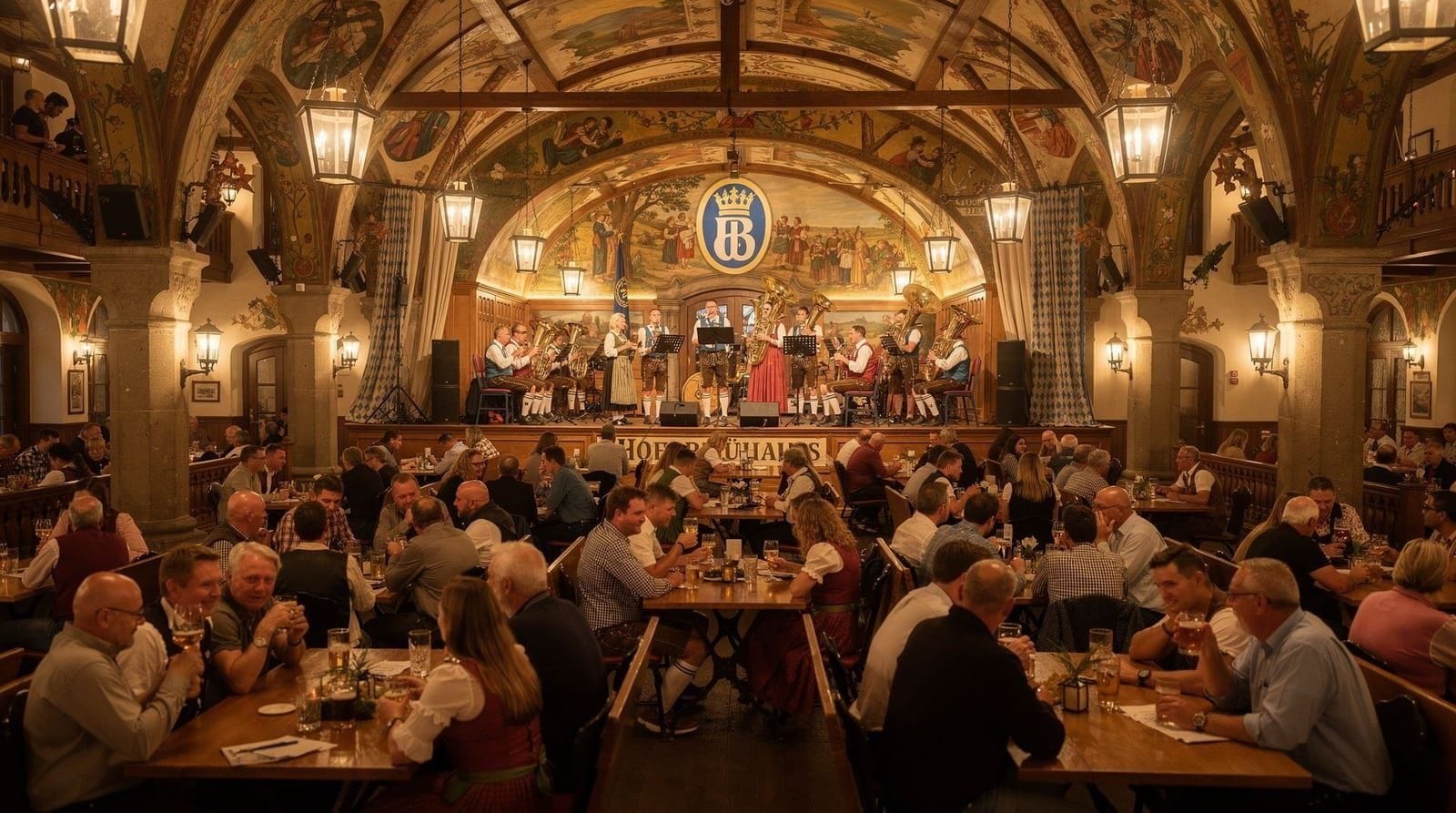
The Munich beer culture that Andechs represents at its most traditional also exists in the city’s celebrated beer halls — the Hofbräuhaus, the Augustinerkeller, the Augustinerbräu. The Munich beer halls guide covers these in detail. Andechs is not a substitute for those urban experiences but a complement: the monastery shows the roots of a brewing tradition that the city beer halls turned into a global cultural institution.
For planning a Bavaria itinerary that includes both the lakes and the Alpine castles, the Munich castles day trip guide covers the logistics of seeing Neuschwanstein, Linderhof, and Herrenchiemsee in a structured way. Andechs and the Ammersee represent a different register of Bavaria — less dramatic, more human-scaled — that balances well against a programme of royal palaces and Alpine summits.
Andechs across the seasons
The Klosterschänke terrace and the pilgrim path both change substantially through the year, and the right season depends on whether beer, hiking, or a quiet church visit is the priority.
| Season | Terrace | Hike conditions | Crowds |
|---|---|---|---|
| May–June | Full terrace open, best weather-to-crowd ratio | Warm, forest fresh, wildflowers | Moderate, busier weekends |
| July–August | Peak terrace season, can be full by 11:30 | Warm to hot on the open meadow near the summit | Busiest of the year |
| September | Excellent, clear light and cooler | Very good, the classic month for the hike | Quiet again after the school holidays |
| October | Terrace weather-dependent, often still usable | Good, autumn colour in the beech forest | Quiet |
| November–March | Mostly indoors, smaller seating area | Muddy or icy in sections; grip-soled shoes essential | Very quiet |
The Doppelbock Dunkel is available year-round regardless of season, so a winter visit loses nothing on the beer front — it simply trades the outdoor terrace and lake view for a quieter, more contemplative church visit and forest walk.
What to skip if you only have two hours
Not every visitor has a full afternoon. If time is genuinely limited, take bus 951 up rather than hiking (saving 75–90 minutes), spend 20 minutes in the church, have one Doppelbock Dunkel standing at the terrace rail rather than waiting for table service, and walk down the 60-minute forest path instead of taking the bus back — this gives you the view, the beer, and at least part of the hike in under two hours from arriving at Herrsching. What’s worth cutting first: the Klosterladen browsing and a full sit-down meal, both of which can be done on a longer visit another time.
Top experiences
Bookable activities with verified prices and instant confirmation on GetYourGuide.