Herrenchiemsee Palace
Herrenchiemsee Palace guide — Ludwig II's Versailles on a Chiemsee island, boat from Prien, Hall of Mirrors, gardens and tips for 2026.
From Munich: Herrenchiemsee Palace and boat trip day tour
Quick facts
- Distance from Munich
- 90 km (1 hr 15 min by car; 1 hr 20 min by train)
- Access
- Boat from Prien am Chiemsee or Stock (Bernau)
- Adult ticket (2026)
- €12 palace; boat approx. €9 return
- Opening hours
- Apr–Oct 9:00–18:00; Nov–Mar 9:40–16:15
- Island walk to palace
- 15–20 min from the boat landing
Ludwig II’s Versailles — reached by boat across the Chiemsee
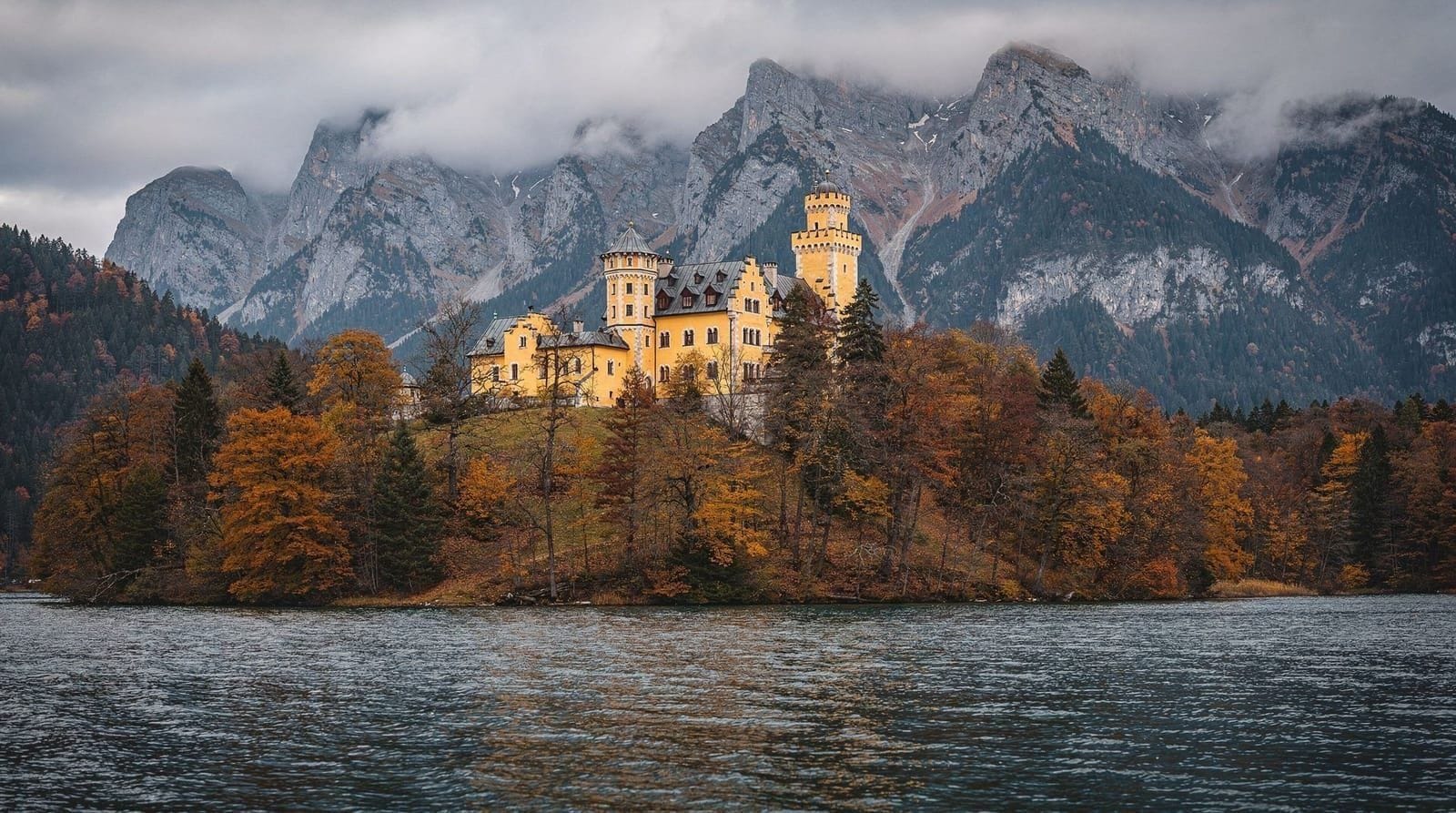
Of the three palaces built by King Ludwig II of Bavaria, Herrenchiemsee is the most ambitious and the most extravagant. It is also the most logistically interesting to reach: the palace sits at the centre of the Herreninsel (Men’s Island) in the middle of the Chiemsee — Bavaria’s largest lake — accessible only by a 15-minute boat ride from the mainland.
Ludwig bought the Herreninsel in 1873 specifically to build his own version of Versailles. Not an interpretation. A literal copy of the Palace of Versailles, built room by room to match Louis XIV’s original as precisely as possible, including the Hall of Mirrors. He spent the equivalent of hundreds of millions of euros (in today’s values) on a building he visited only once, for 9 days in 1885, a year before his death. At the time of Ludwig’s death, the palace had 20 completed rooms out of a planned 70. The remaining unfinished shell is still standing on the north end of the island.
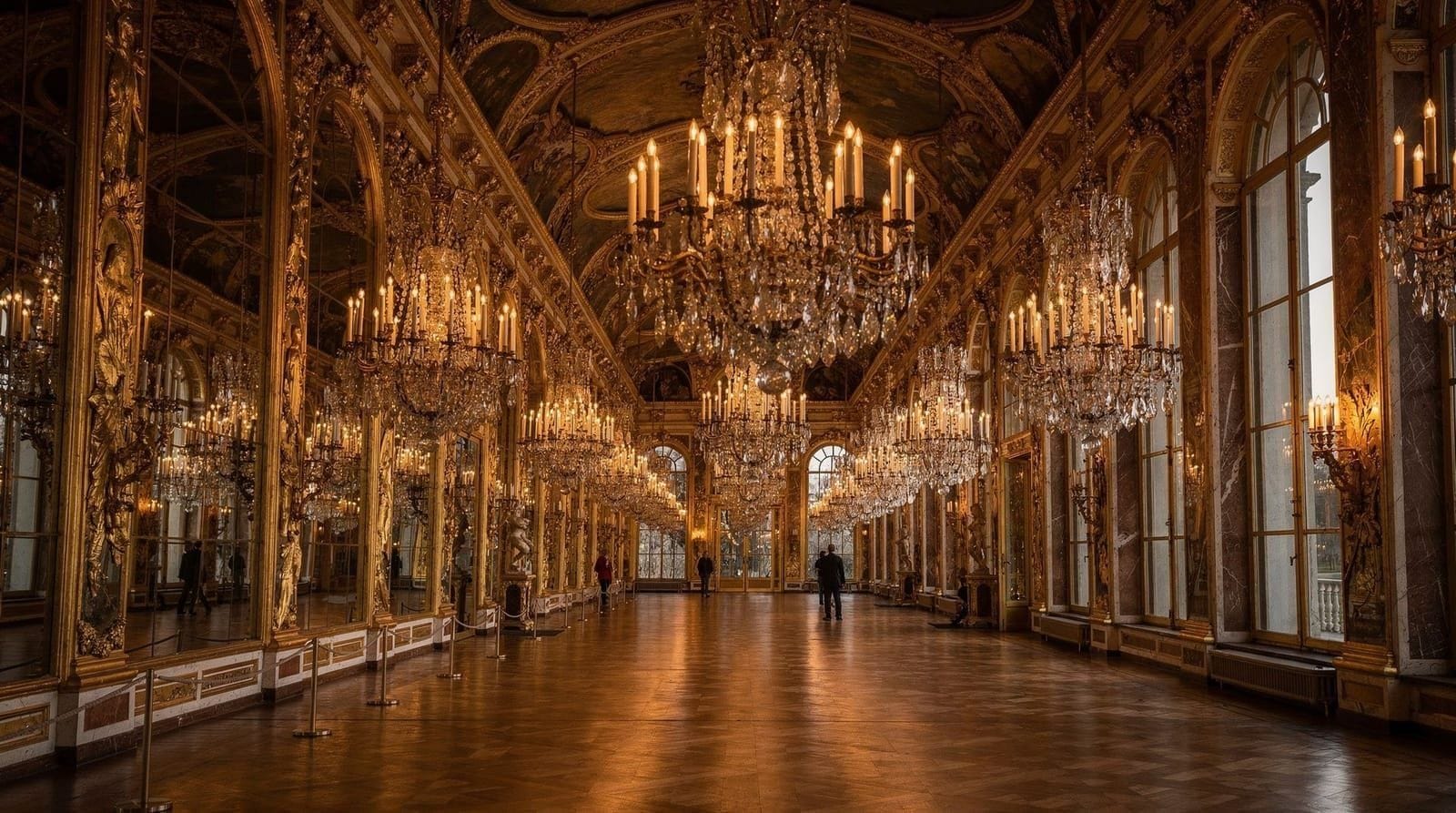
The completed section — particularly the Hall of Mirrors — is more dramatically beautiful than the equivalent room at Versailles because it has been more carefully maintained and has not been repurposed for state functions. The light in the evening when the 2,500 candles in the 44 chandeliers are lit for special concerts is extraordinary. For regular daytime visitors, the room is still one of the most impressive interiors in Europe.
Quick answer: Herrenchiemsee requires more logistics than Neuschwanstein but rewards the effort. The island setting is unique, the Hall of Mirrors is spectacular, and the combination of boat trip + palace + island walk fills half a day comfortably. With a car from Munich, it is a straightforward half-day excursion.
| Where | Herreninsel, Chiemsee — boat only, no road access |
| Cost | Around €12 palace + €9 return boat |
| Time needed | Half day minimum, full day with Fraueninsel |
| Getting there | Train to Prien (~1h15) + Chiemsee-Bahn + boat |
| Best time | May, June or September for smaller groups |
Getting there to Herrenchiemsee
The palace is on an island. This means all visitors take a boat, regardless of how they travel to the mainland.
By car from Munich: Take the A8 motorway towards Salzburg, exit at Bernau am Chiemsee or Prien am Chiemsee (exit 106 or 108). Parking in Prien at the Chiemsee Schifffahrt car park (approximately €4 per day, large capacity). Total journey: approximately 90 km, 1 hour 15 minutes in normal traffic.
By train from Munich: Hourly regional services from Munich Hauptbahnhof to Prien am Chiemsee (RB/RE, approximately 1 hour 15–20 minutes). Bayern-Ticket covers this journey. From Prien station, a historic narrow-gauge railway (the Chiemsee-Bahn, a steam tram) runs to the boat landing at Prien-Stock (3 km, about 15 minutes, runs in season, approximately €3). Alternatively, walk from Prien station to the harbour (about 20 minutes flat) or take a taxi (approximately €8).
By organised tour: Several Munich operators run Herrenchiemsee day trips that include the train journey and boat: Herrenchiemsee day trip from Munich by train and boat Private Herrenchiemsee excursion from Munich by train
The boat journey
Chiemsee Schifffahrt operates the boats from Prien-Stock (harbour) to the Herreninsel landing. Boats run frequently in season (April–October, roughly every 30–60 minutes depending on time of day) and less frequently in winter.
Boat fares (2026): Approximately €9 return adult, €4.50 child, family tickets available. The boat fare is separate from the palace ticket — you pay for each independently. Do not confuse third-party booking sites that bundle both: the official Chiemsee Schifffahrt website (chiemsee-schifffahrt.de) is the only place to check current timetables.
Journey time: 15 minutes from Prien-Stock to Herreninsel landing. An alternative departure from Gstadt (on the north shore of the lake) also exists.
Note: Boats also serve the Fraueninsel (Women’s Island), a small island with a Benedictine convent (founded 782) visible from the boat. You can combine both islands on the same day if you have time — the Fraueninsel is a 10-minute crossing from the Herreninsel.
Walk from the landing to the palace
From the boat landing on the Herreninsel, the palace is approximately 1.5 km inland along a tree-lined avenue. Allow 15–20 minutes walking at a relaxed pace. Horse-drawn carriages operate this route in season (approximately €5 one way) — they are atmospheric but the walk is easy and pleasant. The avenue is lined with chestnut and lime trees and the approach to the palace facade is gradual, with the building appearing through the trees as you walk.
The palace itself
The guided tour of Herrenchiemsee covers the completed 20 rooms and lasts approximately 25–35 minutes. Like Neuschwanstein and Hohenschwangau, photography inside is not permitted. Groups are limited and the experience is less rushed than Neuschwanstein.
Completed rooms of particular note:
State Staircase: A direct copy of the Ambassadors’ Staircase at Versailles (which was demolished in 1752 — Herrenchiemsee’s version may actually be more faithful to the original than anything in France). Gilded balustrades, marble columns, painted ceiling.
State Bedroom: Ludwig’s personal bedroom, designed as a ceremonial space rather than a sleeping room (he actually used a smaller bedroom elsewhere). The gold canopy bed, surrounded by a gilded balustrade, is at the same scale as Louis XIV’s equivalent at Versailles.
Council Chamber: Formal meeting room with a ceiling painting depicting the sun rising over the earth — the central metaphor of Louis XIV’s solar monarchy.
Small Blue Gallery and Porcelain Cabinet: Smaller rooms showing the delicacy of Rococo applied arts — Meissen porcelain, gilded display cabinets, Sevres-blue silk walls.
The unfinished north wing of the palace — visible from the exterior — is a striking contrast: raw brick, empty windows, structural steel exposed. This is how much of Versailles would have looked during Louis XIV’s lifetime. Ludwig ran out of money and time before completing it.
Hall of Mirrors
The Spiegelsaal (Hall of Mirrors) at Herrenchiemsee is 98 metres long, slightly longer than the Versailles original (73 metres). Ludwig commissioned it as an exact copy but added an extra 25 metres. In the centre of the room, the 17 arched windows on one side face 17 mirrored arches on the other, creating the visual illusion of infinite space that Versailles pioneered in 1684.
The room contains:
- 44 chandeliers holding 2,500 candles (original candles, not electric — the wax is still used for special evening concerts)
- 33 candelabras and 16 girandoles
- 44,000 individual candles burned during a single evening of use
During Ludwig’s one 9-day visit in 1885, he had the candles lit every evening and dined alone in the Hall of Mirrors. The cost of a single candle-lit evening rivalled the monthly wage of a senior government official.
For summer evening concerts (Herrenchiemsee Concert series, typically June–September, by candlelight), tickets are sold separately through the Herrenchiemsee Festival website. These concerts are genuine highlights of the Bavarian cultural calendar — a string quartet playing in candlelight in the Hall of Mirrors is not a tourist approximation of anything, but a specific and real experience.
Gardens and island
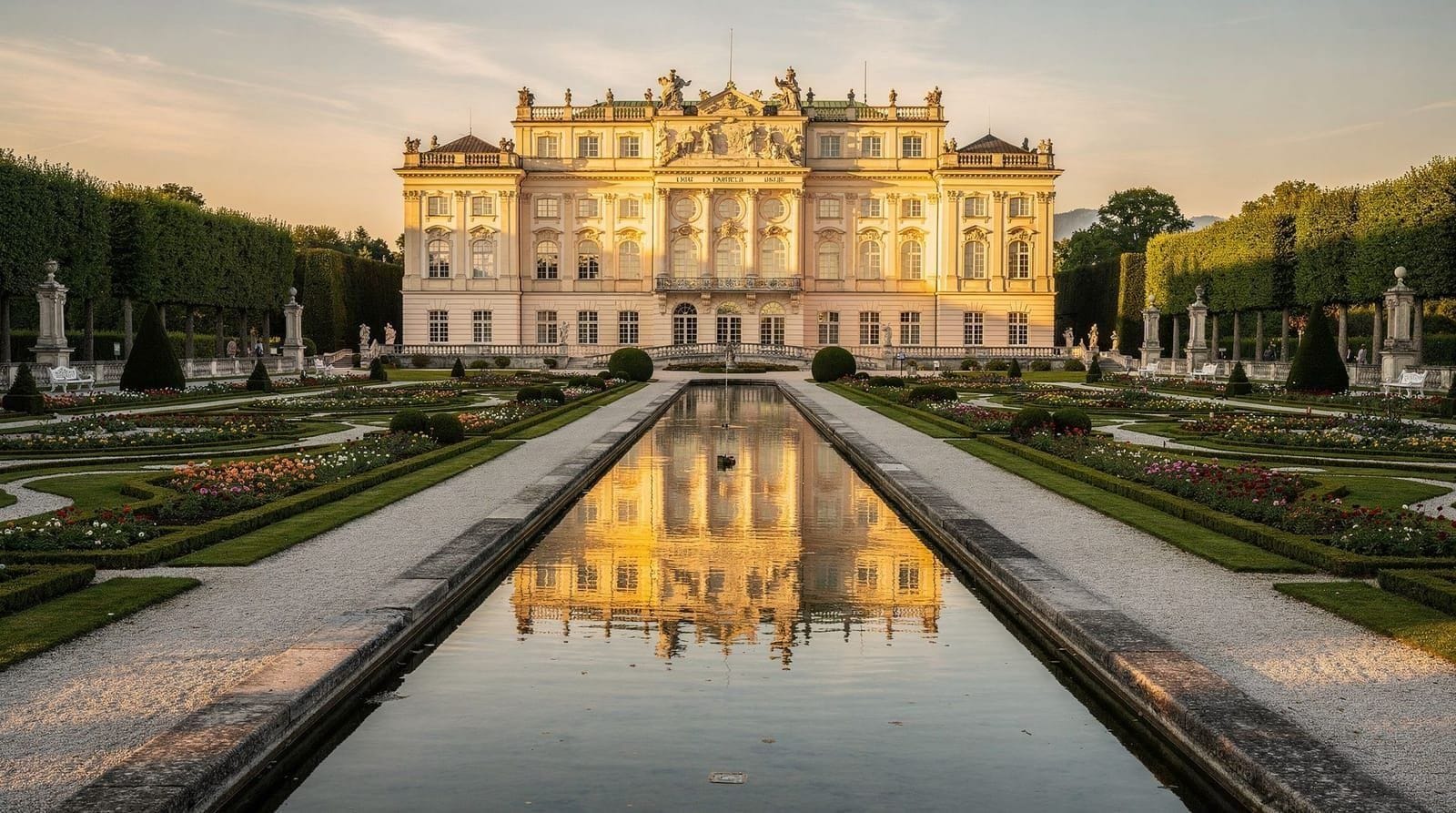
The formal garden in front of the palace extends south from the main facade in the French geometric style. The central axis runs 1 km from the palace facade to the southern end of the island, flanked by basins and canals. The Fortuna fountain at the top of the formal parterre is active in summer.
Island walks: The Herreninsel is large enough to walk for hours in the forested sections beyond the palace grounds. The island measures approximately 1.5 km x 3 km. The northeast corner, away from the palace, has woodland walking paths along the lake shore with views to the Alps. In autumn these paths are excellent — beech forest turning gold against the lake.
The Old Palace: A smaller, older building on the island (formerly an Augustinian monastery, then a royal hunting lodge) houses the Ludwig II Museum — a well-presented collection of objects from Ludwig’s personal life: his uniform, letters, portraits, and the document removing him from power. Entry is included in the palace ticket. The museum is more informative than emotional, but it provides context that the palace rooms alone do not.
Fraueninsel: The adjacent island, reachable by another boat connection, has the Benedictine convent of Frauenwörth (founded 782 AD, one of the oldest continuously inhabited convents in Bavaria), a few guesthouses, a fish smokehouse (smoked Renke — a local whitefish — is the traditional purchase here), and views back to the Herreninsel. The convent church is Romanesque. If you have time, the 30-minute combined visit is worthwhile.
Practical tips
Timing: Unlike Neuschwanstein, Herrenchiemsee rarely requires advance booking outside summer weekends. Most visitors can arrive at Prien, take a boat, and purchase a palace ticket on the spot. Check the palace website (herrenchiemsee.de) for any changes to the timed-entry system.
Allow time for the logistics: From Munich, the total journey to the palace door and back involves: train 75 minutes, Chiemsee Bahn 15 minutes, boat 15 minutes, walk 20 minutes — each way. Allow 5–6 hours total for a comfortable half-day trip, or a full day if including the Fraueninsel.
Weather and the island: The Chiemsee generates its own microclimate — afternoon thunderstorms develop rapidly in summer and the lake can become choppy. Boats continue to operate in moderate weather but can be disrupted in storms. Check the forecast before travelling.
Last boat: Check the Chiemsee Schifffahrt timetable carefully. The last boat from the Herreninsel back to Prien in summer is typically around 17:45 (confirm on the day). Missing it means waiting for the next one or arranging a taxi boat, neither of which is catastrophic but both of which are inconvenient.
Food: The restaurant at the boat landing on the Herreninsel (Gasthof zur Linde) serves standard Bavarian food — reasonable for a captive audience. The island has no supermarket. Bring snacks and water if you plan to walk the island. Better food is available in Prien town centre.
Prien am Chiemsee: If staying overnight, Prien is a pleasant small lake town with hotels, restaurants, and a beach. More relaxed than a Munich hotel for this day trip, and means you can take the first boat of the day before the Munich day-trippers arrive.
For the wider context of Ludwig II’s building projects, the King Ludwig II castles guide covers all three palaces and their construction history. The Munich castles 3-day itinerary suggests how to combine Herrenchiemsee with Neuschwanstein and Linderhof over multiple days. Day trip to Herrenchiemsee Palace by private van from Munich
Frequently asked questions about Herrenchiemsee Palace
How do I get to Herrenchiemsee Palace from Munich?
Take the train from Munich Hauptbahnhof to Prien am Chiemsee (approximately 1 hour 15–20 minutes, Bayern-Ticket valid), then the Chiemsee Bahn narrow-gauge tramway to Prien-Stock harbour (approximately 15 minutes), then a Chiemsee Schifffahrt boat to the Herreninsel (15 minutes). Total one-way travel time: approximately 1 hour 45 minutes to 2 hours.
Do I need to book Herrenchiemsee tickets in advance?
Generally no. Herrenchiemsee rarely sells out in the way Neuschwanstein does. Same-day tickets are almost always available at the palace ticket office. The exception is long weekends in July and August, when it is worth booking online a few days ahead. Check the official site (herrenchiemsee.de) for current booking status.
How long does a Herrenchiemsee visit take?
Allow 3–4 hours on the island: 25–35 minutes for the palace guided tour, 30–45 minutes for the gardens and formal parterre, 20–30 minutes for the Ludwig II Museum in the Old Palace, and additional time for island walks or the Fraueninsel. Travel time from Munich is approximately 1 hour 45 minutes each way, making the full day trip 6–7 hours.
Is the Hall of Mirrors at Herrenchiemsee bigger than the one at Versailles?
Yes. The Herrenchiemsee version is 98 metres long versus 73 metres at Versailles. Ludwig specifically instructed his architect to surpass the original. The room contains 44 chandeliers and over 2,500 candles — more than the Versailles version by most accounts.
Can you swim in the Chiemsee near Herrenchiemsee?
Swimming in the Chiemsee is permitted in designated areas on the mainland shores. The Herreninsel itself has limited access to the water. The lake water is clean and reaches around 20°C in July and August. Public bathing beaches are at Bernau (Airbräu beach, about 3 km from the Prien car park) and at Prien itself.
Is Herrenchiemsee worth visiting compared to Neuschwanstein?
Different experiences. Neuschwanstein is the exterior fantasy castle; Herrenchiemsee has the more impressive interior, particularly the Hall of Mirrors. Herrenchiemsee is significantly less crowded, the boat journey adds atmosphere, and the island setting is unique. If you can visit both, do — they are complementary rather than redundant. If forced to choose, Neuschwanstein is the more photogenic exterior; Herrenchiemsee is the more stunning interior. The King Ludwig II castles guide compares all three.
Can I combine Herrenchiemsee with Neuschwanstein in one day?
Technically possible by car but uncomfortable — the two sites are about 135 km apart (about 1 hour 45 minutes driving). You would need to visit Herrenchiemsee in the morning (first boat, early tour) and Neuschwanstein in the afternoon, or vice versa. Both involve queuing and timed entries. The Munich castles 3-day itinerary suggests a more comfortable 3-day sequence. If you have only one day, choose one.
Is Herrenchiemsee wheelchair or stroller accessible?
The boat, tram and tree-lined avenue are manageable with a stroller, though the final stretch is gravel. The palace interior tour has stairs and no lift, so it is not straightforward for wheelchair users — contact the palace administration in advance to check current accessibility arrangements before travelling.
Can I visit both the Herreninsel and Fraueninsel in one day?
Yes. The two islands are connected by a 10-minute boat crossing, and most visitors combine a morning at the Herreninsel palace with an afternoon stop at the Fraueninsel’s Benedictine convent and its smoked-fish specialities. Allow a full day rather than a half day if you want to see both comfortably.
Is it better to visit Herrenchiemsee in the morning or afternoon?
Morning, if avoiding crowds is the priority. Day-trip coaches and tour groups from Munich typically arrive from mid-morning onward, so taking one of the first boats from Prien-Stock means a quieter palace tour and a calmer walk along the tree-lined avenue. Afternoon light is better for photographing the garden facade, so a late-morning tour followed by an afternoon in the gardens balances both.
The Chiemsee — Bavaria’s largest lake
Herrenchiemsee is the main reason visitors come to the Chiemsee, but the lake itself is worth knowing about. With a surface area of 80 km², the Chiemsee (locally called the “Bavarian Sea”) is the largest lake entirely within Bavaria and one of the largest in Germany. On a clear day the Alps are visible to the south, with the peaks of the Berchtesgaden Alps and the Chiemgau Alps forming a white wall along the horizon.
Prien am Chiemsee: The main departure point for the Herreninsel boats is a pleasant market town with a pedestrian old town, several good restaurants, and a beach on the lake. The Promenade along the waterfront is lined with beer gardens in summer. Prien makes a more relaxing base than Munich for an Herrenchiemsee visit — you can take the first morning boat and have the palace largely to yourself before the Munich day-trippers arrive from mid-morning.
Water sports: The Chiemsee is a sailing and windsurfing lake. The steady westerly wind (Föhn conditions) makes it reliable for water sports. Boat rental (rowing boats, paddleboards, kayaks) is available at several points on the lake perimeter.
Bernau am Chiemsee: On the south shore, Bernau has the secondary boat departure for the Herreninsel (from the Gstadt pier). Less well-known than Prien, it is sometimes a shorter queue.
Wildlife: The Chiemsee is an important bird habitat — great crested grebes, ospreys, and cormorants are regular in spring and autumn. The marsh areas at the eastern end of the lake (Chiemsee-Moor) are protected nature reserve.
The Munich lakes guide covers the wider lake landscape of Bavaria, including the Starnberger See and Tegernsee alongside the Chiemsee.
Evening concerts at Herrenchiemsee
The Herrenchiemsee Music Festival (Festspiele Herrenchiemsee) runs each summer, typically July and August, with evening concerts held inside the palace — in the Hall of Mirrors by candlelight, or in the garden amphitheatre. Programmes typically include chamber music, baroque orchestral works, and operatic recitals, chosen to reflect the musical tastes of Ludwig II’s era.
This is not a gimmick. A string quartet playing Baroque music by candlelight in a room with 2,500 candles lit in 44 chandeliers is a specific and unrepeatable experience — the acoustic properties of the room, the visual scale of the reflected light, and the historical setting combine in a way that no other concert venue in the world can replicate.
Tickets are sold through the official festival website and tend to sell out weeks in advance for the most popular programmes. Prices range from approximately €40 to €120 depending on seat category and programme. Evening concerts require the last regular boat back (confirm current schedules — festival organisers typically arrange late-night return boats from the island for concert attendees).
If you are planning a Bavaria trip for July or August, checking the festival schedule before booking is worthwhile. The Munich opera and classical music guide covers the broader classical music scene in Bavaria, including the Munich Opera and Bayreuth Festival context.
Herrenchiemsee vs the other Ludwig II palaces
| Palace | Character | Crowds | Access from Munich |
|---|---|---|---|
| Herrenchiemsee | Grandest interior, Versailles copy | Low–moderate | Train + tram + boat, ~2h |
| Neuschwanstein | Iconic fantasy exterior | Very high | Train + bus/walk, ~2h |
| Linderhof | Most intimate, best gardens | Low | Car or tour recommended |
If interior grandeur matters more than the postcard silhouette, Herrenchiemsee is the stronger choice and the boat crossing adds real atmosphere that no other Bavarian castle visit offers. The King Ludwig II castles guide compares all three in depth, and the Linderhof destination page covers the third and smallest of the trio.
For visitors trying to decide which single palace to prioritise on a first Bavaria trip, the honest answer depends on what draws you to Ludwig II’s story in the first place: the fairy-tale exterior points to Neuschwanstein, the obsessive recreation of Versailles points to Herrenchiemsee, and the intimate, eccentric personal retreat points to Linderhof. Visitors with two days often pair Herrenchiemsee with Neuschwanstein for contrast; visitors with three days add Linderhof to complete the set, as suggested in the Munich castles 3-day itinerary.
Photography and what you can (and can’t) shoot
As at Neuschwanstein and Linderhof, photography inside the completed rooms of Herrenchiemsee is not permitted — this applies strictly to the Hall of Mirrors, the State Staircase and the State Bedroom, and is enforced by tour guides. The exterior, the formal gardens, and the unfinished north wing are all fair game, and the palace facade photographs best from the southern end of the parterre garden in late-afternoon light, when the sun is low and the water in the ornamental canals reflects the building. The boat crossing itself, with the palace gradually appearing across the lake, is one of the more rewarding photo opportunities of any Bavarian castle visit and doesn’t require an early arrival — unlike Neuschwanstein’s Marienbrücke, it isn’t a crowded viewpoint.
Families and accessibility on the island
The boat, the Chiemsee-Bahn tram, and the tree-lined avenue to the palace are all manageable with a stroller, though the final approach to the palace is gravel rather than paved. The palace’s interior tour involves stairs and no lift, which makes it unsuitable for wheelchair users without assistance — contact the palace administration ahead of a visit if mobility is a concern. Children generally enjoy the boat ride and the island’s open grounds more than the guided tour itself, which runs on a fixed pace with no lingering. Budget extra time for a picnic or play on the lawns near the Old Palace if travelling with younger children.
Top experiences
Bookable activities with verified prices and instant confirmation on GetYourGuide.