Munich opera and classical music guide
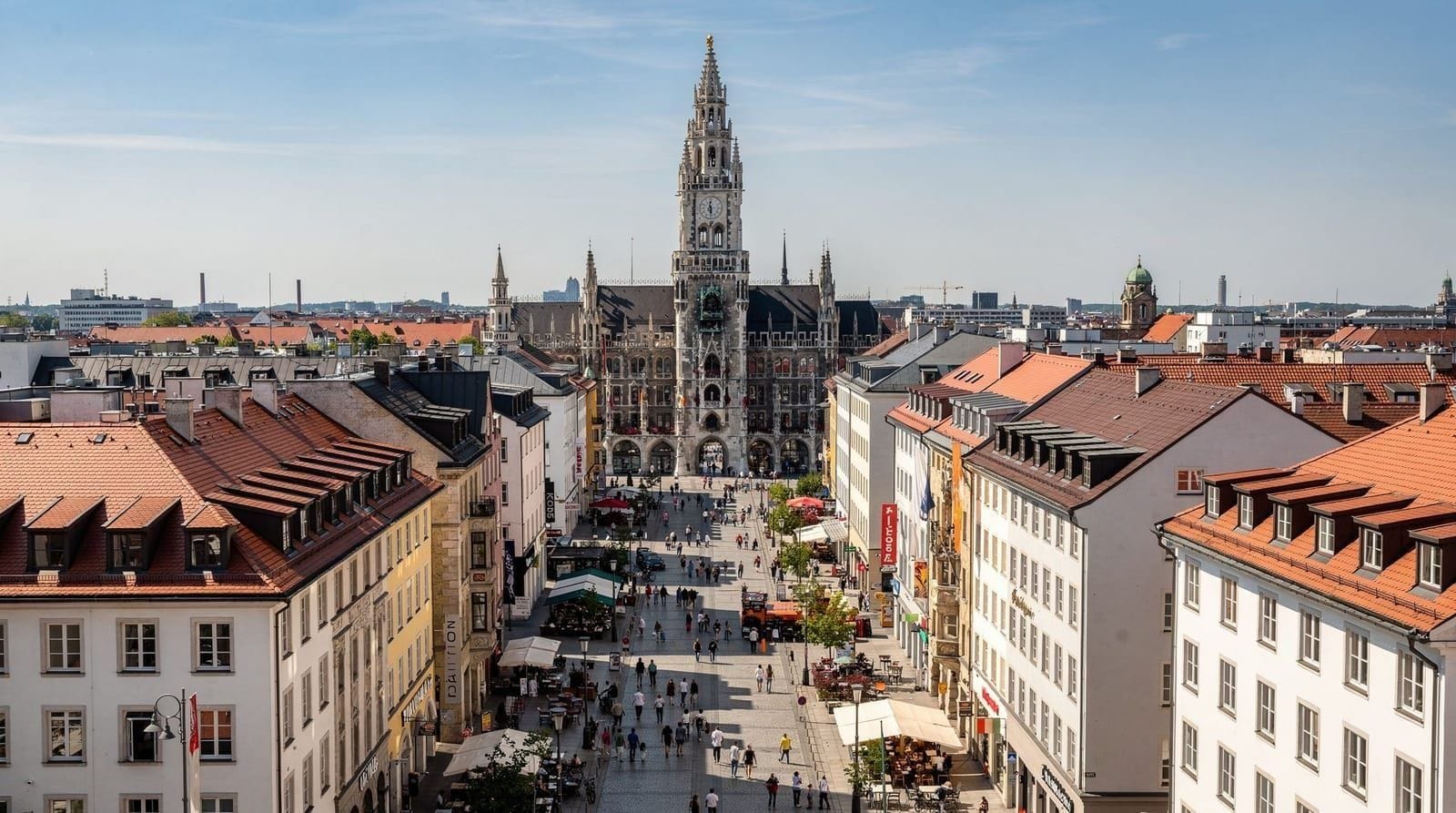
Munich: old town walking tour
What is the best classical music venue in Munich?
The Bayerische Staatsoper (Bavarian State Opera) at the Nationaltheater on Max-Joseph-Platz is one of the world's top five opera houses by any measure, performing around 70 productions per season. The Munich Philharmonic, currently based at the Isarphilharmonie (HP8) in the Werksviertel, performs under chief conductor Lahav Shani. The Gasteig cultural centre is under major renovation until 2028.
A city that took opera seriously before most cities had it
Munich’s claim to classical music seriousness is not a marketing construction. The Bayerische Staatsoper was founded in 1653 — two centuries before Wagner premiered at Bayreuth, four decades before the founding of the Opéra Comique in Paris. The Munich court orchestra predates these by another century. When Richard Wagner needed a patron willing to fund productions on an impractical scale, he chose Munich and King Ludwig II, not Berlin, Vienna or Dresden.
| Where | Nationaltheater, Max-Joseph-Platz (Altstadt) |
| Cost | standing room around €10; seats from around €20–150+ |
| Time needed | 2.5–4 hours depending on the opera |
| Getting there | U3/U4/U5/U6 to Odeonsplatz or Marienplatz |
| Best time | book 4 months ahead for major productions; July for the Opera Festival |
This history matters for the present-day visitor. What you encounter at the Nationaltheater today is not a performing arts venue that has been rebranded to attract tourists. It is an institution with unbroken operational continuity across 370 years, one of the top five opera houses in the world by any critical measure, and a place where an evening ticket represents genuine cultural encounter rather than spectacle.
The city also has a second major tradition: orchestral music. The Munich Philharmonic and the Bavarian Radio Symphony Orchestra are two of Europe’s great ensembles, with contrasting identities. Understanding both streams — operatic and symphonic — opens Munich’s classical scene significantly.
Comparing Munich’s major classical venues
| Venue | Resident ensemble | Character | Getting there |
|---|---|---|---|
| Nationaltheater | Bayerische Staatsoper | Grand, formal, historic | U3/U4/U5/U6 Odeonsplatz |
| Isarphilharmonie (HP8) | Munich Philharmonic | Modern, excellent acoustics | S-Bahn Ostbahnhof |
| Herkulessaal (Residenz) | BRSO (some concerts) | Ornate, atmospheric | U3/U4/U5/U6 Odeonsplatz |
| Cuvilliés Theatre | Occasional festival use | Intimate Rococo jewel box | U3/U4/U5/U6 Odeonsplatz |
| Prinzregententheater | Occasional opera/concert | Wagnerian deep-stage design | U4 Prinzregentenplatz |
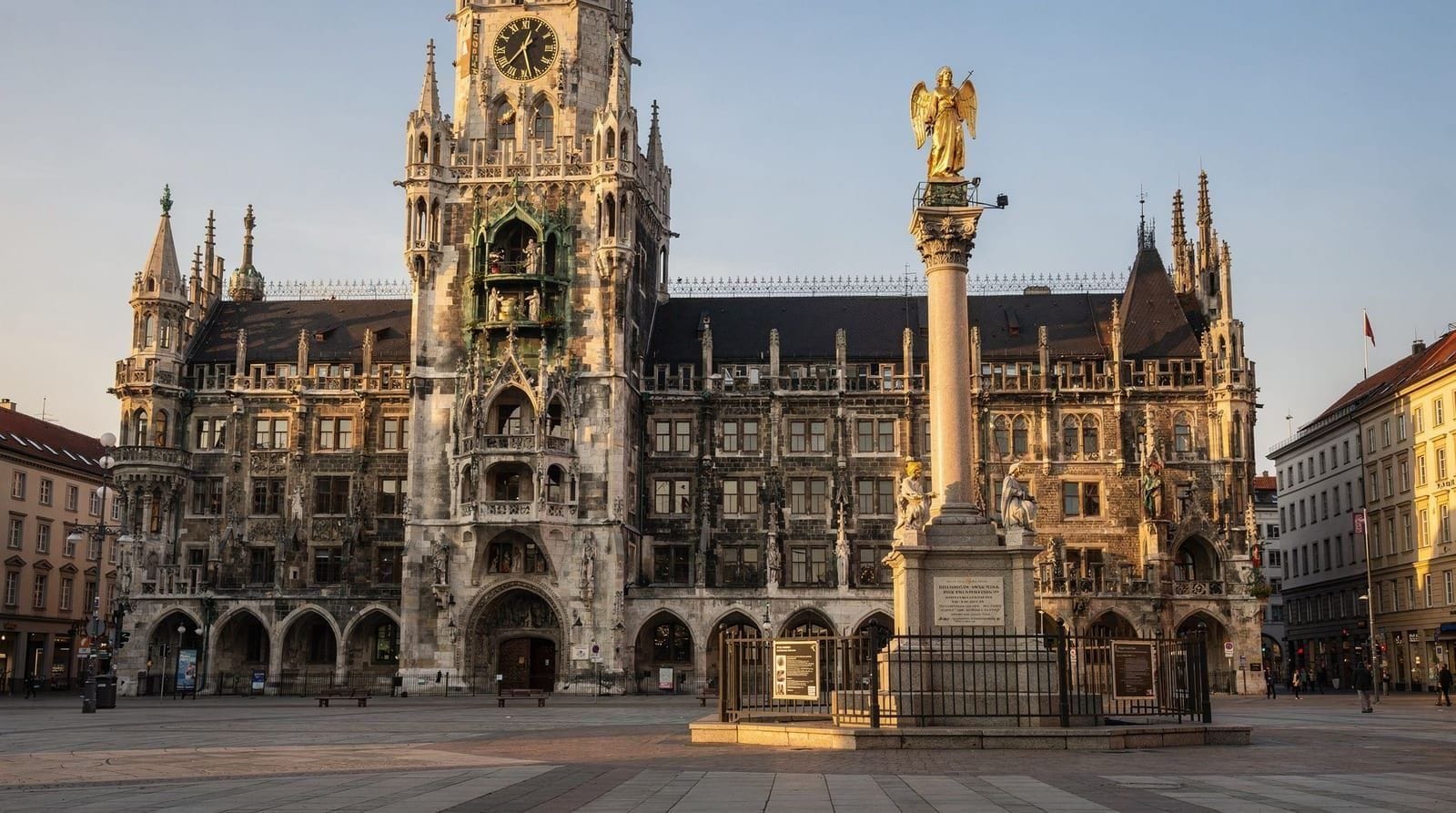
The building’s setting on Max-Joseph-Platz is worth understanding in its own right — it faces the Munich Residenz and sits within the same royal axis covered in the Munich royal history and Wittelsbach guide, which explains why the theatre, the palace and the surrounding neoclassical architecture read as a single coherent composition rather than separate buildings.
The Nationaltheater: architecture and history
The Nationaltheater occupies the north side of Max-Joseph-Platz, the formal square at the eastern end of Munich’s royal axis. The building is neoclassical in appearance, with a large portico of Corinthian columns fronting a colonnaded wing that curves around the square’s edge. What looks like a building of the 1820s is in fact almost entirely a postwar reconstruction.
The original Nationaltheater was designed by Karl von Fischer and opened in 1818. It burned down in 1823 and was rebuilt by Leo von Klenze. The second building stood until 3 October 1943, when British bombing destroyed most of it. The ruins stood for two decades while debate continued over whether to rebuild or create something new. The decision in 1958 to reconstruct the original faithfully was controversial at the time but is now seen as correct — the result is one of the most successful postwar reconstruction projects in Germany.
The current building reopened in 1963. Its stage is one of the largest in the world by depth and wing space, allowing simultaneous preparation of multiple productions in different stage configurations. The house seats around 2,100.
The Bavarian State Opera: programming and identity
The Bayerische Staatsoper presents approximately 70 opera and ballet productions per season, from September to July, with the Opera Festival in July as the culminating event. The programming spans the full operatic canon with particular strength in German repertoire — Mozart, Wagner, Strauss — reflecting the institution’s historical character.
Richard Wagner and Munich have a complicated but defining relationship. Ludwig II funded the premiere of Tristan und Isolde at Munich in 1865, with Hans von Bülow conducting and a cast assembled at enormous expense. Die Meistersinger von Nürnberg followed in 1868. Wagner’s relationship with Ludwig, and his affair with von Bülow’s wife Cosima, made Munich simultaneously his most important patron city and a place of personal scandal.
Richard Strauss was born in Munich in 1864. His father Franz Strauss was the principal horn player of the Court Orchestra. Richard served as chief conductor of the Bavarian State Opera (then the Munich Court Opera) from 1886 to 1898, returning in a senior capacity much later in his career. The Bavarian State Opera maintains a particularly strong connection to the Strauss repertoire — Ariadne auf Naxos, Elektra, Der Rosenkavalier and Capriccio appear regularly.
Current music director Kirill Petrenko, who served from 2013 to 2021 and built a globally recognized reputation before moving to the Berlin Philharmonic, transformed the company’s profile. His successor Simon Rattle served from 2023, continuing the house’s post-pandemic artistic momentum.
The Munich Opera Festival
The Münchner Opernfestspiele runs each July for approximately four weeks. Programming typically includes new productions, revivals of the season’s best work, and special concerts. Ticket demand exceeds supply significantly for headline evenings — a revival of a Strauss or Wagner production conducted by a major name can sell out within minutes of going on sale in March.
Practical realities:
- Tickets go on sale at staatsoper.de in March for the July festival
- Standing room (Stehplätze) is available daily from 10:00 at the box office for that evening’s performance — roughly 10 euros, limited places
- Dress code is formally smart but not rigid: dark suits and dresses for evening performances, more relaxed for matinees
- The interval is long enough to eat in the building’s restaurant or nearby on Max-Joseph-Platz
- Surtitles are in German and English for non-German operas
If you cannot get tickets to a main-stage production, consider concerts in the Cuvilliés Theatre (the Residenz’s Rococo jewel box, also used during the festival) or the Prinzregententheater in the Bogenhausen district. Munich old town walking tour — includes the Nationaltheater exterior and Max-Joseph-Platz
The Munich Philharmonic
The Munich Philharmonic was founded in 1893 under the name Kaim-Orchester, named after its founder Franz Kaim. Hans von Bülow, who had previously been central to the Wagnerian Munich decade of the 1860s, was associated with the orchestra in its early years. The ensemble’s 20th-century history includes a complex period under the Nazi regime — the orchestra played at official state functions — and a long postwar rebuilding process.
The Philharmonic’s identity was defined most distinctively by Sergiu Celibidache, who served as chief conductor from 1979 until his death in 1996. Celibidache was a Romanian conductor with an almost mystical approach to the tempo: his performances were famously slower than any other conductor’s interpretation of the same works. He refused to allow recordings to be released during his lifetime, believing that music’s meaning existed only in live performance. Posthumous releases of his Munich Philharmonic recordings have given him a global reputation that was largely invisible during his lifetime.
Lahav Shani, the Israeli conductor who became chief conductor in 2023, represents a significant generational shift. His programmes balance the core Austro-German repertoire with 20th-century works and some contemporary programming.
The Isarphilharmonie: a temporary home with permanent acoustics
The Gasteig cultural centre on the Isar River was Munich’s primary concert and event venue from its opening in 1985 until it was closed for major renovation in 2021. The renovation is expected to complete around 2028.
In the interim, a temporary structure was built in the Werksviertel district (near the Ostbahnhof) housing the Isarphilharmonie — also designated HP8, meaning Halle E in the Gasteig HP8 building. The irony of the situation is that the Isarphilharmonie has received better acoustic reviews than the original Gasteig hall. Critics and musicians consistently praise its sound quality, and there is some public debate in Munich about whether the Munich Philharmonic should return to the renovated Gasteig at all.
The venue is practical to reach: the Ostbahnhof is on S-Bahn lines 1, 2, 4, 6, 7 and 8. Walking from the station takes about 10 minutes. The Werksviertel is a converted industrial area that has become a cultural and food hub, with several good restaurants and bars open before and after concerts.
The Bavarian Radio Symphony Orchestra
Munich is unusual in having two world-class orchestras. The Bavarian Radio Symphony Orchestra (Symphonieorchester des Bayerischen Rundfunks, BRSO) is technically the house ensemble of Bavarian Radio (BR) but performs a full public concert season, traditionally at the Herkulessaal in the Residenz and the Gasteig (now at alternative venues during renovation).
The BRSO is widely considered one of Europe’s top five orchestras. Its chief conductors have included Eugen Jochum, Rafael Kubelik (who rebuilt the orchestra after wartime disruption), Colin Davis, Mariss Jansons (who served from 2003 to 2019 and raised the ensemble’s international profile significantly), and Simon Rattle from 2023.
The BRSO programmes somewhat differently from the Munich Philharmonic — more contemporary commissions, slightly more international guest conductors, and a stronger tradition of recording. Many of its concerts are broadcast live and available as streams via BR Klassik.
Other classical music venues and institutions
Prinzregententheater in Bogenhausen was built in 1901 as a Wagnerian festival theatre with Bayreuth-style deep staging. It is used for opera and concert performances throughout the season and is also the home of the Bavarian State Conservatory of Music (Musikhochschule) for some events.
Herkulessaal in the Residenz: the large banqueting hall of the Munich Residenz, with an ornate painted ceiling, functions as one of Munich’s premier chamber and orchestral concert venues. The acoustics are atmospheric if not technically perfect. Several summer concert series use the hall.
Hochschule für Musik und Theater München: the city’s conservatoire presents hundreds of free or low-cost concerts annually, from student ensemble performances to faculty recitals featuring internationally recognized musicians. The main building is on Arcisstrasse in Maxvorstadt.
Chamber music in churches: Several of Munich’s historic churches host regular classical concerts. The Michaelskirche on Neuhauser Strasse and the Frauenkirche on Frauenplatz both have active music programmes. The Frauenkirche guide has details on the cathedral’s regular liturgical music. The Asamkirche guide covers another of Munich’s churches that occasionally hosts Baroque chamber concerts in an interior built for exactly that kind of acoustic drama. Guided walking tour of Munich old town in English
Combining a concert evening with the rest of Munich
A classical music evening pairs naturally with the rest of an Altstadt day. See the Munich Altstadt guide for how to structure daytime sightseeing around Max-Joseph-Platz before an evening performance, and the Munich architecture guide for more on how the Nationaltheater’s postwar reconstruction fits the city’s broader pattern of rebuilding after WWII. For visitors weighing an opera evening against Munich’s other cultural options, the Munich best attractions guide places the Staatsoper within the wider list of top experiences.
If your evening runs late after a performance, the Munich nightlife guide covers where to find a late drink near the Altstadt — several bars around Odeonsplatz and Maximilianstrasse cater specifically to the post-opera crowd.
Booking strategy: what actually works
The practical reality of getting good seats at the Bayerische Staatsoper:
Book early for new productions and major conductors. Tickets go on sale at staatsoper.de approximately four months before the performance. Set a calendar reminder. New productions and conductors like Petrenko (now in Berlin) sell out in minutes.
Standing room (Stehplätze) is sold from 10:00 on the day of the performance at the box office on Max-Joseph-Platz. Around 200 tickets are available at roughly 10 euros each. The experience is exactly what it sounds like: you stand at the rear of the stalls or in a gallery. For opera, standing through a three-hour Wagner performance is genuinely demanding. For shorter programs this is a very good option.
Last-minute returns are released approximately two hours before curtain and can include premium seats returned by season ticket holders who cannot attend. These sell quickly.
Day seats (Tageskasse): some productions release a small number of tickets on performance day at the box office. Not reliable for popular shows but worth checking.
Subscriptions: if you are in Munich for an extended period, the Staatsoper’s subscription packages (Abonnements) offer guaranteed seats at reduced prices and priority access to difficult productions.
For the Munich Philharmonic at the Isarphilharmonie, the booking situation is generally less frantic. Tickets are available at mphil.de with more flexibility, except for concerts with internationally prominent guest conductors or soloists.
Munich in Wagner’s shadow
The 1860s Munich decade of Wagner deserves its own context. Ludwig II, 18 years old when he ascended the throne in 1864, was obsessed with Wagner’s operas before they ever met. He summoned Wagner to Munich within weeks of becoming king, provided him with an annual stipend, a villa and plans for a festival theatre.
Wagner’s Munich period produced the premieres of Tristan und Isolde (1865), Die Meistersinger von Nürnberg (1868), Das Rheingold (1869) and Die Walküre (1870). Hans von Bülow conducted Tristan and Meistersinger, even as his wife Cosima was conducting her affair with Wagner. Wagner was eventually asked to leave Munich in 1865 because his influence on the king and his extravagant lifestyle were causing court scandal. He later established Bayreuth as his permanent festival base.
The legacy is that Munich has some claim to being Wagner’s first and most important patron city. The Nationaltheater has a deeper investment in Wagner production than any house except Bayreuth itself. Walking tour through Munich’s historic district and Viktualienmarkt
Frequently asked questions about Munich opera and classical music
Is the Bavarian State Opera better than Vienna Staatsoper?
This is a genuinely contested question among opera specialists. Vienna has a longer continuous operational history and performs more productions per season, but Munich is generally considered to have more consistent musical quality in its current period. The comparison often comes down to specific productions, conductors and casts rather than a generalizable answer.
What should I wear to the opera in Munich?
Smart evening dress is standard for night performances — suits for men, dresses or equivalent for women. There is no enforcement, and you will see visitors in jeans at every performance, but the general atmosphere is formal. For matinees and at the Isarphilharmonie, dress codes are considerably more relaxed.
Are there opera tours or tours of the Nationaltheater building?
The Nationaltheater offers occasional backstage tours and open-house events, typically during the off-season and during special days (Tag der offenen Tür). These are listed on the Staatsoper website and can include stage and workshop access not available during normal operations.
How does the Opernfestspiele compare to Salzburg or Bayreuth?
Munich Opera Festival is considered the most prestigious operatic festival that combines Wagner, Strauss and the full standard repertoire in a major city setting — neither Bayreuth nor Salzburg does this. Bayreuth is exclusively Wagner; Salzburg mixes opera with orchestral concerts in a smaller city. Munich’s festival benefits from having the full state theatre apparatus — sets, costume workshops, chorus, orchestra — in a world capital. Ticket prices are broadly similar.
Do children attend performances at the Bayerische Staatsoper?
Some productions are specifically designed or adapted for younger audiences, and the Staatsoper occasionally runs family matinees with shorter runtimes and introductory explanations before the performance. Full-length evening productions are generally not aimed at young children given their length and formality. Check the season programme for family-labelled events if you want to introduce children to opera in Munich specifically.
Can I visit the Cuvilliés Theatre?
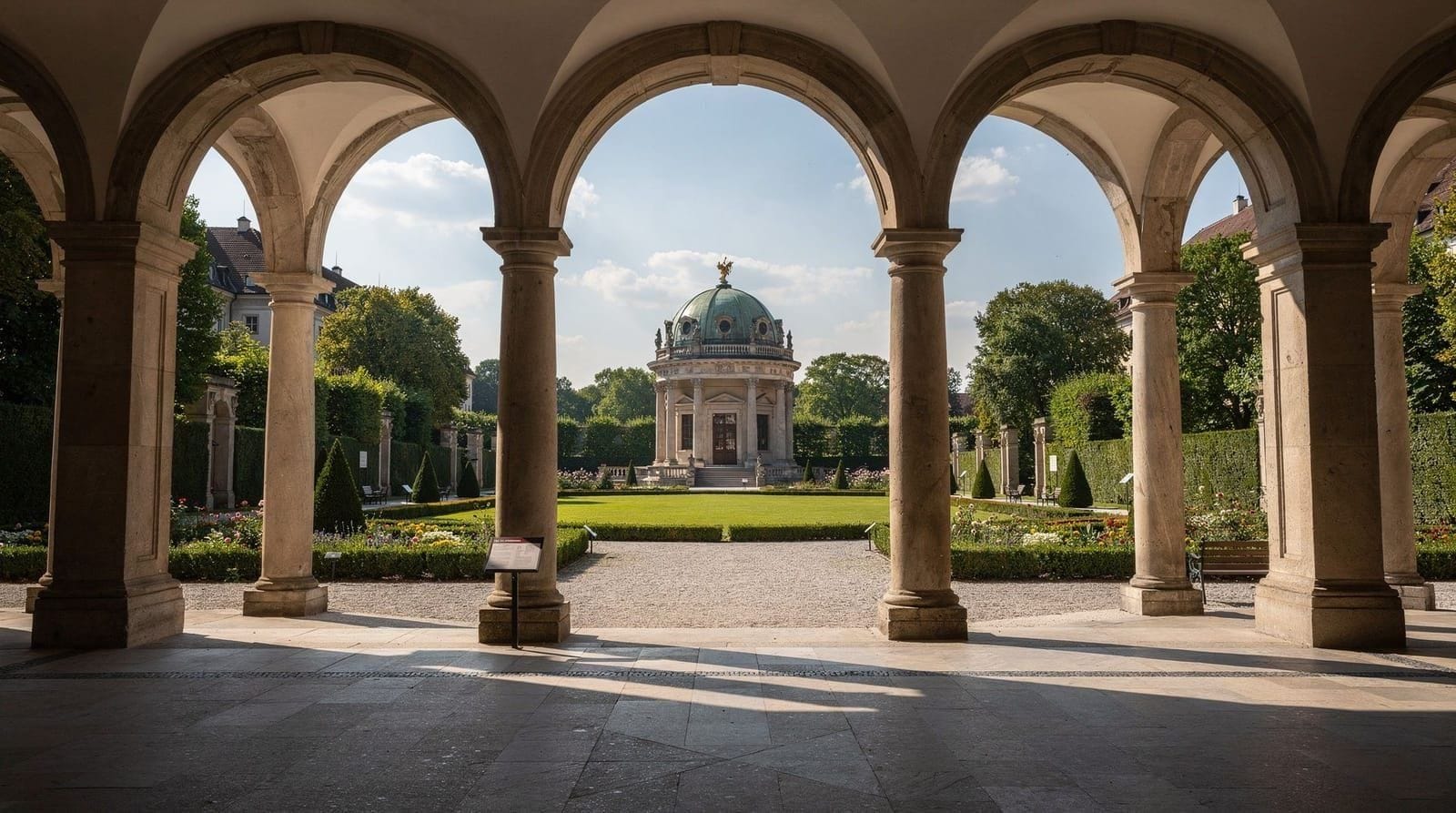
The Cuvilliés Theatre inside the Munich Residenz complex is open for visits during daytime hours when it is not in use for performances (check the Residenz website). It is also used for Opernfestspiele events — checking the festival programme sometimes reveals concert performances in the theatre. It seats around 400 and its gilded Rococo interior is extraordinary.
Where is the Gasteig located and can I visit the renovation?
The historic Gasteig building is on Rosenheimer Strasse, overlooking the Isar River south of the city centre. During renovation, it is not generally accessible. The Gasteig HP8 (Isarphilharmonie) operates from a separate building in the Werksviertel on Atelierstrasse, near Ostbahnhof. Renovation updates are published on gasteig.de with a projected reopening around 2028.
Is Munich’s classical scene suitable for first-time opera-goers?
Yes, and arguably a good place to start. The Nationaltheater’s surtitles in German and English make unfamiliar repertoire accessible, and the standing-room option removes the financial barrier to trying an evening without committing to a full-price ticket. Shorter works or matinee performances are a gentler introduction than a full-length Wagner opera, which can run four to five hours including intervals. If in doubt, ask the box office which upcoming production is considered the most approachable for newcomers — staff are generally happy to advise.
What other classical music festivals happen in Munich?
The Klavierfestival München (piano festival) takes place in spring. The Brucknerfest (dedicated to Anton Bruckner’s symphonies) is an occasional event. The BRSO presents a summer Serenade series at the Residenz and other venues. During Advent, numerous churches and halls host choral and orchestral concerts. The complete seasonal calendar is maintained at muenchen.de.
Top experiences
Bookable activities with verified prices and instant confirmation on GetYourGuide.