Füssen
Füssen guide — gateway to Neuschwanstein, southern terminus of the Romantic Road, Lech Falls, old town and practical base for Bavaria's royal castles in
Füssen: Neuschwanstein and Hohenschwangau Castle entry ticket and audio guide
Quick facts
- Distance from Munich
- 127 km (2 hrs by train, RB 84)
- Distance to Neuschwanstein
- 4 km from Füssen station
- Population
- Around 15,000
- Altitude
- 808 m above sea level
- Romantic Road
- Southern terminus
The town most Neuschwanstein visitors forget to look at
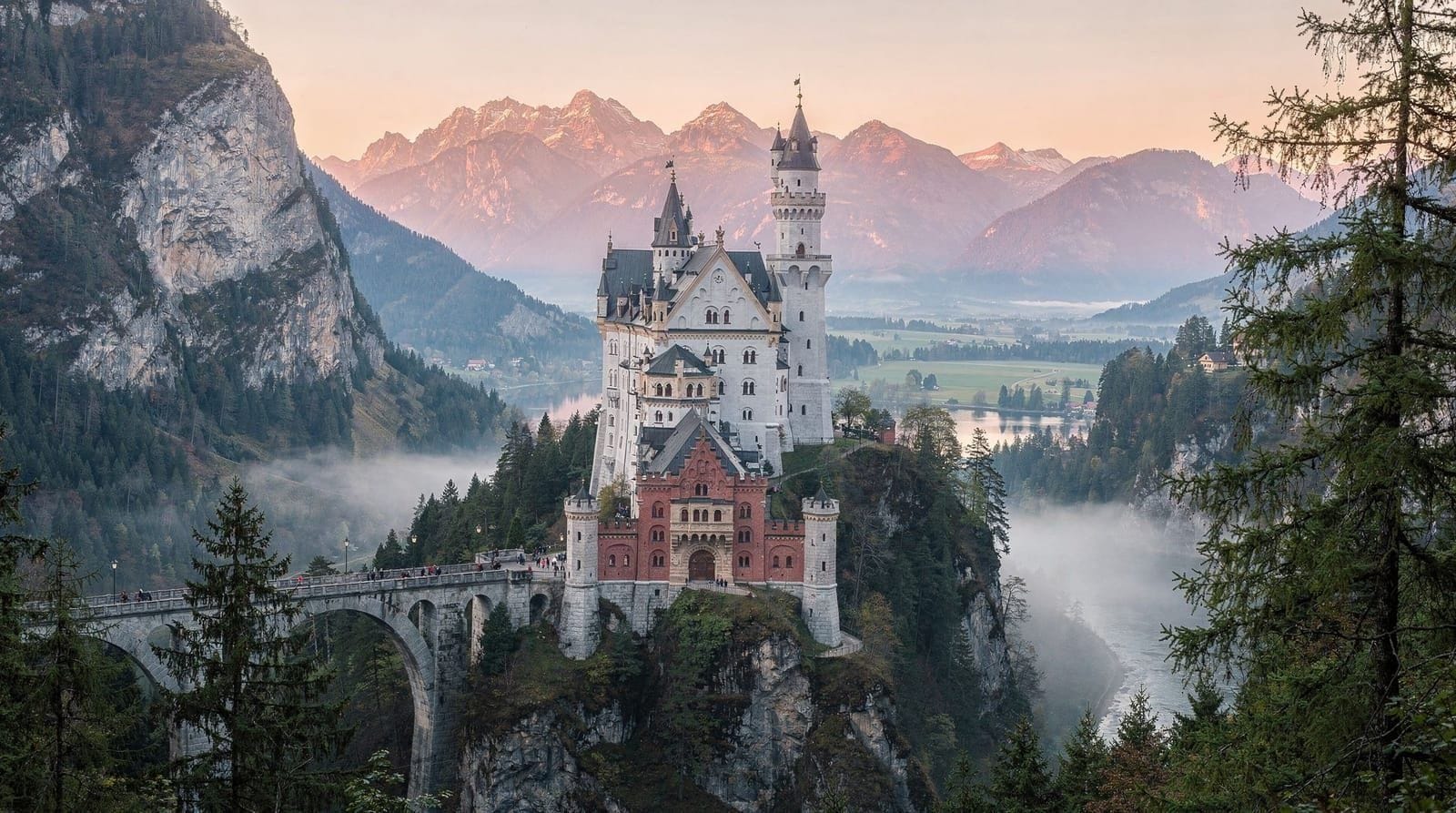
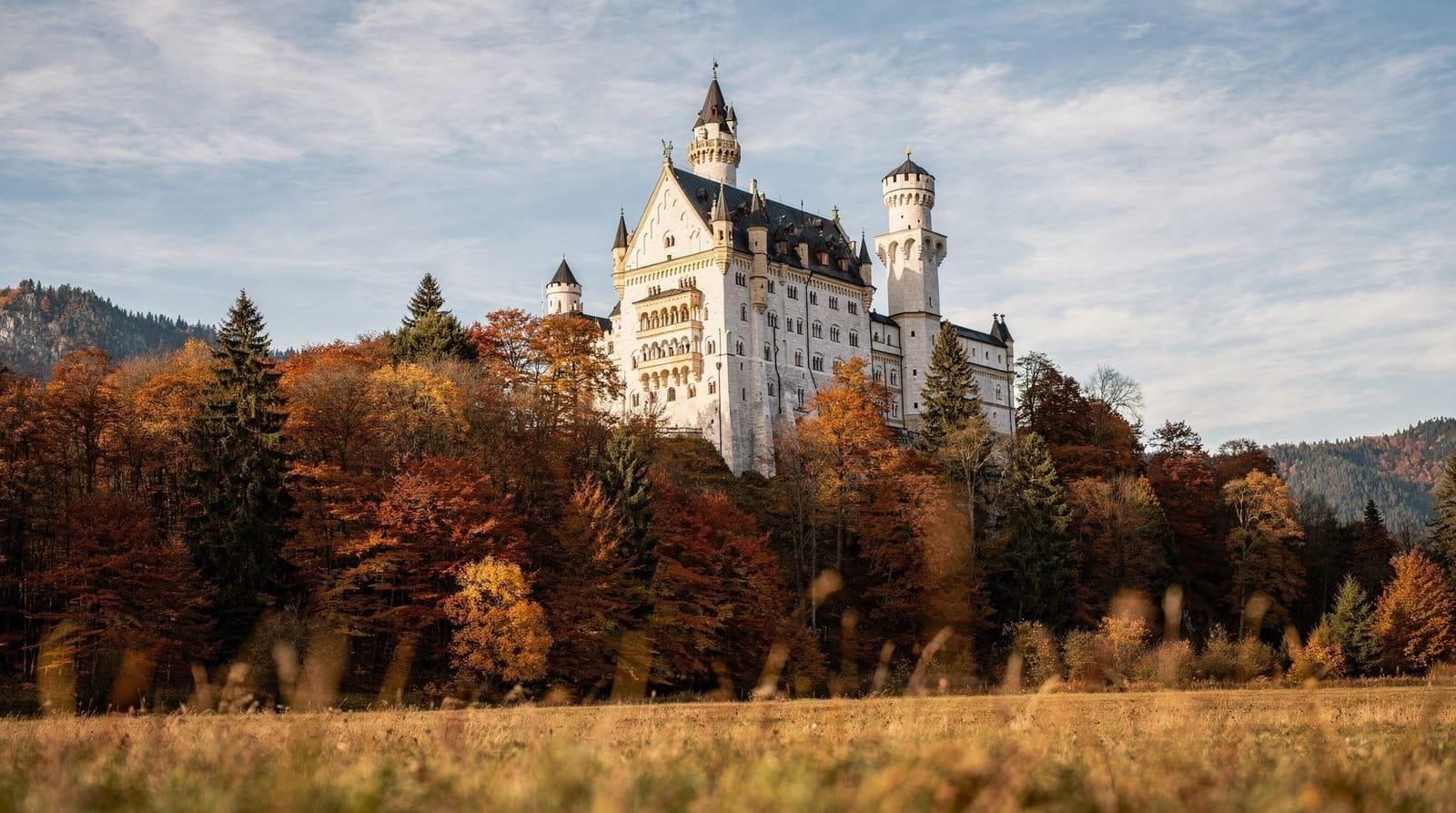
Füssen is the launch point for Bavaria’s most famous castles, and most visitors treat it exactly that way — a bus stop en route to Neuschwanstein. They arrive on the train, connect to a bus, spend the day at the castles, and head back to Munich without spending a single night. That is understandable and entirely workable. But staying in Füssen overnight makes the logistics considerably easier, the morning castle visit significantly less crowded, and the evening — spent in a compact Baroque old town with excellent restaurant options and the thundering Lech Falls just below the town walls — significantly more pleasant.
Füssen sits at 808 metres above sea level at the foot of the Alps, at the point where the river Lech exits its Alpine gorge and spreads into the pre-Alpine plateau. The town has been inhabited continuously since Roman times — the Via Claudia Augusta, one of the great Roman roads, passed through here. In the medieval period it was a prosperous market town, a stopping point for lute and violin makers (Füssen had the largest concentration of instrument makers in Europe in the 16th and 17th centuries), and the southern gateway to the passes into Italy.
Quick answer: Staying overnight in Füssen gives you early access to Neuschwanstein and Hohenschwangau before the Munich day-trippers arrive, and the old town is a genuine bonus rather than a consolation prize. One night is enough for the castles; two nights allows the Lech Falls gorge, cycling, and the High Castle.
| Where | 127 km southwest of Munich, at the southern end of the Romantic Road |
| Cost | RB 84 train from around €31 Bayern-Ticket; hotels from around €70–200/night |
| Time needed | 1–2 nights ideal; possible as a long day trip |
| Getting there | Direct RB 84 from Munich Hbf, around 2 hours |
| Best time | May–October for fewer crowds and warm weather; winter for snow photos of Neuschwanstein |
Getting there
By train: RB 84 from Munich Hauptbahnhof to Füssen, direct, approximately 2 hours. Runs roughly every 2 hours. Covered by Bayern-Ticket (from €31 for the first person). The train station is directly adjacent to the bus station where you pick up line 73 or 78 for the castles. See the Bayern-Ticket guide for current prices and how to buy.
By car: A96 west from Munich, then B472/B17 south through Kaufbeuren and Schongau. Approximately 1 hour 45 minutes in normal traffic. Parking in Füssen town centre costs €1–2 per hour in paid zones; hotels typically have their own parking or partner garages.
From the castles: Bus 73/78 runs from Hohenschwangau back to Füssen bus station in about 9 minutes, every 30 minutes. Last buses in the evening run until approximately 20:00 in summer — check the current timetable as it changes seasonally.
Füssen’s old town
The Altstadt (old town) of Füssen occupies a compact peninsula between the river Lech and the Forggensee lake. Most of it is pedestrianised and takes about 30–45 minutes to walk through at a leisurely pace.
Reichenstraße: The main shopping street, lined with 18th-century painted facades in Baroque style. Many buildings feature Lüftlmalerei — Bavarian external murals depicting religious scenes or decorative patterns. The real thing, not a tourist reconstruction.
Hohes Schloss (High Castle): The late-Gothic palace of the Prince-Bishops of Augsburg, built in the 15th century. It overlooks the old town from a rocky outcrop and houses a collection of late-Gothic panel painting and Swabian art (entry approximately €7). The courtyard features trompe-l’oeil architectural painting — the windows and towers are flat paintings that look three-dimensional. Worth 20 minutes of your time even if you only go as far as the courtyard.
St Magnus Basilica: The large Baroque church attached to the former Benedictine monastery of St Mang, founded in the 9th century. Interior in the heavy, exuberant Bavarian Baroque style — gilded stucco, ceiling frescoes by Franz Georg Hermann (1726), and the crypt housing the tomb of St Magnus himself. Free to enter.
Museum der Stadt Füssen: In the former monastery building, covering Füssen’s history as a centre of lute and violin making, plus Roman-era finds. Entry approximately €6.
Eating in Füssen: The Gasthof Quellenhof on Weidachstraße has reliable Bavarian food (Wurstsalat, Schnitzel, Kasspätzle) at local prices. Zum Hechten on Ritterstraße has been operating for centuries and is the most historically interesting of the town restaurants. Both close between lunch and dinner service, typically 14:00–17:30.
Lech Falls
The Lechfall is one of the most dramatic waterfalls in Bavaria and arguably the most undervisited attraction in the Füssen area. The river Lech, dropping out of the narrow Lech Gorge, falls through a series of stone channels immediately below the town walls. From the viewing platform and bridge (free, open all hours), the gorge drops about 9 metres through bright turquoise water into a narrow canyon.
Location: 5 minutes’ walk south of Füssen train station, or 10 minutes from the old town centre. Follow signs for Lechfall or Mühlenbach.
Best time to visit: Spring and early summer when snowmelt fills the river. In late summer the flow is lower. At night, the falls are sometimes illuminated — check locally as lighting schedules vary.
Gorge walk: A path leads downstream from the falls through the Lechschlucht (Lech Gorge) to the ruins of Burg Falkenstein and beyond. The first section (to the suspension bridge, about 1 km) is accessible and has good views into the gorge. Further sections require sturdy footwear and are closed after heavy rain.
Southern end of the Romantic Road
The Romantische Straße (Romantic Road) is a 460-km tourist route running from Würzburg in the north to Füssen in the south, passing through some of Germany’s best-preserved medieval towns including Rothenburg ob der Tauber, Dinkelsbühl, and Augsburg. Füssen is the southern terminus — the end point of a journey that most visitors drive or take by bus over 2–4 days.
If you are arriving in Füssen from Munich and want context for the broader Romantic Road, the Romantic Road day trip guide covers the route and how to experience the highlights from Munich. The northern end of the road, including Rothenburg, is covered in the Munich to Rothenburg day trip guide.
Füssen also sits on the Via Julia Augusta, the Roman military road that predated the medieval pilgrimage and trade route. There are Roman-era finds in the town museum that contextualise this long history.
Cycling from Füssen
The Allgäu plateau around Füssen is exceptional cycling territory — relatively flat by Alpine standards, well-signed cycle paths, and spectacular scenery with the Alps as a backdrop.
Forggensee circuit: 36 km loop around the Forggensee reservoir (Bavaria’s largest lake by area, created in 1954 by damming the Lech). The path is almost entirely flat and paved. Bike rental from Aktiv Sport Ziegler on Rupprechtstraße (approximately €16/day for a standard bike, €25/day for an e-bike).
Füssen to Pfronten: 22 km round trip through the Ostallgäu countryside, largely on dedicated cycle paths. Pfronten has a ruined castle and several cafés.
Alpsee circuit: 7 km loop around the Alpsee lake below Hohenschwangau Castle — easily combined with a castle visit. Flat, well-signed.
Where to stay in Füssen
Staying in Füssen has a genuine logistical advantage over Munich: you are 4 km from the castle ticket centre rather than 127 km. The first bus to Hohenschwangau departs Füssen at around 07:30 (check current timetable), meaning you can be at the ticket centre when it opens at 08:00.
Hotel Hirsch: Traditional 4-star hotel on Kaiser-Maximilian-Platz, central, good restaurant, parking available. Room rates from approximately €120–180/night.
Hotel Sonne: 3-star, on Prinzregentenplatz, good value, close to the Lechfall. From approximately €85–130/night.
Gästehaus Schlosskrone: 3-star, smaller, centrally located. Budget end of midrange, from approximately €70–100/night.
Hotel Luitpoldpark: 4-star with pool, slightly outside the old town centre, larger property with business hotel feel. From approximately €140–200/night.
For campers: Camping Bruggermühle, 2 km south of town on the Lech, has pitches from approximately €22/night plus per-person charge.
Practical tips
When to arrive in Füssen: If catching the first morning bus to the castles matters, stay the night before. If you are a day-tripper from Munich, take the 07:50 RB 84 departure from Munich Hauptbahnhof (check current timetable on bahn.de) to arrive in Füssen around 10:00, giving you a morning start.
Left luggage: Coin lockers at Füssen train station (€2–4 depending on size). Use them before heading to the castles — there is no left-luggage service at the ticket centre or castle.
Supermarkets: REWE and Edeka in the pedestrian zone, open 07:30–20:00. Stock up on snacks and water here before heading to the castles — food at the castle is overpriced and the queues for the café add time.
Swimming: The Forggensee has public bathing areas at Waltenhofen (north shore) and Brunnen (east shore). Both are free, with changing facilities in summer. Water temperatures reach 20–22°C in July.
Winter visits: Füssen is accessible year-round. Neuschwanstein is open in winter with reduced hours (10:00–16:00) and smaller crowds. The town itself is quieter but the Christmas market (mid-November to late December) is pleasant and far less commercialised than Munich’s.
For the full context of visiting the castles themselves, see the Neuschwanstein Castle guide and the Hohenschwangau Castle guide. Neuschwanstein Castle ticket and guided tour from Füssen
Hiking around Füssen
The Allgäu Alps begin immediately south of Füssen, and there are genuine hiking options ranging from easy valley walks to full mountain routes, most accessible without a car from the town itself.
Tegelberg (1,720 m): The most prominent mountain immediately above Hohenschwangau. A gondola cable car (Tegelbergbahn) operates from the valley floor (Tegelberg station, reached by bus from Füssen or Hohenschwangau) to the summit, where there are panoramic views of Neuschwanstein, the Forggensee, and the Bavarian foothills. A hang-gliding and paragliding launch site at the top. Walking up from the valley floor takes approximately 3–4 hours on a marked trail. The gondola descent is approximately €19 return (2026 estimate — confirm at the cable car).
Lechfall Gorge walk: From the Lechfall (10 minutes from Füssen station), a trail follows the Lech Gorge downstream through dramatic limestone scenery for about 3 km to the village of Füssen-Walder. Marked path, some steep sections, closed after heavy rain. Allow 1.5 hours one way.
Schwangauer Bergweg: A circular walk from Schwangau (the village below Neuschwanstein) up through the forest, past the Pöllat Gorge, and returning via the Marienbrücke footpath. Approximately 7 km, 300 metres altitude gain, 3 hours round trip. Combines well with a castle visit — do the walk in the morning and the castle tour in the afternoon.
Pindartal circuit: A quieter valley east of Füssen, accessible by bike or on foot, with several small alpine farms (Almen) selling local cheese. The Buronhütte on the circuit offers cold drinks and Brotzeit (bread and cheese) at reasonable prices — not a tourist restaurant, but a working farm café. Allow 2–3 hours for the circuit.
Füssen in winter
Füssen is open and accessible year-round, and winter visits (December–February) have genuine advantages:
- Neuschwanstein in snow is photographically extraordinary. The classic shot from Marienbrücke with fresh snow on the castle and forested hillsides is worth the cold.
- Castle crowds drop by 60–70% compared to July. Timed entry slots are almost always available same-day.
- The Tegelberg has a 500-metre sledging run (rodelbahn) in winter — one of the most accessible and good-value winter activities in the Alps.
- Cross-country skiing (Langlauf) on prepared tracks around the Forggensee when snow conditions allow.
- Accommodation is significantly cheaper (typically 30–40% lower than July rates).
Drawbacks: the Venus Grotto at Linderhof is closed in winter (roughly November–March). Daylight hours are short. Bus services to the castles run on reduced winter timetables — check beforehand.
The Munich in winter guide has context for the broader winter visit to Bavaria, including dates for the Füssen Christmas market (typically early December).
What to buy in Füssen
The old town has a few genuinely worthwhile shops beyond standard tourist merchandise.
Geigenbau-Schule Füssen (violin-making school, on Augustinergasse): Füssen’s 400-year instrument-making history is not entirely a historical footnote. The professional school still produces a small number of graduates annually, and occasionally sells instruments from the teaching workshop. Not a tourist shop — if buying an instrument is not relevant, the exterior and the awareness of the tradition adds meaning to the walk around the old town.
Winzerer’s Confiserie (Reichenstraße): A proper confectionery shop selling Bavarian Lebkuchen, marzipan figures, and locally made chocolate. Not a chain. The Lebkuchen here are softer and less commercialised than the Nuremberg varieties.
Allgäu-Käse at the weekly market (Tuesdays and Saturdays, Marktplatz): The Allgäu region surrounding Füssen produces genuine alpine cheeses — Bergkäse, Emmentaler, Weißlacker. Buying direct from market vendors is both cheaper and more interesting than the supermarket version.
Postkartenläden on Reichenstraße: Several shops sell vintage and contemporary photographs of Neuschwanstein — useful if you want actual wall-quality images rather than smartphone shots.
The Bavarian food and Viktualienmarkt guide covers the broader food culture of Bavaria if you want to understand what you are buying.
Frequently asked questions about Füssen
Is it worth staying overnight in Füssen rather than day-tripping from Munich?
Yes, if you are visiting in summer. Staying overnight lets you arrive at the castle ticket centre at opening time (08:00), ahead of the Munich day-trippers who arrive from 10:00 onwards. You will have more choice of timed slots, shorter queues, and the castle approaches are significantly less crowded. Füssen itself is a pleasant small town with good restaurants and accommodation options.
How do I get from Füssen train station to Neuschwanstein?
Take bus 73 or 78 from the Füssen bus station (directly outside the train station) to the Hohenschwangau / Alpsee stop (9 minutes, runs roughly every 30 minutes). All tickets for Neuschwanstein are purchased or collected at the ticket centre adjacent to this bus stop, not at the castle itself.
What else is there to do in Füssen besides the castles?
The Lechfall waterfall (free, 5 minutes from the station) is spectacular. The old town takes 30–45 minutes to walk and has good architecture and a few good restaurants. The Hohes Schloss is worth 20–30 minutes. The Alpsee lake is a pleasant 3.5 km walk. Cyclists will enjoy the Forggensee circuit. One night is enough to combine the castles with a proper look at the town.
Is Füssen on the Romantic Road?
Yes — Füssen is the southern terminus of the Romantische Straße, Germany’s most famous scenic tourist route. The Romantic Road runs 460 km north to Würzburg, passing through Augsburg, Rothenburg ob der Tauber, and Dinkelsbühl. The northern start point is covered in the best day trips from Munich guide.
How long is the train from Munich to Füssen?
The direct RB 84 regional train takes approximately 2 hours from Munich Hauptbahnhof. Services run roughly every 2 hours. The Bayern-Ticket covers this journey. Check bahn.de for current timetables and the Munich to Bavaria by train guide for route planning.
Is one night in Füssen enough, or should I stay two?
One night covers the essentials — an early castle ticket-centre arrival and a walk through the old town and Lechfall. A second night is worth adding if you want the Forggensee cycling circuit at a relaxed pace, a proper Lech Gorge walk beyond the first accessible kilometre, or time for the Hohes Schloss and violin-making museum without rushing between castle time slots.
What is the cheapest way to visit Füssen and the castles from Munich?
A Bayern-Ticket (from €31 for the first traveller, cheaper per person in a group) covers the RB 84 train both ways plus local buses to the castles. Combined with self-catering from a Füssen supermarket rather than eating near the ticket centre, and the free Lechfall and old town, a budget day is realistic for well under €60 per person including castle admission.
What is the Forggensee and how do I get there?
The Forggensee is Bavaria’s largest reservoir by surface area, 2 km north of Füssen town centre. Formed by a dam across the Lech River completed in 1954, it covers 15 km² when full. Accessible by foot, bike, or local bus. Bathing beaches at Waltenhofen and Brunnen are free. The lake is primarily visible and accessible by bike — the 36 km circuit is flat and well-marked. Füssen: Neuschwanstein and Hohenschwangau entry ticket with audio guide
Füssen by season
| Season | Castle crowds | Weather for hiking/cycling | Notes |
|---|---|---|---|
| May–June | Moderate, building toward summer | Good, occasional rain | Green Alpine scenery, Forggensee still cool |
| July–August | Peak, longest queues at the ticket centre | Warm, best for the Forggensee circuit and swimming | Book accommodation weeks ahead |
| September | Thinning noticeably | Excellent, clear light | A strong month for photography without midsummer crowds |
| October | Quiet | Good but shortening days | Autumn colour on the Tegelberg slopes |
| November–February | Drops 60–70% versus July | Limited; some trails and the Venus Grotto at Linderhof closed | Best value accommodation; classic snow photos of the castle |
One night versus two: what changes
A single overnight in Füssen already solves the main problem — reaching the castle ticket centre before the Munich day-trip buses arrive around 10:00. A second night adds meaningful extras rather than just more castle time: a proper Lechfall gorge walk beyond the first accessible kilometre, the Forggensee cycling circuit at an unhurried pace, and time for the Hohes Schloss and the violin-making museum without squeezing them between castle timings. For most visitors, one night covers the essentials; two nights turns Füssen from a castle gateway into a destination in its own right.
Füssen for cyclists and hikers who skip the castles entirely
Not every visitor comes for Neuschwanstein. The Allgäu around Füssen is genuinely good standalone hiking and cycling territory, and a growing number of visitors use the town purely as a base for the Forggensee circuit, the Tegelberg cable car and paragliding launch, and the quieter Pindartal valley, treating the castles as optional rather than the point of the trip. For this kind of visitor, two or three nights makes more sense than one, spread across a cycling day on the Forggensee loop, a half-day hike to the Tegelberg summit or the Lechfall gorge, and a slower exploration of the old town’s instrument-making history and Baroque churches without any castle time pressure at all.
Top experiences
Bookable activities with verified prices and instant confirmation on GetYourGuide.