Munich in winter — what to expect from November to February
Munich: Bavarian beer walking tour with samples and food
Is Munich worth visiting in winter?
Yes, genuinely so. Christmas markets run late November through 24 December, the Tollwood winter festival fills Theresienwiese in December, skiing day-trips to Garmisch-Partenkirchen are feasible on a Bayern-Ticket, and the major museums are at their least crowded. Expect cold (often below 0°C), some slush, and short days, but an authentically Bavarian atmosphere most summer visitors never see.
Why winter is one of Munich’s better-kept travel secrets
Ask most visitors when to go to Munich and they will say summer or Oktoberfest. They are not wrong, but they are missing something. Winter in Munich is the season when the city stops performing for tourists and goes back to being itself. The Christmas markets are genuinely old and genuinely local. The beer halls are warm and navigable without elbowing through crowds. The museums are sparsely visited. And the snowcapped ridgeline of the Bavarian Alps — visible from the English Garden on clear days — sits in perfect contrast to the city lights.
This guide covers the practical side of a Munich winter visit: what’s open, what to wear, what it costs, how to reach the ski slopes, and how to spend your time when daylight runs out by 4:30pm.
| Best months | December (markets), January–February (value, quiet) |
| Temperature | Often 0°C or below, sometimes down to -10°C |
| Christmas markets | Late November – 24 December |
| Daylight | Sunrise ~8am, sunset 4:15–4:30pm |
| Skiing | Garmisch-Partenkirchen, ~1h25 by train |
The Christmas markets: what they are and what to expect
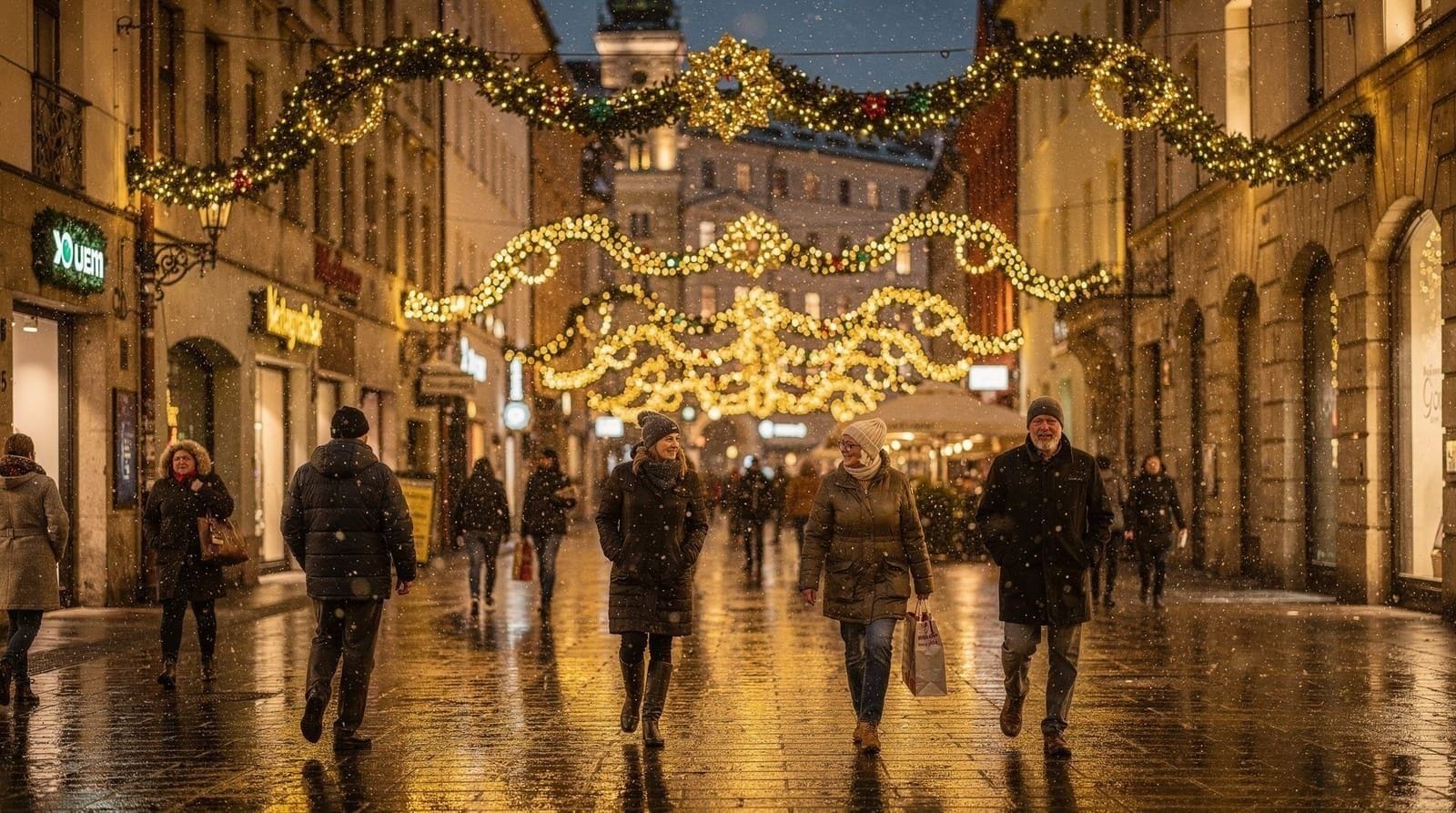
Munich’s Christmas markets are not a modern tourist invention. The Christkindlmarkt on Marienplatz has records going back to the 14th century, making it one of the oldest continuous Christmas markets in the German-speaking world. In 2026 it opens on Saturday 28 November and closes at 2pm on 24 December.
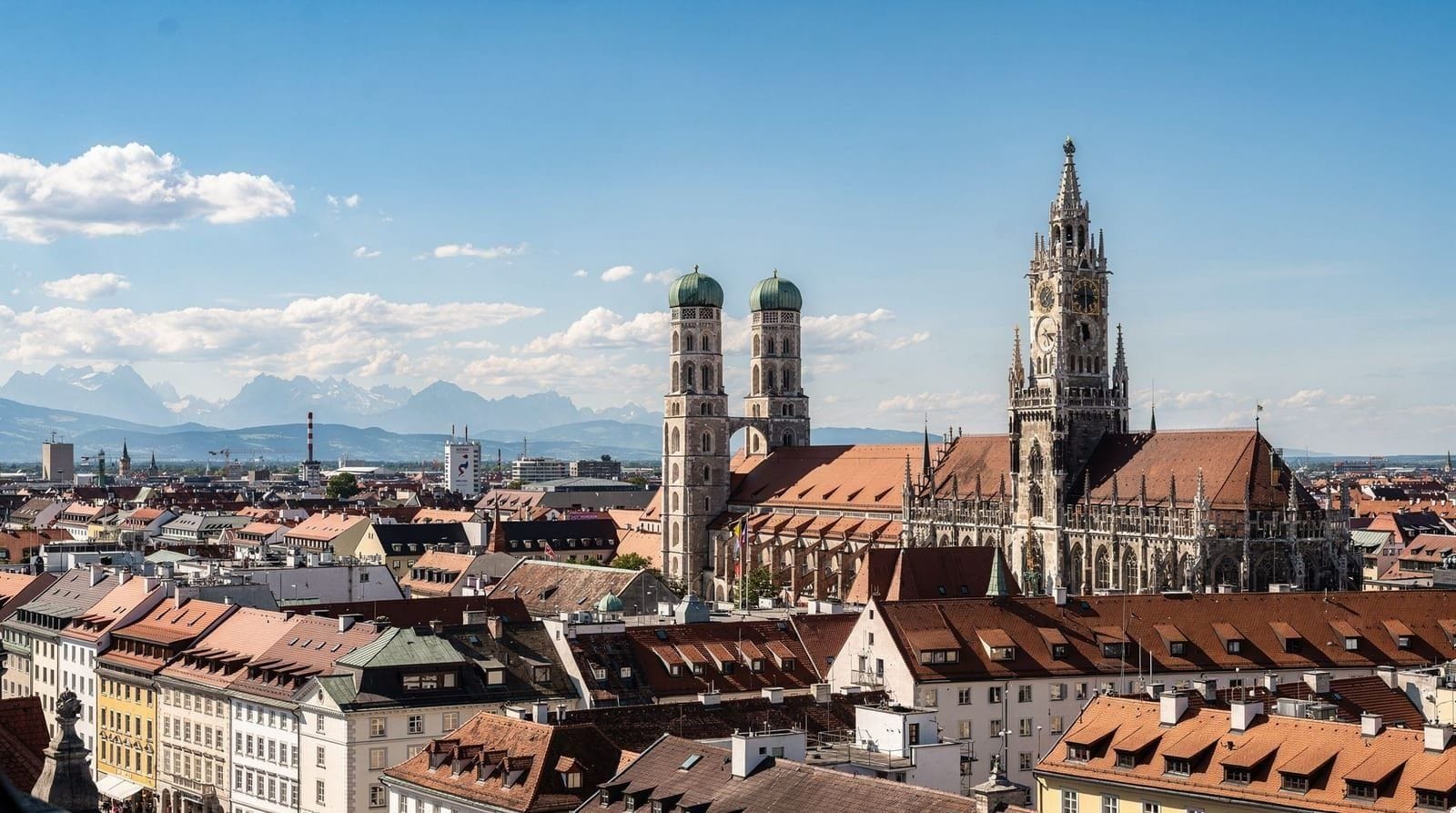
The market fills the square in front of the Neues Rathaus — the Gothic revival town hall whose Glockenspiel figures you can watch for free at 11am and noon daily. Stalls sell Lebkuchen (spiced gingerbread), carved wooden figures, hand-blown glass ornaments, and increasingly, tourist tat. Be selective. The quality varies enormously from stall to stall.
Glühwein (spiced mulled wine) costs around €4–5 per cup, plus a €3–4 deposit on the ceramic mug that you either return for a refund or keep as a souvenir. A serious Christstollen (fruit bread loaf) from a proper bakery stall costs €18–35 depending on size — buy a slice to try first. Gebrannte Mandeln (candied almonds) are €4–6 per bag and make the whole market smell like December.
Do not rely solely on Marienplatz. The market there is the most central and the most packed. The alternatives are worth seeking out:
Tollwood Winterfestival on Theresienwiese runs a similar calendar. It is less traditional and more eclectic — art installations, live music nightly, food stalls covering a dozen cuisines, and artisan craft vendors who are genuinely different from what you find elsewhere. Entrance to the grounds is free; you pay only for what you eat and drink. Getting there: U4/U5 Theresienwiese or Schwanthalerhöhe.
Medieval Christmas Market at Wittelsbacherplatz (near Odeonsplatz) is smaller but has good atmosphere — fire jugglers, mead, roasted meats, and merchants in period costume. Rough and cheerful.
Schwabing Christmas Market at Münchner Freiheit is a neighbourhood market rather than a tourist attraction. Locals from Schwabing and Maxvorstadt use it as an after-work spot. Prices are marginally lower than Marienplatz, the mulled wine is reliably good, and the crowd is mixed ages.
For more detail on Christmas market food, including which stalls to seek out for genuine Bavarian baking, see the dedicated food guide.
Winter month by month
| Month | Weather | What’s on | Crowds |
|---|---|---|---|
| Late November | Cold, often dry | Christmas markets open | Building |
| December | Coldest of the run-up, possible snow | Markets peak, Tollwood Winterfestival | Peak (weekends sell out) |
| January | Coldest month, occasional snow | Museums quiet, beer halls warm | Lowest of the season |
| February | Still cold, days lengthening | Fasching (carnival) build-up, skiing season continues | Low to moderate |
Beer halls in winter: the best time to visit
The outdoor beer garden season ends in October. From November through March, Munich’s beer culture retreats indoors, and this is when the halls come into their own.
Augustiner am Dom on Frauenplatz is the city’s most beloved local Augustiner pub — lower-key than the famous Augustiner-Keller, right next to the Frauenkirche, with a mix of tables and a warm interior. A Maß runs around €9.50.
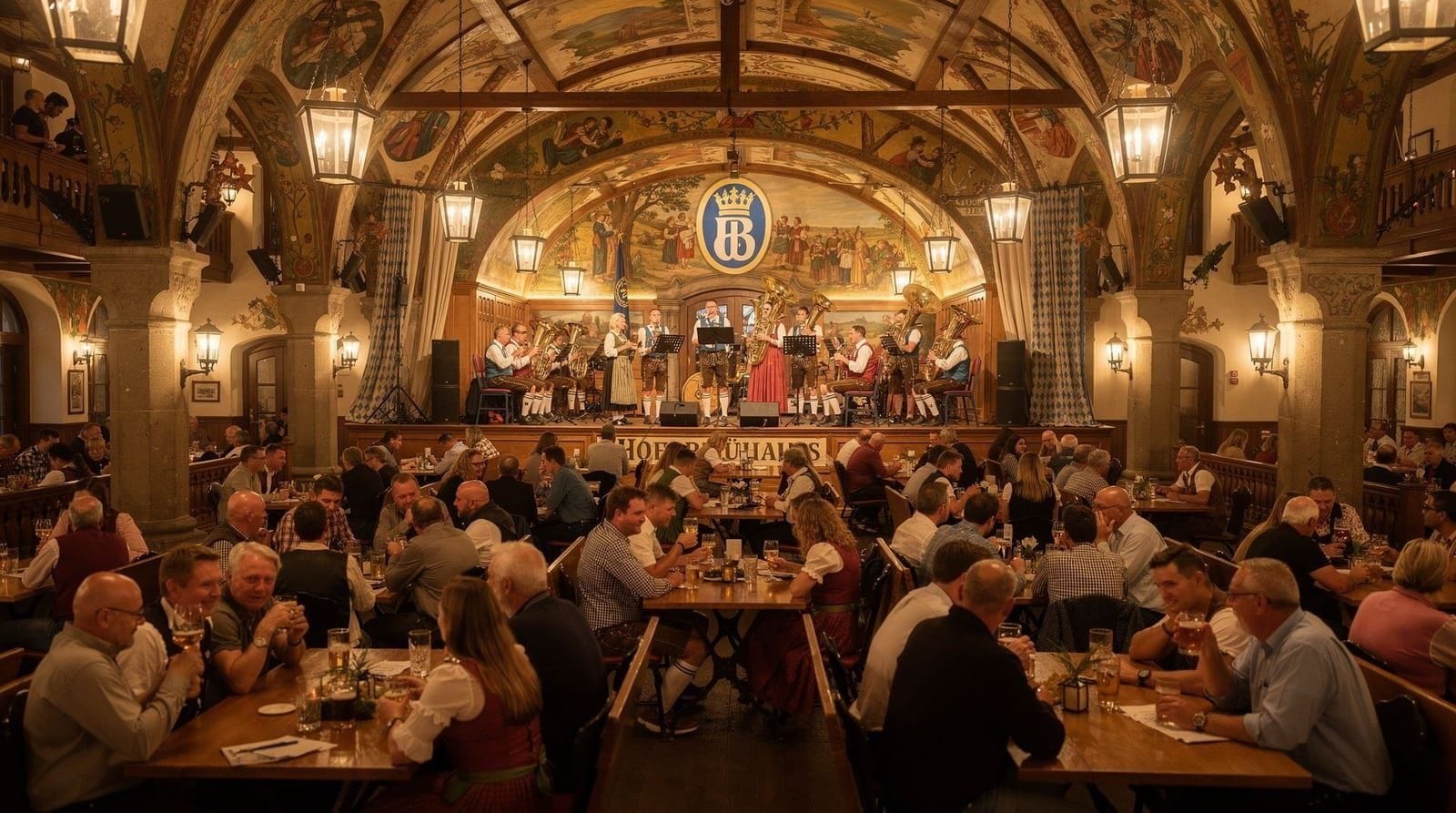
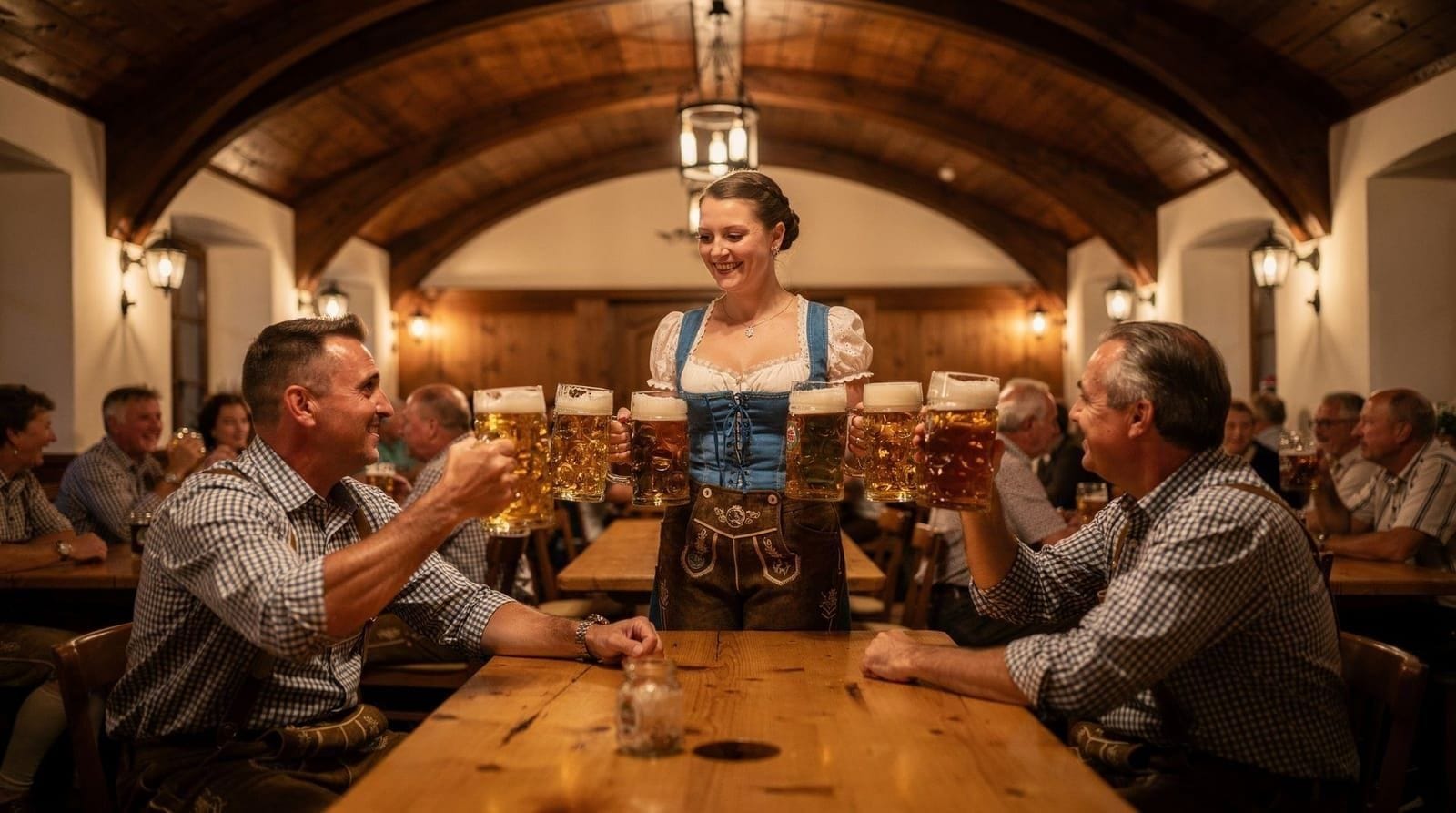
Hofbräuhaus on Platzl is unavoidable — 3,000 seats across multiple floors, oompah band every evening, tourists in lederhosen, locals who have given up caring. If you go once for the experience, go on a weekday and sit in the back hall (Schwemme) at a communal table. A Maß costs around €10.50–11. The food is competent Bavarian pub cooking — Schweinsbraten (roast pork) and Schweinshaxe (pork knuckle) are both solid.
Löwenbräukeller on Stiglmaierplatz is a proper local brewery hall, less visited by tourists, with a vast hall that feels genuinely historic. The Löwenbräu brewery connected to it has been operating since the 14th century.
A 3-hour guided tour of Munich’s beer halls and breweries is a practical way to navigate the landscape if you are new to the scene — a guide who knows which tables to request and how to read the menu makes the difference between a good evening and a great one.
For solo travellers, the main halls are welcoming of solo visitors — communal seating means you will not be sitting alone, and a basic knowledge of when to raise your Maß and say “Prost” is all the German you need.
Skiing day trips from Munich
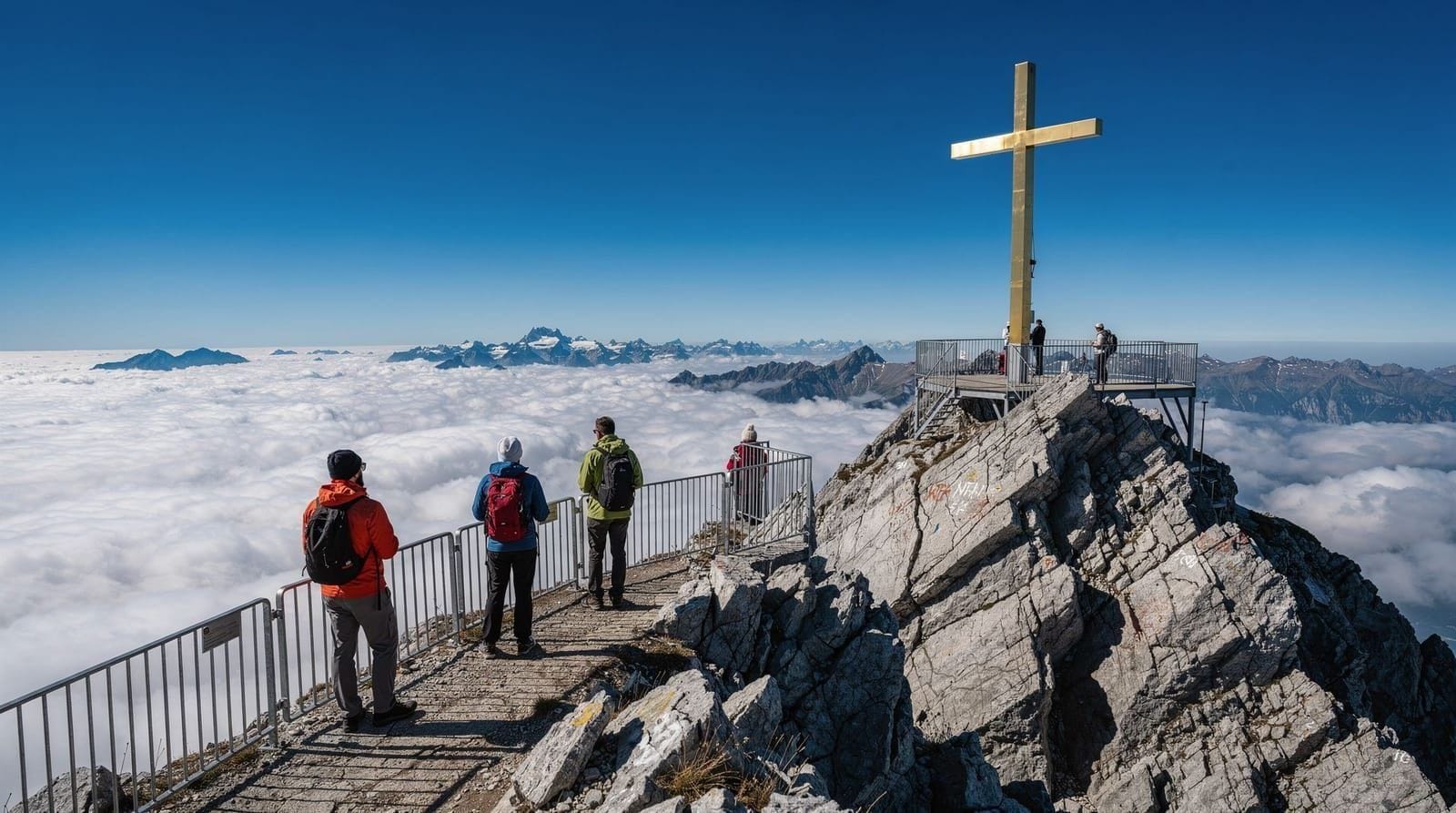
Munich sits roughly 60km north of the Bavarian Alps. On a clear day you can see the Zugspitze (2,962m — Germany’s highest peak) from the English Garden. Getting to the slopes takes between 90 minutes and two hours by train.
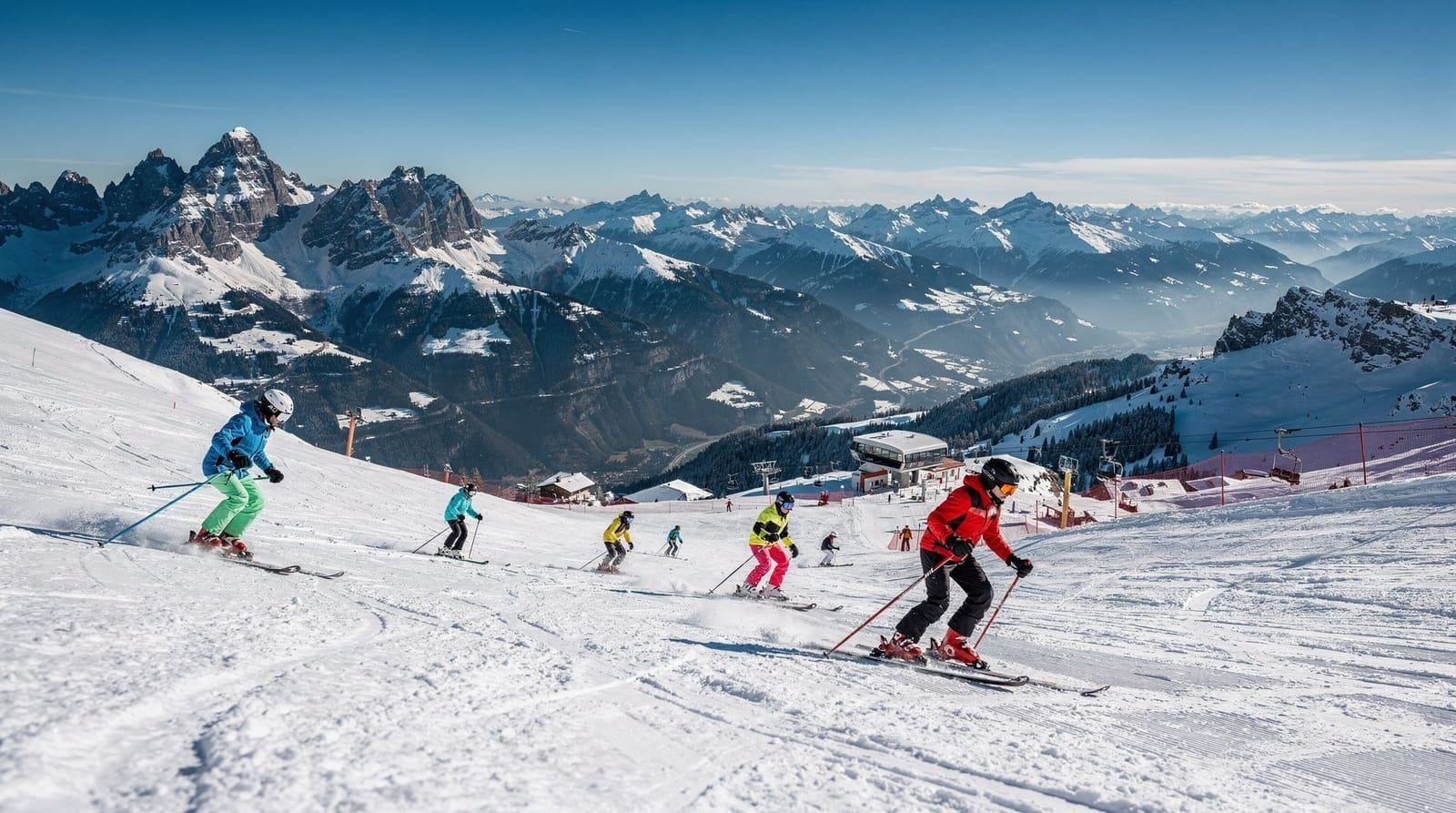
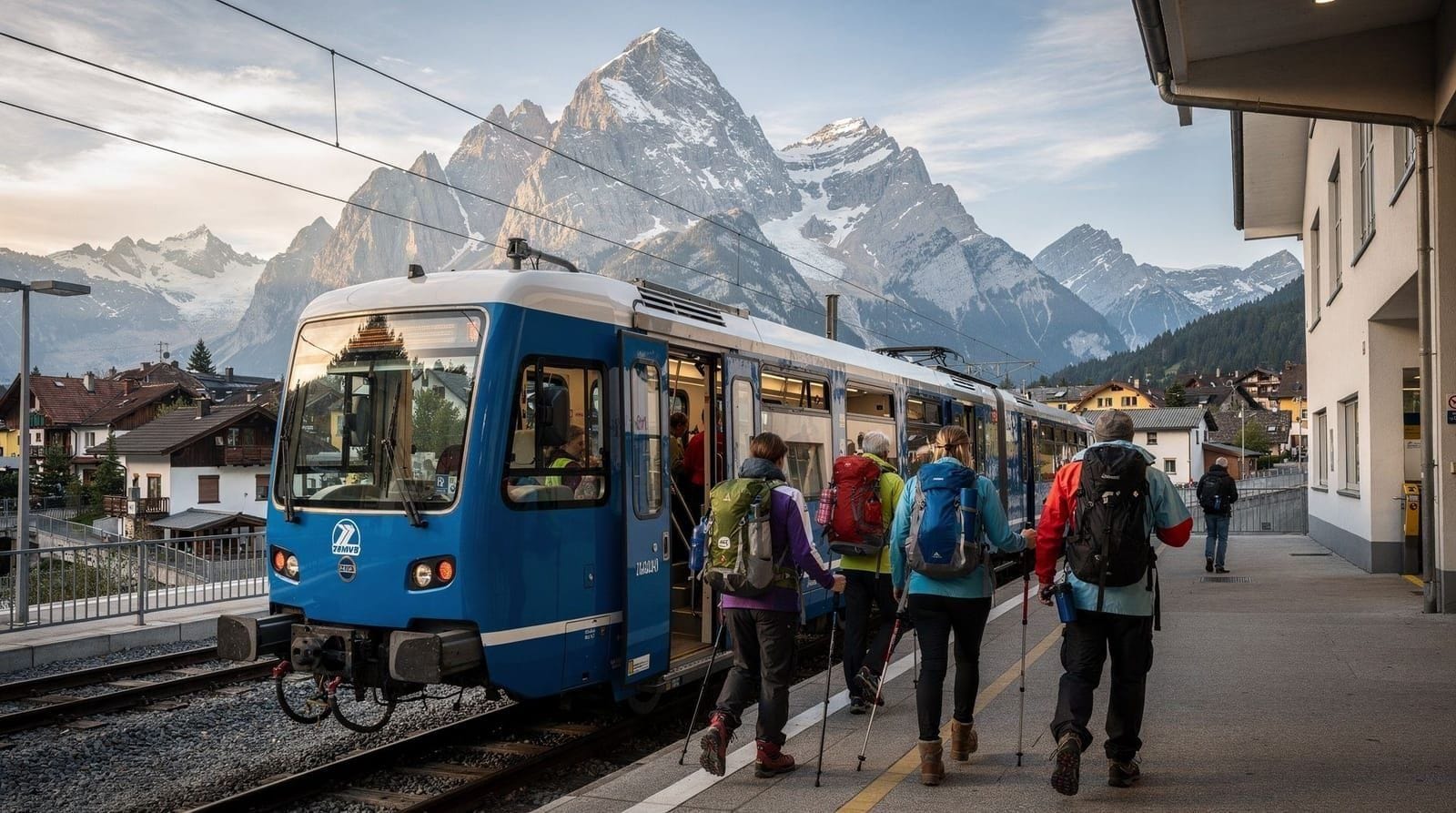
Garmisch-Partenkirchen is the primary target. The BOB Bayerische Oberlandbahn from Munich Hauptbahnhof to Garmisch takes around 1 hour 25 minutes. The Bayern-Ticket covers this journey and costs from €29 for up to 5 people — effective for a group day trip. Garmisch has two main ski areas: Zugspitze (highest, best for experienced skiers, cable car + cogwheel train access) and Garmisch Classic (more varied terrain, beginner-friendly). Ski rental in the town costs approximately €30–45/day for a full set.
For a thorough breakdown of getting there, lift pass prices, and which slopes suit which ability level, see the Munich skiing day trips guide and the Zugspitze day trip guide.
A guided van tour from Munich to Zugspitze and Garmisch removes the logistics entirely and is worth considering if you plan to combine sightseeing with skiing in one day.
Mittenwald (1 hour 20 min by train) is a quieter alternative. The Karwendel ski area above the town is smaller but excellent for intermediate skiers, and Mittenwald itself — a village famous for violin-making, with elaborate murals painted on its facades — is worth an hour of exploration beyond the slopes.
Museums and indoor culture
The saving grace of short winter days is that Munich’s museum landscape is exceptional.
Deutsches Museum on Museumsinsel is one of the world’s great science and technology museums. The collection spans mining, aviation, shipping, chemistry, astronomy, and more across 73,000 square metres. Allow a minimum of four hours; serious visitors come back for a second day. Entry costs €15 adults. Getting there: tram 16/17 or S-Bahn Isartor.
Pinakothek der Moderne, Alte Pinakothek, and Neue Pinakothek in Maxvorstadt form a museum cluster that takes a full day at a comfortable pace. The Alte Pinakothek holds one of Europe’s finest collections of old masters; the Pinakothek der Moderne has 20th-century art and design. Sunday entry to all three costs €1. See the Pinakothek museums guide for what to prioritise.
BMW Welt and BMW Museum together make an engaging half-day regardless of your interest in cars. BMW Welt (free entry) showcases current vehicles in a striking steel-and-glass building; the museum (€12) traces 100 years of automotive and motorcycle history. The architecture alone justifies the journey.
For visitors holding a city pass, the Munich museums pass covers most major venues and can represent significant savings over a multi-day visit.
Practical winter logistics
What to wear: A waterproof outer layer is essential — Munich winters are often wet rather than snowy. Thermal base layers for any outdoor time above a few minutes. Waterproof boots with grip: Munich’s pavements get icy in January, particularly in the early morning. Wool or down mid-layer for days when it drops below -5°C.
Daylight hours: Sunrise around 8am in December, sunset 4:15–4:30pm. Plan outdoor sightseeing in the midday block. The Christmas market stalls look better in the dark anyway — they are lit from around 4pm onwards.
Getting around: The Munich public transport system runs reliably through winter with no meaningful service reduction. S-Bahn and U-Bahn run every 10 minutes during the day. The Bayern-Ticket (day pass for up to 5 people on regional trains and all city transport) costs from €29 and is the most efficient way to handle a day trip.
Icy pavements and platform edges: Munich clears its main pedestrian streets promptly after snowfall, but side streets and smaller squares can stay icy for a day or more after a cold snap. Older cobbled areas of the Altstadt are the worst offenders — good grip on footwear matters more here than in most European winter cities.
Budget: Museum entry is the main cost. The Christkindlmarkt markets are free to enter; expect to spend €10–20 on Glühwein and snacks if you browse for an hour. A sit-down Bavarian meal at a mid-range restaurant runs €15–25 per person for a main and a drink. See the Munich budget guide for more detail.
New Year and Fasching — Munich’s lesser-known winter events
Beyond Christmas, two further Munich winter traditions are worth knowing about if your dates align.
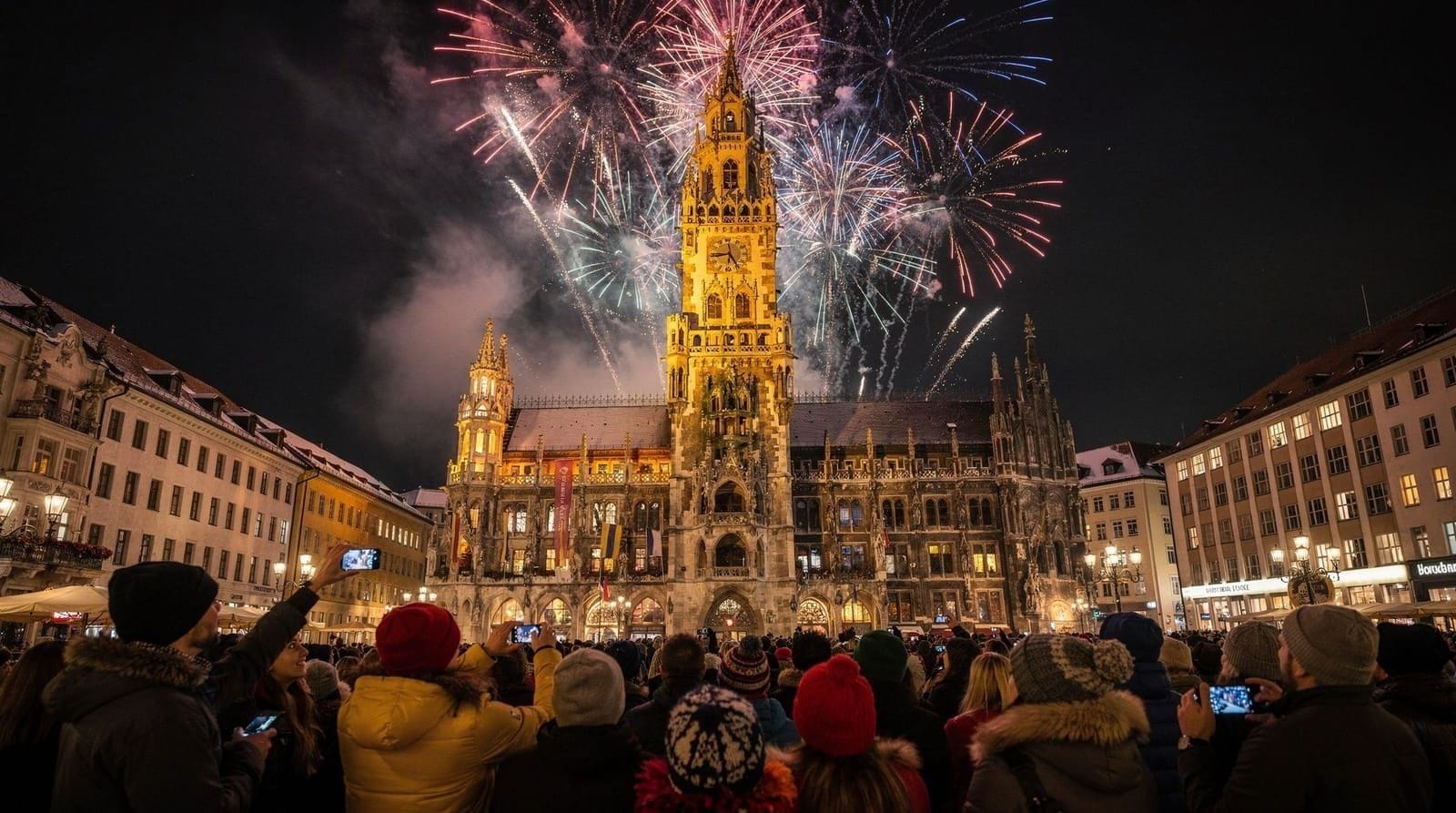
New Year’s Eve (Silvester). Munich’s Silvester is a genuinely local affair — Marienplatz and the surrounding old town fill with an informal, decentralised fireworks display set off by residents rather than one organised municipal show. It is chaotic, loud, and best watched from a rooftop bar or a friend’s balcony rather than street level with children. The Munich New Year guide covers the safest vantage points and what to expect.
Fasching (Bavarian carnival). Running from early January through Ash Wednesday (which falls in February or early March depending on the year), Fasching is Bavaria’s answer to carnival — costume parties, parades and a notably different, more playful mood than the solemn Christmas season. Munich’s Fasching is lower-key than Cologne’s or Rio’s, but neighbourhood parties and the Viktualienmarkt dancing event (Tanz der Marktfrauen, held on Fasching Tuesday) are worth timing a visit around if the theme appeals.
A typical four-day Munich winter itinerary
Day 1 — Old Town and Christmas markets: Start at Marienplatz for the Glockenspiel at 11am, explore the Christkindlmarkt, walk up to the Frauenkirche, continue to Viktualienmarkt (some stalls trade year-round), finish with dinner at Augustiner am Dom.
Day 2 — Museums: Spend the morning at Deutsches Museum or the Pinakotheks in Maxvorstadt. Afternoon: walk through Schwabing to the Münchner Freiheit Christmas market.
Day 3 — Skiing day trip: Train to Garmisch-Partenkirchen. Ski or ride the Zugspitze cable car; return to Munich by 7pm. Evening at a beer hall.
Day 4 — Nymphenburg and beer culture: Nymphenburg Palace opens year-round; the main palace and Marstall (carriage museum) are open through winter. Afternoon at the Tollwood Winterfestival on Theresienwiese.
What is closed or reduced in winter
Beer gardens close by mid-October and do not reopen until late April or early May. The outdoor pool at Olympiapark closes. Some boat hire on the English Garden lake closes. A handful of smaller neighbourhood attractions keep reduced hours. The English Garden is fully walkable year-round; the Eisbach river surfers are there every day regardless of temperature.
The Christmas markets themselves close at 2pm on 24 December and do not reopen — the city switches to Stille Nacht (silent night) mode on Christmas Eve. Most restaurants are closed 24–26 December except hotel restaurants. If you plan to be in Munich over Christmas proper, book in advance and verify opening hours with your specific venue.
Frequently asked questions about Munich in winter
Is Munich good to visit in December?
December is one of Munich’s most atmospheric months. The Christmas markets, Tollwood festival, and winter beer culture all peak in December. The trade-off is short days and cold evenings. Book accommodation early — December weekends around the markets sell out months ahead.
How much does a Munich Christmas market trip cost?
The markets themselves are free to enter. Budget €15–25 for Glühwein and food at the market, €10–20 for a sit-down beer hall evening, and €0–15 for museums (the Pinakotheks cost €1 on Sundays, Deutsches Museum is €15). The real cost is accommodation — weekends in early December run €120–200+ per room in mid-range hotels.
Can I ski from Munich as a day trip?
Yes. Garmisch-Partenkirchen is 1.5 hours by train on a Bayern-Ticket. You can be on the slopes by 10am and back in Munich for dinner. Expect to spend €45–70 on ski hire, €50–70 on a day lift pass for Garmisch Classic, plus the Bayern-Ticket.
What’s the difference between Christkindlmarkt and Tollwood?
Christkindlmarkt on Marienplatz is the traditional Christmas market — wooden stalls, Glühwein, ornaments, Lebkuchen, religious imagery. Tollwood on Theresienwiese is a modern alternative festival with artisan stalls, world food, and live music performances. Both are free to enter. They have different characters and are worth visiting on separate evenings.
Are beer halls worth visiting in winter more than in summer?
For most visitors, yes. The crowds are smaller, tables are easier to find, the dark Bock and Dunkles beers are in season, and the atmosphere is more genuine. The outdoor beer garden season runs May–October; winter is purely about the halls.
Is the Englischer Garten worth visiting in winter?
Yes for a walk or jog, particularly if it has snowed. The Eisbach surfer is there year-round at the Haus der Kunst bridge. The Chinesischer Turm beer garden closes October–April, but the Chinese Tower and the open parkland are accessible and pleasantly quiet.
When should I book accommodation for Munich at Christmas?
As early as possible. December weekends in Munich — particularly the first weekend of Advent, typically late November — sell out by September. Weekdays in January and February are much easier to find last-minute and significantly cheaper.
Is Munich in January or February a good time to visit for value?
Yes, this is the best-value window of the year. Flights and hotels drop noticeably after the Christmas markets close, museums and the Deutsches Museum are at their quietest, and beer halls are easy to get a table at without booking. The trade-off is the coldest temperatures of the year and the shortest daylight, but for budget-focused, indoor-oriented visitors it’s a strong choice.
What is Fasching and is it worth visiting Munich for?
Fasching is Bavaria’s carnival season, running January through Ash Wednesday, with costume parties and neighbourhood events culminating in a lively Fasching Tuesday. It’s lower-key than Cologne’s carnival but genuinely fun if you’re already in the city — not typically a reason on its own to plan a Munich trip around, unlike the Christmas markets.
Top experiences
Bookable activities with verified prices and instant confirmation on GetYourGuide.