Munich Christmas guide 2026 — markets, dates, food and what to expect
Munich: Bavarian beer walking tour with samples and food
When is the Munich Christkindlmarkt in 2026?
The main Christkindlmarkt on Marienplatz opens Saturday 28 November 2026 and closes at 2pm on Thursday 24 December 2026. Tollwood Winterfestival on Theresienwiese runs a similar window — typically from late November to 23 December. The Schwabing market at Münchner Freiheit and the medieval market at Wittelsbacherplatz open in late November. Most markets run noon–9pm weekdays, from 10am at weekends.
Munich’s Christmas markets: what they are, why they matter
Munich’s Christkindlmarkt on Marienplatz has documentary records going back to 1310, making it one of the oldest continuously operating Christmas markets in the world. It predates Nuremberg’s famous Christkindlesmarkt by at least a century. That lineage matters not just as a marketing claim but as context: what happens on Marienplatz in December is genuinely old and genuinely Bavarian, not a 1980s tourist invention.
The city now has around a dozen distinct Christmas markets, each with its own character. This guide covers the main ones with honest crowd and value assessments so you can spend your time and Glühwein budget wisely.
| Dates 2026 | 28 Nov – 24 Dec (Marienplatz); similar window for Tollwood |
| Hours | Noon–9pm weekdays, 10am–9pm weekends (Marienplatz) |
| Best for atmosphere | Marienplatz, weekday evening |
| Best for food variety | Tollwood Winterfestival, Theresienwiese |
| Best for locals’ pace | Schwabing at Münchner Freiheit |
| Typical spend | €30–50 for an evening with drinks and snacks |
Christkindlmarkt Marienplatz: the original
Dates 2026: Saturday 28 November to Thursday 24 December (closes 2pm on Christmas Eve). Hours: Noon–9pm weekdays; 10am–9pm weekends and holidays. Location: Marienplatz, city centre. U3/U6/S-Bahn Marienplatz.
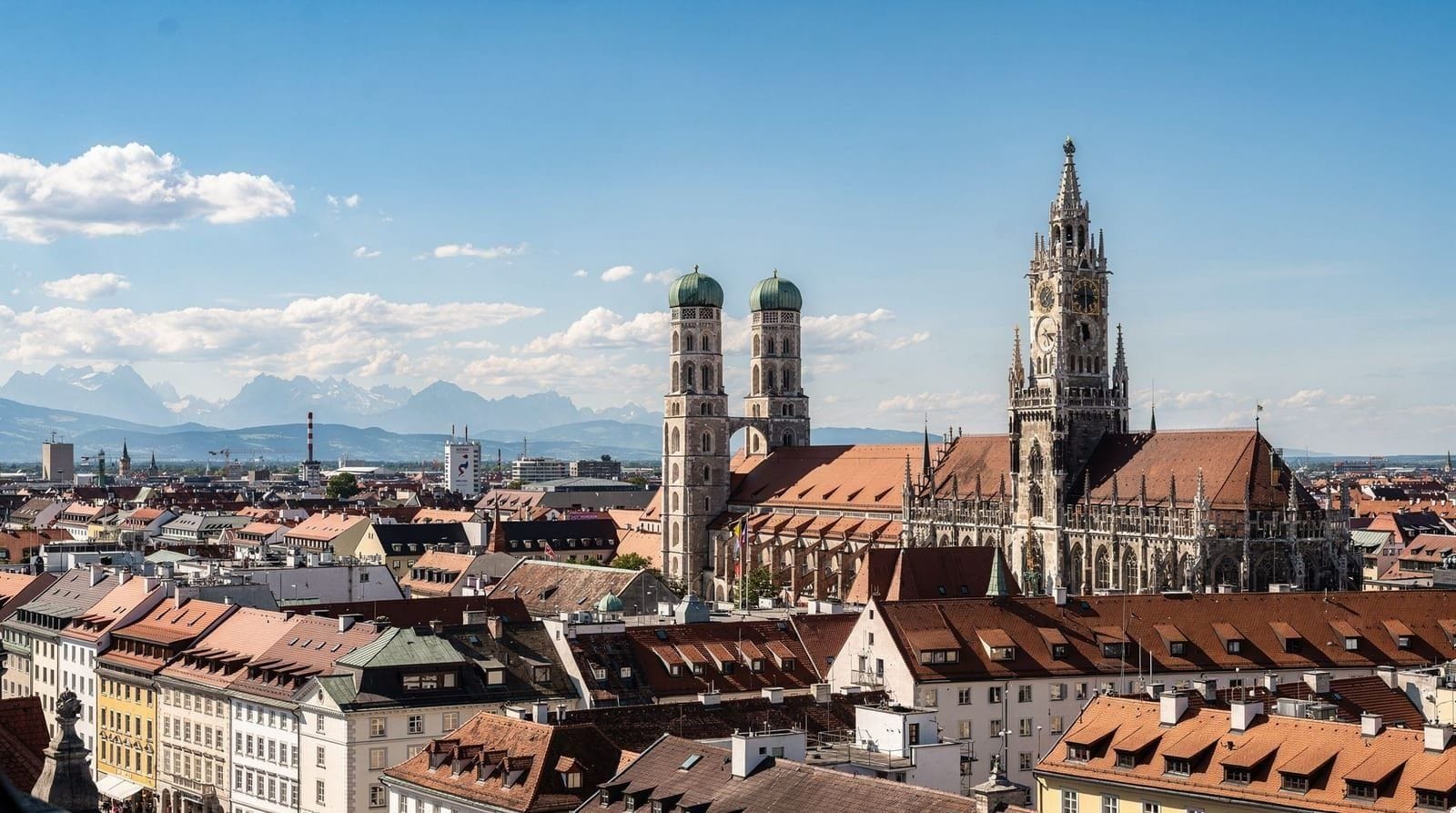
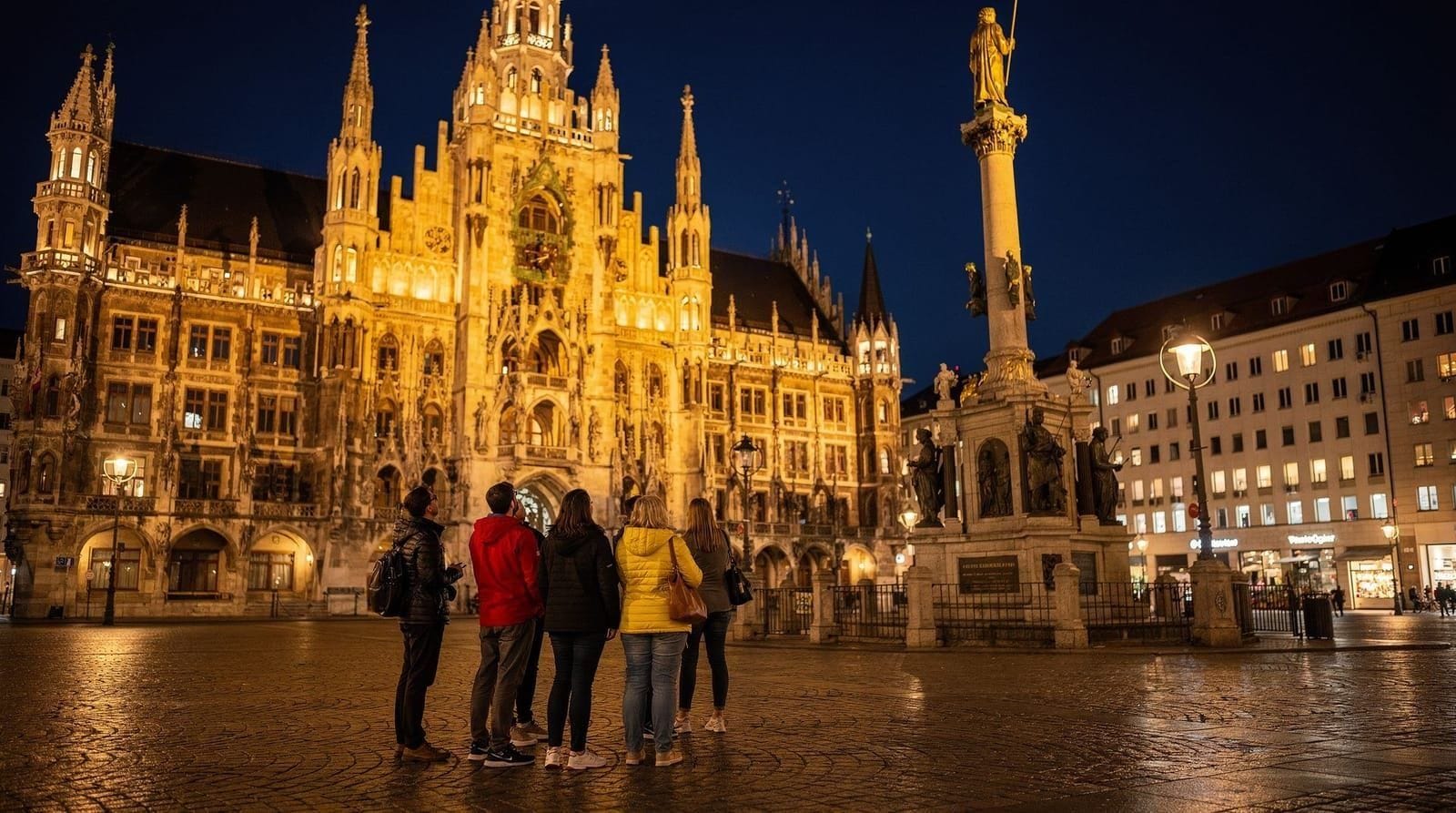
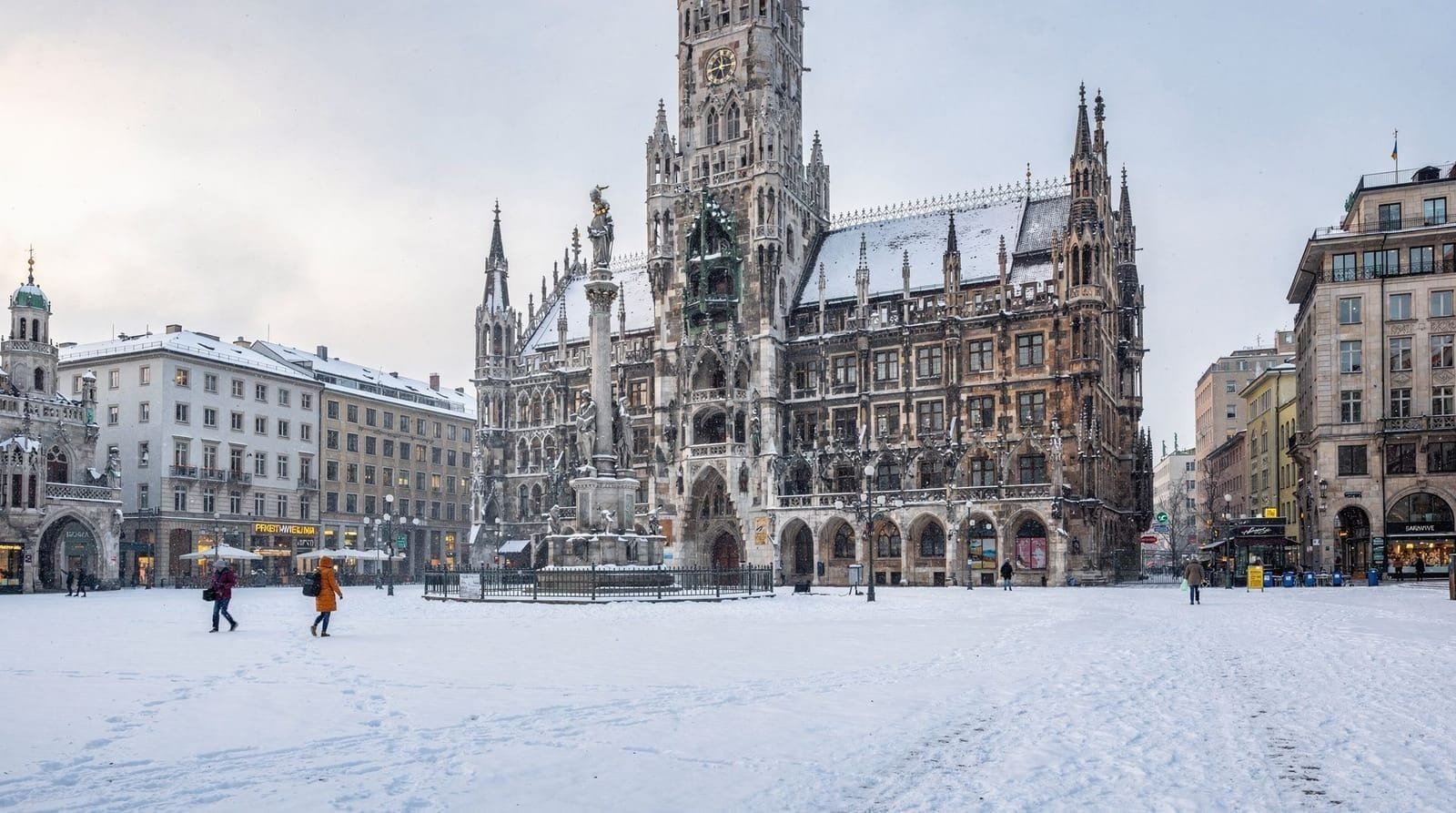
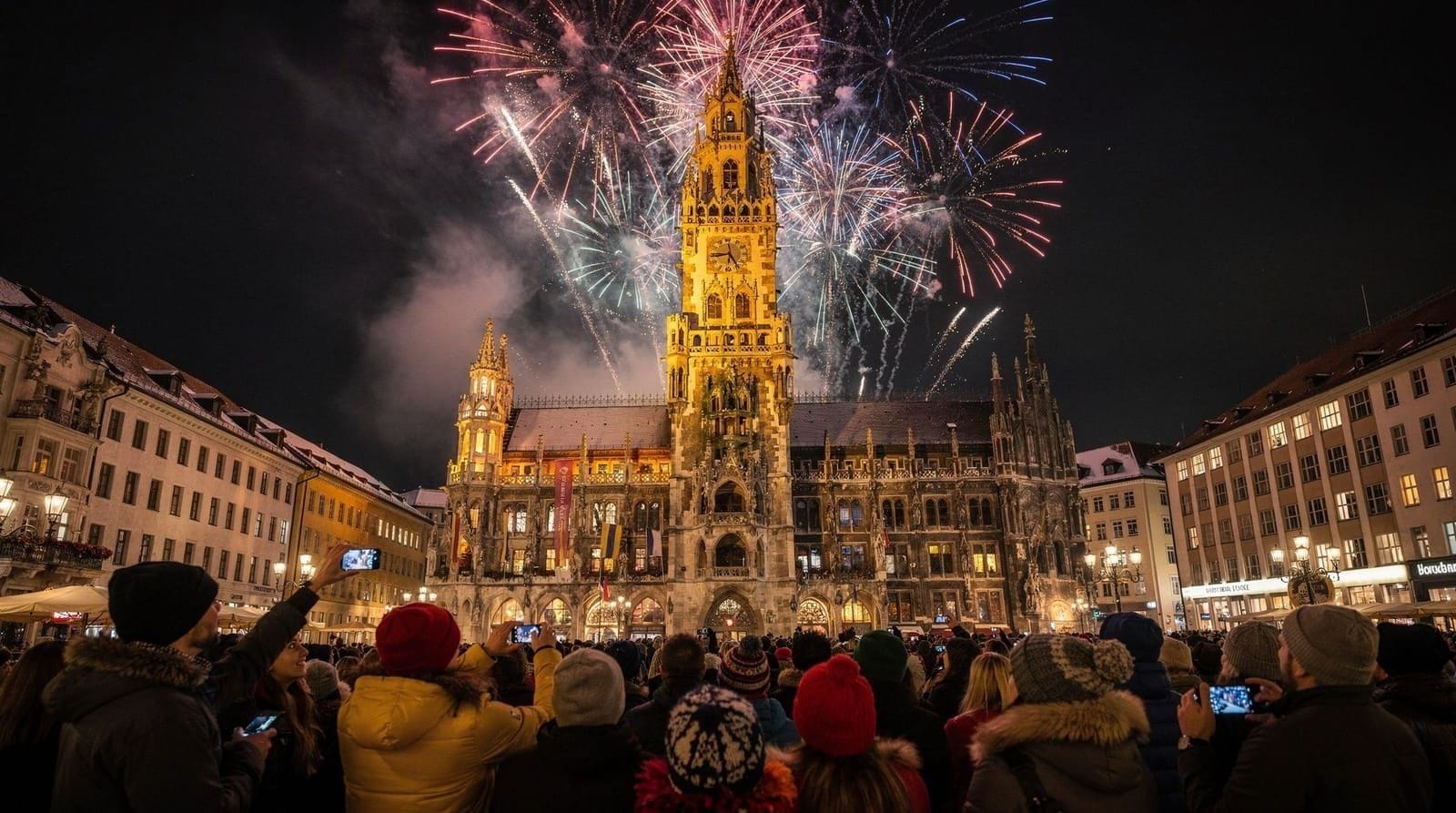
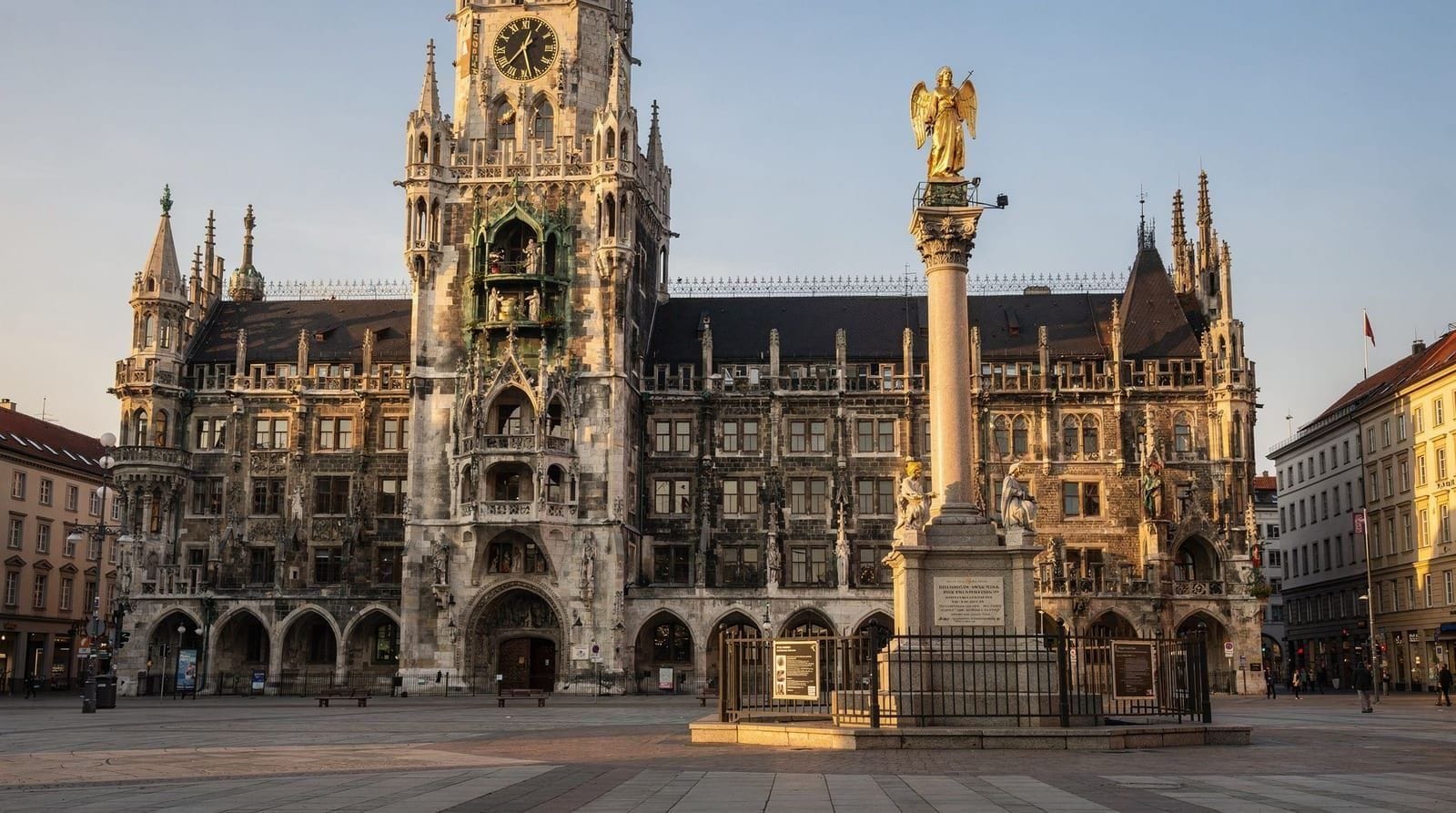
Around 100 stalls fill the square in front of the Neues Rathaus, selling ornaments, carved wooden figures, nativity scenes, Lebkuchen, Stollen, and Glühwein. The setting is undeniably beautiful — the neo-Gothic town hall facade lights up at dusk, the Glockenspiel figures appear at 11am and noon, and the smell of cinnamon, pine, and roasting nuts drifts through even in a crowd.
The honest assessment: it is crowded on weekends in December, the quality of individual stalls varies enormously (some are excellent artisan producers; some sell mass-produced goods at high margins), and the mulled wine in the immediate surroundings of Marienplatz is overpriced at some stalls. Go on a Tuesday evening for the best balance of atmosphere and navigability.
What’s worth buying: Hand-blown glass ornaments from established family stalls (look for production demonstrations). Christstollen from a bakery stall that lets you taste a slice first. Nutcracker figures from Erzgebirge (the Saxon mountain region) if you can verify they are genuine rather than Chinese-manufactured. Lebkuchen from the proper gingerbread stalls, not the souvenir versions.
What to skip: The restaurant stalls at the Marienplatz market itself are overpriced relative to the pubs and beer halls 5 minutes away. For a substantial meal, walk to Augustiner am Dom on Frauenplatz or any of the Altstadt beer halls.
For more detail on what to eat and which stalls specifically are worth your money, see the Munich Christmas market food guide.
Tollwood Winterfestival: the best alternative
Dates 2026: Approximately 26 November to 23 December 2026 (confirm on tollwood.de — exact dates for 2026 will be confirmed in autumn). Hours: Typically 2pm–11pm weekdays; noon–11pm weekends. Location: Theresienwiese. U4/U5 Theresienwiese or Schwanthalerhöhe.
Tollwood is worth understanding as a different product, not just a secondary Christmas market. Founded in 1988 as a counter-cultural festival, it occupies the same Theresienwiese ground where Oktoberfest is held and is physically larger than the Marienplatz market.
Key differences from Christkindlmarkt:
- Stalls are vetted for ecological standards — many are certified organic or fair trade vendors
- Food selection is genuinely international: Ethiopian, Japanese, Peruvian, Bavarian organic, and more alongside Glühwein
- Live music and circus/theatre performances run throughout — check the Tollwood programme for headline acts, which in previous years have included names from jazz, world music, and electronic genres
- Religious imagery is minimal; the festival is explicitly secular in character
The artisan craft stalls tend to have genuinely unusual items — jewellery, textiles, handmade toys — at higher prices than souvenir-standard but representing actual craft products. Entry to the grounds is free; you pay per stall for food and drink. Budget €20–30 for a full evening including food and two mulled wines.
Wittelsbacherplatz medieval Christmas market
Location: Wittelsbacherplatz, near Odeonsplatz. U3/U4/U5/U6 Odeonsplatz.
Smaller, rougher, and more atmospheric than Marienplatz. Stalls sell mead (Honigwein), roasted meats, smoked sausage, and medieval craft items from vendors in period costume. Fire jugglers and performers operate on weekend evenings. The crowd is younger than Marienplatz and more local. Mulled wine is sold in wooden cups rather than the ceramic mugs used elsewhere.
This market has a more theatrical character — it is not historically authentic so much as actively playful about historical atmosphere. Worth an evening visit as part of a broader Altstadt circuit (Marienplatz → Odeonsplatz → Wittelsbacherplatz is a 15-minute walk).
Schwabing Christmas market at Münchner Freiheit
Location: Münchner Freiheit square, Schwabing. U3/U6 Münchner Freiheit.
This is the neighbourhood market that Schwabing and Maxvorstadt residents use as their regular evening social spot in December. Smaller than the tourist markets, it has a relaxed, local atmosphere — couples, groups of friends after work, families with young children.
Glühwein here is typically €4–4.50, marginally cheaper than Marienplatz. The stalls lean towards local artisans and small producers. Worth combining with dinner in Schwabing — the neighbourhood has some of Munich’s best mid-range restaurants and is genuinely pleasant for an evening without tourist-centre density.
Glühwein: a practical guide
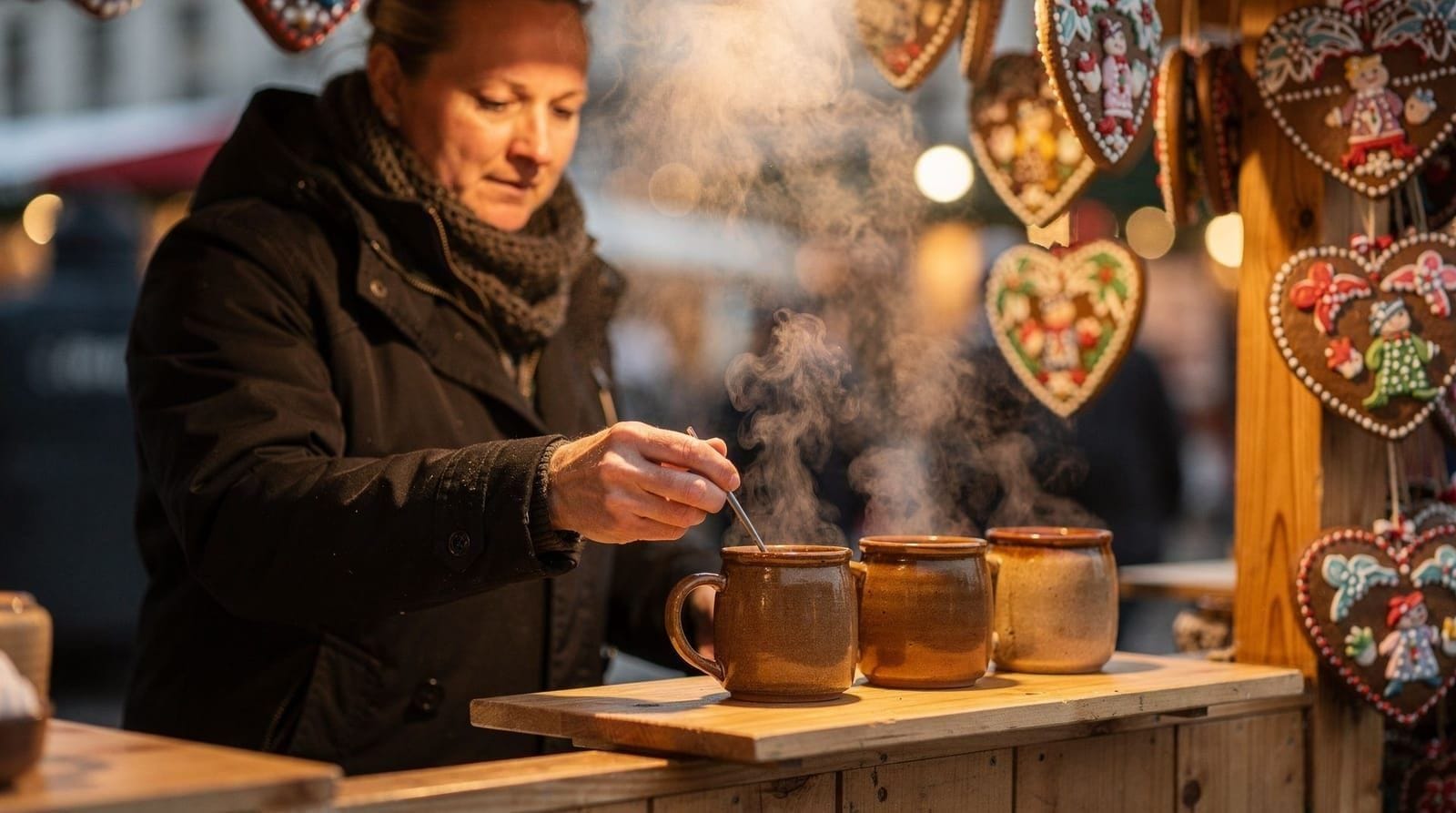
Glühwein (mulled red wine spiced with cinnamon, cloves, orange peel, and star anise) is the canonical Christmas market drink. Typical recipe: red wine base, heated to 60–70°C, never boiling. Quality varies from industrial pre-mixed to genuinely made-from-scratch on-site.
How to tell the difference: Look for stalls that have spice bundles visible, or where the wine is being heated in a large open pot rather than dispensed from a pressurised container. Ask if it is self-made (hausgemacht) — some vendors are proud of the recipe and will tell you.
Deposit system: You pay a Pfand (deposit) of €3–4 on the ceramic mug. Keep the receipt. If you return the mug at the same stall, you get the deposit back. If you keep the mug, you have paid the full price of an actual souvenir. Each stall (and sometimes each market) has a different mug design — collectors move deliberately between stalls to acquire the set.
Variants: Heißer Apfelwein (hot apple wine) is non-alcoholic and lighter in flavour, widely available. Kinderpunsch is the alcohol-free children’s version made from fruit juice. Feuerzangenbowle (rum flambé poured over a sugar cone into red wine) is available at some stalls and is theatrical to watch and drink.
Glühwein red flags: Stalls charging above €6 per cup without a mug deposit are charging tourist rates. Any stall on Kaufingerstrasse or Neuhauser Strasse (the main pedestrian shopping street) not connected to the official Christkindlmarkt is likely inflated. The market stalls within the official cordoned area are price-controlled to some degree.
Christmas shopping in Munich
Beyond the Christmas markets, Munich has serious shopping in December. The main pedestrian shopping zone (Kaufingerstrasse and Neuhauser Strasse, between Marienplatz and Hauptbahnhof) is very busy December weekends — avoid it on Saturday afternoon if you actually want to move.
For Bavarian-specific gifts: Manufactum on Residenzstrasse stocks well-made German and Austrian household goods. Rosenthal Studio-Haus on Dienerstrasse carries quality German porcelain. For genuine Erzgebirge carved figures, look for stalls with credentials — ask about the region of manufacture.
Viktualienmarkt is the everyday food market open year-round (closed Sundays) and is worth visiting in December for gingerbread, Stollen, smoked meats, and Bavarian cheeses to take home. Get there before 10am on weekdays to avoid the lunch-hour crowd. See the Viktualienmarkt food guide.
For a broader guide to shopping in Munich, see the Munich shopping guide.
Beer halls during Christmas: the indoor alternative
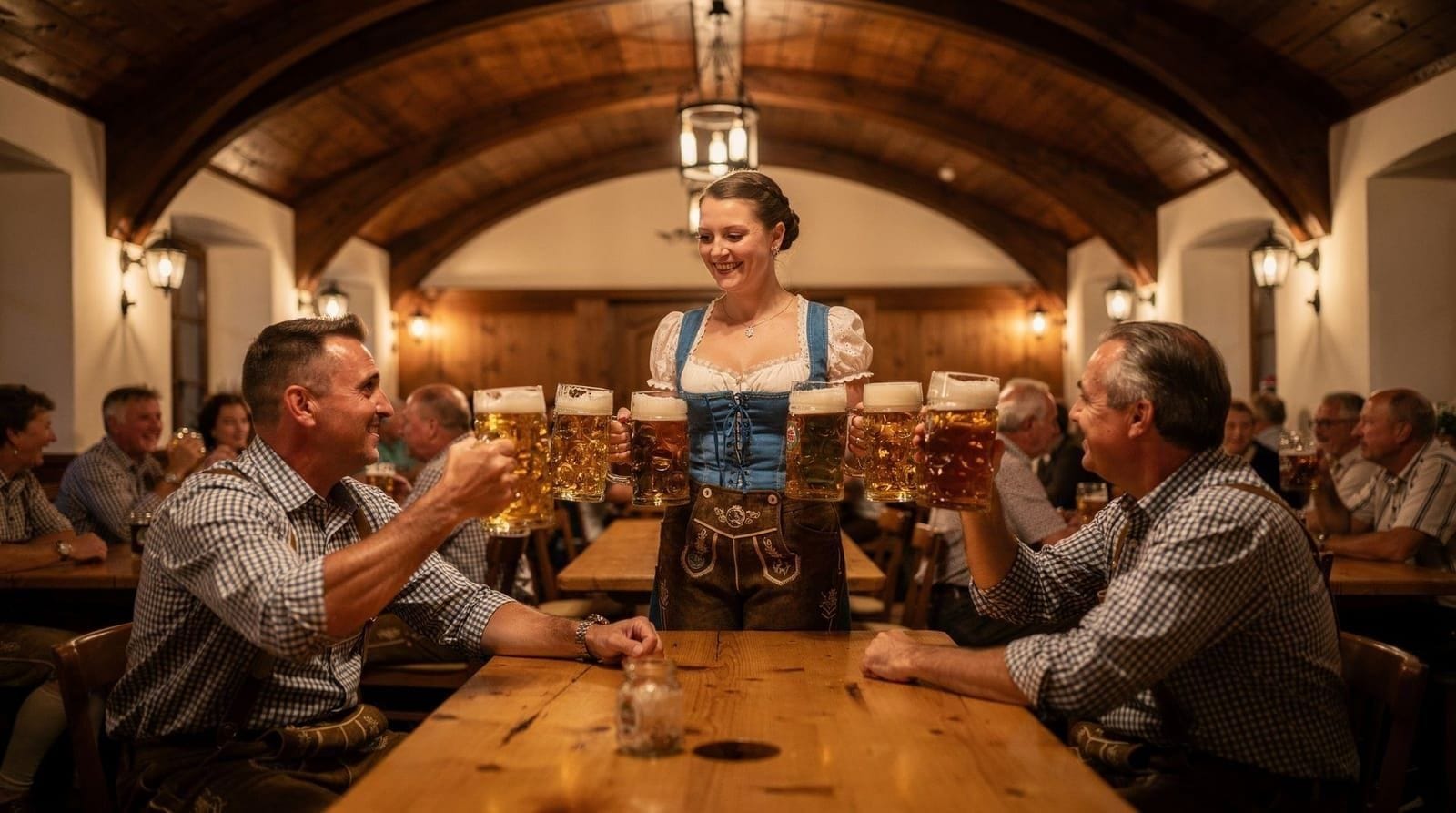
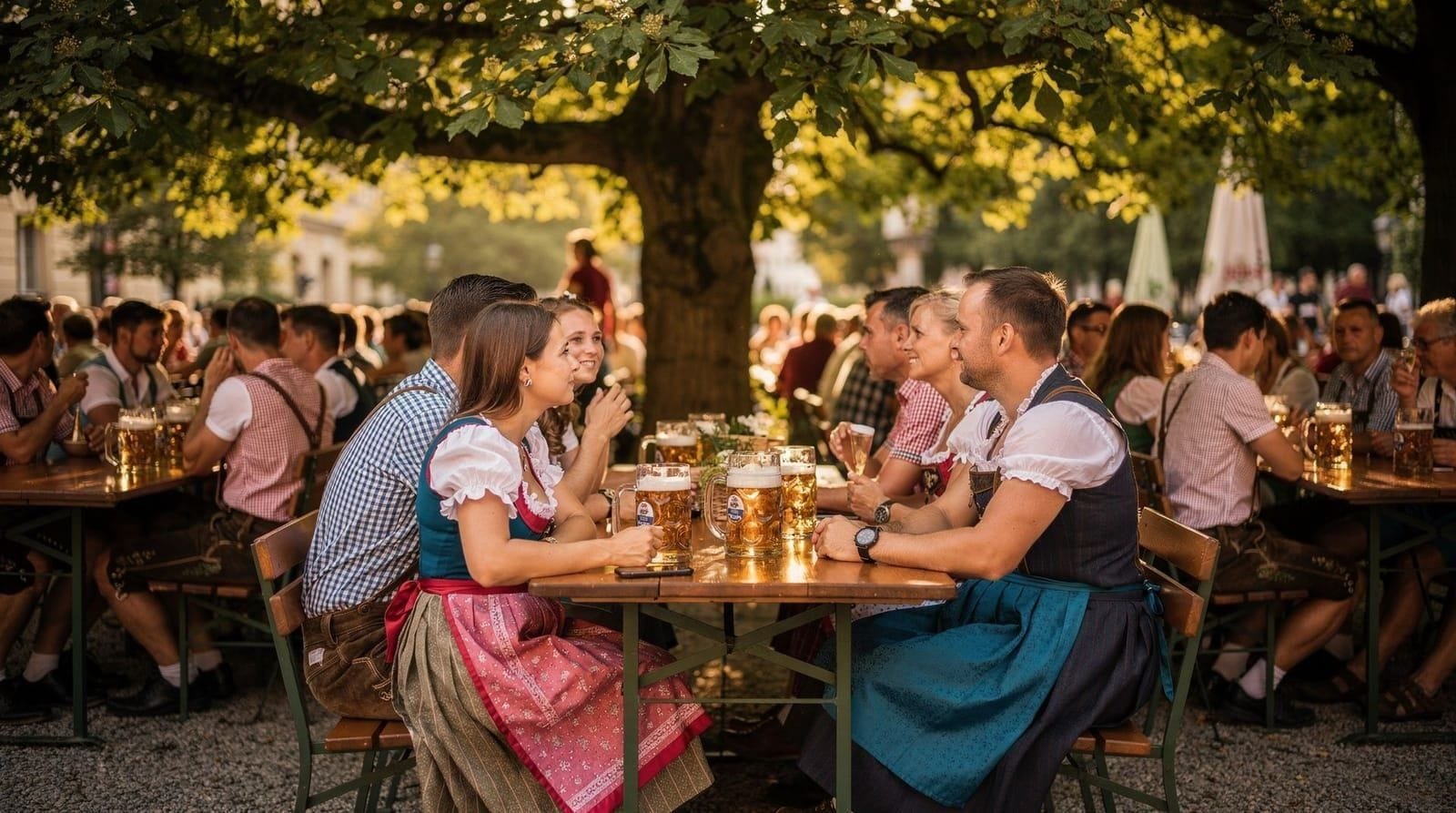
When it is too cold or too crowded at the Christmas markets, Munich’s beer halls provide a warm, satisfying alternative. The Bavarian pub interior at its best — dark wood, long communal tables, candlelight in December — has its own seasonal atmosphere.
Augustiner am Dom (Frauenplatz 7) is the ideal Christmas visit — right next to the Frauenkirche cathedral, warm, unpretentious, serving Augustiner Edelstoff and Dunkel alongside classic Bavarian food. It gets booked up on December weekends from around 7pm onwards.
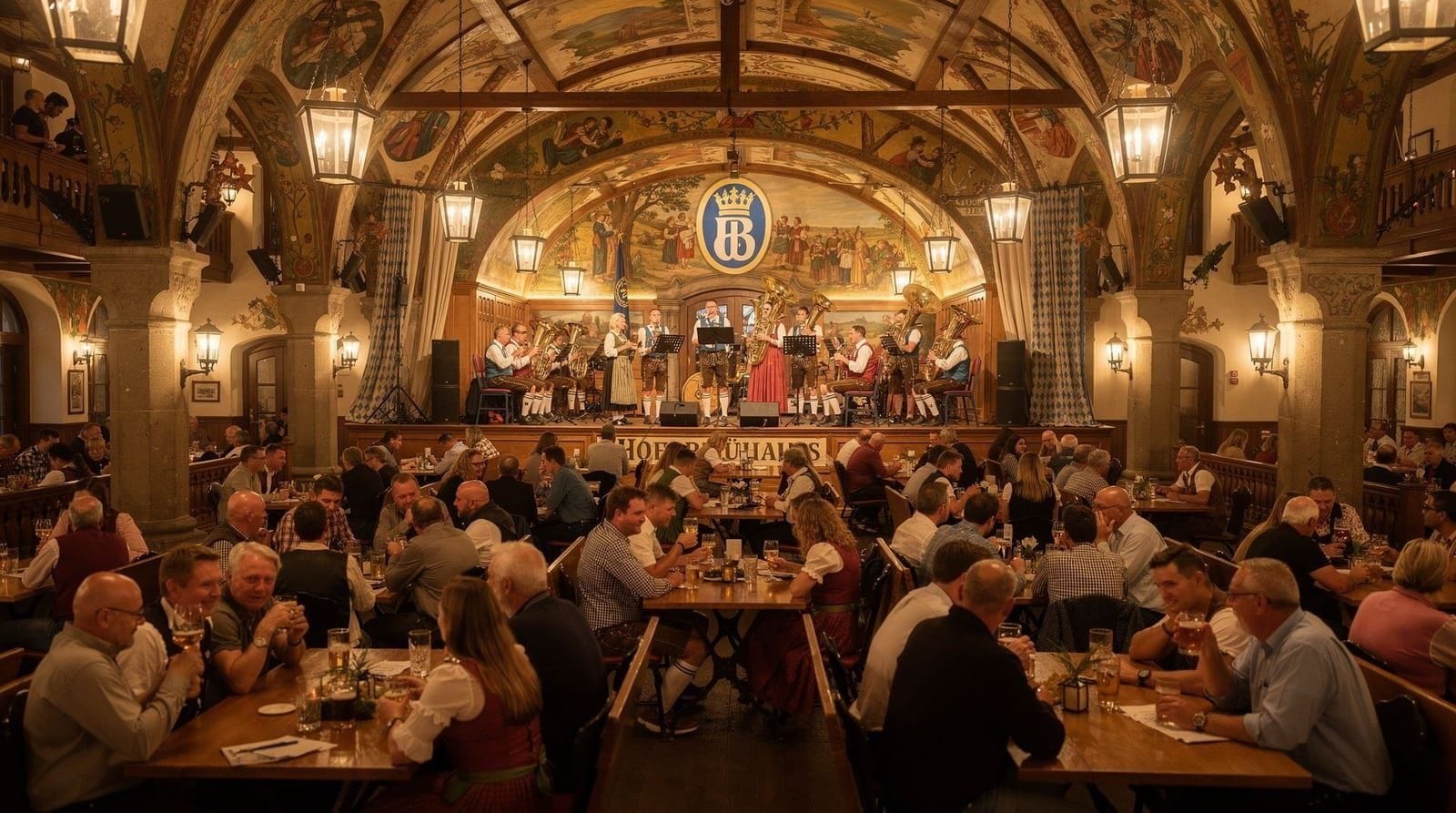
Hofbräuhaus (Platzl 9) is unavoidable but works well as a December visit — the oompah band plays nightly, the Schwemme hall is atmospheric, and the Christmas season brings Bock and Märzen specials alongside the regular Helles. A Maß runs €10.50–11.
A guided beer halls tour is particularly useful in December when knowing which halls have space, which beer styles are seasonal, and how to navigate the ordering system saves time and frustration.
For full detail on the major beer halls and how to choose between them, see the Munich beer halls guide.
Christmas Eve and Christmas Day in Munich
24 December: The Christkindlmarkt closes at 2pm sharp. Most shops close by 6pm at the latest. Restaurants are either closed or require reservations made weeks in advance. The Christmas Eve church services at Frauenkirche and St Michael’s are free to attend but start early (typically 4pm and 11pm Midnight Mass). The city is quiet by 8pm.
25–26 December: Almost everything is closed. Hotel restaurants operate; a handful of restaurants in the main tourist areas remain open. The Residenz, Deutsches Museum, and most major museums are closed. Public transport runs on a reduced Sunday schedule. This is genuinely a city-on-pause period. If you are in Munich over Christmas proper, plan in advance and verify every booking.
Practical advice: If you want to see the markets and experience Christmas atmosphere, visit 28 November – 22 December and leave before Christmas Eve. The last weekend before Christmas (19–21 December) is the busiest of the entire season.
Getting to Munich for Christmas
Munich Airport (MUC) connects well to major European cities year-round. From the airport, the S8 and S1 run directly to Hauptbahnhof (40–45 minutes, €13.60 single). No transfer needed. For detailed logistics including which nights of the week have cheaper fares and how to book accommodation near the markets, see the Munich trip planning guide.
Choosing your market: a quick comparison
With around a dozen markets running simultaneously, most visitors do better picking two or three deliberately rather than trying to see everything.
| Market | Character | Crowds | Best time to go |
|---|---|---|---|
| Marienplatz Christkindlmarkt | Grand, historic, central | High, especially weekends | Weekday evening |
| Tollwood Winterfestival | Alternative, international food, live music | Moderate | Any evening |
| Wittelsbacherplatz medieval market | Theatrical, mead and fire performers | Moderate | Weekend evening for performers |
| Schwabing (Münchener Freiheit) | Local, relaxed, neighbourhood feel | Low–moderate | Any time |
For a market-by-market deep dive including the Chinesischer Turm market in the English Garden, see the Munich Christmas markets guide. For the food specifically, the Munich Christmas market food guide covers what to eat at each.
Frequently asked questions about Munich Christmas markets
Which Munich Christmas market is best in 2026?
For classic atmosphere, Marienplatz Christkindlmarkt — but go on a weekday evening. For food variety and a younger crowd, Tollwood on Theresienwiese. For a local neighbourhood feel, Schwabing at Münchner Freiheit. For medieval spectacle, Wittelsbacherplatz. Most visitors can cover all four in two days.
Is Munich’s Christmas market better than Nuremberg’s?
Both are genuinely old and genuinely good. Nuremberg’s Christkindlesmarkt is smaller and more uniformly traditional; Munich’s is larger and more commercially varied. Nuremberg’s is often cited as having the more authentic feel, Munich’s as the better overall city destination. They are 1 hour apart by train on the Bayern-Ticket — do both if you have time.
Can I visit Munich Christmas markets with children?
Yes, very well suited. Christkindlmarkt has a Kinderpunsch (non-alcoholic punch) stand at around €3. Tollwood specifically has children’s activities and circus performers. The medieval market at Wittelsbacherplatz has fire performers that children enjoy. Dress children warmly in waterproof outer layers; evenings in December can drop to -2°C.
What should I buy at Munich Christmas markets?
Focus on things that are genuinely local or German: Erzgebirge wooden figures and nutcrackers, hand-blown glass ornaments (watch for production demonstrations), proper Christstollen from a bakery stall, aged Bavarian cheese from Viktualienmarkt nearby, or Lebkuchen tins from the larger dedicated gingerbread stalls. Avoid the made-in-China ornaments that some stalls sell at the same price as genuine German goods.
How do I get between the Munich Christmas market locations?
Marienplatz to Tollwood on Theresienwiese: 15-minute walk or U4/U5 one stop. Marienplatz to Wittelsbacherplatz: 10-minute walk. Marienplatz to Schwabing Münchner Freiheit: U3/U6 three stops north. The city is walkable between Marienplatz, Odeonsplatz, and Wittelsbacherplatz; use the U-Bahn for Theresienwiese and Schwabing.
Is there a Christmas market in Munich near the main station?
The Christkindlmarkt at Marienplatz is a 10-minute walk or 2-minute U-Bahn ride from Hauptbahnhof (Marienplatz station). There is also a smaller market at Rotkreuzplatz in the Neuhausen neighbourhood (20 minutes by U1 from Hauptbahnhof) and a pop-up market at Hauptbahnhof itself, though the latter is purely commercial.
How many days do I need to see Munich’s Christmas markets properly?
Two full evenings covers the essentials comfortably: one for Marienplatz and Wittelsbacherplatz (a 10-minute walk apart), and one for Tollwood, which deserves its own unhurried visit given the food and live performance programme. A third evening allows a relaxed trip to Schwabing for the neighbourhood market and dinner. Trying to compress everything into one evening means rushing at least one market.
Is it worth booking a guided walking tour during the Christmas market season?
Yes, particularly for a first visit — a guided Altstadt walking tour or evening beer hall tour adds historical context to the buildings surrounding Marienplatz that most visitors miss when navigating the market crowds independently, and a knowledgeable guide can time your visit around the worst crowd surges. Munich Bavarian beer walking tour with samples works well as a warm, structured evening that naturally passes several market locations.
Top experiences
Bookable activities with verified prices and instant confirmation on GetYourGuide.