Munich Christmas market food guide
Munich: old town food tour with 10+ tastings, beer and pretzel
What food is at Munich's Christmas markets?
The essentials are Glühwein (mulled wine), Bratwurst in a roll, Gebrannte Mandeln (candied roasted almonds), Dampfnudeln (steamed yeast dumplings), Lebkuchen (gingerbread), and Maronen (roasted chestnuts). The Tollwood Winter Festival adds international street food, organic produce, and artisan cheese alongside the traditional items.
What to eat at Munich’s Christmas markets: the full picture
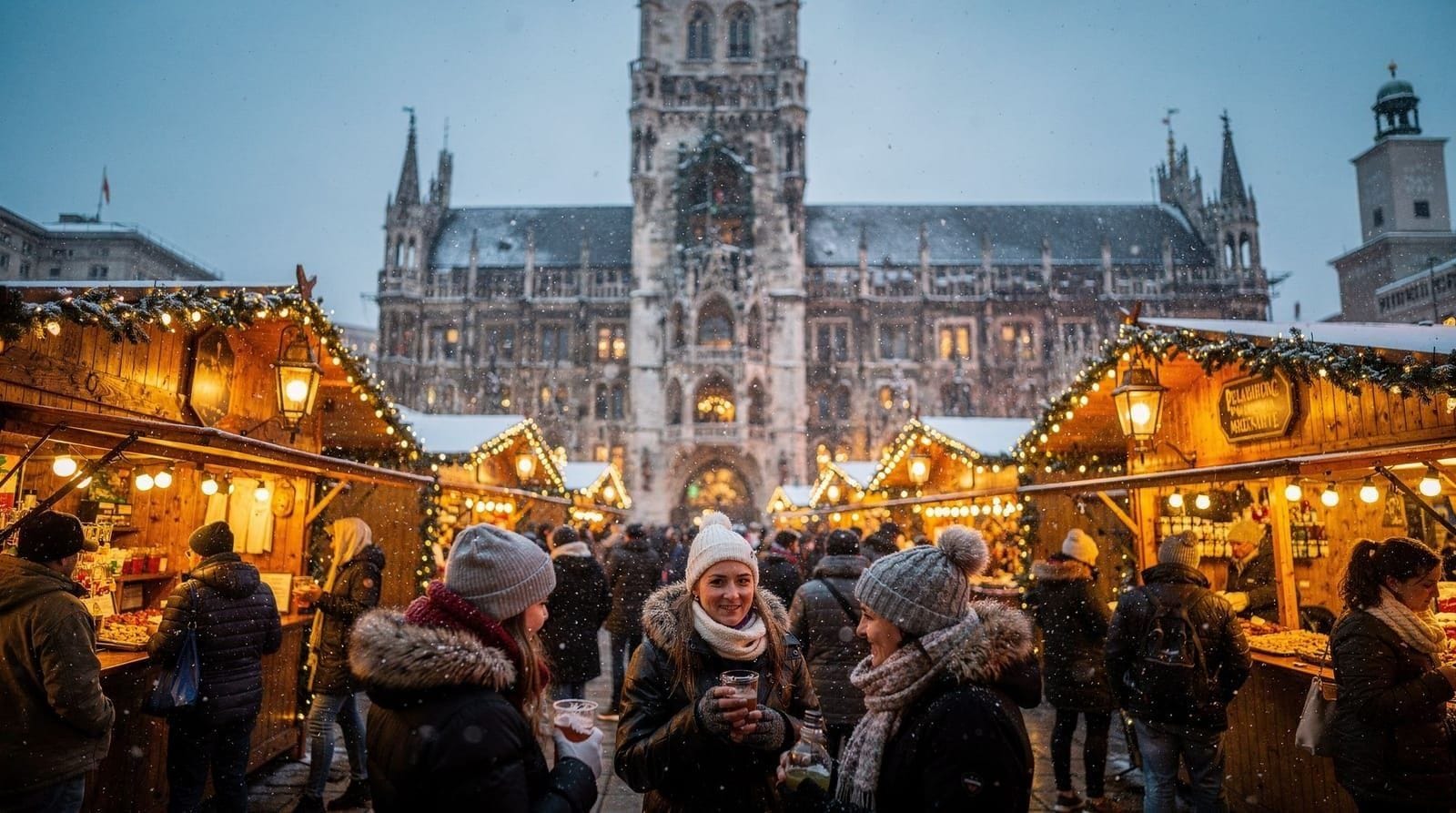
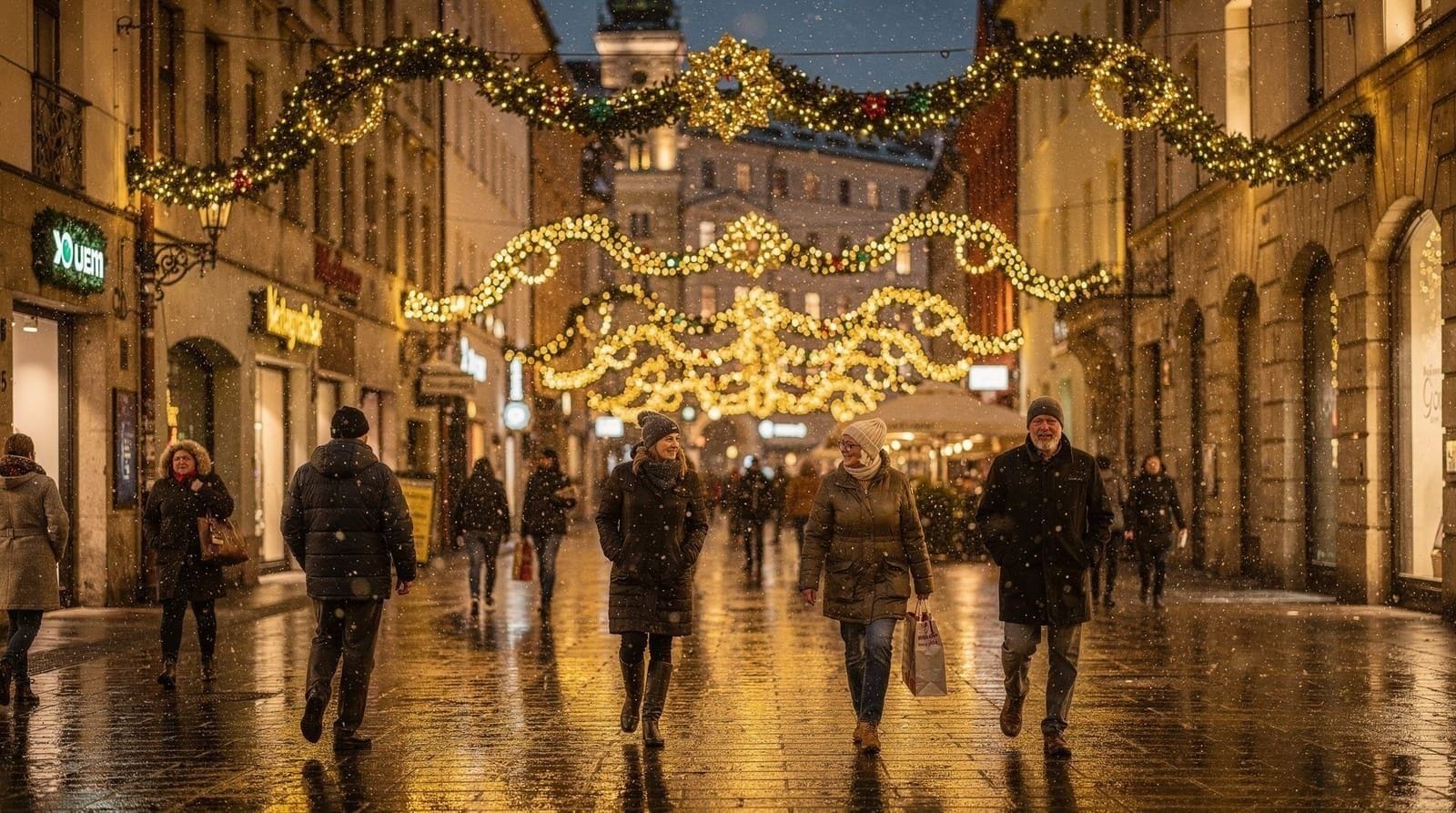
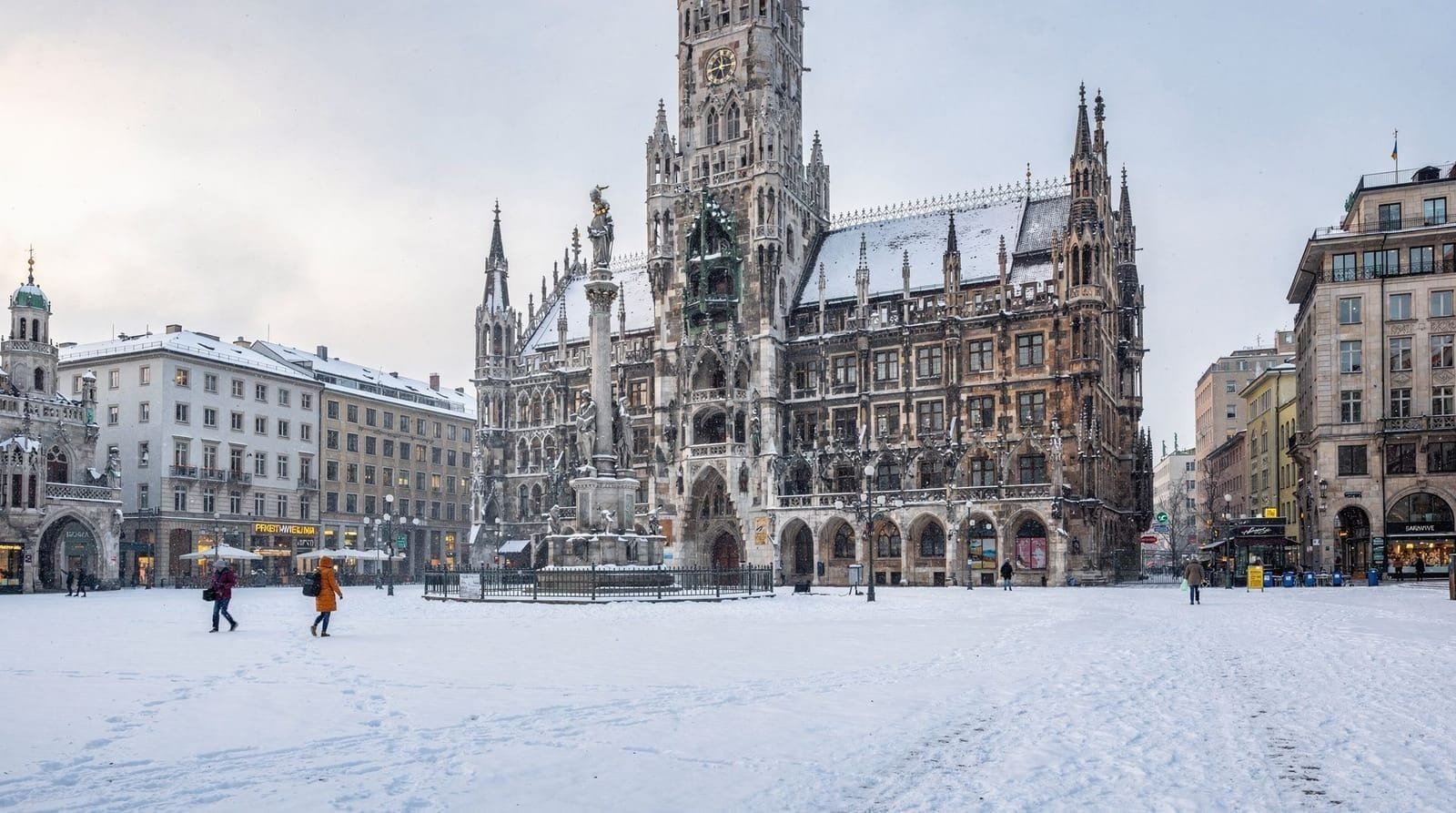
Munich’s Christmas market season runs from late November through December 24, with more than fifteen separate markets across the city. Each has a distinct character and food selection, but the core food and drink offerings are consistent across all of them — with significant additions and variations at the larger specialist markets.
| Must-try drink | Glühwein, €4–5.50 + €2–3 mug deposit |
| Must-try food | Bratwurst in Semmel, €3.50–5.00 |
| Best smell | Gebrannte Mandeln, €3.50–5.00 |
| Rarest find | Dampfnudeln — not every market has a stall |
| Best quality overall | Tollwood, organic/fair-trade vetted vendors |
| Budget for an evening | €30–50, drinks + snacks for two rounds |
This guide covers what each of the main foods and drinks is, what to pay in 2026, where to find the best version, and honest notes on quality variation between stalls.
Glühwein: Munich’s Christmas market drink
Glühwein (from the German glühen, to glow) is hot spiced wine — typically a simple red wine mulled with cinnamon sticks, cloves, star anise, orange peel, and sugar, then kept warm in a large pot and ladled into cups. A white wine version (Weisser Glühwein) is also common, as is Kinderpunsch (children’s punch), a non-alcoholic mulled apple and cherry juice with the same spices.
What a good one tastes like: Properly made Glühwein uses a drinkable red wine as the base — not a cooking wine — and the spices are balanced, not overwhelming. Poor versions are overly sweet and taste of cinnamon syrup. The Glühwein at Tollwood, where vendors are selected for quality, tends to be better than the standard market offering.
2026 prices:
- Standard Glühwein cup: €4.00–5.50
- Cup deposit (Pfand): €2.00–3.00 (refundable when you return the cup)
- Children’s Kinderpunsch: €3.50–4.50
The cup tradition: Each Christmas market uses a different cup design — the Marienplatz market uses a distinctive stoneware mug or boot-shaped cup that changes design each year. Many visitors choose to keep the cup as a souvenir rather than returning it for the deposit. The deposit is fully refundable if you do return it before the market closes.
Alternatives to Glühwein:
- Feuerzangenbowle — a dramatic Glühwein variant where a rum-soaked sugar cone is set alight over the wine pot and allowed to drip into the drink. Rarely found at standard Christmas market stalls; more common at indoor events and specialist vendors at Tollwood.
- Eierpunsch — egg punch, a warm creamy mixture of wine, eggs, and sugar. A dessert drink rather than a refreshing one. Common at the medieval markets.
- Craft mulled wine (Tollwood only) — Tollwood vendors offer mulled wine made with organic wine and estate-grown spices at €5.50–7.00 — noticeably better quality than the standard market offering.
Bratwurst: the Christmas market’s primary food
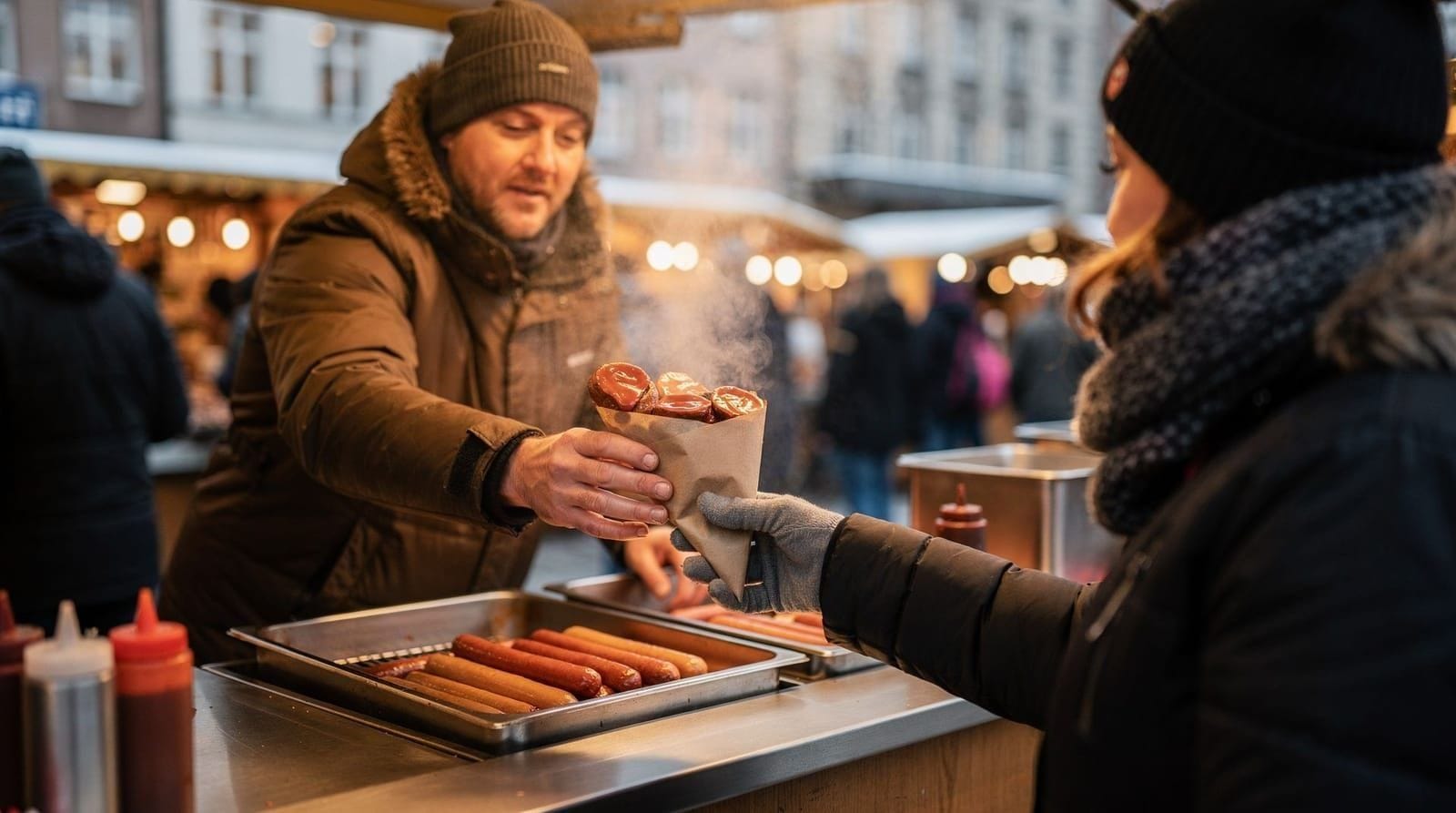
A grilled Bratwurst sausage in a crusty Semmel roll is the most commonly sold food item at all Munich Christmas markets. At the main Marienplatz market, several stalls compete for position around the Christkindlmarkt perimeter and the side streets.
What to look for: The best Bratwurst stalls maintain their grill temperature properly — the sausage should have a browned, slightly charred exterior without being dried out. Ask for medium or well-done (mittel or durchgebraten); the default is often slightly underdone for a market sausage.
2026 prices: €3.50–5.00 for a sausage in a roll with mustard. Price varies by position — stalls directly on Marienplatz charge at the higher end; stalls on adjacent streets (Kaufingerstrasse, Rindermarkt) are usually €0.50–1.00 cheaper.
Bratwurst types at Munich Christmas markets:
- Munich Bratwurst — a larger, pork-based sausage, the local standard
- Nuremberg Bratwurst — the smaller, narrower Franconian variety, typically served in groups of three or four in a roll. More delicate flavour
- Käsekrainer (less common) — Austrian-style sausage with cheese embedded in the filling
- Weißwurst is generally not served at Christmas market stalls — it is a morning dish sold at butcher counters and beer halls, not an evening market item
Gebrannte Mandeln: the most aromatic market food
Gebrannte Mandeln (candied roasted almonds) are possibly the most recognisable Christmas market smell in Germany — a cloud of caramelised sugar, cinnamon, and vanilla from a copper drum in which whole almonds are rolled and coated continuously as the pan rotates.
What they taste like: Whole almonds encased in a thin, cracking shell of caramelised sugar and cinnamon. The almond inside should be freshly roasted — still warm, crisp, and fragrant. A poorly made batch uses pre-roasted almonds recoated in cold sugar, which is detectably inferior.
2026 prices: €3.50–5.00 for a paper cone (typically 100–150g). Sold by weight at most stalls. Hazelnuts (Haselnüsse) are usually available at the same stall and are occasionally better quality than the almonds.
Variations: Walnuts, macadamia nuts, and peanuts are sold with similar coatings at some stalls. The original remains the best.
Dampfnudeln: Munich’s Christmas market dumpling
Dampfnudeln are soft, yeast-leavened dumplings steamed in a pan with a small amount of sweetened milk and butter, creating a golden, slightly caramelised base while the top puffs into a cloud-like dome. A traditional Bavarian dish, they are rarer at Christmas markets than at restaurants, but the Marienplatz market and Tollwood usually have at least one Dampfnudel stall.
What they taste like: Extremely light and pillowy inside, with a faint yeasty sweetness. The base has a crisp, caramelised quality from the milk and butter in the pan. Served with vanilla sauce (Vanillesoße), Zwetschgenröster (plum compote), or poppy seed filling.
2026 prices: €4.50–6.50 for one or two dumplings with sauce.
Where to find them: Not all markets have Dampfnudeln. The Marienplatz main market usually has a stall; Tollwood consistently has one with organic ingredients. Café Frischhut on Prälat-Zistl-Strasse (near Rindermarkt) serves the best Dampfnudeln in Munich year-round — open from 07:00, sell out by midday.
Lebkuchen and Lebkuchenherzen
Lebkuchen (gingerbread) is the other defining smell of a German Christmas market. Munich’s markets carry both soft Lebkuchen (for eating) and Lebkuchenherzen (large heart-shaped decorative pieces with icing).
Eating Lebkuchen: The soft variety, typically sold in sets of 4–8 pieces, is made from spiced dough with nuts, honey, and candied citrus peel. The Nuremberg variety (with protected designation of origin) is the benchmark — more complex spicing and a better base. Most Munich market Lebkuchen stalls import from Nuremberg producers.
Lebkuchenherzen: Large, flat gingerbread hearts with icing inscriptions, hung on a ribbon. They range from palm-sized (€3–4) to large (€8–12). The decoration and ribbon take precedence over the baking quality — they are more keepsake than snack.
2026 prices:
- Small Lebkuchen pack (4 pieces): €3–5
- Individual soft Lebkuchen: €1.50–2.50
- Lebkuchenherz (medium): €4–8
Maronen: roasted chestnuts
Maronen (roasted chestnuts) are sold from street vendors at many Christmas market locations, typically cooked in a perforated metal drum over hot coals. They are always sold hot and should be eaten immediately.
What to expect: The skin splits from the heat and the flesh inside is soft, creamy, and slightly sweet — unlike the dry, mealy chestnut you may associate with older preservation methods. Fresh-roasted Maronen from a good vendor are excellent; overcooked ones are dry and hard to peel.
2026 prices: €3.00–4.50 for a paper bag of approximately 8–10 chestnuts.
Where to find them: Maronen vendors are typically positioned on the periphery of Christmas markets or along the walking routes between markets — Kaufingerstrasse, Neuhauser Strasse, and the approaches to Marienplatz. Not usually inside the main market footprint. A guided food tour of Munich’s old town area covers the market food tradition in context and can be a good prelude to independent market exploration, particularly if you want guidance on which stalls are sourcing better ingredients.
Tollwood Winter Festival: the alternative Christmas market
Tollwood (held at the Olympiapark area) is Munich’s most ethically and culturally focused Christmas event. It runs from approximately mid-November through December 31 and offers a substantially different food proposition from the city-centre markets.
What makes Tollwood food different:
- Vendor selection: Tollwood operates a vetting process for food vendors — all produce must meet organic or fair-trade certification requirements. This results in noticeably better baseline quality.
- International range: Alongside Glühwein and Bratwurst, Tollwood has Vietnamese pho, Moroccan tagine, Indian curry, Ethiopian injera, and other international street food in dedicated food tents.
- Organic Bavarian produce: Several stalls source exclusively from organic Bavarian farms — raw milk cheese, heritage breed sausage, organic beer.
- Craft drinks: Fair-trade hot chocolate, Darjeeling masala chai, and mulled wine from estate-grown grapes alongside the standard market drinks.
Tollwood price range (2026):
- Organic Glühwein: €5.50–7.00
- International street food main: €9–14
- Organic Bratwurst: €5.50–7.00
- Fair-trade hot chocolate: €4.00–5.50
Getting to Tollwood: U3 to Olympiazentrum, then a 5-minute walk to the Olympiapark gates. Open daily from approximately 14:00 (weekdays) or 12:00 (weekends) to 23:00 or midnight.
The medieval Christmas market at Wittelsbacher Platz
The Mittelaltermarkt (medieval market) on Wittelsbacher Platz near Odeonsplatz runs a food programme themed around the pre-modern era — and while the authenticity is theatrical rather than historical, some of the food is good:
- Met (mead) — honey wine, hot or cold, spiced with herbs
- Flammkuchen — Alsatian tarte flambée, flat and crisp with cream and bacon
- Meddewurste — cold-smoked medieval-style sausage
- Schmalznudeln — deep-fried dough, similar to funnel cake, dusted with sugar
Price point is similar to the main market; the atmosphere is more theatrical.
Neighbourhood Christmas markets: the local alternative
The markets in residential districts are smaller, less crowded, and often have better quality control than the main tourist-facing markets:
Schwabing market (Münchener Freiheit): A local market serving the Schwabing neighbourhood. Quieter than Marienplatz, with a stronger representation of local bakeries and organic produce stalls. Accessible on U3/U6 to Münchener Freiheit.
Haidhausen market (Weißenburger Platz): A low-key neighbourhood market in Au-Haidhausen with strong local beer and sausage vendors. Crowded on weekends with residents, quieter midweek.
Sendlinger Tor market: A smaller market at the historic city gate, with a mix of standard and artisan food stalls.
Practical tips for Christmas market eating
Timing: Marienplatz is at its most crowded on Saturday afternoons and evenings between December 14–24. Weekday mornings (10:00–12:00) are significantly quieter and colder. Tollwood is consistently more manageable in terms of crowd density.
Cash vs. card: Most Munich Christmas market stalls accept both cash and card, but small-denomination notes and coins are useful for quick purchases at busier stalls.
Cup returns: Return your Glühwein cup at the same stall where you bought it — the deposit is per-stall, not market-wide. Different markets use different cups that are not interchangeable.
Cold weather: Munich in December is cold — typically 0–7°C during the day, below freezing at night. The Christmas markets have no indoor heating in the traditional sense. Dress for standing outside; a base layer is advisable. A Viktualienmarkt and Altstadt food tour provides a deeper orientation to Munich’s food market culture, including the winter market period and where to find the best of each seasonal food.
Christmas market food costs at a glance (2026)
| Item | Typical 2026 price |
|---|---|
| Glühwein (plus Pfand cup deposit) | €4.00–5.50 + €2–3 deposit |
| Bratwurst in Semmel | €3.50–5.00 |
| Gebrannte Mandeln (cone) | €3.50–5.00 |
| Dampfnudel with vanilla sauce | €4.50–6.50 |
| Lebkuchenherz (medium) | €4–8 |
| Maronen (bag of 8–10) | €3.00–4.50 |
| Kinderpunsch (non-alcoholic) | €3.50–4.50 |
| Tollwood organic Glühwein | €5.50–7.00 |
| Tollwood international main dish | €9–14 |
Vegetarian and vegan options at Munich Christmas markets
Munich’s Christmas market food is heavily meat-and-dairy oriented by tradition, but the options for vegetarians and vegans have improved significantly in recent years, particularly at Tollwood.
Vegetarian-friendly staples available everywhere: Käsespätzle (cheese noodles, sometimes available at larger stalls), Kartoffelpuffer (potato pancakes, usually served with apple sauce and occasionally sour cream), Gebrannte Mandeln and other roasted nuts, Lebkuchen, and most bread and pastry items excluding those with lard in the dough (check with the stall if unsure).
Vegan options: Genuinely vegan food is limited at the traditional Marienplatz-style markets — Maronen (roasted chestnuts) are naturally vegan, as is Kinderpunsch and most mulled wine (confirm no honey has been added). Tollwood is by far the better option for vegans, with dedicated international food stalls (Ethiopian, Indian, Vietnamese) that reliably offer plant-based mains, alongside fair-trade hot chocolate available with plant milk on request.
What to avoid asking for: Weißwurst, Bratwurst, and Käsekrainer are all meat products by definition — there is no widely available vegetarian Bratwurst at Munich’s traditional markets, unlike some Berlin markets. If a plant-based main course matters to your evening, plan around Tollwood specifically rather than Marienplatz. The Munich vegetarian and vegan guide covers the city’s broader options beyond the Christmas market season.
Eating your way through more than one market in an evening
A practical food-focused route for visitors who want to sample widely rather than settle at one market: start at Marienplatz for Glühwein and Bratwurst around 5pm, walk 10 minutes to Wittelsbacherplatz for mead and Flammkuchen, then take the U-Bahn to Tollwood for a more substantial international main course and better-quality Glühwein to finish the evening. This sequence works because it moves from the most crowded market early (before the after-work rush intensifies) to the calmer, later-closing Tollwood.
Frequently asked questions about Munich Christmas market food
Which Munich Christmas market has the best food?
Tollwood consistently offers the best-quality food due to its vendor vetting process and organic/fair-trade requirements. For traditional Bavarian Christmas market food in the best atmospheric setting, the Marienplatz market is the reference. For a more local, less crowded experience with decent food, the Schwabing and Haidhausen markets are better choices.
Is the Glühwein at different Munich markets the same?
No. The quality varies significantly — different vendors use different base wines and different spice formulas. Tollwood’s Glühwein is notably better than the standard market offering. Within the main Marienplatz market, try a small cup at two or three stalls and decide which you prefer before buying a full serving.
What is the difference between Glühwein and Eierpunsch?
Glühwein is hot spiced wine — red or white. Eierpunsch (egg punch) is a warm drink made from wine, eggs, sugar, and vanilla — similar to eggnog but not as thick. It is significantly sweeter and richer than Glühwein and better suited as a dessert drink.
Can I take Glühwein cups as souvenirs?
Yes — the cup deposit (Pfand) covers the option to take the cup home. If you pay the deposit and do not return the cup, the stall keeps the deposit as the cup’s value. Many visitors keep the cup, particularly the distinctive Marienplatz design which changes each year. Previous years’ cups are collected by enthusiasts.
Are there dairy-free hot drink options at Munich Christmas markets?
Standard Glühwein is dairy-free (wine only). Kinderpunsch is typically dairy-free (apple or berry juice base). Hot chocolate (Trinkschokolade) at standard stalls usually contains milk — at Tollwood you can find plant-milk versions on request.
What time do the Christmas market food stalls close?
Most stalls close when the market closes, typically 21:00–22:00. The Tollwood festival can run until 23:00 or midnight at weekends. Dampfnudeln and Schmalznudeln stalls sometimes sell out before closing time on busy evenings — arrive by 19:00 if you specifically want them.
Is there a good time to visit for less crowding?
Weekdays before December 14 are the least crowded. Any evening after December 20 will be very busy at Marienplatz. Mornings (10:00–12:00) are the calmest time at all markets. Tollwood is generally less crowded than Marienplatz on weekends because it has more space.
Are there vegetarian or vegan options at Munich Christmas markets?
Yes, though they are more limited at the traditional markets than at Tollwood. Kartoffelpuffer, Gebrannte Mandeln, Maronen, and most Lebkuchen are vegetarian-friendly, and Maronen and Kinderpunsch are naturally vegan. For a reliable vegan main course, head to Tollwood’s international food stalls rather than the traditional Bratwurst-focused markets.
Can I combine Christmas market food with a guided food tour?
Yes — the old town food tour with 10 tastings runs through winter and includes stops that overlap with the Christmas market food tradition, giving useful context on quality differences between stalls before you explore independently. It works well as an early-evening warm-up before a self-guided Glühwein crawl.
Top experiences
Bookable activities with verified prices and instant confirmation on GetYourGuide.