Au-Haidhausen guide: Munich's French Quarter, Wiener Platz and local life
Munich: old town walking tour
What is Au-Haidhausen and why do people recommend it?
Au-Haidhausen is a residential neighbourhood east of the Isar river, about 2 kilometres from Marienplatz. It is known as one of Munich's most liveable and locally popular areas — good independent restaurants and bars, the French Quarter (Franzosenviertel) with its Paris-themed street grid, Wiener Platz weekend market, Gasteig cultural centre, and direct Isar river access. Prices for accommodation and food are noticeably lower than in Schwabing or the Altstadt.
| Where | East of the Isar, between Rosenheimer Platz and Ostbahnhof |
| Cost | Free to walk; market/café spend from around €10–20 |
| Time needed | Half a day to explore properly |
| Getting there | S-Bahn to Rosenheimer Platz, or U5/S-Bahn to Ostbahnhof |
| Best time | Saturday morning for the Wiener Platz market; summer evenings for the Isar bank |
Au-Haidhausen: Munich’s understated eastern neighbourhood
Ask Munich locals where to stay for a genuine local experience and many will say Au-Haidhausen. It lacks the polish and tourist infrastructure of Schwabing, the museum-district gravitas of Maxvorstadt, and the nightlife reputation of the Glockenbachviertel — but it combines a dense independent restaurant and café scene, easy Isar river access, fair prices and straightforward public transport into an area that rewards the visitor who is not primarily following the tourist trail.
The neighbourhood sits east of the Isar, across the river from the Altstadt. Its western boundary is the riverbank; its eastern edge is the Ostbahnhof (East Station). Au and Haidhausen are technically two separate administrative districts that have grown together and are consistently treated as one: Au (literally “lowland meadow”) occupies the southern section closer to the Isar; Haidhausen proper is the northern section with the French Quarter and the Wiener Platz market.
Getting there and getting around
From Marienplatz: The most atmospheric approach is on foot — cross the Maximiliansbrücke or Ludwigsbrücke east over the Isar, follow the east bank north or south to the Wiener Platz area. The walk takes 20–25 minutes and passes through a pleasant section of riverbank.
By public transport: S-Bahn to Rosenheimer Platz (one stop from Marienplatz) puts you at the western edge of the neighbourhood near the Gasteig. S-Bahn or U5 to Ostbahnhof reaches the eastern part. The U5 from Ostbahnhof to Marienplatz takes about 8 minutes.
Within the neighbourhood: Au-Haidhausen is walkable. The French Quarter streets are a compact grid; from Wiener Platz to Rosenheimer Platz is a 10-minute walk. Cycling is the most efficient way to cover the full area and the Isar riverbanks.
The Isar riverbank: Munich’s natural advantage
Au-Haidhausen’s western edge runs directly along the Isar, and this is one of its clearest advantages. The Isar through Munich was extensively naturalised between 2000 and 2011 — the concrete banks that had channelled the river since the 1900s were replaced with gravel banks, shallow beaches and naturalistic river edges. The result is that Munich now has a stretch of river bank through the city that functions essentially as a beach on warm days.
The Isar beaches (Isarstrand) between the Deutsches Museum island and the Marienklause are within walking distance of Au-Haidhausen. On summer days, sections of the bank are covered with Munich residents swimming, sunbathing and picnicking — an entirely free and genuinely local outdoor activity. The water is cold (alpine snowmelt), clear and fast-moving; swimming requires competence. Certain sections of the bank have strong currents and are not suitable for inexperienced swimmers.
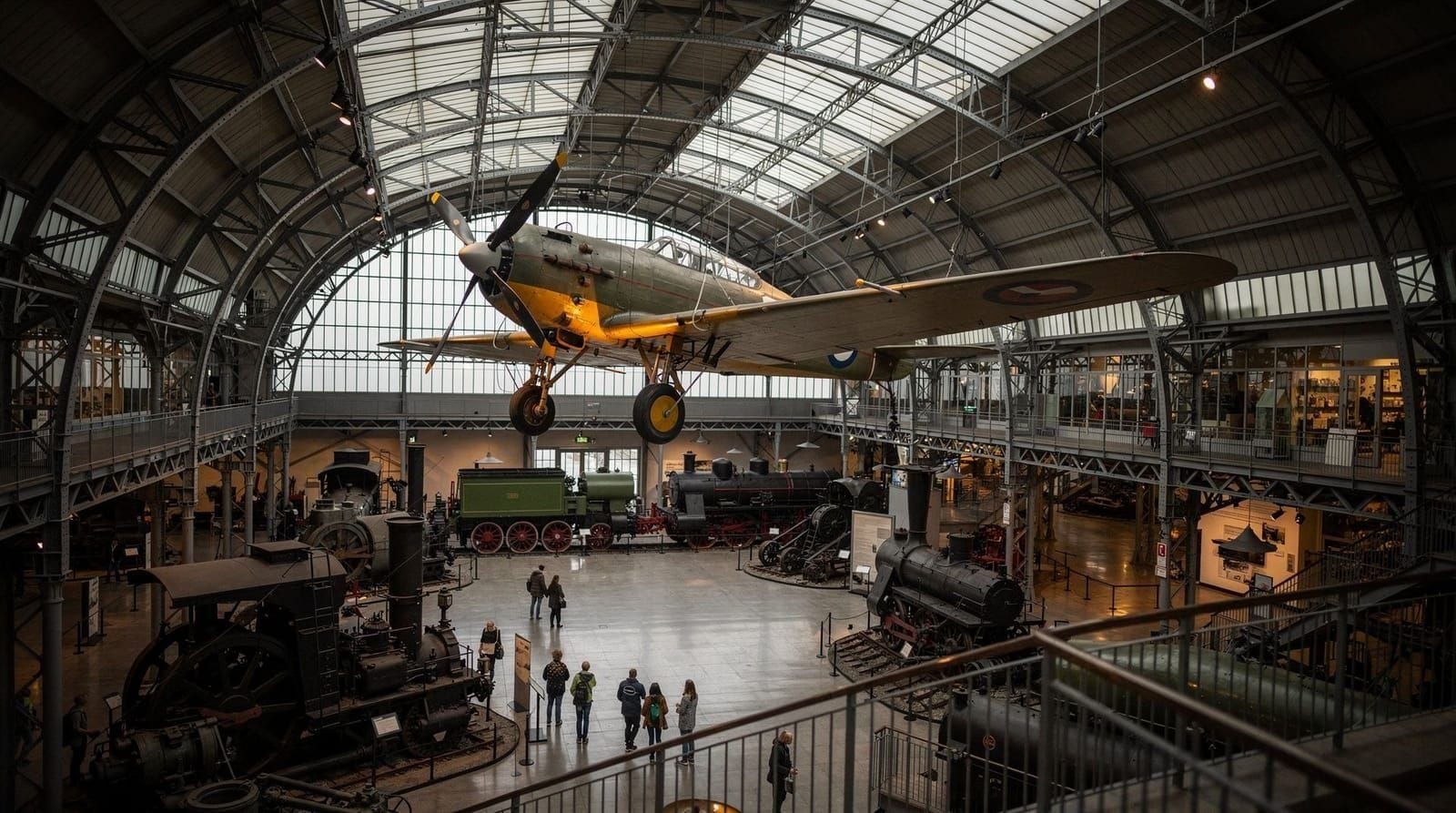
The Deutsches Museum (Deutsche Museum für Meisterwerke der Naturwissenschaft und Technik) occupies an island in the Isar directly adjacent to the Au-Haidhausen bank. One of the world’s largest science and technology museums, it covers engineering, aviation, chemistry, physics and numerous other disciplines over an enormous floor area. The museum is in a rolling renovation programme; individual wings open and close. The Deutsches Museum guide covers the current state of the exhibits.
The French Quarter: Franzosenviertel
The Franzosenviertel is the grid of streets in northern Haidhausen named after French cities, regions and cultural figures. Walking through the area, street signs read Rue de Marseille, Pariser Strasse, Bretonischer Ring, Sedanstrasse, Lothringerstrasse. The naming dates from the 1870s — Bavaria having won the Franco-Prussian War as part of the North German Confederation, and the French indemnity having funded significant civic infrastructure in Munich.
Today the historical irony of the naming is largely forgotten and the area is simply a pleasant residential district. The streets are quiet, lined with late-19th and early-20th-century apartment buildings, and have a neighbourhood-within-a-city quality that is genuinely different from the tourist zones around Marienplatz. Independent cafés, small restaurants, a few boutiques and specialist shops serve the local residential population.
There is no tourist infrastructure here — no guides, no tours, no museum explaining the history. The French Quarter is worth exploring as a neighbourhood walk rather than a structured attraction.
Wiener Platz: the neighbourhood market square
Wiener Platz (Vienna Square) is the social centre of Au-Haidhausen. The square itself is not architecturally remarkable — a widened street intersection with a central kiosk building. What makes it work is the density of cafés and restaurants immediately around it, and the weekend market.
Saturday morning market: Local farmers and producers set up stalls around the kiosk from approximately 8am to 1pm on Saturdays. The scale is smaller than the Viktualienmarkt but the character is more genuinely local — you are shopping alongside neighbourhood residents rather than tourists. Cheese, seasonal vegetables, bread, flowers, honey and occasional speciality products. The market is not listed in most tourist guides and has no tourist infrastructure.
Weekday Wiener Platz: During the week, the kiosk building serves as a community function point and the surrounding cafés and restaurants open normally. The pavement café tables along Wörthstrasse and Milchstrasse are pleasant for morning coffee or afternoon beer.
Eating and drinking in Au-Haidhausen
The neighbourhood’s restaurant scene is one of its defining characteristics. It is not culinarily famous in the way that Gärtnerplatz or the Glockenbachviertel are, but the combination of lower rents (relative to Schwabing or the Altstadt centre) and a local rather than tourist customer base has produced a solid independent restaurant culture.
Bavarian restaurants:
- Wirtshaus in der Au (Lilienstrasse): One of Munich’s most-recommended traditional Bavarian restaurants — particularly famous for dumplings (Knödel) in many variations. Reservations recommended for evenings. Main courses €12–20.
- Max-Emanuel-Brauerei (technically Maxvorstadt but accessible from Au-Haidhausen): A 19th-century brewery-restaurant with a courtyard beer garden. Good beer and solid Bavarian food.
International options: The streets around Pariser Platz and Wörthstrasse have a good mix of Italian, Greek, Asian and Middle Eastern restaurants. Quality is consistently solid at mid-range prices (€10–18 for a main).
Cafés: The morning café culture is strong in Au-Haidhausen. Several independent coffee shops on Milchstrasse, Wörthstrasse and in the French Quarter streets open early and serve local residents before they open to the tourist or general city trade.
Bars: The area around Kirchenstrasse and the eastern edge of Au has a concentration of bars and late-night venues that attract a local crowd. Less famous than the Glockenbachviertel bar scene but with a neighbourhood regulars feel. Munich food and beer walking tour — local dishes and brewery history
The Gasteig cultural centre
The Gasteig (the name means “steep rise” in local Bavarian — the building sits on a slope above the Isar) is Munich’s main concert and cultural venue, located at the Rosenheimer Platz end of Au-Haidhausen.
The building was completed in 1985 and was controversial from the start — a large red-brick complex that critics found oppressive and that does not integrate well with the surrounding neighbourhood. It contains:
- Philharmonie im Gasteig: The main concert hall and home of the Munich Philharmonic Orchestra
- Carl-Orff-Saal: A smaller concert hall
- Schwarzer Saal: Black box theatre and multi-use performance space
- Stadtbibliothek München (Gasteig): One of the city’s main public library branches
- Multiple smaller spaces: Film screenings, exhibitions, rehearsal spaces
The building is undergoing phased renovation. During renovation (expected to run through 2028–2029), many Munich Philharmonic concerts have relocated to the temporary Gasteig HP8 venue in the Sendling district at Motorwerk. Check the Gasteig and Munich Philharmonic websites for current schedules and locations.
The Gasteig renovation is a significant Munich cultural politics story — the city has been debating whether to renovate the existing building, demolish it, or move to a new-build site. As of 2026, the renovation-in-place option has been chosen. If classical music is a priority during your visit, verify event locations before attending.
St. Maximilian’s Church and the Maximilianstrasse axis
The Maximilianstrasse — Munich’s most upscale shopping street, running east from the Altstadt through the Isartor gate — crosses the Isar via the Maximiliansbrücke and enters Au-Haidhausen as it terminates at the Maximilianeum, a monumental building (1874) on a bluff above the Isar that houses the Bavarian State Parliament (Landtag). The building is not open for general tourist visits but is architecturally significant.
St. Maximilian’s Church (Maximilians-Anlagen), a 19th-century neo-Gothic church, is visible from the bridge and from the Isar bank. The church and the public garden on the riverbank (Maximilians-Anlagen) form a pleasant riverside walk between the Maximiliansbrücke and the Gasteig.
Haidhausen beer gardens and outdoor culture
Consistent with Munich’s beer garden culture, Au-Haidhausen has several outdoor venues:
Hilton beer garden (at the Munich Hilton hotel, Rosenheimerstrasse): A large beer garden adjacent to the hotel that is open to non-guests. Not a traditional beer garden atmosphere but functional and pleasant.
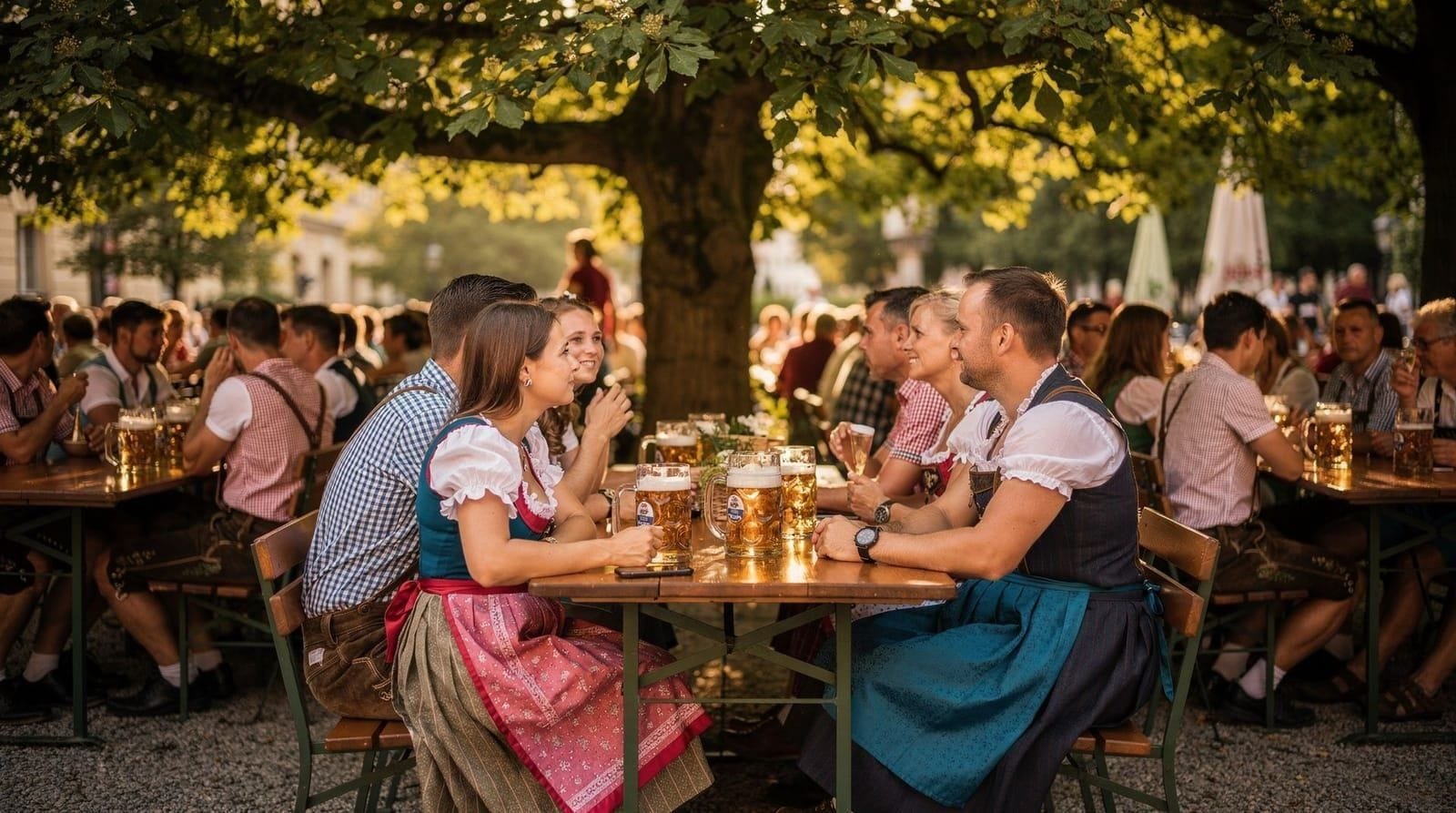
Hofbräukeller (Innere Wiener Strasse): One of Munich’s historic beer halls with a large outdoor garden. Less famous than the Hofbräuhaus downtown, considerably less touristy, and a genuine neighbourhood beer hall atmosphere. The garden seats approximately 1,500 people and serves Hofbräu beer.
Isar riverbank: As described above — the bank itself functions as a de facto beer garden and outdoor leisure area on warm days. Many residents bring their own food and drink. Viktualienmarkt and Altstadt food tour — 10 Bavarian tastings
Where to stay in Au-Haidhausen: price guide
Budget (under €80/night): Limited options in the neighbourhood itself; the Ostbahnhof area has some budget chain hotels. Hostel beds are available at nearby Hacker-Pschorr and similar spots.
Mid-range (€90–160/night): The neighbourhood has independent hotels and pension-style guesthouses that offer better value than comparable Schwabing options. The proximity to the Ostbahnhof means some business-oriented mid-range chains are present.
Upper mid-range (€160–250/night): The Munich Hilton (Rosenheimerstrasse) is at the Gasteig end of Au-Haidhausen — a large business hotel with a good outdoor beer garden, convenient for both the Altstadt and the neighbourhood.
For a full comparison of Munich areas by accommodation price and convenience, see the where to stay in Munich guide.
Suggested half-day route through Au-Haidhausen
A practical way to see the neighbourhood without backtracking: start at Rosenheimer Platz S-Bahn, walk past the Gasteig toward the Isar bank, follow the river north or south for 20–30 minutes (longer if you stop to swim in summer), cross back at the Maximiliansbrücke to see St. Maximilian’s Church, then head into the French Quarter streets north of Wörthstrasse before finishing at Wiener Platz for coffee or a late lunch. The whole loop takes 2.5–3.5 hours at an unhurried pace, and connects back to the Munich Altstadt in about 15 minutes on foot via the Maximiliansbrücke if you want to continue into the centre afterward.
How Au-Haidhausen compares for a base versus other neighbourhoods
Visitors weighing Au-Haidhausen against the alternatives should look at what they actually plan to do each day. If your priority is late-night bars and LGBTQ+ nightlife, the Glockenbachviertel is the stronger base. If proximity to the museums of the Maxvorstadt matters more than river access, that district edges it out. Au-Haidhausen wins on value and on direct Isar access, and the Munich best areas for tourists guide and the broader Munich neighborhoods overview both cover how it stacks up against Schwabing and the Altstadt on price and convenience. For a first Munich trip built around the Munich trip planning guide, Au-Haidhausen works best as a base for travellers who want to feel like residents rather than stay directly in the tourist core.
Frequently asked questions about Au-Haidhausen
Is Au-Haidhausen safe?
Yes. Au-Haidhausen is a normal Munich residential neighbourhood with low crime rates. The Ostbahnhof area (at the eastern edge) has more street activity at night than the quieter residential streets, but nothing approaching serious safety concerns by the standards of European cities. Standard city travel precautions apply.
What is the Haidhausen “French Quarter” actually like to walk through?
Quiet and residential. There are no French restaurants, no Eiffel Tower replicas, no tourist infrastructure. It is a pleasant late-19th-century residential grid with wide streets, good-quality apartment buildings and independent cafés and shops. The interest is in the street names and the neighbourhood’s calm character relative to the tourist centre. Allow 30–45 minutes to walk through the main French Quarter streets.
How does Au-Haidhausen compare to the Glockenbachviertel?
Both are east-of-centre neighbourhoods with good independent restaurant and bar scenes. The Glockenbachviertel is more famous and more animated at night — it has Munich’s LGBTQ+ scene and a denser nightlife concentration. Au-Haidhausen is quieter, more family-oriented and more residential in character. Prices in Au-Haidhausen tend to be slightly lower for accommodation. The Glockenbachviertel is closer to the Altstadt; Au-Haidhausen has the Isar riverbank advantage. See the Glockenbachviertel guide for the comparison.
Can I swim in the Isar near Au-Haidhausen?
Yes, at the gravel bank beaches between the Deutsches Museum and the Marienklause. The water is cold (typically 15–18°C in summer), fast-moving and alpine-clear. Current is significant in higher sections; check the water level indicator before entering. Children and weak swimmers should not enter the main river channel. Designated swimming areas along the bank are marked.
What is the Hofbräukeller and is it better than the Hofbräuhaus?
The Hofbräukeller (Innere Wiener Strasse 19, Au-Haidhausen) is the original Hofbräuhaus brewery pub, predating the famous Altstadt location. It is considerably less touristy — mostly local regulars and neighbourhood residents. The beer (Hofbräu, same brewery) is identical to that served at the famous Hofbräuhaus downtown. The outdoor beer garden is pleasant and large. This is genuinely the better Hofbräu experience for visitors who want to avoid the Altstadt tourist atmosphere.
How far is Au-Haidhausen from the English Garden?
The southern entrance to the English Garden (near the Haus der Kunst) is about 30 minutes on foot from Wiener Platz via the Isar banks and Prinzregentenstrasse. By bike, the route is 15–20 minutes and is entirely pleasant along the river. See the English Garden guide for entry points and what to see.
Is Au-Haidhausen a good base if I do not have a car?
Yes — it is one of the better car-free bases in Munich. The S-Bahn from Rosenheimer Platz reaches the Altstadt in one stop, and the U5 from Ostbahnhof connects to Marienplatz in around 8 minutes. Combined with the Munich public transport guide, you can reach almost anywhere in the city centre or the wider MVV network within 20–30 minutes without needing a car.
Are there good day-trip connections from Au-Haidhausen?
Yes, indirectly — Ostbahnhof at the neighbourhood’s eastern edge is a regional and long-distance rail hub in its own right, alongside Munich Hauptbahnhof. Some regional trains toward the Bavarian Alps and Salzburg call at Ostbahnhof, which can save a crosstown trip to the main station. Check the day trips by train guide for which routes are relevant to your plans.
Top experiences
Bookable activities with verified prices and instant confirmation on GetYourGuide.