Bavarian dishes to try in Munich
Munich: Bavarian food and market tour with 3-course meal
What are the essential Bavarian dishes to eat in Munich?
The non-negotiable list is Weisswurst with sweet mustard and pretzel, Schweinshaxe (roast pork knuckle), Käsespätzle (cheese noodles), Obatzda (cheese spread), and a proper Brotzeit platter. Sauerbraten, Dampfnudeln, and Steckerlfisch round out a thorough Bavarian food experience.
| Where | Beer halls, Wirtshäuser and market stalls across Munich |
| Cost | Around €4–24 per dish depending on what you order |
| Time needed | A single sit-down meal, or a half-day food crawl to cover several dishes |
| Getting there | Most classic addresses cluster around the Altstadt and Viktualienmarkt |
| Best time | Weisswurst before noon; beer garden dishes best on a warm afternoon |
Bavarian food in context: what to expect
Bavarian cuisine is one of the most coherent regional food traditions in Germany — rooted in Central European peasant cooking, shaped by the Alpine climate, and defined by pork, root vegetables, cabbage, dairy, and carbohydrate. It is robust, filling, and not especially subtle. What it is, at its best, is technically excellent: a perfectly executed Schweinshaxe with crackling shell and melting interior is genuinely remarkable; a properly made Weisswurst with artisan mustard is better than most restaurant sausage dishes anywhere in Europe.
The key to eating well in Munich is understanding which dishes are worth ordering and which are coasting on reputation. This guide gives you a practical checklist — what each dish is, what a good version tastes like, what you should expect to pay, and where to find it.
Essential Bavarian dishes: the checklist
1. Weisswurst (white veal sausage)
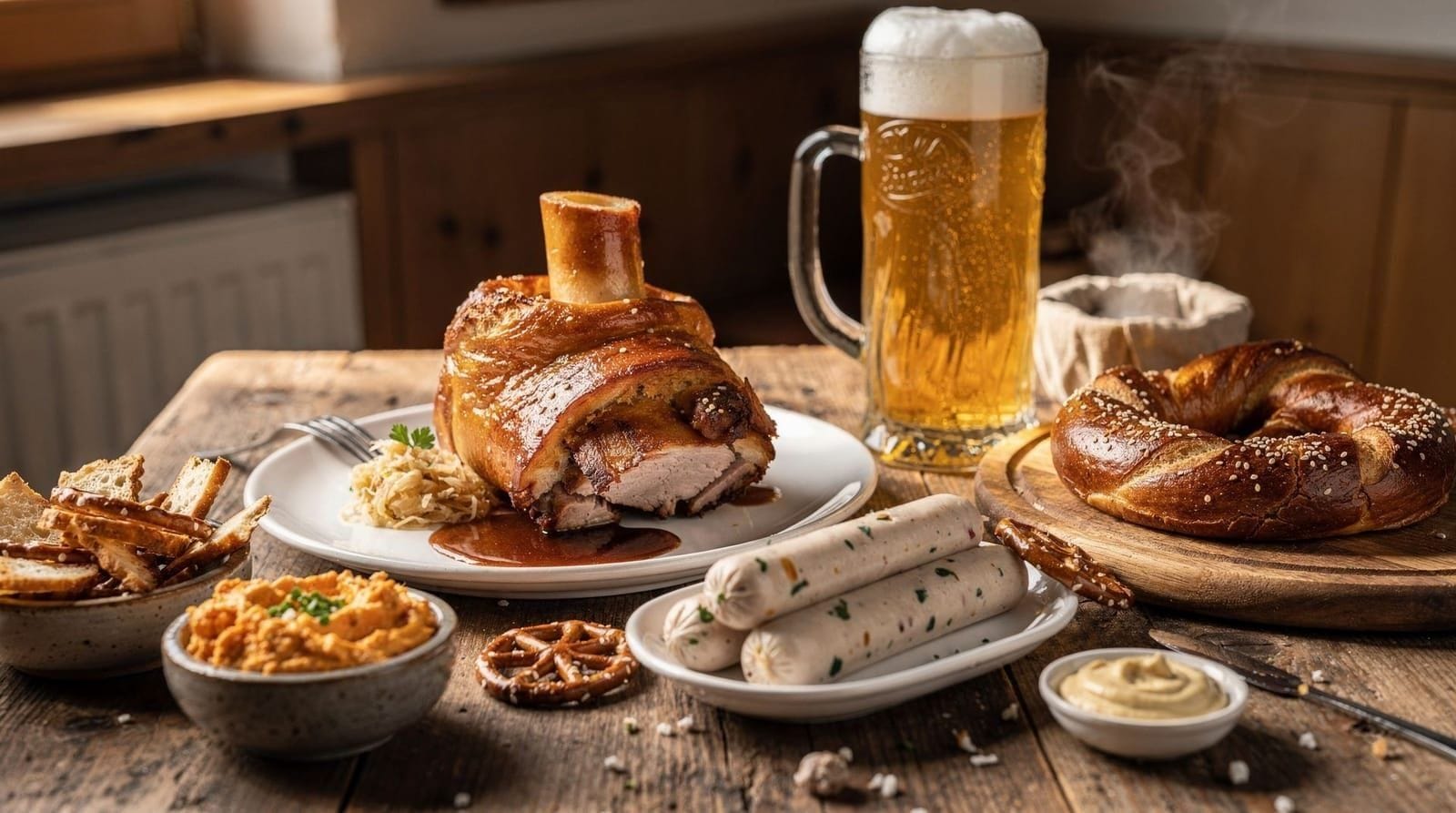
What it is: A pale, smooth sausage made from minced veal and pork back fat, flavoured with fresh parsley, lemon zest, mace, cardamom, ginger, and onion. Stuffed into natural pork casings and cooked by poaching — never grilled or fried, as the delicate mix would split.
What a good one tastes like: Creamy and subtly flavoured, with the parsley dominant and a faint lemon note. The texture is soft, almost mousse-like compared to a grilled sausage.
How to eat it: The sausage arrives in a small bowl of warm water to maintain temperature. Remove it from the water and either suck the sausage from its skin (Zuzeln) — more traditional, messy, and functional — or cut lengthways with a knife and fork and peel the skin. Dip each bite in the accompanying sweet Weisswurstsenf mustard.
When to eat it: The tradition says before noon. This comes from the pre-refrigeration era, when the sausages were made fresh each morning and had to be consumed while still fresh. Most Munich establishments still follow the convention, though you will occasionally find Weisswurst served in the afternoon at tourist-heavy venues.
What to pay: €4.50–6.50 for two sausages, pretzel, and mustard. Included in the Weisswurst Frühstück (breakfast set) at most beer halls.
Best places: Augustiner am Dom (Frauenplatz), Zum Franziskaner (Residenzstrasse), Cafe Frischhut (Prälat-Zistl-Strasse), and almost any Metzgerei in the morning.
2. Schweinshaxe (roasted pork knuckle)
What it is: A single pork leg joint — the lower leg from knee to trotter — approximately 800g–1.2kg, slow-roasted at high heat until the outer skin becomes a deeply browned, blistered shell while the interior meat becomes soft and rich.
What a good one tastes like: The crackling (Schwarte) should be brittle enough to crack with a fork without being burned. The meat inside separates easily from the bone and is both fatty and lean, with a strong pork flavour that comes from the long roasting. Poor versions are simply fatty; good versions have a developed, complex depth from the cooking process.
Accompaniments: Sauerkraut or Kartoffelknödel (potato dumpling) and a small pot of the concentrated cooking juices. The dumpling is dense, smooth, and soaks up the sauce well; do not underestimate it.
What to pay: €14–22 at a beer hall or Wirtshaus. Cheaper versions exist but the quality degrades noticeably below €14.
Best places: Haxnbauer (specialised Schweinshaxe restaurant on Münzstrasse), Hofbräuhaus, Augustiner Keller, and Schneider Bräuhaus.
3. Käsespätzle (cheese noodles)
What it is: Spätzle are a type of soft egg pasta — small, irregular shapes formed by pressing fresh dough through a grater or colander directly into boiling water. Käsespätzle layers the hot noodles with grated mountain cheese (Emmental, Bergkäse, or Allgäuer Emmentaler) and tops with deeply caramelised fried onion rings.
What a good one tastes like: The cheese melts into the noodles rather than coating them — the distinction is in the Bergkäse quality and the heat of the dish when served. The fried onions add sweetness and textural contrast. A poor version uses pre-grated processed cheese and arrives lukewarm.
What to pay: €9–13 as a main course at a restaurant; €6–8 at market stalls.
Best places: Wirtshaus in der Au (Marie-Ward-Platz — arguably the best Käsespätzle in Munich), Hofbräuhaus, most traditional Wirtshäuser in the residential neighbourhoods.
4. Obatzda (Bavarian cheese spread)
What it is: A spreadable mixture of ripe Camembert or Brie, soft butter, cream cheese, finely minced onion, caraway seeds, sweet paprika, and sometimes a dash of Weissbier or Radler. The ratio varies by maker; the best Obatzda uses fully ripe Camembert that has developed its sharp, ammoniac edge.
What a good one tastes like: Creamy but tangy, with the caraway adding a distinct flavour note and the paprika providing colour and gentle sweetness. Not sharp enough to be unpleasant, but strong enough to make the pretzel and radish pairing necessary rather than decorative.
What to pay: €4–7 for a generous plate at a beer garden or Wirtshaus.
Best places: Beer gardens at Viktualienmarkt and Chinesischer Turm in the English Garden. Many butcher stalls at markets also sell it fresh.
5. Leberknödelsuppe (liver dumpling soup)
What it is: A clear beef broth containing one or two large liver dumplings — roughly baseball-sized dumplings made from ground beef liver, bread, onion, marjoram, and egg. The combination sounds unusual; the result is a deeply flavoured, warming soup that functions well as a starter.
What a good one tastes like: The broth should be genuinely clear and richly flavoured (bone-based, not cube-based); the dumpling should be firm but not dense, with the liver flavour present but not dominant.
What to pay: €5–7 as a starter.
Best places: Traditional Wirtshäuser in Au-Haidhausen, the Hofbräuhaus, Schneider Bräuhaus.
6. Sauerbraten (marinated pot roast)
What it is: Beef (occasionally pork or horse in the Rhineland version) marinated for 2–7 days in a mixture of red wine vinegar, wine, onions, bay leaves, juniper berries, black pepper, and cloves. The marinated meat is then braised low and slow, and the marinade reduced to a sweet-sour sauce. The Bavarian version classically uses crumbled Lebkuchen (gingerbread) stirred into the sauce to add sweetness and body.
What a good one tastes like: The beef should be fork-tender and deeply flavoured. The sauce is the defining element: a properly made Sauerbraten sauce has complexity — sweet, sour, spiced — that is unlike any other German sauce.
What to pay: €16–24 as a main course.
Best places: Wirtshaus in der Au, Zum Straubinger (Blumenstrasse), Paulaner am Nockherberg (Bavarian institution in the Haidhausen area).
7. Dampfnudeln (steamed yeast dumplings)
What it is: Large, round yeast-leavened dumplings steamed in a shallow pan with a small amount of milk and butter, which forms a browned, slightly crisp base while the dough puffs into a soft, pillowy dome. Served either as a dessert (with vanilla sauce and plum compote) or as a savoury main (with potato soup or Sauerkraut).
What a good one tastes like: The contrast between the crisp, slightly caramelised base and the cloud-soft interior is the point. The savoury version is the more typically Bavarian presentation; the dessert version is more commonly found in Baden-Württemberg.
What to pay: €6–9 as dessert or main.
Best places: Café Frischhut (Prälat-Zistl-Strasse, near the old market hall) is the most famous Dampfnudeln institution in Munich — an old-school morning café that sells almost nothing else. Get there early; they sell out.
8. Steckerlfisch (fish on a stick)
What it is: A whole fish — typically mackerel (Makrele) or trout (Forelle) — threaded lengthways onto a wooden stick and grilled over an open wood or charcoal fire for 15–20 minutes until the skin crisps and chars slightly. The simplest possible preparation.
What a good one tastes like: The fat in mackerel renders over the fire, basting the flesh continuously. The result is moist inside with a smoky, slightly charred exterior. Seasoning is just salt; the quality of the fish and the fire do the work.
When to find it: Primarily at Oktoberfest (the most famous Steckerlfisch stands are on the eastern side of the Theresienwiese), at summer beer garden events, and at market festivals. Not a year-round restaurant dish.
What to pay: €5–8 at market stalls; €10–14 at Oktoberfest.
9. Brotzeit (Bavarian bread time)
What it is: Brotzeit (literally “bread time”) is a cold snack platter rather than a single dish — a spread of rye bread, pretzels, Obatzda, cold cuts (Wurst), radishes, pickled gherkins, and sometimes Leberkäse or hard-boiled eggs. It functions as a late-morning or early-afternoon meal rather than lunch.
What a good one looks like: The Brotzeit is an assembly dish rather than a cooked one — quality depends entirely on ingredient sourcing. The best versions use artisan-baked bread, fresh Obatzda made that day, and sliced meats from a quality butcher rather than pre-packaged deli meat.
What to pay: €9–16 for a substantial platter. Beer garden Brotzeit platters are often the best value.
Best places: Beer garden Brotzeit at Viktualienmarkt, Augustiner Keller biergarten, and the Englischer Garten’s Chinesischer Turm.
10. Zwiebelrostbraten (onion-smothered roast beef)
What it is: A thin-cut beef sirloin (Roastbeef) seasoned, pan-fried, then topped with a generous pile of deeply caramelised fried onion rings (Röstzwiebeln) and served with a rich pan gravy and Bratkartoffeln (fried potatoes) or Spätzle.
What a good one tastes like: The beef should be cooked to medium at most — the thin cut overcooks rapidly and a well-done Rostbraten is a waste. The fried onions are the dominant flavour: sweet, slightly bitter at the edges from caramelisation, and substantial in quantity.
What to pay: €17–24.
Best places: Wirtshaus in der Au, Augustiner am Dom, Zum Straubinger. A full-meal Bavarian food tour that works through several traditional dishes in one guided session is an efficient way to taste the range without navigating multiple restaurants alone.
Dishes that are overrated or tourist-facing
Haxe at Hofbräuhaus: The Hofbräuhaus serves Schweinshaxe but the kitchen is producing at industrial volume. The quality is adequate but not exceptional. For the best Schweinshaxe in Munich, Haxnbauer on Münzstrasse is the specialist.
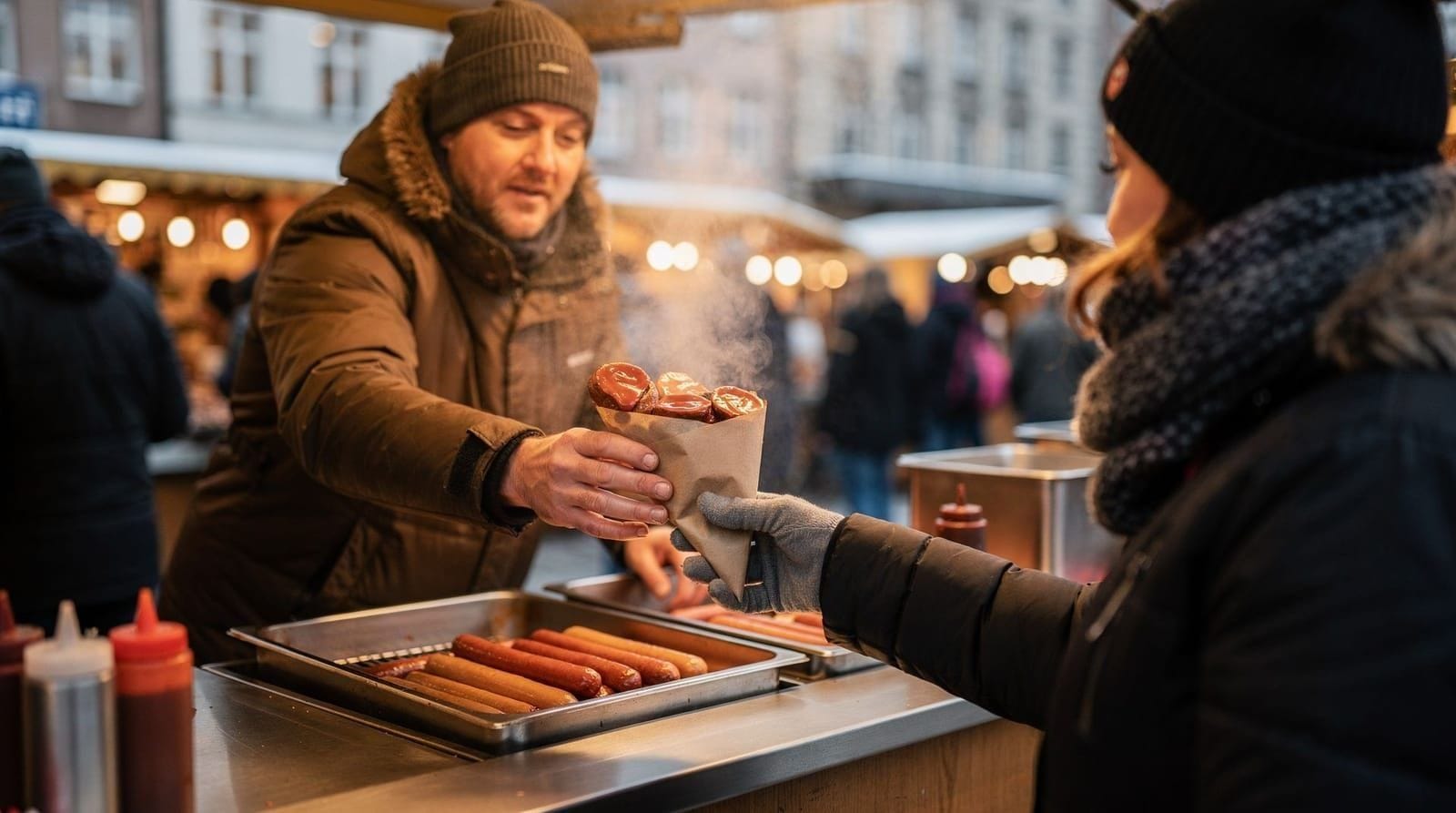
Bratwurst at street stalls on pedestrian zones: Usually fine but overpriced at €6–8 for a sausage and roll. The same sausage costs €3.50–4 at a market stall.
“Authentic Bavarian” restaurant sets on Neuhauserstrasse: Several restaurants near the Karlstor sell fixed-price “Bavarian experience” menus for €25–35 that include below-average versions of everything on this list. Avoid.
Vegetarian Bavarian dishes
The traditional Bavarian kitchen is meat-heavy, but some dishes are inherently vegetarian:
- Käsespätzle — entirely vegetarian
- Obatzda — entirely vegetarian
- Dampfnudeln (dessert version with vanilla sauce) — vegetarian
- Laugenbrezel (pretzel) — vegan
- Zwetschgendatschi — Bavarian plum tart, vegetarian and common in coffee houses
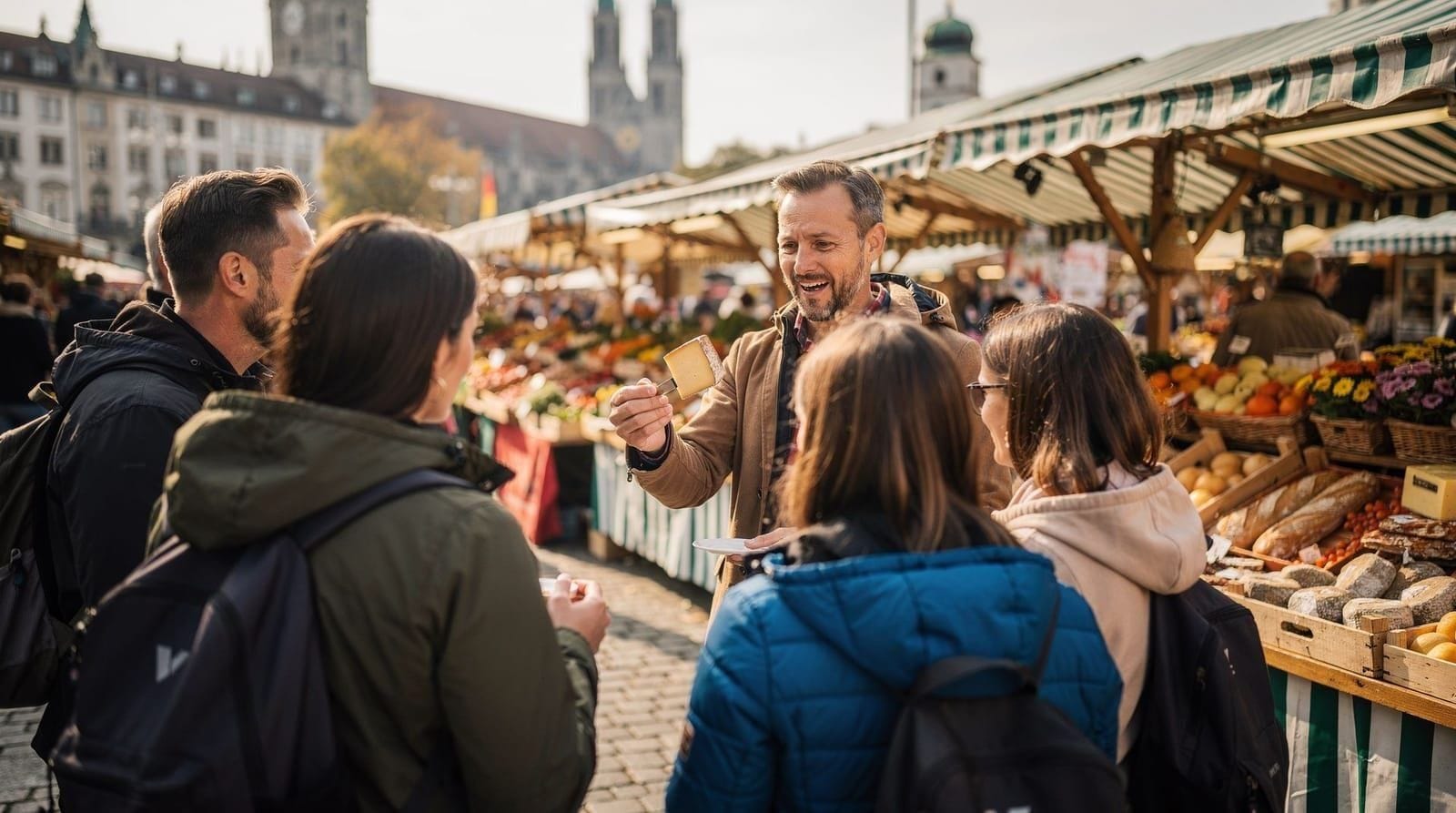
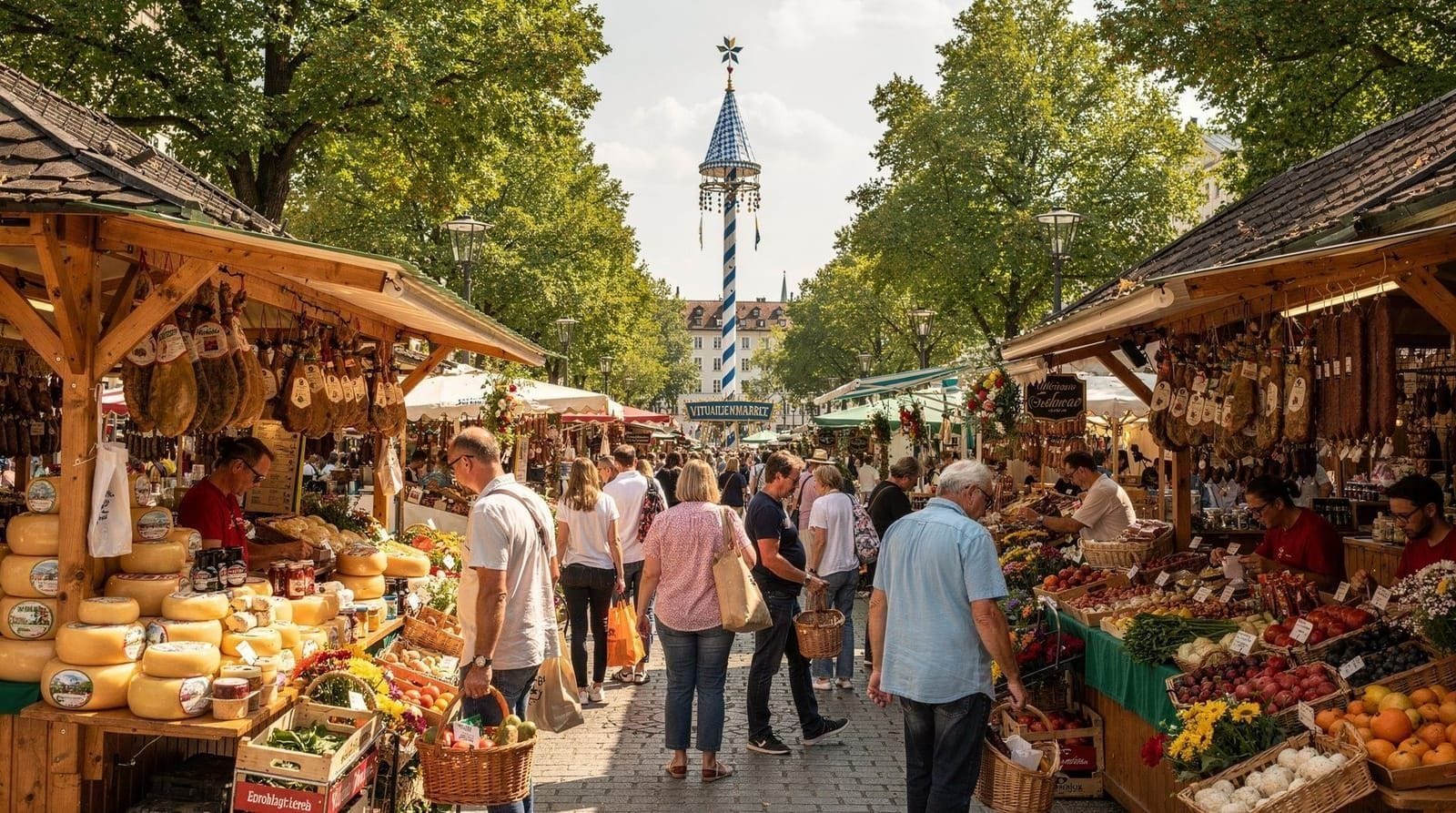
For a full guide to plant-based eating in Munich, see the Munich vegetarian and vegan guide. A gourmet food tour of the Viktualienmarkt introduces several of these dishes in their best market-stall versions, with a guide who can explain ingredient sourcing and traditional context.
Desserts and sweets worth trying
Apfelstrudel — stretched pastry wrapped around spiced apple filling, served warm with vanilla sauce or Vanilleeis. The Viennese version is the reference, but Munich coffee houses do their own well.
Kaiserschmarrn — a torn, fluffy pancake caramelised with sugar and served with plum sauce (Zwetschgenröster). A Bavarian-Austrian dessert that is larger and richer than the name “torn pancake” suggests.
Lebkuchen — spiced gingerbread, particularly prominent at Christmas markets but available year-round. The Nuremberg variety (with a protected designation) is the benchmark.
Zwetschgendatschi — a Bavarian plum tart made on a yeast-leavened base with halved Italian prune plums and a streusel topping. A late-summer seasonal dish available from August through October.
Where to eat well without getting confused
The Munich food tour guide covers structured guided experiences for those who want expert help navigating the choices. The Viktualienmarkt guide covers the market stalls where many of these dishes appear in their simplest forms.
For a broader orientation to Munich’s restaurant scene — from beer halls to Michelin-starred restaurants — the best restaurants in Munich guide gives a complete overview by category and price.
Prices at a glance (2026)
| Dish | Typical price at a Wirtshaus/beer hall |
|---|---|
| Weisswurst breakfast (2 + pretzel + mustard) | €6.50–8.50 |
| Schweinshaxe with Sauerkraut | €14–22 |
| Käsespätzle | €9–13 |
| Obatzda with radishes | €4–7 |
| Leberknödelsuppe | €5–7 |
| Sauerbraten with dumplings | €16–24 |
| Dampfnudeln | €6–9 |
| Brotzeit platter | €9–16 |
| Zwiebelrostbraten | €17–24 |
| Apfelstrudel with sauce | €5–8 |
Building a one-day Bavarian food crawl
If you only have one day to eat your way through this list, sequence it around the noon Weisswurst rule rather than fighting it. Start at a market stall or Café Frischhut before 11:00 for Weisswurst or Dampfnudeln, walk the Viktualienmarkt for Obatzda and a Brotzeit-style snack around midday, then book a proper Wirtshaus dinner for Schweinshaxe or Sauerbraten in the evening when kitchens are at full strength. This spreads the heavy dishes across the day instead of stacking them into one sitting, which matters given how filling Bavarian food is. The Munich street food guide has more stall-level options if you want to graze rather than sit down for every course.
For visitors staying near Schwabing or Maxvorstadt rather than the Altstadt, most of the addresses above require a short U-Bahn ride rather than a walk — factor that into how much of the list you can realistically cover in a day. Those on a Munich budget should prioritise market-stall versions of Obatzda and Käsespätzle over restaurant plates; the quality gap is smaller than the price gap.
Frequently asked questions about Bavarian dishes to try
Can I eat Weisswurst in the afternoon?
The traditional rule says before noon, and most Munich establishments follow it. If you arrive after 12:00 asking for Weisswurst, some places will tell you they have sold out — which is often true, as they make a fixed quantity each morning. A handful of tourist-facing beer halls serve it until 15:00.
Is Schweinshaxe the same as Eisbein?
No. Schweinshaxe is a roasted pork knuckle; Eisbein is a boiled pork knuckle, traditional in Berlin and northern Germany. The roasted version is the Bavarian preparation — the skin becomes crackling rather than gelatinous. Eisbein occasionally appears on Munich menus but is not native.
What is the difference between Klöße and Knödel?
Both refer to dumplings. In Bavaria, Knödel is the standard term; Klöße is used more in northern and central Germany. Bavarian Kartoffelknödel (potato dumplings) are made from half raw and half cooked potato, shaped into large spheres. Semmelknödel (bread dumplings) use old white rolls and go particularly well with dishes that have a sauce.
Are the beer halls in Munich genuinely Bavarian or tourist-facing?
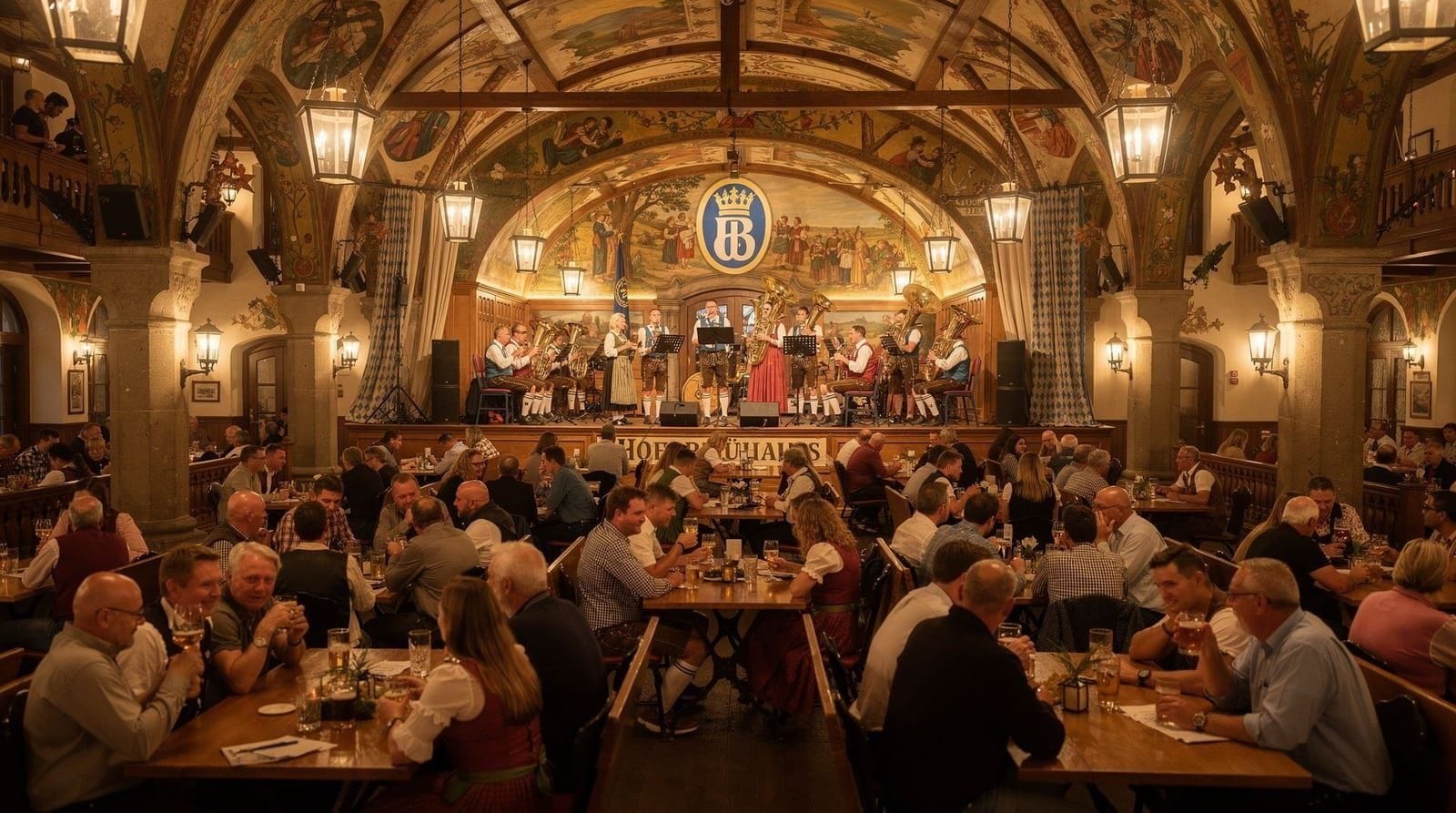
Both, depending on the hall. The Hofbräuhaus is overwhelmingly touristy but the food quality holds up. The Augustiner Keller, Augustiner am Dom, Löwenbräukeller, and Schneider Bräuhaus retain strong local customer bases and are not primarily tourist venues. The Munich beer halls guide covers the distinctions in detail.
How much should a full Bavarian dinner cost?
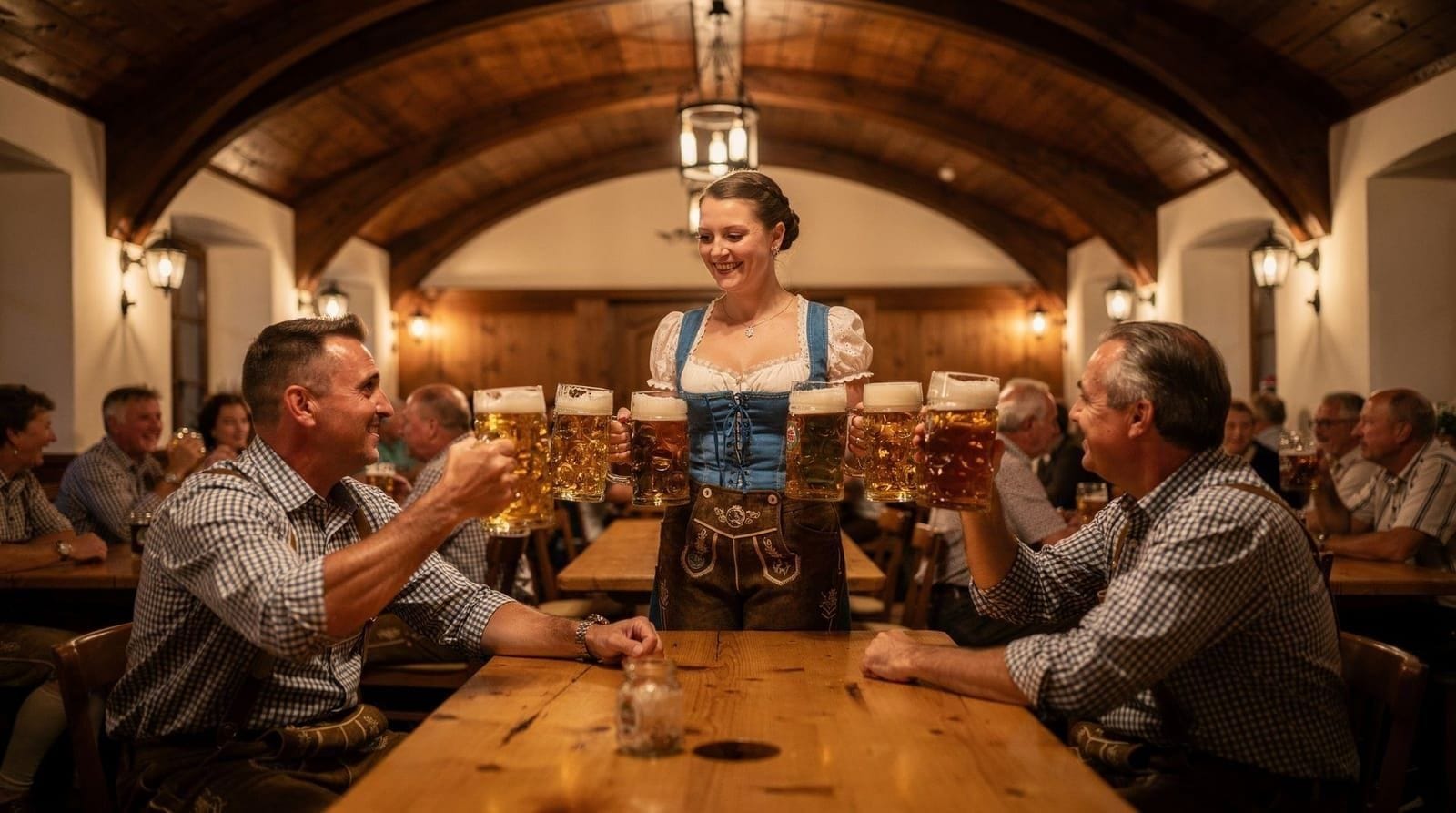
A main course at a traditional Wirtshaus costs €13–24; add a starter soup at €5–7 and a dessert at €5–8, plus a litre of beer at €6–9 (Wirtshaus beer is cheaper than beer hall beer). A full dinner for one person runs €28–45 at a mid-range establishment. Budget Bavarian dining — Brotzeit and a Masskrug — can be done for €18–22 at a beer garden.
Where can I find Dampfnudeln in Munich?
Café Frischhut near the old market hall is the cult address. It opens from 07:00 and serves Dampfnudeln and Schmalznudeln (deep-fried dough) until sold out — typically by 11:00–12:00. Arrive before 09:00 for guaranteed availability.
Are Bavarian dishes different from Oktoberfest tent food?
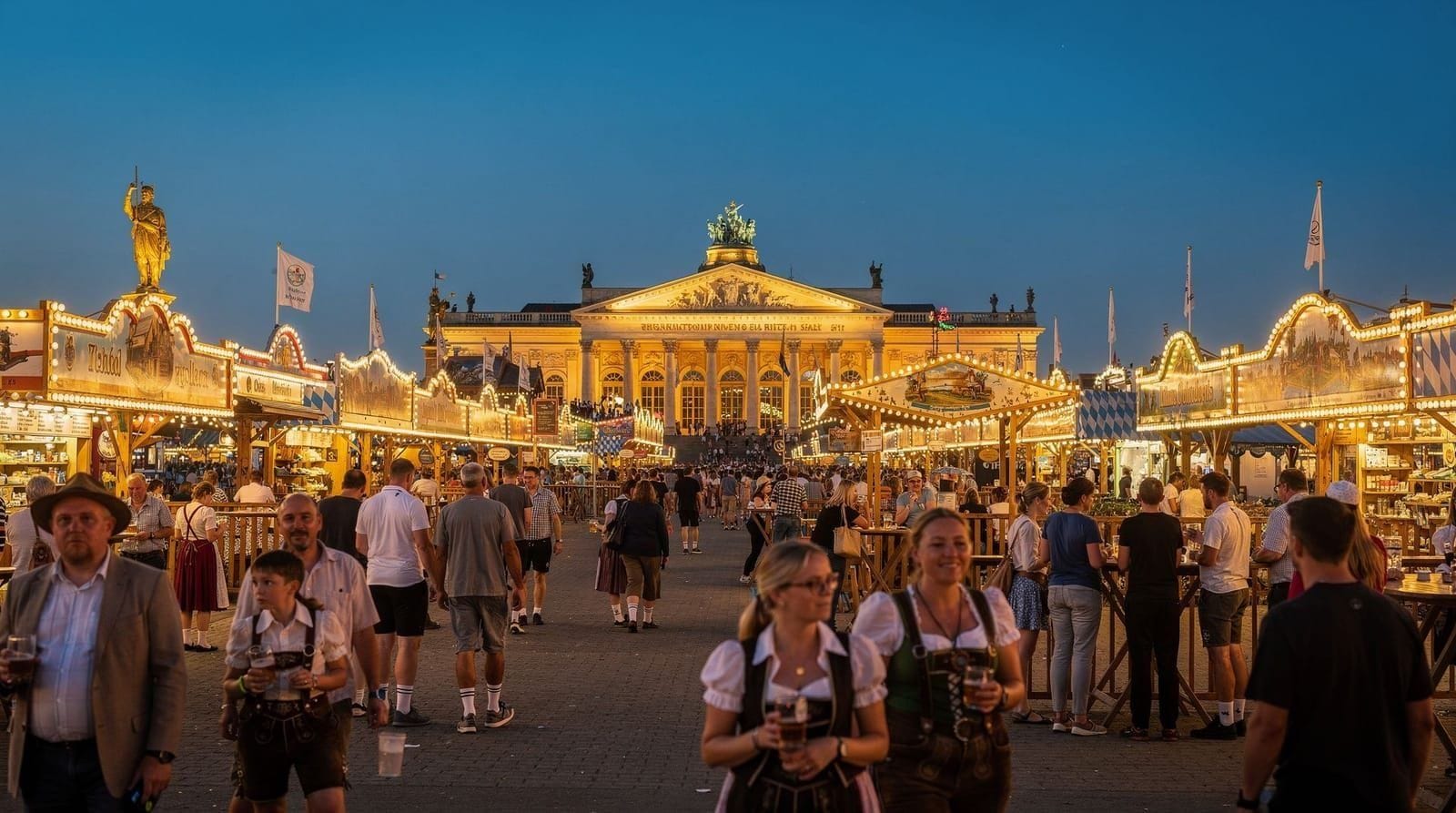
Not fundamentally — the tents serve the same core repertoire (Schweinshaxe, Weisswurst, Käsespätzle, Steckerlfisch, roast chicken) but at festival-scale volume and festival prices. The Oktoberfest guide covers tent-by-tent food quality, and Steckerlfisch specifically is far easier to find at the Wiesn than at any other time of year.
Can I try several of these dishes without booking multiple restaurants?
Yes — a single guided food tour is the most efficient way to sample four or five dishes in one afternoon without researching addresses yourself. Munich Old Town food tour with 10 tastings covers a broad cross-section of this list in one guided walk.
Top experiences
Bookable activities with verified prices and instant confirmation on GetYourGuide.