Best Bavarian food in Munich — dishes to try and where to eat them
Munich: Bavarian food and market tour with 3-course meal
What are the must-try Bavarian dishes in Munich?
The five essential dishes are: Weißwurst with sweet mustard (before noon), Schweinshaxe (roast pork knuckle), Obatzda on a pretzel, Leberkäse in a bread roll, and Kaiserschmarrn for dessert. For beer, order a Helles lager or Weizenbier. Budget €15-20 for a proper Bavarian sit-down meal, more at upmarket Wirtshäuser.
| Where | Wirtshäuser, beer halls and the Viktualienmarkt across Munich |
| Cost | Around €4–24 per dish; €15–20 for a full sit-down meal |
| Time needed | A single meal, or a half-day crawl to sample several dishes |
| Getting there | Most classic addresses are in the Altstadt and Au-Haidhausen |
| Best time | Weißwurst before noon; sit-down mains any time from lunch onward |
A cuisine shaped by altitude, winter, and brewing
Bavarian food is not sophisticated in the French sense, and it does not pretend to be. It is cold-weather food from a mountainous region where winters are long, physical labour was the norm, and proximity to Alpine pastures meant an abundance of dairy, pork, and grain. The cuisine that evolved from these conditions is hearty, filling, high in fat and carbohydrates, and genuinely delicious when prepared correctly.
Understanding the logic of Bavarian food makes eating in Munich considerably more enjoyable. The cuisine divides roughly into three categories: the traditional Wirtshaus dishes eaten sitting down in wood-panelled establishments; the beer garden and market food meant to be eaten standing or at communal tables; and the sweet Bavarian pastry and dessert tradition that is underestimated by most visitors.
The essential dishes, one by one
Weißwurst — Bavaria’s most culturally specific food
Of all the foods associated with Munich, Weißwurst carries the most cultural weight. It is not merely a sausage but a ritual — a specific preparation, a specific time window, a specific set of accompaniments, and a set of table customs that Munich locals observe seriously and explain with genuine pride.
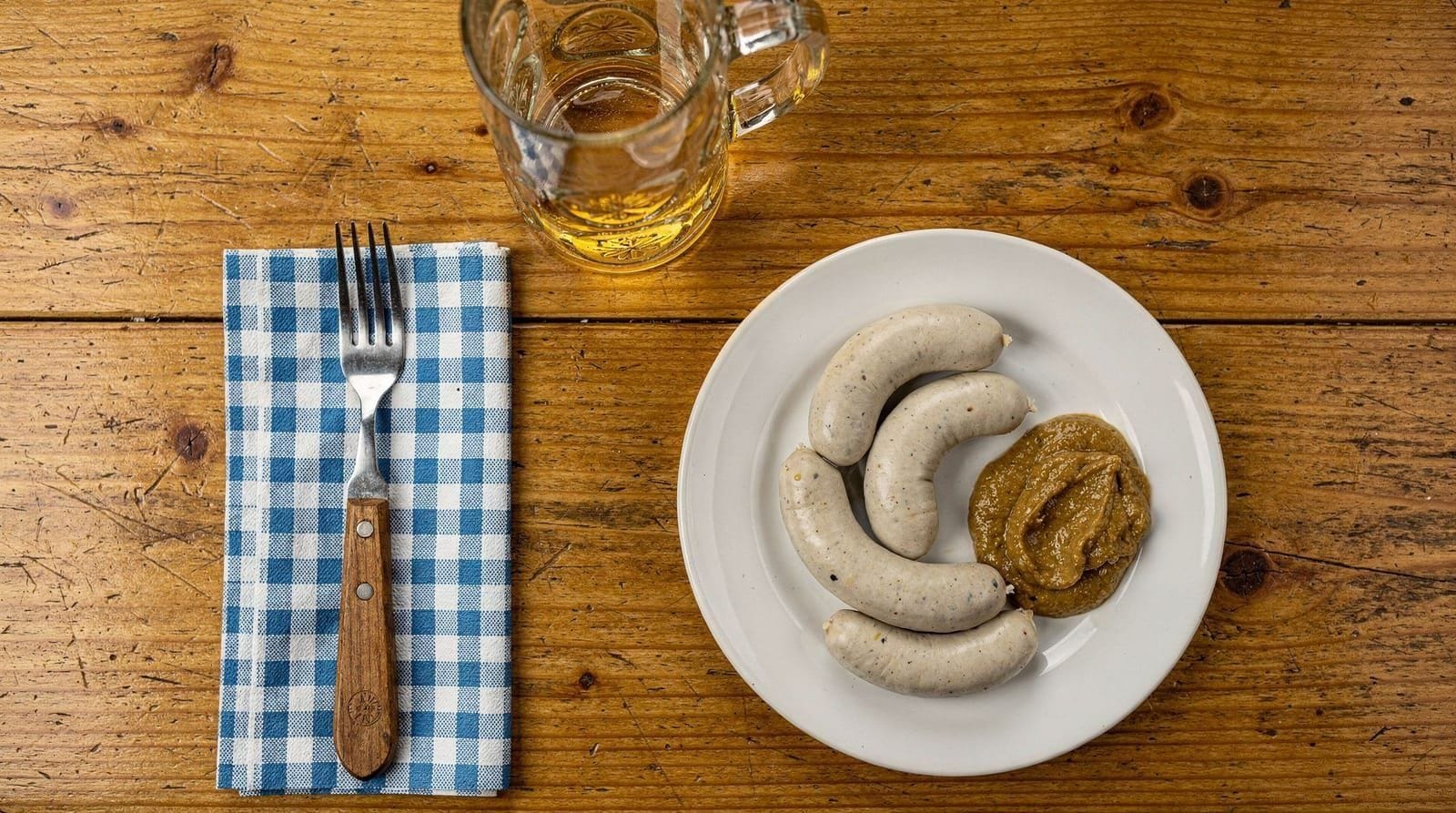
What it is: Finely minced veal and pork back fat, with parsley, lemon zest, fresh onion, cardamom, mace, and ginger, formed into a pale sausage approximately 12-15cm long and poached (not grilled, never grilled) in hot water until just cooked through. The texture is soft, almost custard-like in the centre. The flavour is delicate — primarily veal, with the lemon and cardamom clear but not aggressive.
The noon rule: Order Weißwurst before 12pm. This is observed as an actual convention in traditional establishments, and ignoring it will earn you a gentle but firm explanation from the waiter. The origin is pre-refrigeration food safety — the sausages were made fresh each morning and did not keep. The rule has outlived its rationale but not its authority.
The accompaniments: Sweet Bavarian mustard (Süßer Senf or Weißwurstsenf) — not spicy, not Dijon, not any other variety. A Brezn, fresh and ideally still slightly warm. In a traditional setting, a Weizenbier or a coffee.
Eating the sausage: Two accepted methods. Traditional (“zuzeln”): cut off one end, grip the skin with one hand, and suck the meat out of the casing. Practical: cut lengthwise and eat the interior with your fork, leaving the skin. Either is correct. Cutting it into rounds and eating it skin-on is technically wrong but happens constantly and nobody will eject you from the restaurant for it.
Where to eat it: Almost every traditional Wirtshaus and beer hall serves Weißwurst in the morning. The Weißes Bräuhaus on Tal Straße (5 minutes from Marienplatz) is considered by many Munich residents to be the definitive version. The Viktualienmarkt butcher stalls also offer excellent Weißwurst at good prices.
Cost: €7-10 for a pair with mustard and Brezn.
Schweinshaxe — the centrepiece of Bavarian roast cookery
Schweinshaxe is the dish that most immediately communicates what Bavarian cooking is about: a pork knuckle (lower leg), cured overnight in a salt and caraway brine, then slow-roasted for several hours until the skin becomes crackling — dark, brittle, deeply savoury — and the meat underneath pulls away from the bone without resistance.
A well-made Schweinshaxe is a large portion. A full knuckle weighs 600-900 grams raw and arrives as a substantial piece of meat. It is not an appetiser or a light meal — plan your day’s eating around it. The skin should be genuinely crispy (ask your waiter if it arrives soft and leathery, which is acceptable grounds for sending it back). The interior meat should be moist and flavoured with the brine caraway.
The classic accompaniments are Sauerkraut (fermented cabbage) and a Semmelknödel (bread dumpling) or potato dumpling. The dumplings are essential for absorbing the meat juices and dripping.
Where to eat it:
- Haxnbauer am Marienplatz (Münzstraße 2): Specialises in Schweinshaxe and roasted pork, with open rotisserie visible from the dining room. A Munich institution. Price: €21-24. Reservation recommended for evenings.
- Wirtshaus in der Au (Lilienstraße 51, Haidhausen): Slightly further from the tourist zone and better for it — the cooking here is a step above most central Wirtshäuser. The Schweinshaxe is excellent, the atmosphere is genuinely local, and the Dampfnudeln (steamed yeast dumplings for dessert) are the best in the city.
- Zum Dürnbräu (Tal 21, old town): A small, traditional Wirtshaus in a historic building — one of the oldest continuously operating restaurants in Munich. Excellent Schweinshaxe and Bavarian classics, no theatrics.
Cost: €18-24 depending on the establishment.
Leberkäse — the everyday fast-food
Outside of tourist contexts, Leberkäse is what many Munich residents eat for a quick lunch. The hot-counter version — a thick slice of the baked meatloaf placed in a fresh bread roll (Semmel), with a streak of Senf across the top — costs €3-4 and is filling, satisfying, and genuinely good when the Leberkäse is fresh from the oven.
Leberkäse quality varies considerably. The versions from the Viktualienmarkt butcher stalls and the counters at established Munich Metzgereien (butcher shops) are made from better-quality meat and have a cleaner flavour than the pre-sliced supermarket variety. Look for the steam — if it’s visibly hot, it’s just been cut.
Where to eat it: The Viktualienmarkt butcher stalls; any butcher shop with a hot counter (the Metzgerei Vinzenz Murr chain, available across Munich, is reliable); and traditional Wirtshäuser where it appears on the menu in thicker slices alongside vegetables and bread.
Obatzda — Bavaria’s cheese culture
Obatzda deserves its own attention because it represents Bavaria’s genuine dairy culture. Good Obatzda starts with a properly ripe Camembert or Brie — the kind with a pungent, slightly ammoniated rind — mashed with butter, cream, paprika, and caraway. The result is spreadable, complex, slightly funky, and completely different from commercial cream cheese.
The best Obatzda in Munich is found at the Viktualienmarkt cheese stalls, where it is made daily using market produce. Beer hall Obatzda is usually decent but standardised. Supermarket Obatzda is fine in a pinch but a pale comparison.
Obatzda appears on almost every traditional Bavarian menu as a Brotzeit (bread time) option — the Bavarian equivalent of a charcuterie board, meaning a cold spread of meats, cheeses, and bread rather than a cooked dish. If you’re not particularly hungry but want to sit at a beer hall or Wirtshaus, a Brotzeit with Obatzda, Brezn, radishes, and a Maß is a perfectly calibrated choice.
Kaiserschmarrn — the dessert tradition
Bavarian desserts are less well-known internationally than the savoury dishes, but they deserve attention. Kaiserschmarrn — shredded caramelised pancake, served with stewed plums or apple compote and dusted with icing sugar — is the most distinctive. The batter is thicker than a French crêpe, more eggy and slightly sweetened, cooked in butter until golden, then torn apart with two forks while hot and tossed in the pan so the pieces caramelise further.
A properly made Kaiserschmarrn is light despite its richness — the technique of folding beaten egg whites into the batter creates a texture closer to soufflé than pancake. It is the dish most Bavarian grandmothers claim to make better than any restaurant. Most restaurants make it adequately; some make it exceptionally.
Where to eat Kaiserschmarrn in Munich: Wirtshaus in der Au has a notably good version. Any restaurant inside the English Garden serves it with views of the park. Augustiner-Keller Gaststätte has it on the menu year-round.
Dampfnudeln — the sleeper dessert
Dampfnudeln are steamed yeast dumplings — soft, slightly sweet dough balls cooked in a covered pot with butter and milk until the base caramelises and the top puffs up. Served with vanilla sauce, poppy seed filling, or fruit compote, they are the less-famous but equally essential sibling of Kaiserschmarrn.
The best Dampfnudeln in Munich are at Wirtshaus in der Au, where they are made to order and arrive barely fitting on the plate — pale, fragrant, with that characteristic golden-brown base. The wait is around 20 minutes; order with your main course.
Sauerbraten — the slow-cooked alternative to Schweinshaxe
For those who want slow-braised meat without committing to a full Schweinshaxe, Sauerbraten is the alternative. The name means “sour roast” — the meat (usually beef) is marinated for several days in vinegar, red wine, and spices before slow-cooking. The result is tender, deeply flavoured, and served with a rich sauce that incorporates the marinade liquid, often thickened with Lebkuchen (gingerbread) — a combination that sounds unusual but works perfectly.
Sauerbraten appears on traditional Wirtshaus menus across Munich but is less universal than Schweinshaxe — worth asking about when the menu lists it as a Tagesgericht (daily special).
Bavarian food and beer — the pairing logic
In traditional Bavarian food culture, beer is the assumed drink alongside any meal. The pairing is not as formalised as wine-with-food, but the general logic:
Helles (pale lager, the Munich style): Works with everything and offends nothing. A 5% Munich Helles — Augustiner, Spaten, or Paulaner — is the correct pairing for Weißwurst, Leberkäse, and most grilled dishes. Its mild bitterness and clean finish reset the palate without competing with the food’s flavour.
Weizenbier (wheat beer): Pairs particularly well with fish, lighter sausages, and salads. The carbonation and slight tartness cut through fatty foods. The Bavarian Hefeweizen (yeast wheat beer, unfiltered, cloudy) is the standard — always served in a tall 500ml glass.
Märzen (amber lager, the Oktoberfest style): Richer and slightly sweeter than Helles. Best with heavier, meatier dishes — Schweinshaxe, Sauerbraten, roasted duck. The malt character complements caramelised meats.
Dunkles (dark lager): The most versatile with sweet-savoury dishes — venison with cranberry sauce, roast duck with red cabbage, and the sweet elements of Lebkuchen-enriched sauces.
For a structured introduction to Munich’s food and beer culture together, the food and beer walking tour covers the main dishes, the beer styles, and the venues across a 3-hour guided session.
Traditional Bavarian breakfast
Bavarian breakfast deserves separate mention because it is culturally distinct from the rest of Germany. A traditional Bavarian Frühstück (breakfast) at a Wirtshaus or café includes:
- Weißwurst as the centrepiece — the morning’s primary protein
- Brezn — always fresh, always warm
- Süßer Senf — the sweet mustard that is non-negotiable
- Weizenbier — yes, beer at breakfast, and not unusual at all in Munich
- Radieschen (radishes) and Radi (white radish) as accompaniments
This is the “Weißwurst Frühstück” that many traditional Wirtshäuser serve on weekend mornings. It costs €12-18 depending on the establishment. The Weißes Bräuhaus on Tal Straße and the Augustiner-Keller Gaststätte both offer this as a formal menu item.
The broader Bavarian food vocabulary
Beyond the headline dishes, a number of Bavarian food items appear repeatedly on menus and at market stalls, and knowing what they are helps with ordering:
Brotzeit: Literally “bread time” — the Bavarian version of a cold board. Not a snack but a meal category: a spread of bread, cold cuts, cheese, radishes, and Obatzda assembled without cooking. Available at virtually every beer hall, beer garden, and traditional Wirtshaus. The quality Brotzeit version includes Hausmacher Wurst (house-made cold cuts), Bergkäse, Obatzda, fresh Brezn, and the essential garnish of thinly sliced radishes and spring onions. Price in a mid-range venue: €12-18 per person.
Leberknödelsuppe: Liver dumpling soup — a clear beef broth with a single large Leberknödel (ground liver dumpling with breadcrumbs and spices) as the central element. This is Munich’s soup benchmark — every serious Wirtshaus kitchen makes it, and regulars judge a kitchen’s competence by the quality of the Leberknödel and the clarity of the broth. A properly made Leberknödelsuppe has a deep amber broth, a dumpling that holds together but yields easily to a spoon, and a flavour that is savoury without being too strong. Price: €6-9 as a starter.
Tellerfleisch: Boiled beef — a Munich staple that sounds less interesting than it is. Cheap cuts of beef (short ribs, brisket, or the heel) slow-simmered in a vegetable broth until completely tender, served with the broth, horseradish, and bread or potato. Tellerfleisch was historically a workman’s dish — efficient, filling, cheap — and it still appears on traditional Wirtshaus menus as a lunch option. The best versions have a richly flavoured broth that is served alongside the meat. Weißes Bräuhaus on Tal Straße does an excellent version.
Radi: Giant white radish (Daikon-style), the quintessential beer garden accompaniment. Sliced paper-thin in a spiral pattern with a small knife, salted, and served with a Maß of beer. The salt draws moisture from the radish, softening the texture and concentrating the mild, peppery flavour. Available at every beer garden counter and most beer halls. Price: €3-5.
Wurstsalat: Cold sausage salad — sliced ring sausage or Fleischwurst, thinly sliced onion, and a sharp vinegar dressing. Bavarian Wurstsalat (without Emmentaler cheese added) is distinguishable from the Swiss version (which adds cheese and is called Wurstsalat mit Käse). It is sharp, refreshing, and significantly better with a beer than it sounds. Price: €8-12 in a Wirtshaus.
Germknödel: A large steamed yeast dumpling filled with Zwetschgenröster (stewed plum jam) and served with melted poppy-seed butter. This is the dessert sibling of the savoury Knödel family — softer, sweeter, and the particular comfort food of Munich winters and the ski resort cafeterias of the Bavarian Alps. Available year-round in Munich but at its best in the colder months.
Sauerbraten: As mentioned above — marinated pot roast, slow-braised in its own vinegar and wine marinade, served with a sauce that is typically enriched with Lebkuchen (gingerbread). This last element — the gingerbread in the sauce — is distinctly Bavarian and gives the dish a sweet-sour complexity that straightforward pot roast lacks. Seasonal game versions appear in autumn.
Where to eat traditional Bavarian food in Munich in 2026
Budget-friendly:
- Viktualienmarkt stalls — Weißwurst, Leberkäse, Obatzda at market prices
- Café Frischhut (Prälat-Zistl-Straße) — Schmalznudeln, coffee, Munich’s most distinctive pastry
- Any Metzgerei hot counter — Leberkäse roll under €4
Mid-range traditional Wirtshäuser:
- Wirtshaus in der Au (Lilienstraße 51) — serious cooking, Haidhausen location
- Zum Dürnbräu (Tal 21) — historic, small, genuinely good
- Augustiner-Keller Gaststätte (Arnulfstraße 52) — the indoor restaurant attached to Munich’s best beer garden
Tourist-friendly but decent:
- Hofbräuhaus (Am Platzl 9) — the most famous beer hall in the world; the food is adequate and overpriced, but going once is a legitimate experience
- Augustiner am Dom (Frauenplatz 12) — better food than Hofbräuhaus at similar price levels
For a comprehensive list with reservations guidance, the best restaurants in Munich guide covers all price categories with honest assessments.
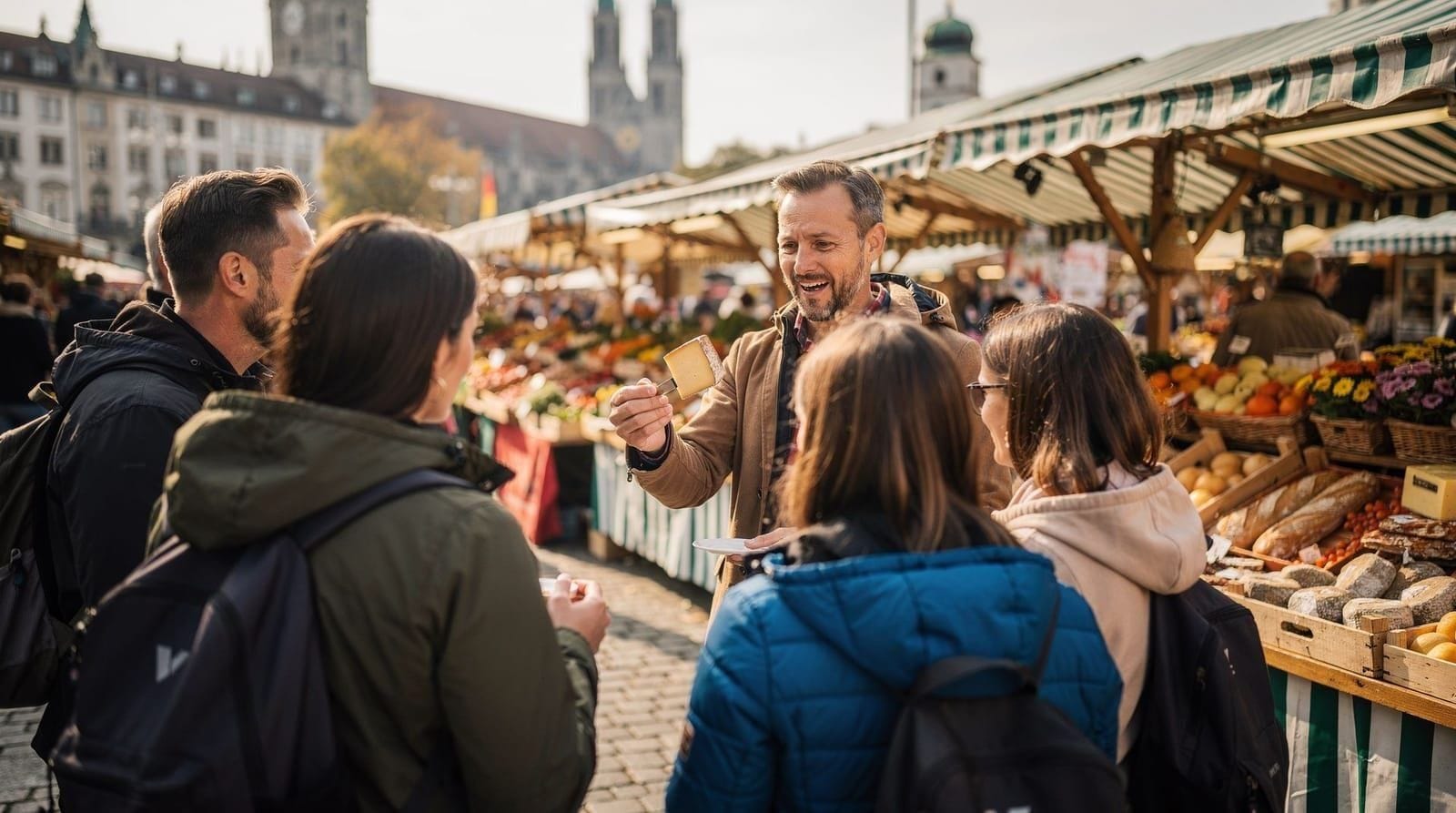
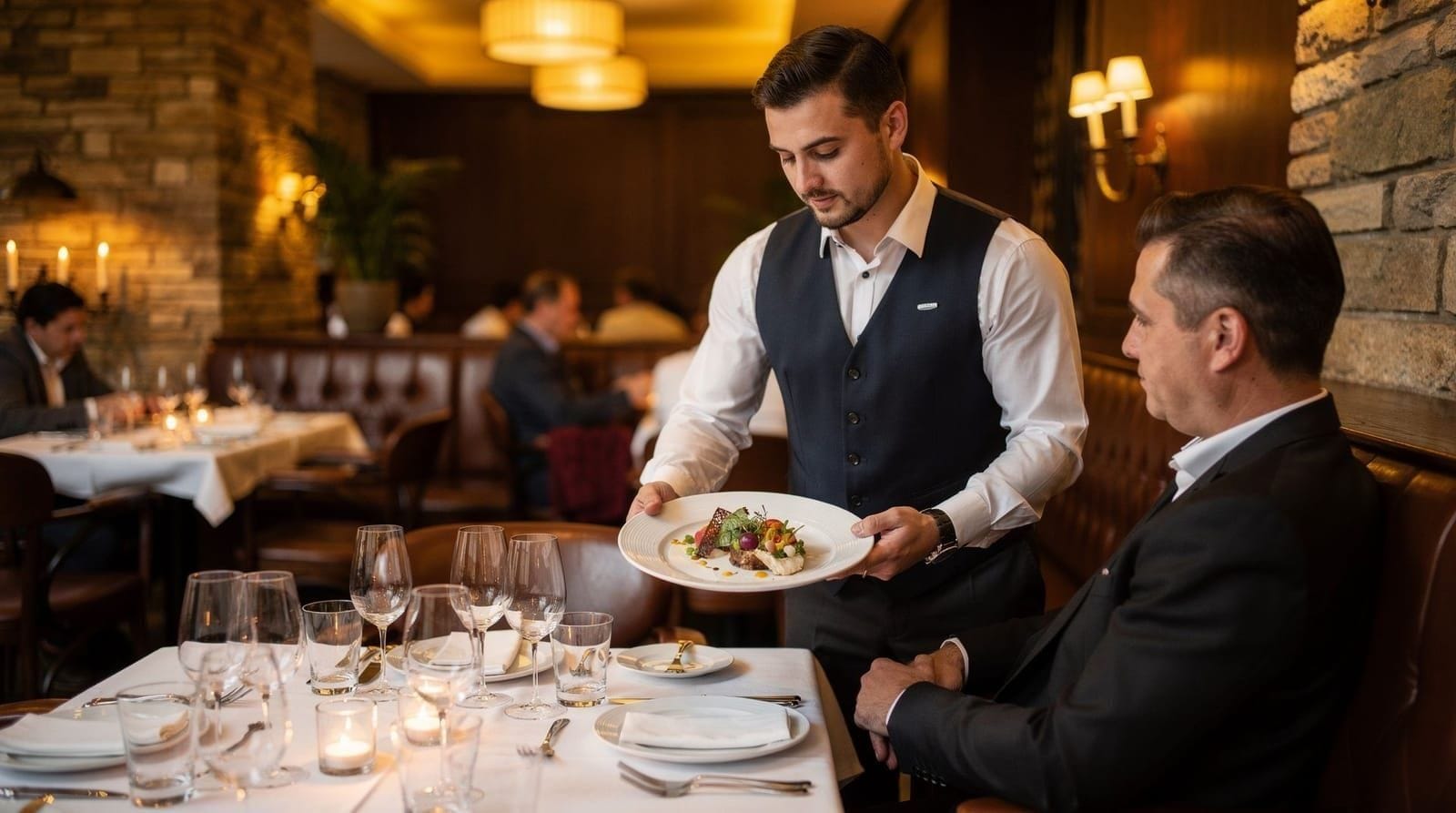
The Bavarian food tour with 3-course meal combines market tasting stops with a structured sit-down meal and a guide who explains the dishes in their cultural context — useful for understanding the cuisine before ordering alone.
Planning a food-focused day in Munich
If Bavarian food is a priority for your trip rather than an incidental part of it, treat it the way you would a museum day: pick two or three addresses in advance rather than wandering and hoping. A workable structure is a market breakfast at the Viktualienmarkt before 11:00 for Weißwurst and Obatzda, a mid-afternoon Brotzeit at a beer garden, and a proper sit-down Schweinshaxe or Sauerbraten dinner booked ahead at Wirtshaus in der Au or Zum Dürnbräu. This spreads the heavier dishes across the day, which matters given the portion sizes involved. The Munich food tour guide is worth considering if you would rather have someone else plan the route and make the reservations.
For visitors on a tighter budget, the Munich budget guide has more detail on stretching a food budget without sacrificing quality — market-stall Leberkäse and Obatzda deliver most of the flavour of the restaurant versions for a fraction of the price. And for a broader restaurant-scene view beyond just Bavarian classics, the best restaurants in Munich guide and the Munich cafés guide round out where to eat when you want a break from the traditional Wirtshaus circuit.
Frequently asked questions about Bavarian food in Munich
Where is the best place to eat Weißwurst in Munich?
The Weißes Bräuhaus on Tal Straße is considered by many Munich residents to be the definitive version — the sausages are made in-house and the kitchen takes them seriously. Wirtshaus in der Au and the Viktualienmarkt stalls are equally good alternatives.
Is Schweinshaxe available everywhere or only at specialist restaurants?
Schweinshaxe appears on most traditional Wirtshaus menus but quality varies enormously. The specialist roast houses — Haxnbauer, Pschorr Wirtshaus — produce it most consistently because it is their primary dish. General Wirtshäuser often do it well but may serve it at inconsistent quality depending on kitchen volume.
What should I order if I don’t eat pork?
Munich’s traditional food is pork-heavy, but alternatives exist. Bavarian trout (Forelle) is a regional speciality — freshwater trout from Alpine streams or lakes, pan-fried in butter with parsley. Duck is available in autumn at most traditional Wirtshäuser — roasted with red cabbage and potato dumplings. Venison (Hirsch or Reh) appears as seasonal game specials. The Munich cooking classes guide covers where to learn more about Bavarian cuisine including the less-pork-centric traditions.
Can I drink anything other than beer with Bavarian food?
Yes. Apfelschorle (apple juice with sparkling water) is a universal non-alcoholic alternative that appears on every traditional menu. Mineral water is standard. Bavarian apple wine exists but is harder to find than in Frankfurt. Wine from the Franconia region (dry whites, Silvaner, and Riesling) appears on upmarket Wirtshaus wine lists. Many Munich residents drink Radler (beer mixed 50-50 with lemon soda) as a lower-alcohol alternative during the day.
What are the regional food differences between Munich and the rest of Bavaria?
Munich’s food is broadly similar to upper Bavarian cooking but with a city-specific character — more refined restaurant options, a higher concentration of good beer halls, and the Viktualienmarkt as a unique food source. Rural Bavarian food, particularly in the Alps around Garmisch or Berchtesgaden, tends to be simpler and more focused on dairy — Bergkäse (mountain cheese), Knödel (dumplings), and hearty meat dishes with fewer flourishes.
How does Bavarian food fit into an Oktoberfest visit?
The Wiesn tents serve a condensed version of this same repertoire — Schweinshaxe, Weißwurst, Käsespätzle, roast chicken — at festival volume and festival prices. If you want a calmer, better-value version of the same dishes, eat at a proper Wirtshaus before or after your Oktoberfest day rather than relying solely on tent food. The Oktoberfest guide covers tent-by-tent food quality in more depth.
Is it worth booking a food tour instead of choosing restaurants myself?
For visitors short on time or unfamiliar with the etiquette (the noon Weißwurst rule, how to order at a beer hall, what a Brotzeit actually is), a guided tour removes the guesswork and typically covers four or five dishes in one session. Munich Old Town food tour with 10 tastings is a broad option that touches most of the dishes covered in this guide.
Top experiences
Bookable activities with verified prices and instant confirmation on GetYourGuide.